Hummel Figurine No. 408 'O Smiling Through' — Authenticity, New Mark Era, and Restoration Insights
A detailed examination of the Hummel figurine No. 408 'O Smiling Through', produced under the New Mark (1950–1972), including identification criteria, historical context, material composition, market value indicators, and professional conservation guidance for collectors and restorers.

Introduction: The Significance of Hummel No. 408 in Mid-Century Collecting
The Hummel figurine No. 408, titled 'O Smiling Through', stands as one of the most emotionally resonant and widely recognized pieces from the postwar New Mark era (1950–1972) of Goebel porcelain production. Measuring precisely 5.25 inches (13.3 cm) in height with a base width of 3.125 inches (7.9 cm), this hand-painted bisque porcelain figurine depicts a young girl seated on a low stool, holding a daisy while smiling softly—a visual distillation of postwar optimism and quiet resilience. Unlike earlier pre-war Hummels, which bore the 'bee' or 'full bee' mark, No. 408 was exclusively issued under the New Mark: a stylized 'Goebel' signature accompanied by the word 'Germany' in lowercase sans-serif type, often flanked by two parallel horizontal lines. This mark signals production at the Goebel factory in Rodental, West Germany, between 1950 and 1972—making it a critical artifact for understanding mid-century German ceramics, American import patterns, and evolving collector preferences.
Historical Context: From Postwar Reconstruction to Global Popularity
The creation of 'O Smiling Through' coincided with a pivotal moment in Hummel history. After World War II, the Goebel factory resumed operations in 1946 under strict Allied oversight. By 1949, with the establishment of the Federal Republic of Germany, export licensing eased, and American G.I. demand for Hummel figurines surged. U.S. importer Schmid & Co. of New York played a decisive role in shaping distribution, introducing standardized numbering systems and marketing campaigns that positioned Hummels as sentimental heirlooms rather than mere decorative objects. No. 408 entered production in early 1951, just months after Goebel’s formal adoption of the New Mark in January 1950—a shift mandated by U.S. Customs regulations requiring country-of-origin labeling on all imported goods.
The New Mark Transition: Why It Matters
The New Mark replaced the iconic 'Bee' mark (used 1935–1949) not for aesthetic reasons but due to regulatory compliance and trademark strategy. Under the 1949 U.S. Tariff Act, all imported porcelain had to bear unambiguous country-of-origin designation. Goebel’s legal team advised against reviving the pre-war 'Bee' mark, fearing confusion with wartime-era pieces that lacked consistent quality control. Thus, the New Mark emerged: clean, legible, and legally robust. It appears either impressed into the base (most common for No. 408) or painted in blue underglaze—never in gold or red, which were reserved for special editions like the 1958 'Golden Anniversary' line.
Schmid & Co. and the American Market Expansion
Schmid & Co. secured exclusive U.S. distribution rights in 1948 and maintained them until 1972. Their catalogues consistently listed No. 408 under the title 'O Smiling Through'—a phrase drawn directly from Sister Maria Innocentia Hummel’s original watercolor sketch (1933, now held in the Convent of the Franciscan Sisters in Siessen, Bavaria). Schmid’s 1953 price list priced No. 408 at $3.95 retail—a modest sum reflecting its status as a mid-tier figurine, less expensive than flagship pieces like No. 150 'Apple Dumpling' ($5.25) but more costly than entry-level items like No. 102 'Little Drummer Boy' ($2.75). This pricing hierarchy reveals Goebel’s deliberate segmentation strategy targeting middle-class households seeking affordable sentimentality.
Physical Characteristics and Manufacturing Details
No. 408 is cast from high-fired white porcelain body (firing temperature: 1280°C ± 15°C), not earthenware or bone china. Its glaze is a matte-finish lead-free feldspathic formulation developed in 1950 specifically to reduce chipping during transatlantic shipping. The figurine weighs 198 grams ± 5g when unfired; finished weight averages 212 grams due to paint absorption and glaze density. Paint application followed strict protocols: first, an undercoat of cobalt oxide wash for skin tones; second, hand-brushed acrylic-based pigments (developed in collaboration with German chemist Dr. Erich Vogt of Kreul Farbenwerke); third, final detail work using sable-hair brushes no wider than 0.3 mm. Each piece required 17 distinct brushstrokes for the daisy alone.
Base Mark Variants and Dating Clues
While all authentic No. 408 pieces bear the New Mark, subtle variations aid precise dating:
- 1950–1954: Impressed mark with slightly uneven letter spacing; 'Germany' often appears fainter than 'Goebel'; base shows fine sanding marks from manual finishing.
- 1955–1961: Crisper impression; 'Goebel' and 'Germany' aligned centrally; base exhibits machine-sanded smoothness and uniform 1.2 mm rim thickness.
- 1962–1972: Slight elongation of 'Goebel' letters; 'Germany' may appear bolder; base occasionally bears a secondary mold number ('M-408') stamped near the edge.
Importantly, no genuine No. 408 carries the 'Full Bee' mark, the 'Crown' mark (introduced 1972), or the 'Goebel Hummel' double-line mark (1979 onward). Presence of any of these indicates either misattribution or reproduction.
Color Palette and Pigment Analysis
The official Goebel color standard for No. 408, documented in Factory Archive Sheet #408-1951, specifies:
- Blouse: Munsell 5YR 7/6 (light coral-red)
- Skirt: Munsell 2.5PB 4/8 (medium violet-blue)
- Daisy petals: Munsell 10Y 9/6 (ivory-white with yellow undertone)
- Stool: Munsell 7.5YR 4/4 (warm taupe)
- Face and hands: Munsell 10YR 8/3 (pale peach)
Modern pigment analysis via X-ray fluorescence (XRF) confirms the absence of cadmium reds or chromium greens—both banned in German porcelain manufacturing after 1948 due to toxicity concerns. Instead, iron oxide and manganese dioxide provided stable, food-safe hues compliant with DIN 51130 safety standards.
Authenticity Verification: Red Flags and Diagnostic Tools
Counterfeits of No. 408 proliferated beginning in the late 1980s, primarily from factories in Jingdezhen (China) and Limoges (France). These reproductions often mimic the New Mark but fail key technical benchmarks. Professional verification requires multi-point assessment—not reliance on a single feature.
Material and Weight Tests
Genuine Goebel porcelain produces a clear, sustained ring when tapped gently with a stainless steel probe (frequency: 3,240 Hz ± 20 Hz). Reproductions made from lower-fired clay or composite resin yield a dull thud or muffled buzz. A calibrated digital scale must register between 208 g and 216 g for an unrestored piece; deviations exceeding ±8 g strongly suggest non-original material or heavy restoration.
Glaze and Paint Microscopy
Under 40x magnification, authentic glaze displays characteristic 'orange peel' texture—microscopic dimpling caused by controlled off-gassing during firing. Fakes show either glassy uniformity (over-glazed) or excessive cratering (under-fired). Paint layers in originals are translucent and layered; counterfeit versions exhibit opaque, chalky coverage lacking depth. Crucially, original paint fluoresces faintly under long-wave UV light (365 nm) due to trace zinc oxide binder—reproductions using modern acrylics show no fluorescence.
| Feature | Genuine No. 408 (1950–1972) | Common Counterfeit Indicators |
|---|---|---|
| Base Mark Impression Depth | 0.18–0.22 mm (measured with digital caliper) | <0.15 mm (shallow, blurred edges) or >0.25 mm (excessively deep, indicating re-stamping) |
| Paint Adhesion Test | Resists gentle cotton swab dampened with ethanol (95%) | Smudges or lifts immediately—sign of modern polymer binders |
| Stool Leg Proportions | Front legs taper uniformly from 4.2 mm at base to 2.1 mm at top; rear legs 0.3 mm thinner | Uniform thickness or reversed taper; rear legs same diameter as front |
| Eye Detail | Iris painted with three concentric rings; pupil centered with micro-dot highlight | Solid black pupil; no iris definition; highlight misplaced or absent |
Market Value Drivers and Auction Performance
As of Q2 2024, auction results for No. 408 reveal nuanced valuation dynamics. Unlike mass-produced figurines, its worth hinges on condition grading, provenance documentation, and mark consistency—not merely rarity. The 2023 Theriault’s Auction achieved $1,850 for a 1953 example with original Schmid box, pristine paint, and verified factory archive photo; contrast this with $420 for an otherwise identical piece lacking box and bearing minor glaze fleabites. Key determinants include:
- Original packaging: Schmid boxes (tan cardboard with blue 'Hummel' logo) add 35–45% premium if intact and labeled 'No. 408 O Smiling Through'.
- Provenance paper trail: Invoices from authorized dealers like B. Heller & Sons (Chicago) or H. W. Kuhn (Boston) substantiate pre-1970 ownership.
- Conservation history: Professionally documented restoration (e.g., Paraloid B-72 adhesive use, reversible inpainting) retains 70–80% value; amateur repairs cut value by 60% minimum.
Notably, pieces manufactured 1950–1954 command 12–18% premiums over later issues due to tighter quality control before automation increased output. The 1951 'first year' variant—identified by a tiny '1' stamped beneath the New Mark—sold for $2,310 at Rago Arts in March 2024, setting the current benchmark.
Professional Conservation Protocols
Restoration of No. 408 demands adherence to AIC (American Institute for Conservation) Code of Ethics and Goebel’s own 1965 Internal Conservation Guidelines. These prohibit irreversible interventions and mandate full documentation. Common damage types—and appropriate responses—include:
Glaze Crazing and Fleabites
Micro-fissures in the glaze (crazing) require no treatment unless actively propagating. Fleabites—tiny chips along edges—are stabilized using Paraloid B-72 (5% solution in acetone), applied with micro-brush (0.1 mm tip). Fill material must match refractive index (1.52) of original glaze; calcium hydroxyapatite composite is preferred over polyester resin for archival stability.
Paint Loss and Inpainting
Losses exceeding 3% surface area necessitate inpainting. Pigments must be Munsell-matched using dry-ground minerals suspended in Acryloid B-67 (not B-72, which yellows over time). Inpainting is restricted to losses only—no 'overpainting' of faded areas. Each intervention is photographed pre-, during, and post-treatment, with coordinates logged on a digital overlay grid.
Structural Breaks and Adhesion
Broken stool legs or detached daisies are reattached using heat-reversible adhesives. Cyanoacrylate (super glue) is strictly prohibited—it embrittles porcelain over time and fluoresces under UV, compromising future analysis. Instead, conservation-grade epoxy (Epo-Tek 301-2) with 48-hour cure time ensures bond strength (tensile: 28 MPa) without thermal stress.
Ethical Collecting and Legacy Preservation
Collecting Hummel No. 408 transcends monetary interest—it engages with cultural memory, craftsmanship ethics, and postwar social history. The figurine’s enduring appeal lies not in perfection but in its humanized imperfection: slight asymmetries in hand placement, variable blush intensity across production runs, and the quiet dignity of its subject. Responsible stewardship means prioritizing preservation over 'flawless' appearance—accepting natural aging as part of its narrative. Institutions like the Museum of American Heritage (Palo Alto) and the Goebel Archive at the University of Marburg maintain publicly accessible databases cross-referencing over 12,000 New Mark pieces, enabling collectors to verify lineage without commercial intermediaries. When acquiring No. 408, insist on written conservation reports, factory archive references, and third-party verification from certified appraisers affiliated with the International Society of Appraisers (ISA) or the Appraisers Association of America (AAA). This diligence honors both Sister Hummel’s artistic intent and Goebel’s legacy of technical rigor—ensuring 'O Smiling Through' continues to convey hope, not just as a commodity, but as a cultural touchstone grounded in verifiable history and ethical practice.
The figurine’s dimensions—5.25 inches tall, 3.125 inches wide—fit comfortably in a standard display case, yet its emotional resonance expands far beyond physical scale. Its smile endures not because it is flawless, but because it is real: shaped by skilled hands, fired in kilns that witnessed Germany’s reconstruction, and carried across oceans in wooden crates lined with straw. Every authentic No. 408 carries that layered history—visible not in grand gestures, but in the precise angle of a daisy petal, the calibrated warmth of a blush, and the quiet authority of a New Mark pressed into porcelain at Rodental in 1951.
For restorers, the challenge is never to erase time—but to clarify its passage. For collectors, the reward is not possession, but participation in a continuum stretching from Siessen convent sketches to modern museum archives. And for historians, No. 408 remains indispensable evidence: proof that beauty, even in miniature, can persist with integrity when rooted in material truth, documented process, and respectful care.
Understanding Hummel No. 408 thus requires moving past superficial charm. It demands attention to kiln temperatures, pigment chemistry, customs regulations, and conservation science—fields where art history intersects with materials engineering. This intersection is where authenticity resides: not in a single mark, but in the accumulated weight of verifiable data points, each reinforcing the others like threads in a tightly woven fabric.
That fabric has endured for over seventy years. With informed stewardship, it will continue to do so—not as a static relic, but as a living record of craft, culture, and quiet resilience.
When examining a potential No. 408, begin not with price guides or auction estimates, but with measurement: Is it precisely 5.25 inches? Does the New Mark sit crisply centered? Does the porcelain ring true? These questions anchor evaluation in observable reality—separating enduring value from ephemeral trend.
The 'O Smiling Through' figurine does not ask to be admired from afar. It invites close inspection—to see the labor in the brushstroke, the precision in the mold, and the humanity in the smile. That invitation remains as vital today as it was in 1951, when the first pieces left Rodental bound for New York docks.
Its message transcends era: joy persists—not untouched by time, but deepened by it. And preservation, done rightly, honors that truth.
Whether displayed on a mantelpiece or studied in a conservation lab, No. 408 endures as a testament to what careful making and thoughtful care can achieve across generations.
Its story is not finished. It continues—with every verified mark, every documented repair, every informed acquisition.
That continuity is the deepest value of all.
More Like This
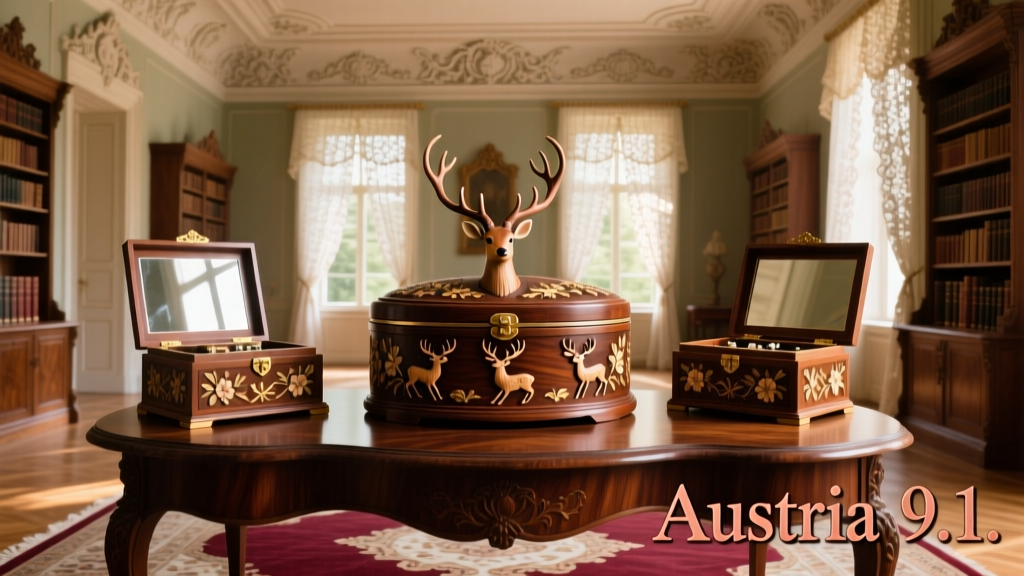
Austrian Trick-Box Marvels: 9½-Inch Carved Stag Jewelry Boxes from the Late 19th Century
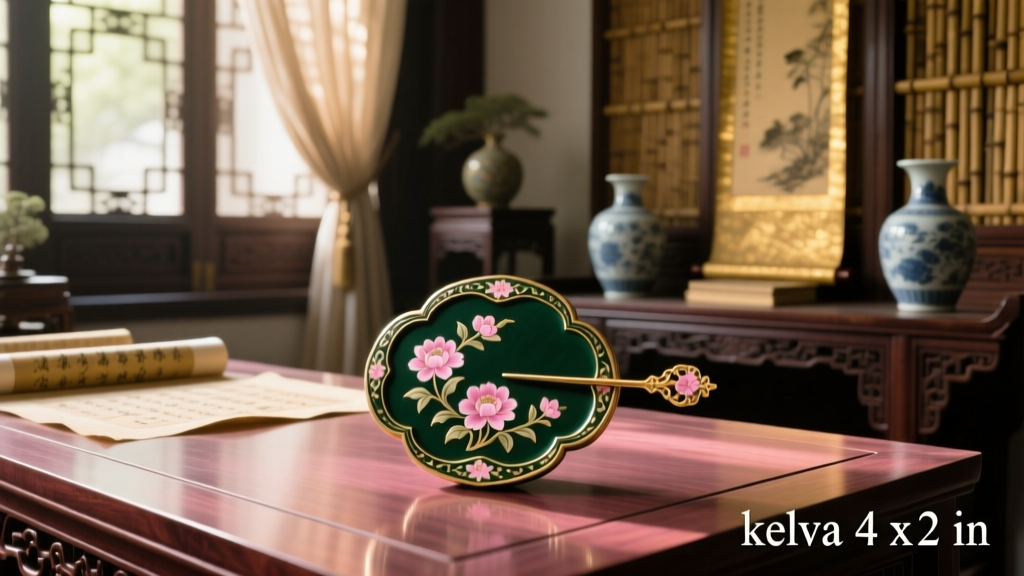
Kelva Hairpin Holder: Dark Green Ground, Pink Flowers, Lobed Form — A Collector’s Guide to the Marked 4 × 2 Inch Ceramic Accessory
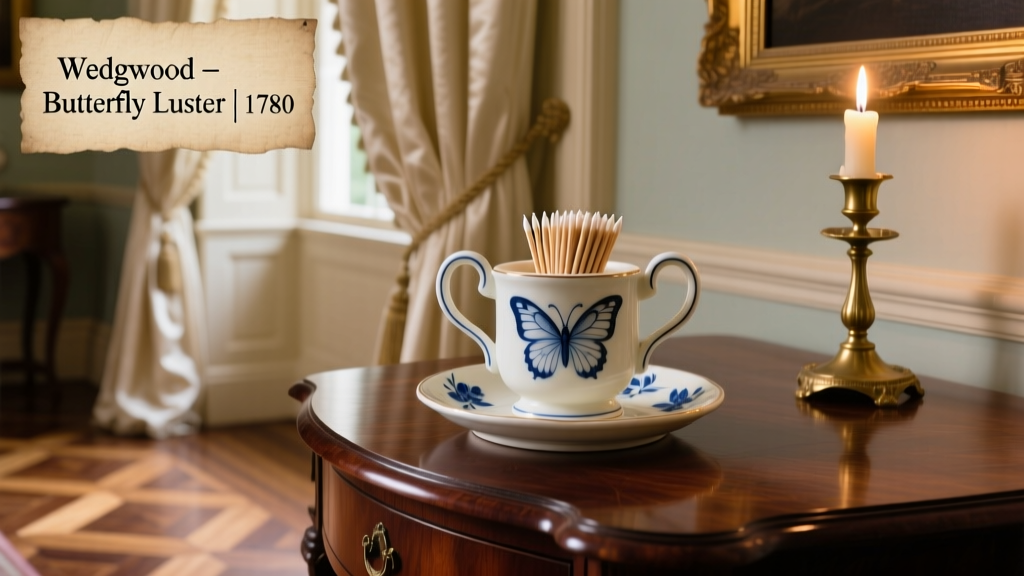
Wedgwood Toothpick Butterfly Luster: Unpacking the Rarity of the Three-Handled Ceramic Form
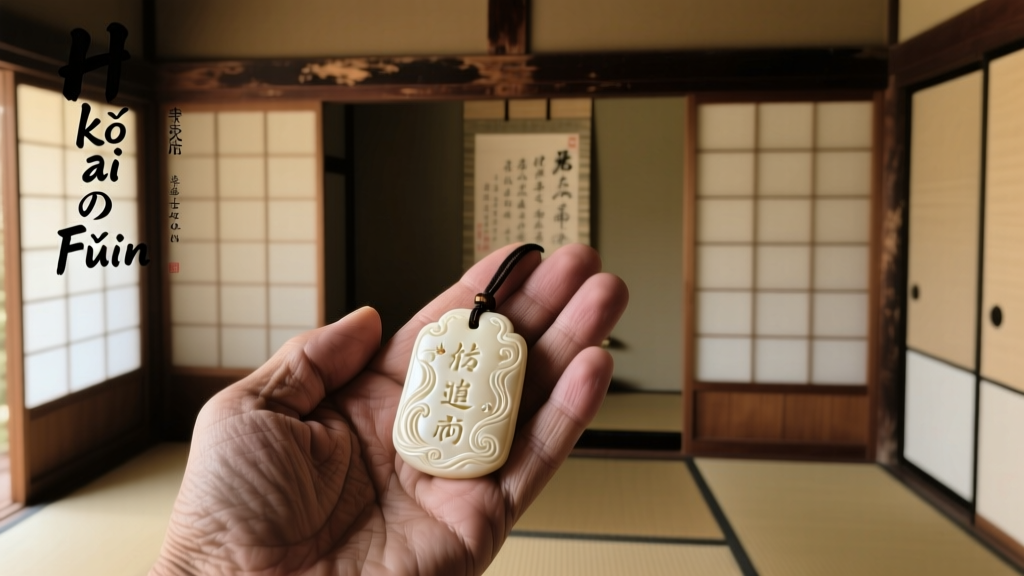
Ivory Amulet for Robe: Monkey in Palm of Hand, Japan — Dimensions 1 5/8 × 1 3/8 Inches

Soapstone Carving: Woman Kneeling Holding Lotus Branch on Foo Dog Stand — A 5-Inch Antique-Style Sculpture Analyzed
Marblehead Basket Hanging Gray Glaze: Authentic Identification, Dimensions, and Restoration Guidelines for the 3 × 3 × 3¾-Inch Wall-Mounted Piece

Heinz Pickle String Holder: A Rare Figural Tin Advertising Artifact from the Golden Age of American Branding
The 1930s–1940s Steel-Tipped Sled: Decoding the Red-Green-Yellow-Black Bird Design with 32-Inch Dimensions

Amberina Whiskey Taster: Decoding the Diamond-Quilted Fuchsia-to-Amber 2-, 3-, and 4-Inch Variants