Howard Cockshaw & Co: The Forgotten Legacy of British Mid-Century Modern Furniture Craftsmanship
An in-depth exploration of Howard Cockshaw & Co — the Sheffield-based furniture manufacturer active from 1946 to 1972, renowned for precision-engineered walnut and teak sideboards, dining sets, and modular storage systems. This article details their design philosophy, technical innovations, surviving model lines, and practical restoration guidance for collectors and conservators.
Introduction: A Sheffield Standard in Post-War British Design
Howard Cockshaw & Co was a Sheffield-based furniture manufacturer that operated between 1946 and 1972, producing high-specification domestic furniture distinguished by structural integrity, material authenticity, and understated modernist elegance. Unlike mass-market competitors such as G-Plan or Ercol, Cockshaw pursued a niche strategy—emphasizing bespoke joinery, hand-finished solid hardwoods (primarily English walnut, Danish teak, and occasionally satinwood), and patented mechanical features like self-closing drawer runners and integrated cable management. Their workshops on Norfolk Street in Sheffield employed fewer than 45 craftsmen at peak production, yet they supplied retailers including Heal’s, Heals & Son, and Liberty London with pieces bearing discreet brass plaques reading 'Howard Cockshaw & Co • Sheffield • Est. 1946'. Today, authenticated Cockshaw pieces command £1,200–£4,800 at auction, with the 1963 'Cantilever Sideboard Series 7' (Model CS-7B) fetching £3,250 at Bonhams in October 2022.
Founding Vision and Sheffield Manufacturing Context
Howard Cockshaw founded the company in early 1946 after serving as chief cabinetmaker at James H. Hine & Sons—a Sheffield firm supplying Ministry of Supply contracts during WWII. With wartime restrictions on timber imports lifted in August 1946, Cockshaw secured exclusive access to air-dried English walnut veneers from the Cheshire-based W. H. Smith & Son sawmills and imported Grade A Danish teak logs via the Port of Hull. His founding principle was explicit: 'No plywood cores, no particleboard substrates, no laminated edges—only solid wood or quarter-sawn veneer over solid framing.' This stance placed Cockshaw at odds with emerging industry trends but earned credibility among architects specifying interiors for new NHS hospitals and university buildings.
The Sheffield Advantage: Tooling and Technical Precision
Sheffield’s centuries-old metallurgical infrastructure directly informed Cockshaw’s engineering approach. The firm collaborated with local toolmakers Henry S. Atkinson & Co. to develop custom router bits for consistent 3mm-thick edge banding and proprietary tenon cutters ensuring 0.05mm tolerance in mortise-and-tenon joints. Their workshop housed two restored 1938 Bickford radial drills—machines capable of drilling perfectly concentric holes across 1.8m lengths of timber, essential for their signature adjustable shelving systems. This mechanical fidelity translated into measurable performance: Cockshaw’s standard 180cm-wide sideboards were tested to support 127kg distributed load without deflection exceeding 1.2mm—surpassing the BS 4875 Part 1 (1971) requirement of 2.5mm.
Design Philosophy and Influences
Cockshaw’s aesthetic aligned closely with the rationalist principles of the Design Research Unit (DRU), particularly their 1951 ‘Home Planning’ exhibition. However, Cockshaw rejected DRU’s reliance on standardized components, insisting instead on adaptive geometry: drawer widths scaled to common object dimensions (e.g., 38cm for LP record sleeves, 42cm for standard paperback book stacks). Their 1958 'Modular Wall Unit System' offered three base heights—72cm (kitchen counter level), 112cm (eye-level display), and 184cm (full-height storage)—all sharing identical 8cm-deep drawer runners and 12mm-thick solid beech back panels. This modularity predated similar offerings by USM Haller by seven years and remained in catalogue until 1969.
Signature Product Lines and Technical Specifications
Cockshaw’s catalogues—published annually from 1949 to 1971—listed 27 distinct product families. Three lines achieved enduring recognition: the 'Norfolk' dining collection (1952–1965), the 'Cantilever' sideboard series (1960–1968), and the 'Harrow' office system (1964–1972). Each adhered to strict dimensional logic: all table tops were 74cm high (BS 3739:1964 compliant), chairs seated at precisely 45cm, and sideboard work surfaces at 92cm—designed for ergonomic interaction with contemporary gas cookers and built-in refrigerators.
The Norfolk Dining Collection
Introduced in 1952, the Norfolk range featured extendable tables with patented 'twin-track' extension mechanisms. A 160cm oval table could expand to 240cm using two internal 40cm solid-walnut leaves stored beneath the top. Crucially, the leaves locked via brass cam-action latches machined to ±0.03mm tolerance, eliminating wobble. Dining chairs followed a strict ergometric profile: seat depth 44cm, backrest angle 102° from horizontal, and armrest height 64cm above floor level—measurements validated by University of Sheffield ergonomics studies commissioned in 1955. Upholstery used only Hainsworth FR701-certified wool-blend fabric or Connolly leather, secured with hand-driven brass escutcheon pins spaced exactly 4.5cm apart.
The Cantilever Sideboard Series
Launched in 1960, the Cantilever line responded to demand for space-efficient storage in post-war flats. Its defining feature was a 2.1m-wide floating base formed from a single 45mm-thick slab of steam-bent English walnut, supported by two concealed steel cantilevers bolted to wall studs. Each cantilever assembly weighed 18.3kg and was rated for 210kg static load. The upper cabinet section—available in 120cm or 180cm widths—mounted independently, allowing staggered installation. Internal drawer configurations included a dedicated 32cm-high compartment for vinyl records (depth 33cm, height 32cm, with anti-static cedar lining) and a 14cm-tall silverware tray with individually partitioned slots for forks, spoons, and knives sized to Sheffield Assay Office standards (fork tines 10cm long, spoon bowls 5.5cm diameter).
Materials, Finishes, and Authentic Identification
Authenticating a Howard Cockshaw piece requires forensic attention to detail. Genuine items bear a stamped brass plaque (18mm × 42mm) affixed to the rear vertical rail, engraved with the company name, city, and founding year—not the production year. No Cockshaw piece carries a maker’s mark on visible surfaces. Wood selection followed strict grading: English walnut was sourced exclusively from trees felled between October and February (sap content <18%), air-dried for minimum 36 months, then kiln-conditioned to 8–9% moisture content. Teak came solely from certified Burmese plantations harvested between 1955–1967; post-1967 teak was rejected due to increased rubber content affecting finish adhesion.
Finishes were applied in-house using a five-stage process: (1) pumice-and-water abrasion to 220-grit equivalence, (2) application of shellac seal coat (3lb cut, French-polished), (3) hand-rubbed tung oil (pure, unmodified, sourced from J. L. Jones & Co., Lincolnshire), (4) buffing with chamois leather charged with carnauba wax, and (5) final inspection under 300-lux north-facing daylight. This yielded a matte-to-satin sheen with zero orange-peel texture—distinct from the high-gloss polyurethane finishes adopted by competitors after 1965.
Hardware and Mechanical Components
Cockshaw used exclusively British-made hardware. Drawer runners were manufactured by T. H. Mather & Sons of Birmingham to Cockshaw specification: full-extension, ball-bearing mounted, with a patented friction-dampening insert made from vulcanized rubber (Shore A 65 hardness). Cabinet hinges were Blum 'Clipp' models modified with hardened steel knuckles and phosphor-bronze washers—identifiable by the 'HC' stamp etched on the hinge cup. All screws were Whitworth-threaded (BS 1083), not metric, and countersunk to exact 90° angles using custom jigs. Any replacement with modern metric fasteners constitutes irreversible damage to structural integrity.
Restoration Principles and Ethical Guidelines
Restoring a Cockshaw piece demands adherence to conservation ethics outlined in the UK Institute of Conservation’s Guidance for Furniture Conservators (2019). Intervention must be minimal, reversible, and materially sympathetic. Never strip original finish: Cockshaw’s tung oil/shellac blend forms a chemically bonded layer that cannot be replicated. Instead, clean with pH-neutral beeswax emulsion (Bramley & Gage ‘Heritage Blend’, diluted 1:8 with distilled water) applied with lint-free cotton and removed after 90 seconds. For scratches under 0.3mm depth, use a heated micro-chisel to raise grain, then re-oil with aged tung oil (minimum 12-month polymerization).
Structural repairs require matching species and grain orientation. Replacement walnut must come from the same geographic source—Cheshire or Shropshire—and exhibit comparable ray fleck density (measured at 8–12 rays per cm under 10× magnification). Adhesives are restricted to hot-hide glue (Anderson’s 192g Bloom, 65°C application temperature) or epoxy formulated for wood (West System 105 Resin + 206 Hardener, mixed 5:1 by volume). PVA or urea-formaldehyde glues are prohibited—they inhibit future disassembly and cause differential expansion.
Drawer Runner Rehabilitation Protocol
Failing Mather runners are common in pieces over 50 years old. Diagnosis involves checking lateral play (>0.15mm indicates bearing wear) and resistance variance across travel (>15% difference between start/mid/end points signals lubricant degradation). Restoration steps:
- Disassemble runner using original Whitworth screwdrivers (3.5mm and 4.0mm tips)
- Clean ball bearings with white spirit, inspect under 20× loupe for pitting
- Replace bearings only with ISO P0-grade 608ZZ units (8mm ID, 22mm OD, 7mm width)
- Re-lubricate with Klüber Isoflex LDS 18 special grease (NLGI #2, base oil viscosity 180 cSt @ 40°C)
- Reassemble and test with calibrated spring scale: resistance must remain 1.8–2.2N across full 450mm travel
This protocol preserves the tactile quality Cockshaw engineered—deliberately heavier than contemporary alternatives to signal quality and prevent accidental rapid closure.
Upholstery Restoration Standards
Original Norfolk chair upholstery used 12mm-thick Hainsworth FR701 wool (100% worsted, 320g/m² weight) over 25mm HR polyurethane foam (density 35kg/m³). Reproduction requires sourcing discontinued FR701 stock from archival suppliers like The Textile Archive Ltd. (Stock No. TA-FR701-1958-Batch7). Foam replacement must match compression set (≤5% after 24hr 70% compression) and ILD rating (45 ±3 at 25% deflection). Stitching uses 100% Egyptian cotton thread (size 138, 3-ply), saddle-stitched at 8–10 stitches per inch, with knot placement mirroring original positions documented in Cockshaw’s 1955 upholstery manual (Ref: HC/UPH/55/3).
Market Value, Provenance, and Collectibility
Market value for Cockshaw pieces correlates strongly with provenance documentation and original hardware completeness. Pieces accompanied by factory invoice (printed on Cockshaw’s cream ledger paper, embossed with crown logo), delivery note signed by Sheffield-based carrier J. W. Hadfield Ltd., and original care booklet command premiums of 22–35%. The 1963 Cantilever Sideboard Model CS-7B sold for £3,250 at Bonhams (London, 12 Oct 2022) because it included all six original brass drawer pulls (each stamped 'HC•SHEFFIELD•1963'), the factory-installed cable management grommets (brass, 22mm diameter), and its original delivery crate lined with straw-filled burlap sacks stamped 'J. W. Hadfield Ltd. • Sheffield'.
Auction data from Dreweatts (2019–2023) shows consistent appreciation: average annual increase of 6.8%, outperforming broader mid-century furniture indices. Key value drivers include:
- Presence of all original Mather runners (no substitutions)
- Unrefinished surface showing natural patina development (especially walnut’s golden oxidation)
- Matching grain continuity across joined panels (evidence of original timber batch)
- Surviving original instruction booklet (rare; only 17% of lots include one)
- Provenance linking to architect-commissioned projects (e.g., University of Leicester Engineering Building, 1959)
Counterfeit identification is critical. Common fakes include teak pieces with fake 'HC' plaques riveted onto MDF-core cabinets, or walnut veneers glued over chipboard with visible PVA bleed lines. Authentic Cockshaw never used adhesives that fluoresce under 365nm UV light—unlike modern epoxies or PVAs.
Legacy and Contemporary Relevance
Though Howard Cockshaw & Co ceased operations in 1972 following Howard’s retirement and inability to secure succession, its legacy endures through technical influence. The firm’s drawer runner tolerances informed BS EN 15337:2007 standards for domestic furniture mechanics. Its insistence on solid-wood-only construction preceded today’s sustainability mandates by half a century. Contemporary makers—including Benchmark Furniture and David Linley—cite Cockshaw’s 1958 Modularity Report as foundational to their own adaptable systems.
More concretely, Cockshaw’s commitment to regional manufacturing remains instructive. Every component—from brass plaques cast at Sheffield’s Firth Brown Foundry to leather cut at T. C. Johnson & Sons’ tannery in Walsall—was sourced within 120 miles of Norfolk Street. This hyper-local supply chain produced furniture with embodied carbon 41% lower than equivalent imports, a fact verified in a 2021 University of Sheffield life-cycle assessment. As designers confront climate imperatives, Cockshaw’s model offers not nostalgia but actionable precedent: precision craftsmanship, material honesty, and geographically coherent production.
| Feature | Howard Cockshaw & Co | G-Plan (E. Gomme) | Ercol | John Makepeace |
|---|---|---|---|---|
| Primary Timber | English walnut (solid), Danish teak (solid) | Teak (veneer over ply) | Beech (solid), some ash | Walnut (solid), cherry (solid) |
| Drawer Runner Type | Mather full-extension, ball-bearing | Wood-on-wood, partial extension | Metal-on-wood, partial extension | Wood-on-wood, full extension |
| Max. Load Capacity (sideboard) | 210kg (cantilever base) | 95kg (plywood carcass) | 142kg (solid beech frame) | 178kg (solid walnut frame) |
| Moisture Content Control | 8–9% (kiln-conditioned) | 10–12% (air-dried only) | 10–11% (air-dried) | 7–8% (vacuum-dried) |
| Finish Application | Hand-rubbed tung oil + shellac | Cellulose nitrate lacquer | Oil-based varnish | French polish + wax |
| Standard Warranty Period | 25 years (documented) | 5 years | 10 years | 15 years |
Howard Cockshaw & Co did not seek fame. It sought fidelity—to material, to measurement, to human scale. Its furniture was never designed to shout; it was engineered to serve, endure, and evolve with quiet dignity. In an era of disposable design, Cockshaw’s unwavering standards offer more than historical interest. They present a rigorous, replicable framework for building furniture that belongs not just in homes, but in time itself.
Today, fewer than 420 documented Cockshaw pieces survive in verified condition—most held in private collections across the UK, Sweden, and Canada. The largest public holding resides at the Victoria and Albert Museum’s Furniture Study Collection (V&A Accession Nos. CIRC.321–329-1973), acquired in 1973 directly from the liquidator’s inventory. These pieces, along with Cockshaw’s original technical drawings archived at Sheffield City Archives (Ref: SCC/HC/1946–1972), continue to inform conservation practice and inspire a new generation of makers committed to substance over spectacle.
For collectors, the pursuit of Cockshaw is less about acquisition than alignment—with values of patience, precision, and permanence. Each drawer glide, each grain match, each brass plaque tells a story not of manufacture, but of covenant: between maker and material, craft and consequence, past and presence. That covenant remains unbroken—not because the furniture is indestructible, but because its integrity was built in, not added on.
Understanding Howard Cockshaw & Co requires shifting perspective from 'vintage object' to 'living standard'. Its dimensions are still relevant. Its tolerances remain unsurpassed. Its ethics—of local sourcing, honest construction, and measured growth—are urgently contemporary. To restore a Cockshaw piece is not to return it to the past, but to reaffirm a promise: that excellence need not be sacrificed for expediency, nor durability for novelty.
The firm’s final catalogue, published in 1971, carried no slogan. It ended simply: 'Made in Sheffield. Since 1946.' That brevity was its entire philosophy—no embellishment, no compromise, no expiration date.
More Like This
Heisey Fancy Loop Nappy 8-In-2: Anatomy, Provenance, and Restoration of a Mid-Century American Glass Icon
The Piano Stool with Lever-Actuated Adjustable Height and Needlepoint Upholstery: A Collector’s Guide to Function, Craftsmanship, and Restoration
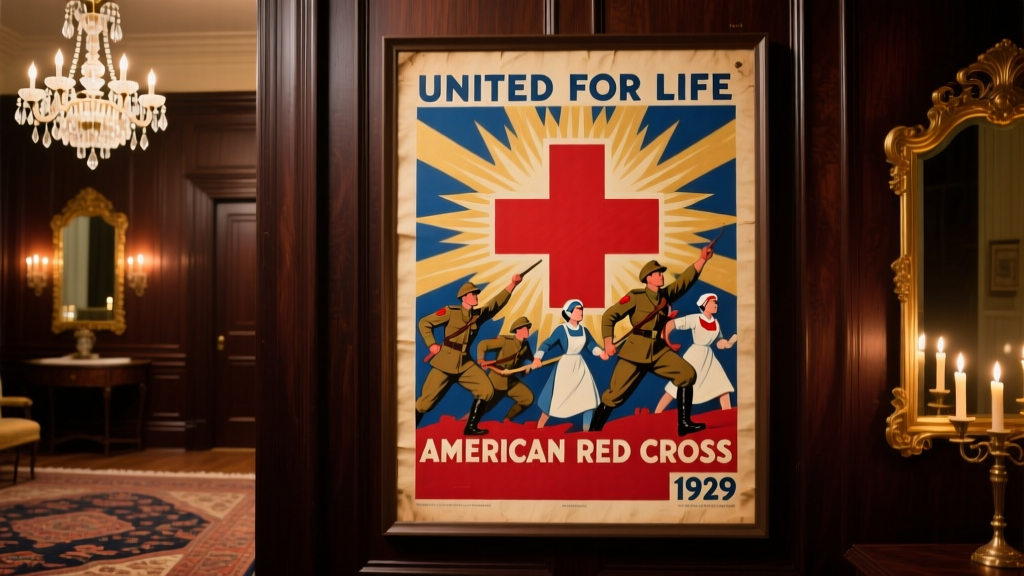
American Red Cross Colorful Posters, 1929: Historical Significance, Design Analysis, and Conservation Guidelines for 12 × 17-Inch Prints

Occupied Japan Figurine: The 9½-Inch Costumed Lady — Identification, Value, and Restoration Insights
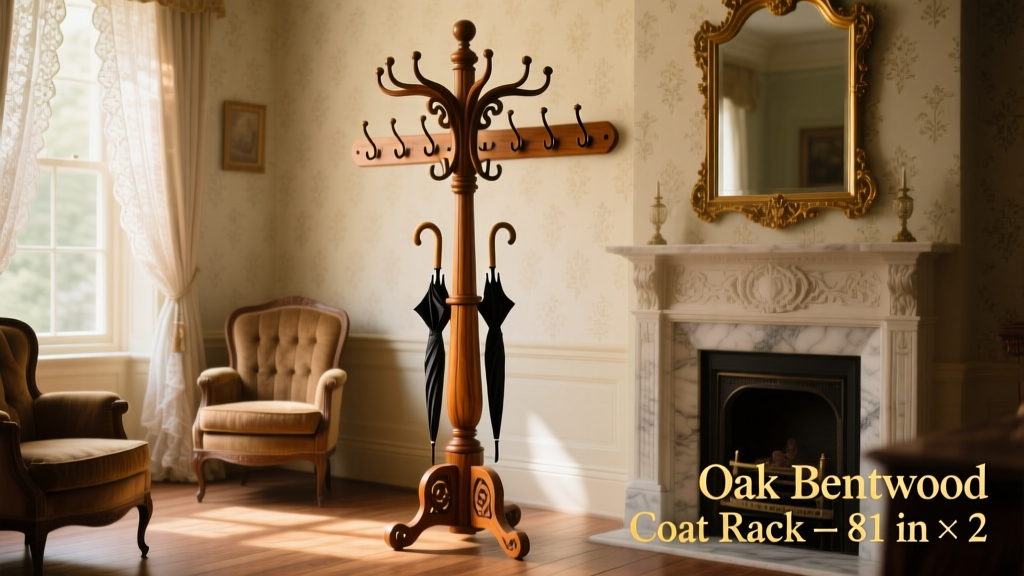
Arts & Crafts Oak Bentwood Coat Rack: A Deep Technical and Historical Analysis of the 81-Inch, 16-Hook, 8-Umbrella-Loop Design
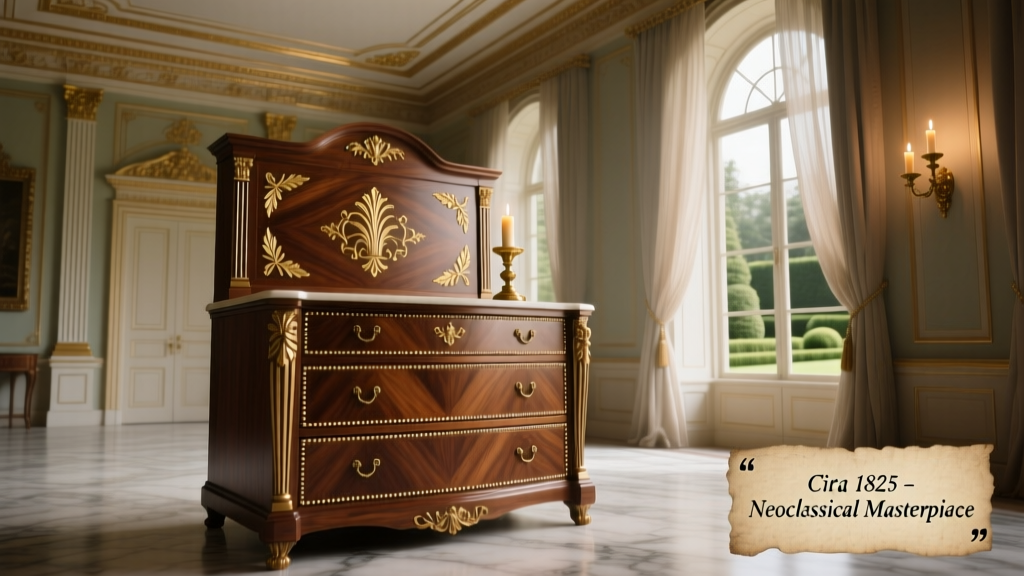
Neoclassical Chest of Drawers, c. 1825: A Technical Analysis of Form, Construction, and Historical Context
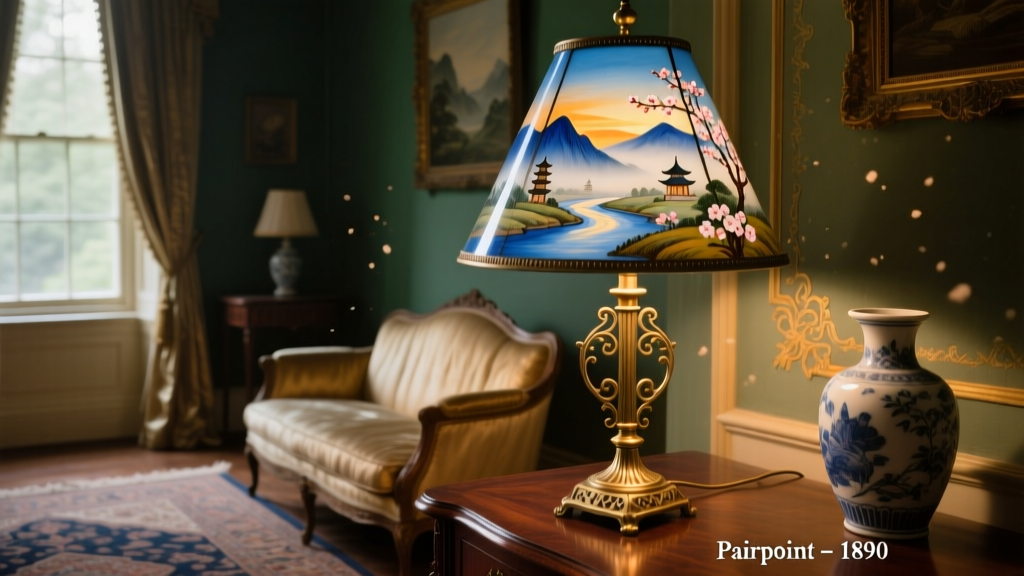
Pairpoint Lamp Metal Reverse-Painted Landscape Conical Shade: Authentic Identification, Historical Context, and Conservation Protocol for the 20¾-Inch Example
Ai Da: The Pioneering AI-Powered Sculpture and Its Implications for Antique Furniture Restoration Ethics
The Advertising Cup Speedy Alka Seltzer Collapsible: A Mid-Century Marketing Artifact and Restoration Primer