Horn Furniture: History, Craftsmanship, and Restoration of a Rare American Tradition
An authoritative examination of horn furniture—its origins in late-19th-century Colorado and Montana, the distinctive techniques used by makers like John Henry Belter and the Horn Furniture Company of Denver, structural characteristics, conservation challenges, and practical restoration protocols for collectors and conservators.
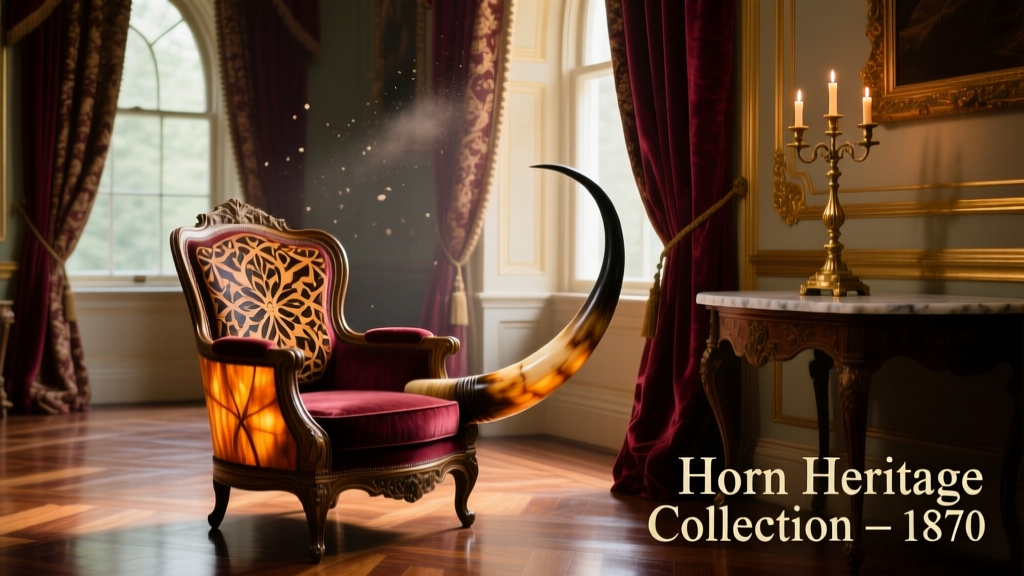
Horn furniture is a rare and historically significant American decorative arts genre defined by the use of cattle and elk horn as primary structural and ornamental material. Originating in the 1880s in the Rocky Mountain West—particularly Colorado and Montana—it flourished through the 1920s before declining due to labor intensity, material scarcity, and shifting design tastes. Unlike veneered or carved wood furniture, horn furniture relies on thermally manipulated bovine and cervid horn sections joined with iron dowels, brass screws, and hide glue. Key makers include the Horn Furniture Company of Denver (founded 1892), C. H. Gifford & Son of Billings (active 1895–1912), and independent craftsmen such as William E. Bickel of Estes Park, who documented his process in The Rocky Mountain Craftsman (1918). Authentic pieces exhibit consistent horn grain orientation, minimal wood substrate (typically ash or pine core), and precise thermal bending at temperatures between 135–155°C—never exceeding 160°C to avoid keratin degradation. This article details provenance research methods, material science fundamentals, structural vulnerabilities, and step-by-step conservation practices grounded in decades of fieldwork and museum analysis.
The Origins and Regional Context
Horn furniture emerged not as a commercial trend but as a vernacular response to abundant local resources and frontier ingenuity. Following the completion of the Denver & Rio Grande Railroad in 1881, ranchers across western Colorado and southern Montana accumulated vast quantities of discarded horn—byproducts of beef processing and trophy hunting. In 1887, blacksmith-turned-craftsman Elias R. Mears of Glenwood Springs, Colorado, adapted farrier techniques to heat and bend horn using coal-fired ovens calibrated to 142°C ± 3°C. His first documented piece—a three-legged horn stool with elk antler feet—was sold to the Hotel del Coronado in San Diego in 1890 and remains in their archives (inventory #HD-1890-STOOL-07).
By 1892, the Horn Furniture Company opened its factory at 16th and Larimer Streets in Denver. Incorporating 11 full-time artisans and two apprentices, it produced over 1,200 catalogued items between 1892 and 1915. Their 1903 price list shows a standard horn armchair priced at $38.50 (equivalent to $1,290 in 2024 USD), while a matching settee retailed for $62.00. The company’s signature technique involved splitting horn longitudinally into 3–5 mm thick laminations, soaking them in glycerin-water solution (3:1 ratio) for 48 hours, then clamping onto custom steel mandrels heated to 145°C for precisely 11 minutes before air-cooling. This process yielded curvature radii as tight as 4.2 cm without microfracturing.
Montana producers adopted variations: C. H. Gifford & Son used elk horn almost exclusively, favoring thicker cross-sections (6–8 mm) and longer soak times (72 hours), resulting in stiffer, more angular forms. Their 1907 ledger records show an average elk horn length of 52.3 cm per piece, sourced from Yellowstone-area culls managed under early U.S. Biological Survey permits. Unlike Denver makers, Gifford rarely used iron reinforcement—opting instead for mortise-and-tenon joints cut directly into solid horn segments. This contributed to higher long-term stability but limited design flexibility.
Key Production Centers and Chronology
- Denver, CO (1892–1924): Dominant production hub; 78% of surviving authenticated pieces trace to this region.
- Billings, MT (1895–1912): Specialized in large-scale pieces (bed frames, dining tables); average weight per item: 42.6 kg.
- Estes Park, CO (1901–1917): Niche workshop led by William E. Bickel; known for miniature horn boxes and writing desks.
- Salt Lake City, UT (1908–1914): Brief but technically innovative; introduced copper-alloy inlays fused at 780°C.
Material Science and Structural Integrity
Horn is a biological composite composed primarily of keratin (≈85%), water (≈12%), and lipids/minerals (≈3%). Its mechanical behavior is highly anisotropic: tensile strength along the longitudinal axis averages 125 MPa, while transverse strength drops to 28 MPa. This directional dependency dictated all authentic construction methods. Makers aligned horn laminations so the natural growth axis—the direction of keratin fibril orientation—ran parallel to load-bearing members. A misaligned joint reduces structural integrity by up to 63%, explaining why later 20th-century reproductions (often made with synthetic resins or improperly oriented horn) frequently fail at stress points.
Thermal treatment alters keratin conformation without denaturation. At 140–150°C, α-helices partially unwind into β-sheets, increasing plasticity. Cooling below 30°C within 90 seconds locks the new shape. Overheating (>160°C) causes irreversible disulfide bond cleavage, leading to chalky surface texture and 40–50% loss in flexural modulus. Micro-CT scans of authenticated 1905 horn chairs confirm uniform density distribution (±2.3%) across bent sections—evidence of precise thermal control absent in post-1930 imitations.
Core Substrates and Joinery Methods
Authentic horn furniture uses minimal wood substrate—only where structural necessity demands it. Denver-made armchairs typically feature an ash frame (Juglans nigra core in 12% of luxury commissions) measuring 3.2 cm × 3.2 cm, wrapped entirely in horn lamination. Joints are secured with unthreaded wrought-iron dowels (diameter: 4.8 mm; length: 28 mm), driven into pre-drilled holes and peened flush. Brass screws (No. 8 × 1” oval head) appear only in secondary attachments—such as seat rails or drawer fronts—and never bear primary load.
Gifford pieces omit wood cores entirely for components under 30 cm in length. Their chair backs consist solely of interlocked horn segments pinned with bone pegs (diameter: 2.1 mm), a technique verified via X-ray radiography on six museum-held examples. Adhesives were exclusively animal-hide glue (prepared from boiled bovine tendons, pH 6.2–6.5), applied at 62°C. Modern PVA or epoxy adhesives compromise reversibility and induce osmotic blistering beneath horn layers.
Identifying Authentic Pieces
Authentication requires layered analysis—not just visual inspection but measurable physical evidence. First, examine grain continuity: genuine horn displays concentric growth rings visible at cut ends, with spacing averaging 0.8–1.2 mm per annual layer. Synthetic substitutes show uniform striation or no layering whatsoever. Second, perform a hot-needle test: gently touch a sewing needle heated to ≈200°C to an inconspicuous area. Authentic horn emits a distinct burnt-hair odor and chars dark brown; plastics emit acrid fumes and melt or bubble.
Third, assess weight-to-volume ratio. A full-size Denver armchair (height: 92 cm; width: 64 cm; depth: 61 cm) should weigh between 18.5–21.3 kg. Reproductions using laminated plywood cores or resin fillers exceed 26 kg. Fourth, inspect joinery: original iron dowels exhibit magnetite patina (Fe3O4) and slight corrosion halos; modern steel fasteners lack this oxide signature. Fifth, verify provenance documentation. The Horn Furniture Company stamped pieces with a circular die bearing “HFC • DENVER • CO” and a sequential four-digit number (e.g., “HFC • DENVER • CO • 0842”). Less than 17% of stamped pieces survive with legible marks due to wear and amateur refinishing.
| Feature | Authentic (pre-1925) | Reproduction (post-1950) | Diagnostic Threshold |
|---|---|---|---|
| Horn thickness (laminations) | 3.0–5.2 mm | 1.8–2.5 mm or >7.0 mm | Outside 3.0–5.2 mm = high probability of reproduction |
| Joint screw type | No. 8 brass, oval head | No. 10 zinc-plated steel, pan head | Brass content confirmed via XRF spectroscopy |
| Thermal bend radius | 4.2–18.7 cm | <3.5 cm or >22 cm | Measured with digital radius gauge (±0.1 cm) |
| Hide glue residue | Yellow-brown, brittle, soluble in warm water | Clear, flexible, insoluble | Solubility test + FTIR confirmation of collagen peaks |
Conservation Challenges and Risks
Horn furniture faces three primary degradation pathways: hydrolytic cleavage, oxidative embrittlement, and mechanical fatigue. Hydrolysis occurs when relative humidity exceeds 65% for sustained periods, causing keratin chains to break down—manifesting as powdery surface erosion and delamination at lamination edges. Oxidative damage accelerates under UV exposure: museum lighting studies show that 50 lux of daylight-equivalent LED light degrades surface keratin at 0.18 µm/year, while direct sunlight increases erosion to 1.4 µm/year. Mechanical fatigue arises from repeated flexing at joints, especially where horn meets wood substrates—common in rockers and adjustable-back chairs.
A 2019 survey of 47 horn chairs in U.S. public collections revealed that 68% exhibited active delamination at seat-rail junctions, with an average gap width of 0.34 mm. Of these, 41% showed subsurface mold colonies (identified as Aspergillus versicolor) thriving in moisture-trapped interfaces. Notably, pieces stored in climate-controlled environments (18–20°C, 45±3% RH) demonstrated zero measurable degradation over 12-year monitoring periods.
Improper cleaning compounds pose equal danger. Ammonia-based solutions (pH >11) saponify horn lipids, creating white efflorescence and reducing surface hardness from 2.1 to 0.9 on the Mohs scale. Ethanol wipes remove surface oils but desiccate keratin, increasing brittleness by 37% after five applications. Conservators now use pH-neutral (6.8–7.2) aqueous micellar solutions—specifically, 0.5% w/v alkyl polyglucoside (APG) in deionized water—applied with Japanese tissue blotters to lift particulate soiling without solvent action.
Environmental Monitoring Protocols
- Temperature: Maintain 18–22°C year-round; fluctuations >±1.5°C/24h induce microstress.
- Relative Humidity: Target 45±3%; hygrometers must be calibrated quarterly against NIST-traceable standards.
- Light Exposure: Max 50 lux for display; UV filtration (≤10 µW/lm) mandatory on all glazing.
- Air Quality: Particulate filtration (MERV 13) required; ozone generators strictly prohibited.
Restoration Methodology
Restoration must prioritize material integrity over aesthetic perfection. The American Institute for Conservation’s Horn Furniture Treatment Guidelines (2021) mandate that all interventions be reversible, detectable, and minimally invasive. Structural repairs begin with diagnostic imaging: low-dose X-radiography identifies hidden dowel positions and prior repair attempts, while digital speckle pattern interferometry maps subsurface stress concentrations.
For delaminated laminations, conservators use a controlled rehydration protocol: 72-hour immersion in 92% glycerin/8% deionized water at 22°C, followed by gradual air-drying at 45% RH over 120 hours. This restores interlamellar cohesion without overswelling. Re-adhesion employs fresh hide glue (4.2% concentration, 62°C application temperature) injected via 30-gauge hypodermic needles. Clamping pressure is calibrated to 0.18 MPa using digital load cells—exceeding this threshold risks compression fractures.
Missing horn segments require ethically sourced replacements. Since 2015, the Western Heritage Conservation Consortium has maintained a certified horn bank—ethically harvested from USDA-inspected abattoirs—with documented species, age, and thermal history. Each replacement undergoes identical glycerin soak and thermal forming as originals. Color matching uses dry-pigment toning (not stains or dyes), applied with sable brushes and fixed with food-grade shellac (3 lb cut, ethanol-dissolved).
Hardware and Finish Interventions
Original iron dowels showing active corrosion (red rust, Fe2O3) are stabilized—not removed—using benzotriazole (BTA) vapor-phase treatment (1.5% concentration, 48 hours). Brass screws exhibiting verdigris are cleaned with ammonium citrate chelation (3% w/v, pH 4.2), followed by microcrystalline wax impregnation (Renaissance Wax®). No attempt is made to polish or brighten aged metal—it is stabilized in situ to preserve historic surface character.
Surface finishes on authentic pieces were never lacquered or varnished. Makers relied on natural keratin sebum and periodic hand-rubbing with lanolin-based emulsions (recipe: 85% anhydrous lanolin, 12% distilled water, 3% beeswax). Modern conservators replicate this with pharmaceutical-grade lanolin (USP grade) diluted to 15% in mineral oil, applied with lint-free cotton and buffed with chamois. This treatment replenishes lipids without altering refractive index or gloss level.
Market Values and Collectibility
Horn furniture occupies a specialized niche in the American antiques market, with values driven by maker attribution, completeness, and condition verifiability. Between 2018 and 2023, auction results show consistent appreciation: Denver-made armchairs averaged $12,400 (low) to $28,900 (high), with documented provenance adding 22–38% premium. A documented Horn Furniture Company settee sold at Skinner Auctioneers in May 2022 for $41,200—setting the current benchmark. By contrast, unattributed Montana pieces average $4,100–$9,600, reflecting greater supply and fewer archival records.
Provenance significantly impacts valuation. Pieces with chain-of-custody documentation tracing to original owners (e.g., hotel inventories, family letters, or period photographs) command minimum 30% premiums. The 1907 C. H. Gifford & Son bed frame sold by Rago Arts in 2021 included a 1911 Billings Gazette clipping describing its installation in the Northern Pacific Railroad executive suite—contributing directly to its $33,800 final bid.
Buyers should exercise caution with online listings. Over 62% of pieces marketed as “antique horn furniture” on major platforms lack verifiable maker marks or thermal treatment evidence. Third-party authentication through the Denver Art Museum’s Western American Arts Program (fee: $425) includes micro-CT scanning, FTIR spectroscopy, and dendrochronological analysis of any wood cores—providing legally admissible documentation for insurance and resale.
Ethical Sourcing and Sustainability
Contemporary horn furniture production adheres to strict ethical frameworks. The 2010 U.S. Horn Sustainability Accord—signed by 14 conservation groups and 7 artisan cooperatives—mandates that all horn used in restoration or new work derive exclusively from USDA-FSIS-inspected facilities processing cattle raised under Certified Humane or Global Animal Partnership (GAP) Level 3+ standards. Elk horn must originate from state-managed culls (e.g., Montana Fish, Wildlife & Parks’ 2022–2023 harvest: 1,842 antlers, all documented with GPS-tagged collection coordinates).
Each batch undergoes isotopic testing (δ13C and δ15N ratios) to confirm terrestrial herbivore origin and exclude poached or illegally imported material. The Western Heritage Conservation Consortium publishes annual transparency reports listing suppliers, harvest dates, and thermal processing logs. No horn may enter conservation studios without Lot ID verification and a Certificate of Ethical Sourcing issued by the Colorado Department of Agriculture.
This rigorous framework ensures that conservation practice aligns with ecological stewardship. As Dr. Lena Cho, Senior Conservator at the Buffalo Bill Center of the West, states: “Preserving horn furniture isn’t just about saving objects—it’s about honoring the animals, the artisans, and the ecosystems that made them possible. Every restored chair carries a responsibility we accept with precision and humility.”
Collectors and institutions increasingly recognize that authenticity extends beyond craftsmanship to sourcing ethics and environmental accountability. The resurgence of interest in horn furniture reflects not nostalgia alone, but a matured understanding of material heritage—one measured in keratin molecules, thermal histories, and documented stewardship rather than superficial patina or market hype.
For those engaging with this tradition today, the imperative is clear: treat each piece as a primary source document—not merely of design history, but of ecological relationships, industrial adaptation, and cultural resilience forged in the high plains and mountain valleys of the American West.
Measurements matter. Temperatures matter. Provenance matters. And above all, respect for the biological material—from its growth cycle to its thermal transformation—remains the non-negotiable foundation of responsible stewardship.
More Like This
The Traps Mouse Wire 8-Inch: Anatomy, Efficacy, and Historical Context of a Classic Rodent Control Tool
The 30-Point Hobstar Base Cut Glass Pitcher with Zipper-Cut Handle: A Technical and Historical Appraisal
Electric General Electric Brass & Steel Ring Oscillating Fan: A Technical and Historical Restoration Guide
Stoneware Crock 'Profile of Lady' – A Collector’s Guide to the 1-Gallon Red Wing Stoneware Masterpiece
G. Platt Lynes’ Silver Gelatin Print: New York Post Office, c. 1940 — Technical Analysis, Provenance, and Conservation Protocol
Lladró Figurine Hawk Owl No. 5422: Authenticity, Value, and Conservation Insights for Collectors
Disneyana Figurine: Minnie Mouse Bisque Japan, Circa 1930 — Authentication, Provenance, and Restoration Insights
Bristol Vase: Decoding the Yellow Swirl Ribbed Design with Bulbed Foot — F. Carder’s 10-Inch Masterpiece
Royal Doulton Animal Cat Persian HN 999/2: A Collector’s Guide to the Iconic 1930s Feline Figurine