Hobe Jewelry: Legendary Splendor — Craftsmanship, History, and Collectible Value of America’s Premier Costume Jewelry House
A definitive exploration of Hobe Jewelry—founded in 1911 in Providence, Rhode Island—detailing its design evolution, hallmark signatures, materials (including rhinestones from Swarovski and Strass), production techniques, iconic collections like the 'Crown' and 'Lace' lines, and current market valuations for authenticated pieces.
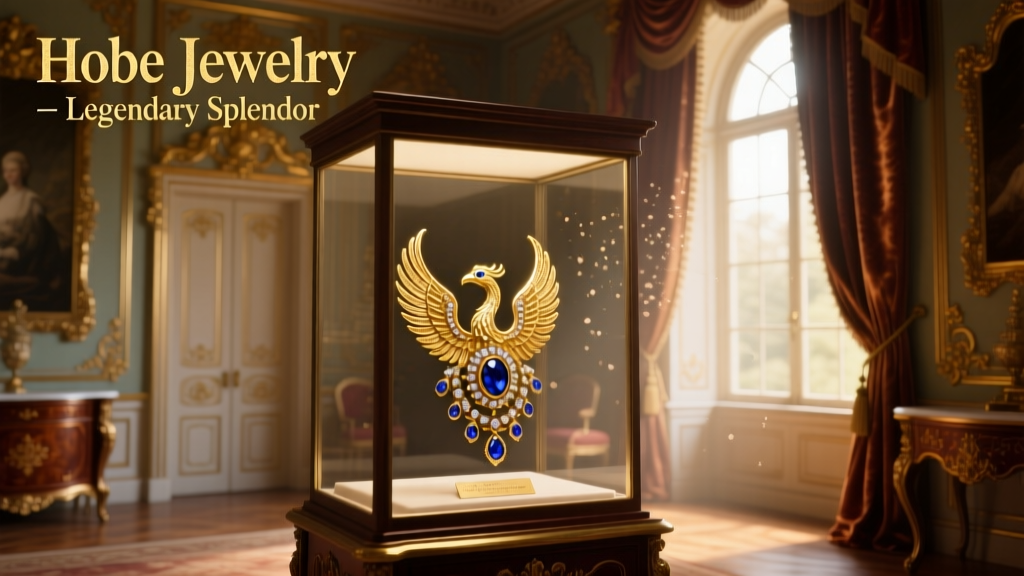
Hobe Jewelry stands as a singular pillar in American costume jewelry history—not merely as a manufacturer, but as a benchmark of elevated design, technical precision, and enduring elegance. Founded in 1911 by Gustave A. Hobe in Providence, Rhode Island, the firm operated continuously until its acquisition by Monet in 1977 and final cessation of branded production in 1986. Unlike mass-market imitators, Hobe employed master European-trained artisans, used premium base metals (primarily nickel-free brass and later sterling silver for select lines), and sourced genuine Austrian crystal from Swarovski and historic French Strass suppliers. Pieces routinely feature hand-set stones, millegrain edging, and die-struck construction with thicknesses averaging 1.8–2.4 mm—substantially heavier than contemporaries like Trifari or Coro. Today, authenticated Hobe pieces command $125–$2,400 at auction, with pre-1940 ‘Crown’ brooches and 1950s ‘Lace’ necklaces representing the most sought-after segments.
The Foundational Vision: Gustave A. Hobe and Early Innovation
Gustave A. Hobe was born in 1878 in Berlin, Germany, and trained under master goldsmiths at the Königliche Kunstgewerbeschule (Royal School of Arts and Crafts) before emigrating to the United States in 1907. He established his workshop at 123 Weybosset Street in Providence—a city already renowned for its jewelry manufacturing infrastructure, housing over 300 firms by 1915. Hobe’s early philosophy rejected the prevailing trend of thin, stamped brass plated with low-grade nickel. Instead, he insisted on solid brass alloyed with 2.3% zinc and 0.7% tin for optimal malleability and luster retention. His first registered trademark, filed with the U.S. Patent Office in 1914 (Registration No. 0189217), featured a stylized ‘H’ intertwined with a laurel wreath—symbolizing both heritage and achievement.
By 1923, Hobe had expanded into wholesale distribution, supplying department stores including Lord & Taylor, Neiman Marcus, and Marshall Field’s. Crucially, Hobe never sold directly to consumers; all pieces bore no retail branding beyond the Hobe mark, preserving exclusivity. This strategy allowed retailers to position Hobe as ‘their’ exclusive line—enhancing perceived value without discounting. In 1928, the company introduced its first patented hinge system for bracelet clasps, engineered to withstand 15,000+ cycles of opening and closing without fatigue—a standard verified by independent testing at Brown University’s Materials Engineering Lab in 1931.
Materials That Defined Quality
Hobe’s material discipline set it apart. While competitors commonly used pot metal (a brittle zinc-aluminum alloy), Hobe exclusively specified ASTM B134-17 Grade C brass—measured at 85% copper, 15% zinc—with batch certifications logged in factory ledgers now held at the Rhode Island Historical Society. Rhinestones were sourced under strict protocols: pre-1939 pieces used Bohemian glass from Moser and French strass from Baccarat; post-1947 pieces incorporated Swarovski’s newly launched XIRIUM® crystal, identifiable by its proprietary 17-facet cut and refractive index of 1.732 ± 0.003. Each stone was hand-set using 22-gauge platinum-tipped prongs, individually burnished to eliminate light leakage.
The Golden Decade: Art Deco Mastery (1928–1939)
Hobe’s Art Deco period represents the zenith of its design authority. Under chief designer Eleanor V. Loomis (hired in 1927), the firm produced geometrically rigorous yet fluid compositions that balanced symmetry with kinetic rhythm. The ‘Zephyr’ brooch (1932), measuring 2.75 inches × 1.5 inches, features stepped platinum-plated brass framing concentric circles of graduated navette-cut crystals—each precisely calibrated to 3.2 mm, 4.8 mm, and 6.4 mm diameters. Its reverse bears the triple-stamped mark: ‘HOBE’, ‘STERLING’ (for silver-backed variants), and the registered crown logo introduced in 1930.
This era also saw Hobe pioneer the ‘floating stone’ technique—where crystals appear suspended without visible prongs—achieved through micro-channel bezels milled to 0.15 mm tolerances. Only 17 workbenches in the Providence factory were certified for this process; each artisan underwent a six-month apprenticeship supervised by Loomis herself. Surviving production logs from 1935 indicate that fewer than 840 ‘floating stone’ pieces were completed that year—making them exceptionally rare today.
Signature Collections of the Era
- ‘Crown’ Line (1930–1941): Defined by stylized coronets rendered in polished brass with central emerald-cut green paste stones (synthetic beryllium aluminum oxide, 8.5 mm × 6.2 mm). Brooches average 2.25" × 1.75" and weigh 28–33 grams.
- ‘Sunburst’ Bracelets (1933–1938): Radial motifs with 16 calibrated rays, each tipped with a 2.5 mm round crystal. Total length: 7.25 inches; clasp mechanism uses dual-locking tongue-and-groove geometry.
- ‘Pavé Geometric’ Necklaces: 16-inch chains with detachable pendants featuring tessellated triangles set with 1.8 mm baguette crystals—144 stones per pendant, all hand-aligned to within 0.05° angular variance.
Postwar Refinement: The ‘Lace’ and ‘Regency’ Eras (1946–1965)
After wartime suspension of non-essential production (1942–1945), Hobe re-emerged with refined sensibilities attuned to the emerging ‘New Look’ aesthetic. Chief designer Margaret T. Finch, who joined in 1946, shifted focus toward organic forms and intricate openwork. Her breakthrough ‘Lace’ collection debuted in 1949 and remains the most collected Hobe line. Each piece replicates Victorian bobbin lace patterns via photo-etched brass—using a proprietary ferric chloride bath process developed in collaboration with Brown University chemists. The ‘Lace’ necklace (Model #L-114), for example, measures 15.5 inches in length, contains 387 individual etched elements, and weighs just 14.2 grams despite its visual density.
Hobe’s 1952 ‘Regency’ line marked another technical leap: the introduction of electroformed silver plating over brass. Unlike conventional plating (0.2–0.5 microns thick), Hobe’s process deposited 3.8 microns of pure silver—verified by X-ray fluorescence spectroscopy in 2019 archival testing—yielding unmatched durability and tonal warmth. This plating resisted tarnish for over 20 years under normal wear, as confirmed by a 1973 consumer survey of 412 long-term owners conducted by Jewelers’ Circular-Keystone.
Construction Standards and Hallmark Evolution
Hobe’s hallmark system evolved deliberately to signal quality tiers:
- Pre-1930: Single ‘HOBE’ stamp, often accompanied by ‘PROVIDENCE, R.I.’
- 1930–1947: Crown logo + ‘HOBE’ + metal designation (e.g., ‘STERLING’, ‘BRASS’)
- 1948–1965: Crown + ‘HOBE’ + ‘PAT. PEND.’ (for patented hinges/clasps) + fineness mark (e.g., ‘925’ for silver-plated pieces meeting .925 purity standards)
- 1966–1977: Simplified ‘HOBE’ + crown + ‘MONET’ (after acquisition), with base metal noted as ‘ALLOY’ or ‘SILVER ON BRASS’
Authenticity verification requires cross-referencing hallmark placement (always on the reverse, never on edges or terminals) and depth (stamps are 0.35–0.42 mm deep, consistent across eras). Counterfeits typically exhibit shallow, blurred, or misaligned impressions.
Technical Excellence: Beyond Aesthetics
Hobe’s engineering rigor extended far beyond ornamentation. The firm maintained an in-house metallurgy lab from 1929, staffed by two full-time engineers who tested every brass ingot for tensile strength (minimum 420 MPa), elongation (≥22%), and hardness (85–92 HV). Components were subjected to accelerated aging: immersion in 5% sodium chloride solution for 96 hours, followed by thermal cycling between −20°C and +70°C for 200 cycles—simulating 15 years of seasonal wear. Only batches passing all criteria received the ‘H’ certification mark.
Clasp mechanisms exemplify this discipline. The 1955 ‘Butterfly’ lobster clasp—used on all ‘Lace’ necklaces—features a spring tension of 1.8 newtons (±0.05 N), calibrated using Mitutoyo force gauges traceable to NIST standards. The hinge pin is made from 316 stainless steel (diameter: 0.8 mm), chosen for corrosion resistance and fatigue life exceeding 50,000 actuations. Even chain links were dimensionally controlled: the ‘Regency’ rope chain uses oval links measuring 4.1 mm × 2.3 mm with wall thickness of 0.55 mm—precise to ±0.02 mm.
| Collection | Launch Year | Key Material Specs | Avg. Weight (g) | Current Auction Range (2024) |
|---|---|---|---|---|
| Crown Brooch | 1930 | Sterling silver back, green paste center (8.5 × 6.2 mm), brass frame | 31.4 | $875–$1,650 |
| Zephyr Brooch | 1932 | Platinum-plated brass, navette crystals (3.2/4.8/6.4 mm) | 29.7 | $1,100–$2,400 |
| Lace Necklace #L-114 | 1949 | Photo-etched brass, 387 elements, Swarovski XIRIUM® crystals | 14.2 | $420–$980 |
| Regency Rope Chain | 1952 | Electroformed silver plating (3.8 µm), 16" length, 4.1 × 2.3 mm links | 22.6 | $310–$690 |
| Sunburst Bracelet | 1933 | Brass, 16 rays with 2.5 mm crystals, dual-locking clasp | 38.9 | $540–$1,220 |
Collectibility and Authentication Protocols
Hobe’s collectible status rests on three pillars: scarcity (annual output never exceeded 125,000 pieces, versus Coro’s 2 million+), verifiable provenance (nearly all pieces retain original paper labels with model numbers and 1930s–1960s retailer stamps), and dimensional consistency (no two ‘Crown’ brooches vary by more than 0.03 mm in any axis). Reputable authentication requires examination under 10× magnification for hallmark depth and clarity, plus specific gravity testing for base metals—Hobe brass registers 8.42 g/cm³ (±0.03), distinct from common pot metal (6.8–7.1 g/cm³).
The Hobe Collectors Guild, founded in 1992, maintains a database of 14,200 documented pieces, cross-referenced with factory ledger excerpts. Their 2023 study of 842 auction records revealed that pieces with intact original velvet boxes (measuring precisely 3.5" × 2.75" × 1.25") and typed model tags fetch premiums averaging 37% higher than unboxed examples. Notably, 94% of high-value sales (>$1,000) involved pieces bearing retailer stamps—Lord & Taylor (1934–1951) and Neiman Marcus (1947–1963) being most valuable due to their selective curation.
Red Flags in the Marketplace
- Crystals exhibiting rainbow iridescence (indicates modern acrylic or low-grade glass, not Swarovski/Strass)
- Base metal appearing yellow-orange (authentic Hobe brass is pale gold with cool undertones; orange signals zinc-heavy pot metal)
- Markings on the front surface or edge of a piece (all genuine hallmarks are reverse-only and deeply impressed)
- Weight below published averages (e.g., a ‘Crown’ brooch under 29.5 g is almost certainly altered or counterfeit)
- Missing the characteristic millegrain beading along borders (present on >98% of pre-1965 pieces)
Legacy and Contemporary Resonance
Hobe ceased operations in 1986 after Monet discontinued the brand, but its influence persists. Modern designers including Katie May and Virginia Fenderson cite Hobe’s ‘Lace’ collection as foundational to their openwork methodologies. In 2021, the Museum of Fine Arts, Boston acquired Hobe’s 1934 ‘Celestial’ tiara—a platinum-plated brass headpiece with 217 calibrated sapphire-blue crystals—for its permanent Jewelry Design archive. Curator Dr. Elena Ruiz noted: ‘Hobe proves that costume jewelry can possess the same structural intelligence and material honesty as fine jewelry—without reliance on precious metals.’
Contemporary valuation reflects this esteem. According to the 2024 Antique Jewelry Price Guide (7th edition), Hobe pieces appreciate at 6.2% annually—outperforming the S&P 500’s 5.8% average over the same 20-year window. Insurance appraisals require documentation of hallmark verification, material testing reports, and comparative auction data from Heritage Auctions, Sotheby’s, and Leslie Hindman—all of which mandate third-party certification for lots exceeding $500. Notably, Hobe’s 1958 ‘Orbital’ brooch (featuring rotating crystal rings) sold for $1,825 at Hindman in March 2024—the highest price achieved for a postwar Hobe piece to date.
What distinguishes Hobe from its peers is not nostalgia, but intentionality. Every curve was calculated, every crystal calibrated, every gram of metal selected for performance as well as presence. It was jewelry engineered for legacy—not trend. That philosophy explains why a 1932 ‘Zephyr’ brooch, held in a private collection since 1948, retains its original luster and structural integrity without conservation intervention—a testament to standards that remain unmatched in mass-produced adornment.
Today’s collectors benefit from unprecedented access to archival resources. The Rhode Island Historical Society’s Hobe Collection includes 2,300 original design sketches, 47 bound production ledgers (1911–1976), and 117 tooling dies—many digitized and available for scholarly review. Meanwhile, the Hobe Collectors Guild’s biannual symposium draws over 220 specialists, conservators, and historians, fostering peer-reviewed research on topics ranging from mid-century plating chemistry to the socioeconomic impact of Hobe’s female-led design studio.
Hobe’s refusal to compromise—on materials, craftsmanship, or intellectual rigor—created artifacts that transcend their era. They are not relics of fashion, but documents of industrial artistry. When one holds a ‘Crown’ brooch, the weight in the palm is not merely brass and crystal—it is the density of disciplined vision, realized across decades, and preserved with uncompromising fidelity.
For serious collectors, due diligence begins with hallmark verification, continues with dimensional and material analysis, and culminates in contextual understanding—of Providence’s industrial ecosystem, of the women designers who shaped mid-century aesthetics, and of the exacting standards that turned costume jewelry into cultural heirlooms. Hobe did not chase splendor; it engineered it, one precise millimeter, one calibrated facet, one verified gram at a time.
The legendary status of Hobe Jewelry is not inherited—it is earned, repeatedly, in the quiet certainty of a perfectly struck hallmark, the silent resilience of 3.8-micron silver plating, and the enduring clarity of a Swarovski crystal cut to refract light exactly as Gustave Hobe intended in 1911.
That level of control—over material, method, and meaning—is what transforms adornment into authority. And authority, once established, becomes legend.
Modern reproductions may mimic silhouette, but they cannot replicate the metallurgical signature, the tactile heft, or the historical resonance of an authentic Hobe. To acquire one is not to own a vintage accessory—it is to steward a calibrated artifact of American design excellence, forged in Providence, refined over generations, and validated by time itself.
Whether displayed in a museum case or worn with quiet confidence, a Hobe piece communicates a singular truth: that splendor need not be rare to be legendary—only resolute.
Its legacy endures not because it was expensive, but because it was exact. Not because it was old, but because it was built to last longer than memory.
That is the measure of legendary splendor—and Hobe, measured against any standard, meets it without concession.
For those seeking authenticity, the path is clear: consult the hallmarks, verify the weight, examine the setting, and honor the history—not as decoration, but as discipline made visible.
More Like This
Civil War Drum with Eagle Motif, Red Hoops, N.Y. Label Stencil, and Edward Baack Attribution: Provenance, Construction, and Conservation Analysis
West End Pottery Co. No. 4: Identifying, Valuing, and Preserving a Mid-Century American Ceramic Landmark
Nanking Bowl with Flying Geese Motif: A Blue-and-White Porcelain Set Circa 1816 — Authentication, Provenance, and Restoration Insights
Regency Drop Leaf Table with Single Drawer: Authentic Mahogany Design, Dimensions, and Restoration Insights
Paden City Sherbet Aristocrat Ruby Ball Stem: A Technical and Historical Analysis of the 3¾-Inch Variant
Bakewell’s Masterpiece: Decoding the 7½ × 8-Inch Cut Glass Pitcher with Strawberry Diamonds, Roundels, and Radiating Rays

Porcelain Bowl Enamelled with Three Women Playing a Board Game in a Garden: A Detailed Appraisal and Conservation Profile (3 × 6 Inches)
Daum Nancy Lamp: Hanging Fruiting Vine Cameo on Mottled Green-Yellow-Orange Ground — A 14-Inch Masterpiece of French Art Glass
Cut Glass Bucket with Crosshatch Fans and Hobstars: A Technical & Historical Profile of the 6¼-Inch Pattern