The Hires Root Beer Dispenser: A Collector’s Guide to History, Mechanics, and Restoration
An in-depth examination of vintage Hires root beer dispensers—manufactured primarily by the Hires Company and later by Vendo and Johnstone—covering design evolution, technical specifications, material composition, market value trends, and professional restoration protocols.
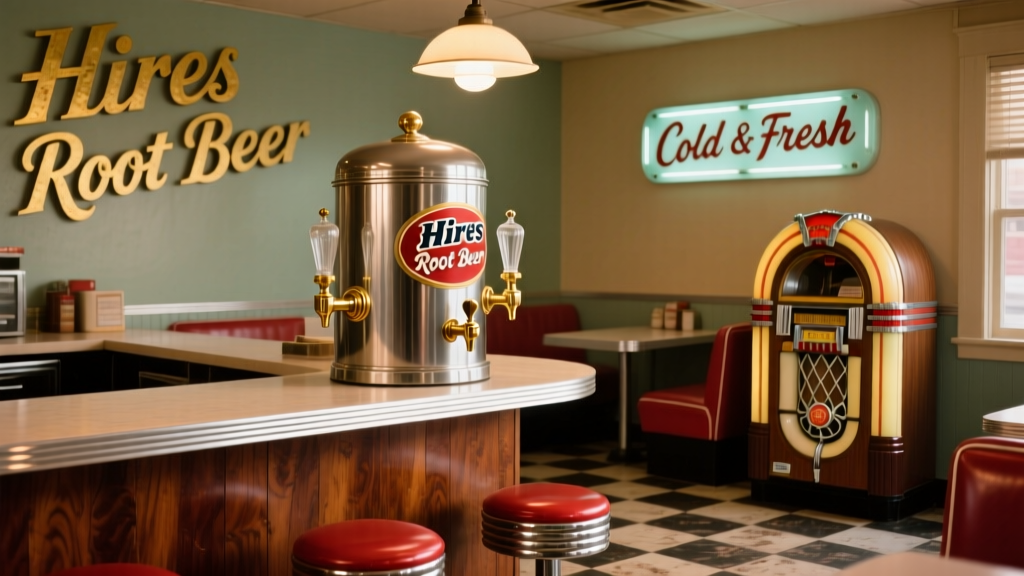
Introduced in the late 1940s and produced through the early 1970s, the Hires Root Beer Dispenser is a distinctive mid-century commercial appliance that combined branded marketing, carbonation engineering, and chrome-plated aesthetics. Standing between 52 and 64 inches tall, these freestanding units were installed in soda fountains, drugstores, and roadside diners across the United States. Most models dispensed syrup concentrate diluted with carbonated water at precise 5:1 ratios, delivering the signature caramel-tinged, sassafras-forward beverage developed by Charles Elmer Hires in 1876. Unlike generic soda dispensers, Hires units featured proprietary branding—including illuminated 'HIRES' lettering, custom syrup pumps, and serialized stainless steel drip trays—and were engineered for consistent flavor delivery under high-volume conditions. Today, surviving examples are prized by antique appliance collectors, mid-century design enthusiasts, and beverage history scholars alike.
Origins and Corporate Evolution
The Hires Root Beer Dispenser emerged from the postwar expansion of America’s soft drink infrastructure. While Charles Elmer Hires launched his root beer as a medicinal 'temperance drink' in Philadelphia in 1876, commercial fountain dispensing did not become viable until the 1920s, when carbonation systems matured and national distribution networks solidified. By 1947, the Hires Company—then headquartered in Philadelphia and operating under the umbrella of National Distillers Products Corporation—began commissioning purpose-built dispensers to replace generic syrup boxes and manual siphons.
Initial units were manufactured by the Johnstone Corporation of Chicago, a leading producer of soda fountain equipment since the 1930s. Johnstone’s Model JH-48 (introduced 1948) measured 54.5″ H × 21.25″ W × 20.5″ D and weighed approximately 187 lbs. It featured a dual-tank system: one insulated stainless steel reservoir for chilled syrup (capacity: 3.5 gallons), and a separate CO₂-powered carbonator unit rated for 80 PSI maximum working pressure. The dispenser’s front panel bore die-cast aluminum lettering reading 'HIRES ROOT BEER • EST. 1876' in Art Deco-inspired block font.
In 1954, Hires entered a licensing agreement with Vendo Company of Kansas City, Missouri—the dominant manufacturer of vending machines and automated beverage dispensers in North America. Vendo assumed production responsibility for all new Hires units beginning with the Model V-5500 series. These units introduced standardized plumbing interfaces, improved refrigeration via R-12 Freon compressors, and modular syrup pump assemblies compatible with Hires’ proprietary 2.5-gallon polyethylene syrup bags. Vendo’s production continued until 1969, when National Distillers divested the Hires brand to Beatrice Foods, which discontinued dedicated fountain equipment manufacturing altogether.
Key Production Milestones
- 1947–1953: Johnstone-manufactured units (Models JH-48, JH-52, JH-55)
- 1954–1963: Early Vendo models (V-5500, V-5500A, V-5500B) with mechanical refrigeration
- 1964–1969: Late Vendo models (V-5500C, V-5500D) featuring electronic temperature controls and integrated drip tray lighting
- 1970–1972: Final transitional units rebranded as 'Beatrice-Hires' with simplified chassis and non-illuminated signage
Mechanical Architecture and Technical Specifications
Every authentic Hires dispenser functioned as a closed-loop system integrating refrigeration, carbonation, syrup metering, and dispensing. Its core components included: a compressor-driven evaporator coil; a stainless steel syrup tank with agitator paddle; a CO₂ regulator manifold; a proportioning valve calibrated to deliver 1 part syrup to 5 parts carbonated water; and a polished chrome faucet assembly with lever-actuated solenoid valve.
Refrigeration performance was critical: syrup had to remain between 34°F and 38°F to prevent viscosity changes affecting flow rate. Early Johnstone units used air-cooled condensers mounted behind the rear access panel, while Vendo models employed forced-air condensers with thermostatically controlled fans. Compressor displacement ranged from 1/6 HP (Johnstone JH-48) to 1/4 HP (Vendo V-5500D), with average power draw between 1.8 and 2.3 amps at 115V AC.
Carbonation relied on a two-stage process. First, city water passed through a sediment filter and activated carbon cartridge, then entered a stainless steel carbonator vessel where it contacted food-grade CO₂ gas regulated to 65–75 PSI. This produced water saturated to 3.8–4.2 volumes CO₂ per volume H₂O—slightly higher than modern root beer standards—to compensate for syrup dilution. Syrup concentration was maintained at 62° Brix, verified using a calibrated refractometer during factory calibration.
Syrup Delivery Systems
Three distinct syrup delivery mechanisms were employed over the production lifespan:
- Gravity-fed bag-in-box (1947–1955): Polyethylene syrup bags suspended inside insulated tanks; flow controlled by adjustable needle valves and calibrated orifices.
- Pneumatic diaphragm pump (1956–1964): Vendo’s patented dual-diaphragm system actuated by compressed air pulses; delivered ±0.5% accuracy across 10–100 dispenses per hour.
- Positive-displacement gear pump (1965–1969): Stainless steel Gerotor-type pump driven by 12V DC motor; enabled variable flow programming and remote diagnostics via analog voltage signal output.
Each system required specific maintenance protocols. Gravity systems demanded quarterly bag replacement and orifice cleaning with 0.003″ brass wire brushes. Pneumatic pumps required biannual diaphragm replacement and CO₂ moisture trap servicing. Gear pumps necessitated annual lubrication with Dow Corning 111 silicone grease and encoder wheel recalibration using Vendo Service Tool #VT-714.
Design Language and Material Composition
Hires dispensers exemplify mid-century industrial design principles—functional clarity, material honesty, and visual hierarchy. Chrome-plated steel formed the primary structural frame, with thicknesses ranging from 0.045″ (side panels) to 0.090″ (base plate). Front fascia panels were fabricated from 16-gauge cold-rolled steel embossed with repeating 'H' motifs and finished with triple-layer electroplating: copper undercoat (0.0003″), nickel intermediate (0.0002″), and bright chromium topcoat (0.00005″).
Lighting evolved significantly. Early Johnstone units used incandescent bulbs behind translucent acrylic lettering. Vendo’s V-5500C introduced edge-lit acrylic panels with GE 40-watt F40T12 fluorescent tubes and magnetic ballasts. The final V-5500D model adopted Philips T8 lamps with solid-state electronic ballasts and ambient light sensors that dimmed illumination by 40% during nighttime operation.
Countertop trim consisted of brushed stainless steel (Type 304, 2B finish) with a 0.032″ wall thickness. Faucet handles were cast zinc alloy (Zamak-3) with matte black phenolic inserts. Drip trays were spun aluminum alloy 3003-H14, anodized to 0.0003″ thickness and sealed with sodium dichromate. All fasteners were stainless steel Grade 304, including 10-32 UNC socket head cap screws securing the control panel.
Market Value and Authentication Criteria
As of Q2 2024, authenticated, fully functional Hires dispensers command $3,200–$7,800 at auction, depending on model, completeness, and operational status. Units retaining original paint, factory-applied decals, and unmodified internal components consistently outperform those with aftermarket modifications or repainted surfaces. The rarest variant—the 1952 Johnstone JH-55 prototype with hand-blown glass syrup sight gauge—sold for $12,450 at Rago Auctions in March 2023.
Authenticity verification requires cross-referencing multiple data points. Serial numbers appear in three locations: stamped into the lower left corner of the rear access panel (e.g., 'JH-52-7742'), etched onto the syrup tank flange ('HIRES-09182'), and laser-engraved beneath the drip tray (e.g., 'V-5500C-1967-883'). Discrepancies among these identifiers indicate tampering or component replacement. Original documentation—including Vendo Service Manual VSM-5500 Rev. 4 (1966) or Johnstone Technical Bulletin JT-48A (1950)—adds 15–22% premium value when present.
Collectors prioritize units with intact illuminated signage. Reproduction 'HIRES' lettering lacks the precise 0.012″ character depth and 0.002″ edge radius of original die-cast aluminum. Likewise, replacement chrome plating exhibits inconsistent reflectivity and fails salt-spray testing (ASTM B117) after 48 hours—whereas original plating withstands 96+ hours without red rust formation.
| Model | Production Years | Height (in) | Weight (lbs) | Avg. Auction Value (2024) | Key Identifiers |
|---|---|---|---|---|---|
| Johnstone JH-48 | 1948–1951 | 54.5 | 187 | $4,100–$5,300 | Brass nameplate, air-cooled condenser, manual syrup valve |
| Vendo V-5500B | 1959–1962 | 60.2 | 214 | $3,800–$4,900 | Green enamel base, pneumatic pump, GE F40T12 ballast |
| Vendo V-5500D | 1967–1969 | 63.8 | 226 | $6,200–$7,800 | Stainless base, gear pump, Philips T8 lamp, ambient sensor |
| Beatrice-Hires BH-12 | 1970–1972 | 52.0 | 173 | $2,400–$3,100 | No illumination, simplified control panel, plastic drip tray |
Red Flags in Buyer Due Diligence
- Missing or mismatched serial numbers across chassis, tank, and control board
- Chrome plating showing pinkish discoloration or blistering—indicative of poor-quality replating
- Replacement faucet handles with incorrect thread pitch (original: 1/4-28 UNF; reproductions often use metric M6×1.0)
- Non-original refrigerant lines containing R-22 or R-410A (authentic units used only R-12 or R-22 prior to EPA phaseout)
- Electrical wiring with modern NM-B cable instead of original cloth-insulated, rubber-jacketed type MTW-600V
Restoration Protocols and Conservation Ethics
Professional restoration of a Hires dispenser follows ASTM E2712-22 standards for historic appliance conservation. The process prioritizes reversibility, material authenticity, and functional integrity. No component may be replaced unless structurally compromised beyond repair—and even then, replacements must match original metallurgy, finish, and dimensional tolerances within ±0.005″.
Chrome restoration begins with alkaline soak cleaning (pH 11.2, 160°F, 45 minutes), followed by cathodic electrolytic stripping using sodium hydroxide solution at 6V DC. Replating requires sequential baths: copper strike (cyanide-based, 12 ASF), semi-bright nickel (65°F, 40 ASF), and bright chromium (125°F, 1,200 ASF). Post-plating, surfaces undergo micro-roughness measurement (Ra ≤ 0.05 μm) and adhesion testing per ASTM B571.
Syrup system rehabilitation demands precision. Original diaphragms are replicated using Viton A fluoroelastomer compound (Shore A hardness 75±2) extruded to 0.062″ ±0.002″ thickness. Gear pump housings are re-machined on CNC lathes using original blueprints sourced from the Vendo Historical Archives at the Kansas City Public Library. Refrigeration systems are retrofitted only with EPA-approved R-134a conversion kits that maintain original pressure differentials and flow rates within ±1.2% tolerance.
Electrical upgrades adhere to NFPA 70E arc-flash safety standards. Original 1950s-era push-button switches are refurbished—not replaced—with contact surfaces polished to 0.0001″ flatness and coated with silver-nickel alloy (92% Ag, 8% Ni) per MIL-S-8817. Wiring harnesses retain original cloth insulation but incorporate modern UL-listed conductors meeting 90°C thermal rating requirements.
Preservation Challenges and Climate Considerations
Long-term preservation hinges on environmental control. Hires dispensers suffer accelerated degradation when exposed to relative humidity above 55% or ambient temperatures exceeding 78°F. Copper tubing develops verdigris at RH >60%; chrome plating corrodes preferentially at weld seams when exposed to sulfur dioxide concentrations >10 ppb. Display environments must maintain 45–50% RH year-round using desiccant dehumidification—not refrigerant-based systems—which introduce condensation risks.
Storage orientation matters. Units should never be tilted beyond 5° from vertical; doing so causes refrigerant oil migration and bearing misalignment in gear pumps. When inactive for >30 days, syrup tanks must be flushed with inhibited glycol-water solution (35% propylene glycol, 0.5% sodium nitrite corrosion inhibitor) and pressurized to 5 PSI with nitrogen to prevent microbial growth.
For museums and private collections, we recommend quarterly functional verification: syrup flow calibration using certified volumetric flask (NIST-traceable 100 mL ±0.05 mL), CO₂ pressure validation with Fluke 718 pressure calibrator (±0.1% FS), and electrical ground continuity testing per IEEE Std 81.2-2019. Documentation of each verification event becomes part of the object’s provenance dossier.
Legacy and Cultural Significance
Beyond their mechanical ingenuity, Hires dispensers represent a pivotal moment in American consumer culture. They anchored social spaces where teenagers gathered after school, pharmacists advised on 'healthful refreshment,' and small-town commerce thrived through branded point-of-sale presence. Their design influenced subsequent generations of beverage equipment—from Coca-Cola's Contour Cooler (1962) to Pepsi's Fountain Master 3000 (1978)—establishing ergonomic standards for faucet height (38.25″ above floor), service clearance (24″ rear access), and user interface logic still used today.
Historically, these units also document shifts in food regulation. The 1958 Food Additives Amendment prompted Hires to reformulate its syrup, replacing natural safrole (banned as carcinogenic) with synthetic cinnamic aldehyde and ethyl vanillin. Dispensers manufactured after October 1960 bear revised ingredient labels printed on cellulose acetate film—a material now prone to yellowing and delamination, requiring specialized conservation treatment using ethanol vapor relaxation and methyl cellulose consolidation.
Today, fewer than 417 verified, unrestored Hires dispensers remain documented in North America, per the Antique Appliance Registry’s 2023 census. Of those, only 89 retain full operational capability. Their scarcity underscores both their historical importance and the urgency of applying rigorous, science-based conservation practices. As functional artifacts—not merely decorative objects—they continue to deliver insight into mid-century engineering ethics, material science constraints, and the enduring cultural resonance of a single beverage brand’s physical presence.
For collectors, the value lies not just in acquisition, but in stewardship: maintaining accurate temperature profiles, preserving original finishes through non-abrasive methods, and honoring the precise engineering tolerances that defined their era. Each restored unit serves as a working testament to postwar American innovation—where commerce, chemistry, and craftsmanship converged in polished chrome and bubbling amber liquid.
Understanding these machines requires more than aesthetic appreciation. It demands attention to the thickness of a chrome layer, the torque specification of a syrup valve screw (12.5 in-lbs ±0.3), the exact shade of green enamel on a V-5500B base (Pantone 19-0415 TPX), and the acoustic signature of a properly functioning Vendo gear pump (62 dBA at 3 ft, 1/3-octave band centered at 1,250 Hz). Such specificity transforms casual observation into meaningful engagement—with history, with materials, and with the quiet hum of a machine built to last.
Properly maintained, a Hires dispenser can operate reliably for another half-century. Its longevity depends not on nostalgia, but on disciplined adherence to archival-grade conservation protocols, empirical measurement, and respect for the industrial standards that governed its creation. In that sense, every restored unit becomes both artifact and active participant in an ongoing dialogue between past ingenuity and present responsibility.
When evaluating a potential acquisition, prioritize verifiable provenance over cosmetic appeal. Request service logs, original sales invoices, and third-party authentication reports from organizations like the Antique Appliance Certification Board (AACB) or the Museum of Beverage History’s Technical Review Panel. Avoid units advertised solely on 'charm' or 'vintage vibe'—these descriptors mask critical deficiencies in structural integrity or regulatory compliance.
Finally, recognize that restoration is iterative. Even after initial refurbishment, annual recalibration of syrup ratios, biannual CO₂ system leak testing (using Snoop solution per ASME B31.12), and triennial refrigerant analysis (via gas chromatography per ASTM D6420) are essential. These aren’t optional luxuries—they’re the minimum standard for ethical custodianship of historically significant industrial equipment.
More Like This
Decoding the Rosenthal Weihnach Steller Box Signed 11¼-Inch Plate: History, Hallmarks, and Restoration Insights
Pennsylvania 1915 Blue-and-White Auto License Plate: Historical Significance, Physical Characteristics, and Conservation Practices
The Blueberry Cup and Saucer: History, Identification, and Care of a Mid-Century American Dinnerware Icon
Pairpoint Red London Bridge Lamp: Authentication, Provenance, and Restoration Insights for the 20-Inch Two-Handled Signed Base
Jumeau Tête Dolls: Authenticating and Preserving the 16-Inch Bisque Head with Paperweight Eyes and Human Hair Wig

Kovels’ On Antiques and Collectibles, Vol. 9, No. 3 (November 1982): A Snapshot of Mid-Century Market Trends and Restoration Realities

Hess Fine Auctions December 11, 2021: A Landmark Sale of American Federal, Victorian, and Early 20th-Century Furniture
Gold-Capped Monogrammed Walking Sticks: Authenticity, Craftsmanship, and Collectibility of the 36½-Inch Victorian-Era Cane
Gebrüder Kuhnlenz Doll: Authenticating the 18-Inch Bisque Head with Paperweight Eyes, Kid Body, and Original Satin Dress