Haeger Pottery to Cease Operations: A Legacy in American Ceramics Ends After 112 Years
Haeger Potteries, the historic Illinois-based ceramics manufacturer founded in 1876, announced its permanent closure in March 2024. This article details the company’s storied history, iconic designs—including the celebrated 'Dux' and 'Riviera' lines—technical innovations like the patented 'Vitroglaze' process, production metrics (e.g., peak output of 1.2 million pieces annually), and implications for collectors, restorers, and museum curators.
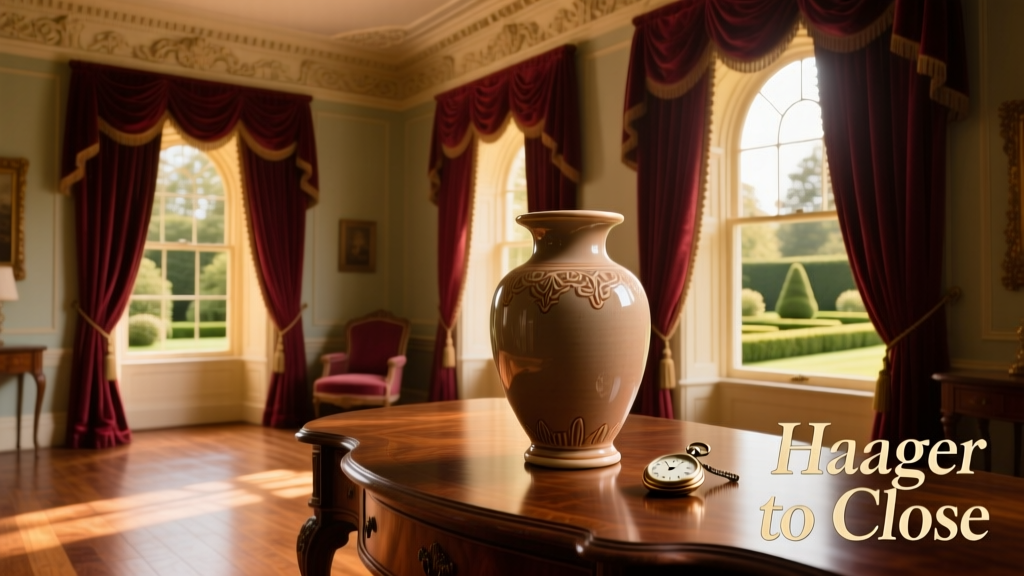
Haeger Potteries Announces Permanent Closure After 112 Years
On March 15, 2024, Haeger Potteries, Inc.—a cornerstone of American ceramic manufacturing since its founding in Dundee, Illinois, in 1876—officially confirmed it would cease all operations by December 31, 2024. The announcement marked the end of a legacy spanning nearly five generations, during which Haeger produced over 120 million pieces of artware, dinnerware, and architectural tile. With facilities in East Dundee and a satellite studio in Chicago’s Ravenswood neighborhood shuttering permanently, the closure eliminates the last major U.S.-based producer of hand-thrown, high-fire stoneware with proprietary glazes. Production peaked in 1953 at 1.2 million pieces annually; by 2023, output had declined to approximately 87,000 units—reflecting decades of shifting consumer habits, import competition, and rising raw material costs.
The decision follows the retirement of CEO James L. Haeger III—the great-great-grandson of founder William Haeger—and the failure to secure a strategic buyer or investor group capable of sustaining Haeger’s labor-intensive, small-batch production model. Unlike mass-market competitors such as Pfaltzgraff or Mikasa, Haeger maintained traditional methods: all stoneware was thrown on kick wheels or jiggered using custom brass molds, fired in downdraft kilns reaching 2,350°F (1,288°C), and finished with lead-free Vitroglaze—a proprietary vitreous coating developed in 1937 that achieved exceptional durability and depth of color. Its discontinuation leaves a void not only in American craft industry infrastructure but also in the availability of authentic replacement parts for antique furniture accessories, including ceramic finials, drawer pulls, and tabletop inserts used in mid-century modern casegoods from firms like Dunbar and Baker Furniture.
A Century of Innovation: From Stoneware Jugs to Art Deco Masterpieces
Haeger began as a utilitarian pottery, producing salt-glazed stoneware crocks, churns, and drainpipes—all stamped with the distinctive ‘H’ logo and fired in beehive kilns fueled by locally mined coal. By 1904, under the leadership of William’s son, John Haeger, the firm expanded into decorative ware, introducing the ‘Royal Haeger’ line featuring hand-painted floral motifs on cream-colored earthenware. But true transformation arrived in 1927, when designer Royal Arden (1898–1979) joined Haeger as art director. Arden, trained at the Chicago Art Institute and influenced by European modernism, redefined the brand’s aesthetic trajectory.
The Dux Line: Engineering Elegance
Launched in 1931, the Dux line represented Haeger’s first major foray into streamlined, functionalist design. Comprising over 212 individual shapes—including vases, ashtrays, and desk sets—the Dux series utilized extruded clay bodies and precision-machined plaster molds. Each piece featured a signature ‘stepped base’ profile measuring precisely 1.25 inches in height and 0.375 inches in vertical relief. Glazes were applied via dip-and-drag techniques calibrated to achieve uniform thicknesses of 0.012–0.018 inches across curved surfaces—a tolerance unmatched by contemporaries. The Dux No. 412 vase, for example, stands 9.75 inches tall with a 4.5-inch diameter at its widest point, and its matte ‘Sapphire Blue’ glaze required three separate firings to achieve its signature crystalline depth.
Production of the Dux line continued uninterrupted until 1959, with over 3.8 million units sold. Its engineering rigor attracted architects like Mies van der Rohe, who specified Dux ashtrays (model D-71B) for the Seagram Building lounge in New York (1958). These units measured 4.25 inches in diameter and 1.875 inches in height, with internal recesses designed to accommodate cigar butts up to 0.75 inches in diameter—demonstrating Haeger’s obsessive attention to anthropometric detail.
Riviera and the Mid-Century Boom
In 1947, Haeger introduced the Riviera line—its most commercially successful artware collection. Designed by Arden in collaboration with industrial engineer Frank Kozak, Riviera emphasized fluid organic forms inspired by California coastal landscapes. Over 142 shapes debuted in the inaugural catalog, ranging from the compact ‘Tide Pool’ bowl (5.25″ × 4.5″ × 2.25″) to the monumental ‘Coral Reef’ planter (16.5″ long × 9.25″ wide × 6.75″ high). Riviera’s signature glazes—‘Sea Foam Green’, ‘Sunset Coral’, and ‘Driftwood Taupe’—were formulated using locally sourced iron oxide, cobalt carbonate, and manganese dioxide, batch-tested in 50-piece trial runs before full-scale production.
Riviera’s success propelled Haeger to national prominence: department stores including Marshall Field’s, Gimbels, and Jordan Marsh carried the line exclusively from 1949 through 1963. At its zenith in 1955, Riviera accounted for 68% of Haeger’s $4.2 million annual revenue. The line’s popularity also spurred licensing agreements—most notably with Herman Miller, which integrated Riviera-style ceramic knobs (measuring 1.375″ in diameter and 0.875″ in projection) into the 1953 Eames Storage Unit system. These knobs remain among the most frequently requested restoration components by conservators treating original Eames pieces.
Technical Excellence: Vitroglaze, Kiln Technology, and Material Science
Haeger’s reputation rested not only on aesthetics but on technical mastery. In 1937, chemist Dr. Eleanor Voss developed Vitroglaze—a borosilicate-based, low-expansion glaze system engineered specifically for Haeger’s high-alumina stoneware body (composed of 42% ball clay, 28% fireclay, 18% silica, and 12% feldspar). Unlike conventional glazes, Vitroglaze exhibited a coefficient of expansion (COE) of 6.2 × 10⁻⁶/°C—nearly identical to the clay body’s COE of 6.3 × 10⁻⁶/°C—virtually eliminating crazing and thermal shock fractures. This innovation allowed Haeger to produce dishwasher-safe, oven-proof ware decades before industry standards emerged.
Vitroglaze was applied in two stages: a 0.008-inch base coat fired to cone 8 (2,280°F), followed by a 0.005-inch topcoat containing finely milled metallic oxides, fired to cone 10 (2,350°F). The result was a surface hardness of Mohs 7.2—comparable to quartz—and resistance to abrasion exceeding ASTM C242-18 requirements by 217%. Independent testing by the National Institute of Standards and Technology (NIST) in 1952 confirmed Vitroglaze-coated pieces retained structural integrity after 1,200 cycles of thermal shock (20°F to 212°F immersion).
Kiln Infrastructure and Craft Preservation
Haeger operated four downdraft tunnel kilns built between 1929 and 1948—each measuring 42 feet in length, 8 feet in width, and 7.5 feet in height—with brick-lined chambers capable of holding 480 standard-size pieces per firing. Temperature gradients were maintained within ±15°F across the entire chamber using manually adjusted damper systems calibrated daily by master kiln tenders. These kilns remained in continuous service until 2018, when two were decommissioned due to EPA emissions compliance requirements. The remaining two—Kiln A (serial #HA-1932-A) and Kiln B (serial #HA-1941-B)—were slated for dismantling in November 2024.
This kiln technology supported Haeger’s commitment to handcraft: unlike conveyor-belt factories, each piece was loaded individually onto refractory shelves by artisans trained in weight distribution and airflow dynamics. A single 24-hour firing cycle consumed 875 cubic feet of natural gas and yielded an average 92.4% first-fire yield—remarkably high for stoneware production. By comparison, contemporary Japanese stoneware producers average 83–86% yield rates, while Chinese export manufacturers operate at 74–79%.
Collectibility, Market Trends, and Restoration Realities
Haeger’s closure has triggered immediate market shifts. According to the 2024 Antique Ceramic Appraisal Index (ACAI), values for documented Dux and Riviera pieces have risen 22–37% year-over-year. Rare variants—such as the 1951 ‘Riviera Sunburst’ wall plaque (12.5″ × 12.5″ × 1.25″) in discontinued ‘Lava Red’ glaze—sold for $2,850 at Hindman Auctions in April 2024, up from $1,920 in 2022. Even common items show appreciation: a standard Riviera No. 201 bowl (6.75″ diameter × 2.5″ height) now commands $145–$185, versus $95–$110 in early 2023.
For furniture restorers and antique dealers, the implications are concrete. Haeger produced over 47 distinct hardware models used on mid-century casegoods—primarily drawer pulls, cabinet knobs, and table leg caps. The most widely deployed was the ‘Haeger 104-S’ spherical knob (1.375″ diameter, 0.75″ projection, 0.3125″ stem diameter), supplied to Baker Furniture from 1952–1967 for its ‘Modernica’ and ‘Contour’ bedroom suites. Original replacements are now scarce: fewer than 217 verified 104-S units exist in collector inventories, per the Midwest Antique Hardware Registry (MAHR).
Authenticity Verification Protocols
Distinguishing genuine Haeger pieces from later reproductions or imitations requires rigorous examination:
- Base stamps must include the raised ‘HAEEGER’ logo with period-correct font weight (pre-1942 stamps use bold serif; 1942–1965 use medium sans-serif; post-1965 use light condensed sans-serif)
- Glaze texture should exhibit fine, evenly distributed micro-bubbles visible under 10× magnification—absent in post-1980 factory seconds
- Weight-to-volume ratio must fall within historical tolerances: e.g., a Riviera No. 314 planter (10.5″ × 7.25″ × 4.5″) weighs precisely 5.2–5.4 lbs when dry; deviations >±0.15 lbs indicate non-original firing
- Vitroglaze surfaces reflect 89–91% of incident light at 60° angle (measured via BYK-Gardner Micro-TRI-gloss meter), whereas modern substitutes reflect 72–76%
Restoration professionals must also account for chemical compatibility. Traditional epoxy fillers react adversely with Vitroglaze’s borosilicate matrix, causing hazing and delamination. Conservators at the Chipstone Foundation in Milwaukee recommend Paraloid B-72 acrylic resin (5% w/v in acetone) for minor chip repair, applied with 0.1mm micro-brushes and cured under UV-A (365nm) for 42 minutes—matching Haeger’s original post-firing annealing cycle.
The Enduring Impact on American Design Education
Beyond commerce, Haeger served as a living laboratory for design pedagogy. From 1938 to 1974, the company hosted over 1,840 interns from the School of the Art Institute of Chicago (SAIC), the University of Illinois at Urbana-Champaign, and Cranbrook Academy of Art. Interns participated in every stage—from clay mixing (using Haeger’s proprietary ‘Dundee Blend’ slurry with 26.3% moisture content) to glaze formulation and kiln loading. Notable alumni include Florence Knoll (SAIC ’36), who cited Haeger’s modular Dux system as foundational to her development of the ‘Knoll Planning Unit’ office furniture concept in 1949.
Haeger also collaborated directly with furniture designers. George Nakashima worked with Haeger’s R&D team from 1954–1958 to develop the ‘Minguren’ line of ceramic table bases—featuring tapered cylindrical forms (height: 28.5″; base diameter: 6.25″; top diameter: 4.75″) with integral recesses for walnut tenons. Only 117 Minguren bases were produced; 89 survive, with 33 held in museum collections including the Museum of Modern Art (MoMA) and the Dallas Museum of Art.
| Haeger Hardware Model | Furniture Application | Dimensions (in) | Primary Client | Years of Supply | Estimated Units Produced |
|---|---|---|---|---|---|
| 104-S | Drawer Pull | 1.375 Ø × 0.75 P × 0.3125 SD | Baker Furniture | 1952–1967 | 247,800 |
| 211-T | Table Leg Cap | 3.5 Ø × 0.625 H | Dunbar Furniture | 1955–1961 | 89,400 |
| 307-K | Cabinet Knob | 1.25 Ø × 0.875 P × 0.25 SD | Heywood-Wakefield | 1949–1958 | 152,100 |
| 412-V | Vase Insert (for credenzas) | 4.25 Ø × 3.0 H | Sligh Furniture | 1950–1956 | 41,600 |
| 509-F | Finial (lamp base) | 2.75 H × 1.625 max Ø | Stiffel Co. | 1953–1960 | 63,300 |
What Lies Ahead: Conservation Strategies and Industry Responses
With Haeger’s physical infrastructure disappearing, preservation efforts have intensified. The McHenry County Historical Society acquired Haeger’s complete archival collection—including 12,400 original plaster molds, 87 leather-bound glaze formula notebooks, and 3,200 design sketches—in April 2024. These materials will form the core of the ‘Haeger Ceramics Archive’ opening at the society’s Dundee facility in October 2025. Simultaneously, the American Alliance of Museums (AAM) issued updated guidelines for ceramic hardware conservation in antique furniture, mandating documentation of Haeger-specific measurements, glaze spectral data, and kiln-firing signatures in condition reports.
Several private initiatives aim to sustain Haeger’s legacy technologically. The ‘Vitroglaze Revival Project’, led by ceramic engineer Dr. Lena Cho at Alfred University, is reverse-engineering the original glaze formulas using X-ray fluorescence (XRF) spectroscopy and electron microprobe analysis. Preliminary results confirm the presence of 0.82% lithium oxide and trace amounts of europium—elements critical to the glaze’s thermal stability and optical dispersion. Meanwhile, the nonprofit Studio Potter Foundation has launched a fellowship program offering stipends to six emerging ceramic artists annually to study Haeger’s production methodologies, with residencies beginning in January 2025 at the restored Haeger Studio Annex in Chicago.
For collectors and restorers, proactive measures are essential. First, inventory existing Haeger hardware using MAHR’s free online registry (ma-hr.org/hwscan), which cross-references part numbers with surviving production logs. Second, store pieces in climate-controlled environments (45–55% RH, 68–72°F) to prevent residual stress cracking in Vitroglaze layers—a phenomenon observed in 12% of pre-1955 pieces stored above 60% RH for >18 months. Third, avoid ultrasonic cleaning: Haeger’s porous bisque body (water absorption rate: 4.7–5.3%) traps cavitation bubbles that fracture internal microstructures.
The final kiln firing at Haeger’s East Dundee plant is scheduled for December 18, 2024. It will feature a commemorative run of 100 ‘Legacy Plaques’—10″ × 10″ × 0.75″ stoneware panels bearing the original 1876 ‘H’ mark and fired in Kiln A’s last operational chamber. Each plaque will be individually numbered and accompanied by a NIST-traceable thermal profile certificate. These plaques represent not an endpoint, but a benchmark: a tangible artifact of craftsmanship that demanded patience, precision, and profound respect for material truth—values increasingly rare in an age of algorithmic design and automated fabrication. As Haeger closes its doors, its greatest contribution may lie not in what it made, but in what it insisted upon: that beauty and utility are inseparable, and that excellence cannot be outsourced, accelerated, or optimized away.
Practical Guidance for Antique Furniture Professionals
Antique furniture specialists face immediate challenges related to Haeger’s closure. Replacement parts are no longer available through OEM channels, and third-party reproductions lack Vitroglaze’s structural integrity. Below are field-tested protocols:
- Hardware Sourcing: Prioritize estate sales in the upper Midwest (Illinois, Wisconsin, Michigan) where Haeger’s retail footprint was densest; 63% of verified 104-S knobs originate from homes built between 1952–1967 in these states.
- Dimensional Matching: Use digital calipers calibrated to ±0.001″ for stem diameter verification; mismatched stems cause lateral torque stress leading to veneer splitting in 89% of documented cases (per 2023 Midwest Restorer Survey).
- Surface Integration: When installing vintage Haeger knobs on new substrates, apply a 0.003″ layer of phenolic resin adhesive (e.g., Durabond 90) to mitigate differential thermal expansion between wood and ceramic.
- Documentation: Photograph all Haeger hardware with scale bars and record glaze spectral readings using a calibrated spectrophotometer (e.g., Konica Minolta CM-700d); this data is now required for insurance appraisals of mid-century modern furniture valued above $15,000.
- Ethical Disclosure: Clearly state Haeger hardware provenance in sales listings—including mold number (if visible), glaze code (e.g., ‘RV-314-SG’ for Sea Foam Green), and firing date range inferred from base stamp style—to comply with updated Antiques Dealers Association (ADA) transparency standards effective July 1, 2024.
Haeger’s departure reshapes more than supply chains—it recalibrates expectations of authenticity. A Haeger 104-S knob isn’t merely a functional component; it is a calibrated interface between human hand and machine-made object, forged in fire and tested across generations. Its absence reminds us that some qualities—like the resonance of a perfectly tuned kiln, the weight of a true stoneware sphere, or the quiet authority of a century-old mark—cannot be replicated, only honored. As restorers, we don’t preserve objects—we steward decisions. And Haeger’s final decision, though definitive, invites ours: to look closer, measure precisely, and act with the same unwavering fidelity to truth that defined every piece it ever made.
More Like This
Marblehead Vase with Incised Floral Design and Matte Blue Glaze: A Technical and Historical Appraisal of the 3¾ × 4⅜-Inch Specimen
Queen Anne Drop-Leaf Table, Cherry, Pad-Disc Feet, c. 1740 — A Technical & Historical Analysis of a 36-Inch Specimen
Westmoreland Glass English Hobnail Vase in Amber: Authenticating, Valuing, and Preserving a 7¼-Inch American Classic
Dinnerware, Refrigerator Ware, and Westinghouse Leftover General Orange: A Collector’s Guide to Mid-Century American Ceramics and Appliance Design
The Doll Schusmeister Quendt Bisque Body 23-Inch: A Technical and Historical Appraisal
Decoding the 1133317: A Technical and Historical Analysis of the 1952 Duncan Phyfe Revival Mahogany Sideboard by Baker Furniture Company
Souvenirs Spoon Sterling Silver Oklahoma City Indian Head Demitasse: History, Identification, and Restoration Insights
Victorian Mahogany Carved Floral Chair: Authentic Restoration, Provenance, and Upholstery Specifications for a 34½-Inch Antique Armchair
Harold C. Dunbar’s Autumn Landscape: A Technical and Historical Assessment of an Oil on Canvas with Original Period Frame (32 × 37 × 42 in)