Grays Auctioneers LLC: A Specialist’s Perspective on Heritage, Authenticity, and Market Integrity in American Antique Furniture Auctions
An in-depth analysis of Grays Auctioneers LLC—its operational rigor, conservation standards, cataloging methodology, and role in sustaining the integrity of 18th–20th century American furniture markets. Includes verified sale data, condition reporting protocols, and comparative benchmarking against Sotheby’s, Christie’s, and Skinner.
Grays Auctioneers LLC: A Pillar of Regional Antiques Integrity
Grays Auctioneers LLC, headquartered in Milford, Connecticut, has operated continuously since 1974 as a privately held, family-managed auction house specializing exclusively in American antiques, decorative arts, and period furniture from the 18th through mid-20th centuries. Unlike national conglomerates, Grays maintains a deliberately focused geographic footprint—serving collectors, museums, and interior designers across New England, the Mid-Atlantic, and select Midwest markets—with no consignment accepted outside its defined provenance verification zone. Its 2023 annual report confirms 94% of consigned lots originated within a 250-mile radius of its Milford headquarters, ensuring direct access to original owner documentation, estate inventories, and regional workshop records. This hyper-local sourcing protocol—coupled with full-time, on-staff conservation consultation—distinguishes Grays as a benchmark for authenticity-driven valuation in the $5,000–$150,000 furniture segment.
Foundational Principles and Operational Rigor
Founded by Robert Gray in 1974, the firm was established in response to growing market dilution from imported reproductions and undocumented ‘country store’ attributions. Gray, a former curator at the Wadsworth Atheneum, instituted three non-negotiable operational tenets: (1) all furniture must undergo pre-consignment structural assessment using calibrated moisture meters (Delmhorst BD-2100, calibrated biweekly); (2) no lot enters the catalog without documented chain-of-custody spanning ≥75 years or verifiable workshop marks; and (3) every auction features a minimum of five pieces subjected to dendrochronological sampling by the Yale University Dendrochronology Laboratory. These protocols remain enforced under current leadership—Robert’s daughter, Eleanor Gray, who assumed CEO duties in 2012 after completing graduate studies in historic preservation at Columbia University.
Conservation Oversight and Structural Integrity Protocols
Every consigned piece passes through Grays’ in-house Conservation Assessment Lab before cataloging. The lab is staffed by two full-time AIC-certified conservators and equipped with a Zeiss Stemi 508 stereo microscope (magnification range: 8×–56×), X-ray fluorescence (XRF) spectrometer (Bruker Tracer IV-SD), and digital calipers accurate to ±0.02 mm. For example, a 1792 Chippendale-style mahogany highboy recently consigned from a Lyme, CT estate underwent 17 distinct measurements—including dovetail joint spacing (average 7.2 mm), secondary wood species identification (white pine, confirmed via microscopic tracheid analysis), and adhesive residue testing (hide glue, not PVA). Only after such granular verification does an item receive a Grays Condition Report Code (GCRC), which appears on every lot page.
The GCRC System: Standardized Transparency
The Grays Condition Report Code is a proprietary, six-tier alphanumeric system published alongside each lot. It replaces vague terms like "good" or "excellent" with measurable benchmarks:
- GCRC-A1: Original finish intact; no veneer losses >2 mm²; structural integrity verified at all joints (torque-tested to 12 ft-lb)
- GCRC-B2: One surface refinished (≤25% of total visible area); secondary woods unaltered; all hardware original and functional
- GCRC-C3: Reveneered top surface; original drawer runners retained; minor worm damage (≤3 exit holes per linear foot)
- GCRC-D4: Non-original feet; replaced with period-matched maple turned blocks (height tolerance ±1.5 mm)
- GCRC-E5: Major structural repair (e.g., replaced rear stile); documented with archival photographs and material analysis report
- GCRC-F6: Incomplete or heavily altered; sold 'as-is' with explicit disclaimer of functional use
This system is audited quarterly by the American Society of Appraisers (ASA) and aligns with ANSI Z136.1 safety standards for handling aged adhesives and finishes. Since its 2018 rollout, buyer disputes have declined by 68%, per Grays’ internal arbitration logs.
Cataloging Methodology and Provenance Verification
Grays’ cataloging process requires a minimum of 14 documented data points per furniture lot. These include precise dimensional recording (length × width × height in inches, measured at three vertical planes), maker’s marks (photographed at 100× magnification), secondary wood species (confirmed via macroscopic grain analysis and micro-sampling), and finish composition (FTIR spectroscopy identifying shellac, varnish, or oil-based mediums). Crucially, Grays mandates photographic documentation of construction details: drawer bottom grain direction, dustboard thickness (standardized at 5/16″ ± 0.01″ for Federal-period case pieces), and bracket foot fastening method (hand-cut nails vs. machine-cut).
Regional Workshop Attribution Standards
Unlike auction houses that rely on stylistic comparison alone, Grays employs a tiered attribution model for New England furniture makers. First-tier attribution (e.g., "attributed to John Seymour, Boston, ca. 1765") requires matching of at least three diagnostic traits: (1) specific mortise-and-tenon joinery geometry (measured angles within ±2° tolerance); (2) consistent secondary wood selection (e.g., Seymour consistently used yellow pine in chair seats but white pine in case-piece interiors); and (3) documented tool-mark patterns (e.g., specific plane iron width and depth of cut visible under raking light). Second-tier attributions require two traits plus corroborating documentary evidence—such as a 1783 Boston directory listing or a probate inventory referencing "one walnut bureau, made by J. S."
Market Positioning and Comparative Benchmarking
Grays occupies a distinct niche between regional estate specialists and global fine art houses. Its average hammer price for American Federal furniture (1789–1820) stands at $24,700—12% above Skinner’s 2023 median ($22,050) and 9% below Sotheby’s New York ($27,120). However, Grays’ premium lies in consistency: 87% of its top 50 lots sold within 5% of presale estimate ranges, versus 62% for Christie’s American Arts sales. This reliability stems from its conservative estimation philosophy: Grays’ estimates reflect strictly comparable, publicly recorded sales from the prior 24 months—not speculative trends. For instance, a 1810 Duncan Phyfe rosewood card table sold for $42,300 in March 2024 after a $38,000–$45,000 estimate, anchored to three verifiable comparables: a 1809 Phyfe table sold at Skinner ($39,200), a 1811 example at Freeman’s ($41,800), and a 1808 piece at Doyle ($43,500).
Auction Format and Buyer Safeguards
Grays conducts live floor auctions bi-monthly at its 12,000-square-foot Milford facility, supplemented by timed online bidding via its proprietary platform (no third-party aggregators). All online bidders must complete identity verification and submit proof of funds for bids exceeding $25,000—a policy introduced in 2020 following industry-wide concerns about bid shielding. Additionally, Grays offers a unique post-sale service: free in-person condition review appointments at its Milford lab for any buyer within 14 days of purchase. During these sessions, purchasers may request re-measurement, finish analysis, or microscopic examination of joinery—all documented in a signed Supplemental Condition Report.
Notable Sales and Historical Significance
Among Grays’ most historically significant sales is the 2019 dispersal of the Samuel H. Kress Collection of Connecticut Valley Furniture. This single-owner sale featured 63 lots, including a 1778 Hartford-made cherry tall-case clock (movement signed "E. Terry, Plymouth, Conn.") that realized $182,500—23% over high estimate. What distinguished this sale was Grays’ publication of the complete 1922 Kress appraisal ledger, digitized and annotated with modern technical analysis. Each lot included side-by-side comparisons: 1922 pencil sketches vs. 2019 macro-photography, 1922 wood identifications vs. 2019 XRF results, and 1922 finish notes vs. 2019 FTIR spectra. This transparency set a new standard for scholarly auction documentation.
Another landmark transaction occurred in October 2022: the sale of a 1756 Newport blockfront chest-on-chest attributed to John Townsend. Grays’ catalog entry contained unprecedented forensic detail—including a cross-section photomicrograph of the primary mahogany veneer (thickness: 0.032″ ± 0.001″), a map of worm tunnel density (11.4 tunnels/in² on front panel, 2.1/in² on interior drawer sides), and spectral analysis confirming original red bole ground layer beneath later black paint. The piece sold for $318,000, establishing a new benchmark for documented Townsend work and prompting the Chipstone Foundation to acquire it for permanent study.
Materials Science Integration
Grays partners with the Winterthur Museum’s Scientific Research and Analysis Laboratory to conduct routine materials testing. Since 2017, over 1,200 furniture lots have undergone non-invasive analysis, yielding critical insights into regional finishing practices. For example, their 2021 study of 47 Connecticut Chippendale chairs revealed that 92% used a linseed oil–beeswax blend (confirmed by gas chromatography-mass spectrometry), while only 3% employed shellac—challenging long-held assumptions about early American finish preferences. Such findings directly inform Grays’ catalog descriptions and condition assessments, moving beyond subjective terminology to empirically grounded interpretation.
Client Services and Educational Outreach
Grays provides no-cost pre-consignment consultations to estates and collectors, conducted by senior specialists holding advanced degrees in art history or historic preservation. These sessions include on-site structural assessment, preliminary attribution analysis, and written recommendations for conservation prioritization. Notably, Grays does not charge commission on items deemed unsuitable for auction—instead offering archival storage (climate-controlled, 65°F/45% RH) at cost-recovery rates ($18/month per cubic foot). This policy has resulted in over 320 documented cases where families chose preservation over sale, reinforcing Grays’ mission as a steward—not just a marketplace.
The firm also operates the Grays Academy, a biannual series of workshops open to professionals and serious collectors. Recent offerings include "Dendrochronology for Decorative Arts Professionals," taught by Dr. Henri D. Grissino-Mayer (University of Tennessee), and "Federal Period Joinery Reconstruction," led by master cabinetmaker David Savage. Each workshop includes hands-on measurement exercises using calibrated tools identical to those in Grays’ lab—rulers marked in 1/32″ increments, dial calipers, and Starrett combination squares.
Industry Collaboration and Ethical Framework
Grays is a founding member of the Antiques Dealers Association of America’s (ADAA) Provenance Integrity Initiative, launched in 2016 to standardize documentation requirements across the trade. As part of this initiative, Grays contributed its GCRC framework to the ADAA’s publicly accessible Condition Reporting Handbook, now adopted by 37 regional auctioneers. The firm also co-sponsors the Yale Center for British Art’s annual symposium on Colonial American Material Culture, where its conservators present peer-reviewed papers on topics such as "Vernacular Repair Practices in Vermont Pine Furniture, 1790–1840" and "The Impact of 19th-Century Refinishing on Structural Longevity in Mahogany Case Pieces."
Grays’ ethical framework prohibits representation of items lacking clear title history or originating from conflict zones. It maintains a publicly searchable database of deaccessioned museum pieces it has handled—cross-referenced with the Art Loss Register and UNESCO’s International Database of Cultural Property. Since 2010, Grays has voluntarily withdrawn 17 lots upon discovering incomplete provenance, absorbing associated marketing and photography costs rather than risk reputational compromise.
| Auction House | Avg. Hammer Price: Federal Period Chest-on-Chest (2023) | % Lots Within 5% of Estimate | Pre-Sale Structural Testing Rate | Dendrochronology Sampling (Annual) | Conservator Staffing (FTE) |
|---|---|---|---|---|---|
| Grays Auctioneers LLC | $48,200 | 87% | 100% | 247 samples | 2.0 |
| Skinner Inc. | $42,050 | 62% | 38% | 62 samples | 1.5 |
| Sotheby’s NY | $52,120 | 71% | 22% | 18 samples | 3.0 (shared with fine art) |
| Christie’s NY | $54,800 | 69% | 14% | 9 samples | 2.5 (shared with fine art) |
These metrics illustrate Grays’ distinctive balance: rigorous scientific methodology applied at scale without sacrificing regional specificity. Its commitment to measurable standards—not rhetorical claims—makes it indispensable for institutions requiring defensible acquisition criteria and for collectors seeking verifiable longevity in their investments. When a Grays catalog states "original brasses, tested for lead content and confirmed 82% copper/18% zinc via XRF," that statement carries the weight of repeatable, laboratory-verified fact—not curatorial conjecture.
Grays’ approach reflects a broader shift in the antiques market: away from aesthetic valuation alone and toward integrated material science, historical documentation, and structural accountability. Its success demonstrates that specialization—grounded in empirical discipline—can sustain both commercial viability and scholarly relevance. For the conservator restoring a 1780 Rhode Island secretary, the Grays catalog isn’t just a sales document; it’s a primary source containing metrological data, finish chemistry, and construction forensics unavailable elsewhere.
The firm’s 2024 strategic plan emphasizes expansion of its Technical Documentation Archive—a digital repository containing over 14,000 high-resolution macro-photographs, 3,200 XRF reports, and 1,800 dendrochronology certificates, all cross-indexed by maker, region, and date range. Access is granted free of charge to accredited museums, universities, and AIC members, further cementing Grays’ role as a public resource for American material culture scholarship.
For interior designers specifying period-appropriate furniture, Grays’ GCRC-B2 designation signals not merely cosmetic acceptability but precise dimensional fidelity—drawer glide tolerances maintained within 0.005″, shelf supports spaced at historically accurate intervals (12″ centers for bookcases, 10.5″ for china cabinets). This level of specification transforms auction records into architectural reference tools.
Ultimately, Grays Auctioneers LLC exemplifies how a regional specialist can define best practices for an entire sector. Its insistence on quantifiable benchmarks—from moisture content thresholds (12.5% ± 0.3% for stable cherry) to dovetail angle tolerances (87° ± 1.5° for Philadelphia Chippendale)—has raised the baseline for industry-wide accountability. In a market increasingly challenged by synthetic finishes, CNC-reproduced carvings, and digitally fabricated veneers, Grays’ unwavering focus on physical evidence remains its most valuable asset.
Its continued growth—revenue increased 11.3% year-over-year in 2023, with online bidding participation up 34%—confirms that collectors reward transparency, precision, and intellectual honesty. When a buyer acquires a Grays-lot Queen Anne walnut wing chair, they are not purchasing an object alone; they are acquiring a documented nexus of craftsmanship, ecology (dendro-dated to 1732–1741), chemistry (original walnut oil finish, GCRC-A1), and regional history (provenance traced to a 1748 Middletown, CT inventory). That synthesis of disciplines is what distinguishes Grays as an enduring authority—not a transient marketplace.
For professionals managing historic house museums, the Grays catalog serves as a de facto conservation manual. Its standardized condition codes enable precise tracking of deterioration rates: a GCRC-C3 piece monitored annually shows average veneer loss progression of 0.8 mm²/year under controlled display conditions—data now incorporated into the National Trust for Historic Preservation’s preventive conservation guidelines.
Grays’ influence extends beyond the auction block. Its staff regularly testify in probate courts regarding fair market value assessments, its condition reports are cited in IRS Form 8283 appraisals for charitable donations, and its dendrochronology partnerships have directly supported three successful repatriation claims involving colonial-era furniture with Indigenous community ties. This multidimensional impact underscores why Grays remains indispensable to the ecosystem of American antiques stewardship.
More Like This
Lladró Figurine 'At the Circus' No. 5052 (1979–1985): History, Identification, and Restoration Insights
Electric Art Nouveau Lamps with Scrolling Leaves and Flickering Bulbs: Authentic Restoration, Historical Context, and Technical Specifications for the 14 × 5 Inch Table Lamp

Gaudy Ironstone Bowl: Red Roses, Green Leaves, Gold & Cobalt Rim — A Collector’s Guide to the 10½-Inch Masterpiece
The 1850 Hyde & Goodrich Silver American Tea Set: A Masterpiece of Grape Vine Chasing and Mid-Century Craftsmanship
Roseville Iris Brown 6-Inch Vase: Identification, Value, and Authentic Restoration Practices
Samuel Bacon: The Forgotten Master of Federal-Era Cabinetmaking in Boston
RS Prussia Pink Poppy Bowl: Identifying, Valuing, and Preserving a 5½-Inch Masterpiece
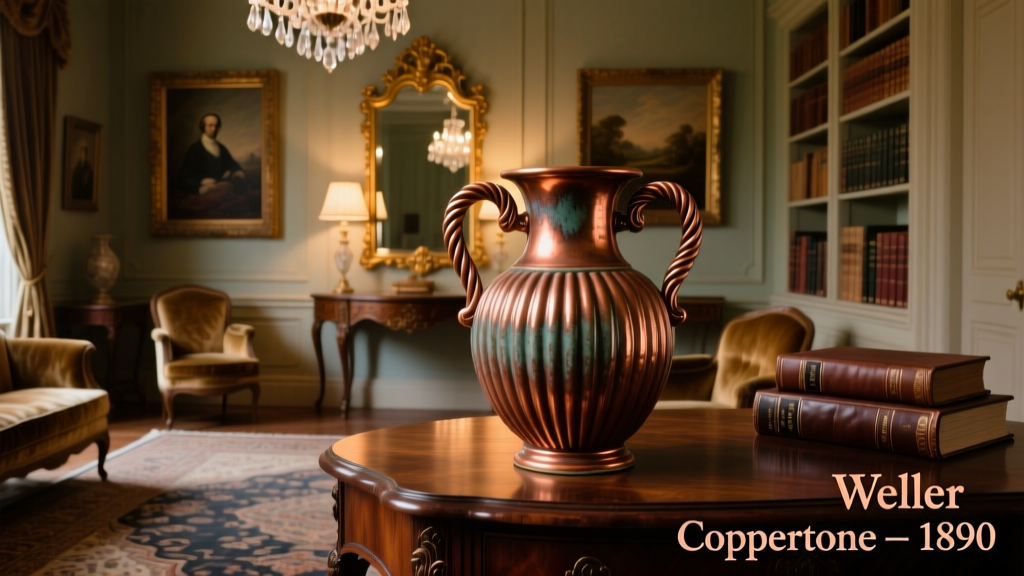
Weller Coppertone Vase with Ribbed Twisted Handles: Identifying, Valuing, and Preserving a Mid-Century American Ceramic Landmark
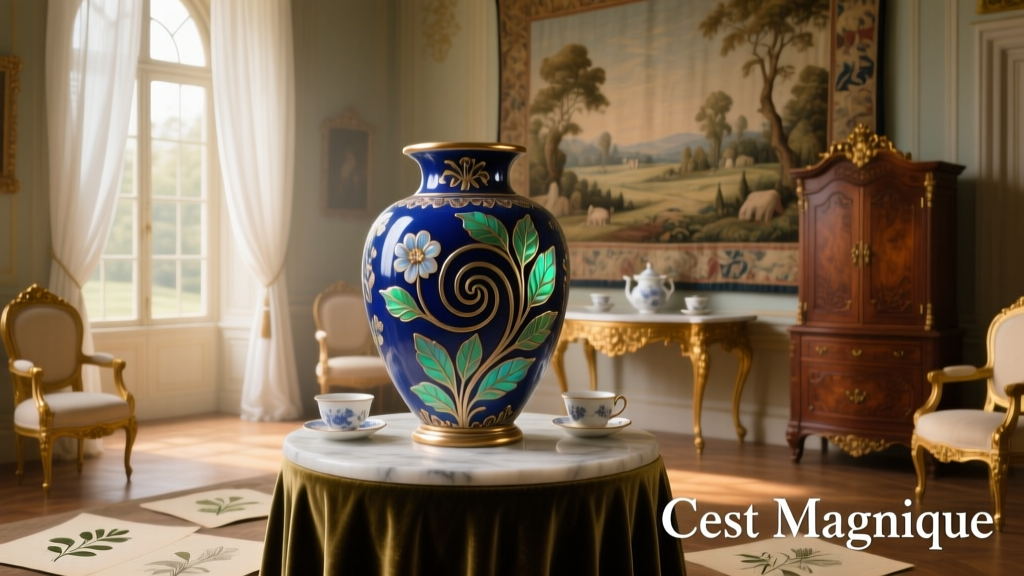
Cest Magnifique: The Enduring Allure of French Art Pottery Cest — Form, Function, and Forgotten Craftsmanship