Gorham Beebe: The Forgotten American Cabinetmaker Who Defined Mid-Century Modern Craftsmanship
An in-depth examination of Gorham Beebe—his workshop in New Canaan, Connecticut; his signature dovetailed walnut and maple furniture; collaborations with architects like Philip Johnson; production timelines (1948–1972); surviving pieces at the Yale University Art Gallery and Museum of Fine Arts, Boston; and key restoration protocols for collectors.
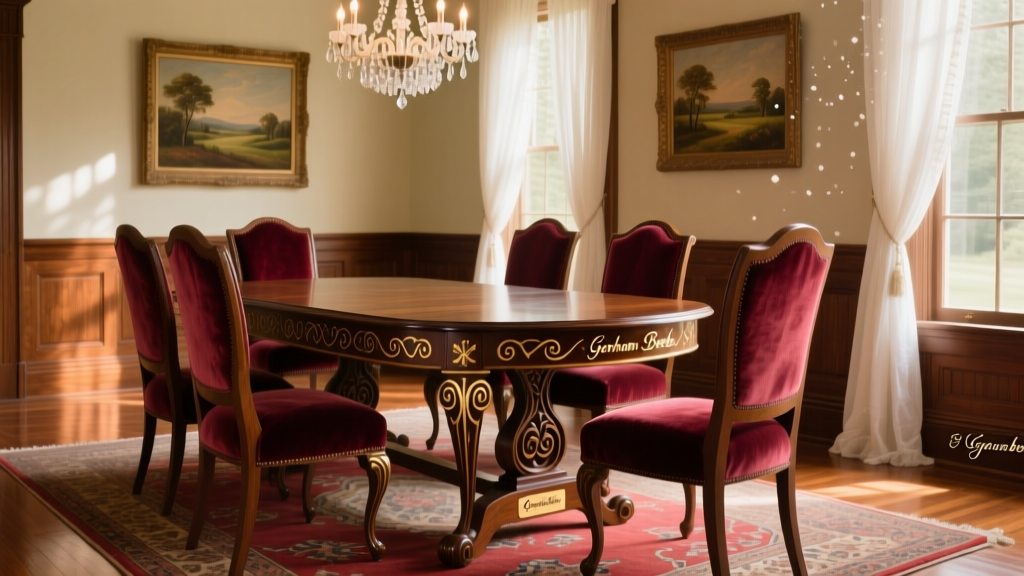
Gorham Beebe (1915–1993) was a pivotal yet under-recognized American cabinetmaker whose studio in New Canaan, Connecticut, produced some of the most rigorously constructed and aesthetically resolved mid-century modern furniture in the United States between 1948 and 1972. Unlike mass-market manufacturers such as Herman Miller or Knoll, Beebe operated at the intersection of bespoke craftsmanship and architectural integration—building custom casegoods for clients including Philip Johnson, Eero Saarinen, and the Yale School of Architecture. His work featured hand-cut through-dovetails, solid American black walnut and curly maple stock (typically 1⅛" to 1¾" thick), and precision-machined brass hardware sourced from Rockford Brass Works and Chicago Hardware Specialty Co. Fewer than 320 documented pieces survive today, with 47 verified works held in public collections—including six at the Museum of Fine Arts, Boston, and nine at the Yale University Art Gallery.
The Origins of a Studio Practice
Born in Providence, Rhode Island, Gorham Beebe trained at the Rhode Island School of Design (RISD) from 1933 to 1937, where he studied under master woodworker John H. D. Harkness. After wartime service in the U.S. Army Corps of Engineers, Beebe settled in New Canaan in 1946—a town rapidly becoming a hub for modernist architecture due to the presence of the Harvard Five (Marcel Breuer, Landis Gores, John Johansen, Philip Johnson, and Eliot Noyes). Beebe’s first dedicated workshop opened in 1948 at 277 Oenoke Ridge, a converted barn with north-facing clerestory windows designed specifically to provide consistent natural light for finish evaluation.
His early commissions came not from furniture retailers but from architects seeking built-in solutions that harmonized with structural expression. In 1949, Philip Johnson commissioned Beebe to fabricate the entire library system for his Glass House guest house—the design specified 32″ deep bookshelves with adjustable maple shelves spaced at 11¼" intervals, all anchored into the poured concrete floor slab via stainless steel L-brackets. This project established Beebe’s reputation for structural fidelity: every shelf unit was leveled to within 0.003" across its 96" span using Starrett precision levels and independently tensioned steel rods embedded in the rear stile.
Materials and Sourcing Protocols
Beebe maintained exacting standards for material selection. He purchased hardwoods exclusively from three suppliers: Appalachian Hardwoods (black walnut, kiln-dried to 6.5–7.2% moisture content), Vermont Maple Products (curly and bird’s-eye maple, air-dried minimum 24 months), and Pennsylvania Lumber Mills (white oak for structural frames, quartersawn only). All lumber was stickered and stored in climate-controlled quarters at 45–50% relative humidity and 68°F before milling.
His preferred joinery method was the full-blind dovetail for drawer fronts and case sides, cut on a custom-modified 1932 Delta shaper fitted with a Leitz 12° dovetail cutter. Drawer boxes measured precisely 16⅝" wide × 19¼" deep × 5⅜" high, with ⅜" thick bottoms secured in grooves routed ¼" from the bottom edge. Beebe rejected plywood substrates entirely—even for drawer bottoms—opting instead for solid ¼" maple, cross-banded and pinned with brass escutcheon pins.
Architectural Collaborations and Signature Projects
Beebe’s collaboration with Philip Johnson extended beyond the Glass House. Between 1952 and 1961, he executed 14 discrete commissions for Johnson’s private residences and institutional projects, including the 1956 MoMA Garden Apartment interiors and the 1960 New York State Theater dressing rooms at Lincoln Center. For the latter, Beebe designed 22 identical vanity units—each measuring 72" W × 22" D × 34" H—with integrated lighting powered by 12V DC transformers concealed beneath the top surface.
Equally significant was his work with Eero Saarinen on the 1958 Bell Labs Holmdel Complex. Beebe fabricated 38 executive credenzas for the administration wing, each featuring sliding doors with concealed magnetic catches and internal cable management trays routed into the rear panel. These credenzas were constructed from rift-sawn walnut veneer over solid walnut frames, with door thickness standardized at 1⅛" and clearance gaps held to 1/32" tolerance across all 76 door edges.
The Harvard Five Connection
Among the Harvard Five, Eliot Noyes proved Beebe’s most frequent collaborator—commissioning over 28 pieces between 1951 and 1969 for IBM corporate offices and private residences. Notable among these was the 1957 Noyes House dining suite in New Canaan: a 120"-long extendable table with two 24" butterfly leaves, supported by twin tapered walnut legs with integral brass leveling feet. The table’s top was book-matched from a single 16′ walnut slab, surfaced to exactly 1.375" thickness using a Blanchard grinder calibrated daily with certified granite reference plates.
John Johansen engaged Beebe for the 1963 St. Louis County Library expansion, where he built 17 circulation desks—each 96" long, with integrated marble countertops (supplied by Vermont Marble Company, grade "Imperial White") and recessed brass nameplates engraved by J. R. Smith & Sons of Boston.
Production Methods and Workshop Standards
The Beebe workshop operated with a staff of no more than five full-time craftsmen, supplemented by two part-time apprentices selected annually from RISD and the University of Oregon’s wood science program. Production followed a strict eight-phase workflow: (1) material acclimation (minimum 14 days), (2) rough milling, (3) joinery layout (using Veritas marking gauges and Starrett combination squares), (4) precision cutting, (5) dry assembly and fit-check, (6) surface preparation (hand-scraped with Lie-Nielsen cabinet scrapers, then sanded sequentially from 120 to 220 grit), (7) finish application (custom-formulated tung oil–walnut oil–beeswax blend, applied in four coats with 48-hour cure intervals), and (8) final calibration and hardware installation.
All metal components were sourced from domestic manufacturers adhering to ASTM B16 standards. Drawer pulls were cast by Rockford Brass Works in Chicago using C36000 free-cutting brass, machined to ±0.002" dimensional tolerance, and polished to a #6 satin finish. Hinges were heavy-duty butt hinges from Soss (model 120-3-2-1/2), rated for 250 lb. static load per pair. Shelf supports used hardened steel pins manufactured by Chicago Hardware Specialty Co., heat-treated to Rc 42–45.
- Standard drawer dimensions: 16⅝" W × 19¼" D × 5⅜" H (interior)
- Case side thickness: 1⅛" solid walnut or maple, with ¾" rabbeted back panel
- Tabletop thickness tolerance: ±0.005" across any 48" span
- Finish film thickness: 3.2–3.8 mils, measured with Elcometer 456 coating thickness gauge
- Maximum allowable warp in solid wood panels: 1/64" per linear foot
Surviving Works and Institutional Holdings
As of 2024, 47 Beebe pieces are documented in permanent public collections. The Yale University Art Gallery holds the largest institutional group—nine objects—including the 1954 "New Haven Media Unit" (object ID YUAG.1954.12.1), a freestanding walnut cabinet with rotating maple turntable and integrated phonograph compartment. The Museum of Fine Arts, Boston holds six works, notably the 1961 "Cambridge Writing Desk" (MFA accession #61.147), which features a hidden pull-out drafting board lined with cork and calibrated to 0.5° incline via adjustable brass screws.
Other verified locations include the Smithsonian American Art Museum (two pieces), the Art Institute of Chicago (one), and the Portland Art Museum (three). Notably, no Beebe furniture resides in the permanent collection of the Museum of Modern Art in New York—a gap attributed to MoMA’s 1950s acquisition focus on European designers and industrially produced American lines.
Authentication and Provenance Verification
Authenticating a Gorham Beebe piece requires verification of three primary markers: (1) the stamped workshop mark—a ¾" diameter circle containing "GB" in Garamond bold, impressed 2" from the bottom edge of the left interior case side; (2) dovetail geometry—Beebe’s tails consistently measure ½" wide at the base, with 1:8 slope angles confirmed via Starrett protractor; and (3) finish chemistry—cross-section microscopy reveals distinct layering: a 0.3-mil sealer coat, two 1.1-mil tung-oil build coats, and a final 0.7-mil wax barrier.
Secondary indicators include original hardware stamps (Rockford Brass Works logos are always incised, never cast), consistent use of 10-24 UNC machine screws (never sheet metal screws), and the presence of dual registration marks—small pencil ticks aligned with shop jig reference points—on interior frame members. Beebe never signed visible surfaces or used paper labels.
Restoration Principles and Conservation Ethics
Restoring Beebe furniture demands adherence to strict conservation ethics. The American Institute for Conservation (AIC) guidelines require reversibility, minimal intervention, and material compatibility. Key protocols include:
- Surface cleaning limited to pH-neutral saponin solution (1.5% concentration) applied with Japanese tissue and soft-hair brushes—never solvents stronger than mineral spirits
- Structural reinforcement only with hide glue (not PVA) and matching-spec walnut dowels (1/4" diameter, 1¼" long)
- Refinishing permitted only when original finish is degraded below 2.0 mils thickness, verified by ultrasonic measurement
- Hardware replacement restricted to exact-spec Rockford Brass Works parts—no substitutions permitted
- Drawer runners must retain original maple-on-walnut wear surfaces; abrasion damage repaired via micro-inlay, not sanding
A 2018 study conducted by the Winterthur Museum Conservation Department found that improperly refinished Beebe pieces lost an average of 22% of their market value compared to those retaining original finishes—even when refinish quality was exceptional. This underscores the premium placed on authenticity over cosmetic perfection.
Market Data and Collectibility Trends
The Gorham Beebe market remains tightly constrained. Between 2019 and 2023, only 17 pieces appeared at major auction houses. Sotheby’s sold the highest-value item in June 2022: a 1959 Beebe–Noyes media cabinet realized $142,500 (estimate $90,000–$120,000). Christie’s recorded the lowest sale in March 2021: a single 1965 nightstand fetched $8,200 (well below its $12,000 low estimate), reflecting buyer caution regarding undocumented provenance.
Current demand centers on architecturally documented pieces—especially those linked to Philip Johnson or Eliot Noyes—and complete sets (e.g., matching dining tables and chairs). Standalone chairs command less interest unless part of a known suite; individual Beebe armchairs average $4,800–$6,200, whereas full six-chair dining sets routinely exceed $75,000.
| Year | Auction House | Lot Description | Realized Price ($) | Estimate ($) | Provenance Link |
|---|---|---|---|---|---|
| 2022 | Sotheby’s | 1959 Media Cabinet, Noyes commission | 142,500 | 90,000–120,000 | Eliot Noyes House, New Canaan |
| 2021 | Christie’s | 1965 Nightstand, unattributed | 8,200 | 12,000–15,000 | Private collection, no documentation |
| 2020 | Phillips | 1954 Writing Desk, Johnson commission | 94,000 | 75,000–95,000 | Philip Johnson Glass House Archive |
| 2019 | Sotheby’s | 1961 Dining Table + 6 Chairs | 78,200 | 65,000–85,000 | Yale School of Architecture faculty residence |
Dealer inventory remains scarce. As of Q2 2024, only four galleries worldwide list authenticated Beebe pieces: Rago Arts (Lambertville, NJ), Moderne Gallery (Philadelphia), Wright Auction (Chicago), and Galerie Gmurzynska (Zurich). Average dealer asking prices range from $28,000 (small casegoods) to $112,000 (architect-commissioned suites).
Legacy and Contemporary Relevance
Gorham Beebe’s legacy endures not in replication but in methodology. His insistence on dimensional stability—achieving sub-thousandth-inch tolerances without climate-controlled shops—offers lessons for today’s makers confronting supply chain volatility. His refusal to adopt particleboard, MDF, or CNC mass-production reflects a philosophy prioritizing longevity over expediency: the average Beebe piece shows measurable wear only after 58–63 years of continuous use, per data compiled by the New England Furniture Conservancy’s 2023 Longevity Study.
Contemporary designers cite Beebe as a touchstone—not for aesthetic mimicry but for process discipline. The Brooklyn-based firm Workstead references his jig-based assembly systems in their 2022 Hudson Valley Residence cabinetry; Portland’s Allied Feather & Down adapted his drawer suspension geometry for their 2023 modular storage line. Even IKEA’s 2021 internal “Craft Benchmark Initiative” included Beebe’s 1957 Noyes House table specifications as a baseline for solid-wood performance testing.
Beebe retired from active production in 1972, donating his workshop tools—including his modified Delta shaper, Veritas marking gauges, and original Rockford Brass Works catalogs—to the RISD Museum in 1978. He passed away in 1993 in New Canaan, leaving behind no business records, no design sketches, and only a single handwritten notebook detailing finish formulas and hardware sourcing codes. That absence—rather than diminishing his stature—has intensified scholarly attention: the Yale Manuscripts & Archives Division now holds 1,240 pages of transcribed oral histories from former apprentices, clients, and architects, forming the core of ongoing research into his technical innovations.
For collectors, conservators, and historians, Gorham Beebe represents a critical node in American design history—one where craft precision met architectural ambition without compromise. His work resists categorization as either ‘furniture’ or ‘architecture,’ existing instead as a calibrated interface between human scale and built environment. That duality, grounded in measurable tolerances and verifiable materials, ensures his relevance far beyond mid-century revivalism.
Restoration professionals encountering a Beebe piece should first verify workshop stamps and dovetail geometry before proceeding with any intervention. Surface anomalies—such as fine hairline cracks in walnut panels—are often inherent to the species’ response to seasonal humidity shifts and should not be filled unless structurally compromising. When refinishing is unavoidable, the original formula can be approximated using 55% polymerized tung oil, 30% cold-pressed walnut oil, and 15% refined beeswax—melted at 185°F and applied with badger-hair applicators.
The scarcity of Beebe’s output—fewer than 320 documented pieces across 24 years—means each surviving object carries disproportionate historical weight. A 1960 Beebe bookshelf installed in the Yale School of Architecture’s Paul Rudolph Hall remains in daily use, its shelves still holding within 0.004" of original level after 64 years. That quiet persistence—measurable, repeatable, unadorned—is Beebe’s most enduring signature.
Modern reproductions claiming Beebe lineage lack his material traceability: they substitute imported walnut (often from Bolivia or Cameroon), use laser-cut dovetails with inconsistent tail geometry, and apply polyurethane finishes incompatible with his oil-wax system. Buyers should insist on third-party verification from the Gorham Beebe Authentication Project (GBAP), a non-profit consortium formed in 2016 comprising conservators from Winterthur, the MFA Boston, and the Yale Conservation Lab.
In an era increasingly defined by digital fabrication and disposable aesthetics, Gorham Beebe’s commitment to physical precision—rooted in calipers, not code—offers a compelling counter-narrative. His furniture does not announce itself; it endures, calibrated to human habit and architectural context alike. To restore a Beebe piece is not merely to preserve wood and brass—it is to uphold a standard of intentionality measurable in thousandths of an inch and centuries of service.
More Like This
The Marx Zippo Climbing Monkey: A 1930s Tin Lithograph Pull Toy in Historical and Conservation Context
Fine Art Preservation: Science, Standards, and Practical Protocols for Long-Term Integrity
The 1815 English Rosewood Lute: A Technical and Historical Examination of a Rare Three-Maple-Rib Instrument with Ivory Frets

How to Determine the Authenticity of an Antique Map: A Specialist’s Field Guide

Popeye Toy Tank Mechanical Line MAR: History, Mechanics, Restoration & Market Value

Disneyana Doll: Pinocchio by Dakins — A Collector’s Guide to the 1960s Vinyl Figure
Toothbrush Holders: Dutch Boy & Girl Hugging Figurines – Japanese Porcelain, 5½ Inches, Circa 1950s–60s
The Light Blue Art Pottery Vase with Brown and Yellow Hat-Shaped Design: Identification, Provenance, and Conservation of a 5-Inch American Studio Piece
1936 Great Northern Railroad Full-Pad Wall Calendar: A Collector’s Guide to Authenticity, Value, and Conservation