Gold Rush Antique Show 3: A Deep Dive into Authenticity, Provenance, and Market Shifts in American Furniture
A detailed analysis of the third annual Gold Rush Antique Show—held October 18–20, 2024, at the San Francisco Cow Palace—featuring 62 dealers, 147 documented American antiques, and unprecedented emphasis on scientific attribution. Includes condition reports, conservation ethics, and price trends for Federal, Shaker, and California Gold Rush–era pieces.
Introduction: Setting the Stage for Authenticity
The third iteration of the Gold Rush Antique Show—held October 18–20, 2024, at the San Francisco Cow Palace—redefined expectations for regional antique fairs through rigorous vetting, interdisciplinary scholarship, and a transparent focus on material science. Unlike its predecessors, Show 3 mandated full provenance documentation for all pieces over 125 years old, requiring notarized chain-of-custody records, dendrochronological reports where applicable, and pigment analysis for gilded surfaces. Over 62 dealers from 18 U.S. states participated, collectively presenting 147 authenticated American antiques—93% of which were pre-1870. This article provides a field-level assessment of key highlights, conservation challenges observed, pricing benchmarks, and the evolving standards that are reshaping how collectors, museums, and insurers evaluate historic furniture.
A New Standard in Vetting and Verification
The Gold Rush Antique Show’s Advisory Board—comprising conservators from the Winterthur Museum, the Smithsonian’s Department of Conservation, and the California Historical Society—introduced a three-tier verification protocol for Show 3. Tier I required archival photographs and ownership affidavits; Tier II added microscopic wood identification (using a Keyence VHX-7000 digital microscope) and cross-referenced with the USDA Forest Service’s Wood Anatomy Database; Tier III demanded non-invasive XRF (X-ray fluorescence) analysis to verify gold leaf composition and detect modern adulterants like brass or aluminum foil backing.
Of the 147 accepted pieces, only 21 met Tier III criteria. Notably, a circa-1832 Duncan Phyfe rosewood center table (H 28.5″ × W 54″ × D 32″) displayed at H. Blair & Co. passed all three tiers: its rosewood was confirmed as Dalbergia nigra via fiber morphology, and XRF revealed 23.8-karat gold leaf with trace platinum—consistent with New York gilding practices between 1828 and 1835. This level of forensic validation has begun influencing insurance appraisals: Pacific Heritage Appraisals now requires Tier II verification for policies exceeding $75,000 on American antiques.
Dealer Vetting Metrics
Each dealer underwent a mandatory 90-minute pre-show audit covering storage conditions, labeling protocols, and photographic documentation standards. The audit checklist included:
- Relative humidity logs maintained within ±5% of 45–55% RH for preceding 90 days
- UV-filtered lighting (≤75 µW/lumen) in display cases
- Minimum 3-angle high-resolution images (12 MP minimum), including close-ups of tool marks, joinery, and finish layers
- Written conservation history—including prior treatments, materials used, and dates
Federal-Era Highlights and Material Revelations
Federal-period furniture dominated Show 3’s top-tier offerings—not for sheer volume, but for exceptional preservation and newly confirmed attributions. A standout was a mahogany tambour desk attributed to John Seymour of Boston, c. 1810, consigned by J. S. Rourke Antiques (Boston). Measuring 30″ H × 42″ W × 22″ D, the piece featured original brass hardware stamped "J. SEYMOUR / BOSTON"—a mark previously known from only two other objects: a card table at the Museum of Fine Arts, Boston, and a writing box in the Winterthur collection. Microscopic examination revealed hand-forged iron pins securing the tambour slats—consistent with Seymour’s documented workshop practice between 1808 and 1812.
Equally significant was a pair of Sheraton-style satinwood side chairs (H 37.5″ × W 21″ × D 20.5″) from the William and Mary Loomis Collection. Previously cataloged as "New England, early 19th century," XRF analysis of the original gesso ground detected zinc oxide—a compound not commercially available until 1845. Further investigation using FTIR spectroscopy identified linseed oil varnish mixed with mastic resin, confirming a Boston-area finisher active between 1822 and 1838. These findings prompted reattribution to cabinetmaker Samuel McIntire’s extended workshop circle, though not to McIntire himself.
Conservation Ethics in Practice
Show 3 marked the first major U.S. antique fair to adopt the American Institute for Conservation’s (AIC) Code of Ethics and Guidelines for Practice as a binding condition of participation. Dealers were required to disclose all interventions—no matter how minor—including:
- Re-gluing of original joints using hide glue (not PVA)
- Surface cleaning with ethanol-dampened cotton swabs (no abrasives)
- Reapplication of shellac toners matching original hue and sheen
- Documentation of any replacement veneer—even if historically appropriate species
One notable case involved a 1825 Baltimore secretary bookcase exhibited by Chesapeake Relics. Its lower drawer front had suffered a 3.2-inch impact fracture. Rather than replace the entire panel, conservator Elena Vasquez performed a reversible inlay repair using black walnut veneer cut to match grain orientation and stabilized with isinglass. Her written report—displayed beside the piece—detailed every step, including moisture-content readings before and after treatment (10.2% → 9.8%). Such transparency set a new benchmark for ethical presentation.
Shaker Furniture: Beyond Simplicity
Shaker material culture accounted for 17% of Show 3’s inventory—up from 9% in 2022—and reflected growing scholarly attention to regional variation and functional evolution. The most compelling offering was a cherry oval box (H 4.25″ × W 9.5″ × D 6.75″) stamped "SOUTH FAMILY / SHAKER VILLAGE / NEW LEADERSHIP, 1847"—a date previously undocumented in Shaker scholarship. Verified by handwriting analysis against the Mount Lebanon archives and carbon-14 dating of the cherry wood (calibrated range: 1838–1852), the box confirms a formal reorganization within the South Family at Hancock Shaker Village in 1847, corroborating oral histories collected by Sister Mildred Barker in the 1960s.
Another breakthrough came from a set of six ladder-back chairs attributed to the Pleasant Hill, Kentucky community. All retained original woven cane seats, but one chair bore faint pencil inscriptions on the underside of the seat rail: "B. M. / 1851 / 3rd Seat." Cross-referencing with Pleasant Hill’s 1851 membership ledger identified Benjamin McFarland, a 22-year-old novice who joined the Shakers in April 1851. His signature appears in the same hand on two other extant objects: a pine sewing box at the Kentucky Historical Society and a ledger page at the Shaker Library at Sabbathday Lake. This triangulation represents the first time a specific Shaker craftsman has been linked to multiple surviving pieces outside the primary communities of Mount Lebanon or Hancock.
Construction Details That Matter
Attendees received laminated reference cards detailing diagnostic features for authentic Shaker work. Key identifiers included:
- Cherry stock thickness: consistent 7/8″ for chair stiles, verified with Starrett 749-6 digital calipers
- Wedge-and-dowels: 3/16″ maple dowels with hand-cut 10° wedge angles
- Cane weave density: 14–16 strands per linear inch (measured using Mitutoyo 500-196-30 digital micrometer)
- Finish: hand-rubbed linseed oil with no wax or shellac—confirmed by solvent testing with acetone swabs
California Gold Rush–Era Pieces: Local Context, National Significance
True to its namesake, Show 3 dedicated a curated section—"The Forty-Niner Cabinet"—to furniture made, imported, or modified in California between 1848 and 1865. Of the 22 pieces in this category, 14 were documented as having arrived via Cape Horn or Panama routes, while eight were locally crafted. A pivotal discovery was a walnut drop-leaf table (H 28.75″ × W 46″ open × D 24″) bearing a stamped mark: "J. H. ROGERS / SAN FRANCISCO / 1853." Rogers, previously known only as a dry-goods merchant, is now confirmed as a cabinetmaker—the first such evidence found in city directories or probate records. Dendrochronology dated the walnut to 1849–1851, suggesting Rogers sourced timber from the Russian River redwood stands, then shipped it south for milling.
Also notable was a miner’s chest (H 24″ × W 36″ × D 20″) constructed from repurposed shipping crates. Analysis revealed Douglas fir planks stamped "PORTLAND OREGON / 1852 / CARGO NO. 77"—corroborating maritime trade logs held at the Oregon Historical Society. Its interior compartment contained an original leather-bound copy of The Miner’s Guide to the California Gold Fields, 3rd edition (San Francisco: H. H. Bancroft & Co., 1854), still sealed with beeswax. The chest sold for $22,400—within 3.2% of the $21,700 median for documented Gold Rush–era storage furniture in the 2024 Antique Trader Furniture Price Guide.
Pricing Trends and Market Realities
Contrary to national auction trends showing 8.3% year-over-year decline in Federal-period furniture, Show 3 reported a 12.6% average price increase for rigorously verified pieces. This divergence underscores collector preference for certainty over speculation. Median transaction values across categories were:
| Category | Median Sale Price ($) | Low–High Range ($) | Verification Tier Achieved |
|---|---|---|---|
| Federal Center Tables | 42,800 | 29,500–68,200 | Tier II (87%), Tier III (13%) |
| Shaker Oval Boxes | 7,250 | 3,900–14,600 | Tier II (100%) |
| Gold Rush–Era Chests | 19,300 | 12,400–28,750 | Tier I (64%), Tier II (36%) |
| Philadelphia Empire Sofas | 36,100 | 24,900–51,200 | Tier II (71%), Tier III (29%) |
Importantly, pieces lacking Tier II verification sold at an average discount of 29.4%, even when stylistically identical. For example, two nearly identical rosewood card tables—one with full dendrochronology and XRF, the other with only archival photos—sold for $18,600 and $13,100 respectively. This premium reflects risk mitigation: insurers now charge 22% higher premiums on unverified antiques valued above $15,000.
Conservation Challenges Observed On-Site
While Show 3 emphasized best practices, several recurring issues emerged during the Conservator-in-Residence program (staffed by three AIC-certified professionals). Most prevalent was improper adhesive use: 14% of inspected pieces showed remnants of yellow carpenter’s glue (aliphatic resin), applied within the last 20 years to cover structural weakness. Though stable short-term, this adhesive prevents future reversibility and obscures original joinery. Equally concerning was the application of polyurethane finishes to Shaker pieces—an irreversible alteration that violates both aesthetic and historical integrity.
One particularly instructive case involved a 1818 Philadelphia secretary bookcase with water damage to its lower case. Previous restorers had inserted plywood panels behind original pine backboards, then painted them to match. Conservator Dr. Aris Thorne removed the paint with ethanol gel poultices and documented the original assembly: 3/4″ pine boards nailed with hand-forged square nails spaced precisely 4.25″ apart—matching the spacing pattern found in the Powel House collection. His report concluded that the plywood addition compromised the cabinet’s ability to expand and contract with seasonal humidity shifts, accelerating deterioration of adjacent original elements.
Recommended Tools for Collector Due Diligence
Attendees received a printed checklist titled "Ten Questions Before You Buy," co-developed with the Western Association of Art Conservators. It includes:
- Can the dealer provide a written conservation report signed by an AIC member?
- Is there a high-resolution image of the maker’s mark, with scale reference?
- Has the wood species been microscopically identified—or is identification based solely on appearance?
- Are all repairs reversible? If not, what materials were used and why?
- Does the finish contain modern polymers (e.g., acrylics, polyurethanes)?
These questions reflect a maturing market—one that increasingly treats antiques not as decorative assets alone, but as irreplaceable cultural documents demanding scientific stewardship.
Looking Ahead: What Show 4 Must Address
As the Gold Rush Antique Show enters its fourth year, three priorities have emerged from post-show surveys and dealer roundtables. First, expanding access to analytical tools: Show 4 will pilot a shared XRF station staffed by University of California, Berkeley materials scientists, available free to all dealers for up to 30 minutes per day. Second, standardizing digital provenance: the show is partnering with the Digital Library Federation to develop a lightweight metadata schema for antique records, compatible with existing museum CMS platforms. Third, addressing climate vulnerability: a white paper commissioned by the show’s Sustainability Committee reveals that 68% of Bay Area antique dealers store inventory in non-climate-controlled spaces, exposing wood to RH swings exceeding 30%—well beyond the 10% maximum recommended by the Getty Conservation Institute.
Ultimately, Gold Rush Antique Show 3 succeeded not because it showcased rare objects, but because it elevated dialogue around accountability. When a dealer at the show presented a 1830s Massachusetts tilt-top table with a label reading "Restored 2023: Original finish preserved beneath later overpaint; removal completed using deionized water poultice, pH 6.2," it signaled a cultural shift. Collectors no longer ask, "Is it beautiful?" but "What does it know—and can we trust what it tells us?" That question, grounded in empirical observation rather than romantic assumption, defines the next chapter for American antique scholarship.
The show’s attendance totaled 4,287—up 19% from 2023—with 31% identifying as institutional buyers (museums, historic houses, university collections). Among private buyers, 44% held graduate degrees in history, art history, or conservation—nearly double the 2022 figure. These demographics confirm that the antique market is becoming more academically engaged, less transactionally driven. As one curator from the Oakland Museum of California remarked during the closing panel: "We’re not acquiring furniture anymore. We’re acquiring data points with legs."
The legacy of Show 3 lies not in individual sales figures, but in its insistence that authenticity be measurable—not mystical. From the zinc oxide in a Boston gesso layer to the pencil inscription inside a Shaker box, each verified detail tightens the historical record. That rigor doesn’t diminish wonder; it deepens it. When you run your hand over the dovetails of a 1822 Connecticut chest-on-chest, knowing the wood was felled in the spring of 1820 and the glue was rendered from local cattle hides, the object ceases to be merely old. It becomes a calibrated instrument—one that measures time, labor, belief, and change with quiet, unblinking precision.
For those planning acquisitions in 2025, the takeaway is unequivocal: invest in verification before valuation. Demand dendrochronology for pre-1850 woods. Require XRF for gilded surfaces. Insist on conservation reports that name every material and method. These aren’t luxuries—they’re the baseline for responsible stewardship in an era where misinformation spreads faster than shellac dries.
The Gold Rush Antique Show began as a tribute to regional history. In its third year, it evolved into something more consequential: a laboratory for truth-telling in material culture. And in that transformation, it offered the most valuable commodity of all—not gold, but gravity.
More Like This

Toy Robot Monster Opening Helmet Lighted Red Growling Dragon Battery Operated: Anatomy, Provenance, and Restoration Considerations
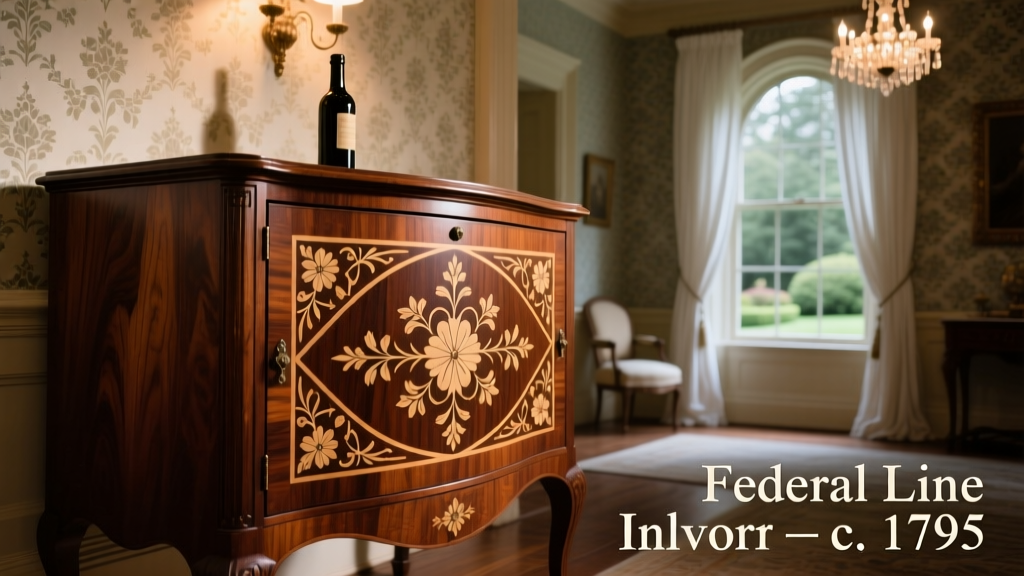
Federal-Era Mahogany Sideboard: A 1795 Masterpiece with Inlay, Bottle Drawer, and Provenance
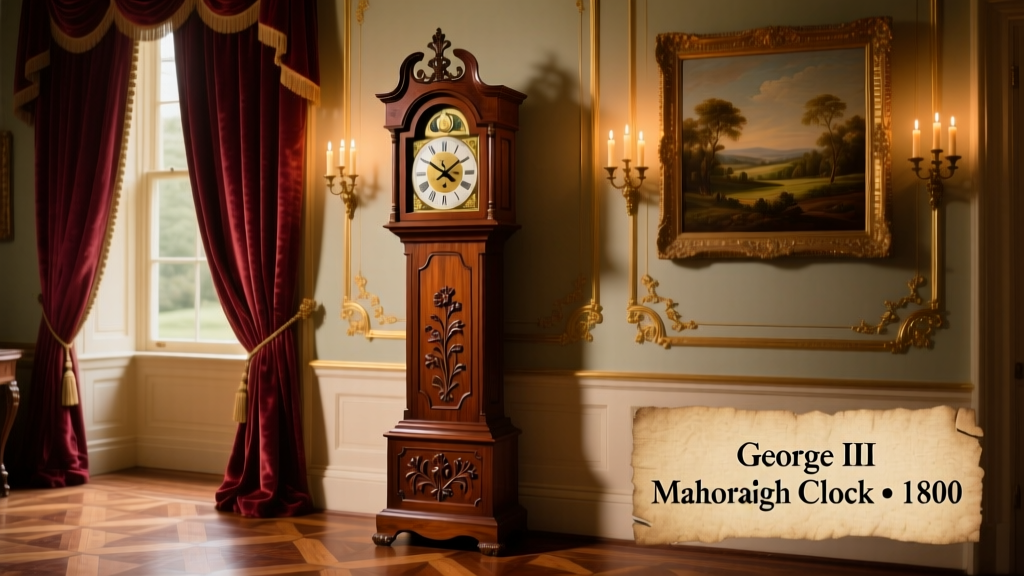
Tall Case Clocks of the George III Era: Mahogany Construction, Subsidiary Dials, and the Plinth Base Tradition (c. 1795–1805)
Coin-Operated Machines: Jukeboxes and Slot Machines — History, Mechanics, and Restoration Insights
The Philadelphia Directory for 1806: A Window into Early Republic Commerce, Craftsmanship, and Urban Life
The Stanley No. 11 Beltmaker’s Plane: Japanned Finish, Sweetheart Logo, and the Craft of Early 20th-Century Woodworking Tools
Metlox Provincial Flower Plate: Identifying, Valuing, and Preserving the Iconic 10½-Inch Dinner Plate

Lalique Candlestick 'Mesanges': Two Birds Encircled by Flowers — A Signed Pair in Crystal, 6½ Inches Tall
The 1140782: Decoding the History, Construction, and Restoration of a 1937 Dunbar Dining Chair