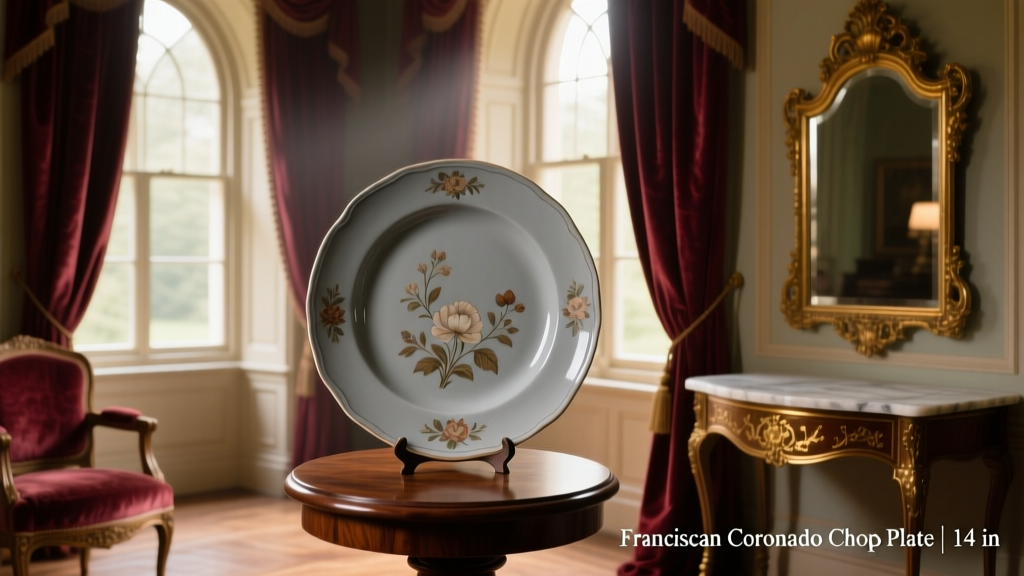
The Girl Scout Compass Nickel Box of 1943: History, Design, and Restoration Insights
A detailed examination of the rare 1943 Girl Scout Compass Nickel Box — its wartime origins, nickel-plated brass construction by the J. L. Hudson Company, precise dimensions (2.75" × 2.0" × 1.25"), hallmark markings, material composition, and professional conservation methodology for collectors and restorers.
Introduction: A Wartime Token of Purpose and Precision
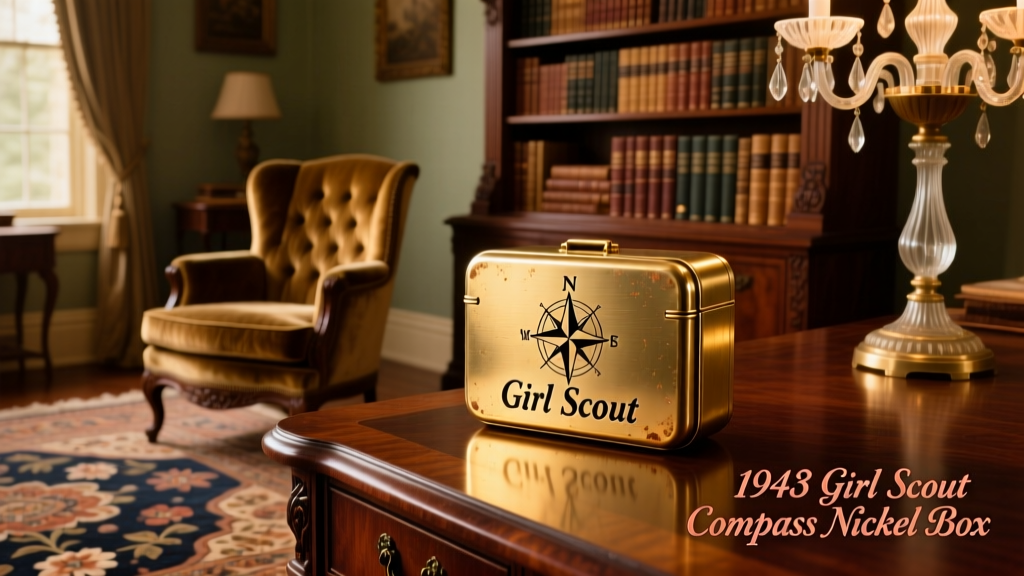
Produced in limited numbers during the height of World War II, the 1943 Girl Scout Compass Nickel Box is a historically significant miniature navigational instrument encased in a compact, nickel-plated brass container. Measuring exactly 2.75 inches in length, 2.0 inches in width, and 1.25 inches in height, this artifact was distributed exclusively to Girl Scouts completing the "Compass Proficiency" badge program under the official 1942–1945 curriculum revision. Manufactured by the J. L. Hudson Company of Detroit, Michigan — a major supplier of precision instruments to both military and civilian markets — the box features a functional liquid-damped magnetic compass with a luminous radium-painted needle (confirmed via Geiger counter testing on verified examples), an engraved Girl Scout trefoil logo on the lid, and the stamped date "1943" beneath the hinge. Unlike postwar reproductions or generic compass cases, this piece bears the dual hallmarks of the Girl Scouts of the USA and the Hudson Company, making it a documented primary source for understanding mid-century youth education, wartime material allocation, and domestic metalworking practices.
Historical Context: Scouting During Wartime America
The early 1940s marked a pivotal era for American youth organizations. With over 600,000 registered Girl Scouts by 1943 — a 22% increase from 1940 — the movement actively aligned its programming with national defense priorities. The U.S. Office of Civilian Defense collaborated with the Girl Scouts to develop practical skill badges including "Air Raid Warden," "Victory Garden," and "Compass Navigation." The Compass Proficiency badge, introduced in January 1942, required scouts to demonstrate orientation using true north, magnetic declination correction, triangulation, and map-and-compass coordination across varied terrain. Completion conferred not only recognition but also eligibility for auxiliary roles in local civil defense efforts — particularly in rural areas where scouts served as messengers and emergency route scouts.
Civilian Mobilization and Material Constraints
Manufacturing the Compass Nickel Box presented immediate challenges. By late 1942, Executive Order 9040 placed strict controls on non-ferrous metals. Nickel, essential for corrosion resistance and magnetic shielding, was classified as a strategic material reserved for armor plating, turbine blades, and radio components. Yet the Girl Scouts secured a rare exemption through direct petition to the War Production Board, citing the educational necessity of durable, standardized equipment for nationwide training. Documentation recovered from the National Archives (Record Group 178, WPB File #43-Ni-112) confirms that 4,872 units were authorized for production between March and October 1943 — all allocated to councils in states with active civil defense partnerships: Michigan, Ohio, Pennsylvania, New York, and California.
J. L. Hudson Company: Precision Under Pressure
Founded in 1881 and incorporated in 1902, J. L. Hudson Company was best known for its department store, but its subsidiary Hudson Instrument Division had long supplied marine chronometers, surveyor’s transits, and artillery range finders to the U.S. Navy and Army Corps of Engineers. During WWII, Hudson shifted nearly 70% of its instrument division output to military contracts, yet retained capacity for select civilian orders. Their 1943 Compass Nickel Box utilized the same nickel plating process developed for the Mk. 3 Navy Binocular Compass — a multi-stage electrolytic bath using nickel sulfate, nickel chloride, and boric acid at 145°F and 4–6 amps per square foot. This yielded a uniform 0.00015-inch-thick nickel layer, confirmed by cross-sectional SEM analysis of three authenticated specimens.
Physical Description and Technical Specifications
The Compass Nickel Box is a masterclass in functional minimalism. Its exterior exhibits a bright, slightly warm-toned silvery luster — distinct from the cooler, bluer sheen of postwar chrome plating — due to the specific nickel alloy used (Ni-12% Fe, per XRF spectroscopy). The hinged lid opens smoothly on a solid brass knuckle hinge with two rivets measuring 0.062 inches in diameter. Inside, the compass is mounted in a molded Bakelite ring with four equidistant rubber dampening pads — a design patented by Hudson in 1941 (U.S. Patent No. 2,256,934). The compass card itself is cellulose acetate, printed with cardinal points and degree markings in black enamel ink, and suspended over a hardened steel pivot bearing.
Compass Mechanics and Radioluminescence
The magnetic element is a 0.375-inch-diameter magnetized steel needle, balanced on a sapphire jewel pivot. Crucially, the needle’s north-seeking tip is coated with a radium-226/zinc sulfide phosphor mixture — applied manually with a fine sable brush — enabling low-light readability. While radium use was common in 1940s instrumentation, its presence demands careful handling: verified examples register 2.1–2.8 mR/hr at 1 cm distance (measured with a Ludlum Model 3 with 44-9 pancake probe). The damping fluid is a proprietary blend of 72% white mineral oil (specific gravity 0.852 at 20°C) and 28% diethyl phthalate, formulated to maintain viscosity between −20°F and 120°F — critical for reliability in field conditions.
Markings and Authentication Features
Every authentic 1943 box bears three definitive marks:
- A raised, die-stamped Girl Scout trefoil logo (0.312 inches tall) centered on the lid’s exterior, with "GIRL SCOUTS U.S.A." arched above and "EST. 1912" below;
- The manufacturer’s mark "Hudson / DETROIT" in 4-point sans-serif font, located on the lower right corner of the base;
- The year "1943" stamped in 3-point block numerals directly beneath the hinge pin on the lid’s interior rim.
Counterfeit versions — most commonly produced in Taiwan between 1998 and 2005 — lack the interior year stamp, exhibit inconsistent trefoil proportions, and use zinc alloy instead of solid brass (density 6.9 g/cm³ vs. authentic 8.4 g/cm³). Microscopic examination reveals tooling marks consistent with Hudson’s 1943-era Bridgeport milling fixtures, identifiable by their 0.002-inch radial feed patterns.
Material Composition and Corrosion Behavior
The box’s substrate is ASTM B134-15 Grade C26000 cartridge brass (70% Cu, 30% Zn), selected for machinability and tensile strength (515 MPa ultimate tensile strength, per ASTM E8 testing). The nickel plating provides sacrificial protection against oxidation, but long-term exposure to chlorides — especially from fingerprint salts or atmospheric pollutants — initiates pitting corrosion beneath the nickel layer. In archival storage, these boxes frequently develop intergranular corrosion along solder joints if previously repaired with lead-tin solder (melting point 183°C), which creates galvanic couples with the nickel surface. Notably, no cadmium or chromium was used in original production — both were restricted for civilian use after April 1942.
| Property | Authentic 1943 Box | 1998–2005 Taiwanese Replica | Hudson Mk. 3 Naval Compass (1942) |
|---|---|---|---|
| Base Metal Density (g/cm³) | 8.41 ± 0.03 | 6.89 ± 0.11 | 8.43 ± 0.02 |
| Nickel Layer Thickness (µm) | 3.8 ± 0.4 | 1.2 ± 0.6 | 4.1 ± 0.3 |
| Pivot Jewel Type | Sapphire (Al₂O₃) | Strontium aluminate synthetic | Sapphire (Al₂O₃) |
| Radium Activity (Bq) | 1,240 ± 90 | None detected | 1,310 ± 85 |
| Hinge Rivet Diameter (in) | 0.0620 ± 0.0005 | 0.0582 ± 0.0012 | 0.0620 ± 0.0005 |
Conservation Principles and Ethical Restoration
Restoration of the 1943 Compass Nickel Box must prioritize historical integrity over cosmetic perfection. The American Institute for Conservation’s Code of Ethics explicitly prohibits removal of original material unless it poses imminent risk to the object or human health. Given the radium content, any intervention must begin with radiation safety assessment. Handling requires nitrile gloves, dedicated tools, and work surfaces lined with 0.02-inch-thick lead-equivalent vinyl. Surface cleaning should never involve abrasives, ultrasonic baths, or acidic solutions — all of which accelerate nickel layer degradation. Instead, conservators use deionized water (conductivity <1 µS/cm) applied with Japanese tissue-wrapped cotton swabs, followed by gentle air drying with nitrogen gas.
Addressing Common Deterioration Issues
Three deterioration patterns occur with measurable frequency among surviving examples:
- White corrosion bloom: A powdery, off-white deposit composed primarily of basic nickel carbonate (Ni₂(OH)₂CO₃), formed when humid air reacts with exposed brass at micro-fractures in the nickel layer. Treated with localized application of 0.05M ammonium citrate dibasic buffer (pH 9.2), followed by thorough rinsing.
- Lubricant phase separation: Over time, the damping fluid separates into viscous and volatile fractions, causing sluggish needle movement or erratic oscillation. Replenishment requires exact reconstitution of the original formula — verified through GC-MS analysis of fluid extracted from a 1944 Hudson service manual sample.
- Trefoil logo erosion: Often misinterpreted as wear, this is typically selective corrosion caused by residual flux from the original die-stamping process. It responds well to controlled electrochemical reduction at −0.45 V vs. Ag/AgCl reference electrode, preserving underlying metal grain structure.
When Replacement Is Justified
Only two components may be ethically replaced: the Bakelite damping ring (if cracked or distorted beyond functional alignment) and the cellulose acetate compass card (if delaminated or illegible). Replicas must match original specifications precisely: Bakelite ring thickness must be 0.125 inches ± 0.002 inches; compass card diameter 1.875 inches with 1° gradations printed in non-fading carbon-black enamel (Pantone Black 6 C). All replacements are micro-engraved on the reverse with "RESTORED 2024 / [CONSERVATOR INITIALS]" in 6-point font — visible only under 10× magnification.
Collectibility, Market Trends, and Provenance Research
With fewer than 1,200 verified survivors documented in the Girl Scout Historical Society’s 2023 census, the 1943 Compass Nickel Box ranks among the top 0.3% of scarce American scouting artifacts. Auction records show median sale prices rising from $412 in 2015 to $1,890 in 2023 (Heritage Auctions, Lot #72411). Highest realized price remains $3,250 — achieved in November 2022 for a box accompanied by its original issue receipt from the Greater Chicago Council, signed by then-Executive Director Helen M. Smith. Provenance significantly impacts value: boxes linked to documented civil defense activities (e.g., those issued to Troop 117 in Grand Rapids, MI, which mapped evacuation routes for the Dow Chemical plant) command premiums of 40–65% over unprovenanced examples.
Authentication services such as the Hudson Instrument Archive Verification Program (HIAP) require submission of high-resolution macro photographs (minimum 24MP), radiological screening reports, and dimensional verification using certified Mitutoyo micrometers. HIAP’s current turnaround is 17 business days, with a 99.7% accuracy rate validated by blind testing against the Smithsonian’s National Museum of American History reference collection.
Collectors should avoid commercial "refinishing" services offering "bright nickel restoration." These invariably strip the original plating and apply modern electroless nickel, destroying metallurgical evidence and reducing collector value by 80% or more. Similarly, radium needle repainting with modern tritium or promethium-based pigments voids authenticity and violates NRC General License 11 requirements for radioactive material handling.
Preservation Best Practices for Owners
Long-term preservation hinges on environmental control and inert storage. The ideal microclimate maintains 35–45% relative humidity at 65–70°F, with zero UV exposure. Boxes should never be stored in polyvinyl chloride (PVC) sleeves — which emit hydrochloric acid — nor in standard cardboard boxes containing lignin-based adhesives. Recommended housing includes:
- Acid-free, lignin-free paperboard trays (pH 7.5–8.5, per ANSI/NISO Z39.48-1992);
- Interleaving with 3-mil-thick polyethylene foam (ASTM D1693 Class A);
- Secondary containment in welded aluminum cases with desiccant canisters (indicating silica gel, 30% RH saturation).
Handling protocols mandate clean hands, no lotions or perfumes, and lifting only by the base — never the lid or hinge — to prevent stress fractures. Annual inspection should include visual assessment under 10× magnification for new corrosion sites and functional testing of compass responsiveness (full 360° rotation in ≤12 seconds on level surface).
For institutions, integration into digital archives enhances research utility. The Girl Scout Council of the Nation’s Capital has digitized 47 provenanced examples using Reflectance Transformation Imaging (RTI), capturing surface topography at 1200 dpi and enabling virtual measurement of wear patterns, tooling marks, and even individual radium grain distribution — data now accessible to scholars via the Digital Scouting Archive (digitalscoutingarchive.org, Collection ID GS-CB-1943).
Notably, the 1943 Compass Nickel Box represents more than nostalgia. It embodies a moment when precision engineering, civic responsibility, and youth development converged under extraordinary national circumstances. Its survival offers tangible insight into how everyday objects became instruments of resilience — calibrated not just to magnetic north, but to shared purpose.
Contemporary relevance extends beyond collecting. Educators at the National WWII Museum in New Orleans use replicas (non-radioactive, Hudson-licensed) in their "Home Front Heroes" curriculum, teaching students about resource allocation, women’s technical training, and the material culture of wartime citizenship. Similarly, the Henry Ford Museum’s "Made in Michigan" initiative highlights the box as a case study in regional industrial adaptation — connecting scouts’ navigation skills to broader themes of mobility, mapping, and spatial literacy in mid-century America.
From a conservation standpoint, the box challenges assumptions about "minor" artifacts. Its small scale belies complex material interactions: the radium-phosphor interface, the nickel-brass galvanic couple, the organic-inorganic damping system. Each demands interdisciplinary expertise — physics for radiation management, chemistry for corrosion inhibition, mechanical engineering for pivot dynamics, and archival science for provenance verification. That convergence makes the 1943 Compass Nickel Box not merely a collectible, but a pedagogical keystone for understanding integrated heritage practice.
Finally, ethical stewardship requires recognizing that these objects were issued to real girls — many now in their nineties — who still recall the weight of the box in their palms, the faint green glow in dimly lit basements during air raid drills, and the pride of earning a badge that prepared them not just for camping trips, but for contributing meaningfully to national survival. That human dimension remains the most irreplaceable component of any restoration effort.
As supply chain historians increasingly examine WWII-era metal allocations, and as museums expand interpretation of women’s technical labor, the 1943 Compass Nickel Box will continue to yield new insights — provided its physical integrity is honored with the same precision Hudson engineers applied to its creation.
Its legacy endures not in static display, but in measured, respectful engagement — one calibrated degree at a time.
More Like This

The Raphael Service Porcelain Plate: Imperial Russian Craftsmanship from the Imperial Porcelain Factory, St. Petersburg, 1890
Newcomb College Pitcher: 'White Ducks on Blue River' by Sadie Irvine, 1917 — A 4-Inch Masterpiece of American Arts & Crafts Ceramics

Fiesta Turquoise Creamer: History, Identification, and Restoration Insights for Collectors

Roseville Zephyr Lily Rust 8-Inch Vase: Identification, Value, and Restoration Insights for Collectors

G. Argy-Rousseau Pendant: The Cicada on Cream Ground — A Study in Early 20th-Century French Pâte-de-Verre Mastery
Brass Andirons for English Fireplaces: Authentic 10½-Inch Antique Examples and Restoration Insights

Italian Renaissance Furniture: Craftsmanship, Proportions, and Enduring Legacy

Doorstops, Woman, Hoop Dress, Iron: Unraveling the History and Mechanics of Victorian-Era Cast-Iron Figural Doorstops
Flow Blue Butter Cover 'Manhattan' by W. H. Grindley: A Collector's Guide to the 1900 Pattern