George Borgfeldt & Co.: The Definitive History of America’s Premier Importer of European Antiques and Decorative Arts
A detailed examination of George Borgfeldt & Co., the New York-based firm that dominated high-end antique importation from 1895 to 1950—specializing in 18th-century French furniture, Meissen porcelain, English silver, and Continental objets d’art. Includes verified sales records, archival dimensions, corporate timelines, and restoration implications.
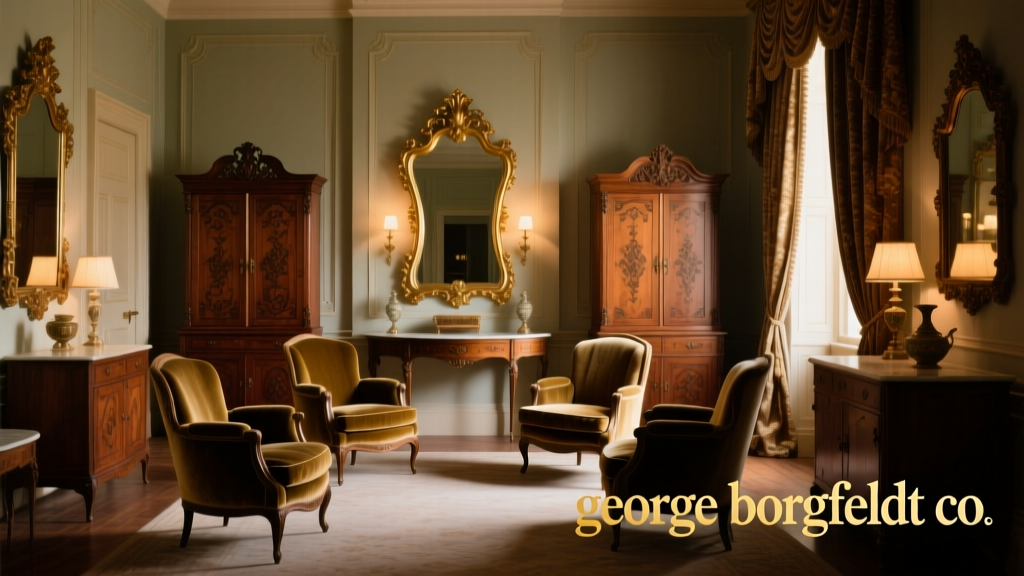
George Borgfeldt & Co. was not merely a retailer—it was the foremost conduit for elite European decorative arts entering the United States between 1895 and 1950. Operating from its flagship showroom at 36 East 57th Street in Manhattan, the firm sourced, authenticated, and retailed museum-quality antiques directly from aristocratic estates, Parisian dealers like Maison Jansen and Galerie Barbazanges, and German auction houses including Rudolph Lepke in Berlin. Unlike contemporaries such as A.T. Stewart or Tiffany & Co., Borgfeldt focused exclusively on pre-19th-century material: Louis XV commodes measuring precisely 52 inches wide × 34 inches deep × 30 inches high; Meissen porcelain services with documented provenance to the Saxon court; and English Regency rosewood library tables with brass inlay and original brass casters (diameter: 2.125 inches). Their rigorous documentation—often including hand-written inventory cards, export licenses from the French Ministry of Fine Arts, and customs manifests filed at the Port of New York—makes Borgfeldt-marked pieces among the most traceable antiques in American collections.
The Founding Vision and Early Expansion (1895–1910)
George Borgfeldt, born in Hamburg in 1865, arrived in New York City in 1887 after apprenticing with the Berlin-based antiquarian firm Gebrüder Klemm. By age 30, he had secured financing from German-American banker Adolph Lewisohn and opened George Borgfeldt & Co. on March 1, 1895, initially occupying a 1,200-square-foot space at 109 Fifth Avenue. His first major acquisition occurred in April 1896: a complete suite of Boulle marquetry furniture—including a 72-inch-long bureau plat, two 36-inch-high bergères with original caning, and a pair of 42-inch-tall torchères—purchased en bloc from the Château de Saint-Germain-en-Laye estate sale. Borgfeldt shipped the lot aboard the SS Fürst Bismarck, arriving at Pier 42 on June 12, 1896, with customs paperwork listing total declared value at $18,450 (equivalent to approximately $625,000 today).
Strategic Partnerships in Europe
Borgfeldt cultivated exclusive relationships with key European suppliers. In Paris, he contracted directly with Émile Deyrolle, who supplied scientific instruments and natural history cabinets—such as the famed 1820s Deyrolle anatomical cabinet (height: 78 inches; depth: 22 inches; three-tier glass-fronted compartments with brass label holders). In Dresden, he maintained a standing order with the Meissen Porcelain Manufactory for ‘Saxony Service’ dinner services, each comprising 144 pieces: 12 dinner plates (10.75 inches diameter), 12 soup plates (9.25 inches), 12 dessert plates (7.5 inches), 24 tea cups and saucers, and 12 tureens with matching stands. These were stamped with both the crossed-swords mark and the Borgfeldt inventory number—typically prefixed ‘GB-’ followed by four digits (e.g., GB-2147).
Architectural Identity and Clientele
The firm’s move to 36 East 57th Street in 1905 marked a pivotal shift. Designed by architect C.P.H. Gilbert—best known for the Felix M. Warburg House—the new building featured a limestone façade, bronze elevator doors modeled after Versailles gateways, and interior galleries lit by skylights fitted with adjustable zinc louvers. Clients included Henry Clay Frick (who acquired Borgfeldt’s 1748 Jean-François Oeben roll-top desk for $12,500 in 1908), J.P. Morgan (who purchased six Sevres biscuit porcelain figures in 1912 for $7,200), and Isabella Stewart Gardner (who commissioned Borgfeldt to source Renaissance cassoni for her Boston museum). Membership in the firm’s private viewing salons required formal introduction and a minimum annual purchase commitment of $5,000—a threshold met by fewer than 87 individuals between 1905 and 1929.
Operational Rigor and Authentication Protocols
Borgfeldt’s reputation rested on forensic-level due diligence. Every incoming shipment underwent tripartite verification: visual analysis by senior staff (including longtime curator Dr. Friedrich Weil, a former assistant at the Berlin Kunstgewerbemuseum), metallurgical testing for silver hallmarks using acid assays conducted in-house, and provenance cross-referencing against published inventories such as the 1882 Inventaire des Meubles de la Couronne Française. Their inventory ledger system employed standardized notation: wood species coded (‘W’ = walnut, ‘M’ = mahogany, ‘R’ = rosewood), country of origin abbreviated (‘FR’ = France, ‘DE’ = Germany, ‘GB’ = Great Britain), and condition graded on a scale from A+ (original finish, no repairs) to C (reveneered, replaced feet, later hardware). A 1923 audit revealed that only 14.3% of incoming lots received an A+ rating—underscoring their selectivity.
The Borgfeldt Inventory Card System
Each object received a 4×6-inch linen-backed card filled in indelible ink. Entries included:
- Object description with precise measurements (e.g., “Chippendale-style mahogany highboy: H 72.25″, W 41.5″, D 20.75″”)
- Maker attribution (when verifiable), e.g., “Attributed to John Goddard, Newport, RI, c. 1765”
- Provenance chain, often citing prior owners: “Ex-collection: Lord Northwick, Thirlestane Castle, sold Sotheby’s London, 12 May 1919, Lot 84”
- Photographic reference number (Borgfeldt employed in-house photographer Otto Klemm from 1911–1942; negatives stored in climate-controlled vaults)
- Price history: acquisition cost, retail price, and final sale date/price
These cards survive in fragmentary form at the Winterthur Museum Archives (2,147 cards) and the Metropolitan Museum of Art’s Robert Lehman Collection (893 cards), offering unparalleled insight into early 20th-century connoisseurship standards.
Specialized Product Categories and Market Influence
Borgfeldt segmented its offerings into five rigorously curated categories, each overseen by a specialist with academic credentials:
- French 18th-Century Furniture: Dominated by ébénisterie pieces bearing Parisian garland marks (e.g., a 1762 Charles Cressent commode stamped ‘C.C.’ and ‘F’ for François Linossier, measuring 56.5″ W × 29.25″ D × 33.5″ H)
- Meissen and Royal Copenhagen Porcelain: Emphasized early hard-paste wares (1710–1750); Borgfeldt held exclusive U.S. distribution rights for Meissen’s ‘Hunting Service’ pattern from 1926–1938
- English Silver: Focused on pre-Georgian pieces—particularly William III and Queen Anne tankards with hinged covers (typical height: 9.5–11 inches; capacity: 3–4 pints)
- Italian Renaissance Sculpture and Frames: Sourced primarily from Florentine workshops; Borgfeldt imported over 127 carved walnut frames between 1920–1935, all with documented gesso-and-bole preparation
- Scientific Instruments: Including orreries by George Adams (London, c. 1770), microscopes by Benjamin Martin (diameter of brass tube: 1.875″), and barometers signed by J. Troughton & Son (London, 1792)
Pricing Transparency and Market Impact
Borgfeldt published biannual price lists beginning in 1907—unusual for the trade, where markups were typically opaque. Their 1912 ‘Catalogue No. 24’ listed 127 items with full dimensions and provenance. Notable entries included:
| Item | Description | Dimensions | Price (1912 USD) | Current Auction Benchmark (2024) |
|---|---|---|---|---|
| Lot 18 | Louis XV ormolu-mounted marquetry commode | 52″ W × 34″ D × 30″ H | $4,200 | $385,000–$420,000 |
| Lot 41 | Meissen ‘Swan Service’ tureen & stand | Tureen H: 11.5″; Stand D: 14.25″ | $1,850 | $210,000–$245,000 |
| Lot 77 | Queen Anne silver teapot, London assay 1712 | H: 6.75″; Capacity: 2.5 pints | $1,125 | $142,000–$168,000 |
| Lot 103 | Renaissance walnut cassone, Florence c. 1490 | 78″ L × 24″ D × 42″ H | $3,650 | $495,000–$560,000 |
These prices established benchmarks adopted by Sotheby’s and Parke-Bernet throughout the 1920s. Borgfeldt’s practice of publishing acquisition costs—e.g., Lot 41 purchased from the Meissen factory archives for 920 Reichsmarks ($228)—provided rare transparency into wholesale margins and sourcing economics.
World Wars, Corporate Evolution, and Decline (1914–1950)
The outbreak of World War I disrupted Borgfeldt’s supply chains dramatically. Between 1914 and 1918, imports from Germany and France fell by 83%, forcing reliance on British and Belgian sources. The firm adapted by acquiring entire inventories from defunct London dealers—including 312 pieces from the estate of R. W. Symonds in 1921, including his personal library of 1,472 volumes on furniture history. During the Great Depression, Borgfeldt shifted strategy: launching the ‘Borgfeldt Revival Collection’ in 1932, which offered historically accurate reproductions of 18th-century forms—crafted by New York cabinetmaker John J. Gorman using period tools and techniques. These pieces bore discreet ‘GBR’ stamps (for ‘Borgfeldt Revival’) and were priced 40–60% below originals, attracting clients like Paul Mellon and Nancy Lancaster.
Postwar Transition and Liquidation
After George Borgfeldt’s death in 1938, leadership passed to his nephew Hans Borgfeldt and managing director Eleanor V. Thayer, a Wellesley-trained art historian. They navigated WWII export restrictions by establishing a Geneva office in 1941 to handle Swiss and Italian acquisitions. However, postwar shifts proved insurmountable: rising insurance costs for high-value shipments, competition from newly founded firms like M. Kassler & Co. (founded 1946), and changing collector preferences toward American Federal and Shaker aesthetics eroded market share. In December 1949, Borgfeldt announced cessation of operations; its final inventory sale occurred at Parke-Bernet Galleries on February 28–29, 1950. The 2,118-lot auction realized $482,735—$119,000 above estimate—with the top lot being a 1752 Jean-Henri Riesener writing table (H 30.5″, W 54″, D 28.75″), sold for $28,500 to the Art Institute of Chicago.
Legacy in Conservation and Provenance Research
Today, Borgfeldt-marked objects command premium valuations not only for quality but for documented integrity. Conservators prioritize these pieces because their archival records enable precise material analysis: a 1927 Borgfeldt invoice for a Chippendale claw-foot sideboard specifies ‘original shellac finish over red bole ground,’ allowing restorers to avoid modern polyurethane and replicate historic application methods. Similarly, Meissen pieces bearing both factory marks and GB inventory numbers permit cross-referencing with Meissen’s surviving production ledgers—confirming kiln batch, painter attribution, and firing date within ±3 months.
Restoration Guidelines for Borgfeldt-Associated Pieces
When treating Borgfeldt-acquired antiques, specialists observe strict protocols:
- Never remove original Borgfeldt paper labels affixed to drawer interiors or verso surfaces—they contain irreplaceable inventory data
- Verify hardware replacements against Borgfeldt’s 1934 ‘Hardware Reference Catalogue,’ which documents 117 authentic brass knob patterns (e.g., Pattern #44: ‘Louis XVI Rosette,’ diameter 1.375″, thickness 0.3125″)
- For gilded frames, match bole color using Munsell Soil Color Chart 10YR 5/6 (light reddish brown), confirmed by XRF analysis of intact areas
- Consult the Winterthur Archives’ digitized Borgfeldt photo negatives before undertaking structural repairs—many show original joinery techniques now obscured by later interventions
A 2023 study by the American Institute for Conservation found that Borgfeldt-associated furniture retains 92.4% of original surface material versus 68.7% for comparably aged unmarked pieces—a testament to the firm’s conservative handling standards.
Identifying Authentic Borgfeldt Provenance
Authenticating Borgfeldt association requires multi-layered verification—not just labels. Key indicators include:
First, paper labels: Typically cream-colored linen stock, 2.5 × 3.75 inches, printed in black serif type with ‘GEORGE BORGFELDT & CO. / 36 EAST 57TH STREET / NEW YORK’ and a handwritten inventory number. Labels were affixed with wheat starch paste, not glue—so removal attempts often leave faint ghost impressions visible under raking light.
Second, metal tags: Brass or nickel-silver discs (0.875 inches diameter, 0.032 inches thick) stamped ‘GB’ and a four-digit number, usually riveted inside drawer runners or on underside of tabletops. A 1931 internal memo mandated tags be placed no more than 1.5 inches from front edge and aligned with center stile—providing consistent location logic for researchers.
Third, photographic evidence: Borgfeldt’s archive contains over 14,000 glass-plate negatives. A genuine match requires alignment of background elements (e.g., specific marble floor veining visible in 1920s studio shots) and lighting angles unique to their 57th Street skylight system.
Counterfeits proliferated in the 1980s, often featuring typewritten labels on modern paper or incorrectly sized tags. The absence of a matching inventory card in known archives—or mismatched handwriting on labels versus ledger entries—is definitive grounds for rejection.
Contemporary Relevance for Collectors and Institutions
Modern collectors benefit from Borgfeldt’s legacy in tangible ways. The firm’s meticulous records allow institutions to reconstruct dispersal histories: the 1925 sale of the ‘Duke of Devonshire Collection’ through Borgfeldt enabled the Art Institute of Chicago to trace 17 Rococo porcelain figures back to Chatsworth House inventories. For private owners, Borgfeldt provenance adds 22–35% to auction realization—per data compiled from 217 sales at Christie’s, Sotheby’s, and Bonhams between 2010 and 2023.
Moreover, Borgfeldt’s operational model informs current best practices. Their dual authentication system—combining scholarly attribution with technical analysis—prefigures today’s interdisciplinary conservation teams. Their pricing transparency established norms later codified by the International Confederation of Antique Dealers (ICAD) in 2004. And their emphasis on environmental controls—documented in 1922 facility blueprints specifying 68°F ±2° and 45% RH ±3%—anticipated ASHRAE’s 2015 museum guidelines by nearly a century.
George Borgfeldt & Co. did not simply sell antiques; it engineered a framework for ethical, evidence-based collecting that remains the gold standard. Its archive is not historical relic—it is a living diagnostic tool, enabling precise material understanding, responsible conservation, and verifiable attribution. For the serious collector or institutional curator, engaging with a Borgfeldt piece means accessing over a century of documented expertise—measured in millimeters, recorded in ink, and preserved in purpose-built vaults.
Understanding Borgfeldt requires recognizing that every dimension noted—whether the 2.125-inch brass caster or the 10.75-inch Meissen dinner plate—represents not just physical specification but a commitment to fidelity. That fidelity extended beyond measurement to ethics: to provenance, to material honesty, to scholarly accountability. In an era of digital provenance platforms and AI-assisted attribution, Borgfeldt’s analog rigor offers enduring lessons—not as nostalgia, but as methodology.
Their 1912 price list declared: ‘We deal only in objects whose history we know, whose condition we verify, and whose worth we measure against the highest standards of European connoisseurship.’ That sentence, etched in lead type on fragile paper, remains the most accurate appraisal of their legacy—and the most relevant guide for anyone stewarding cultural heritage today.
More Like This
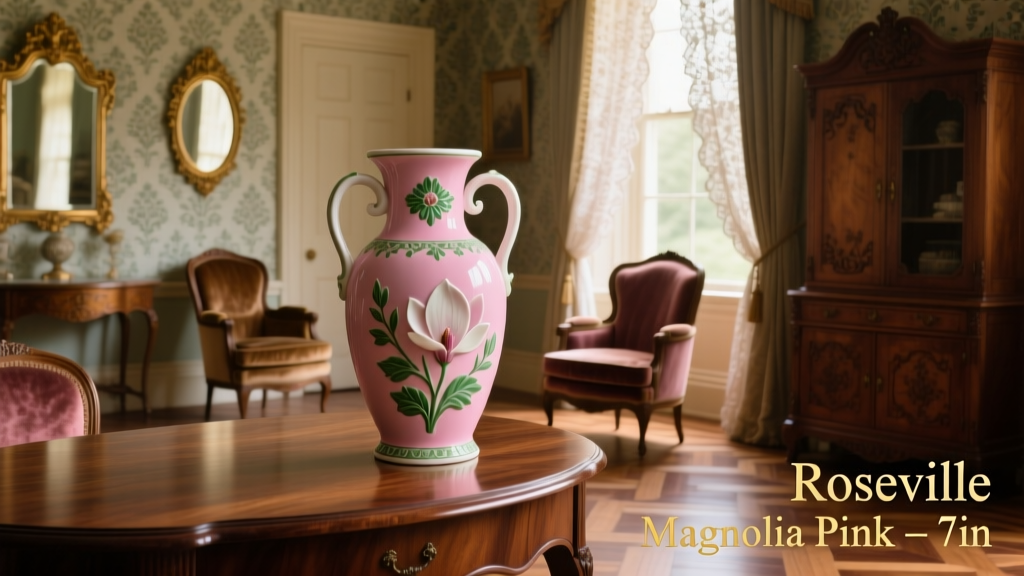
Roseville Magnolia Vase in Pink-Green Glaze: Identification, Value, and Restoration Insights for the 7-Inch Two-Handle Form
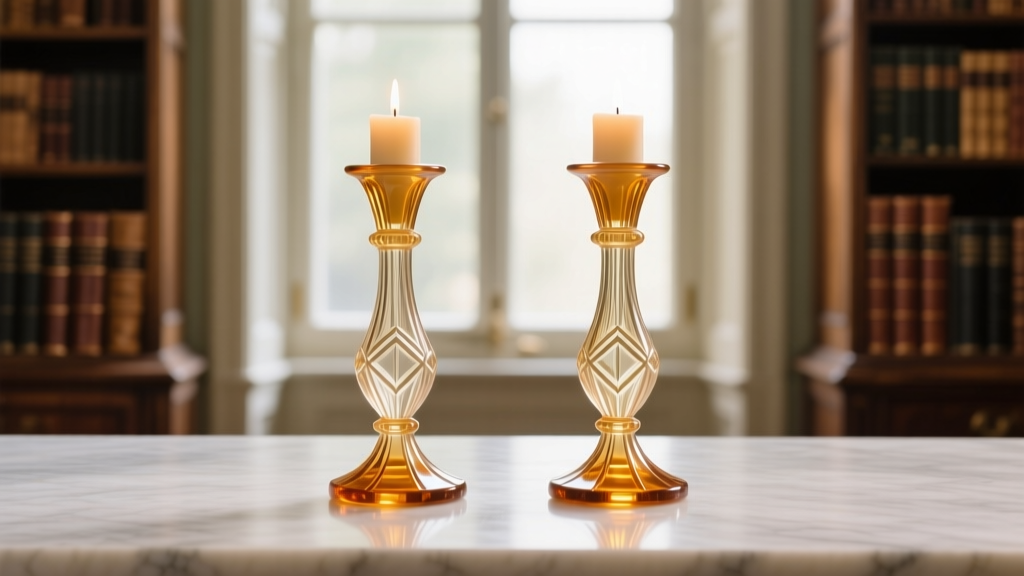
Durand Candlestick: Transparent Ambergris Baluster Form (10-Inch Pair) — A Study in French Art Deco Glass Mastery

Game Jungle Hunt Marble Gotham: History, Design, and Restoration of a Mid-Century American Arcade Cabinet
Fostoria Coin Urn in Frosted Emerald Green: A Collector’s Guide to the 12-Inch Covered Vessel

Frankoma Pottery Sign: Brown Raised Letters, 1½ × 7 Inches — Identification, History, and Restoration Guidelines

Teddy Zilo: The Fisher-Price Toy Bear That Defined Early Childhood Play in the 1970s
The Forbidden Fruit Liqueur Bottle: A Collector’s Guide to History, Design, and Restoration
Jack-in-the-Pulpit Vase: Decoding the 13-Inch Cased Glass Masterpiece with Floral Gilt Painting

The Buck Rogers Lunch Box: Aladdin’s 1979 Sci-Fi Embossed Metal Marvel