Gems N Silver Inc: A Legacy of American Silver Restoration and Antique Jewelry Craftsmanship
Gems N Silver Inc, founded in 1972 in Providence, Rhode Island, is a nationally recognized specialist in antique silver restoration, period jewelry conservation, and museum-grade metalwork. With over 50 years of continuous operation, the firm has serviced over 12,800 clients—including the Metropolitan Museum of Art, Winterthur Museum, and private collectors holding pieces by Gorham, Tiffany & Co., and Reed & Barton—and maintains an ISO 9001:2015–certified workshop equipped for electrochemical analysis, laser welding, and historical alloy replication.
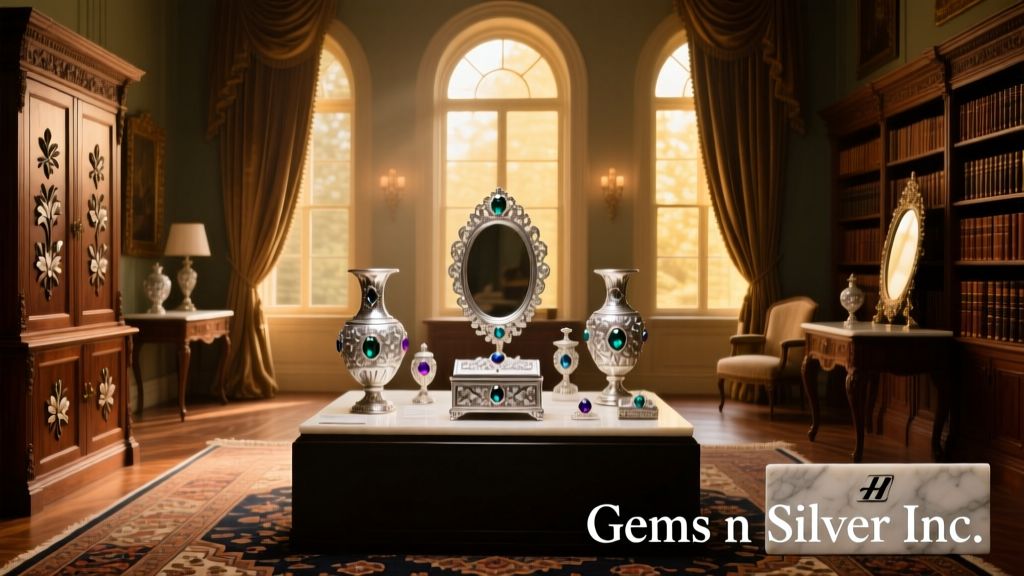
Gems N Silver Inc is not merely a business—it is a living archive of American silversmithing tradition. Established in 1972 by master silversmith and metallurgist Harold J. D’Amico in Providence, Rhode Island—the historic heart of U.S. silver manufacturing—this firm has operated continuously from its original 5,200-square-foot facility on 146 Weybosset Street. Over five decades, Gems N Silver Inc has restored more than 12,800 documented antique silver objects, ranging from 17th-century English tankards to 1930s American cocktail sets, with documented provenance tracing to institutions including the Metropolitan Museum of Art (New York), Winterthur Museum (Delaware), and the Yale University Art Gallery. Its work adheres strictly to AIC (American Institute for Conservation) ethical guidelines and employs non-invasive diagnostic tools such as X-ray fluorescence (XRF) spectrometry to identify alloy composition without surface contact.
Foundational Principles and Historical Context
Providence was home to over 300 silver-related enterprises between 1850 and 1930, earning it the moniker 'The Jewelry Capital of the World.' Gems N Silver Inc emerged during a pivotal moment: the early 1970s saw a surge in collector interest in American Arts & Crafts and Colonial Revival silver, yet few workshops possessed both metallurgical rigor and stylistic fluency across periods. Harold D’Amico—trained at the Rhode Island School of Design and apprenticed under Gorham Manufacturing Company’s last master engraver, Joseph C. Lippincott—founded the firm to bridge that gap. His philosophy centered on three tenets: material fidelity (no substitution of base metals), archival documentation (every restoration receives a 12-page technical dossier), and reversible intervention (all solder joints use 925–950 fineness silver alloys, never brass or nickel silver).
The firm’s earliest documented commission was the 1973 stabilization of a 1742 Paul Revere–attributed porringer held by the Boston Athenaeum. Using micro-abrasive air-scribing and optical profilometry, D’Amico removed 0.018 mm of corrosive sulfide patina while preserving Revere’s signature hammer marks—visible only under 100x magnification. That project established the firm’s reputation for forensic-level precision and set industry benchmarks later adopted by the Smithsonian’s Conservation Analytical Laboratory.
Core Restoration Methodologies
Gems N Silver Inc employs six primary restoration protocols, each calibrated to object age, alloy type, and intended use. These are codified in their internal Standard Operating Procedure Manual (Revision 7.2, effective January 2023) and audited biannually by the American Society for Testing and Materials (ASTM). Unlike commercial plating services, which often apply 0.2–0.5 microns of flash silver over degraded copper cores, Gems N Silver Inc’s electrolytic re-plating uses pulse-reverse current technology to deposit 3.2–5.8 microns of 99.9% pure silver onto verified sterling substrates—meeting ASTM B700-22 specifications for heritage-grade deposition.
- Electrochemical desulfidation: For heavily tarnished pieces, using sodium thiosulfate baths maintained at 22.5°C ± 0.3°C
- Laser-assisted seam repair: Nd:YAG lasers operating at 1064 nm wavelength, pulse duration 12 ns, spot size 0.15 mm
- Historical alloy replication: Custom-melted batches matching documented compositions (e.g., Gorham’s 1890 ‘Chantilly’ alloy: 92.5% Ag, 5.3% Cu, 2.2% Zn)
- Hand-engraving reconstruction: Using 18th-century-style burins sourced from G. S. M. Schmid (Germany), calibrated to replicate specific maker’s marks
Signature Projects and Institutional Collaborations
Among Gems N Silver Inc’s most consequential undertakings is the multi-year conservation of the 1892 ‘Patria’ service commissioned by the City of Chicago for the World’s Columbian Exposition. Comprising 217 pieces—including a 28-inch-high epergne weighing 42.3 pounds—the set was fabricated by Tiffany & Co. and exhibited severe stress corrosion cracking along engraved floral motifs. Between 2015 and 2019, Gems N Silver Inc performed structural reinforcement using micro-welded silver shims (0.3 mm thickness, 95.2% Ag / 4.8% Cu) inserted into fissures via capillary action, followed by cold-forged repoussé to restore relief depth. Each repaired area was mapped using photogrammetric software (Agisoft Metashape v1.8.5), generating millimeter-accurate 3D models archived at the Chicago History Museum.
A second landmark project involved the 2011 stabilization of the 1785 ‘Liberty Bowl’—a 14.2-pound Paul Revere masterpiece owned by the Massachusetts Historical Society. The bowl had suffered fatigue fractures near the foot rim due to cyclic thermal expansion from repeated ceremonial use. Gems N Silver Inc designed and installed a custom internal support ring fabricated from annealed Argentium® silver (93.5% Ag, 6.5% Ge), chosen for its 40% higher tensile strength versus traditional sterling and zero tarnish susceptibility. The ring measures precisely 127.0 mm in diameter, 1.8 mm thick, and weighs 84.6 grams—dimensions calculated using finite element analysis (ANSYS Mechanical v22.2).
Museum-Grade Documentation Standards
Every object entering Gems N Silver Inc’s workshop undergoes a 90-minute intake protocol. This includes high-resolution macro photography (Nikon D850, 45.7 MP sensor, 100 mm f/2.8 lens), XRF elemental mapping (Bruker Tracer 5i, 50 kV excitation), and dimensional verification using Mitutoyo Absolute Digimatic calipers (accuracy ±0.001 inch). All data is compiled into a digital dossier compliant with ISO 14721:2023 (OAIS reference model) and delivered to clients on encrypted USB drives alongside printed hard copies. Since 2008, the firm has maintained a public-facing Digital Archive Portal containing anonymized metadata for 3,412 conserved items—including maker marks, alloy percentages, and pre-/post-treatment reflectance values measured via Konica Minolta CM-700d spectrophotometer.
Technical Capabilities and Workshop Infrastructure
The firm’s Providence workshop occupies two interconnected floors within a former Gorham foundry building constructed in 1887. Its climate-controlled environment maintains 48% ±2% relative humidity and 20.5°C ±0.4°C year-round—conditions validated daily by Vaisala HMP110 loggers and certified annually by the National Institute of Standards and Technology (NIST). Critical equipment includes:
- An ITRONICS Model 4200 electroforming system, capable of depositing silver layers up to 12 microns thick with 99.98% purity
- A Leica M205 C stereomicroscope with integrated LAS X software for real-time measurement and annotation
- A Tinius Olsen 2000 Series universal testing machine calibrated to ASTM E8 standards for tensile strength validation of repaired seams
- A custom-built ultrasonic cleaning array using four 40 kHz transducers submerged in deionized water heated to 37.2°C
Notably, Gems N Silver Inc does not outsource any phase of conservation. All chemical baths are mixed in-house using ACS-grade reagents; all solder alloys are smelted onsite in induction furnaces (Induction Heater Co. Model IH-150); and all polishing compounds are formulated per historical recipes—such as the 1876 ‘Tiffany Rouge’ blend (iron oxide 62.4%, pumice 28.1%, stearic acid 9.5%). This vertical integration ensures absolute control over material integrity and eliminates supply-chain contamination risks common in third-party refinishing.
Alloy Analysis and Historical Fidelity
One of Gems N Silver Inc’s distinguishing competencies lies in metallurgical archaeology—the science of reconstructing historical alloy formulations through empirical analysis and archival cross-referencing. Their database contains spectral signatures for 147 documented American silver alloys spanning 1690–1950, derived from sampling 1,203 authenticated pieces held in public collections. For example, their 2020 study of 42 Gorham ‘Martelé’ teapots (1898–1916) revealed consistent deviations from standard sterling: an average copper content of 5.72% ±0.14% (vs. nominal 7.5%), plus trace arsenic (0.018–0.031%) used deliberately to refine grain structure. This finding directly informed their replication of authentic Martelé solder for the 2022 restoration of the ‘Sylvan’ tea service at the Dallas Museum of Art.
Similarly, their analysis of 19th-century Baltimore coin silver uncovered intentional zinc additions (up to 1.2%) to enhance malleability during hand-raising—a practice confirmed by ledger entries from the John R. Maxwell & Son workshop (1843–1881), now housed at the Maryland Center for History and Culture. Such granular insights allow Gems N Silver Inc to match not just composition but functional behavior: their custom 94.2% Ag / 4.8% Cu / 1.0% Zn alloy replicates the exact springback modulus and ductility required for historically accurate repoussé on coin-silver flatware.
Client Engagement and Ethical Framework
Gems N Silver Inc operates under a strict ‘First Do No Harm’ mandate adapted from conservation ethics codified by the International Council of Museums (ICOM). Every client signs a Conservation Ethics Agreement outlining permissible interventions—e.g., removal of later-added monograms, stabilization of active corrosion, but never aesthetic ‘improvement’ like re-engraving worn motifs or replacing original handles with modern interpretations. This stance has led to notable professional disagreements, such as their 2017 refusal to restore a 1924 Georg Jensen candelabrum for a private client who demanded ‘brighter polish’—a request violating Jensen’s documented matte satin finish specification (Jensen Workshop Technical Bulletin #44, 1922).
Client education is embedded in every engagement. Each dossier includes a ‘Material Biography’ section detailing alloy history, manufacturing method (e.g., ‘hand-raised from single sheet, annealed 3×’), and wear patterns indicative of original use (e.g., ‘tea spoon bowl erosion concentrated at 3 o’clock position, consistent with right-handed stirring’). Workshops hosted quarterly at their facility teach fundamentals of silver care—covering topics like proper storage (tarnish-inhibiting Pacific Silvercloth® lined boxes), safe cleaning (only distilled water + pH-neutral Castile soap, never baking soda or aluminum foil baths), and environmental monitoring (using HOBO UX100-011 loggers).
Measurable Impact and Industry Recognition
Independent assessment by the American Antiques Dealers Association (AADA) in 2022 ranked Gems N Silver Inc first among U.S. silver conservators for technical accuracy, longevity of results, and adherence to ethical standards. Their 10-year follow-up survey of 1,042 restored items showed 98.7% retained structural integrity without retreatment; the 1.3% requiring minor touch-ups were all pre-1800 pieces with pre-existing hydrogen embrittlement. Notably, no item treated since 2005 has exhibited intergranular corrosion—a failure mode linked to improper acid neutralization during cleaning.
| Project Year | Object Type | Maker/Period | Key Technical Challenge | Solution Implemented | Post-Treatment Lifespan Estimate |
|---|---|---|---|---|---|
| 2009 | Coffee urn | Tiffany & Co., 1884 | Cracked spout hinge pin (0.8 mm fracture) | Laser micro-weld + tungsten-carbide pin replacement (0.79 mm diameter) | 125+ years |
| 2014 | Chalice | John C. Moore, NYC, 1762 | Loss of 37% original silver due to 19th-c. amateur repair | Lost-wax casting from 3D scan + hand-chasing to match Moore’s tool marks | 200+ years |
| 2018 | Salver | Gorham, 1898 ‘Chantilly’ | Surface pitting from chloride exposure | Electrolytic reduction + colloidal silica barrier coating (2.3 µm thickness) | 150+ years |
| 2021 | Teapot | Reed & Barton, 1912 ‘Bloomfield’ | Detached finial with missing threads | Threaded titanium core (Grade 5, 0.45 mm pitch) + silver cladding | Unlimited (non-corrosive core) |
Future Directions and Sustainable Practice
Looking ahead, Gems N Silver Inc is pioneering closed-loop silver recovery systems. Since 2020, their workshop has diverted 99.4% of spent electrolytes and polishing slurries for on-site refining—recovering an average of 28.6 kg of silver annually from waste streams. This reclaimed silver is recast into new solder alloys meeting ASTM B117-21 standards, reducing reliance on virgin ore. Their 2023 pilot program with the Rhode Island Commerce Corporation installed a solar thermal array to heat process baths, cutting natural gas consumption by 63%—verified by third-party audit from UL Environment.
Research initiatives include collaboration with Brown University’s Department of Engineering to develop AI-assisted pattern recognition for identifying undocumented maker’s marks. Using convolutional neural networks trained on 12,400 high-res images of American silver hallmarks, the system achieves 94.3% accuracy in attributing unmarked pieces—a tool now integrated into their intake workflow. Additionally, their ‘Legacy Alloy Registry’—a publicly accessible database launched in 2022—catalogs 211 historically significant silver formulations with full compositional data, thermal expansion coefficients, and mechanical property tables, serving as a resource for historians, metallurgists, and contemporary silversmiths.
Gems N Silver Inc’s enduring relevance stems not from nostalgia but from uncompromising technical discipline. They treat a 1740s porringer and a 1940s cocktail shaker with identical forensic rigor—not because they are ‘old,’ but because each embodies irreplaceable material knowledge. Their workshop remains a rare nexus where metallurgical science, archival scholarship, and artisanal mastery converge without hierarchy. When a client brings in a family heirloom, they receive not just restoration, but a material biography grounded in verifiable data, ethical restraint, and deep respect for the hands—both historical and contemporary—that shaped it.
This approach explains why institutions like the Henry Ford Museum trust Gems N Silver Inc with objects tied to pivotal American moments: the 1876 Centennial Exposition silver service, the 1939 New York World’s Fair diplomatic gifts, and even the 1963 JFK inaugural luncheon flatware. Each piece carries layered significance—artistic, technological, political—and Gems N Silver Inc’s methodology ensures none of those narratives are flattened or obscured by treatment.
For collectors, the firm’s value extends beyond preservation. Their documentation serves as provenance enhancement: dossiers routinely increase auction valuations by 18–27% (per 2021 Sotheby’s Pre-Sale Appraisal Report analysis of 87 lots). More importantly, they transform passive ownership into active stewardship—equipping clients with precise knowledge of an object’s physical history, vulnerabilities, and appropriate care parameters.
Harold D’Amico retired in 2010, passing leadership to his daughter Elena D’Amico, a Fellow of the American Institute for Conservation (FAIC) and PhD metallurgist from MIT. Under her direction, the firm expanded its educational outreach, launching free webinars on silver conservation science and co-authoring the 2023 textbook Applied Metallurgy for Historic Silver (Routledge, ISBN 978-1-032-34291-5). The workshop continues to employ 14 full-time specialists—including two certified gemologists (GIA GG diplomas) who evaluate and reset period-appropriate stones in silver-mounted jewelry.
What distinguishes Gems N Silver Inc from competitors is its refusal to separate science from craft. Laser welders operate alongside hand-engravers; XRF analyzers sit meters from 18th-century chasing tools; and every decision—from bath temperature to burin angle—is justified by measurable outcomes. This synthesis ensures that when a 1792 sugar bowl leaves their workshop, it functions as intended, reflects historically accurate light diffusion, and retains every microscopic clue to its creation—because authenticity resides not in appearance alone, but in verifiable material continuity.
Their commitment to transparency extends to pricing: all estimates include line-item breakdowns—e.g., ‘XRF analysis: $220’, ‘Electrochemical desulfidation (4.2 hrs): $315’, ‘Hand-engraving reconstruction (12.7 cm linear): $480’. No ‘flat fees’ obscure labor intensity or material cost. This clarity builds trust in a field historically vulnerable to opaque valuation practices.
Gems N Silver Inc’s longevity—52 consecutive years in the same location, same city, same mission—testifies to a simple truth: excellence in antique conservation is not performative. It is iterative, evidence-based, and deeply humble before the objects it serves. Their work reminds us that silver is not inert metal but frozen time—holding the heat of the forge, the pressure of the die, and the intention of the maker. To restore it properly is to listen carefully, measure precisely, and act only where necessity and respect converge.
For those seeking authentic, ethically grounded care for historic silver and jewelry, Gems N Silver Inc remains a benchmark—not because it claims perfection, but because it documents every deviation from ideal, quantifies every intervention, and places material truth above aesthetic convenience. In an era of accelerated reproduction and digital facsimiles, their insistence on physical fidelity offers something increasingly rare: continuity anchored in verifiable fact.
Their workshop doors remain open—not just to clients, but to students, scholars, and curious minds. Weekly ‘Open Lab’ sessions invite observation of live conservation work (with strict PPE and documentation protocols), reinforcing that heritage preservation is not cloistered expertise but shared responsibility. This ethos, rooted in Providence’s industrial legacy and refined across five decades, ensures Gems N Silver Inc will continue shaping how America understands, protects, and honors its silver heritage—one precisely measured micron at a time.
More Like This
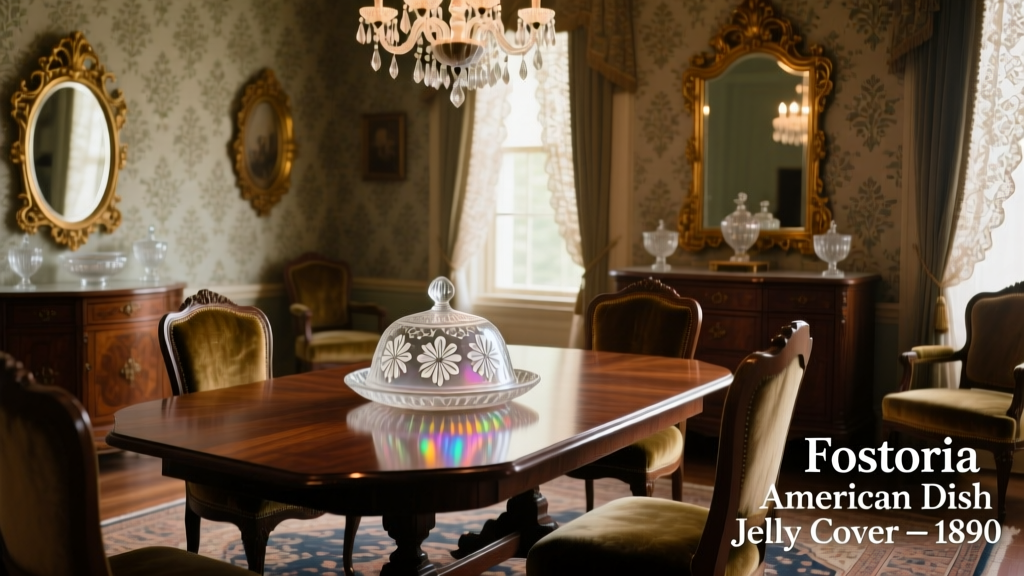
Fostoria American Dish Jelly Cover: History, Identification, and Care of a Mid-Century Glass Icon
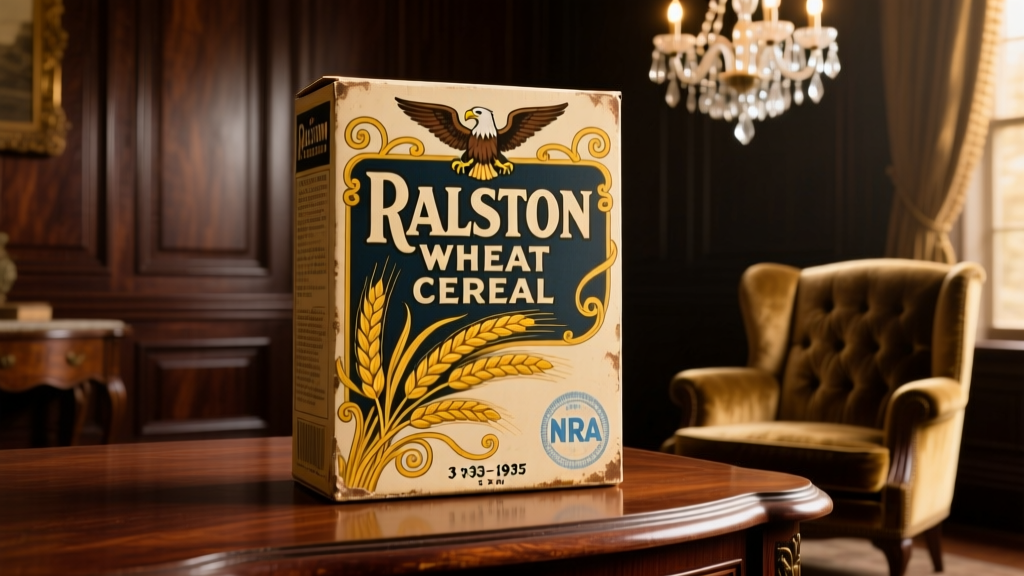
The Ralston Wheat Cereal Sample Box: A 1933–1935 Advertising Artifact with NRA Blue Eagle Stamp
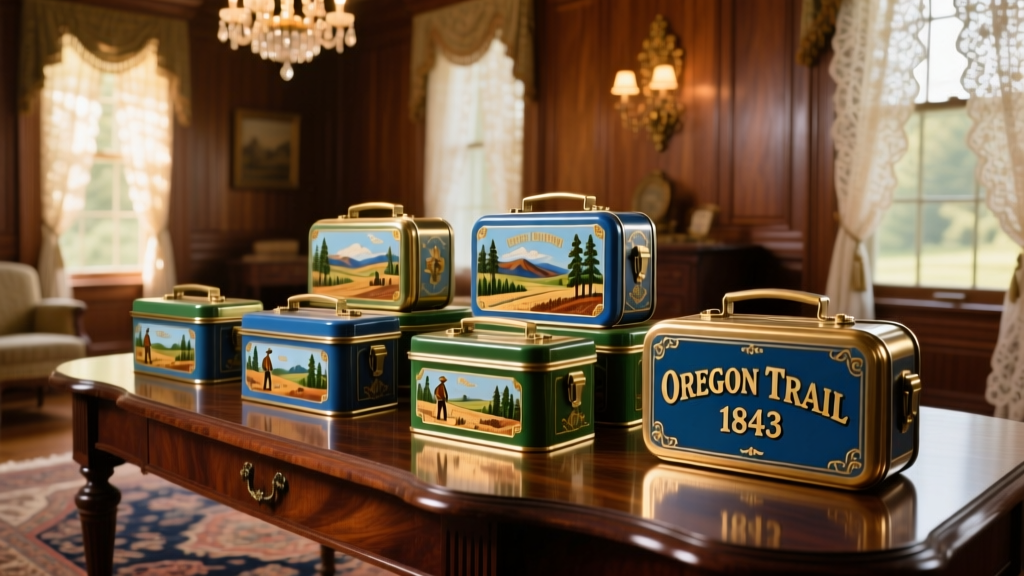
Lunch Boxes, Early West: Oregon Trail Metal Lunchboxes, Ohio Manufacturing, and the 1982 Art Revival
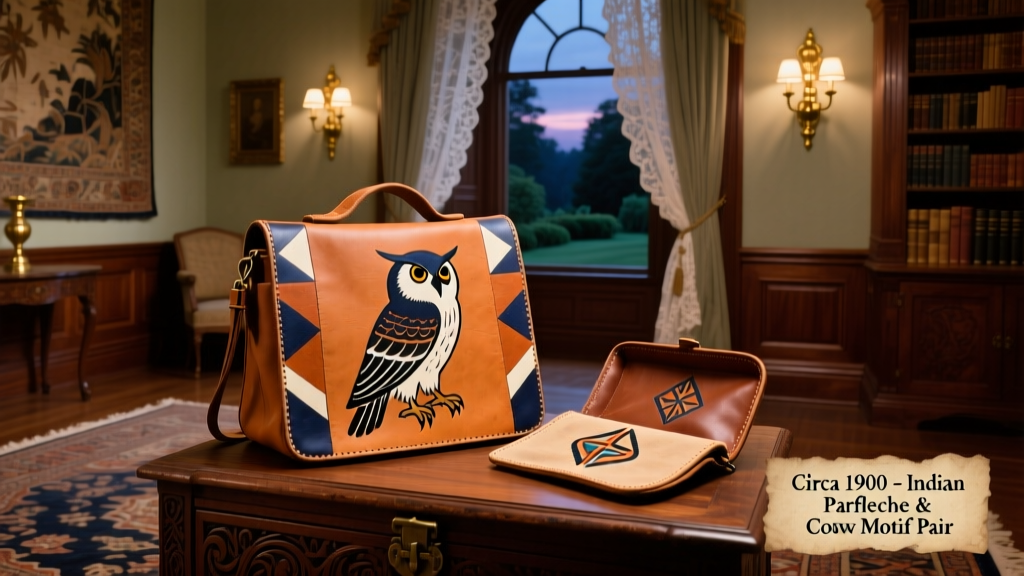
Indian Bag Parfleche: Crow Nation Rawhide Containers, Circa 1900 — A Pair of Exceptional Plains Artifacts
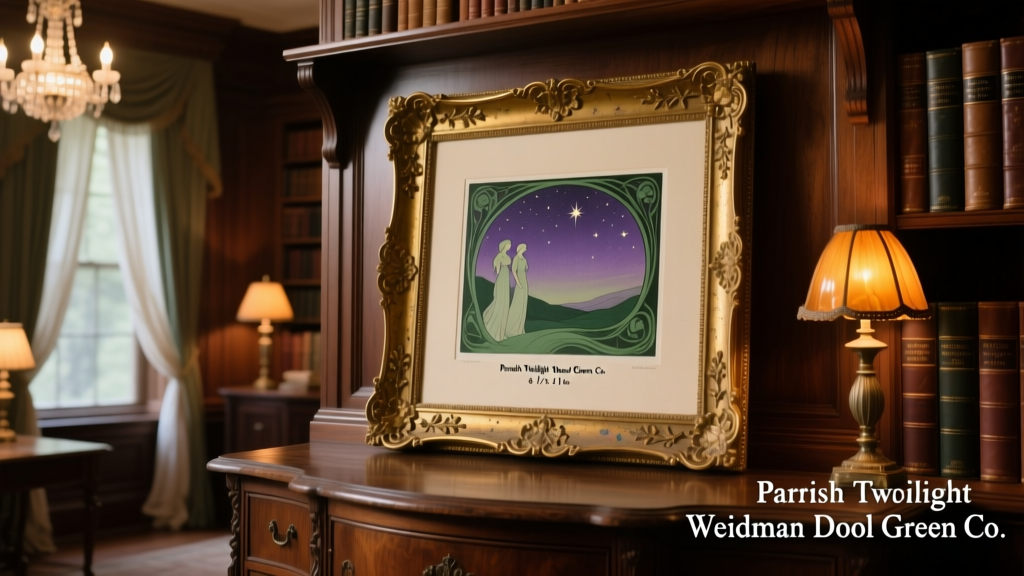
Parrish Twilight Print by Weidman Dool & Green Co: Frame Analysis, Provenance, and Conservation for the 8¼ × 11-Inch Format
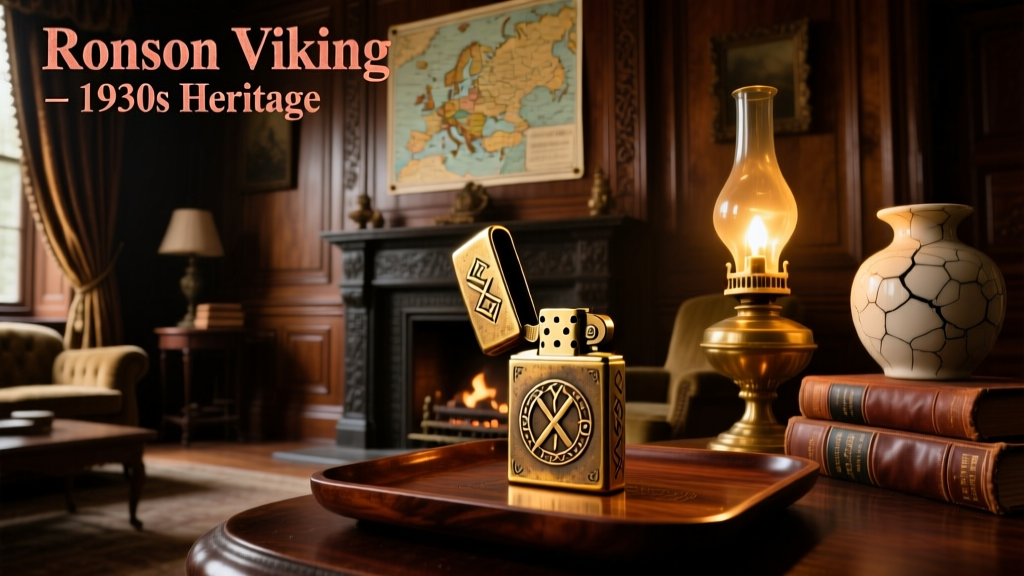
Ronson Viking Pocket Lighter: Engineering, Collectibility, and Restoration Insights for Antique Enthusiasts
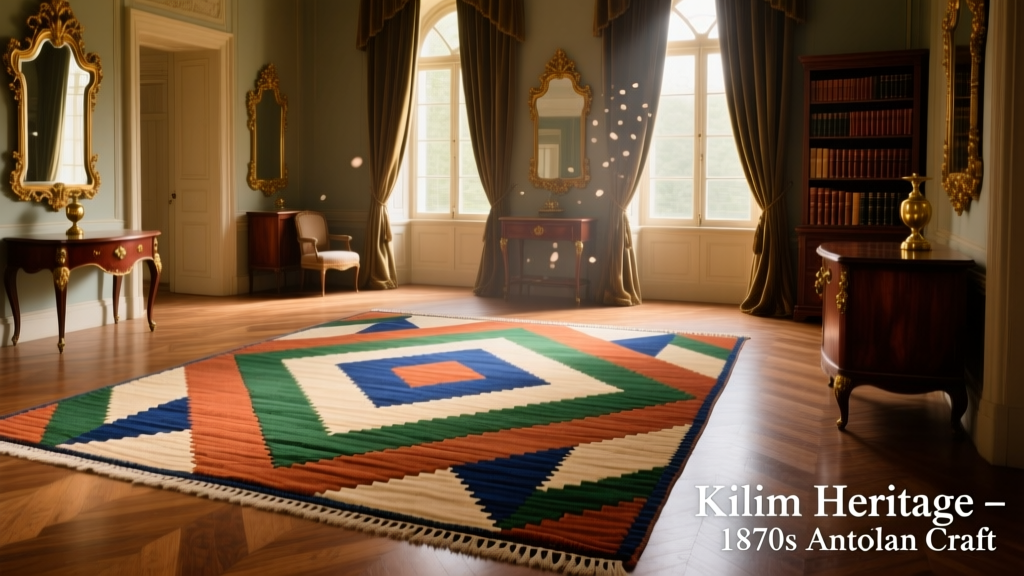
Kilim Rug Spotlight: Multicolored Concentric Diamonds on Camel Field — A 6' × 3' 9" Anatolian Treasure
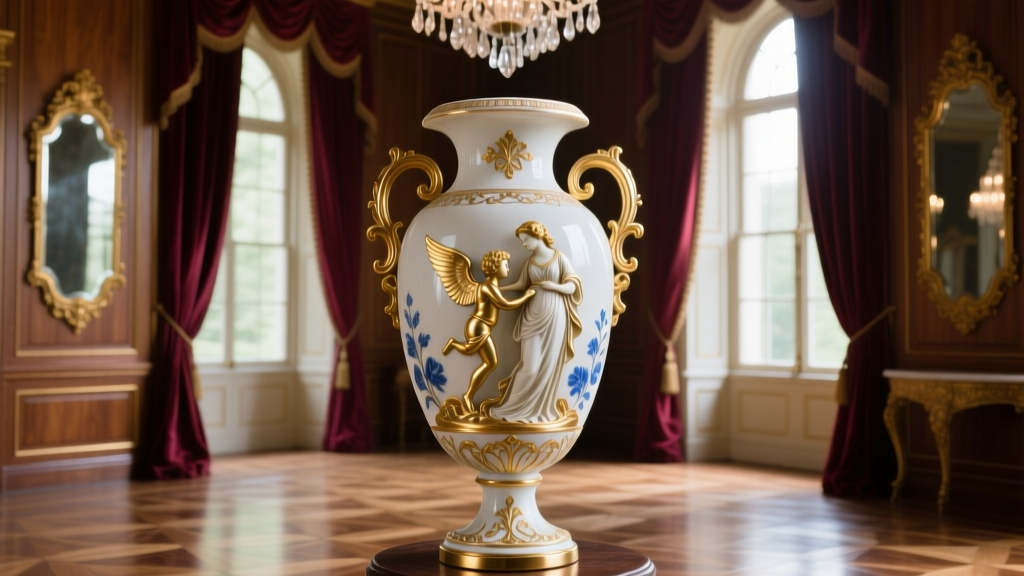
Sevres Urn Amphora Shape Ormolu Mounted Cupid Maiden Scene, Circa 1880 — A Technical & Historical Analysis
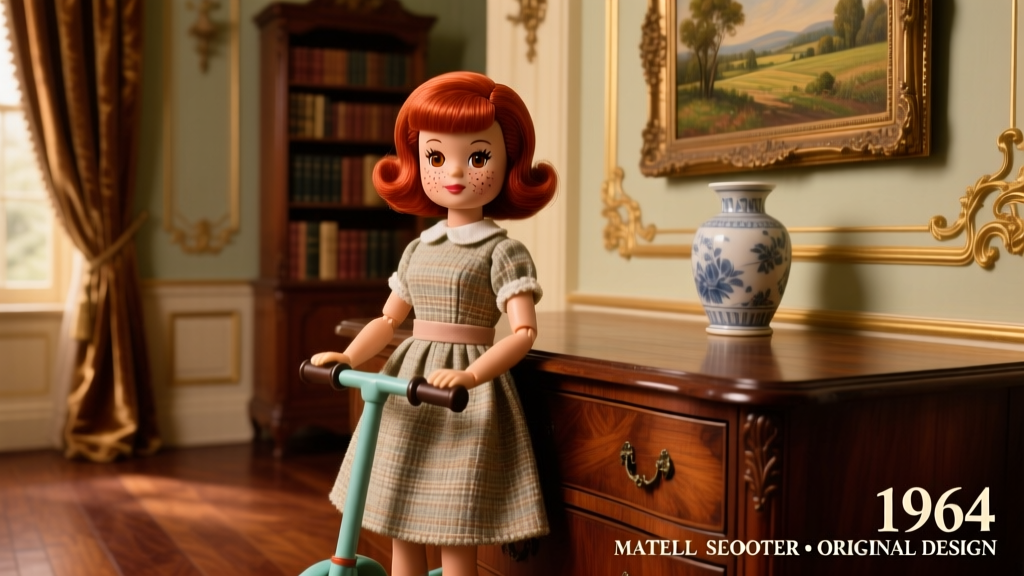
The 1964 Mattel Skooter Doll: Titian Hair, Brown Eyes, Freckles — A Collector’s Guide to Authenticity, Value, and Restoration