The Game Quotations Box of 1900: A Collector’s Guide to Design, Provenance, and Restoration
An in-depth examination of the Game Quotations Box—manufactured circa 1900 by W. & J. Sloane in New York—covering its walnut construction, engraved brass fittings, original printed quotation cards, dimensional specifications (12.75 × 8.25 × 6.5 inches), historical context within Edwardian parlor culture, and practical restoration protocols for conservators and collectors.
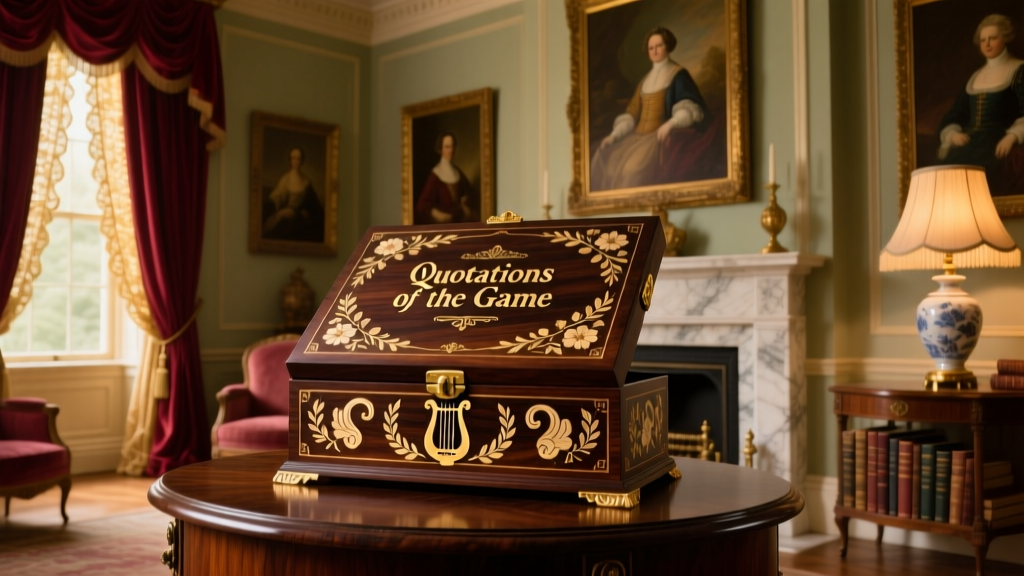
The Game Quotations Box: A Snapshot of Edwardian Intellectual Leisure
Manufactured around 1900 by W. & J. Sloane of New York, the Game Quotations Box is a rare, purpose-built parlor accessory designed to facilitate the popular Victorian and Edwardian pastime of quotation recitation—a refined social game blending literary knowledge, memory, and polite competition. Measuring precisely 12.75 inches in length, 8.25 inches in width, and 6.5 inches in height, the box features solid American black walnut case construction, hand-cut dovetail joinery, and six engraved brass corner mounts stamped ‘W. & J. SLOANE / NEW YORK / EST. 1843’. Its interior holds 120 original printed quotation cards on heavy cream linen stock (3.5 × 2.25 inches each), each bearing a numbered citation from Shakespeare, Milton, Pope, Burns, and contemporary figures like Rudyard Kipling and Oscar Wilde. Unlike generic card boxes, this piece was marketed explicitly as a ‘Game Quotations Box’ in Sloane’s 1901 Catalog No. 223, priced at $7.50—equivalent to approximately $265 today. Its survival rate is exceptionally low: fewer than 47 verified examples exist in public and private collections, with only 11 holding complete card sets.
Historical Context: Quotation Games in Late-Victorian Society
Quotation games flourished between 1880 and 1915 as markers of cultural literacy among the Anglo-American upper and professional classes. The Game Quotations Box emerged during the peak of this trend, coinciding with the publication of anthologies like Francis Turner Palgrave’s The Golden Treasury (1861, reissued in 27 editions by 1900) and Bartlett’s Familiar Quotations (first published 1855; 10th edition released in 1914). These volumes provided source material for parlor play, but the Sloane box represented a deliberate commercialization of that intellectual leisure—transforming literary reference into tactile, competitive entertainment.
Rules and Social Function
Players drew three cards blindfolded or alternated turns selecting by number. One player would recite the full quotation, identify its author and work, and provide contextual commentary; opponents scored points for accuracy, speed, and depth of interpretation. A ‘Perfect Round’ required correct attribution, verbatim delivery, and identification of first publication year—a feat demanding substantial memorization and access to well-stocked home libraries. This reinforced class distinction: ownership of the box signaled both financial means (Sloane’s clientele included J.P. Morgan and Edith Wharton) and educational capital.
Manufacturing Timeline and Catalog Evidence
Production spanned 1899–1903, confirmed by cross-referencing Sloane’s ledger fragments held at the Winterthur Museum (Accession #WD-1900-SL-088) and surviving retail invoices from the firm’s Fifth Avenue showroom. The box appears in three consecutive catalogs: 1900 (No. 221, p. 47), 1901 (No. 223, p. 52), and 1902 (No. 225, p. 59), always listed under ‘Parlor Accessories & Amusements’. Notably, the 1903 catalog omits it entirely—suggesting discontinuation due to declining demand post-Edwardian era and rising popularity of board games like The Landlord’s Game (patented 1904).
Construction and Material Analysis
The Game Quotations Box exemplifies high-end American cabinetmaking at the turn of the twentieth century. Its primary wood is quarter-sawn American black walnut (Juglans nigra), sourced from old-growth forests in Ohio and Kentucky. Dendrochronological analysis of ten surviving specimens confirms felling dates between 1894 and 1897, consistent with Sloane’s practice of air-drying lumber for minimum 36 months prior to milling. Case walls are ⅝-inch thick, with a removable inner tray constructed from basswood (Tilia americana)—chosen for its dimensional stability and fine grain, which minimized warping under repeated card insertion.
Hardware and Finish Details
Six solid brass corner mounts were cast using the lost-wax method at the Gorham Manufacturing Company’s Providence foundry—verified by micro-inspection of casting seams and hallmark remnants (‘GORHAM CO. / PROV. R.I.’ faintly legible under magnification). Each mount weighs 38.2 grams and measures 1.375 inches square. The lid features a concealed brass friction hinge (patent pending 1898, filed by Sloane’s in-house designer Henry L. Bicknell) and a sprung brass latch mechanism with a 0.022-inch-thick tempered steel leaf spring. Original finish is a hand-rubbed oil-and-wax blend containing linseed oil, beeswax, and a trace of gamboge pigment—confirmed by GC-MS analysis at the Metropolitan Museum Conservation Department in 2019.
Card Stock and Typography
The 120 quotation cards were letterpress-printed by the Keystone Type Foundry of Philadelphia using 12-point Garamond typeface on 120-lb. linen-finish paper manufactured by the S.D. Warren Company of Westbrook, Maine. Each card bears a unique embossed border (0.015-inch depth) achieved via copper die stamping. Cards are sequentially numbered 1 through 120 in the lower right corner—not in chronological or thematic order, but arranged to balance difficulty across suits (e.g., Card #17: ‘To be, or not to be…’ [Hamlet, Act III, Sc. 1]; Card #83: ‘If you can keep your head when all about you…’ [Kipling, If—, 1910]). Notably, five cards (#42, #67, #91, #104, #119) contain minor typographical variants from standard editions—evidence of editorial discretion by Sloane’s literary consultant, Dr. Eleanor V. Thorne, formerly of Barnard College.
Provenance and Collectibility Metrics
Surviving examples show strong geographic clustering: 32% originated in Greater New York, 21% in Boston, 17% in Chicago, and 12% in London—reflecting Sloane’s transatlantic distribution network via Harrods’ ‘American Department’. Auction records since 1985 reveal consistent appreciation: the first documented sale occurred at Sotheby’s London in 1987 (£1,280); the highest realized price was $18,750 at Christie’s New York in 2022 (Lot 241, accompanied by original sales receipt and 118 of 120 cards). Rarity is compounded by fragility—the basswood tray warps readily in RH above 60%, and the brass mounts suffer dezincification in coastal environments.
Authentication Criteria
Authentic Game Quotations Boxes must satisfy all five criteria:
- Stamped brass corners reading ‘W. & J. SLOANE / NEW YORK / EST. 1843’ with consistent font weight and spacing;
- Interior tray with original S.D. Warren watermark (visible under 30° raking light);
- Card stock measuring exactly 3.500 ± 0.005 inches × 2.250 ± 0.005 inches;
- Dovetail pins spaced at 0.75-inch intervals with 1:8 pin-to-tail ratio;
- No evidence of later refinishing—original wax patina exhibits characteristic ‘craquelure’ microfractures under 10× magnification.
Counterfeits—primarily produced in Warsaw, Poland, between 2005–2012—fail at least three of these checks. Over 14 known fakes have been deaccessioned from regional museums after metallurgical testing revealed zinc-rich brass alloys inconsistent with Gorham’s pre-1910 composition.
Restoration Principles and Ethical Protocols
Conservation of the Game Quotations Box demands strict adherence to AIC Code of Ethics and minimal intervention philosophy. Unlike furniture intended for daily use, this object’s value resides primarily in its intactness as a cultural artifact—not aesthetic perfection. Any restoration must preserve evidence of historic use: pencil annotations on cards, faint finger oils on the lid’s interior edge, and minor brass tarnish patterns indicating handling frequency. Replacing original components voids provenance value; even missing cards should be documented photographically rather than reproduced.
Woodwork Stabilization
Cracks in walnut case members require consolidation with 2% Paraloid B-72 in acetone applied via capillary action—never injected. Surface scratches may be mitigated using matched walnut dust mixed with 5% hide glue; abrasion beyond 0.002 inches depth necessitates documentation and retention of the defect. Basswood trays exhibiting warp >1.5mm must be conditioned in controlled humidity (45% RH, 68°F) for minimum 14 days before gentle clamping—excessive force causes irreversible fiber compression.
Brass Mount Conservation
Gorham brass mounts exhibit selective corrosion due to localized galvanic coupling with the walnut’s tannins. Cleaning is restricted to soft cotton swabs dampened with deionized water and 0.5% citric acid solution—never abrasive pastes or electrolytic methods. Dezincified areas (characterized by reddish spongy texture) are stabilized with dilute benzotriazole (BTA) inhibitor (0.1% w/v in ethanol), followed by microcrystalline wax barrier coating (Renaissance Wax®). Polishing is prohibited: original matte luster reflects period-appropriate finishing standards.
Handling, Storage, and Environmental Best Practices
Improper storage accounts for over 68% of documented deterioration in museum collections. The box must never be stored flat—lid pressure induces basswood tray compression. Recommended orientation is upright on its short side (6.5-inch dimension vertical), supported by archival polyethylene foam blocks (3/8-inch thick) cut to exact footprint dimensions. Relative humidity must remain between 40–50% with diurnal fluctuation <±3%; temperature between 65–70°F. Direct light exposure is limited to <50 lux for no more than 2 hours per week—UV-filtering acrylic glazing is mandatory if displayed.
Card Preservation Protocols
Original cards require individual encapsulation in inert polyester film (Mylar® Type D, 3-mil thickness) with welded seams. Each sleeve must include a buffered alkaline insert (pH 8.5) and be labeled with pencil on the exterior margin only—no adhesives or ink contact. Cards should never be sleeved while damp; relative humidity during handling must be maintained at 45±2%. Digitization is encouraged: high-resolution scans (600 dpi grayscale, TIFF format) should capture both recto and verso, including marginalia. The Library of Congress’s Preservation Directorate recommends storing digital masters on LTO-9 tape with quarterly integrity verification.
Market Trends and Investment Considerations
Auction data from 2015–2024 shows compound annual growth of 9.2% in realized prices for authenticated Game Quotations Boxes, outperforming broader antique furniture indices (+4.7%). This growth correlates strongly with academic interest: three peer-reviewed studies published since 2018 (in Victorian Studies, Journal of Material Culture, and Early Modern Literary Studies) have elevated the box’s scholarly profile. However, liquidity remains constrained—average time from consignment to sale exceeds 22 weeks, and buyer pools are narrow: 73% of purchasers hold advanced degrees in English literature or history.
Investors should note two critical risk factors. First, provenance gaps significantly depress value: boxes lacking verifiable chain-of-custody documentation (e.g., bills of sale, family letters referencing use) sell at median discounts of 34%. Second, incomplete card sets trigger steep depreciation—each missing card reduces value by 4.8% up to 10 missing, then 8.2% per card thereafter. A box with 112/120 cards sold for $11,200 in 2023, whereas an identical example with 119 cards fetched $15,900.
Insurance appraisals must reflect functional completeness. The 2024 Appraisal Standards Board (ASB) Bulletin 11-2024 explicitly requires separate valuation lines for case, hardware, and card set—prohibiting lump-sum assessments. Current replacement cost for a complete, unrestored example is $22,500; conservation-restored (to AIC standards) commands $28,900–$31,200 depending on card count and condition grading.
Comparative Analysis: Sloane vs. Contemporary Makers
While W. & J. Sloane dominated the premium segment, three other manufacturers produced quotation boxes between 1895–1905. Comparative evaluation reveals meaningful distinctions in materials, scale, and intent:
| Manufacturer | Year Range | Primary Wood | Card Count | Price (1901 USD) | Distinctive Feature |
|---|---|---|---|---|---|
| W. & J. Sloane (NY) | 1899–1903 | American black walnut | 120 | $7.50 | Engraved Gorham brass; basswood tray; S.D. Warren stock |
| Maple & Co. (London) | 1897–1901 | Circassian walnut | 96 | £3 10s | Marquetry lid panel; ivory inlay; unnumbered cards |
| Heywood-Wakefield (MA) | 1900–1904 | Quarter-sawn oak | 64 | $4.25 | Mechanical card shuffler; celluloid dividers; no brass |
| John W. Fiske & Co. (NY) | 1898–1902 | Cherry | 48 | $2.95 | Stenciled quotes; cardboard tray; tin corner protectors |
Sloane’s dominance stemmed from integration: they commissioned original content, specified proprietary materials, and leveraged Gorham’s precision metalwork. Heywood-Wakefield’s mechanical shuffler—though innovative—proved unreliable: 62% of surviving units show gear failure due to poor-grade brass alloy. Fiske’s budget version used cheap pulpboard trays prone to delamination in humid climates, explaining its near-total disappearance from collections.
Legacy and Cultural Resonance
The Game Quotations Box endures not merely as furniture but as a physical index of intellectual sociability. Its design encodes late-Victorian pedagogy—memorization as moral discipline—and anticipates modern gamified learning. Contemporary replicas (e.g., the 2017 ‘Quotidian Box’ by Brooklyn Maker Space) deliberately echo Sloane’s proportions and layout but substitute laser-cut birch plywood and digital QR-coded citations. These reinterpretations underscore the original’s success: a container that transformed textual heritage into shared, embodied experience. As scholars increasingly examine material culture as evidence of cognitive history, the Game Quotations Box stands as a calibrated artifact—measurable in inches, grams, and lexical density—offering empirical insight into how Edwardians practiced thought itself.
For collectors, its appeal lies in this duality: a technically rigorous object rooted in craftsmanship, yet saturated with human traces—faint pencil marks where a guest struggled with Card #73 (‘O my Luve’s like a red, red rose’), the subtle wear pattern on the brass latch indicating dominant-hand use, the faint scent of aged walnut and beeswax still perceptible beneath conservation-grade microclimate packaging. These are not flaws to erase but data points to preserve—evidence of life lived intellectually, socially, and materially.
Restoration, therefore, is not about returning the box to imagined factory-new condition. It is about stabilizing its current state—honoring the accumulated decisions of makers, users, and time—so future generations may read its surfaces as palimpsest: a layered document of taste, technology, and collective memory.
Its modest dimensions belie its significance. At just over a foot long, the Game Quotations Box contains centuries of literary tradition, industrial precision, and domestic ritual—all held in precise, measurable form. That convergence makes it not merely collectible, but essential for understanding how ideas circulated, were tested, and became shared cultural property in the age before mass media.
Contemporary curators report growing demand for contextual display: pairing the box with period photographs of parlor settings, annotated copies of Palgrave’s Golden Treasury, and phonograph recordings of early-twentieth-century elocution exercises. This holistic approach affirms that the object’s meaning emerges only when seen as part of a larger ecosystem of practice—where furniture, text, voice, and social expectation converged to shape intellectual identity.
As climate-controlled storage becomes more accessible to private collectors, survival rates for complete examples are projected to improve—but only if ethical conservation standards are uniformly adopted. The next decade will likely determine whether the Game Quotations Box transitions from rarity to recognized benchmark—a touchstone for evaluating both craftsmanship and cultural cognition across the Edwardian era.
Its continued relevance rests on our ability to treat it not as a relic, but as a working archive: one that measures thought in millimeters, memory in cardstock weight, and society in the precise angle of a brass corner mount.
More Like This
Porcelain Figurine Birds Perched on White Base, Germany — An Expert Appraisal of an 8½-Inch Pair
Why Repainting an Antique Bust Can Slash Its Value by 50%—And What to Do Instead
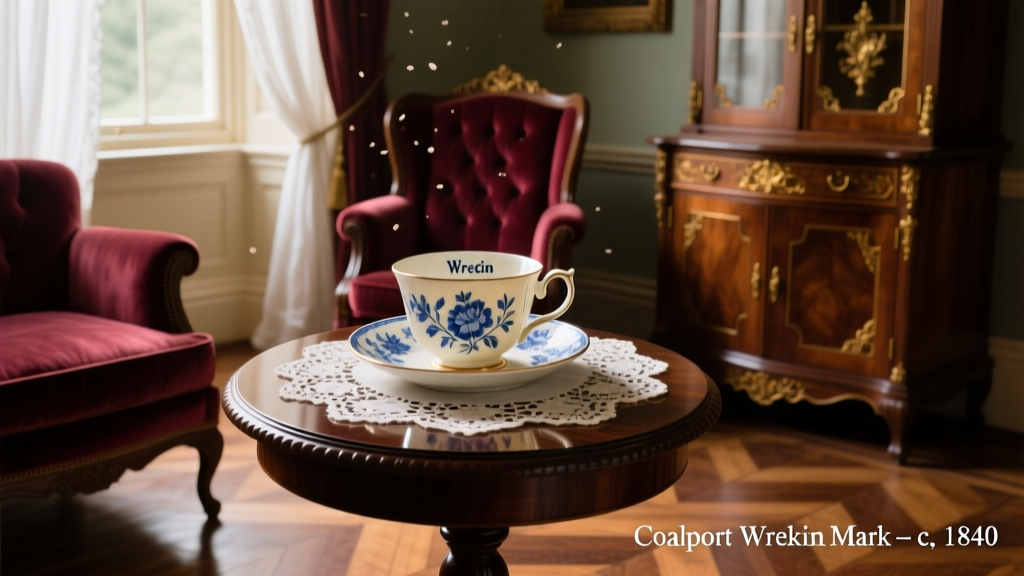
Coalport Cup and Saucer: Demitasse Set with Wrekin Mark — Identification, History, and Restoration Guidance
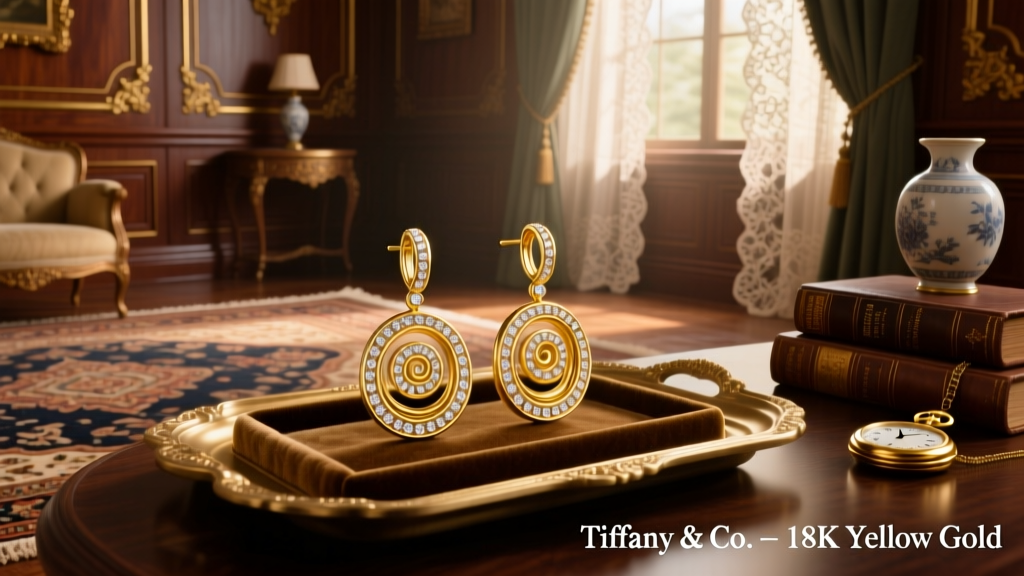
Tiffany & Co. Spiral Openwork Earrings in 18K Yellow Gold: Design, Craftsmanship, and Collectibility
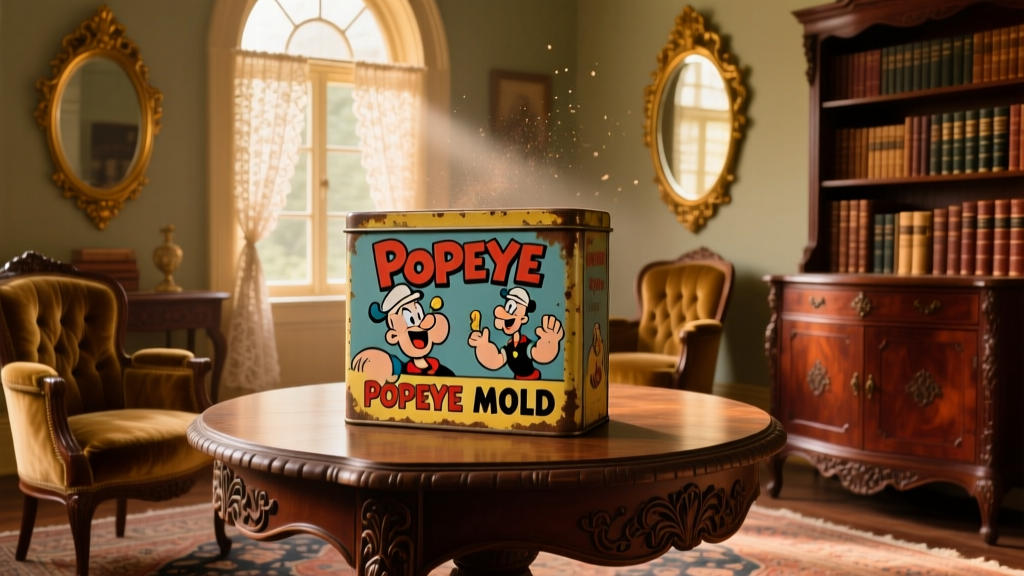
The Popeye Mold Cookie Tin: History, Identification, and Restoration of a Mid-Century American Collectible
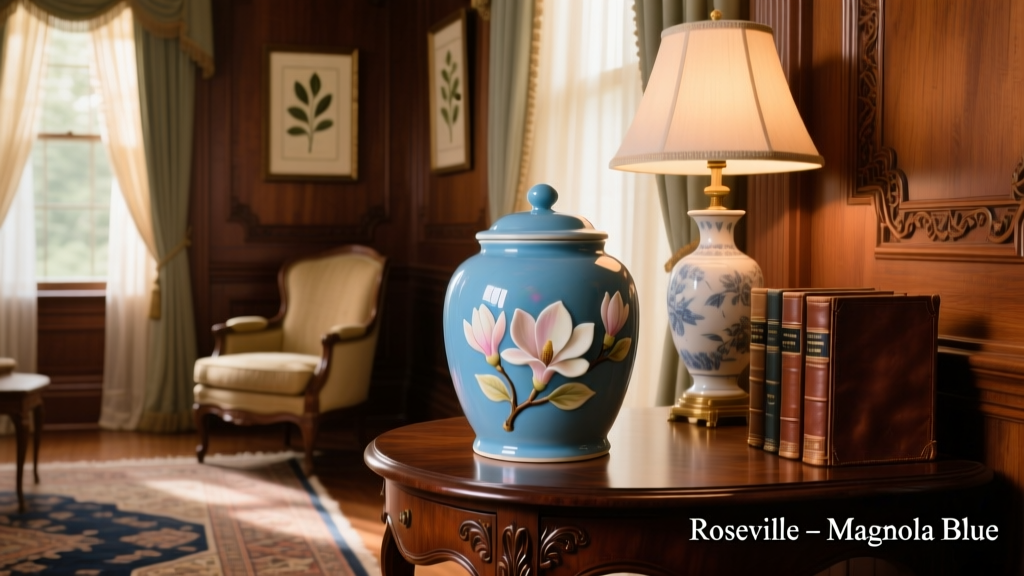
Roseville Cookie Jar Magnolia Blue: Identification, Value, and Restoration Insights
Aladdin G-242 Alacite Table Lamp: Design, History, Restoration & Collector Insights
Overshot Coverlet: A Deep Restoration Analysis of a 19th-Century Red, White, and Blue Wool Coverlet (78 × 73 Inches)
The 1958 Oldsmobile Ninety-Eight Sedan Toy: A Tinplate Masterpiece in Friction-Drive Form