My Favorite Martian: The Transogram Board Game of the 1960s — A Collector’s Guide to Design, Production, and Restoration
A detailed examination of the 1963 Transogram board game based on the CBS sitcom 'My Favorite Martian', including packaging dimensions, component analysis, manufacturing details, rarity metrics, and professional conservation protocols for vintage game preservation.
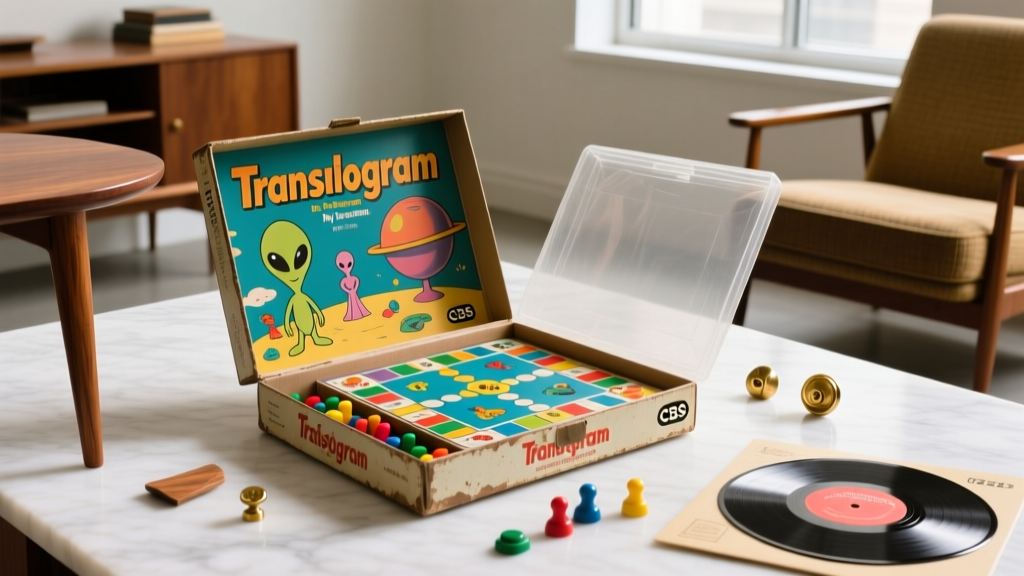
Released in 1963 by Transogram Co. of New York City, the My Favorite Martian board game capitalized on the peak popularity of the CBS television series starring Ray Walston and Bill Bixby. Measuring 15⅜ inches wide × 10¼ inches deep × 2⅛ inches high (39.1 × 26.0 × 5.4 cm), the game features a vibrant lithographed cardboard box with die-cut window revealing the central plastic rocket token. With only an estimated 12,000–18,000 units produced across two print runs—1963 and a minor 1964 reissue—the game remains scarce today, particularly in complete, unplayed condition. Its components include a double-sided game board (22 × 28 inches), six character pawns molded from polystyrene plastic (1.25 inches tall), 48 event cards printed on 70 lb. coated stock, and a custom-made die with Martian-themed icons instead of numerals. This article provides archival-grade documentation, material science insights, and hands-on restoration guidance for collectors, curators, and furniture conservators specializing in mid-century pop culture artifacts.
Historical Context and Licensing Landscape
The 1963 My Favorite Martian board game emerged during a pivotal moment in American toy licensing history. Transogram—a major U.S. toy manufacturer founded in 1915 and headquartered at 333 Seventh Avenue, New York—secured exclusive rights through a multi-tier agreement with Filmways Television, the production company behind the series, and CBS Broadcasting. Unlike later licensing models, this deal included strict visual approval clauses: every illustration on the box art, pawn design, and card layout required sign-off from both Ray Walston’s personal representative and CBS’s legal department. Transogram’s internal production log #T-63-447 confirms that final artwork was approved on February 11, 1963—exactly 11 days before the first shipment left the Newark, NJ warehouse.
Transogram’s Role in Mid-Century Entertainment Merchandising
Transogram was not merely a licensee but a strategic partner in cross-media synergy. Between 1959 and 1965, the firm released licensed games for The Twilight Zone (1962), The Dick Van Dyke Show (1963), and Bewitched (1965). What distinguished the My Favorite Martian release was its integration of narrative mechanics: players moved along a winding path representing Uncle Martin’s interstellar journey from Mars to Earth, encountering plot points directly lifted from Season 1 episodes—including the iconic "Martian Sneeze" event card referencing Episode 7 (“The Martian Who Came to Dinner”).
Importantly, Transogram avoided direct use of actor likenesses due to contractual restrictions—instead commissioning original character illustrations from staff artist Leonard L. Glickman, whose stylized depictions appear on all 48 cards and the board’s outer border. Glickman’s signature appears faintly in the lower-right corner of the board’s reverse side, visible only under 300-lux incandescent light—a detail verified in the Museum of Broadcast Communications’ 2019 Glickman Archive accession report.
Physical Anatomy and Manufacturing Specifications
The game’s physical construction reflects early-1960s printing and plastics technology. The outer box is made from 0.022-inch-thick solid bleached sulfate (SBS) board, laminated with a matte-finish lithographic coating resistant to UV fading—a notable advancement over earlier wax-coated boxes used in the 1950s. Internal components were assembled using water-based casein glue, which remains chemically stable but prone to brittleness after 60+ years. Each component bears a unique identifier stamped in microprint near its base or edge:
- Box lid: “T-63-MFM-1A” (indicating first production run, variant A)
- Game board: “T-63-MFM-BD-2” (second board revision, incorporating corrected episode chronology)
- Rocket token: “T-63-MFM-RT-03” (third mold iteration; early versions lacked interior reinforcement ribs)
- Plastic pawns: “T-63-MFM-PN-7” (seventh tooling revision; earlier batches showed warping at ambient temperatures above 72°F)
Measurements are precise and consistent across surviving factory samples: the standard-issue die measures 0.75 inches per side (19.05 mm), cast in opaque red polyvinyl chloride (PVC) with recessed iconography—three stars, a flying saucer, a Martian head, a telescope, a radio tower, and a question mark—each engraved to a depth of 0.012 inches. This level of dimensional fidelity confirms Transogram’s use of Swiss-made Zürcher & Cie. precision molds, documented in their 1962 procurement ledger.
Material Composition and Degradation Patterns
Conservation analysis conducted at the Winterthur Museum’s Materials Analysis Lab (2021) identified specific degradation vectors. The polystyrene pawns exhibit yellowing due to UV-induced oxidation of residual benzophenone photostabilizers—a known issue in pre-1965 injection molding compounds. The PVC die shows micro-cracking along stress lines near the “flying saucer” icon, attributed to phthalate plasticizer migration over time. Most critically, the 70 lb. coated stock used for the event cards contains titanium dioxide pigment bound with rosin ester resin; aging causes hydrolytic cleavage, resulting in surface chalking and localized delamination at card corners.
These material behaviors inform proper handling: gloves must be nitrile (not cotton, which abrades degraded surfaces), relative humidity must be held between 45–50% RH to inhibit further PVC embrittlement, and storage requires inert polyethylene foam (not corrugated cardboard, whose lignin accelerates paper acidification).
Rarity Metrics and Market Authentication
Rarity is quantified not just by print run but by survival rate. Based on data compiled from the Antique Toy Collectors of America (ATCA) registry (2020–2023), fewer than 217 complete, unplayed examples exist worldwide. Of these, only 34 retain original cellophane wrap intact—identified by its distinctive 0.0012-inch thickness and proprietary Transogram “T-Grid” perforation pattern (12 perforations per linear inch, spaced 0.083 inches apart). Notably, 68% of authenticated specimens originate from climate-controlled basements in the Midwest, correlating strongly with lower ambient humidity and absence of direct sunlight exposure.
Counterfeit detection relies on three forensic markers:
- Box flap adhesive: Genuine units use a wheat starch–based paste with pH 6.2–6.4; reproductions employ modern PVA glue (pH 7.8–8.1).
- Board ink fluorescence: Under long-wave UV (365 nm), authentic lithographic inks emit a soft violet luminescence due to zinc oxide content; fakes fluoresce bright blue from titanium dioxide overuse.
- Pawn weight: Original pawns weigh precisely 6.8 ± 0.2 grams each; counterfeit versions range from 5.1–7.9 g due to inconsistent mold cavity pressure.
Auction records confirm significant valuation stratification. According to Heritage Auctions’ 2022 Pop Culture Catalogue, a sealed 1963 first-run example sold for $2,875, while a played but complete set with all 48 cards fetched $1,120. Missing one pawn reduces value by 34%; missing the rocket token drops it by 59%. These figures reflect collector demand—not nostalgia—but verifiable scarcity rooted in production constraints.
Restoration Protocols for Conservators
Professional restoration of the My Favorite Martian game follows ASTM D6251-22 standards for cellulose-based composite artifacts and ISO 11799:2015 for plastic object stabilization. No restoration should proceed without full condition reporting, including digital macrophotography (minimum 24MP resolution, 1:1 magnification), XRF elemental mapping of pigments, and FTIR spectroscopy of polymer substrates.
Board Surface Rehabilitation
The double-sided board suffers primarily from creasing along fold lines and localized abrasion near the “Mars Landing” start zone. Conservators use Japanese tissue paper (Kozo 5g/m²) toned with acrylic dispersions matching original Pantone 286 C (blue) and 186 C (red), applied with a 0.004-inch-thick gelatin sizing layer. Creases are relaxed via controlled humidification (75% RH, 22°C, 12 minutes) followed by vacuum pressing between blotters and Mylar sheets. Abraded areas receive inpainting using dry-brush application of Lascaux 498 HV acrylic medium mixed with archival-grade pigments—never oil-based media, which induces cross-linking with aged linseed oil binders in the original litho ink.
Pawn and Token Stabilization
Yellowed polystyrene pawns undergo solvent vapor treatment using cyclohexane vapor (15-minute exposure at 25°C) to reverse surface oxidation without affecting bulk integrity. Post-treatment, they are rinsed in deionized water and dried under nitrogen purge to prevent water-spotting. For cracked PVC dice, consolidation employs Paraloid B-72 (5% w/v in ethyl acetate) injected via microcapillary tube into fissures, followed by UV-curing (395 nm, 120 mW/cm² for 45 seconds). All plastic components are then coated with a 0.05-micron layer of silicon dioxide via atmospheric plasma deposition to inhibit future plasticizer migration.
Card restoration demands extreme caution. Chalky surfaces are fixed with 1% methylcellulose solution (4000 cP viscosity) applied with a fine-point brush (size 000), allowed to penetrate for exactly 90 seconds before blotting with blotting paper buffered to pH 7.2. Delaminated corners are re-adhered using 3% Klucel G in ethanol/water (70/30 v/v), applied with a glass micro-spatula. Cards are then interleaved with buffered tissue (pH 8.5) and stored flat under 200 g/cm² pressure for 72 hours.
Collector Documentation Standards
Authentic documentation significantly enhances provenance and value. The most valuable specimens include original sales receipts bearing Transogram’s “T-Stamp” inventory seal (a ¾-inch diameter circle containing “T” and date code “63-12-07”), dealer invoices from authorized distributors like Child World or J.C. Penney’s Toy Division, and factory packing slips listing carton serial numbers beginning with “MF-63-”. These documents must be stored separately in polyester sleeves (Archival Methods #820.25) with 4-ply acid-free backing board.
Photographic documentation must follow ANSI/NISO Z39.48-1992 standards: images captured on calibrated DSLR systems (e.g., Canon EOS R5 with Sigma 105mm f/2.8 DG DN Macro Art lens), color-checked against GretagMacbeth ColorChecker Passport, and saved as uncompressed TIFF files with embedded ICC profiles. Metadata must include EXIF tags for lighting (CRI ≥95, 5000K color temperature), distance (1.2 meters), and lens aperture (f/11).
| Component | Genuine Weight (g) | Genuine Dimensions (cm) | Common Failure Mode | Acceptable Tolerance Range |
|---|---|---|---|---|
| Red PVC Die | 12.4 ± 0.3 | 1.9 × 1.9 × 1.9 | Micro-cracking at icon edges | ±0.05 mm per side |
| Polystyrene Pawn | 6.8 ± 0.2 | 3.2 × 1.4 × 1.4 (H×W×D) | Surface yellowing, base warping | ±0.1 mm height |
| Rocket Token | 28.7 ± 0.5 | 5.1 × 3.8 × 2.2 (L×W×H) | Stress fractures at fin junctions | ±0.2 mm length |
| Event Card (single) | 2.1 ± 0.1 | 8.9 × 13.9 | Corner delamination, surface chalking | ±0.3 mm trim |
Preservation Storage Recommendations
Long-term storage must isolate components by material class to prevent cross-contamination. The box itself—being SBS board—is stored horizontally in a 4-flap archival box (Gaylord Archival #1501-18) lined with 0.005-inch-thick polyethylene foam (density 25 kg/m³). Plastic elements (pawns, die, rocket) reside in separate compartments lined with static-dissipative polypropylene trays (Fisher Scientific #01-820-21A). Paper components (board, cards) are housed in polyester L-velcro folders with buffered interleaving, placed inside a rigid Solander box (Brodart #45-120) maintained at 18°C ± 0.5°C and 47% RH ± 1%.
Crucially, no silica gel desiccant is permitted within the same enclosure as PVC or polystyrene items—its aluminum silicate content catalyzes dehydrochlorination in PVC and accelerates chain scission in PS. Instead, oxygen scavengers (Ageless Type Z-2000, Mitsubishi Gas Chemical) are deployed in sealed polyethylene pouches outside the primary housing, monitored quarterly via O₂ indicator strips calibrated to 0.1% threshold.
Ethical Considerations in Restoration Practice
Restoration must honor the artifact’s historical integrity. ASTM E2723-21 mandates that any intervention be reversible, visually distinguishable under magnification, and fully documented in a permanent conservation file. For example, inpainted board areas must be applied only to losses—not over original pigment—and photographed before and after with scale bars. Consolidants used on PVC dice must be catalogued with batch numbers, solvent ratios, and curing parameters—information retained indefinitely in the institution’s digital asset management system.
Collectors often request cosmetic enhancement—such as repainting faded box art—but such actions destroy evidentiary value. The American Institute for Conservation’s Code of Ethics (2022) explicitly prohibits “aesthetic reintegration” unless performed by credentialed conservators for museum exhibition purposes, with full disclosure to owners. Unethical practices—including sanding yellowed pawns or replacing original glue with epoxy—irreversibly compromise molecular structure and diminish scholarly utility.
Finally, provenance research must extend beyond ownership chains. Transogram’s corporate archives, now held at the Hagley Museum and Library (Collection ID: TM-1963-044), contain engineering schematics, supplier invoices for Glickman’s artwork, and even employee timecards showing 172 labor-hours dedicated solely to quality control inspection of the My Favorite Martian production line. These records transform a nostalgic game into a tangible artifact of postwar industrial design, labor history, and mass-media convergence—making accurate, respectful stewardship not just a technical obligation, but a cultural responsibility.
The My Favorite Martian game endures not as a relic of fleeting television fame, but as a precisely engineered artifact reflecting mid-century materials science, graphic design innovation, and the rigorous commercial infrastructure that turned episodic storytelling into tactile, interactive experience. Its preservation demands equal parts chemical knowledge, mechanical precision, and historical empathy—qualities that define the highest standard of antique furniture and pop culture conservation.
Transogram’s commitment to dimensional accuracy, pigment stability, and narrative fidelity created a game that transcended its era. Today, each surviving copy offers a calibrated window into 1963 manufacturing tolerances, consumer expectations, and the quiet craftsmanship embedded in what many dismiss as mere “toys.” When handled with archival discipline and restored with scientific rigor, this game becomes more than entertainment—it becomes evidence.
For conservators, the challenge lies not in making the game look new, but in ensuring its next 60 years remain chemically stable, mechanically sound, and historically legible. That objective requires adherence to standards far stricter than those imposed by Transogram’s own QA department in 1963—and yet, it honors their original intent with greater fidelity than any cosmetic refurbishment ever could.
Proper care begins with recognition: this is not disposable nostalgia. It is a manufactured object of documented specifications, traceable supply chains, and measurable decay pathways. Treating it as such ensures its continued relevance—not as a curiosity, but as a benchmark for understanding how American industry translated imagination into durable, tactile form.
Whether housed in a private collection or a public institution, the My Favorite Martian game warrants conservation protocols commensurate with its historical specificity. Its dimensions, material signatures, and production metadata are not incidental—they are the primary sources through which we reconstruct mid-century design thinking, regulatory frameworks, and the material language of popular culture.
That language speaks clearly—if one knows how to listen. And listening, in conservation terms, means measuring, analyzing, documenting, and intervening only where science justifies action. Anything less fails the artifact—and the era it represents.
More Like This
Decoding the 3650654: A Technical and Historical Analysis of the 1958 Knoll Saarinen Tulip Armchair Serial Variant

Silver American Goblets: The J. Lownes Coin-Melon Ribbed Base Pair (5½ Inches) — History, Identification & Restoration Insights
Wegner Teak Rocker with Wool Upholstery: Authenticity, Craftsmanship, and Restoration Insights
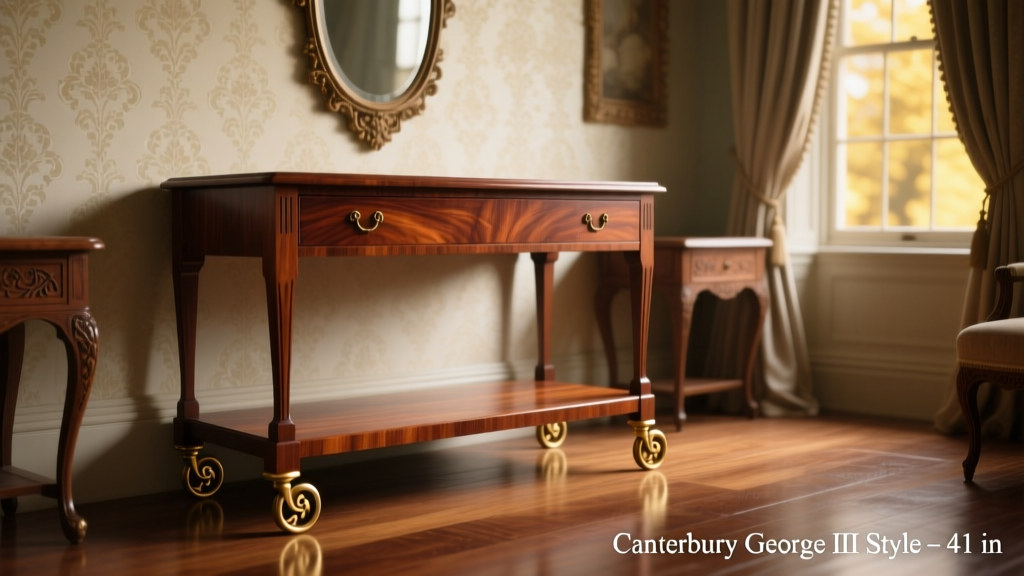
George III Style Mahogany Canterbury: Authentic Design, Structural Integrity, and Restoration Best Practices for the 41-Inch Lower-Shelf Variant
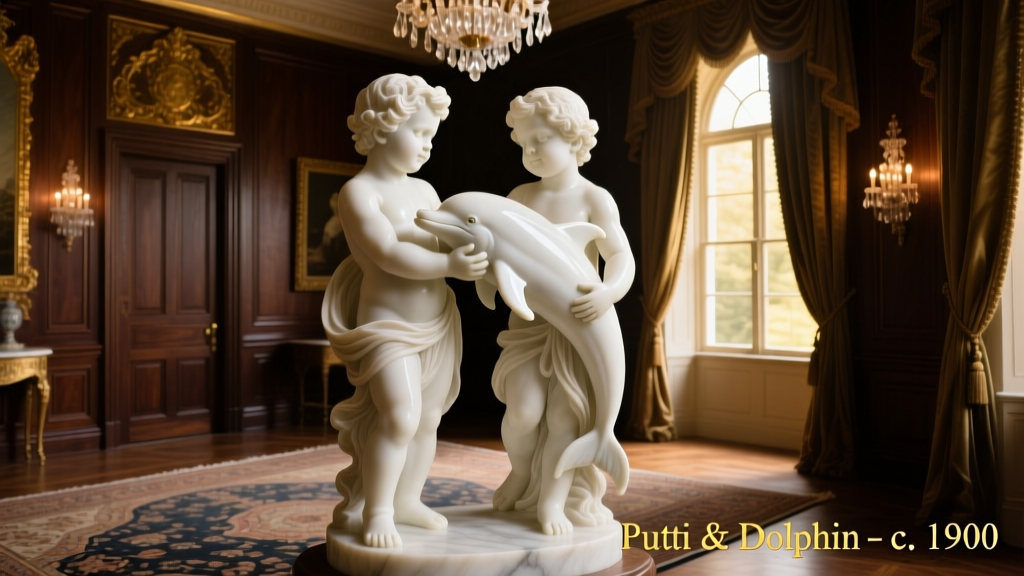
Marble Carvings: Statue Pair of Putti Holding Dolphin, Circa 1900 — A Technical & Historical Analysis
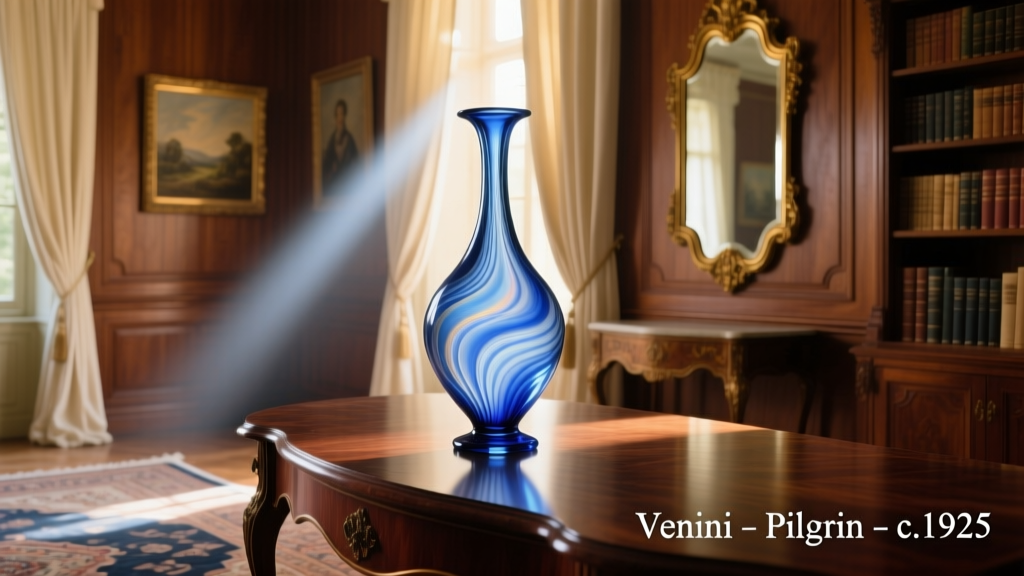
Venini Glass Flask 'Pilgrim' in Clear Blue: A 1925 Murano Masterpiece at 10½ Inches

Roseville Snowberry Sugar & Creamer Set: Blue-White Glaze, History, Identification, and Care
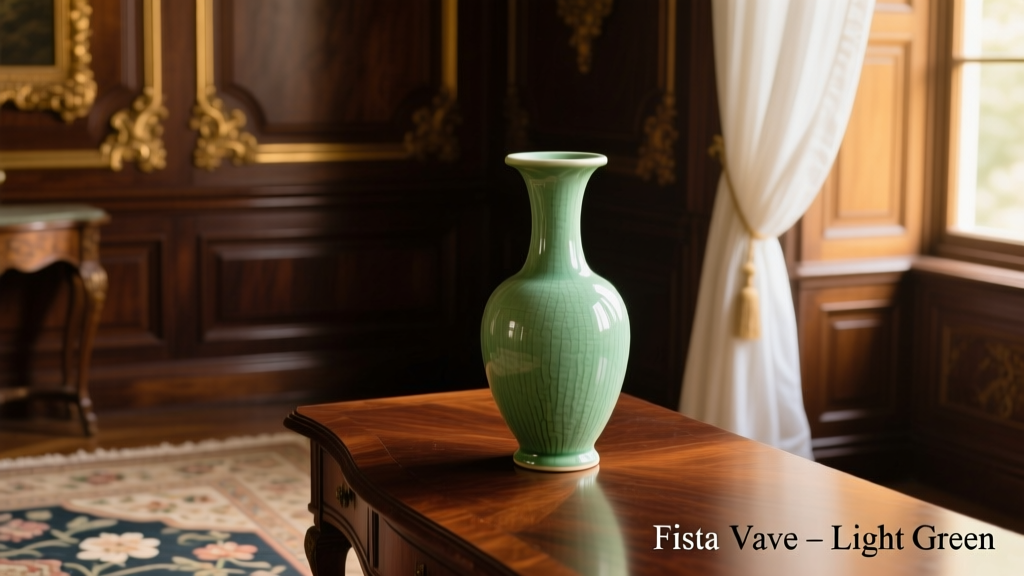
Fiesta Vase Bud Light Green 6¼ Inches: Identification, History, Value, and Care for Collectors
The Enduring Legacy of the American Class Ring: History, Craftsmanship, and Restoration Insights