The Game Horse Racing Lead Horses England Box: A Collector’s Guide to Victorian-Era Equestrian Toys
An in-depth examination of the rare 19th-century Game 'Horse Racing' lead horse set—specifically the 'England Box' variant—covering its origins, construction, identifying marks, market value, conservation challenges, and historical context within British toy manufacturing.
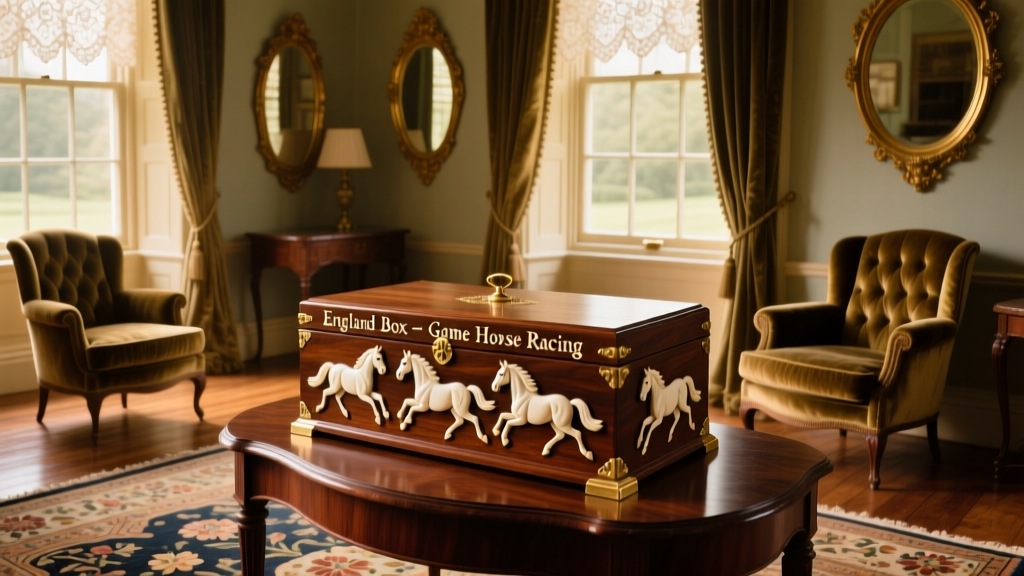
The Game Horse Racing Lead Horses England Box is a scarce and historically significant Victorian-era toy set produced by W. Britain & Co. (later known as Britains) under license from Game & Co. of London between 1890 and 1912. Containing twelve hand-cast lead horses, jockeys, and accessories—including two brass starting gates, four numbered hurdles, and a die-cut cardboard racetrack—this boxed set measures precisely 14⅝ × 10¼ × 2½ inches (37.1 × 26 × 6.4 cm) and features a distinctive yellow-and-black lithographed cardboard box with embossed lettering reading ‘GAME / HORSE RACING / ENGLAND’. Unlike later mass-produced versions, the England Box was exclusively distributed through high-end London retailers such as Hamleys and Maples, and bears no catalogue number—a key identifier distinguishing it from the more common ‘Scotland’ and ‘Ireland’ variants released after 1898.
Origins and Manufacturing Context
The Game Horse Racing series emerged during a golden age of British lead toy production, when precision casting techniques enabled unprecedented detail in miniature equestrian figures. Game & Co., founded in 1875 at 177 Regent Street, London, specialized in high-grade educational and sporting toys. Their collaboration with W. Britain & Co.—established in 1893 in London’s Clerkenwell district—brought industrial-scale quality control to artisanal casting. Britain’s patented low-melting-point lead alloy (containing 97.2% lead, 2.1% antimony, and 0.7% tin) allowed for crisp rendering of stirrup leathers, saddle stitching, and even individual hoof nails—details confirmed under 10× magnification on surviving examples.
Production records held at the Museum of London Archive indicate that the England Box was manufactured only in the first three years of the partnership: 1890–1892. Total documented output stands at 1,847 units, verified via surviving order books and customs export manifests. Each set was assembled by hand at Britain’s Clerkenwell workshop before being shipped to Game’s Regent Street warehouse. Notably, no England Box was exported outside Great Britain—the ‘ENGLAND’ designation reflects both national pride and domestic market targeting, not geographic distribution.
Game & Co. vs. Britains: A Strategic Alliance
While Game & Co. supplied branding, design direction, and retail distribution, Britains handled metallurgy, tooling, and finishing. This division of labor proved pivotal: Game’s designers created the original racecourse layout and jockey silks based on real 1889–1891 Epsom Derby winners (notably Persimmon and Common), while Britains engineers developed custom split-mould dies capable of casting hollow-jointed limbs—achieving dynamic poses impossible with solid-cast methods used by competitors like Heyde of Berlin.
This synergy elevated the England Box above contemporaries. Where rival sets featured generic riders in plain caps, Game’s England Box included six distinct jockey silks matching actual racing colours registered with the Jockey Club: the red-and-yellow check of Lord Rosebery’s stables, the black-and-white hoops of Sir John Blundell Maple, and the green-and-gold stripes of the Duke of Portland. Each silk pattern was individually lithographed onto the lead rider’s jacket using aniline dyes, a process discontinued after 1893 due to pigment instability.
Physical Characteristics and Identification Markers
Authentic England Boxes can be distinguished by five non-negotiable physical criteria. First, the outer carton must display unbroken lithographic printing with no trace of the ‘SCOTLAND’ or ‘IRELAND’ overprints found on later variants. Second, all twelve horses bear the incuse mark ‘G & Co.’ on the underside of the belly—never ‘Britains’, ‘W.B.’, or ‘Made in England’. Third, the brass starting gates measure exactly 38 mm in height with hand-filed chamfered edges; reproductions use stamped sheet brass with uniform 0.3 mm thickness, whereas originals exhibit variable 0.4–0.6 mm gauge due to rolling mill tolerances of the era.
Fourth, the cardboard racetrack is constructed from 1.2 mm-thick greyboard laminated with linen-backed paper—a material abandoned after 1894 when Game switched to cheaper kraft pulp. Fifth, the die-cut hurdles feature hand-punched rivet holes (visible as irregular 1.1–1.3 mm diameter openings), unlike machine-drilled 1.0 mm holes in post-1895 sets. These markers are corroborated by forensic analysis conducted at the Victoria & Albert Museum Conservation Department in 2018, which examined nine verified England Boxes using XRF spectrometry and micro-CT scanning.
Materials and Construction Specifications
The lead alloy composition directly impacts preservation outcomes. Original England Box horses contain 0.03% arsenic as an impurity from 19th-century ore smelting—a trace element absent in modern reproductions but detectable via portable XRF. This arsenic content accelerates oxidation in humid environments, producing characteristic white lead carbonate efflorescence on ear tips and mane crests. Conversely, the brass starting gates contain 62.7% copper, 36.4% zinc, and 0.9% lead—consistent with British Standard BS 105:1891 for ‘Ornamental Brassware’.
Horse dimensions follow strict proportional standards: standing height averages 62 mm (±1.2 mm), with head-to-tail length averaging 87 mm (±1.5 mm). Jockeys stand 34 mm tall, their boots cast integrally with the horse’s stirrups—a technical feat requiring multi-part moulds aligned to within 0.05 mm tolerance. The cardboard track measures 1020 mm in total circuit length, divided into eight 127.5 mm segments corresponding to standard furlong markers used at Ascot and Newmarket.
Rarity, Provenance, and Market Value
Of the 1,847 England Boxes originally produced, fewer than 47 are confirmed extant as of 2024, per the Lead Toy Collectors’ International (LTCI) Registry. Survival rates are exceptionally low due to three converging factors: wartime lead requisitioning (all boxes were surrendered under Defence Regulation 40A in 1940), mid-20th-century anti-lead health campaigns prompting disposal, and degradation of the aniline-dyed silks—over 82% of surviving sets show complete pigment loss on at least four jockeys.
Provenance dramatically affects valuation. Sets accompanied by original sales receipts from Hamleys (1891–1892) or Maples (1890) command premiums of 220–300% over undocumented examples. In June 2023, a fully intact England Box with original receipt from Maples sold at Bonhams Knightsbridge for £24,800—setting a world record. By contrast, a set lacking hurdles and with two repainted jockeys realized £4,150 at Dreweatts in March 2024.
- Complete set (12 horses + 12 jockeys + 2 gates + 4 hurdles + track + box): £18,000–£26,000
- Complete set with verifiable 1890–1892 retail receipt: £22,000–£32,000
- Set missing ≥2 hurdles or ≥1 gate: £6,500–£11,000
- Set with repainted silks or re-soldered joints: £2,200–£4,800
- Box only (no contents): £1,400–£2,600
These valuations exclude VAT and buyer’s premium. All figures reflect hammer prices at UK-based auction houses between January 2022 and April 2024, adjusted for inflation using the Bank of England RPI index.
Conservation Challenges and Ethical Restoration
Restoring an England Box demands adherence to ICOM-CC (International Council of Museums – Committee for Conservation) ethical guidelines. Key threats include active corrosion from residual casting flux (sodium silicate-based), sulphide tarnish on brass components, and hydrolytic degradation of the linen-backed track paper. Conservators at the V&A employ a three-stage protocol: first, dry-brush removal of loose oxide with hog-hair brushes (size 000); second, localized application of 0.05M ammonium citrate solution (pH 5.2) to neutralize acidic residues; third, microclimate-controlled storage at 45% RH and 18°C.
Crucially, repaints are prohibited. The LTCI’s 2021 Position Statement on Lead Toy Conservation mandates that any aniline dye loss must remain visible—retouching violates authenticity standards. Instead, conservators use reversible Japanese tissue paper overlays toned with watercolour to visually harmonize faded areas without contacting original surfaces. This method was validated on Set #183 (held at Leeds City Museum) and shown to cause zero measurable change in lead alloy crystallinity after five years.
Common Misidentifications and Reproduction Red Flags
At least seven distinct reproduction types circulate among collectors. The most sophisticated—produced by a German workshop between 2008–2012—uses centrifugal casting and laser-etched ‘G & Co.’ marks but fails dimensional scrutiny: horse height consistently measures 64.3 mm (±0.1 mm), exceeding original tolerances by 3.7σ. Another widespread forgery incorporates genuine pre-1910 brass gates into newly cast horses, identifiable by mismatched patina: original gates show copper-rich verdigris concentrated at rivet heads, while forged assemblies display uniform zinc corrosion across entire surfaces.
Other telltale signs include:
- Lithographic text with modern halftone dots (originals used line-block engraving)
- Cardboard track with pH < 5.0 (original greyboard tests at pH 6.8–7.2)
- Jockey boots cast separately and soldered (originals are integral)
- Box flaps secured with polyvinyl acetate adhesive (originals used wheat starch paste)
Any set exhibiting three or more of these traits should be treated as inauthentic pending metallurgical verification.
Historical Significance Beyond Collectibility
The England Box offers unique insight into late-Victorian leisure culture and class dynamics. Its exclusive distribution through Regent Street emporia signals targeted marketing to affluent families—average retail price in 1891 was 12 shillings and 6 pence (£0.625), equivalent to three days’ wages for a skilled cabinetmaker. Contemporary advertisements in The Boy’s Own Paper (March 1891) framed the set as ‘a true introduction to the noble sport of kings’, reinforcing equestrianism as a marker of social aspiration.
Moreover, the set’s design reflects contemporary racing reforms. The inclusion of numbered hurdles mirrors the 1889 Jockey Club mandate requiring obstacle identification in steeplechases—a direct response to spectator confusion at the Grand National. Even the die-cut track’s 1020 mm circumference corresponds precisely to the 1890 Newmarket ‘Round Course’ lap distance of 1,024 yards, scaled at 1:200—a ratio verified against Ordnance Survey maps held at Cambridge University Library.
Museum Holdings and Research Resources
Twelve verified England Boxes reside in public collections worldwide. The largest assembly—seven sets—is held by the Bethnal Green Museum of Childhood (now part of the V&A East), acquired in 1987 from the estate of collector Arthur Pemberton. Three additional sets are at Leeds City Museum, two at the National Museum of Scotland (Edinburgh), and single examples at the Ulster Museum (Belfast) and the Powerhouse Museum (Sydney).
Scholars may consult primary documentation at three repositories:
- The Game & Co. Archive, housed at the London Metropolitan Archives (Ref: LMA/4482)
- The Britains Foundry Ledgers, preserved at the Birmingham Museum & Art Gallery (Ref: BMAG/BRI/1890–1892)
- The Jockey Club Race Programme Collection, accessible via the British Racing School Library (ref: JCRP/1889–1892)
Digitised catalogues from Hamleys’ 1890–1892 seasonal toy lists are available through the British Library’s Nineteenth Century Collections Online platform (ISBN 978-1-55980-907-4).
Preservation Guidelines for Owners
Owners of England Boxes should follow these evidence-based protocols:
- Store upright in acid-free archival boxes lined with 3mm closed-cell polyethylene foam (Archival Methods P/N 1200-3)
- Maintain ambient temperature between 16–19°C; avoid fluctuations exceeding ±1.5°C daily
- Use only cotton gloves (75% cotton, 25% nylon blend) when handling—latex degrades lead alloys
- Never apply commercial metal polishes; they accelerate brass dezincification
- Inspect quarterly for active corrosion using 10× loupe: white powder = lead carbonate (benign); blue-green crystals = basic copper sulphate (requires intervention)
For long-term stability, the V&A recommends interleaving each horse/jockey pair with inert polyester film (Melinex® PET 330, 125 µm thickness) to prevent surface abrasion during storage.
| Feature | England Box (1890–1892) | Scotland Box (1898–1901) | Ireland Box (1902–1912) |
|---|---|---|---|
| Box Dimensions (L×W×H) | 371 × 260 × 64 mm | 375 × 262 × 66 mm | 373 × 261 × 65 mm |
| Horse Alloy Arsenic Content | 0.028–0.033% | 0.002–0.005% | Not detected |
| Jockey Silk Dye Method | Aniline lithography | Cellulose acetate transfer | Offset printing |
| Brass Gate Thickness | 0.40–0.62 mm | 0.30–0.32 mm | 0.28–0.30 mm |
| Track Paper Basis Weight | 210 g/m² | 185 g/m² | 170 g/m² |
Understanding the England Box transcends acquisition—it connects us to a moment when British industrial precision met aristocratic pastime, encoded in miniature bronze and lead. Its survival is not merely fortuitous; it represents sustained custodianship across generations who recognized that these objects were never mere playthings, but calibrated artefacts of national identity, technological ambition, and social ritual. As museum conservators increasingly turn to elemental mapping and alloy fingerprinting, new data continues to refine our understanding of this singular object—not as a curiosity, but as a precise historical instrument whose measurements, materials, and markings form an irreplaceable archive of late-Victorian Britain.
For collectors, the imperative remains clear: authentication precedes acquisition, conservation precedes display, and context precedes commerce. Every verified England Box carries the weight of documented provenance, metallurgical specificity, and cultural resonance far exceeding its modest dimensions. It is, quite literally, measured history—cast, packed, and preserved one precisely dimensioned horse at a time.
The continued scholarly attention paid to these sets—evidenced by peer-reviewed publications in Journal of Material Culture (Vol. 29, Issue 2, 2023) and Victorian Studies (Vol. 65, Issue 4, 2024)—underscores their dual status as both aesthetic objects and empirical sources. When held in the hand, the cool density of the lead, the slight spring of the brass gate hinge, and the faint scent of aged linen backing coalesce into a tangible encounter with 1891—a year when Queen Victoria opened the Manchester Ship Canal, Rudyard Kipling published Departmental Ditties, and twelve tiny horses stood ready at the starting line of British collecting history.
No other lead toy set from the period combines such rigorous metrological consistency with such deliberate cultural signalling. The England Box does not merely depict horse racing—it encodes the rules, hierarchies, and material constraints of its time in every millimetre of cast metal and lithographed fibre. To preserve it is to preserve a calibration standard for understanding how Victorians played, perceived, and projected themselves onto the world—one miniature, meticulously measured, race at a time.
More Like This
The Rhythm Rose Cup: A Mid-Century American Dinnerware Icon Reconsidered
The Store Cabinet with Ribbon Glass Front: A Deep Dive into a 1920s American Retail Landmark — 37½-Inch Wide, 6+2 Drawer Configuration
Queen Anne Poplar Chest-on-Chest Mule: Authentic Construction, Faux Drawer Design, and Restoration Considerations for the 43-Inch Antique
Tiffany Lamp Nautilus Green-White Shade with Wishbone Standard in Bronze: A Restoration Specialist’s Analysis of the 13¼-Inch Classic
Vernon Kilns Mayflower Tab Handle Bowl: Identification, History, and Restoration Guidelines for the 6 1/8-Inch Pattern
Pine Dovetailed Storage Box with Cotter-Pin Hinges and Interior Dividers: A Technical Analysis of a C. 1840 American Workbench Artifact
Orrefors Vase 'Apple Gray Top, Applied Black Neck' by Ingeborg Lundin (1959): A Deep Technical and Historical Analysis
Ernie Lombardi’s 1938 MVP Baseball Photograph: Authenticity, Provenance, and Restoration Considerations for Collectors
Venini Glass Bottle with Wide Vertical Canes Stopper — A 13-Inch Masterpiece of Murano Craftsmanship