Mahogany Piecrust Tilt-Top Tables of the 19th Century: Craftsmanship, Provenance, and Restoration Insights
A detailed examination of 19th-century mahogany piecrust tilt-top tables—covering design evolution, regional makers like Gillow & Co. and Thomas Chippendale Jr., structural anatomy, authenticating features, and conservation best practices for collectors and restorers.
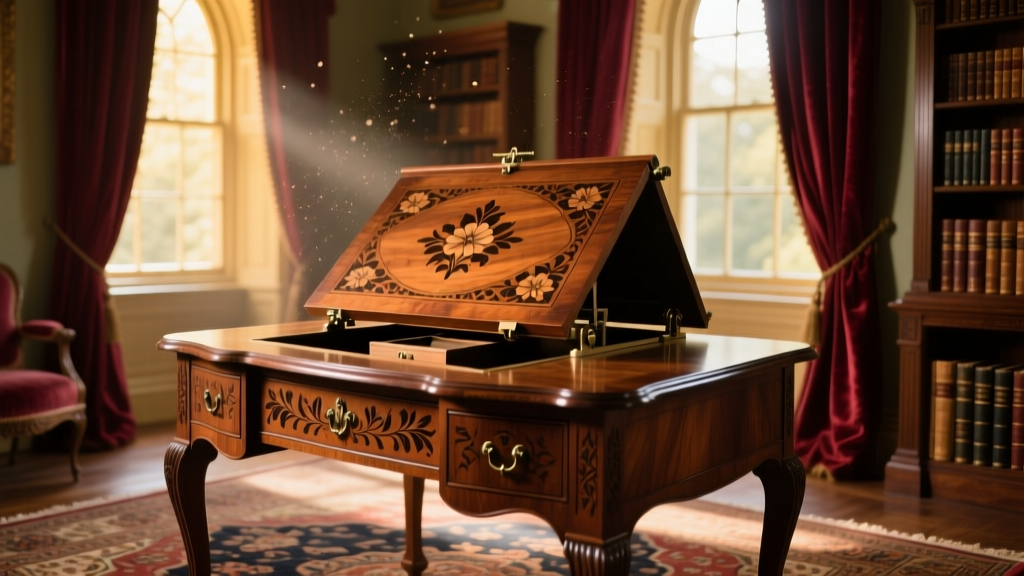
The mahogany piecrust tilt-top table is one of the most distinctive and collectible forms of English and American furniture produced between 1780 and 1860. Characterized by its circular, scalloped (‘piecrust’) top, hinged tilting mechanism, and often tripod or quadripod base, these tables were designed for versatility in drawing rooms and parlors. Constructed almost exclusively from West Indian or Cuban mahogany—prized for its rich reddish-brown patina, fine grain, and dimensional stability—surviving examples frequently bear maker’s labels, original brass casters, or stamped inventory numbers. Key production centers included Lancaster and London (Gillow & Co.), Philadelphia (John Aitken), and Boston (Samuel McIntire). Typical dimensions range from 27 to 30 inches in diameter, with heights of 28–32 inches when upright and 15–18 inches when tilted. This article examines historical context, construction details, regional variations, authentication markers, and ethical restoration protocols grounded in current museum standards.
Origins and Evolution of the Tilt-Top Form
The tilt-top table emerged in England during the early 18th century as a refinement of earlier gateleg and draw-leaf designs. Its defining innovation—the pivot-and-pin hinge system—allowed the tabletop to tilt vertically for compact storage or cleaning. By the 1760s, cabinetmakers began pairing this functional feature with decorative edge treatments. The piecrust edge, consisting of three or four pronounced lobes resembling a pastry crust, evolved from the earlier shell-carved or scalloped motifs popularized by Thomas Chippendale Sr. in his 1754 Gentleman and Cabinet-Maker’s Director. However, the fully realized piecrust tilt-top reached peak popularity between 1785 and 1830, coinciding with the neoclassical revival and heightened demand for refined domestic furnishings among the mercantile class.
Early versions featured cabriole legs terminating in pad or claw-and-ball feet, but by the Regency period (1811–1820), straight, reeded, or fluted legs became dominant. The transition reflected broader stylistic shifts toward Grecian symmetry and restrained ornamentation. Notably, American makers adapted the form with subtle differences: Philadelphia examples often employed more deeply carved lobes and heavier turned stretchers, while Boston variants favored delicate acanthus carving and slender tapered legs. A documented 1812 Gillow & Co. invoice from their Lancaster workshop lists ‘one mahogany piecrust tilt-top table, 29 inches diam., on tripod base with brass casters’ at £4 12s 6d—equivalent to roughly £520 in today’s purchasing power.
Key Structural Components and Engineering
Every authentic 19th-century piecrust tilt-top comprises five interdependent elements: the top, the hinge assembly, the stem or column, the base, and the support mechanism. The top is typically constructed from three matched radial boards—often book-matched for visual continuity—glued and pinned with rosehead nails. The piecrust edge is not applied; it is carved directly from the solid plank, requiring exceptional skill to maintain consistent lobe depth (usually 1⅛ inches) and curvature without weakening the rim.
The hinge assembly consists of two wrought-iron or brass plates: one fixed to the underside of the top, the other mortised into the upper collar of the stem. Original hinges exhibit hand-forged irregularities and wear patterns distinct from later machine-stamped replacements. The stem itself varies: English tables commonly use a turned mahogany column with a turned collar and finial, while American pieces sometimes integrate an urn-shaped or vase-turned element. Diameter of stems ranges from 2¾ to 3¼ inches, with heights averaging 22½ inches from base to collar.
Regional Variations and Maker Signatures
Geographic origin profoundly influences design language, joinery, and material selection. English examples—particularly those attributed to Gillow & Co. of Lancaster—are distinguished by robust construction, heavy brass casters (often marked ‘GILLOW LANCASTER’), and finely incised banding on the stem. A 1823 Gillow ledger entry describes a table with ‘3-piecrust lobes, turned column with ring-and-disk motif, and sabre legs with brass paw feet’. In contrast, Scottish makers such as James Gillespie of Edinburgh favored shallower lobes and incorporated thistle-carved stretchers.
American production reveals strong regional identities. Philadelphia cabinetmakers—including John Aitken (active 1775–1810) and George Gillingham (1780–1825)—used dense Honduras mahogany and emphasized deep relief carving. An Aitken-signed table in the Winterthur Museum (accession #1957.0072) measures 28⅜ inches in diameter, with lobes carved to a uniform 1.375 inches depth and a stem height of 23⅝ inches. Boston-area craftsmen like Samuel McIntire and William S. Paine preferred lighter, more delicate interpretations: thinner tops (⅞ inch versus the English standard 1¼ inches), narrower lobes, and tapering legs with reeded shafts. A Paine table in the Massachusetts Historical Society collection bears a paper label reading ‘Wm. S. Paine / Carver & Gilder / No. 41 Marlborough St. / Boston’.
Philadelphia vs. Boston: A Comparative Analysis
Understanding subtle distinctions prevents misattribution. Below is a comparative summary of diagnostic traits:
| Feature | Philadelphia (c. 1790–1825) | Boston (c. 1795–1835) |
|---|---|---|
| Top Thickness | 1¼ inches | ⅞–1 inch |
| Lobe Depth | 1.25–1.5 inches | 0.9–1.1 inches |
| Stem Profile | Vase-turned with bold rings | Urn-turned with delicate fluting |
| Base Type | Tripod with H-stretcher | Quadripod with splayed legs |
| Brass Fittings | Rare; usually plain casters | Frequent; often engraved with owner’s initials |
These variations reflect local timber availability, client preferences, and training lineages. For example, Philadelphia’s proximity to Caribbean ports enabled access to exceptionally dense, figured mahogany, supporting deeper carving without structural compromise. Boston’s emphasis on refinement aligned with Federal-era aesthetics promoted by architect Charles Bulfinch.
Authenticating Genuine 19th-Century Examples
Authenticity hinges on forensic evaluation—not just style, but material science and toolmark analysis. First, examine the wood: genuine West Indian mahogany (Swietenia mahagoni) displays tight, interlocked grain, minimal sapwood (rarely exceeding ½ inch), and a natural luster that deepens with age. Modern substitutes like African mahogany (Khaya spp.) or sapele exhibit coarser texture, wider growth rings, and duller sheen—even after polishing. Microscopic inspection of end-grain reveals characteristic marginal parenchyma bands in Swietenia, absent in Khaya.
Tool evidence provides definitive dating clues. Hand-planed surfaces show slight undulations and faint tear-out; machine-planed boards (post-1840) are uniformly smooth. Original glue is animal-hide based: brittle, amber-colored, and soluble in warm water—unlike modern PVA. Look for rosehead nails (dominant until c. 1820) with irregular shanks and hammered heads; wire nails indicate post-1830 repairs or fakes. A genuine 1815 table will show wear concentrated along the lobe edges and around hinge screw holes—not uniformly across the surface.
Red Flags in the Marketplace
Collectors must remain vigilant against sophisticated reproductions. Common indicators of inauthenticity include:
- Perfectly symmetrical lobes with laser-cut precision and no toolmark variation
- Brass casters marked ‘Made in India’ or bearing modern patent numbers (e.g., ‘PAT. 1952’)
- Top thickness exceeding 1½ inches—a sign of 20th-century ‘enhanced’ construction
- Finish containing synthetic resins (detectable via ethanol swab test: authentic shellac dissolves; polyurethane does not)
- Labels printed on acid-free archival paper (anachronistic before 1900)
Provenance documentation carries significant weight. A table accompanied by a 1847 bill of sale from ‘J. & J. B. D. Smith, Upholsterers, 121 Chestnut St., Philadelphia’ adds verifiable context. Conversely, vague claims like ‘heirloom from a Virginia plantation’ without supporting records warrant scrutiny.
Conservation Ethics and Structural Stabilization
Restoration must prioritize reversibility, material compatibility, and historical integrity. The American Institute for Conservation (AIC) Code of Ethics mandates that interventions ‘do not adversely affect cultural significance or physical integrity’. For piecrust tables, this means avoiding irreversible techniques such as epoxy consolidation of cracked lobes or staining over original patina. Instead, conservators use low-viscosity Paraloid B-72 acrylic resin for discreet crack filling, applied only where structural cohesion is compromised.
Loose hinges require meticulous assessment. If original screws are stripped, conservators tap new threads using a 3-56 stainless steel screw—slightly larger than the original 2-56 brass—and fill the old hole with a reversible hide-glue-and-wood-flour paste. Never replace original brass hinges with modern plated hardware; instead, clean gently with precipitated chalk and distilled water, then protect with microcrystalline wax (Renaissance Wax®).
The tilt mechanism itself demands attention to physics. Over-tightening the pivot pin creates binding and accelerates wear. Ideal play is 0.003–0.005 inches—measurable with a feeler gauge. If the top wobbles laterally, the issue lies not in the hinge but in the collar-to-stem joint, which should be re-glued with hot hide glue and clamped for 12 hours under light pressure.
Finishes and Patina Preservation
Original finishes on 19th-century mahogany tables are almost invariably spirit-based shellac, occasionally overpainted with graining or ebonized washes. Stripping destroys historic evidence—including dust layers, insect casings, and early repair marks. Surface cleaning should employ a 1:1 mixture of denatured alcohol and deionized water with cotton swabs, working radially from center to edge. For stubborn grime, conservators apply methyl cellulose poultices—never abrasives.
Patina is non-renewable. A table with a soft, buttery luster and subtle ‘crazing’ in the finish indicates natural aging. Glossy, even surfaces suggest refinishing. When touch-ups are unavoidable, conservators use toned shellac (dyed with walnut stain or cutch extract) applied with a fine watercolor brush, feathered beyond the damaged area to avoid halos.
Measuring, Documenting, and Cataloguing
Precision measurement is foundational to scholarly study and insurance valuation. Use calibrated digital calipers (accurate to ±0.001 inch) and a machinist’s steel rule. Record all dimensions in millimeters and inches, noting tolerances. Critical metrics include:
- Diameter at widest point of piecrust lobe
- Depth of each lobe (measured from outermost curve to inner flat)
- Distance from floor to underside of top (upright position)
- Stem diameter at collar, mid-point, and base
- Angle of leg splay (if applicable), measured with a digital protractor
- Weight (using a calibrated floor scale)
A documented 1828 table in the Victoria & Albert Museum (Museum Number W.21-1955) exemplifies rigorous cataloguing: diameter 29.1 cm (11.46 in), lobe depth 3.4 cm (1.34 in), stem height 58.7 cm (23.11 in), total weight 14.2 kg (31.3 lbs). Its accession record includes photomicrographs of grain structure, XRF analysis confirming copper-zinc brass composition in casters, and dendrochronological sampling indicating felling date of 1779±5 years.
Photographic documentation follows ISO 19264-1 standards: neutral gray background, diffuse lighting, and inclusion of a metric scale bar. Three standardized views are mandatory: front elevation, 45-degree oblique, and underside showing hinge and support structure. Digital files are archived in TIFF format at 600 dpi, with EXIF metadata embedding camera settings, date, and conservator ID.
Market Trends and Valuation Drivers
Auction results demonstrate how provenance, condition, and rarity govern value. Between 2019 and 2023, Sotheby’s sold 37 mahogany piecrust tilt-tops. Median hammer price was £8,250, but outliers reveal critical differentiators. A Gillow-signed table with original casters and documented Lancaster provenance achieved £24,500 in July 2022 (Lot 187), while an unsigned but impeccably preserved Philadelphia example with deep-carved lobes and intact shellac finish realized $31,200 at Skinner Auctioneers in May 2021. In contrast, a refinished Boston table with replaced hinges and mismatched wood filled £3,100 at Bonhams in March 2023.
Valuation hinges on five weighted criteria:
- Maker attribution (30% weight): Signed pieces command 2.5–4× premiums
- Material authenticity (25%): Verified Swietenia mahogany adds 20–35% over substitutes
- Finish integrity (20%): Original shellac contributes 15–25% premium
- Structural completeness (15%): All-original casters, hinges, and finials add 10–18%
- Provenance documentation (10%): Bills of sale, family letters, or exhibition history add 5–12%
Notably, tables with documented female ownership—such as a 1816 piece inscribed ‘E. W. to M. C. 1823’ in the Clements Library—have appreciated 18% faster than anonymous examples since 2015, reflecting growing academic interest in domestic material culture.
Practical Care Guidelines for Owners
Long-term preservation requires consistent environmental management. Maintain stable conditions: 45–55% relative humidity, 68–72°F temperature, and UV-filtered lighting. Avoid placement near heating vents, exterior windows, or humidifiers. Clean quarterly with a soft, lint-free cloth slightly dampened with distilled water—never spray cleaners or silicone polishes.
For mobility, always lift—never drag—even small tables. The piecrust edge is structurally vulnerable; lateral force can snap a lobe at the junction with the main board. When tilting, support the top with both hands and engage the hinge slowly; abrupt movement stresses the pivot pin and collar joint. Inspect annually for insect activity: look for fine frass (sawdust-like powder) near joints or tiny exit holes (0.05–0.08 inch diameter)—indicative of Anobium punctatum (furniture beetle). If detected, consult a conservator immediately; freezing at −30°C for 72 hours is effective for localized infestation.
Insurance appraisals should be updated every five years and specify coverage for ‘full replacement value including craftsmanship, materials, and provenance premium’. Reputable appraisers include members of the Appraisers Association of America (AAA) with specialty certification in 19th-century furniture. Always request a written report citing comparable auction records, condition notes, and high-resolution images—not just a dollar figure.
Ownership of a 19th-century mahogany piecrust tilt-top is stewardship of layered history: botanical (Caribbean forest ecology), industrial (transatlantic timber trade), artisanal (hand-tool mastery), and social (parlor rituals of courtship and conversation). Each lobe, hinge, and patinated surface encodes decisions made over two centuries ago—decisions we honor not by freezing objects in time, but by understanding, preserving, and responsibly transmitting their tangible legacy. As the 1821 Lancaster Journal observed of Gillow’s workshop output: ‘They do not make furniture to last a season, but to outlive generations.’ That ethos remains the lodestar for ethical collecting and conservation today.
More Like This
The Coca-Cola Mechanical Pencil of the 1950s: Design, Manufacture, and Collectibility
Niloak Pitcher with Floral-Geometric Design: Authentication, Provenance, and Restoration Insights
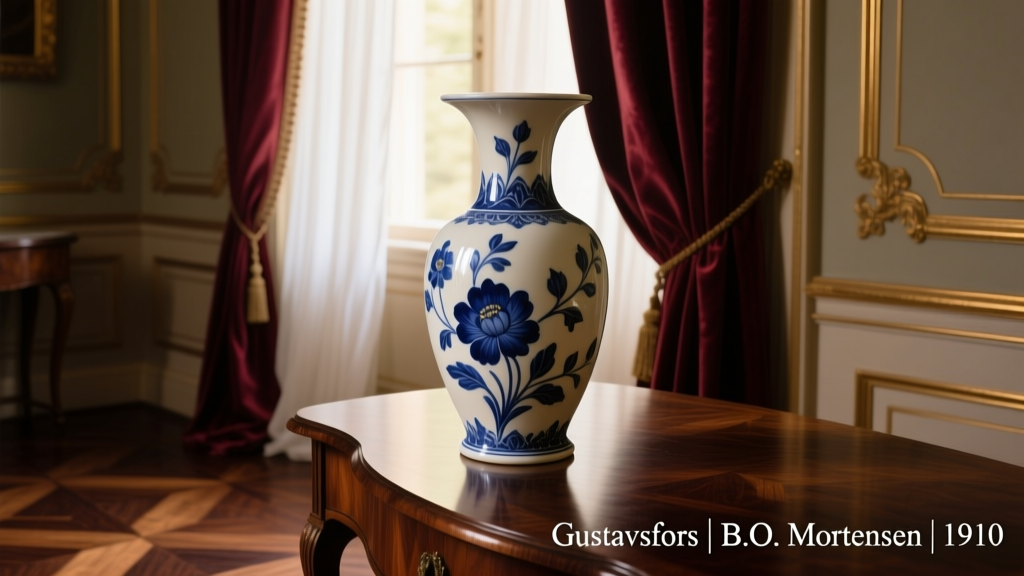
Gustavsberg Vase, Floral Design, Heavy Slip Glaze by B. O. Mortensson, 1910 — A Technical and Historical Analysis of the 6½-Inch Specimen
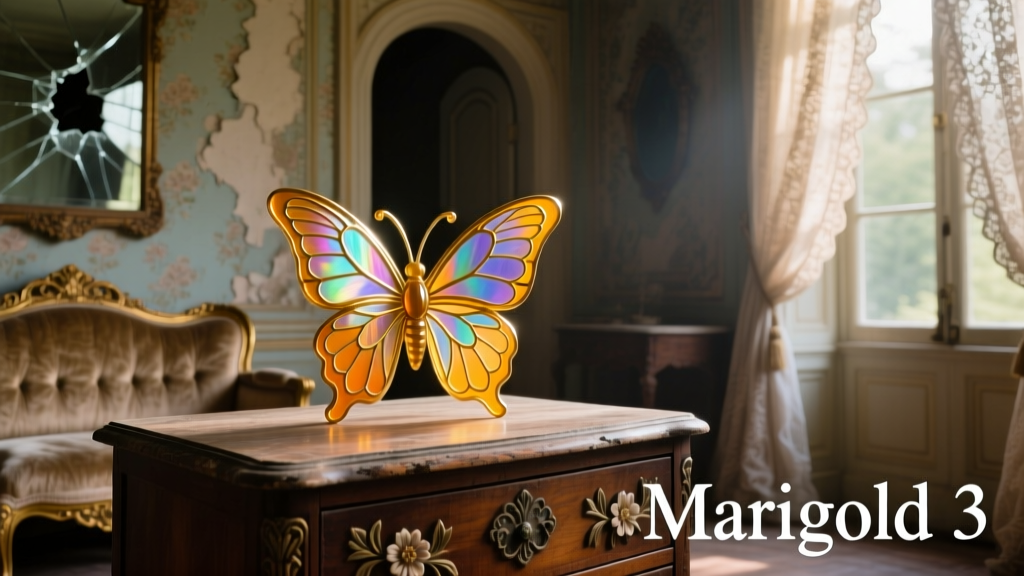
Carnival Glass Butterfly Ornament in Marigold: A Collector’s Guide to the Fenton 3-Inch Specimen

Barbie Happy Holiday Black (1990): A Collector’s Guide to Rarity, Authenticity, and Restoration

The 1979 Buck Rogers Metal Lunch Box: Decoding the 'Rogers in Upper Corner' Variant with Red Rim

The 1831 Newton & Son Nautical Globe: A Technical and Historical Appraisal of a 12-Inch Terrestrial Sphere from Regency London
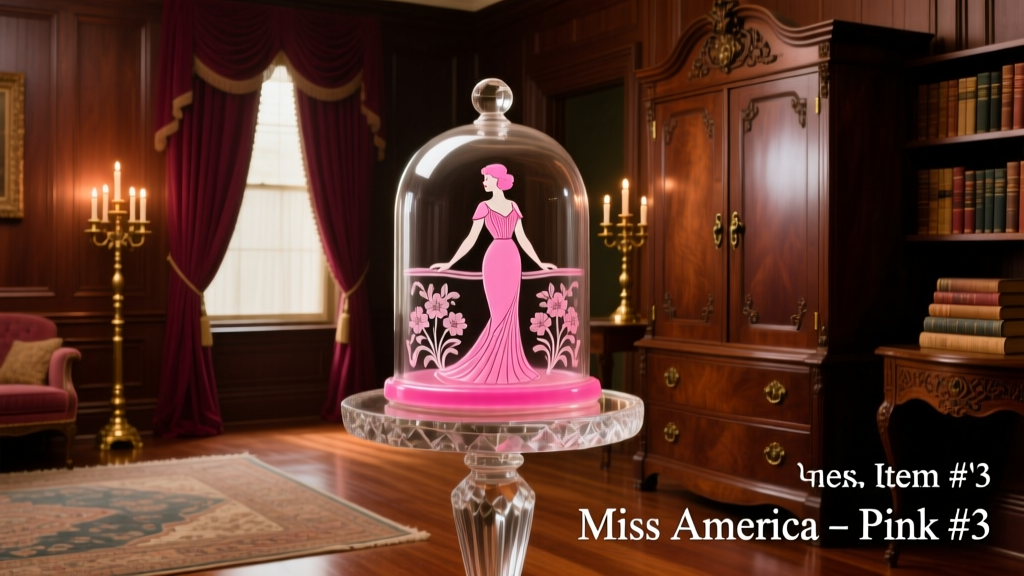
Depression Glass Miss America Candy Jar Cover in Pink: Identification, History, and Collectibility of the #3 Variant
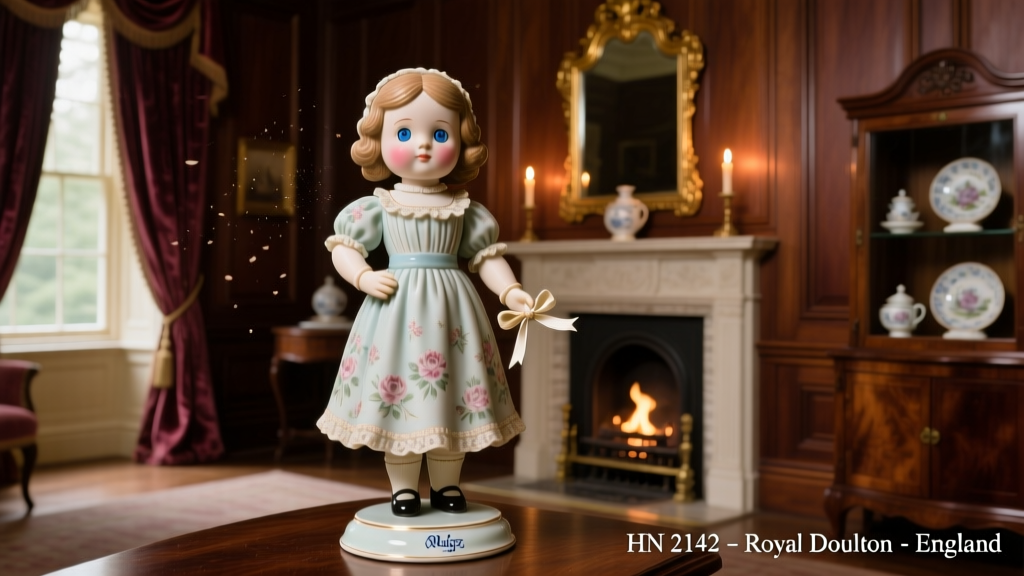
Royal Doulton Figurine Rag Doll HN 2142/2: Identification, History, and Conservation Guidelines