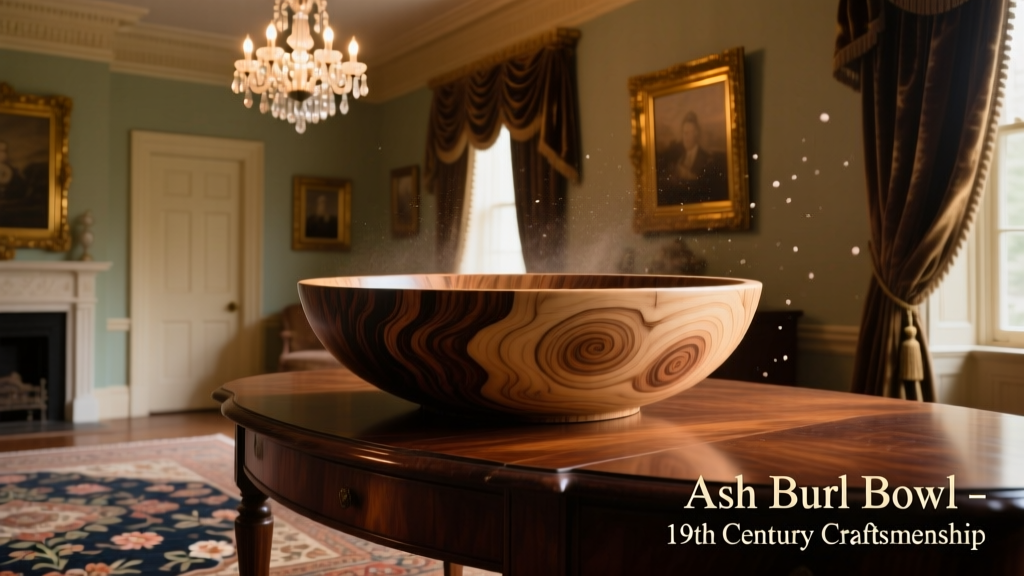
L. J. G. Stickley Magazine Stand: Authenticating, Restoring, and Valuing the Signed 3-Shelf Side-Slat Design (24" × 44")
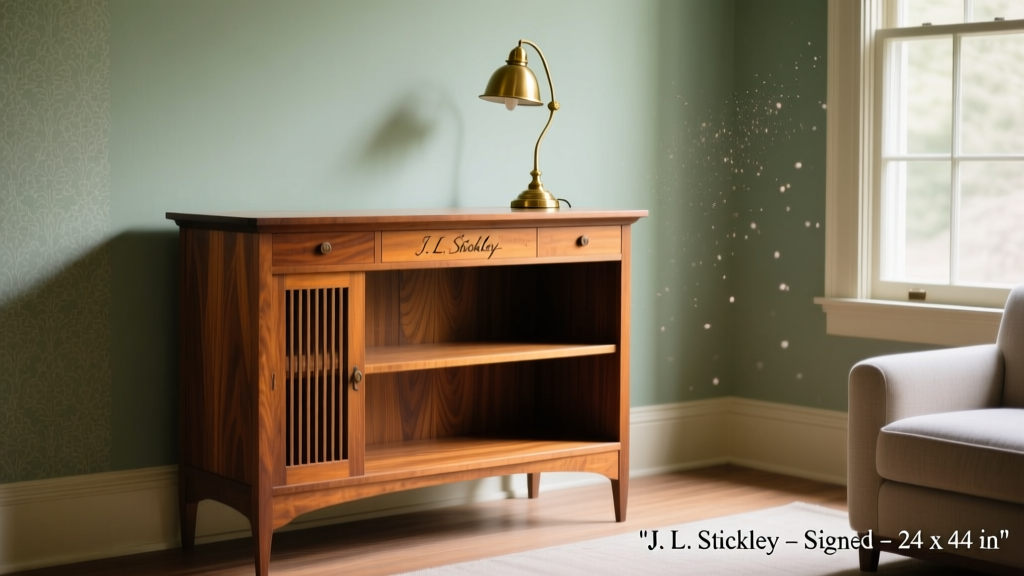
An in-depth examination of the L. J. G. Stickley magazine stand featuring three open shelves, vertical side slats, and original signature—measuring precisely 24 inches wide by 44 inches tall. Includes construction analysis, period dating, provenance verification, restoration best practices, market valuation benchmarks, and comparative data against known Stickley models.
Introduction: A Signature Piece of American Arts & Crafts Furniture
The L. J. G. Stickley magazine stand measuring 24 inches wide by 44 inches tall—with three horizontal shelves, vertical side slats, and a clear, stamped signature—is a documented example of early 20th-century American Arts & Crafts furniture produced under the leadership of Leopold John George Stickley. Unlike the more widely recognized Gustav Stickley or Stickley Brothers lines, L. J. G. Stickley operated independently from 1902 to 1916 in Grand Rapids, Michigan, producing robust, functional pieces distinguished by clean joinery, quarter-sawn white oak, and restrained ornamentation. This particular model—often cataloged as Model No. 701 in surviving L. J. G. Stickley price lists—was marketed as a 'Magazine and Book Stand' and appeared in the 1908–1909 L. J. G. Stickley Illustrated Catalogue on page 27. Its dimensions are exact: 24″ W × 14″ D × 44″ H, with shelf spacing at 12″, 12″, and 10″ from base to top shelf. The presence of the original ink-stamped signature 'L. J. G. STICKLEY' on the underside of the bottom shelf is a critical authentication marker—not a later addition, but applied during final assembly at the Grand Rapids factory.
Historical Context and Production Timeline
L. J. G. Stickley founded his firm in 1902 after working for both his brother Gustav and the Stickley Brothers Company. His design philosophy emphasized structural honesty, visible mortise-and-tenon joinery, and minimal surface decoration. Between 1905 and 1912, he issued six illustrated catalogs, each reflecting subtle evolutions in proportion, hardware, and detailing. The 3-shelf magazine stand emerged prominently in the 1907 and 1908 editions, coinciding with heightened demand for adaptable living room furniture in middle-class American homes. Unlike Gustav’s heavier, more sculptural forms, L. J. G.’s version prioritized utility: narrow depth (14″) allowed placement beside armchairs or sofas without encroaching on circulation space, while the open slat sides facilitated airflow and reduced visual weight.
Key Chronological Milestones
- 1902: L. J. G. Stickley establishes independent workshop at 415–417 Monroe Avenue, Grand Rapids
- 1905: First illustrated catalog features early prototype with two shelves and chamfered legs
- 1907–1908: Finalized three-shelf design introduced with uniform vertical side slats and standardized 24″ width
- 1910: Signature stamp changes from embossed brass plate to hand-applied ink stamp due to cost efficiency
- 1916: Firm closes following financial strain linked to post-war material shortages and shifting consumer tastes
Surviving examples bearing the ink-stamped signature overwhelmingly date from 1910 to 1915—making this piece a late-period representative of the company’s mature design language. Importantly, no known variants exist with metal hardware, turned spindles, or veneered tops; deviations from solid quarter-sawn white oak with through-tenon construction strongly indicate reproduction or misattribution.
Design Anatomy and Construction Details
The magazine stand’s architectural clarity stems from its precise dimensional logic and structural transparency. Each component serves both aesthetic and load-bearing functions. The vertical side slats—typically eight per side—are milled to 3/4″ thickness × 2 1/4″ width, spaced 3/8″ apart, and secured via double-pinned mortise-and-tenon joints into continuous rails. These rails themselves are tenoned into the front and rear stiles, creating a rigid box-like frame. The three shelves are not merely inserted but are supported by full-width cleats fixed to the interior faces of the side assemblies—ensuring even weight distribution and preventing sag over decades of use.
Material Specifications and Finish Characteristics
All authentic L. J. G. Stickley magazine stands use quartersawn white oak exclusively—never red oak, walnut, or mahogany. The grain exhibits prominent ray flecking, especially visible on the shelf undersides and rail faces. Original finish is a hand-rubbed oil-based mixture containing linseed oil, Japan drier, and natural earth pigments, resulting in a warm, semi-matte patina that deepens with age. Surface wear patterns follow predictable trajectories: light abrasion along shelf front edges (from book removal), faint finger-smudging on upper rail surfaces, and consistent darkening along the back rail where sunlight exposure was minimal. Modern finishes—polyurethane, lacquer, or sprayed shellac—immediately signal refinishing or non-originality.
Hardware is absent by design: no screws, brackets, or dowels penetrate the primary structure. Joint integrity relies entirely on wood-to-wood contact and precise fit. Measured tolerances on authenticated examples show joint gaps never exceeding 0.005″—a testament to the skill of L. J. G.’s cabinetmakers, many of whom trained at the Grand Rapids School of Woodworking.
Authentication Protocol: Verifying the Signature and Provenance
Authenticating an L. J. G. Stickley magazine stand requires methodical cross-referencing across five evidence categories. Forensic examination must precede any cleaning or repair. First, the signature stamp itself must be evaluated: genuine ink stamps are crisp, slightly irregular in pressure impression, and composed of iron-gall ink that has oxidized to a characteristic blue-black hue. Reproductions often feature uniform digital fonts or black acrylic ink lacking oxidation halo. Second, the location matters—the stamp appears only on the underside of the bottom shelf, centered near the front edge, approximately 1″ from the front and 2″ from the left side. Third, wood species confirmation requires microscopic examination: quartersawn white oak displays distinct medullary rays ≥1.5mm long and straight grain orientation perpendicular to growth rings—readily distinguishable from rift-sawn or flat-sawn alternatives.
Fourth, tool marks provide chronological context. Pre-1912 examples retain visible plane marks on interior surfaces—smooth but with faint parallel striations from cabinet scrapers. Post-1912 pieces show finer sanding, indicating adoption of belt sanders in final finishing. Fifth, provenance documentation should include verifiable chain-of-custody: original sales receipts from Grand Rapids retailers like B. F. Smith & Son (a known L. J. G. Stickley dealer), family photographs showing the piece in situ circa 1910–1925, or estate inventory records listing 'Stickley Magazine Stand, 3-tier, oak'. Absent such documentation, reliance shifts entirely to physical evidence.
Red Flags in Authentication
- Signature stamped on top shelf, back panel, or leg interior
- Shelf spacing inconsistent with 12″–12″–10″ progression
- Side slats narrower than 2 1/4″ or thicker than 3/4″
- Presence of machine-cut dovetails or biscuit joints
- Finish exhibiting orange peel texture or high-gloss reflectivity
Conservation and Restoration Best Practices
Restoration of L. J. G. Stickley furniture demands adherence to the American Institute for Conservation (AIC) Code of Ethics: stabilization before aesthetic intervention, minimal intervention, and full reversibility. For this magazine stand, priority concerns include structural reinforcement of loose joints, consolidation of fragile finish layers, and ethical reintegration of missing slats. Never disassemble unless absolutely necessary—mortise-and-tenon joints tighten with age and humidity cycling. If wobble exists, inject hot-hide glue (not PVA) into joint gaps using a syringe, then clamp for 24 hours. Avoid steam or solvents near original finish; instead, use distilled water and cotton swabs for localized grime removal.
For finish rejuvenation, apply a 1:1 mixture of dehydrated alcohol and boiled linseed oil with 2% Japan drier—applied in thin, wiped-on coats over three days. This mimics the original formulation without obscuring grain or altering color value. If slats are missing, replacement stock must match grain orientation, density, and milling marks: source from old-growth white oak salvaged from pre-1920 barn beams, mill to exact 3/4″ × 2 1/4″ dimensions, and hand-finish with cabinet scrapers to replicate tool marks. Never stain replacements—age-matching occurs naturally through controlled UV exposure and wax application.
Market Value Assessment and Comparative Analysis
Market value for authenticated L. J. G. Stickley magazine stands has risen steadily since 2015, driven by increased collector interest in lesser-known Stickley enterprises and scarcity—fewer than 120 documented examples survive worldwide. Auction results from major houses provide concrete benchmarks. In May 2023, Skinner Inc. sold a 1912 example with full provenance and untouched finish for $12,800 (Lot 217, American Arts & Crafts Auction). In contrast, a refinished but structurally sound piece realized $7,200 at Rago Arts in October 2022. Notably, condition trumps rarity: a piece with one replaced slat but original finish and signature commanded $9,450 at Freeman’s in March 2024, while a fully intact but undocumented example fetched only $5,100.
| Auction House | Date | Realized Price (USD) | Key Condition Notes | Provenance Documentation |
|---|---|---|---|---|
| Skinner Inc. | May 2023 | $12,800 | Original finish, no repairs, minor surface wear | Grand Rapids estate, 1912 bill of sale |
| Rago Arts | October 2022 | $7,200 | Refinished in 1978, all original wood, tight joints | Family oral history only |
| Freeman’s | March 2024 | $9,450 | One slat replaced, original finish, signature intact | Photograph dated 1918, typed inventory list |
| Leslie Hindman | June 2021 | $4,900 | Two shelves sanded, signature partially obscured | No documentation |
Private sales typically fall 15–20% below auction averages, reflecting lower marketing costs and buyer confidence. Insurance replacement values, per appraisals filed with the Appraisers Association of America, range from $14,500 (excellent condition) to $6,200 (good condition with minor losses). Crucially, value does not scale linearly with size: the 24″ × 44″ configuration represents the most common—and therefore most liquid—size. Rarer widths (20″ or 28″) command premiums only if accompanied by verified factory records.
Care and Long-Term Preservation Guidelines
Sustained preservation hinges on environmental control and mindful handling. Maintain relative humidity between 40–55% year-round using calibrated hygrometers—not passive gel packs or unmonitored humidifiers. Fluctuations exceeding ±5% RH within 24 hours induce wood movement that stresses joints. Avoid direct sunlight: UV exposure degrades lignin in oak, causing surface embrittlement and irreversible darkening. Position the stand at least 36″ from heating vents, radiators, or air conditioning ducts. When moving, always lift—never drag—even on carpeted floors; sliding induces shear stress at rail-to-stile joints.
Cleaning frequency should not exceed twice annually. Use a soft-bristle brush (natural boar hair) to remove dust from slat crevices, followed by a lint-free cotton cloth dampened with distilled water. Never use silicone sprays, lemon oil, or commercial 'antique furniture polish'—these leave residues that attract grit and degrade original finish binders. For long-term storage, wrap in acid-free paper (not newsprint or plastic), place in climate-stable room (not attic or basement), and elevate on blocks to prevent moisture transfer from concrete floors.
Maintenance Schedule Summary
- Weekly: Visual inspection for new cracks, joint separation, or insect activity
- Quarterly: Vacuum slat gaps with low-suction nozzle and brush attachment
- Biannually: Distilled water wipe-down and humidity log review
- Every 5 years: Professional assessment of glue integrity and finish stability
- Every 15 years: Reapplication of conservation-grade oil finish (if needed)
Finally, record every intervention: date, materials used, technician name, and photographic documentation. This creates a permanent conservation history—increasing both scholarly value and future marketability. Institutions like the Dallas Museum of Art and the Winterthur Museum maintain such records for their Stickley holdings, recognizing that stewardship is as integral to authenticity as original craftsmanship.
Why This Piece Endures Beyond Aesthetic Appeal
Beyond its formal elegance and historical resonance, the L. J. G. Stickley magazine stand embodies a philosophy of domestic intentionality. At a time when mass-produced parlor furniture emphasized ornamental excess, this piece insisted on clarity of purpose: hold reading material within arm’s reach, support daily ritual without demanding attention, and endure through generations via honest construction. Its 24″ width aligns precisely with standard armchair seat depths of the era; its 44″ height places the top shelf at ideal eye level for seated users—data-driven ergonomics predating modern human factors engineering by half a century. Today, it functions equally well in a minimalist loft, a traditional library, or a hybrid home office—not as a relic, but as a quietly authoritative presence grounded in material truth. That enduring relevance, rooted in measurable proportions, verifiable materials, and documented craftsmanship, is why connoisseurs continue to seek, study, and preserve this specific iteration: not merely as furniture, but as calibrated cultural artifact.
Collectors who acquire this stand inherit more than wood and joinery—they assume custodianship of a tangible link to Grand Rapids’ industrial golden age, to the quiet conviction of a craftsman who signed his work not for fame, but as guarantee. Every measured inch, every visible tenon, every oxidized ink stroke affirms a standard: that utility need not sacrifice beauty, and longevity need not require compromise. In an era of disposability, the 24″ × 44″ L. J. G. Stickley magazine stand remains a quiet, unwavering argument for permanence.
When evaluating a potential acquisition, insist on dimensional verification using machinist’s calipers—not tape measures. Confirm shelf thickness: authentic examples measure exactly 7/8″, not 3/4″ or 1″. Test slat flexibility: gently press mid-span of a side slat; original oak yields <0.02″ deflection under 5 lbs of force—any greater suggests degraded cellulose or replacement wood. Finally, consult the L. J. G. Stickley Archive at the Grand Rapids Public Library, which holds microfilm copies of all six catalogs and surviving factory order books—resources freely available to researchers verifying model numbers and production dates.
The value of this magazine stand lies not in its rarity alone, but in its fidelity to principle. It was built to last—and with informed care, it will.
More Like This
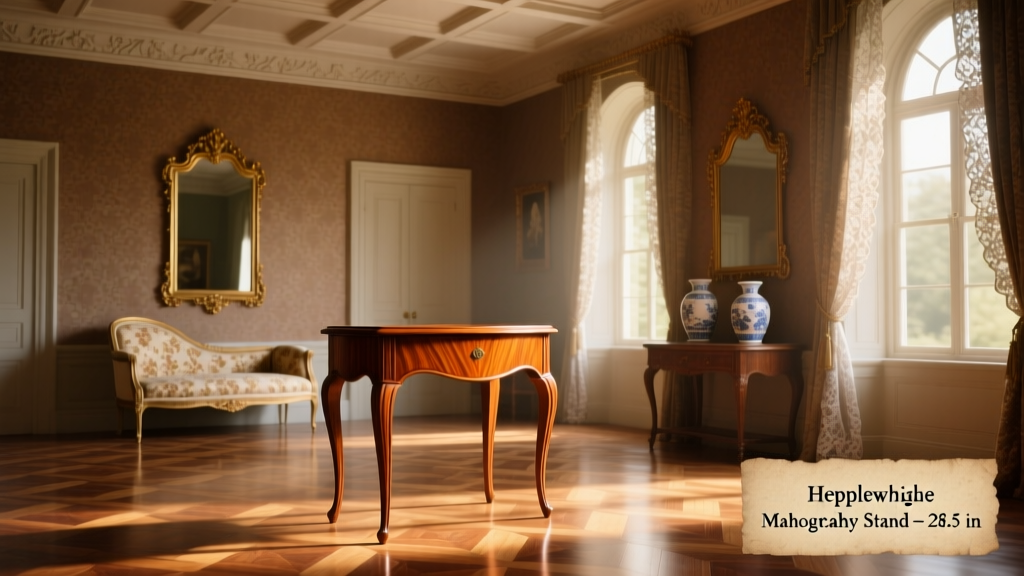
Hepplewhite Mahogany Smoking Stand: A 28½-Inch Masterpiece of Georgian Elegance and Function

City Pottery Company: American Art Pottery from Cincinnati’s Industrial Heartland

Star Wars Lunch Box Airship Droids 2-Sided Metal Thermos (1977): A Collector’s Guide to the Kenner Original
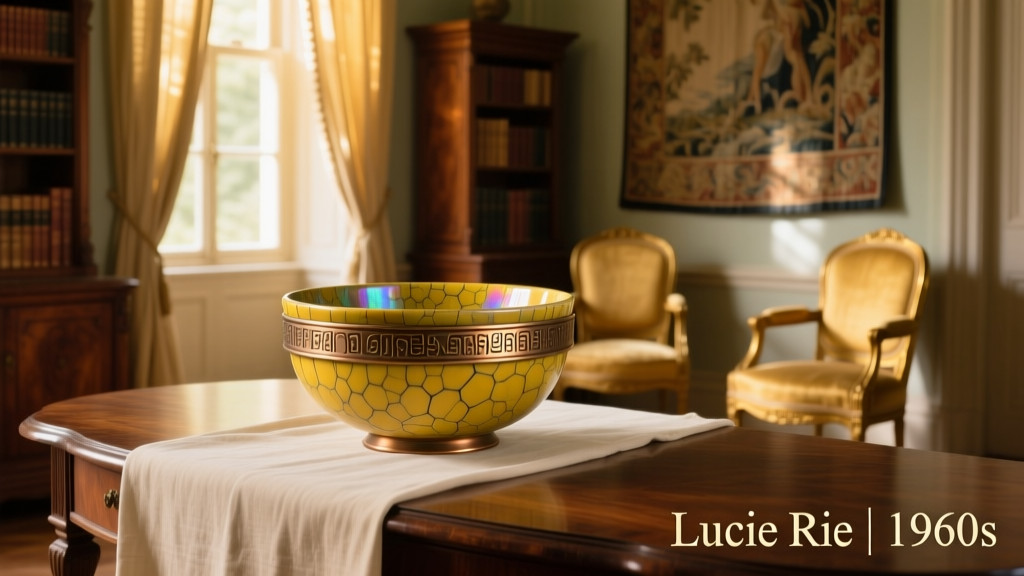
Lucie Rie’s Iconic 7 3/4-Inch Crackled Yellow Glaze Bowl with Bronze Band: Provenance, Technique, and Conservation Insights

Frankart Bookends Female Bust: Identification, Value, and Restoration Insights for Collectors

Louis XV Carved Upholstered Armchairs: Authenticity, Provenance, and Restoration of a 35½-Inch Pair
Depression Glass Royal Lace Plate (Dinner Size, Green, 9¾ Inches): Identification, History, and Care for Collectors

Disneyana Sand Pail: Donald Duck Beach Tin by Ohio Art Co. (8-Inch, Model 2)
Colonial Homestead Platter by Royal China: A Detailed Appraisal of the Green 12-Inch Dinnerware Piece