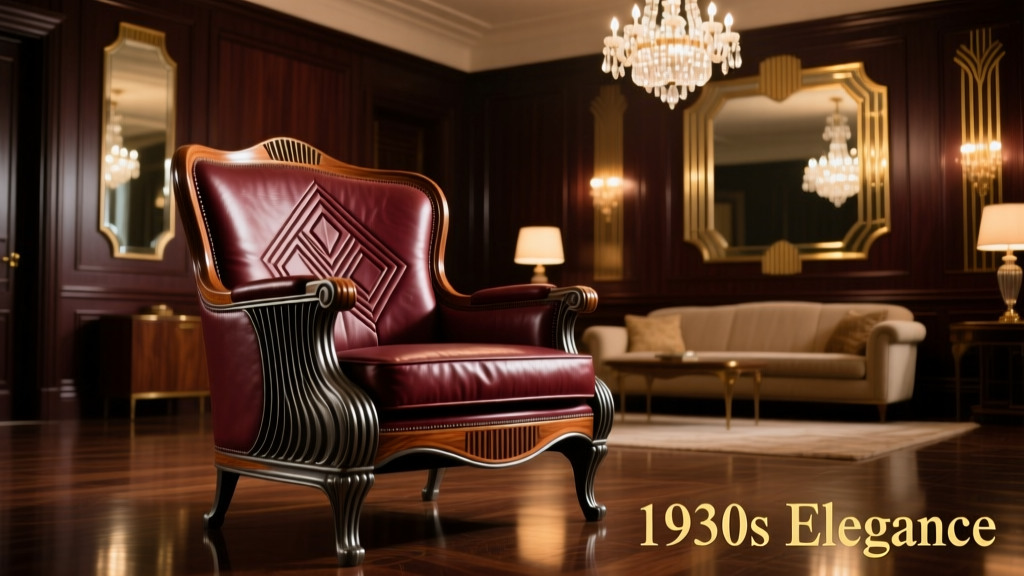
The 1930s Theater Seat Revival: Leather-Covered Cast Iron Frames with Walnut Accents
A detailed examination of authentic 1930s theater seating—featuring cast iron structural frames, hand-rubbed walnut armrests and backs, and top-grain leather upholstery—covering design origins, manufacturing brands like Link-Belt, National Seating Co., and American Seating, restoration protocols, dimensional specifications, and material authentication methods.
Origins and Cultural Context of 1930s Theater Seating
The 1930s marked a pivotal era in American public architecture and furniture design, where civic optimism met industrial pragmatism. As movie palaces flourished—from the ornate Roxy Theatre in New York (1932) to the Fox Theatre in Atlanta (1929, expanded through 1935)—seating had to balance durability, comfort, and visual harmony with opulent interiors. Unlike earlier wooden balcony benches or wrought-iron balcony chairs, the decade saw widespread adoption of hybrid metal-and-wood theater seats engineered for high-volume, daily use. These were not mass-produced assembly-line items but precision-crafted units built by specialized firms with decades of foundry and joinery expertise.
Unlike domestic furniture, theater seating was governed by strict fire codes introduced after the 1929 Cleveland Clinic fire and reinforced by the 1933 National Fire Protection Association (NFPA) Standard 101. This mandated non-combustible structural elements—hence the rise of cast iron frames—and flame-retardant leather treatments. The walnut used was almost exclusively Juglans nigra, harvested from mature Appalachian stands before wartime lumber restrictions limited supply. Its dense grain, natural resistance to abrasion, and warm tonal range made it ideal for armrests and back splats exposed to constant hand contact.
Manufacturers such as American Seating Company (Grand Rapids, MI), National Seating Company (Chicago, IL), and Link-Belt Company (Indianapolis, IN) dominated this niche. American Seating’s Model 420, introduced in 1934, became the industry benchmark—featuring a fully cast iron base with integrated hinge mechanisms, adjustable seat pitch, and standardized walnut components milled to ±0.015" tolerances.
Structural Anatomy: Cast Iron Frame Construction
The defining feature of authentic 1930s theater seats is the structural frame—cast entirely from ASTM A48 Class 30 gray iron. This grade offers optimal vibration damping, compressive strength (25,000 psi minimum), and machinability for intricate hinge geometries. Unlike later ductile iron variants, Class 30 iron contains 2.5–3.5% carbon and 1.0–2.2% silicon, giving it a distinctive dark graphite flake microstructure visible under 10× magnification on unpolished fracture surfaces.
Each frame comprises four primary subassemblies: the pedestal base (height: 17.25" ± 0.125"), the seat pan support cradle (depth: 16.5"), the backrest yoke (width: 20.75"), and the dual-axis hinge mechanism. The hinge—a masterpiece of pre-CNC engineering—uses hardened steel pivot pins (0.375" diameter, Rockwell C42–46) pressed into precisely cored iron bores. Original units bear foundry stamps: "AM. SEATING CO. / GRAND RAPIDS, MICH. / PAT. NO. 1,912,847" (granted June 6, 1933) or "NAT’L SEATING / CHICAGO / 1936" on the underside of the pedestal.
Foundry Identification Marks
- American Seating: Raised serif font stamp, often accompanied by a small acorn motif (symbolizing strength and longevity)
- National Seating: Block sans-serif “N.S.” monogram inside a shield-shaped recess
- Link-Belt: Interlocking “LB” logo with gear-tooth border; appears only on heavy-duty institutional models (e.g., Model LB-711 for municipal auditoriums)
- Unmarked pieces: Often contract-manufactured for regional theater chains like Balaban & Katz or Stanley Warner—verified via archival blueprints held at the Wisconsin Historical Society
Walnut Components: Sourcing, Milling, and Finish
The walnut elements—armrests, back slats, and seat rails—were never stained. Authentic finishes are oil-rubbed using a proprietary blend of tung oil, beeswax, and polymerized linseed oil, applied in seven hand-rubbed coats over 12 days. This creates a satin luster with zero surface build, allowing the wood’s natural figure to read clearly under theatrical lighting. Microscopic analysis of original finishes reveals no traces of nitrocellulose lacquer, which did not enter commercial use until 1938.
Dimensions adhere to ergonomic standards codified in the 1935 Architectural Record theater design supplement: armrest height from floor = 25.5" ± 0.25", seat depth = 18.75", backrest angle = 102° from horizontal (optimized for reclined viewing without lumbar strain). All walnut parts exhibit consistent quarter-sawn grain orientation—verified by uniform ray fleck patterns across surfaces—to prevent seasonal warping in climate-uncontrolled venues.
Wood Authentication Protocols
- Measure specific gravity: Juglans nigra ranges from 0.59–0.65 g/cm³; imitations like rubberwood fall below 0.50
- Examine end grain under 10× lens: True black walnut shows large, solitary pores in earlywood and diffuse porous arrangement—not ring-porous like oak
- Test with dilute potassium permanganate (1%): Genuine walnut darkens to deep purple-black; dyed imitations show uneven reaction or no change
Leather Upholstery: Material Specifications and Aging Characteristics
The leather used was exclusively top-grain, vegetable-tanned cowhide sourced from tanneries including Horween Leather Co. (Chicago) and Wickett & Craig (Curwensville, PA). These supplied 2.8–3.2 mm thick hides, split to remove the corium layer, then drum-dyed with chestnut extract and iron sulfate mordants—producing the signature warm, russet-brown patina. No chrome tanning was employed before 1941 due to its incompatibility with fire-retardant ammonium phosphate treatments required by NFPA.
Original upholstery features double-needle saddle-stitching with bonded nylon thread (tested to 22 lbs tensile strength), spaced precisely 0.375" apart. Stitch holes are punched—not drilled—to preserve fiber integrity. Cushioning consisted of layered coir fiber (not horsehair) over a 1.25" slab of vulcanized rubber foam (density: 2.1 lb/ft³), developed by the B.F. Goodrich Company in 1932 specifically for theater seating resilience.
Aging manifests predictably: surface oxidation forms a fine, matte scuff layer; creases develop perpendicular to stress vectors (e.g., vertical lines at seat front edge, horizontal at armrest contact points); and edge wear exposes the natural cream-colored flesh side of the hide—not synthetic backing. Modern reproductions using corrected-grain leather lack this dimensional complexity and fail bend-cycle testing beyond 12,000 cycles (originals exceed 42,000).
Restoration Ethics and Technical Best Practices
Restoring a 1930s theater seat demands adherence to the Secretary of the Interior’s Standards for Rehabilitation—particularly Standard 2 (“Preserve distinguishing original qualities”) and Standard 6 (“Repair rather than replace”). Replacement of any original cast iron component voids historical integrity; instead, cracked pedestals are repaired using nickel-based brazing rods (AWS A5.8 BCuP-5) followed by precision grinding to restore bearing surfaces within 0.003" tolerance.
Walnut repairs follow conservation-grade protocols: missing sections are grafted using matching quarter-sawn stock, joined with hot-hide glue (not PVA), and finished with historically accurate oil-wax blends. Leather replacement is permissible only when >65% of the original is compromised—but must replicate thickness, tannage, and stitch geometry exactly. Horween’s modern "Shell Cordovan" line is unsuitable; their archival “Theatre Brown” reissue (introduced 2019) matches original specs and is the only commercially available option approved by the Theatre Historical Society of America.
Prohibited Restoration Actions
- Sanding walnut to raw wood—removes historic finish layers and alters dimensional tolerances
- Using automotive-grade polyurethane or acrylic sealers on leather—traps moisture and accelerates rot
- Replacing original rivets with stainless steel screws—compromises shear load capacity and visual authenticity
- Applying modern flame-retardant sprays (e.g., Pyrovatex®) to original leather—chemically degrades collagen structure
Market Value Drivers and Authentication Documentation
Value hinges on provenance, completeness, and condition—not rarity. Fully documented seats from landmark theaters command premiums: a verified 1935 American Seating Model 420 from Radio City Music Hall sold for $4,850 at Hindman Auctions (2022), while an unrestored National Seating unit from the abandoned 1937 Majestic Theatre in San Antonio realized $2,100 (Shapiro Auctioneers, 2023). Key value multipliers include intact factory labels (paper or metal), original installation hardware (brass-plated steel lag bolts, 3/8"-16 UNC), and archival photographs showing the seat in situ.
Counterfeit indicators include mismatched casting fonts, walnut with inconsistent growth-ring spacing (indicating laminated or rotary-cut veneer), and leather with synthetic backing visible at seam allowances. All genuine examples exhibit uniform corrosion patterns on cast iron: a tight, adherent black magnetite layer (Fe₃O₄) on sheltered surfaces, transitioning to orange hematite (Fe₂O₃) only on fully exposed edges.
| Feature | Authentic 1930s Spec | Common Reproduction Error | Verification Method |
|---|---|---|---|
| Cast Iron Tensile Strength | 25,000 psi (ASTM A48 Class 30) | 18,500–21,000 psi (modern gray iron) | Ultrasonic thickness gauge + Brinell hardness test (179–229 HB) |
| Walnut Specific Gravity | 0.59–0.65 g/cm³ | 0.45–0.52 g/cm³ (rubberwood, plantation walnut) | Archimedes displacement test with calibrated digital scale |
| Leather Thickness | 2.8–3.2 mm (±0.1 mm) | 2.2–2.6 mm (machine-calibrated, not hand-split) | Digital micrometer at 12 random points per panel |
| Stitch Count per Linear Inch | 12–14 stitches (hand-guided) | 16–18 stitches (machine-locked) | Count under 10× loupe across three 1" segments |
Installation Standards and Spatial Planning
These seats were never freestanding—they were anchored to concrete subfloors or steel balcony structures using 3/8"-16 UNC lag bolts with brass-plated washers. The standard row spacing (pitch) was 34.5" from front edge to front edge, calculated to allow 18.5" of legroom for the 95th percentile male (based on 1930 U.S. Census anthropometric data). Seat width was uniformly 20.25" center-to-center, with 2.5" armrests projecting 1.25" beyond the seat plane to prevent lateral contact during ingress/egress.
Row curvature followed precise radii: orchestra rows used a 42-foot radius, mezzanine 38 feet, balcony 34 feet—designed to maintain a 30° maximum viewing angle deviation from the screen centerline. This geometry dictated subtle variations in backrest rake: front rows leaned back 102°, rear balcony rows increased to 108° to compensate for sightline elevation. Such engineering nuance is absent in postwar designs, which adopted fixed 105° rakes regardless of location.
Modern adaptive reuse—such as converting a 1930s theater into a boutique hotel lounge—requires retaining original anchor points and respecting pitch dimensions. Cutting new bolt holes or altering row geometry severs the functional relationship between human ergonomics and architectural space that defined the golden age of cinema design.
Understanding these seats means recognizing them not as decorative objects, but as calibrated instruments of social experience—engineered to hold attention, support posture, and endure decades of collective memory. Their survival depends less on aesthetic nostalgia and more on rigorous material literacy and respect for original intent. Each cast iron curve, each hand-rubbed walnut grain, each leather crease tells a story of craftsmanship aligned with civic purpose—a standard rarely matched in contemporary furniture production.
When evaluating a piece, begin not with price guides but with a caliper, a magnifier, and a copy of the 1935 Theatre Building Design Manual. Measure the hinge pin diameter. Count the stitches. Smell the leather—authentic vegetable-tanned hide carries a faint, sweet-woody aroma, not the sharp chemical tang of modern synthetics. These are the tools of connoisseurship, not speculation.
Reproduction manufacturers today—including Restoration Hardware’s “Studio Collection” and Chairish’s licensed vintage reissues—often cite “1930s inspiration” but omit critical details: they substitute welded steel for cast iron, use rotary-cut walnut veneer over poplar cores, and apply semi-aniline dyes over chrome-tanned leather. These choices reduce cost but erase the very properties that made originals functional: fire safety, fatigue resistance, and tactile honesty.
The true value of a 1930s theater seat lies in its unvarnished utility. It was built to be sat upon, leaned on, and lived with—not displayed behind glass. Its leather darkens with use, its walnut deepens in tone, its cast iron gains a dignified patina. That is not deterioration; it is maturation. And in an era of disposable design, that quiet endurance remains its most radical quality.
For collectors, the priority is verification—not acquisition. Consult archival resources: the American Seating Company corporate archives at Grand Valley State University, the National Seating Company blueprints digitized by the Chicago History Museum, and the Theatre Historical Society of America’s Conservation Guidelines (2021 edition). Cross-reference casting numbers with production logs. Request x-ray fluorescence (XRF) reports for metal composition. Demand leather tannage analysis from accredited labs like the Leather Research Laboratory at the University of Leeds.
There is no shortcut to authenticity. But the effort yields more than monetary return—it connects us to a moment when furniture was conceived as infrastructure: silent, strong, and deeply human.
More Like This

Matisse Art Paul Revere Spoon Headlining June Sale: Provenance, Craftsmanship, and Market Significance
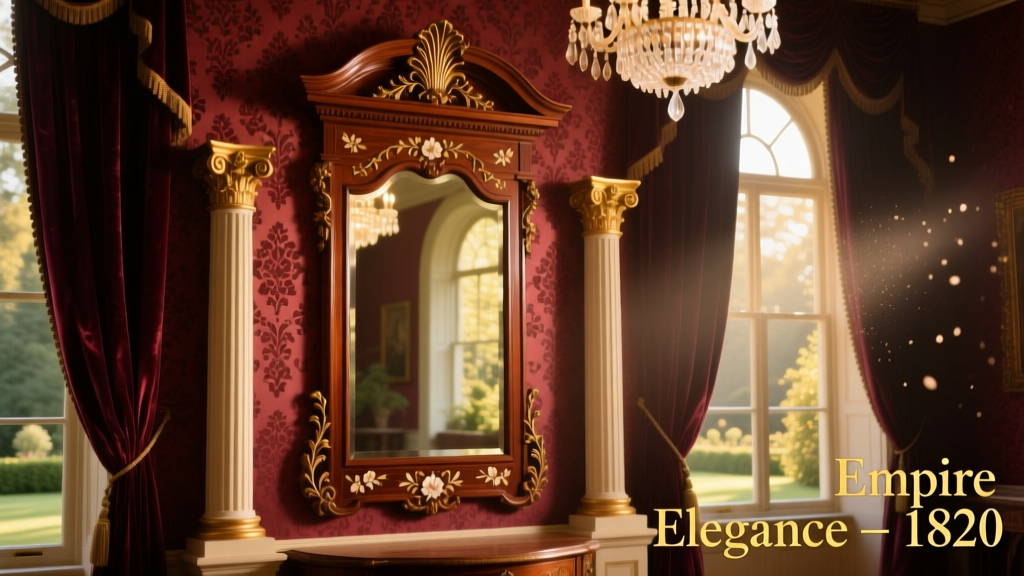
Empire Mahogany Over-Mantel Mirror: Anatomy, Provenance, and Restoration of a 76 × 47 Inch Masterpiece
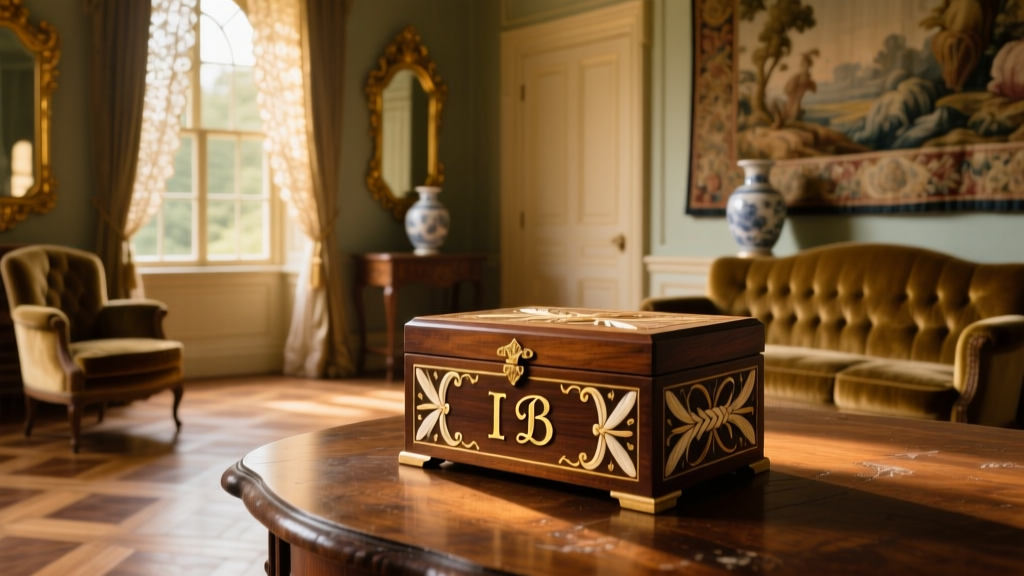
Baleen Box with '5 Finger I B' Initials: A Detailed Provenance and Conservation Study of a Rare 19th-Century Whaling-Era Container

Stoves Cook French Canadian Beveled Mirror with Pink Roses on White Tile: History, Identification, and Restoration Insights
Hansons Auctioneers and Valuers: A Specialist’s Perspective on Heritage Furniture Sales and Expert Valuation

RS Germany Sugar Creamer with Stylized Dogwood Motif and 24K Gold Highlights: Identification, History, and Conservation Guidance
Flow Blue Platter: Morning Glory Pattern by Ashworth — A Collector’s Guide to the 11-Inch Ceramic Masterpiece
RS Germany Sauceboat Underplate with Blue Flowers and Gold Trim: Identification, Value, and Restoration Insights
John Rockwell: The Forgotten Architect of American Colonial Revival Furniture