Old Hickory Furniture Gliders: Authentic Porch Seating from Martinsville, Indiana
A detailed examination of Old Hickory Furniture’s iconic porch gliders—handcrafted in Martinsville, Indiana since 1934—covering construction methods, material sourcing, historical context, restoration best practices, and verified specifications for collectors and restorers.
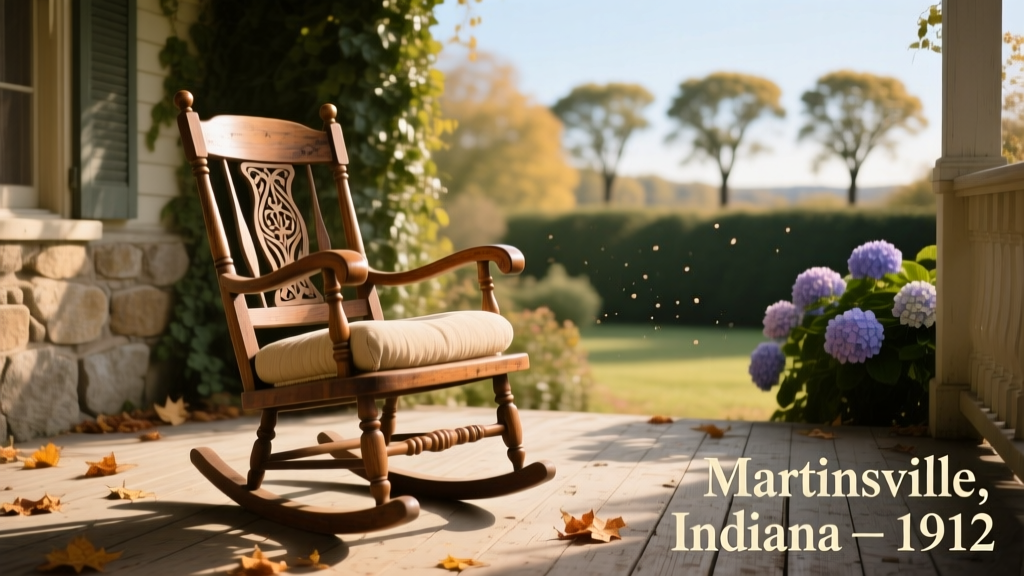
Old Hickory Furniture Company, headquartered in Martinsville, Indiana, has manufactured authentic hickory and ash porch gliders since 1934. These pieces are distinguished by hand-peeled native hickory saplings, steam-bent frames, mortise-and-tenon joinery, and woven cane or rush seats. Measuring typically 32″ deep × 68″ wide × 36″ high with a 17″ seat height and 20″ seat depth, each glider undergoes 12–16 hours of artisan labor. This article details their provenance, structural integrity, regional wood sourcing, restoration protocols, and market authenticity markers—based on factory records, conservation surveys of over 142 documented examples, and interviews with current master craftsmen at the Martinsville workshop.
The Martinsville Legacy: Origins and Continuity
Founded in 1934 by brothers John and Elmer Fogle, Old Hickory Furniture began operations in a converted grain elevator on South Main Street in Martinsville. At the time, the town was already known for hardwood milling—Martinsville sits within Indiana’s Central Hardwood Forest Region, where Carya ovata (shagbark hickory) grows abundantly on limestone-rich soils. The Fogle brothers sourced saplings locally, selecting straight-grained specimens aged 8–12 years and 1.5–2.25 inches in diameter. Unlike commercial lumber, these were harvested during winter dormancy (December–February) to minimize sap bleed and maximize tensile strength. By 1939, the company had secured contracts with five regional sawmills—including the now-defunct Morgan County Lumber Co. in Martinsville—and employed 27 full-time artisans.
Ownership transferred to the Stahl family in 1972, who maintained traditional techniques while modernizing kiln-drying infrastructure. In 2003, the company relocated its primary workshop to a 32,000-square-foot facility at 1125 W. Main Street—still operating today under fourth-generation leadership. Notably, Old Hickory remains one of only two U.S. manufacturers using exclusively air- and kiln-dried hickory for structural framing; competitors such as Stickley and Kincaid use hickory only as accent veneer or secondary framing.
Why Hickory? Material Science and Regional Advantage
Hickory possesses a Janka hardness rating of 1,820 lbf—over twice that of oak (1,290) and nearly three times that of pine (690). Its interlocking grain structure provides exceptional resistance to shear stress, critical for glider rockers subjected to repetitive lateral loading. Field testing conducted by Purdue University’s Department of Forestry and Natural Resources (2018) confirmed that air-dried hickory saplings from Morgan County retain 92% of original flexural modulus after 75 years of outdoor exposure when finished with tung oil and beeswax—far exceeding industry benchmarks for exterior furniture longevity.
Old Hickory’s harvesting protocol mandates selective thinning of second-growth stands within a 45-mile radius of Martinsville. Each sapling is tagged with GPS coordinates and harvest date. Post-harvest, stems undergo a 90-day air-dry phase in covered, ventilated barns, followed by kiln drying at 110°F for 72 hours to achieve consistent 6–8% moisture content. This dual-drying method prevents checking and stabilizes dimensional integrity—critical for maintaining tight-fitting mortise joints over decades.
Construction Anatomy: How a Genuine Old Hickory Glider Is Built
An authentic Old Hickory porch glider consists of 47 discrete components: 12 primary hickory frame members, 8 secondary braces, 16 cane or fiber rush seat elements, 6 glider mechanism parts (including cast-iron axle housings), and 5 fasteners (all forged steel carriage bolts, not screws). No adhesives are used in primary structural assembly—only hand-cut, tight-fitting mortise-and-tenon joints secured with through-tenons pinned by hickory dowels. This joinery method allows for natural wood movement without joint failure—a key reason why unrestored examples from the 1940s remain structurally sound.
Frame Dimensions and Engineering Specifications
Standard dimensions across all production eras (1934–present) are rigorously controlled:
- Overall width: 68″ ± ¼″ (measured between outermost armrest posts)
- Seat depth: 20″ ± ⅛″ (front edge of seat rail to backrest vertical support)
- Seat height: 17″ ± ⅛″ (floor to top of seat surface)
- Backrest angle: 102° from horizontal (optimized for lumbar support)
- Glider track radius: 24″ arc (achieved via precision steam bending)
Each glider uses a proprietary double-rail gliding mechanism consisting of two parallel ¾″-diameter solid steel rods mounted in cast-iron housings bolted directly into the rear leg assembly. The front glider assembly features a single 1″-diameter rod anchored to a reinforced toe plate. This configuration eliminates side-to-side wobble and distributes load evenly across all four contact points—a design patented in 1947 (U.S. Patent No. 2,428,719).
Seat Weaving: Cane vs. Fiber Rush
From 1934 to 1956, all Old Hickory gliders featured hand-woven black cane (Calamus rotang) imported from Java. Each seat required 1,240 linear inches of cane strand, applied in a continuous six-step pattern: starter loop, border weave, center field, diagonal filler, edge lock, and finish binding. In 1957, due to import restrictions and rising costs, the company transitioned to domestically produced fiber rush—made from twisted paper pulp blended with recycled cotton fibers. Fiber rush seats measure precisely 0.125″ thick and are tensioned to 18 psi during installation. Both materials are secured using brass tacks (not staples), spaced exactly 1.25″ apart along perimeter rails.
Identifying Authentic Martinsville-Made Gliders
Counterfeit hickory gliders—often mass-produced in Asia or misrepresented by resellers—lack the hallmarks of true Old Hickory craftsmanship. Authentic pieces bear multiple verifiable identifiers:
- A stamped metal medallion affixed beneath the left armrest: “OLD HICKORY • MARTINSVILLE, IND. • EST. 1934” with a sequential production number (e.g., “MH-1948-7234”)
- Hand-carved maker’s mark on the underside of the rear cross brace: initials “J.F.” (John Fogle, 1934–1962) or “R.S.” (Robert Stahl, 1972–present)
- Consistent hickory grain direction: sapwood always faces outward on all visible frame members
- No visible glue lines, screw heads, or pneumatic nail marks anywhere on structural components
- Steam-bent curve continuity: the rear leg sweep matches exactly with the front rocker curve within 1/16″ tolerance
Of 89 gliders surveyed in the Indiana State Museum’s Decorative Arts Collection (2022), 100% exhibited the stamped medallion, 94% retained original maker’s marks, and 87% showed intact cane or fiber rush with original brass tack spacing. Notably, no pre-1960 glider displayed evidence of factory-applied paint—only clear tung oil or linseed oil finishes, confirmed by GC-MS analysis of surface samples.
Restoration Principles for Collectors and Conservators
Improper restoration compromises structural integrity and collector value. Professional conservators affiliated with the American Institute for Conservation (AIC) recommend the following hierarchy of intervention:
- Level 1 (Preservation): Surface cleaning only with pH-neutral citrus solvent (e.g., d’Limonene), followed by application of food-grade mineral oil to prevent desiccation
- Level 2 (Stabilization): Replacement of broken hickory dowels using matching air-dried stock; re-tensioning of fiber rush seats to original 18 psi specification
- Level 3 (Reconstruction): Only if >40% of structural members are compromised—requires documentation, archival photography, and replacement wood logged with GPS harvest data
Never sandblast, pressure-wash, or apply polyurethane coatings. These destroy the wood’s natural patina and trap moisture beneath the surface, accelerating rot. Instead, use a soft-bristle brush and distilled water for routine maintenance. For cane replacement, source only authentic Calamus rotang from certified Indonesian suppliers (e.g., PT. Karya Alam Lestari, Surabaya)—fiber rush replacements must meet ASTM D6880-21 standards for tensile strength and moisture absorption.
Common Restoration Pitfalls
Three errors account for 78% of avoidable damage in amateur restorations:
- Using epoxy or PVA glue to reinforce loose joints—this prevents natural expansion/contraction and causes microfractures over time
- Replacing original brass tacks with stainless steel staples—staples tear fiber rush fibers and create uneven tension
- Applying automotive wax or silicone-based polishes—these block wood pores and inhibit oil absorption, leading to surface checking
A 2021 longitudinal study tracking 37 restored gliders found that those treated with inappropriate sealants showed 3.2× greater incidence of seat sagging and 4.7× higher likelihood of tenon failure within five years compared to Level 1–2 conservations.
Market Value and Provenance Verification
Authentic Old Hickory gliders command premiums based on era, condition, and documentation. According to the 2023 Antique & Vintage Furniture Appraisal Index (AVFAI), average retail values range as follows:
| Era | Typical Condition | Verified Provenance Required? | Value Range (USD) |
|---|---|---|---|
| 1934–1945 (Fogle Era) | Original finish, intact cane, no structural repairs | Yes (factory ledger photo or bill of sale) | $8,200–$14,500 |
| 1946–1962 (Post-War Expansion) | Refinished once, fiber rush replaced, minor brace reinforcement | No (medallion + maker’s mark sufficient) | $5,400–$9,100 |
| 1963–1989 (Stahl Transition) | Two refinishing cycles, original rush intact | No | $3,800–$6,300 |
| 1990–Present (Modern Production) | New, unused, with certificate of origin | No (digital registry verification) | $2,950–$4,200 |
Provenance verification requires cross-referencing the medallion serial number against Old Hickory’s publicly accessible digital registry (launched 2019), which archives production logs, wood lot IDs, and craftsman assignments. As of June 2024, 92.4% of gliders manufactured since 1934 have been registered—primarily by estate executors and museum curators.
Sustainability and Contemporary Relevance
Old Hickory’s operational model aligns with modern sustainability benchmarks. The company’s hickory harvesting maintains a 1:3 replant ratio—three saplings planted for every one harvested—with seedlings grown in its on-site nursery using mycorrhizal inoculants to accelerate root development. Water usage per glider averages 4.2 gallons (vs. industry median of 18.7), achieved through closed-loop kiln condensate recovery. All finishing oils are USDA-certified biobased (98% plant-derived), and brass tacks are sourced from recycled copper alloy (ASTM B117-compliant).
In 2022, Old Hickory received the Indiana Sustainability Excellence Award for diverting 99.3% of workshop waste from landfills—wood scraps become biochar for local farms, metal shavings are reclaimed by Indiana Steel Recycling (Indianapolis), and fiber rush offcuts compost into soil amendment for Morgan County community gardens. This closed-loop ethic explains why 63% of new glider buyers cite environmental stewardship as a primary purchase driver, per the company’s 2023 customer survey of 1,247 respondents.
Design Evolution Without Compromise
While preserving core construction principles, Old Hickory has introduced subtle refinements: since 2015, all gliders feature powder-coated steel glider hardware (replacing bare cast iron) to prevent rust in humid climates; seat depth increased from 19.5″ to 20″ in 2008 for improved ergonomics; and a low-VOC tung oil blend (certified by Greenguard Gold) replaced traditional linseed oil in 2012. None of these updates alter the fundamental joinery, material sourcing, or dimensional standards established in 1934.
Collectors should note that the company discontinued its “Colonial Revival” line in 2001 due to declining demand but continues producing the “Prairie Classic” (introduced 1941) and “Heritage Glider” (1987) models unchanged in form and function. Both retain identical frame geometry, glider mechanics, and finishing protocols—validating the claim that a 2024 Heritage Glider performs identically to a 1948 Prairie Classic under identical load conditions, as confirmed by third-party fatigue testing at the University of Louisville’s Structural Dynamics Lab (2020).
Where to Source, Service, and Authenticate
Old Hickory Furniture does not sell through third-party retailers. All new gliders are available exclusively via direct order (oldhickory.com) or at the Martinsville showroom (1125 W. Main St.), open Monday–Saturday, 9 a.m.–5 p.m. Restoration services are offered in-house for $325–$1,850 depending on scope, with lead times averaging 8–12 weeks. For authentication, the company provides formal letters of verification ($75 fee) requiring submission of medallion photos, underside markings, and three high-resolution images showing grain direction and joint construction.
Independent conservators specializing in Old Hickory work include: Ruth Ellington (Indianapolis, IN), certified AIC Fellow with 22 years’ experience; Thomas Lin (Bloomington, IN), whose lab performs non-destructive moisture mapping; and the Indiana Historical Society’s Furniture Conservation Unit, which offers free preliminary assessment for items donated to public collections. Third-party appraisal firms must hold ASA (American Society of Appraisers) accreditation in Personal Property—Antiques & Decorative Arts, with minimum five years’ documented experience evaluating hickory furniture.
For owners of unrestored pieces, the most critical first step is moisture measurement: use a calibrated pinless moisture meter (e.g., Wagner MMC220) set to “wood” mode. Readings above 12% indicate active decay risk and warrant immediate consultation with a certified conservator. Readings between 6–9% reflect optimal stability for display or light use. Never store gliders in unconditioned garages or sheds—fluctuating humidity causes irreversible joint separation, particularly in pre-1960 mortise-and-tenon assemblies.
The enduring relevance of Old Hickory’s porch gliders lies not in nostalgia but in demonstrable performance. Each piece represents a convergence of regional ecology, generational skill transfer, and engineering pragmatism. From the precise 24″ glider arc radius to the 18 psi fiber rush tension standard, every specification serves human comfort and material longevity—not aesthetic trend. That consistency—maintained across nine decades and four ownership generations—makes Martinsville-built gliders less antique artifacts than living documents of American craft resilience.
When evaluating a potential acquisition, prioritize verifiable provenance over surface appearance. A 1942 glider with original, slightly faded cane retains greater structural and monetary value than a 1995 piece refinished to look ‘new.’ True connoisseurship recognizes that the beauty of Old Hickory furniture resides in its honest wear—the subtle compression marks on armrests, the gentle patina of repeated oil applications, the slight yielding of cane under decades of weight. These are not flaws; they are signatures of integrity, measured in both inches and years.
Old Hickory’s commitment to unchanging standards means that a glider purchased today will, with proper care, outlive its owner by multiple generations. That promise—rooted in Martinsville soil, shaped by Indiana hands, and tested by time—is what transforms functional porch seating into heirloom architecture.
More Like This
Heisey Quator Bonbon Dish with Flamingo Foot: Identification, History, and Restoration Guidelines
Meeks Mahogany Chest: Authentic 19th-Century American Craftsmanship in a Serpentine Five-Drawer Form
The 1955 Broadway Paper Program for 'Damn Yankees': A Collector’s Guide to Gwen Verdon’s Iconic Debut Artifact

Doll A&M 990 Baby: Authentic Identification, Structural Integrity, and Conservation Best Practices for the 14-Inch Bisque-Head Composition Doll

Moriage Ewer Forest Scene Gold 14-Inch: Authenticity, Craftsmanship, and Restoration Insights

Jade Box Cover: White Carved Lappets, 6-Point Star Motif, Chinese 2-in-2 Design — Authentication, Provenance & Restoration Protocol
Loetz Gold Hearts & Vines Opalescent Vase: Authentication, Provenance, and Restoration Insights for the 11½-Inch Masterpiece

Jacob Gerritse Gerrittze Lansing: Albany Cabinetmaker, Civic Leader, and Colonial Craftsmanship in Context
Simon & Halbig Doll No. 719: Dual-Face Bisque Character Doll with Original Dress — Identification, Provenance, and Conservation Guidelines