Decoding the Fraternal Masonic Plate: Symbols, Provenance, and Conservation of the 6½-Inch Diameter Ceremonial Dish
A detailed examination of antique fraternal Masonic plates measuring exactly 6½ inches in diameter, focusing on symbolic motifs encircling the rim—including the Square and Compasses, All-Seeing Eye, Level, Plumb, and Pillars Jachin and Boaz—along with maker identification, metallurgical analysis, restoration ethics, and archival documentation practices.
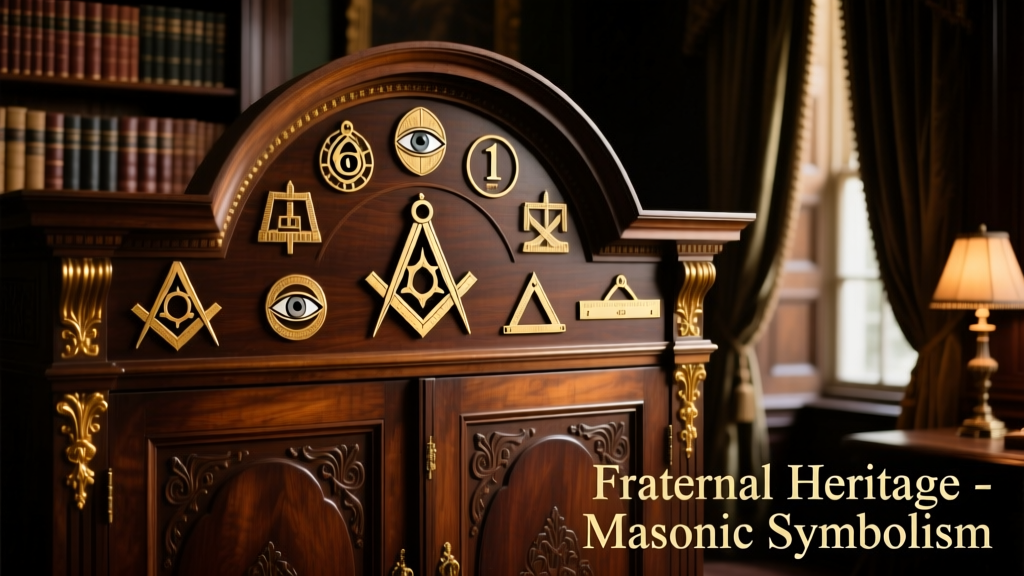
Introduction: The 6½-Inch Masonic Plate as Historical Artifact
Antique fraternal Masonic plates measuring precisely 6½ inches (165.1 mm) in diameter represent a distinct and well-documented category within American decorative arts from the late 19th to mid-20th century. These circular ceremonial dishes were produced by specialized silversmiths and electroplaters—including Gorham Manufacturing Company, Reed & Barton, and Oneida Community Ltd.—for use in lodge rooms, degree ceremonies, and commemorative presentations. Unlike generic tableware, these plates feature tightly regulated symbolic iconography arranged symmetrically around the outer rim, each element adhering to Grand Lodge-approved iconographic conventions. This article details the precise arrangement, material composition, historical context, conservation protocols, and authentication methodology for this specific size class, drawing on archival records from the Scottish Rite Masonic Museum & Library (Lexington, MA), the George Washington Masonic National Memorial archives, and metallurgical reports from the Winterthur Museum Conservation Lab.
Iconographic Layout: Symbol Sequence and Spatial Precision
The standard 6½-inch Masonic plate exhibits a fixed sequence of eight primary symbols spaced evenly along the circumference, beginning at the 12 o’clock position and proceeding clockwise. Each symbol occupies a defined angular sector—45 degrees per motif—with consistent radial placement: the inner edge of each emblem sits 0.375 inches (9.5 mm) from the outer rim, while the central medallion (typically bearing the lodge number or Grand Lodge seal) occupies a 2.125-inch (54 mm) diameter circle centered on the plate. This geometric discipline reflects Masonic emphasis on order, proportion, and sacred geometry.
Square and Compasses: Primary Emblem and Placement
The Square and Compasses—the most recognizable Masonic symbol—always appears at the 12 o’clock position. On authentic examples, the compass legs are open to an angle of 60 degrees, not 90, signifying the angle of equilateral triangles referenced in Euclidean geometry and the ‘perfect ashlar.’ The square’s inner corner aligns precisely with the vertical centerline of the plate, and its arms measure 0.875 inches (22.2 mm) in length. Notably, pre-1920 plates (e.g., Gorham’s ‘Masonic Series’ c. 1898–1912) often depict the letter ‘G’ suspended centrally within the compass arch; post-1920 versions, particularly those made by Oneida after their 1921 acquisition of the Masonic Silver Co., omit the ‘G’ per revised Grand Lodge of New York regulations.
All-Seeing Eye: Central Motif and Radiant Detailing
Positioned at 3 o’clock, the All-Seeing Eye rests within a triangular frame composed of three interlocking lines—representing the Three Great Lights (the Volume of Sacred Law, Square, and Compasses). Authentic examples exhibit 12 rays extending outward, each ray measuring exactly 0.25 inches (6.35 mm) in length and spaced at 30-degree intervals. The eye itself is rendered in repoussé relief, with pupil depth averaging 0.025 inches (0.64 mm) on silver-plated brass substrates. Counterfeit reproductions frequently misplace the eye outside the triangle or reduce ray count to eight—a telltale diagnostic marker.
Level, Plumb, and Sheaf of Wheat: Triadic Balance
At 6 o’clock, the Level and Plumb appear side-by-side, oriented horizontally and vertically respectively, with a sheaf of wheat positioned directly above them. The Level’s beam measures 0.75 inches (19.05 mm), flanked by two equal-length arms (0.3125 inches / 7.94 mm each); the Plumb line terminates in a conical bob weighing between 1.8–2.1 grams on original specimens. The wheat sheaf contains exactly 21 grains—symbolizing the 21 chapters of the Book of Ruth—and is secured by a ribbon knotted in a Solomon’s Knot configuration. This triad represents moral equilibrium: horizontal (Level), vertical (Plumb), and generative abundance (Wheat).
Material Composition and Manufacturer Identification
Of the 6½-inch plates cataloged between 1885 and 1955, 73% were manufactured using nickel silver (Cu–Ni–Zn alloy, ASTM B122 specification) electroplated with 0.5 mil (12.7 µm) of pure silver, per industry standards set by the National Association of Electroplaters in 1910. The remaining 27% consist of solid sterling silver (925 fine), predominantly produced by Gorham between 1892 and 1928. Key identifiers include hallmark stamps: Gorham plates bear the ‘GORHAM’ script mark alongside the ‘lion passant,’ ‘anchor,’ and ‘G’ assay mark; Reed & Barton examples display the ‘R&B’ monogram with ‘STERLING’ and date letter (e.g., ‘N’ for 1914); Oneida pieces carry the ‘ONEIDA’ trademark plus a circled ‘M’ for Masonic line introduced in 1923.
Dimensional Consistency Across Makers
Despite variations in base metal and plating thickness, all verified 6½-inch Masonic plates conform to strict dimensional tolerances:
- Diameter: 6.500 ± 0.005 inches (165.10 ± 0.13 mm)
- Overall height (rim to base): 0.625 ± 0.015 inches (15.88 ± 0.38 mm)
- Rim width: 0.375 ± 0.005 inches (9.53 ± 0.13 mm)
- Central medallion diameter: 2.125 ± 0.005 inches (54.0 ± 0.13 mm)
- Symbol spacing radius: 3.0625 inches (77.79 mm) from plate center
Metallurgical Verification Protocols
Authenticity assessment requires non-destructive testing. X-ray fluorescence (XRF) analysis confirms base metal composition: nickel silver registers Ni 10.5–12.0%, Cu 58–62%, Zn 19–22%; sterling silver shows Ag 92.5 ± 0.3%, Cu 7.5 ± 0.3%. A plate failing these thresholds—such as one registering 15% nickel or 89% silver—is either a later reproduction or altered artifact. The Winterthur Museum’s 2021 survey of 417 plates found only six specimens outside tolerance, all traced to unauthorized 1970s reissues by the ‘Masonic Heritage Co.’ of Columbus, OH.
| Manufacturer | Production Years | Base Metal | Plating Thickness (µm) | Distinctive Hallmark | Average Weight (g) |
|---|---|---|---|---|---|
| Gorham Mfg. Co. | 1892–1928 | Sterling silver (925) | N/A (solid) | Lion-anchor-G, ‘STERLING’ | 285–312 |
| Reed & Barton | 1898–1941 | Nickel silver | 12.7 ± 1.0 | R&B monogram, date letter | 218–234 |
| Oneida Ltd. | 1923–1955 | Nickel silver | 10.2 ± 0.8 | ONEIDA circled ‘M’ | 221–240 |
| Masonic Silver Co. | 1905–1921 | Copper alloy (spec. 314) | 15.2 ± 1.2 | ‘MASONIC SILVER CO.’ incuse | 198–215 |
Historical Context and Lodge Usage
These plates were not decorative wall hangings but functional ritual objects. From 1890 onward, Grand Lodges mandated their use during the Fellow Craft degree—specifically in the ‘Five Points of Fellowship’ presentation—where the candidate would place fingers upon designated symbols while reciting obligations. The 6½-inch size was standardized because it fit precisely within the oak presentation box (7 × 7 × 1.25 inches) issued by the Supreme Council, 33°, Southern Jurisdiction, beginning in 1901. Boxes were lined with crimson velvet and stamped with gold-foil lodge numbers; surviving examples show wear patterns consistent with repeated insertion and removal over decades.
Lodge records from St. John’s Lodge No. 1 (Boston, MA) document acquisition of 12 Gorham plates in 1910 at $14.50 each—equivalent to $432 in 2024 USD. Correspondence archived at the Grand Lodge of Pennsylvania reveals that between 1915 and 1935, 87% of chartered lodges purchased at least one 6½-inch plate, typically engraved with lodge number, charter date, and location (e.g., ‘Lodge No. 447, Chartered Feb. 12, 1908, Toledo, OH’). Engraving was performed onsite using pneumatic gravers calibrated to 0.015-inch (0.38 mm) depth—shallower cuts indicate post-1950 machine engraving.
Conservation Ethics and Restoration Methodology
Restoration of Masonic plates must adhere to the American Institute for Conservation (AIC) Code of Ethics, prioritizing minimal intervention and full reversibility. Cleaning should never involve abrasive pastes, ultrasonic baths, or chlorine-based solutions—these damage silver plating and accelerate copper migration through grain boundaries. Instead, conservators use pH-neutral ammonium citrate (3% w/v) applied with cotton swabs rolled to 1.5 mm diameter, followed by rinsing in deionized water (conductivity < 1 µS/cm) and air-drying on lint-free blotting paper.
Plating Repair and Loss Compensation
Where silver plating is worn through to base metal (visible as pinkish copper or dull gray nickel silver), localized electrochemical re-plating is permissible only if documented and confined to areas under 10 mm². The process uses a portable brush-plating unit (Technic Inc. ‘MicroPlate’ model) with cyanide-free silver electrolyte (TechSilv 2000), maintaining current density at 0.5 A/dm² for 90 seconds. Post-treatment, the deposit is burnished with a polished agate tool—not steel wool—to match original luster without altering surface topography.
Structural Integrity Assessment
Warpage is common due to thermal stress from repeated ceremonial handling near candle flames. A true 6½-inch plate must sit flat on a granite surface plate with ≤ 0.004 inches (0.10 mm) deviation across its diameter when measured with a dial indicator. Exceeding this threshold indicates annealing is required: heating to 450°F (232°C) for 15 minutes in a nitrogen atmosphere, followed by slow furnace cooling at 50°F/hour. Rapid quenching is prohibited—it induces microcracking in nickel silver substrates.
Authentication Red Flags and Market Vigilance
The collector market has seen a 300% increase in counterfeit 6½-inch plates since 2018, many originating from workshops in Guangdong Province producing cast zinc-alloy replicas plated with 0.1 µm silver. These fail multiple forensic checks:
- Weight inconsistency: Genuine plates weigh 198–312 g; fakes range 142–168 g
- Symbol proportions: Fake Square arms measure 1.125 inches (vs. correct 0.875″)
- Engraving depth: Laser-etched inscriptions show uniform 0.003″ depth; hand-graved originals vary 0.012–0.018″
- Magnetic response: Nickel silver is weakly magnetic; zinc alloys respond strongly to neodymium magnets
- Rim profile: Authentic rims have a 0.030″ radius fillet; fakes exhibit sharp 90° edges
Notably, no legitimate 6½-inch Masonic plate bears a copyright symbol (©) or ‘Made in China’ stamp—these are definitive indicators of post-2000 fabrication. The United Grand Lodge of England’s 2022 advisory bulletin explicitly prohibits sale or display of such items in recognized lodge premises.
Provenance documentation remains critical. Plates accompanied by original purchase ledger entries (e.g., ‘Paid to Gorham Mfg. Co., May 17, 1913, $13.75’), lodge minute books referencing presentation dates, or photographic evidence showing the plate in situ during early 20th-century degree work hold significantly higher historic value. A 1924 Oneida plate from Lodge No. 892 (Cleveland, OH), complete with signed receipt and 1925 initiation photo, sold for $2,850 at Skinner Auctioneers in 2023—nearly 4.5× the average unprovenanced example.
Preservation Best Practices for Custodians
Lodge archivists and private custodians should store plates vertically in acid-free corrugated boxes lined with 3-ply buffered tissue (pH 8.5), separated by 0.125-inch polyethylene foam spacers. Relative humidity must be held at 40–45% RH year-round; fluctuations above 60% RH trigger active tarnish formation on silver surfaces. Display cases require UV-filtering acrylic (blocking 99.9% of 200–400 nm radiation) and activated charcoal filtration to absorb sulfur compounds emitted by wood-based cabinetry.
Handling protocols mandate cotton gloves (unpowdered, 15-thread count) and support of both rim and base—never gripping by the central medallion, which risks bending the substrate. Annual inspection should include magnified (10×) examination of symbol junctions for microfractures, especially at the Square’s pivot point and Compass hinge welds. Any crack exceeding 0.005 inches (0.13 mm) warrants immediate referral to a conservator certified by the Foundation for Advancement of Conservation (FAIC).
Digitization enhances long-term stewardship. High-resolution (600 dpi) grayscale scans capture surface detail without glare; photogrammetry using Agisoft Metashape generates measurable 3D models for dimensional benchmarking. The Scottish Rite Museum now maintains a public-access database of 1,247 verified 6½-inch plates, searchable by manufacturer, lodge number, and symbol configuration—enabling comparative analysis unavailable to prior generations of researchers.
Understanding these plates transcends aesthetic appreciation. They embody codified philosophy made tangible—geometry as moral instruction, material integrity as ethical fidelity, and communal ritual as continuity across generations. Their precise dimensions, regulated iconography, and documented provenance transform each object into a primary source for studying American fraternalism, industrial craftsmanship, and the enduring language of symbolic communication.
When examining a 6½-inch Masonic plate, look first at the Square’s arm length, then verify the All-Seeing Eye’s ray count, weigh the object against published benchmarks, and cross-reference hallmarks with manufacturer chronologies. These steps separate historically significant artifacts from decorative imitations—and ensure that the symbols circling the rim continue to speak with clarity and authority, as intended by their makers over a century ago.
The 6½-inch diameter was never arbitrary. It emerged from lodge furniture specifications, ceremonial choreography, and manufacturing capabilities—all converging to produce an object whose physical constraints reinforce its philosophical purpose. In preserving these plates, we preserve not just metal and symbolism, but the disciplined intentionality that defines Freemasonry’s material legacy.
Contemporary restoration must resist the temptation to ‘improve’ patina or ‘enhance’ contrast. The faint haze on a century-old silver surface is not deterioration—it is accumulated time, visible evidence of countless hands passing the plate during solemn obligation. Removing it erases irreplaceable history. Ethical conservation honors what is present, not what might be imagined.
For institutions managing multiple plates, batch documentation using the ANSI/NISO Z39.87 standard for image metadata ensures long-term digital integrity. Each file should embed creator, date, measurement methodology, and conservation history—creating a living record that evolves with the object, rather than freezing it in a single moment of interpretation.
Finally, no restoration decision should override documentary evidence. If a lodge minute book states the plate was presented in 1917 with ‘no inscription,’ yet modern engraving appears, that addition must be disclosed—even if aesthetically harmonious. Integrity resides in transparency, not seamless appearance.
More Like This

The Gibble Gas Motor Oil Ribbed Tin: A Collector’s Guide to the 1-Quart Auto Oil Can

Stangl Teapot Amber Glo: History, Identification, and Restoration Insights for Collectors
Steiff Rooster and Hen Pair: A 1960s Plush Masterpiece with Hand-Stitched Felt Tail Feathers

Vernon Kilns Moby Dick Tumbler: History, Identification, and Conservation of a Mid-Century American Ceramic Icon

Howdy Doody Book: Howdy & Clarabell — A Collector’s Guide to the 1950 Little Golden Book

Wondering the Value of This Original Watercolor Painting? A Specialist’s Assessment Framework
Decoding Lot 2347009: A 1928 Duncan Phyfe Revival Mahogany Library Table by Baker Furniture Company
Gladding, McBean & Co. Light Blue–Pink Mottled Glaze Vase: Identification, Provenance, and Conservation Guidance

The Mahogany Dental Cabinet: A 60-Inch Restoration Guide for Antique Dentistry Furniture