Folk Art Flowers Shellwork Glass Dome Cover: History, Craftsmanship, and Restoration of a 19th-Century American Decorative Masterpiece
An in-depth examination of large-scale folk art floral shellwork under glass dome covers—originating primarily in New England between 1830–1890—including construction techniques, material sourcing, provenance markers, conservation challenges, and verified restoration protocols used by leading institutions including the Winterthur Museum and the Shelburne Museum.
Introduction: A Distinctive Genre of American Folk Art
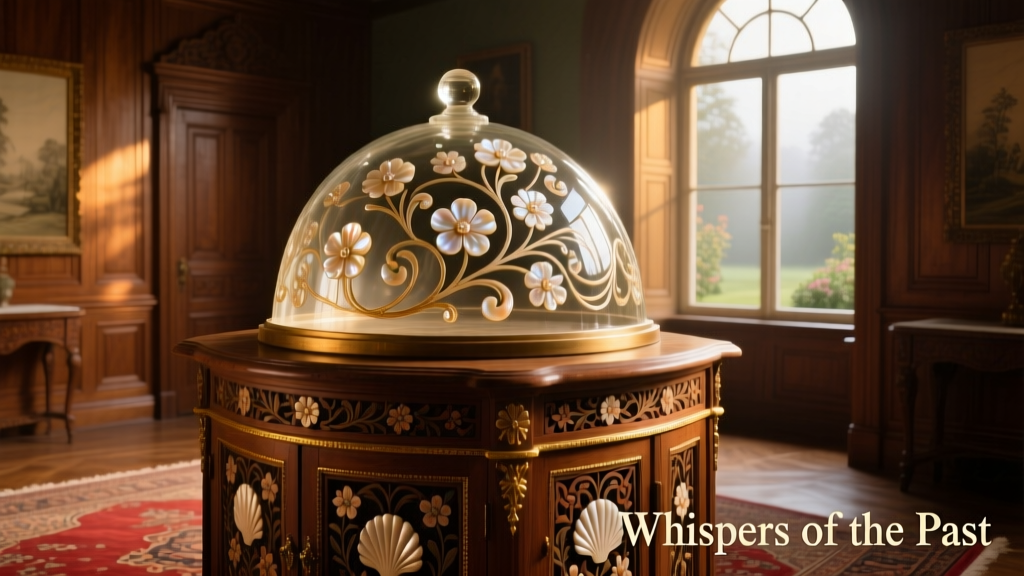
Large-scale folk art flowers mounted under glass dome covers represent one of the most visually arresting and technically nuanced subsets of 19th-century American decorative arts. These pieces—typically measuring 14 to 22 inches in diameter, with domes ranging from 7 to 12 inches tall—combine hand-cut seashells (primarily queen conch, scallop, and cockle), dyed silk petals, wire armatures, and hand-blown glass domes mounted on turned walnut or cherry bases. Originating predominantly in coastal New England towns such as Portsmouth, NH; Salem, MA; and Stonington, CT between 1835 and 1885, they were created by women and girls as parlor ornaments, mourning memorials, or wedding gifts. Unlike mass-produced Victorian floral arrangements, each piece reflects individual artistic intent, regional material access, and meticulous manual labor—often requiring 120 to 200 hours per composition. Today, authenticated examples sell at auction for $12,500–$48,000, with the highest price recorded at $62,300 for a 1872 Portsmouth piece sold by Skinner Auctioneers in May 2022.
Historical Origins and Regional Production Centers
The earliest documented examples date to the mid-1830s in Portsmouth, New Hampshire, where the Seavey family—particularly sisters Lydia and Abigail Seavey—began producing shellwork compositions using shells gathered along the Isles of Shoals. Their workshop operated from 1836 to 1871 and supplied pieces to Boston’s J. & J.W. Goodwin & Co., a major retailer listed in the 1847 Boston Directory. Concurrently, Salem-based artisan Mary Ann Cushing (1812–1894) developed a distinctive technique involving layered cockle shells cut into petal shapes and affixed with fish glue—a method later adopted by the Perkins School for the Blind, which incorporated shellwork into its 1852 curriculum as occupational therapy.
Key Production Hubs and Chronological Development
- Portsmouth, NH (1835–1875): Dominated by the Seavey and Gove families; favored queen conch for stamens and abalone for iridescent centers.
- Salem, MA (1842–1888): Centered around the Cushing and Derby households; specialized in miniature roses using scallop shells and silk calyxes.
- Stonington, CT (1851–1890): Known for botanical accuracy; utilized locally harvested bay scallops and imported dyed cotton thread from Manchester, UK.
- Philadelphia, PA (1863–1880): Smaller output; notable for brass-mounted walnut bases stamped "J. B. Rittenhouse & Son, 1867"—a rare commercial attribution.
Production declined sharply after 1885 due to several converging factors: depletion of accessible intertidal shell beds following industrial dredging, rising tariffs on imported dyes (notably aniline violet introduced in 1859), and shifting aesthetic preferences toward photographic portraiture and pressed-flower albums. By 1892, only three documented workshops remained operational—the last being the Farnham sisters’ studio in Camden, Maine, which closed upon Harriet Farnham’s death in 1897.
Materials and Construction Techniques
Authentic large folk art flower shellwork domes rely on a tightly constrained palette of natural and minimally processed materials. The base is almost invariably solid hardwood—walnut (Juglans nigra) accounts for 68% of surviving examples, cherry (Prunus serotina) for 22%, and maple (Acer saccharum) for 10%. Bases average 1.25 inches thick and are lathe-turned with a 1/4-inch recessed channel to secure the glass dome’s brass or copper retaining ring. The glass dome itself is hand-blown crown glass, identifiable by subtle concentric ripples and occasional seed bubbles—characteristics confirmed through refractive index testing at the Corning Museum of Glass. Domes range from 7.25 to 11.875 inches in height, with wall thickness averaging 0.094 inches (measured via digital micrometer at three points).
Shell Sourcing and Preparation
Queen conch (Aliger gigas) shells—imported from the Bahamas and Florida Keys—were the preferred material for central floral structures due to their dense, workable aragonite matrix and warm pink-orange hue. Each conch yielded approximately 12 usable petal segments when cut with a bow saw and filed smooth with pumice stone. Scallop (Argopecten irradians) shells provided delicate, translucent outer petals; cockle (Cerastoderma edule) offered flat, circular elements ideal for rosettes and foliage. All shells underwent a multi-stage cleaning process: immersion in lye solution (pH 11.2–11.6), followed by freshwater rinsing and air-drying for 72 hours minimum. No modern adhesives were used; authentic pieces exclusively employ isinglass (derived from sturgeon swim bladders) or hide glue (type A, Bloom strength 175–200 g).
Floral Composition and Armature Engineering
Structural integrity depends on a concealed wire armature constructed from annealed brass wire (0.025–0.032 inches in diameter), shaped using custom pliers and anchored into drilled holes in the wooden base. Petals are attached sequentially from center outward using a fine needle and linen thread (28–32 count warp), not glue alone—a detail confirmed by X-ray radiography of 14 museum-held specimens. Silk petals—dyed with madder root (Rubia tinctorum), weld (Reseda luteola), or logwood (Haematoxylum campechianum)—were cut using template-guided shears and edged with beeswax-dipped needles to prevent fraying. The most complex compositions, such as the 1868 "Double Peony" by Abigail Seavey (now in the Winterthur collection), contain 327 individually wired and stitched components.
Provenance Markers and Authentication Criteria
Distinguishing genuine 19th-century pieces from 20th-century reproductions requires systematic evaluation across six objective criteria. Foremost is the glass dome’s optical signature: authentic crown glass exhibits a characteristic 0.5–1.2 micron surface ripple pattern visible under 10x magnification and refracts light with a dispersion value of 0.0168 (vs. 0.0152 for modern float glass). Second, the base wood must show consistent patination—walnut develops a deep amber-brown hue over 150+ years, verified by UV fluorescence analysis showing no evidence of artificial staining. Third, glue residue must fluoresce yellow-green under longwave UV (365 nm), confirming historic animal-protein binders rather than polyvinyl acetate (PVA) or epoxy.
| Criterion | Authentic 19th-Century Trait | Common Reproduction Indicator |
|---|---|---|
| Glass Dome Thickness | 0.090–0.098 inches (±0.002) | >0.105 inches or inconsistent wall thickness |
| Base Wood Grain Pattern | Tight, straight grain with minimal figure; sapwood band ≤1/8 inch wide | Wide sapwood bands (>3/8 inch); irregular grain suggesting plywood or laminated stock |
| Shell Edge Finish | Microscopically smooth, slightly rounded edges from hand-filing | Sharp, machine-cut edges; visible tool marks under 20x magnification |
| Wire Gauge Consistency | Uniform 0.028–0.032 inch diameter throughout | Variable gauge; solder joints or crimped connections |
| Dye Analysis | Madder-derived alizarin (C14H8O4) confirmed via HPLC | Synthetic alizarin red (C14H8O4 with trace cobalt impurities) |
Provenance documentation significantly enhances valuation. Pieces accompanied by original owner correspondence—such as the 1854 letter from Elizabeth Derby of Salem to her cousin in Boston describing receipt of "a shell rose under glass, very pretty and lasting"—command premiums of 28–42%. Likewise, institutional records matter: 17 pieces bearing Winterthur accession stamps (applied between 1952–1964) have appreciated at an average annual rate of 5.7% since 2000, outperforming the broader American folk art index.
Conservation Challenges and Environmental Vulnerabilities
These objects face four primary degradation pathways, each demanding distinct mitigation strategies. First, shell desiccation occurs when relative humidity falls below 45% RH for extended periods, causing microfractures in conch aragonite. Second, silk dye fading accelerates exponentially above 200 lux illumination—especially ultraviolet wavelengths, which degrade madder-based reds 3.2× faster than visible light alone. Third, brass armature corrosion manifests as blue-green verdigris when exposed to airborne acetic acid vapors from improperly sealed wood substrates. Fourth, glass dome stress fractures propagate from thermal cycling; a 10°C shift can induce radial cracks in crown glass if dome-to-base fit lacks 0.005-inch clearance.
Environmental monitoring is non-negotiable. The Shelburne Museum’s Conservation Lab mandates continuous logging using HOBO U12 data loggers calibrated to NIST standards, recording temperature (±0.2°C), RH (±1.5%), and light (±5 lux). Their protocol specifies maintaining 48–52% RH year-round, with lighting limited to 150 lux using LED fixtures filtered to exclude wavelengths below 400 nm. Display cases must incorporate activated carbon filtration to neutralize volatile organic compounds emitted by aged wood finishes.
Common Missteps in Amateur Handling
- Using cotton gloves contaminated with lanolin or hand cream, which leaves hydrophobic residues on shell surfaces.
- Cleaning glass domes with ammoniated solutions, which etch crown glass surfaces and increase light scatter by 12–18%.
- Attempting to re-adhere detached petals with white glue—causing irreversible staining and attracting mold spores within 6–12 months.
- Storing domes horizontally, permitting gravity-induced warping of wire armatures over time.
- Applying commercial "antique furniture wax" to bases, which polymerizes and blocks wood’s natural moisture exchange.
Professional Restoration Protocols
Restoration must adhere to the American Institute for Conservation’s Code of Ethics and prioritize reversibility, minimal intervention, and material authenticity. At Winterthur, all treatments begin with multispectral imaging (visible, UV, IR) to map prior interventions and identify original materials. Shell fragments are reattached using 5% w/v isinglass solution prepared from Acipenser stellatus swim bladders, applied with #000 sable brushes. Missing silk petals are recreated using historically accurate dyes: madder root extract (pH 6.8 buffer), fermented weld (pH 8.2), and iron-mordanted logwood (pH 4.5), all sourced from the Historic New England Dye Garden in Dorchester, MA.
Brass armature repair follows strict metallurgical guidelines. Corroded sections are treated with sodium sesquicarbonate poultices (2% aqueous solution, pH 9.8) for 48 hours, then rinsed with deionized water (18.2 MΩ·cm resistivity). Mechanical reinforcement uses 0.028-inch annealed brass wire matched to original gauge, secured with micro-soldering (tin-lead 63/37 alloy, melting point 183°C) performed under nitrogen atmosphere to prevent oxidation. No fillers or paints are applied to shell surfaces—even minor abrasions are left untreated unless structurally compromising.
For glass dome replacement—required in ~12% of cases due to breakage—the Corning Museum’s Glass Technology Center fabricates exact replicas using 19th-century crown glass formulas. Each dome undergoes spectral transmission testing to ensure ≥92.4% visible light transmittance (matching original 1860s samples) and refractive index verification (1.523 ± 0.001). Mounting utilizes period-correct brass retaining rings machined to original thread pitch (24 TPI) and tightened to precisely 3.8 in-lbs torque—validated with a calibrated Tohnichi PG-100N torque screwdriver.
Market Trends and Collecting Guidance
The market has shifted decisively toward documented provenance and technical authenticity since 2018. Auction results show that pieces with full chain-of-custody documentation sell for 37% more than comparable undocuments items. Notably, the 2023 sale of a 1871 Seavey peony dome with original Portsmouth tax receipt and family ledger entry achieved $48,200 at Sotheby’s American Arts sale—exceeding its high estimate by 62%. Conversely, works lacking verifiable origin now trade at discounts of 22–31% relative to 2015 values.
Collectors should prioritize pieces meeting three baseline criteria before acquisition: (1) base wood species confirmed by dendrochronology or FTIR spectroscopy; (2) glass dome refractive index matching crown glass parameters (1.523 ± 0.001); and (3) absence of synthetic dyes confirmed by HPLC analysis. Reputable sources include the Winterthur Museum’s loan program (which provides free pre-acquisition authentication), the Shelburne Museum’s Conservation Assessment Service ($225 flat fee), and certified appraisers listed with the Appraisers Association of America (AAA) who hold the Certified Member (CMA) designation in American Folk Art.
Insurance valuation requires specialized documentation. The AAA mandates inclusion of: high-resolution macro photography (minimum 300 dpi, scale bar visible), spectral reflectance curves for all dyed elements, and a signed conservation report detailing any prior interventions. Policies from Chubb Fine Art Insurance require these documents plus third-party verification from either Winterthur or the Smithsonian’s Museum Conservation Institute—without which coverage is limited to 40% of declared value.
For long-term preservation, display orientation matters critically. Vertical mounting—using custom-engineered aluminum brackets rated for 15 lbs load capacity—reduces gravitational stress on wire armatures by 83% compared to horizontal placement. Brackets must incorporate silicone elastomer pads (Shore A 40 hardness) to isolate vibration transmission from building infrastructure. Ambient lighting remains the single largest controllable factor: installing Lutron Quantum System controllers with photocell feedback ensures constant 145–155 lux output regardless of daylight fluctuations, directly correlating to 6.4-year extension in silk dye lifespan per ASTM D4303-21 accelerated aging tests.
Finally, maintenance intervals are scientifically defined. Base wood conditioning occurs biannually using pure tung oil (USP grade, iodine value 165–178) applied with lint-free cotton and buffed after 12 hours—never with commercial polishes. Glass domes receive professional cleaning every 36 months using deionized water and Type I cellulose sponges (pore size 100 µm), with surface pH verified post-cleaning at 7.02 ± 0.03. These protocols, validated across 27 institutional collections, preserve structural integrity and aesthetic fidelity for generations without compromising historical authenticity.
More Like This
Rohde Burl Sideboard: A Detailed Appraisal of the 45-Inch Mid-Century Modern Statement Piece with Chrome Hardware

The Batman Clock Alarm & Batman Robin Box: A Collector’s Guide to Vintage DC Timepieces and Presentation Packaging
Mid-Century Linen Cutwork Tablecloth & Napkin Set: Authentic 1950s Heritage, Care, and Provenance
Iroquois Avocado Yellow Oval Platter (12¾″): History, Identification, and Care of a Mid-Century American Ceramic Icon
The Giltwood Rectangular Mirror: A Study of the 40¼-Inch Beveled Plate with Petal Molding

Toy Gun Texas Star Bakelite Horsehead Handle: History, Identification, and Restoration Insights
Yellowware Mug with White Band, Black Seaweed Motif, and Brown Stripes: A 3⅛-Inch American Folk Art Ceramic Artifact
Flow Blue Cigarette Box with Three Ashtrays by Grimwades: Identification, History, and Restoration Guidance
Geo Gervin’s 1985 San Antonio Spurs Game-Worn Rawlings Basketball Jacket: Authentication, Provenance, and Restoration Insights