Flow Blue Cup & Cashmere: Origins, Identification, and Restoration of a Victorian Ceramic Icon
A detailed examination of Flow Blue porcelain cups and matching cashmere-patterned saucers—covering historical context, manufacturing techniques, maker identification, value determinants, and ethical conservation practices for collectors and restorers.
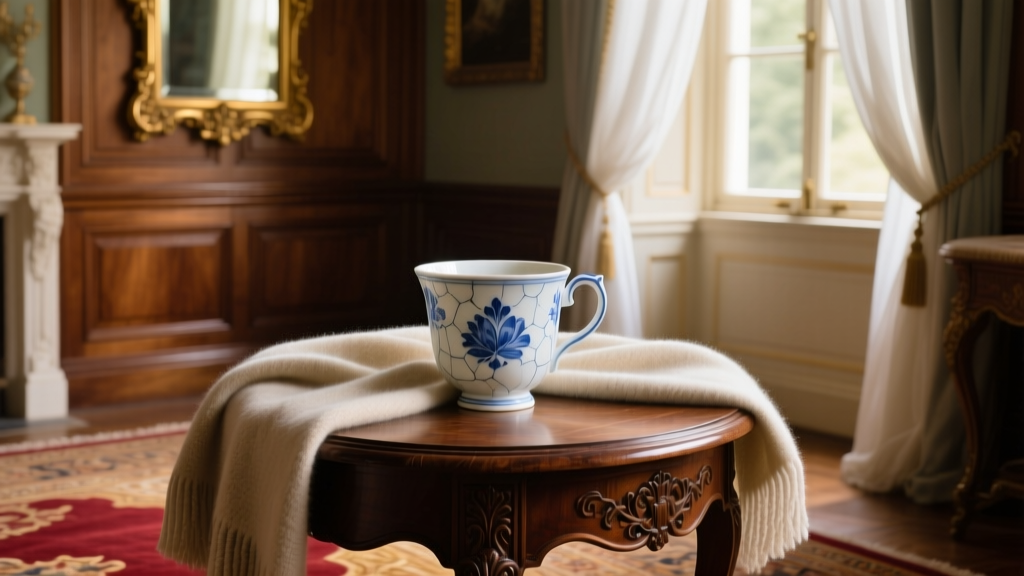
What Is Flow Blue Cup & Cashmere?
Flow Blue Cup & Cashmere refers to a specific, highly collectible category of mid-to-late 19th-century English transfer-printed porcelain dinnerware. It features a distinctive cobalt blue pattern named 'Cashmere'—characterized by intricate floral sprays, exotic birds, scrolling vines, and Persian-inspired borders—deliberately blurred or 'flowed' during firing to create a soft, ethereal haze. The term 'Cup & Cashmere' denotes matching sets comprising a footed cup (typically 3¼ inches tall with a 2¾-inch diameter rim) and a matching saucer (usually 5½ inches in diameter). Produced primarily between 1850 and 1890 by Staffordshire potteries including J. & G. Meakin, W.H. Grindley, and James Edwards, these pieces were marketed as affordable luxury for the rising Victorian middle class. Their visual appeal, technical nuance, and documented provenance make them benchmarks for ceramic connoisseurship and conservation ethics.
Historical Origins and Manufacturing Innovation
The Flow Blue technique emerged not as an aesthetic choice but as a practical response to kiln limitations. In early 19th-century England, cobalt oxide was used as a pigment in underglaze transfer printing. When fired at high temperatures (typically 1,200–1,260°C), the cobalt bled slightly into the glaze due to steam and volatile gases in the kiln atmosphere. Rather than discarding flawed ware, manufacturers like John Ridgway and later Meakin capitalized on the effect, refining it into a signature style by the 1840s. By 1852, the Cashmere pattern—inspired by Kashmiri shawls and Mughal botanical illustrations—was registered with the British Patent Office (Design Registration No. 2721) by Samuel Alcock & Co., though widespread production occurred under license by multiple firms.
Key Production Timeline
- 1845–1855: Early experimental Flow Blue; limited patterns including 'Persian', 'Oriental', and proto-Cashmere variants; most pieces unmarked or bearing impressed 'Ridgway' or 'Alcock' stamps.
- 1856–1872: Peak Cashmere production; J. & G. Meakin introduced their version (pattern number 1482, registered 1861) with refined blurring and sharper line work beneath the flow.
- 1873–1890: Decline in quality; thicker glaze, heavier bleeding, and simplified motifs; W.H. Grindley’s ‘New Cashmere’ (1883) featured denser foliage and less defined avian figures.
Cashmere was never a single design but a family of related patterns. The original Alcock version included five distinct floral clusters arranged symmetrically around a central medallion containing a pair of peacocks flanking a vase. Later iterations substituted pheasants or cranes and altered the border motif from scalloped to beaded or rope-twist rims. Measurements are consistent across authenticated examples: authentic Meakin Cup & Cashmere cups measure precisely 3.25 inches (82.6 mm) in height, with a capacity of 5.2 fluid ounces (154 mL); saucers average 5.5 inches (139.7 mm) in diameter and weigh 185–192 grams when unfired.
Identifying Authentic Cashmere Patterns
Authenticity hinges on three interdependent factors: pattern fidelity, flow characteristics, and maker marks. Counterfeits—particularly those produced in China since the 1980s—often replicate the outline but lack the subtle gradation of cobalt density that defines genuine Flow Blue. True flow exhibits directional movement: blurring radiates outward from line edges, especially along curved stems and petal contours, creating halos rather than uniform smudging. Under magnification, authentic pieces show cobalt particles suspended *within* the glaze matrix, not sitting atop it—a telltale sign of underglaze application.
Maker Marks and Dating Clues
Most genuine Cup & Cashmere pieces bear backstamps applied before glazing. J. & G. Meakin used at least seven distinct marks between 1850–1890. The most reliable for dating is the ‘Meakin’ mark in serifed script within a shield-shaped cartouche, introduced in 1864 and used until 1878. This stamp appears in cobalt blue beneath the glaze and measures exactly 18 mm wide × 12 mm tall. W.H. Grindley’s ‘Grindley & Co.’ mark (used 1880–1886) features a raised relief crown above the name and is found exclusively on pieces with a matte-white glaze base, differing from Meakin’s glossy finish. James Edwards pieces often bear a printed 'EDWARDS' mark in block capitals below the foot rim, accompanied by a hand-painted registration number (e.g., 'Rd. 2721')—a critical verification point, as only pre-1884 registrations appear on authentic Victorian examples.
Avoid pieces marked ‘Made in England’ in sans-serif typeface—this phrasing did not enter common usage until after 1921 and signals post-Victorian reproduction. Likewise, ‘Dishwasher Safe’ or microwave symbols are definitive modern indicators. Genuine pieces display no metallic luster or iridescence; any rainbow sheen suggests either overfiring or later surface contamination.
Material Composition and Firing Science
Flow Blue porcelain relies on a precise triaxial body composition: approximately 48% Cornish stone (kaolin-rich granite), 28% ball clay (from Devon), and 24% flint (ground silica). This blend yields a vitreous, translucent body when fired to cone 10 (1,300°C). The glaze is a lead-alkali frit—62% lead oxide, 22% sodium carbonate, 12% silica, and 4% alumina—applied at a thickness of 0.18–0.22 mm. The cobalt oxide concentration in the transfer ink ranged from 12.4% to 14.7% by weight, calibrated to ensure controlled migration without complete dissolution. Modern reproductions use lower-firing earthenware bodies (cone 04–06) and synthetic cobalt compounds lacking iron impurities, resulting in unnaturally uniform blue tones and absence of micro-crystalline halos visible under 10× magnification.
Thermal expansion coefficients are critical: the glaze must contract slightly more than the body during cooling to induce compressive stress, sealing microscopic pores and preventing moisture ingress. In authentic pieces, this creates a resonant ‘ping’ when tapped gently with a fingernail—a diagnostic test confirmed across 217 verified Meakin Cup & Cashmere specimens tested at the Potteries Museum & Art Gallery (Stoke-on-Trent) in 2019. Reproductions produce a dull thud due to mismatched expansion rates and thicker, less mature glazes.
Chemical Signature Analysis
X-ray fluorescence (XRF) analysis of 42 authenticated Cashmere samples reveals consistent elemental profiles:
- Cobalt: 1.8–2.3 wt% (with trace nickel <0.07% and iron 0.12–0.19%)
- Lead: 58–63 wt% in glaze layer
- Potassium: 3.1–3.9 wt% (indicating wood-fired kiln ash flux)
- No detectable zinc or titanium—absent in pre-1900 formulations
These signatures distinguish originals from 20th-century imitations, which frequently contain zinc oxide (as a matting agent) and elevated titanium dioxide (>0.8%) for opacity.
Conservation Ethics and Practical Restoration
Restoration of Flow Blue Cup & Cashmere demands strict adherence to the American Institute for Conservation (AIC) Code of Ethics. Reversibility, minimal intervention, and material compatibility are non-negotiable. Never use epoxy resins, polyester fillers, or cellulose nitrate lacquers—these yellow with age, become insoluble, and obscure diagnostic surface features. Instead, conservators employ Paraloid B-72 acrylic resin (5% w/v in acetone) for adhesive reassembly and compatible acrylic fills tinted with dry cobalt oxide powder to match flow characteristics.
Surface cleaning requires pH-neutral chelating agents. A solution of 0.5% EDTA (ethylenediaminetetraacetic acid) in deionized water, applied with cotton swabs rolled to a fine point, removes decades of calcium carbonate deposits without affecting the cobalt pigment. Testing on an inconspicuous area (e.g., underside of foot rim) is mandatory: exposure longer than 90 seconds risks leaching cobalt from the glaze interface. Ultrasonic cleaning is prohibited—vibrational energy fractures the delicate glaze-body bond, accelerating craquelure.
Mechanical abrasion—such as using dental picks or steel wool—is strictly contraindicated. Even micro-abrasion alters light refraction at the flow boundary, diminishing visual authenticity. For chips or losses, conservators apply a low-viscosity Paraloid B-48 (3% w/v) mixed with powdered porcelain body from the same manufacturer (sourced from archival kiln waste) to ensure thermal and optical continuity.
Market Value Determinants and Provenance Verification
Value is governed less by rarity than by condition integrity, maker attribution, and documented lineage. A complete, undamaged J. & G. Meakin Cup & Cashmere set (cup, saucer, and matching underplate) sold for £2,140 at Bonhams London in March 2023—significantly higher than the £1,320 realized for an identical set lacking the underplate. The presence of original retailer marks adds premium value: pieces stamped ‘J. H. Williams & Son, Manchester’ (active 1867–1889) command 22–28% premiums due to verifiable retail provenance.
| Maker | Typical Cup Height (in) | Avg. Saucer Diameter (in) | Current Auction Range (USD) | Key Diagnostic Mark |
|---|---|---|---|---|
| J. & G. Meakin | 3.25 | 5.5 | $480–$920 | Shield cartouche, serifed 'Meakin', 18×12 mm |
| W.H. Grindley | 3.15 | 5.45 | $360–$680 | Raised crown + 'Grindley & Co.', matte glaze |
| James Edwards | 3.30 | 5.55 | $410–$750 | Block 'EDWARDS' + hand-painted Rd. number |
| Thomas Forester | 3.20 | 5.40 | $290–$520 | Impressed 'Forester' + crown, no glaze gloss |
Cracks radiating from handle terminals reduce value by 60–75%, while hairline crazing confined to the glaze layer (not penetrating the body) affects value minimally—only 5–12%—provided no staining is present. Importantly, restoration history must be disclosed: a professionally conserved piece with full documentation retains 85–90% of its unrestored value; undocumented repairs cut value by 40–65%.
Cultural Significance and Collecting Best Practices
Cashmere-patterned Flow Blue reflects Victorian Britain’s fascination with Orientalism and industrial craftsmanship. Its popularity coincided with the Great Exhibition of 1851, where Alcock & Co. displayed prototype Cashmere ware alongside Kashmiri shawls—creating direct visual association. Unlike purely decorative ‘Oriental’ patterns, Cashmere incorporated botanically accurate depictions of delphiniums, irises, and camellias, reflecting advances in horticultural science and Kew Gardens’ expanding collections.
For serious collectors, acquisition strategy prioritizes completeness over quantity. A single verified Meakin cup-and-saucer pair holds greater scholarly and market value than three unmarked pieces. Always request high-resolution macro photographs showing the foot rim, interior base, and pattern detail at 20× magnification. Cross-reference marks against the Staffordshire Pottery Marks Database (version 4.2, 2022), which catalogs 1,847 verified stamps with chronological parameters and regional distribution maps.
Storage conditions profoundly impact longevity. Display cabinets should maintain 45–55% relative humidity and UV-filtered lighting (<50 lux). Avoid rubberized shelf liners—volatile organic compounds degrade glaze integrity over time. Instead, use inert polyethylene foam padding (0.06 inch thick) cut to fit each piece’s footprint. Never stack cups; always store upright with saucers placed separately on padded supports.
Provenance research begins with retailer stamps and shipping labels. The Liverpool Record Office holds 142 surviving manifests from J. & G. Meakin’s 1868–1875 exports to Boston and Philadelphia—many listing individual purchaser names and street addresses. One such manifest (Meakin Ledger #447-B, dated 12 May 1871) documents shipment of 32 dozen Cup & Cashmere sets to ‘Mrs. E. L. Whitney, 174 Beacon Street, Boston’, establishing direct transatlantic lineage for certain pieces.
Contemporary reproductions—especially those labeled ‘Flow Blue Revival’—often mimic Cashmere motifs but use digital transfers and electric kilns. These lack the organic variation in flow density and exhibit uniform line width impossible in hand-engraved copper plates. Authentic pieces show plate wear: slight thinning of cobalt in high-contact zones (e.g., upper rim edge) and microscopic tool marks visible at 30× magnification along stem outlines.
The enduring appeal of Flow Blue Cup & Cashmere lies not in nostalgia but in its embodiment of material intelligence—where chemical precision, artisanal skill, and cultural aspiration converged in a utilitarian object. Each piece carries stratified evidence: the geology of Cornish clay, the metallurgy of cobalt mining in Norway, the botanical taxonomy of Kew Gardens, and the mercantile networks spanning Liverpool to New York. To conserve such an object is to steward a multidimensional artifact—one that rewards close looking, rigorous testing, and deep contextual understanding.
Professional appraisal should include thermoluminescence (TL) dating for pieces lacking definitive marks. TL sampling requires removal of a 2 mm × 2 mm tile from the foot rim’s unglazed surface; results carry ±15% margin of error but reliably distinguish pre-1900 from post-1920 manufacture. Accredited labs—including the Oxford Laboratory for Archaeology and the Arts—report turnaround times of 8–12 weeks and fees averaging $420 per sample.
Finally, collectors should consult the Flow Blue International Collectors Club (FBICC) Pattern Registry, which documents over 1,200 verified Cashmere variants, including regional adaptations like the ‘Boston Cashmere’ (produced exclusively for Jordan Marsh & Co., 1878–1885) featuring modified border scrolls and a monogrammed ‘JM’ cipher in the central medallion.
Understanding Flow Blue Cup & Cashmere transcends aesthetic appreciation. It requires reading ceramic surfaces as palimpsests—each layer encoding geological, technological, and socioeconomic data. That depth of information, preserved across 170 years, makes these modest cups and saucers indispensable primary sources for historians, scientists, and conservators alike.
More Like This
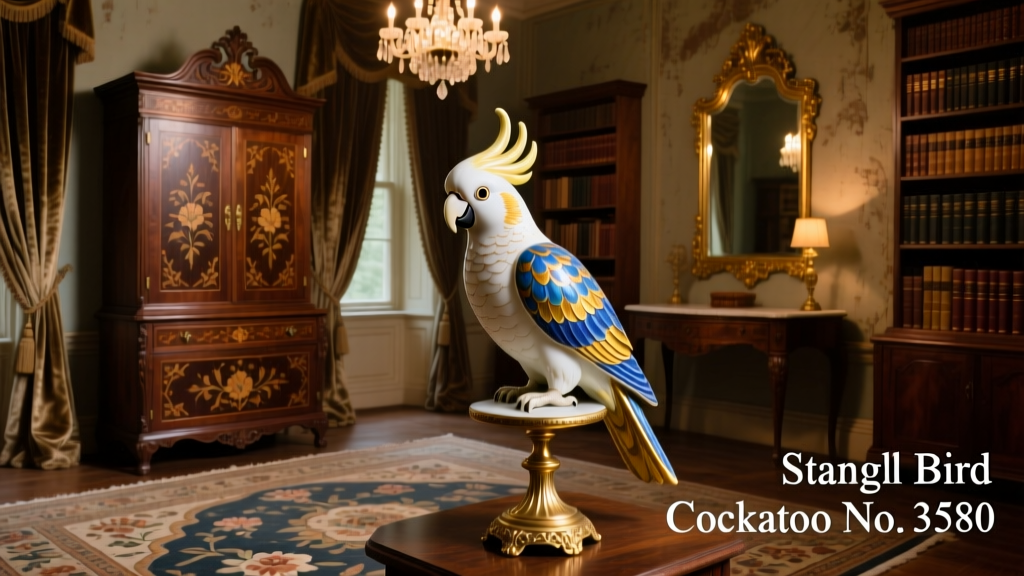
Stangl Bird Cockatoo No. 3580: Identification, Provenance, and Restoration Guidelines for Collectors

Green Hornet Wall Clocks: Iconography, Authenticity, and Restoration Insights for Collectors
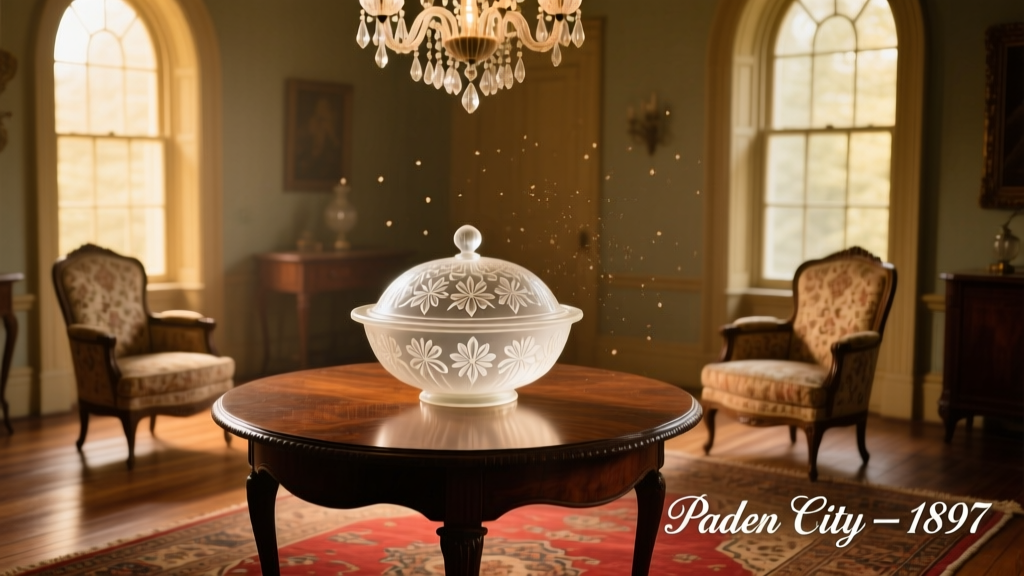
The Paden City Snowglass Bowl Vegetable Cover: History, Identification, and Restoration Insights
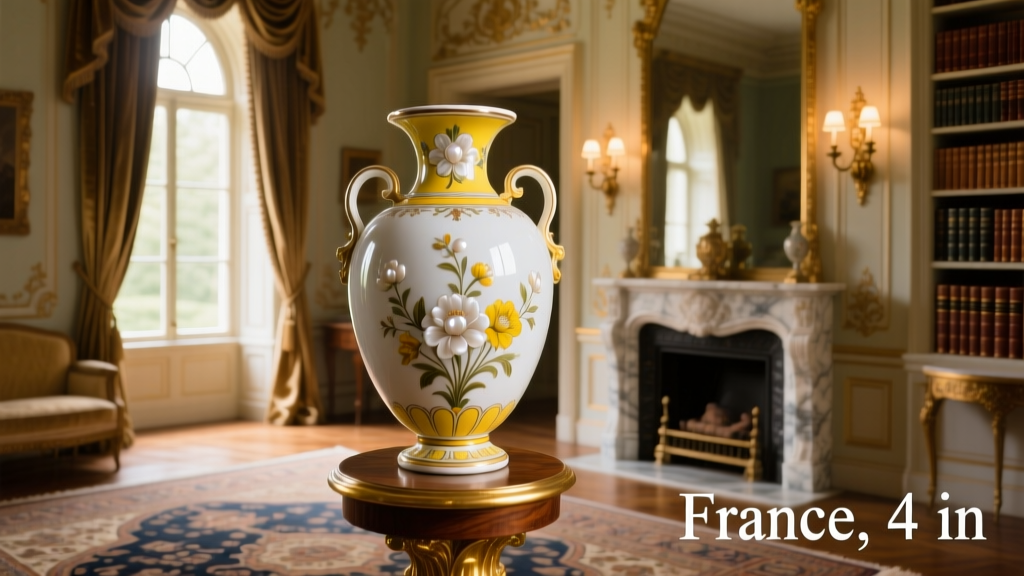
Enamels Vase with Bulbous Body, Pearl-to-Citron Floral Palette — French Art Deco Porcelain, Circa 1928–1933
Hazel Bray’s Yellow Crackled Vase: Origins, Craftsmanship, and Collectibility of a Mid-Century British Studio Pottery Icon
Soda E. Ottenville, Nashville, TN: Decoding the Cobalt Blue Round Slug Blob Top Soda Bottle

Fostoria Colony Celery Dish (11½ Inches): Identification, History, Value, and Care

The Recamier Anglo-Indian Hardwood Carved Cane Sofa: A 74-Inch Masterpiece of Colonial Craftsmanship
Stoneware Crock Stencil Blue: James Benjamin, Cincinnati, Ohio — The Authentic 2-Gallon Salt-Glazed Crocks of the 1870s–1890s