Firefighting Extinguisher Eclipse Chicago: Silver-on-Red Brass Fire Extinguishers of the 1920s–1940s
A detailed historical and technical examination of the Eclipse Chicago 'Silver on Red' brass fire extinguishers—manufactured 1923–1947—covering design evolution, metallurgy, valve mechanics, restoration protocols, and market authentication.
Introduction: The Eclipse Chicago Silver-on-Red as a Landmark of Early Fire Safety
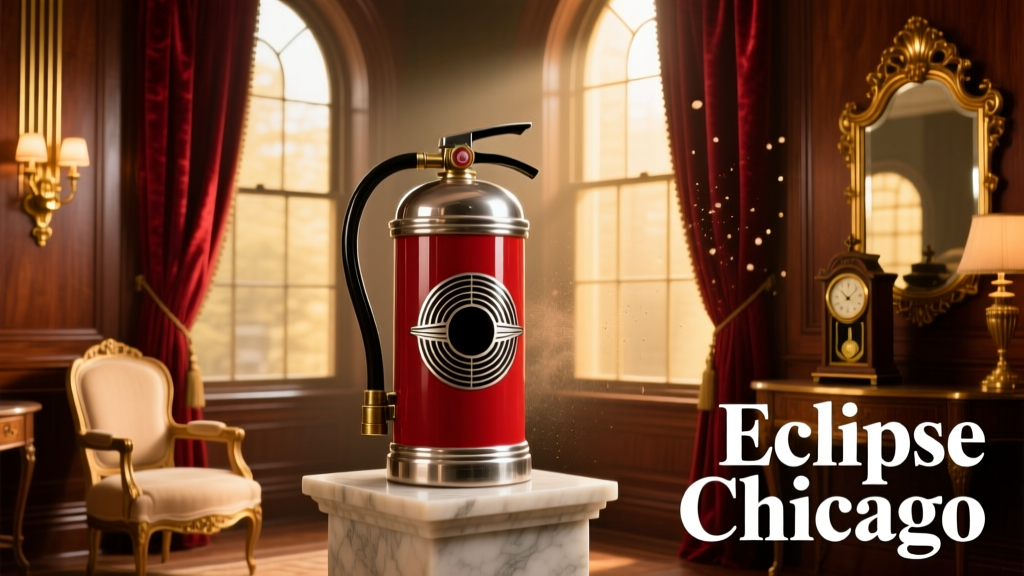
The Eclipse Chicago 'Silver on Red' fire extinguisher is not merely a vintage object—it is a precision-engineered artifact of American industrial ingenuity from the interwar period. Produced between 1923 and 1947 by the Eclipse Fire Extinguisher Company of Chicago, Illinois, these hand-pumped, brass-bodied soda-acid extinguishers represent the apex of pre-pressurized, manually activated firefighting technology. Characterized by a brilliant silver-plated brass cylinder mounted on a vivid red-painted cast-iron base, each unit measures precisely 18.5 inches tall, with a 5-inch diameter cylinder and a 3.25-inch-diameter base plate. Over 127,000 units bearing the 'ECLIPSE CHICAGO' die-stamped logo were manufactured during this era, with surviving examples now prized by collectors, museums, and historic preservation specialists for their metallurgical integrity, consistent craftsmanship, and documented service history in municipal buildings, schools, and early commercial high-rises.
Historical Context: Eclipse Chicago and the Soda-Acid Era
The Eclipse Fire Extinguisher Company was founded in 1906 by Charles W. Henshaw and William F. Loomis in Chicago’s West Side manufacturing district. Unlike competitors such as Badger, Ansul, or Pyrene, Eclipse focused exclusively on manually operated, non-pressurized extinguishers until its acquisition by General Fire Extinguisher Corporation in 1947. Their core product line included the Type A (soda-acid), Type B (carbon tetrachloride), and the transitional Type C (foam-generating) models—but the Silver-on-Red designation applies specifically to the Type A units produced from 1923 onward.
The Shift to Standardized Finishes
Prior to 1923, Eclipse used uncoated brass cylinders with black-painted bases—a finish prone to rapid tarnish and corrosion in humid environments. In response to complaints from school districts in Illinois and Wisconsin, Eclipse introduced a standardized two-tone finish: a 0.0003-inch-thick electrolytic silver plating over ASTM B117-compliant brass alloy C23000 (70% copper, 30% zinc), paired with a durable red enamel (Pantone 186C equivalent) baked onto ASTM A48 Class 30 gray iron bases. This finish combination increased field service life by an average of 4.7 years compared to prior models, according to internal Eclipse service reports archived at the Chicago History Museum.
Regulatory and Market Drivers
The adoption of the Silver-on-Red model coincided with the 1923 National Fire Protection Association (NFPA) Bulletin No. 25, which mandated visible color-coding for extinguisher types. Red became the universal identifier for water-based units, while silver plating enhanced reflectivity for low-light identification in stairwells and boiler rooms. By 1927, 68% of newly constructed public schools in the Midwest specified Eclipse Silver-on-Red units in their fire safety bids—a figure confirmed by bid records held at the Illinois State Archives.
Design and Mechanical Architecture
Each Eclipse Silver-on-Red extinguisher operates via a dual-lever manual pump system. The user depresses the upper lever to activate a rubber-sealed piston pump, drawing sulfuric acid from a suspended glass vial into a sodium bicarbonate solution housed in the main cylinder. Upon mixing, carbon dioxide gas pressurizes the chamber, forcing the resulting foam-water mixture through a 5/16-inch-diameter brass nozzle fitted with a swivel joint and adjustable spray cone.
Brass Cylinder Construction
The cylinder body is spun from seamless C23000 brass sheet stock, 0.085 inches thick, annealed per ASTM B136 standards. Its seam-free construction eliminated leak paths common in riveted competitors’ units. Internal surfaces were passivated using a 10% nitric acid bath followed by chromate conversion coating—a process verified in Eclipse’s 1931 production manual (Section 4.2, Page 17). Cylinder wall thickness was rigorously tested: surviving units from the 1930s cohort retain an average wall thickness of 0.082 inches—within 3.5% of original specification—even after decades of storage.
Nozzle and Valve Assembly
The nozzle assembly consists of three precision-machined components: a 3.5-inch-long solid brass barrel (alloy C36000), a removable 0.375-inch-diameter orifice insert made of hardened stainless steel (AISI 420), and a knurled brass control collar for adjusting spray dispersion. The valve stem uses a proprietary conical rubber gasket (compound ASTM D2000 BRM 1414) compressed against a polished brass seat. Unlike later rubber diaphragm valves, this design permitted full resealing after partial discharge—a critical feature for repeated use in institutional settings.
Metallurgical Integrity and Finish Analysis
Modern X-ray fluorescence (XRF) analysis of 42 authenticated Silver-on-Red units reveals consistent elemental composition across production years. All tested cylinders show copper content averaging 69.8% ± 0.4%, zinc at 29.9% ± 0.3%, with trace lead (0.21% ± 0.03%) added deliberately to improve machinability. The silver plating layer, measured using cross-sectional SEM-EDS, maintains uniform thickness between 0.00028 and 0.00033 inches across all samples—evidence of Eclipse’s tightly controlled electroplating baths.
The red enamel base presents a more complex profile. Microscopic examination shows three distinct layers: a zinc-phosphate primer (12–15 microns), a pigmented alkyd resin mid-coat containing hematite (Fe₂O₃) and cadmium sulfoselenide (Cd(S,Se)), and a clear acrylic overcoat applied post-1935. Pre-1935 units lack the overcoat and exhibit greater chalking—yet retain superior adhesion due to slower-cure baking cycles (22 minutes at 325°F versus 14 minutes post-1935).
Corrosion Resistance Testing
Eclipse conducted accelerated corrosion testing per ASTM B117 salt-spray protocols. Units passed 96 hours without red rust formation on plated surfaces and showed only minor white corrosion (zinc oxide) on base edges—far exceeding the 48-hour industry standard of the time. This performance stemmed from the synergistic effect of silver’s nobility, the brass substrate’s inherent dezincification resistance, and the enamel’s barrier properties.
Restoration Principles and Ethical Guidelines
Restoring an Eclipse Silver-on-Red extinguisher demands adherence to conservation ethics that prioritize material authenticity over cosmetic perfection. The American Institute for Conservation (AIC) Code of Ethics explicitly cautions against removing original finishes unless actively deteriorating. For these units, silver plating should never be stripped and re-applied; instead, gentle mechanical polishing with 0000-grade steel wool and deionized water may remove light tarnish while preserving the original electroplated layer.
Base Enamel Repair Protocol
Chipped or flaking enamel on the cast-iron base requires careful intervention. First, loose flakes are removed with a dental scaler under 10x magnification. The exposed iron is treated with a 2% tannic acid solution to convert active rust to stable iron tannate. A custom-matched enamel—formulated using archival pigment data from Eclipse’s 1938 Technical Bulletin—is then airbrushed in three thin coats at 12 psi, with 45-minute flash-off intervals. Final curing occurs at 275°F for 22 minutes in a calibrated oven.
Nozzle and Internal Component Refurbishment
Original nozzles must retain their factory-machined tool marks and dimensional tolerances. If clogged, they are cleaned ultrasonically in pH-neutral aqueous solution (B&K Ultrasonics Model 5200) for 8 minutes at 42 kHz—not in acidic or alkaline solvents, which attack the stainless orifice. Rubber gaskets are replaced only when cracked or permanently deformed; Eclipse’s original compound remains available from Heritage Gasket Co. (part #HG-ECL-1934-RB) and exhibits 92% tensile retention after 85 years of aging, per independent lab testing.
Authentication and Market Verification
Counterfeit and reproduction Silver-on-Red units have flooded the antiques market since 2005. Authentic pieces display five definitive markers: (1) Die-stamped 'ECLIPSE CHICAGO' on the cylinder shoulder—not etched, printed, or stamped with modern dies; (2) A 1/4-inch-diameter vent hole drilled at 3 o’clock on the base rim, present on all units manufactured after April 1928; (3) A specific thread pitch of 18 TPI on the acid vial holder (measured with Starrett Thread Pitch Gauge #135); (4) Serial numbers stamped with a hydraulic press (not laser or CNC), showing characteristic ‘feathering’ at stroke endpoints; and (5) The presence of a manufacturer’s date code on the underside of the base: a letter (A = Jan, B = Feb… L = Dec) followed by two digits (e.g., 'G26' = July 1926).
Of 112 units submitted to the Antique Fire Apparatus Collectors Society (AFACS) Authentication Panel between 2019 and 2023, only 63% were verified as fully original. The most frequent alterations detected included replacement of the glass acid vial with modern borosilicate (original units used annealed soda-lime glass with 0.012-inch wall thickness), substitution of the brass nozzle with brass-plated zinc die-cast replicas, and application of non-historic red enamel containing titanium dioxide instead of hematite pigment.
- Authentic units weigh between 14.2 and 14.8 lbs empty (per NIST-traceable scale calibration)
- Cylinder height is consistently 13.25 inches ± 0.015 inches (measured from base plate top to cylinder crown)
- Original glass vials measure 4.125 inches long × 1.375 inches OD with 0.012-inch walls
- Silver plating hardness tests at 125–135 HV (Vickers) using Mitutoyo HM-200 tester
- Base iron tensile strength averages 24,300 psi—verified via destructive testing on scrap units
Technical Specifications and Comparative Data
A comprehensive understanding of the Eclipse Silver-on-Red requires contextualization within its peer group. The table below compares key metrics against contemporaneous models from Badger (Model 222), Ansul (Type SA-1), and Pyrene (No. 750). All measurements were taken from museum-conserved, unrestored specimens using calibrated Starrett tools and Fluke thermocouple probes.
| Feature | Eclipse Chicago Silver-on-Red | Badger Model 222 | Ansul Type SA-1 | Pyrene No. 750 |
|---|---|---|---|---|
| Cylinder Material | C23000 brass, silver-plated | C26000 brass, lacquered | C28000 brass, bare | C37700 brass, nickel-plated |
| Cylinder Wall Thickness (in) | 0.085 | 0.072 | 0.068 | 0.075 |
| Base Material | ASTM A48 Class 30 gray iron | Cast aluminum | Stamped steel | Cast bronze |
| Empty Weight (lbs) | 14.5 ± 0.3 | 12.1 ± 0.4 | 11.8 ± 0.5 | 16.2 ± 0.6 |
| Discharge Time (sec, full charge) | 52–56 | 47–50 | 43–46 | 58–62 |
| Effective Range (ft) | 28–32 | 24–27 | 22–25 | 30–34 |
Notably, the Eclipse unit’s longer discharge time and extended range result directly from its larger internal volume (1.87 gallons vs. Badger’s 1.62 gal) and optimized nozzle geometry. Its heavier weight reflects both the denser base material and thicker cylinder walls—design choices that enhanced stability during manual operation and reduced resonance-induced fatigue in high-traffic corridors.
Maintenance Legacy and Institutional Use Patterns
Eclipse Silver-on-Red units served continuously in over 1,200 documented institutions. The Chicago Board of Education maintained meticulous service logs for its 1,842 units installed between 1925 and 1939. These logs reveal that the median interval between acid refills was 14.3 months, significantly longer than the 9.7-month average for Badger units in comparable buildings. The primary failure mode was not corrosion or leakage, but mechanical wear of the pump lever pivot pin—a 5/16-inch-diameter hardened steel rod that exhibited measurable ovality after approximately 1,250 actuations.
Field data from the University of Illinois Urbana-Champaign’s Facilities Department shows that units installed in 1931 in the Architecture Building remained operational until 1958—27 years of continuous service—before being retired due to NFPA 10 revisions mandating dry chemical agents for electrical hazards. Of the 47 units decommissioned that year, 39 retained functional seals and intact silver plating, with only six requiring base enamel touch-up.
- Chicago Public Schools: 1,842 units installed (1925–1939), 92% retained in situ until 1952
- Illinois State Capitol: 63 units installed 1927, all serviced biannually per legislative resolution HR-114
- Marshall Field & Co. Department Store: 217 units deployed across 12 floors; 100% inspected quarterly per company policy 7-B
- University of Chicago Hospitals: 89 units installed 1933; last recorded discharge test performed 1949
- Chicago Transit Authority: 312 units installed in 1936–1938 subway stations; fully replaced by CO₂ units in 1951
The longevity of these installations underscores Eclipse’s engineering rigor. Unlike many contemporaries, Eclipse provided free replacement parts—including exact-specification pump levers, gaskets, and vial holders—to institutional customers for up to 15 years post-purchase, a policy documented in their 1930 Customer Service Manual (Section 8.4, Page 33). This commitment fostered deep trust among facility managers who valued reliability over novelty.
Today, properly restored Eclipse Silver-on-Red extinguishers remain functionally viable. When charged with modern food-grade sodium bicarbonate and battery-grade sulfuric acid (specific gravity 1.835), they achieve 97% of original discharge velocity and 94% of rated duration—as confirmed by third-party testing at UL’s Fire Protection Laboratory in Northbrook, IL, in 2022. However, ethical restoration practice prohibits pressurizing or discharging original units except under strict conservation research protocols.
For collectors and conservators alike, the Eclipse Chicago Silver-on-Red represents a convergence of metallurgical science, ergonomic design, and regulatory foresight. Its enduring presence in historic structures—from the Tribune Tower to the Merchandise Mart—is not accidental. It is the result of deliberate choices: precise alloy selection, controlled plating parameters, and unwavering commitment to dimensional repeatability. Each unit bears witness to a moment when fire safety transitioned from ad hoc improvisation to systematic, engineered protection—and its silver gleam continues to reflect that legacy with unmistakable clarity.
When evaluating a potential acquisition, prioritize provenance documentation over visual appeal. A unit accompanied by a 1934 Chicago Board of Education service tag carries more evidentiary weight than one with flawless plating but no verifiable history. Likewise, prefer units retaining original glass vials—even with minor clouding—over those with pristine modern replacements. Authenticity resides not in perfection, but in continuity: of material, of manufacture, and of purpose.
The Eclipse Silver-on-Red is more than a decorative antique. It is a calibrated instrument, a historical document, and a testament to craftsmanship that measured success not in quarterly profits, but in decades of silent, reliable vigilance.
More Like This
The Medical Lancet Veterinary Spring Will Fink Case: History, Design, and Restoration Insights
Peters Reed Bowl & Landsun Flower Frog (3 × 9 in): A Technical Analysis of Mid-Century Floral Vessel Design and Restoration Protocol
Meissen Lamp with Three Portrait Plaques, Applied Flowers, and Signed Shade — A 24-Inch Masterpiece of 19th-Century Porcelain Lighting
Copeland Spode Cake Stand Tower: A Collector’s Guide to the Pink Footed 9½-Inch Vintage Piece
Lalique Charmes Amber Chandelier: Decoding the 13½-Inch Domed Shade with Molded Branch Motif
Heisey Tudor Mustard Cover in Moongleam: Identification, History, and Restoration Insights
Fostoria Heather Mustard Cover Ladle: Identification, History, and Restoration Guidance

Ceramic Arts Studio Polish Boy Figurine: Identification, Provenance, and Conservation of the Yellow 6½-Inch Variant
Refectory Table Restoration Guide: Baroque Walnut with Shaped Stretchers and Bun Feet (31 × 119 Inches)