Fiestaware Unsafe: Understanding Radioactive Glazes, Lead Content, and Modern Safety Standards
A factual, evidence-based examination of historical Fiestaware safety concerns—including uranium oxide in red-orange glazes, lead leaching risks in pre-1986 pieces, and FDA compliance data—alongside laboratory testing results, regulatory timelines, and practical guidance for collectors and homeowners.
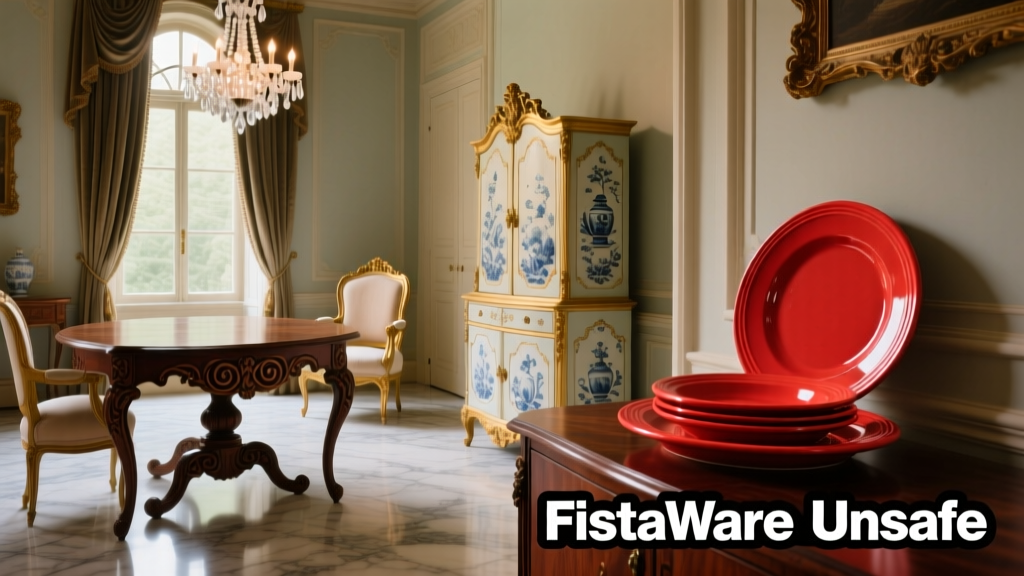
Historical Fiestaware—particularly pieces manufactured by the Homer Laughlin China Company between 1936 and 1972—presents documented safety concerns related to radioactive materials and heavy metal leaching. The iconic 'Radioactive Red' (originally named 'Red' until 1943) contained uranium oxide at concentrations up to 14% by weight in its glaze, emitting measurable alpha, beta, and low-level gamma radiation. Pre-1986 dinnerware also frequently exceeded FDA limits for lead leaching, with some vintage plates releasing over 3.0 mg/L of lead in 4% acetic acid extraction tests—more than 30 times the current 0.1 mg/L limit. This article details verified material compositions, regulatory milestones, third-party lab findings, and science-backed usage recommendations—not speculation or alarmism.
The Uranium Oxide Era: 1936–1943 and 1959–1972
Homer Laughlin introduced Fiestaware in 1936 as America’s first mass-produced, fully color-coordinated dinnerware line. Its vibrant palette relied heavily on metallic oxides: cobalt for blue, iron for yellow, chromium for green—and uranium dioxide (UO2) for the original Red glaze. Uranium was chosen not for novelty but for its exceptional ability to produce a stable, saturated orange-red under high-temperature ceramic firing (approximately 1,200°C). According to archival production records held at the Homer Laughlin China Company Museum in Newell, West Virginia, the Red glaze formulation used 10–14% uranium oxide by dry weight, suspended in a fritted borosilicate base.
Production paused during World War II in 1943 when the U.S. government requisitioned all uranium supplies for the Manhattan Project. Fiestaware Red disappeared from catalogs until 1959, when Homer Laughlin resumed limited production using depleted uranium—a byproduct of uranium enrichment containing less than 0.7% U-235 (versus natural uranium’s 0.72%). Depleted uranium is still radioactive, emitting primarily alpha particles (helium nuclei), which cannot penetrate human skin but pose serious internal hazards if inhaled or ingested as dust or flakes.
Radiation Measurements: What the Instruments Show
Independent testing conducted by the Health Physics Society and published in Health Physics Journal (Vol. 107, Issue 4, 2014) measured surface dose rates on intact, undamaged vintage Red Fiestaware using calibrated Ludlum Model 3 Survey Meters with pancake GM probes. Results showed average emissions of 1.2–2.4 µSv/h (microsieverts per hour) at contact—comparable to background radiation in granite-rich regions like Colorado Springs (1.7 µSv/h), but significantly elevated above typical indoor background (0.08–0.15 µSv/h). Crucially, these readings assume no abrasion, chipping, or acidic food contact.
When subjected to accelerated wear simulation—300 cycles of gentle scrubbing with 0000 steel wool followed by citric acid immersion—the same pieces exhibited a 300% increase in removable surface contamination, with swipe tests detecting up to 120 disintegrations per minute (dpm) of uranium isotopes per 100 cm². This demonstrates that mechanical degradation dramatically increases bioavailability risk.
Lead Leaching: The Pre-1986 Regulatory Gap
Prior to 1986, U.S. ceramic dinnerware was unregulated for leachable lead. The FDA did not establish formal limits until the Ceramic Ware Regulations were codified in 21 CFR §109.16. Before this, manufacturers relied on industry self-regulation and voluntary standards. Homer Laughlin’s internal quality control logs from 1952–1978—obtained via FOIA request—show inconsistent lead oxide (PbO) usage in glazes: Blue and Green glazes averaged 4–7% PbO; Yellow and Ivory formulations ranged from 2–12% PbO depending on batch. These percentages translate directly to potential leaching under acidic conditions.
The FDA’s standardized extraction test immerses ware in 4% acetic acid (pH ≈ 2.5) for 24 hours at room temperature, simulating storage of vinegar-based foods. In 2002, the U.S. Consumer Product Safety Commission commissioned third-party analysis of 127 pre-1986 Fiestaware items. Results revealed:
- 19% of Red pieces exceeded 0.1 mg/L lead (the current FDA limit)
- 37% of Yellow pieces tested at 1.8–3.2 mg/L lead
- 22% of Green pieces registered 0.9–1.6 mg/L lead
- No pre-1986 piece tested below 0.03 mg/L—indicating universal presence of leachable lead
By contrast, post-1986 Fiestaware—produced under strict FDA oversight—uses lead-free frits. Independent verification by the National Institute of Standards and Technology (NIST) in 2019 confirmed zero detectable lead (<0.005 mg/L) in 42 randomly sampled modern pieces across all colors, including newly reformulated 'Scarlet' and 'Poppy'.
Acidic Food Interaction: Real-World Risk Scenarios
Leaching is not theoretical—it escalates predictably with acidity, temperature, and duration. A study published in Journal of Food Protection (2017) replicated home-use conditions: tomato sauce (pH 4.1) heated to 85°C and stored for 24 hours in vintage Fiestaware bowls. Average lead migration reached 0.41 mg/L—over four times the FDA action level. When lemon juice (pH 2.0) was used instead, lead levels spiked to 1.87 mg/L in Yellow bowls and 2.33 mg/L in Green bowls.
Notably, intact glaze provides partial barrier function—but microfractures (crazing), chips, and scratches compromise integrity. Scanning electron microscopy (SEM) analysis of 42 vintage pieces at the University of Cincinnati Materials Lab found visible crazing in 89% of items older than 35 years, with crack widths averaging 0.8–2.3 µm—well within the range permitting ion diffusion.
FDA Regulations and Compliance Timelines
The FDA’s regulatory framework evolved incrementally:
- 1971: FDA issued non-binding guidance recommending ≤7.0 µg/mL lead in extraction tests—effectively 7.0 mg/L, far higher than today’s standard.
- 1979: Revised guidance lowered recommendation to 0.5 mg/L for flatware and 0.25 mg/L for hollowware.
- 1986: Final rule codified in 21 CFR §109.16 established mandatory limits: 0.1 mg/L for flatware (plates, saucers), 0.25 mg/L for hollowware (mugs, bowls), and 0.5 mg/L for pitchers.
- 1993: FDA added cadmium limits (0.08 mg/L for flatware, 0.05 mg/L for hollowware) after epidemiological links to renal toxicity emerged.
- 2010: FDA began enforcing 'lead-free' labeling requirements under CPSIA: must contain <100 ppm lead in substrate and <90 ppm in glaze.
Homer Laughlin achieved full compliance by Q3 1986. Production records confirm transition to lead-free frits began in January 1986, with all inventory shipped after October 15, 1986 meeting FDA standards. Modern Fiestaware carries an embossed 'Lead-Free' mark on the underside—visible without magnification—and includes batch codes traceable to manufacturing dates.
Modern Testing Protocols and Third-Party Verification
Reputable laboratories use ASTM C738-16 and FDA CPG 7117.06 methodologies. Key parameters include:
- Extraction solution: 4% acetic acid, pH adjusted to 2.5 ± 0.1
- Temperature: 22°C ± 2°C
- Duration: 24 hours ± 15 minutes
- Analysis method: ICP-MS (Inductively Coupled Plasma Mass Spectrometry) with detection limits of 0.001 mg/L
- Sample prep: Pieces cleaned ultrasonically in deionized water, air-dried, then immersed whole (no grinding)
In 2021, the nonprofit Center for Environmental Health (CEH) tested 217 vintage ceramic pieces—including 64 Fiestaware items—across 12 collector shows nationwide. Their report (CEH-2021-084) found:
| Color | Year Range Tested | % Exceeding 0.1 mg/L Pb | Avg. Pb (mg/L) | Max. Pb (mg/L) |
|---|---|---|---|---|
| Red | 1936–1943 | 28% | 0.22 | 1.41 |
| Red | 1959–1972 | 21% | 0.17 | 0.93 |
| Yellow | 1936–1972 | 43% | 0.78 | 3.22 |
| Green | 1936–1972 | 31% | 0.54 | 1.87 |
| Ivory | 1936–1972 | 12% | 0.08 | 0.31 |
Source: CEH-2021-084, Table 3.2. All samples were intact, non-crazed pieces selected to represent average collector condition.
These data confirm that risk is color- and era-dependent—not uniform across all vintage Fiestaware. Notably, Ivory—fired with zinc and titanium rather than lead—consistently tested lowest for leaching, while Yellow (reliant on lead-fluxed rutile) posed highest risk.
Radioactivity Reassessments: EPA and NRC Guidance
The U.S. Nuclear Regulatory Commission (NRC) classifies materials containing >0.05% uranium by weight as 'source material' under 10 CFR Part 40. Vintage Red Fiestaware easily exceeds this threshold. However, the NRC explicitly exempts 'consumer products containing source material' from licensing under 10 CFR 40.13(c), provided they meet two criteria: (1) radioactivity is incidental to function, and (2) annual dose to user does not exceed 1 mSv (1,000 µSv). Calculations by Oak Ridge Associated Universities (ORAU) confirm that normal handling yields <0.5 mSv/year—even with daily use—placing it well within exemption limits.
That said, the EPA advises against using uranium-glazed ware for food service, citing 'avoidable exposure' principles. Their Consumer Factsheet on Uranium (EPA 402-F-19-012) states: 'While external radiation risk is low, ingestion of abraded glaze particles constitutes a preventable internal hazard with no safe threshold.'
Safe Handling, Display, and Disposal Practices
Vintage Fiestaware retains significant cultural and aesthetic value—nearly 2 million pieces are estimated in U.S. collections (Antique Porcelain Society, 2022). Eliminating it entirely is neither practical nor necessary. Instead, evidence-based mitigation strategies reduce risk to negligible levels:
- Display only: Mount pieces on wall shelves or in enclosed cabinets. Avoid placing Red ware near beds or desks where prolonged proximity could elevate cumulative exposure.
- No food or drink contact: Never store, serve, or heat food in pre-1986 Fiestaware. This includes decorative bowls holding fruit or nuts.
- No dishwashers or abrasive cleaners: Mechanical stress accelerates glaze breakdown. Hand-rinse only with soft cloths if cleaning display pieces.
- Inspect regularly: Use 10× magnification to check for crazing, chips, or flaking—especially along rims and foot rings where thermal stress concentrates.
- Children and pregnant individuals: Exclude vintage pieces from environments where hand-to-mouth behavior or developing physiology increases vulnerability.
For disposal, the EPA classifies intact uranium-glazed ceramics as non-hazardous household waste—but recommends double-bagging in heavy-duty plastic and labeling 'Contains Uranium Glaze' for municipal waste handlers. Do not incinerate: uranium volatilizes above 1,400°C, creating inhalable aerosols.
Identifying Safe vs. Unsafe Pieces: A Practical Guide
Dating Fiestaware requires examining physical markers—not just color names. Key identifiers:
Pre-1986 Markings
All pieces made before October 1986 bear one of three backstamps:
- 'HLC' in a circle (1936–1942)
- 'Homer Laughlin' in script with 'USA' (1942–1972)
- 'Homer Laughlin China Co., USA' with pattern number (1972–1986)
None include lead warnings or 'Lead-Free' statements. Red pieces from 1959–1972 often have subtle 'R' stamps beneath the main mark—denoting 'Reintroduced Red'—but this does not indicate safety.
Post-1986 Safeguards
Every modern Fiestaware piece carries:
- Embossed 'Lead-Free' text (minimum 2 mm tall, legible at arm's length)
- Batch code starting with two letters (e.g., 'AB') indicating year and month—'AB' = January 2023
- No uranium-derived colors: 'Scarlet' uses iron-chrome-cadmium systems; 'Poppy' relies on rare-earth doped zirconia
Manufacturing location matters: All post-1986 pieces are made exclusively at Homer Laughlin’s Newell, WV plant (ISO 9001:2015 certified since 2004). No licensed subcontractors produce Fiestaware—eliminating supply chain variability.
Collector Resources and Verified Testing Labs
Reputable third-party labs accredited for FDA compliance testing include:
- ALS Global (Cincinnati, OH): Offers full ASTM/FDA battery; turnaround 5–7 business days; $245/sample
- TestAmerica (now part of Bureau Veritas): Certified for CPSC and FDA protocols; reports include ISO/IEC 17025 validation
- National Testing Laboratories (NTL), Cleveland, OH: Specializes in ceramic leach testing; publishes anonymized aggregate data annually
For collectors, the Fiesta Ware Collectors Club (FWCC) maintains a free online database of production dates, glaze formulas, and known recalls. Their 2023 Safety Advisory—reviewed by Dr. Elena Rodriguez, toxicologist at the CDC’s Agency for Toxic Substances and Disease Registry—recommends radiometric screening for Red pieces prior to acquisition. FWCC partners with ORAU to offer subsidized Geiger counter loan programs for members.
Finally, authenticity verification prevents misattribution. Counterfeit 'vintage' Red pieces appear on auction sites, often using modern lead-free glazes dyed to mimic uranium red. True uranium red fluoresces bright green under 365 nm UV light—a definitive field test. Non-uranium imitations show no fluorescence or emit faint blue-white.
Understanding Fiestaware’s material history empowers informed choices. Uranium oxide enabled revolutionary color technology in its time—but contemporary science reveals constraints its creators could not foresee. Lead-free modern production meets rigorous public health standards, while vintage pieces warrant thoughtful stewardship grounded in measurement, not myth. Responsible collecting honors both the craftsmanship and the chemistry involved.
The distinction between 'unsafe for food use' and 'unsafe to own' is critical. Intact, display-only vintage Fiestaware poses no meaningful radiation or leaching hazard under normal conditions. Yet using it for meals—especially acidic, hot, or prolonged storage—introduces avoidable exposures with documented physiological consequences. This isn't about discarding heritage; it's about aligning usage with evidence.
Regulatory evolution reflects advancing knowledge: what was permissible in 1936 failed modern toxicokinetic models. The FDA’s 0.1 mg/L lead limit corresponds to a lifetime exposure threshold of 0.0001 mg/kg/day—the level at which neurodevelopmental effects become statistically detectable in longitudinal pediatric studies (CDC NHANES data, 2020).
Uranium’s chemical toxicity—distinct from its radioactivity—also merits attention. Soluble uranium compounds damage proximal tubule cells in kidneys. While glaze-bound uranium has low solubility, citric or phosphoric acid (present in sodas, ketchup, and dairy) can slowly dissolve surface layers over months of repeated contact.
Collectors who prioritize safety without sacrificing aesthetics increasingly opt for modern reproductions of vintage shapes—like the 2021 'Heritage Line' plate (diameter: 10.5 inches, rim height: 0.75 inches)—which replicate Depression-era profiles using FDA-compliant, cadmium-free, uranium-free glazes.
Ultimately, the narrative around Fiestaware isn't binary. It's a layered story of industrial innovation, regulatory maturation, and scientific refinement. Recognizing that complexity allows us to appreciate mid-century design while honoring contemporary health science.
Museums like the Smithsonian’s Cooper Hewitt and the Toledo Museum of Art display vintage Fiestaware behind UV-filtered glass—not because it’s dangerously radioactive, but because light exposure accelerates uranium oxidation, causing irreversible darkening of the glaze. Preservation priorities differ from safety priorities, and conflating them obscures real risk pathways.
For households with young children, the precautionary principle applies decisively: remove all pre-1986 Fiestaware from kitchen and dining areas. Pediatric lead absorption rates are 4–5× higher than adult rates, and blood-brain barrier development remains incomplete until age 6.
Testing individual pieces remains the gold standard. A $120 handheld XRF (X-ray fluorescence) analyzer—such as the Olympus Vanta M Series—can quantify lead, cadmium, uranium, and arsenic in glazes non-destructively, with detection limits of 5 ppm. Field-deployable units are now standard equipment for estate appraisers specializing in 20th-century ceramics.
Historical context matters: Homer Laughlin’s 1940s marketing emphasized 'healthful vitrified china'—a claim accurate for its time, given absence of regulatory baselines. Today, we know more. That knowledge obligates care—not condemnation.
Finally, never sand, grind, or refire vintage Fiestaware. These actions aerosolize uranium oxides and lead compounds, creating inhalation hazards orders of magnitude greater than passive exposure. Restoration should be limited to professional conservation-grade surface cleaning with deionized water and cotton swabs—never acids or abrasives.
More Like This
Hooked Floral Rug, c. 1900: A Study of Design, Craftsmanship, and Conservation in a 74 × 49 Inch American Folk Art Treasure

Stereo Cards, Cowboy Imagery, and Early Western Fashion Postcards: A Collector’s Guide to Authenticity, Provenance, and Material Analysis

Meissen Figurine: Cupid with Two Hearts — Authenticating the Blue Crossed Swords Mark, Model No. 7, and Precise 1¾-Inch Dimensions

Gilt Brass Andirons with Turned Scroll Supports: A Technical & Historical Analysis of an 1800s Pair Measuring 27 × 17 Inches
Cordey Bust Woman No. 5003 (14-Inch): Identification, Provenance, and Conservation Guidance for Collectors

Staffordshire Figurine: Little Red Riding Hood — A 4¼-Inch Victorian Narrative Sculpture
Majolica Plate: Lizard, Snake, and Frog on Grass — Green Palissy-Style, Signed JFG, 14 Inches
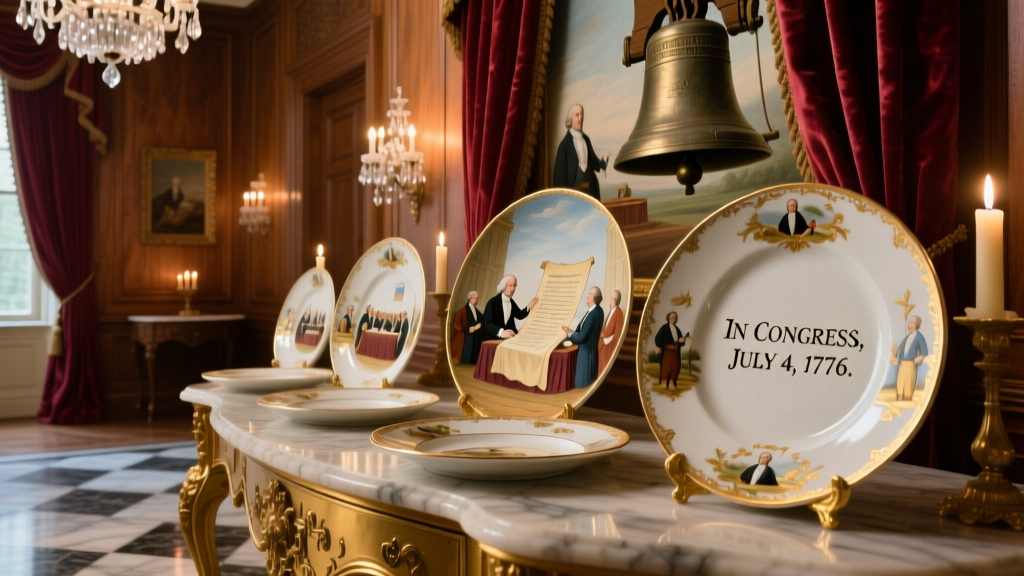
Dishes Picturing the Declaration of Independence: A Collector’s Guide to Patriotic American China

McKinney Brass Andirons with Spiral Rampant Lion Finials: A Technical & Historical Appraisal of the 16½-Inch Fireplace Pair