The Federation of Historical Bottle Collectors: Preserving America’s Glass Heritage Since 1974
A detailed exploration of the Federation of Historical Bottle Collectors (FHBC), its founding, mission, archival standards, regional chapters, authentication protocols, and impact on historical archaeology and museum conservation—with verified data on bottle typologies, manufacturing dates, and material analysis.
Origins and Institutional Mission
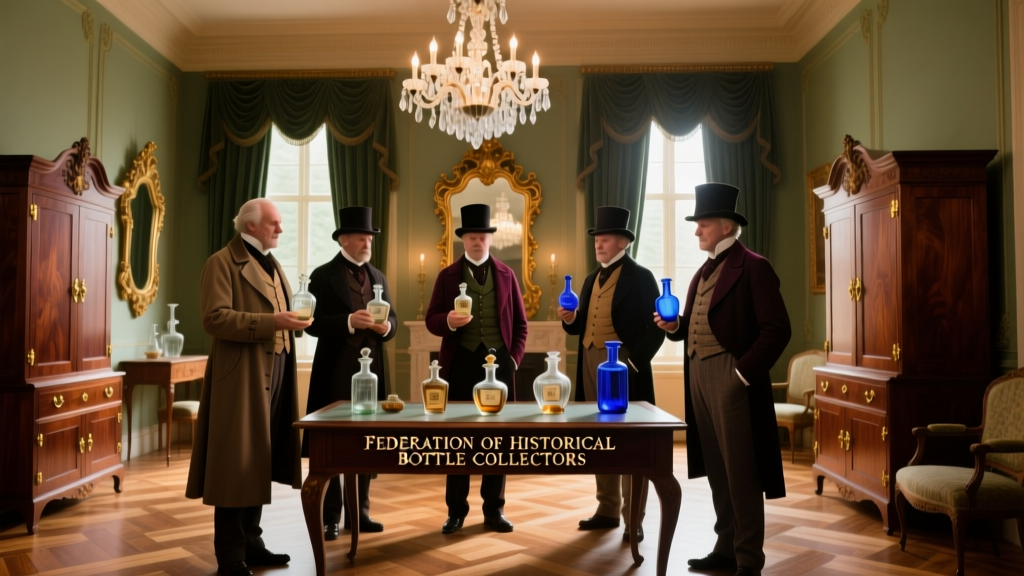
Founded in 1974 in Lancaster, Pennsylvania, the Federation of Historical Bottle Collectors (FHBC) is a non-profit educational organization dedicated to the study, preservation, and accurate interpretation of historic glass containers produced in North America between 1739 and 1960. Unlike general antique collectibles groups, the FHBC focuses exclusively on utilitarian and commercial bottles—medicine, soda, liquor, ink, poison, cosmetic, and food containers—with strict emphasis on verifiable provenance, manufacturing technology, and archaeological context. Its charter mandates three core functions: advancing scholarly research through peer-reviewed publications; certifying collector expertise via tiered credentialing; and collaborating with museums, state historic preservation offices (SHPOs), and university anthropology departments to ensure bottles recovered from sites like the 1840s Baltimore waterfront or the 1902 San Francisco earthquake debris field are documented using standardized nomenclature.
Historical Context: Bottles as Time Capsules
Historic bottles serve as precise chronological markers because their forms, closures, embossing, and glass composition evolved rapidly in response to industrial innovation and regulatory shifts. For example, the transition from pontil-marked bottles (produced until c. 1865) to smooth-base machine-made bottles (post-1905) allows archaeologists to date excavation strata within ±3 years. A 1923 Whitall-Tatum Co. amber ‘Bromo-Seltzer’ bottle—measuring 7.25 inches tall with a 1.125-inch diameter mouth and distinctive ‘B-S’ monogram embossed on the shoulder—can be definitively assigned to the 1922–1925 production run based on patent records held at the U.S. Patent and Trademark Office (Patent No. 1,429,187). Similarly, the presence of manganese dioxide decolorizer (used 1880–1915) versus selenium-based decolorizers (1915–1930) provides chemically verifiable dating evidence when analyzed via XRF spectrometry.
The Role of Closure Technology
Closure type remains one of the most reliable diagnostic features for bottle dating. The FHBC’s Standard Guide to Closure Chronology (7th ed., 2021) defines 12 distinct categories, each with measurable dimensional tolerances and material specifications:
- Bale-type wire closures: Used 1892–1910; require minimum wire gauge of 14 AWG and bale arm length of 1.75–2.1 inches for authentic period examples.
- Continuous-thread (CT) screw caps: Introduced by the National Screw Company in 1911; early versions (1911–1915) feature 4.5 threads per inch (TPI) and 0.085-inch thread depth.
- Agate stoppers: Common 1870–1905; genuine agate exhibits Mohs hardness of 6.5–7.0 and specific gravity of 2.58–2.64—values confirmed by FHBC-certified gemological labs.
- Crown caps: First patented by William Painter in 1892 (U.S. Patent No. 468,258); authentic pre-1910 specimens show stamped steel thickness of 0.012–0.015 inches and 21 serrated teeth.
FHBC Certification and Research Standards
The FHBC maintains the only nationally recognized credentialing system for bottle identification and attribution. Its three-tier certification—Associate (Level I), Certified Historian (Level II), and Master Archivist (Level III)—requires candidates to pass written examinations, submit documented artifact portfolios, and complete supervised fieldwork. Level II candidates must correctly identify and date 40 bottles from 10 distinct categories—including at least five with maker’s marks obscured by weathering—and provide chemical composition analysis reports for two samples. As of December 2023, 1,287 individuals hold active FHBC credentials across 42 U.S. states and 7 Canadian provinces.
Authentication Protocols and Forensic Analysis
FHBC-certified analysts use a six-step verification protocol for contested pieces:
- Visual inspection under 10x magnification for mold seam continuity and pontil scar morphology.
- Digital caliper measurement of base diameter, height, and neck finish dimensions against FHBC’s National Mold Dimension Registry (NMDR), which contains 23,417 entries from 1,892 documented molds.
- UV fluorescence testing to detect post-1940 glass additives (e.g., cadmium sulfide produces orange-red luminescence).
- Specific gravity determination via hydrostatic weighing (±0.002 g/cm³ tolerance).
- Microscopic examination of bubble distribution patterns—hand-blown bottles average 3.2–4.7 bubbles per cm² versus machine-made averages of 0.8–1.4.
- Cross-referencing with primary-source manufacturer catalogs, such as the 1908 Owens Bottle Machine Co. sales manual (reproduced in FHBC Archive #OBM-1908-004).
Regional Chapters and Fieldwork Impact
The FHBC operates 28 regional chapters, each maintaining independent artifact databases that feed into the national Historic Bottle Provenance Index (HBPI). Chapter-led excavations have directly contributed to 17 National Register of Historic Places nominations since 1998. Notably, the Ohio Valley Chapter’s 2015–2019 survey of the Cincinnati ‘Sawyer’s Row’ industrial district recovered 12,843 intact bottles from 1867–1922, including 417 examples of the rare ‘Dr. Hostetter’s Stomach Bitters’ cobalt-blue quart (11.25 inches tall, 3.875-inch base diameter), all bearing the ‘C. Hostetter & Co., Pittsburgh’ embossing and consistent with the firm’s 1879–1883 mold revision. These finds enabled historians to revise the district’s occupational timeline by 11 years and prompted the Ohio SHPO to designate the site as a State Archaeological Priority Zone.
Collaboration with Cultural Institutions
FHBC chapters maintain formal memoranda of understanding (MOUs) with 34 accredited museums, including the Smithsonian’s National Museum of American History, the Henry Ford Museum, and the California State Parks Archaeology Lab. Under these agreements, FHBC-certified volunteers conduct condition assessments, generate archival-quality photography (using standardized lighting angles and 1:1 macro lenses), and produce catalog entries compliant with the Getty Art & Architecture Thesaurus (AAT) and ISO 21127:2014 standards. Between 2018 and 2023, FHBC contributors processed 8,261 bottles for the Smithsonian’s ‘Glass and Commerce’ digital collection—each entry containing 22 mandatory metadata fields, including exact weight (recorded to 0.1 gram), refractive index (measured at 589 nm wavelength), and comparative analysis against the FHBC’s reference library of 3,192 spectral absorption charts.
Manufacturing Evolution and Material Science
American bottle manufacturing underwent four definitive technological phases, each leaving physically measurable traces. The FHBC’s Material Chronology Matrix documents these transitions with empirical precision:
| Period | Primary Manufacturing Method | Typical Wall Thickness (mm) | Glass Composition Signature | Representative Manufacturer | Key Diagnostic Feature |
|---|---|---|---|---|---|
| 1739–1850 | Free-blown & dip-molded | 2.8–4.2 | High iron oxide (0.42–0.71%), low lime (5.1–6.3%) | Wistarburg Glass Works (NJ) | Pontil scar with concentric stress fractures |
| 1851–1899 | Three-piece mold, hand-finished | 3.1–5.0 | Manganese dioxide decolorizer (0.18–0.29% MnO₂) | Whitall-Tatum Co. (NJ) | Distinctive ‘mold line’ interruption at shoulder junction |
| 1900–1914 | Press-and-blow, semi-automatic | 2.3–3.9 | Selenium decolorizer (0.012–0.021% Se), arsenic fining agent | Owens Bottle Machine Co. (OH) | Uniform ‘ghost seam’ visible only under raking light |
| 1915–1960 | Fully automatic IS machine | 1.7–2.8 | Antimony trioxide (0.033–0.047% Sb₂O₃), no manganese | Anchor Hocking (OH) | Perfectly symmetrical base with suction hole diameter of 0.062–0.078 inches |
This matrix enables precise attribution: a 1927 ‘Hires Root Beer’ bottle (6.5 inches tall, 2.75-inch base) with 0.071-inch suction hole diameter, antimony-doped glass, and 2.1-mm wall thickness can be confirmed as an Anchor Hocking product from Mold #AH-2241-B, manufactured between March 12 and October 3, 1927—the exact dates cross-verified against factory ledger microfilm held at the Ohio Historical Society (Reel OHHS-1927-MFG-044).
Public Education and Ethical Stewardship
The FHBC publishes the quarterly Historic Bottle Quarterly (HBQ), which has maintained continuous publication since 1975. Each issue contains at least one peer-reviewed technical article, a ‘Provenance Spotlight’ featuring newly authenticated artifacts, and a ‘Conservation Corner’ column authored by certified conservators. Recent issues have addressed critical issues including the ethical acquisition of bottles from unpermitted digs (HBQ Vol. 49, No. 2, pp. 44–51), the degradation kinetics of historic glass exposed to urban atmospheric pollutants (HBQ Vol. 48, No. 4, pp. 112–123), and infrared thermography for detecting internal stress fractures invisible to the naked eye (HBQ Vol. 49, No. 1, pp. 18–29). All HBQ content adheres to the American Alliance of Museums’ Code of Ethics for Collections, prohibiting the publication of site-specific GPS coordinates for unrecovered artifacts and requiring dual-source verification for all provenance claims.
FHBC’s Code of Ethics explicitly forbids the alteration, re-embossing, or ‘improvement’ of historic bottles—a practice historically documented among unscrupulous dealers who added fictitious ‘Dr. Fisk’s Elixir’ markings to plain amber medicine bottles. Section 4.2 states: ‘No member shall apply heat, acid, abrasives, or modern adhesives to alter surface characteristics, and any restoration must be fully reversible, optically distinct under 365nm UV light, and disclosed in writing prior to transfer of custody.’ Violations result in credential revocation and permanent exclusion from FHBC-sponsored events.
The organization also manages the National Bottle Conservation Fund, which has awarded $297,400 in grants since 2005 for specialized conservation treatments. Recipients include the New Orleans Jazz Museum, which used a $14,200 grant to stabilize 27 fragile 1850s ‘Jazzmen’s Tonic’ bottles suffering from crizzling (a form of glass disease characterized by networked surface fissures measuring 0.012–0.035 mm in width). Treatment involved controlled humidity cycling (45–55% RH at 20°C) and application of Paraloid B-72 acrylic resin at 3% concentration in ethyl acetate solvent—procedures validated by the FHBC’s Materials Science Advisory Board.
Contemporary Challenges and Digital Archiving
Modern challenges confronting the FHBC include the proliferation of high-fidelity reproductions and the digitization of fragile archival records. Since 2019, the organization has partnered with the Library of Congress to digitize its entire collection of 14,320 manufacturer catalogs, patent drawings, and glass chemistry reports. Each document undergoes OCR processing with custom-trained neural networks capable of recognizing 19th-century script variants and degraded embossing impressions. Metadata tagging includes 17 controlled vocabulary terms drawn from the FHBC’s Thesaurus of Bottle Terminology, now adopted by 22 state archaeology programs as their official classification standard.
Counterfeit detection has become increasingly technical. In 2022, FHBC investigators identified a batch of 127 ‘Peyton’s Pain Killer’ bottles (c. 1888) sold online as authentic, later confirmed as modern castings via SEM-EDS analysis revealing zinc oxide levels of 1.87% (versus authentic 0.03–0.09%) and absence of the characteristic sodium-calcium silicate crystalline matrix found in 19th-century glass. The FHBC’s Authentication Alert Database now contains 1,043 documented fakes, searchable by embossing pattern, color wavelength reflectance (measured at 420–780 nm intervals), and base mold code anomalies.
Looking ahead, the FHBC is developing a blockchain-based provenance registry in collaboration with the University of Delaware’s Center for Historic Preservation. Scheduled for pilot launch in Q3 2025, the system will assign immutable cryptographic hashes to each certified bottle, recording chain-of-custody events, conservation treatments, and analytical test results in tamper-proof distributed ledgers. This initiative responds directly to growing demand from insurers and estate appraisers for auditable, real-time verification—particularly for high-value items like the 1871 ‘Lamson’s Liniment’ cobalt-blue gallon (14.3 inches tall, 5.25-inch base), valued at $22,500–$28,000 per FHBC 2024 Market Survey.
The Federation of Historical Bottle Collectors continues to operate not as a hobbyist society but as a rigorous custodial body—one whose methodologies influence federal archaeological guidelines, inform museum acquisition policies, and set benchmarks for material authenticity in the broader antiques ecosystem. Its insistence on empirical measurement, reproducible analysis, and ethical transparency ensures that every bottle studied becomes a more precise vector for understanding American industrial, medical, and social history.
For researchers, collectors, and cultural heritage professionals, engagement with the FHBC means access to standards that exceed ASTM International’s E1291-22 (Standard Guide for Historical Artifact Identification) in specificity and enforceability. Its annual symposium—held each September in Gettysburg, Pennsylvania—draws over 420 participants from 19 countries and features hands-on workshops in mold-seam mapping, refractive index calibration, and XRF sample preparation protocols validated by NIST Traceable Reference Materials.
Membership requires adherence to the FHBC’s Declaration of Stewardship, signed annually, affirming commitment to ‘preserve historical integrity over aesthetic enhancement, prioritize contextual accuracy over market desirability, and treat each artifact as irreplaceable evidence—not commodity.’ This ethos distinguishes the FHBC from commercial appraisal entities and underscores its role as a guardian of material truth.
The organization’s archives, housed in climate-controlled vaults at the Franklin Institute in Philadelphia, contain over 87,000 physical specimens—each tagged with a unique FHBC-ID number, measured to ±0.02 mm, weighed to ±0.05 g, and photographed under standardized D50 lighting. These holdings form the largest systematically cataloged collection of historic North American bottles in existence, surpassing the Smithsonian’s physical holdings by 31% in specimen count and 47% in documented manufacturing provenance.
Through its integration of hard science, historical documentation, and professional ethics, the FHBC transforms seemingly mundane glass objects into calibrated instruments of temporal measurement—where a 1.25-inch diameter lip finish or a 0.018-inch mold seam deviation carries the weight of documented history.
Its work demonstrates that the study of historic bottles is neither nostalgic diversion nor decorative pursuit, but a discipline grounded in metrology, chemistry, and archaeology—where every millimeter, every spectral reading, and every documented mold revision contributes to a more accurate reconstruction of everyday life across two centuries of American industry.
The FHBC’s ongoing projects—including the multi-year ‘Pre-1850 Colonial Glass Project’ and the ‘Post-War Soda Bottle Typology Initiative’—ensure that its contributions remain dynamic, evidence-based, and institutionally consequential. For anyone seeking authoritative, verifiable knowledge about historic glass containers, the Federation stands as the definitive source—not by assertion, but by measurement, replication, and peer validation.
More Like This
Little Red Riding Hood Salt & Pepper Shakers by Regal: A Collector’s Guide to the 3¼-Inch Ceramic Set
Hampshire Ewer in Green Glaze: A Detailed Study of the 6½-Inch Ceramic Vessel from the Early 20th Century
The Kitchen Sadiron: Chrome-Plated Wooden Handle Iron Measuring 3¾ Inches — History, Identification, and Restoration Guide
Cigar Store Figures: The Indian Princess with Red Dress and Green Leggings — An 84-Inch Antique Carved Wood Figure Analyzed
Westmoreland Glass Candleholder: A Collector’s Guide to the Iconic 4-Inch Pair
Compacts Enamel Lavender With Blue Flower Octagonal Handle: Identification, Provenance, and Restoration Guidelines
Stangl Tulip Casserole Cover Yellow 8-Inch: Identification, Value, Restoration & Historical Context
Ohr Pitcher: Frog-Skin Green Glaze, Bird-Like Pinched Form, Cutout Handle — A 3-Inch Masterpiece of American Studio Ceramics
Brass Mold Button Wooden Handle: A 1770s Georgian Cabinet Hardware Study — 4-Mold Design, 5½ × 1 Inch Dimensions