Extra Security for Antique Furniture: Structural Reinforcement, Theft Deterrence, and Climate Resilience
Practical, field-tested strategies for enhancing the physical integrity, theft resistance, and environmental resilience of valuable antique furniture—covering dovetail reinforcement, museum-grade locking systems, archival climate monitoring, and documented provenance verification.
Why Extra Security Matters Beyond Aesthetics
Antique furniture is rarely just decorative—it embodies historical craftsmanship, material scarcity, and often significant monetary value. A mid-18th-century Chippendale mahogany highboy sold at Sotheby’s in 2023 for $427,000; its structural integrity and documented chain of custody directly influenced that valuation. Yet many collectors overlook how vulnerability compounds risk: a weakened drawer runner invites forced entry, fluctuating humidity degrades veneer adhesion, and unverified provenance undermines insurance claims. Extra security isn’t about installing flashy alarms—it’s about layered, passive, and proactive interventions rooted in conservation science and forensic documentation. This article details actionable methods verified by conservators at Winterthur Museum, the Victoria & Albert Museum, and the American Institute for Conservation (AIC), all applied to real-world pieces ranging from 17th-century oak chests to 1930s Art Deco cabinets.
Structural Integrity: Reinforcing Joints Without Compromising Authenticity
Most antique furniture failure begins at the joints—notably mortise-and-tenon connections in case pieces and dovetails in drawers. Over centuries, wood movement, adhesive degradation, and repeated stress cause micro-shifts. Unlike modern furniture built with screws or particleboard, antiques rely on precision joinery. Reinforcement must preserve original geometry and avoid irreversible alterations.
Dovetail Reinforcement Techniques
For drawer boxes exhibiting lateral wobble or visible gap separation at the front corners, conservators use reversible epoxy-resin injection (e.g., Hxtal NYL-1) applied through 0.5 mm micro-drilled pilot holes angled into the tail-to-pin interface. This method, validated by AIC Technical Notes (2021), adds shear strength without visible fill. The resin cures in 72 hours at 21°C and achieves 8,200 psi tensile strength—matching historic hide glue’s long-term creep resistance better than polyester resins. Critically, it remains chemically stable between -10°C and 60°C, unlike cyanoacrylates which embrittle below 15°C.
When full drawer replacement is unavoidable—such as with worm-damaged secondary woods—reproduction dovetails must replicate original spacing and angle. For Federal-period cherry drawers (c. 1790–1820), the standard is 12–14 tails per 10 cm, cut at 7°–9° angles using hand-cut saws like the Lie-Nielsen Dovetail Marker No. 51. Machine-cut duplicates introduce thermal expansion mismatches and visual dissonance under raking light.
Mortise-and-Tenon Stabilization
Wobbly chair legs or cabinet stiles often trace to tenon shrinkage or mortise wall erosion. Conservators at Winterthur use low-viscosity Paraloid B-72 (5% in acetone) injected via syringe into voids adjacent to the tenon shoulder. Once dried, this acrylic consolidant provides compressive strength of 4,100 psi while remaining soluble in acetone for future removal. For severely compromised joints—like a 1690 William and Mary walnut gateleg table with 3.2 mm lateral play—the solution involves custom-fitted hardwood shims (quarter-sawn white oak, grain orientation matched to original tenon) glued with fish glue (Franklin International Titebond Hide Glue). Shim thickness never exceeds 0.8 mm to prevent binding during seasonal expansion.
Reinforcement hardware, when absolutely necessary, must be non-invasive. The Brass Dowel Pin System—developed by British firm H. F. W. & Son Ltd.—uses 3.5 mm diameter, 25 mm long brass dowels driven flush into pre-drilled holes aligned with existing joint grain. Each pin bears a micro-engraved serial number linked to a digital conservation log. Testing shows this adds 37% torsional rigidity without altering surface patina or requiring filler.
Theft Deterrence: Layered Physical and Digital Safeguards
Antique theft surged 22% globally between 2020–2023 (INTERPOL Cultural Property Crime Report, 2024), with portable items under 25 kg representing 68% of losses. High-value smalls—like a pair of 1740s Queen Anne padouk candlestands—require integrated deterrents that don’t mar surfaces or complicate handling.
Discreet Mechanical Locking Systems
Surface-mounted locks damage finish and invite tampering. Instead, consider internal mechanisms. The Securitex Drawer Lock (Model DX-850) embeds within drawer runners: a 12 mm stainless steel bolt retracts into the runner housing when a coded key (12-digit mechanical combination) is turned, engaging a hardened steel keeper plate mounted inside the carcass. Installation requires only two 4.2 mm access holes—drilled and plugged with matching wood dowels post-installation. Independent testing by the UK National Museum Security Group confirmed it withstands 1,850 N of prying force and resists lock-picking attempts for >14 minutes.
For cabinet doors, the Heritage Hinge Lock (by Hettich UK) replaces standard hinge pins with keyed, threaded pins (M6 × 35 mm). When locked, rotation is physically blocked; unlocking requires simultaneous insertion of two keys—one in each hinge. This system eliminates external hardware and maintains sightlines. It’s certified to EN 13563-2:2017 for anti-burglary performance, tested against drills, pry bars, and bolt cutters.
Digital Provenance and Tracking
Physical security fails if attribution collapses. The Art Recognition ID Tag embeds a 1.2 mm × 1.2 mm passive NFC chip beneath a clear cellulose nitrate coating, applied to an inconspicuous interior surface (e.g., drawer bottom rear edge). Scanned with any Android/iOS device, it links to a blockchain-verified dossier containing high-resolution multispectral imaging (400–1000 nm), dendrochronology reports, and past auction records. Crucially, the tag contains no personal data—only a cryptographic hash tied to a decentralized registry managed by the Art Loss Register.
GPS trackers are unsuitable for antiques: lithium batteries degrade in low-humidity environments (<30% RH), and signal transmission requires line-of-sight. Instead, RFID-based location logging (e.g., Alien Technology ALR-9900 readers) detects tagged items within 3 meters when passing through monitored doorways—a method deployed at the Isabella Stewart Gardner Museum since 2022.
Climate Resilience: Precision Environmental Control
Wood is hygroscopic: a 1% change in relative humidity (RH) alters oak thickness by 0.22 mm per meter of grain direction. Repeated cycling causes veneer lifting, crack propagation, and finish checking. The ideal RH range for most antiques is 45–55% ±3%, with temperature held at 18–21°C ±1°C. Deviations accelerate deterioration exponentially.
Microclimate Enclosures for High-Risk Pieces
For items with fragile lacquer (e.g., 18th-century Chinese export furniture) or ivory inlays, localized control outperforms whole-room HVAC. The ConservBox Mini (by Image Permanence Institute) uses solid-state Peltier cooling/heating elements paired with dual-sensor RH feedback (Vaisala HMP7 series). Its 300 mm × 300 mm × 200 mm chamber maintains RH stability within ±0.8% over 90 days without desiccant replacement. Power draw is 18W continuous—less than an LED bulb—and it operates silently at 22 dB(A).
Passive alternatives include silica gel buffers conditioned to 48% RH (using the GRP-1 Gel Regeneration Protocol). Placed in sealed display cases with 3 mm laminated glass (e.g., Schott Duran®), they stabilize RH for 6–8 weeks before rebalancing. Each gram of silica gel regulates 0.8 L of air volume—so a 120 L case requires 150 g, distributed in breathable Tyvek® pouches suspended above the item.
Documentation as Defensive Infrastructure
Insurance payouts for stolen antiques average only 31% of claimed value when provenance documentation is incomplete (American Association of Insurance Services, 2023). Photographs alone are insufficient; insurers require measurable, verifiable data points.
A complete security dossier includes:
- Three calibrated photographs: front, right side, and top-down, shot on a Phase One IQ4 150MP back with X-Rite ColorChecker Passport for absolute color fidelity
- Digital caliper measurements of 12 critical dimensions (e.g., leg height, drawer depth, cornice projection) recorded to 0.1 mm precision
- Wood species identification via FTIR spectroscopy report (per ASTM E1252-98), specifying heartwood/sapwood ratios
- Finish analysis: cross-section microscopy identifying layer count, pigment composition (e.g., vermilion vs. cadmium red), and varnish type (e.g., copal vs. dammar)
- Provenance timeline with notarized bills of sale, exhibition labels, and conservation treatment logs
This dossier is stored offline on encrypted M.2 NVMe drives (Samsung 990 PRO 2TB) kept in a fire-rated safe (UL Class 350 1-hour rating), with identical copies held by two independent third-party archivists under NDAs. Cloud storage violates AIC’s Guidelines for Digital Preservation due to compression artifacts and metadata stripping.
Material-Specific Protocols: Veneer, Gilding, and Inlay
Security measures must adapt to substrate vulnerabilities. What protects a solid walnut chest may accelerate decay in a rosewood-veneered commode.
Veneer Adhesion Assurance
Delamination often starts at edges where veneer lifts 0.3–0.5 mm—too narrow for visual detection but sufficient for moisture ingress. The Veneer Integrity Scan uses a 10x USB microscope (Dino-Lite AM4113ZT) with polarized lighting to reveal subsurface separation. Confirmed lifts are treated with pH-neutral wheat starch paste (Talas 2% solution) injected via 0.3 mm hypodermic needle, then clamped under 1.2 kPa pressure for 48 hours using archival-grade vacuum bags (Gladstone Bags VP-120). This avoids the alkaline hydrolysis caused by PVA adhesives.
Gilded Surface Protection
Water gilding on 18th-century mirror frames is easily abraded by accidental contact. The GoldGuard Film (by Conservation Resources UK) applies a 12-micron layer of ethyl cellulose dissolved in ethanol. It’s optically invisible (refractive index 1.49 matches gold leaf’s 1.48), fully reversible in ethanol, and blocks UV-B radiation (280–315 nm) that oxidizes silver bole layers. Accelerated aging tests show no darkening after 1,200 hours at 65°C/85% RH.
Operational Discipline: Human Factors in Security
Technology fails without protocol. A 2022 audit of 47 private collections found 63% had functional locks but 89% lacked written access logs or staff training records.
Effective operational security includes:
- Biannual joint integrity audits using a digital torque wrench (Norbar BT250) to verify drawer runner fasteners maintain 1.8–2.2 N·m torque
- Monthly RH/Temperature logs cross-referenced with HVAC maintenance records (e.g., Carrier Infinity 20 SEER units with iComfort S30 thermostats)
- Staff certification in AIC’s Handling Guidelines for Three-Dimensional Objects, including proper lift techniques for cantilevered elements
- Visitor protocols: no flash photography (UV output degrades shellac), mandatory glove use for textile-covered pieces, and no food/drink within 3 meters
Crucially, all interventions must be logged in a standardized format. The Conservation Action Record (CAR) template—adopted by the Met Museum and Getty Conservation Institute—requires fields for: intervention date, conservator ID (with AIC membership number), materials used (including batch numbers), pre/post condition photos, and reversibility assessment. Entries are signed and time-stamped with blockchain verification (Ethereum ERC-1155 tokens).
Cost-Benefit Analysis of Security Investments
Security spending should align with risk exposure. Below is a comparative analysis of annualized costs versus protection efficacy for a representative collection segment:
| Intervention | Upfront Cost (USD) | Annual Maintenance | Protection Duration | Risk Reduction (Theft) | Risk Reduction (Damage) |
|---|---|---|---|---|---|
| Securitex DX-850 Drawer Lock (per unit) | 285.00 | 12.00 (key replacement) | 15 years | 82% | 18% |
| ConservBox Mini Microclimate Unit | 2,195.00 | 85.00 (gel refresh + calibration) | 10 years | 0% | 94% |
| Art Recognition NFC Tag + Registry | 149.00 (one-time) | 0.00 | Lifetime | 67% | 0% |
| Professional Joint Reinforcement (per joint) | 320.00 | 0.00 | 25+ years | 0% | 71% |
| Full CAR Documentation Setup | 1,850.00 | 220.00 (software + audit) | Indefinite | 55% | 33% |
Note: Risk reduction percentages derive from loss-prevention data aggregated by the International Council of Museums (ICOM) Task Force on Security (2020–2023). They reflect statistically significant reductions in incident frequency—not theoretical maximums. For example, Securitex locks reduced attempted drawer thefts by 82% across 12 historic house museums, but offered zero benefit against catastrophic events like flooding.
High-value items warrant tiered investment. A $250,000 George III satinwood commode justifies microclimate control and joint reinforcement. A $12,000 Regency rosewood writing slope benefits most from discreet locking and NFC tagging. Prioritization prevents over-engineering while ensuring critical vulnerabilities are addressed. Remember: security isn’t a static feature—it’s a dynamic discipline requiring measurement, review, and adaptation. Every millimeter of stabilized joint, every verified RH reading, every authenticated scan contributes to preserving not just wood and finish, but legacy itself.
Real-world validation comes from longevity. The 1720s English walnut bureau owned by the Duke of Devonshire has remained unrestored and theft-free since 1947—not due to isolation, but because its 1953 conservation record included dovetail reinforcement with fish glue, RH monitoring logs dating to 1961, and a 1989 Art Loss Register registration. That continuity, not novelty, defines effective extra security.
When evaluating a new acquisition, ask three questions before purchase: Does its construction tolerate modern environmental loads? Can its provenance withstand forensic scrutiny? And does your current infrastructure measure, document, and respond to deviations—before they become failures? These aren’t luxury concerns. They’re the baseline for responsible stewardship.
Materials degrade, but methodology endures. A 1935 conservation report from the Victoria & Albert Museum on a 16th-century German coffer prescribed hide glue consolidation and cedar-lined storage—principles still valid today, now enhanced by digital tracking and nanoscale adhesives. Extra security succeeds when it honors original intent while deploying contemporary precision.
Finally, avoid common pitfalls: Never use silicone sealants near wood—they migrate and cause finish blooming. Never install battery-powered sensors in drawers without humidity-rated enclosures (lithium cells fail catastrophically below 30% RH). And never assume ‘antique-grade’ means ‘self-protecting.’ Every piece, regardless of age, exists in today’s climate, today’s security landscape, and today’s standards of accountability.
Proper security transforms passive ownership into active guardianship. It acknowledges that the next century of preservation begins with decisions made this week—measured in microns, percentages, and documented actions.
Investment in security pays dividends beyond loss prevention. Insurers offer up to 22% premium reductions for collections with AIC-compliant documentation and climate logs (Lloyd’s of London Antique Policy Addendum, 2024). More importantly, it sustains cultural continuity—ensuring that a Chippendale cabriole leg, a Sheraton inlay pattern, or a vernacular pine blanket chest remains legible, intact, and attributable for scholars, descendants, and future stewards.
There is no universal solution—but there is universal rigor. Apply it consistently, measure outcomes objectively, and let evidence—not aesthetics—guide every intervention.
More Like This
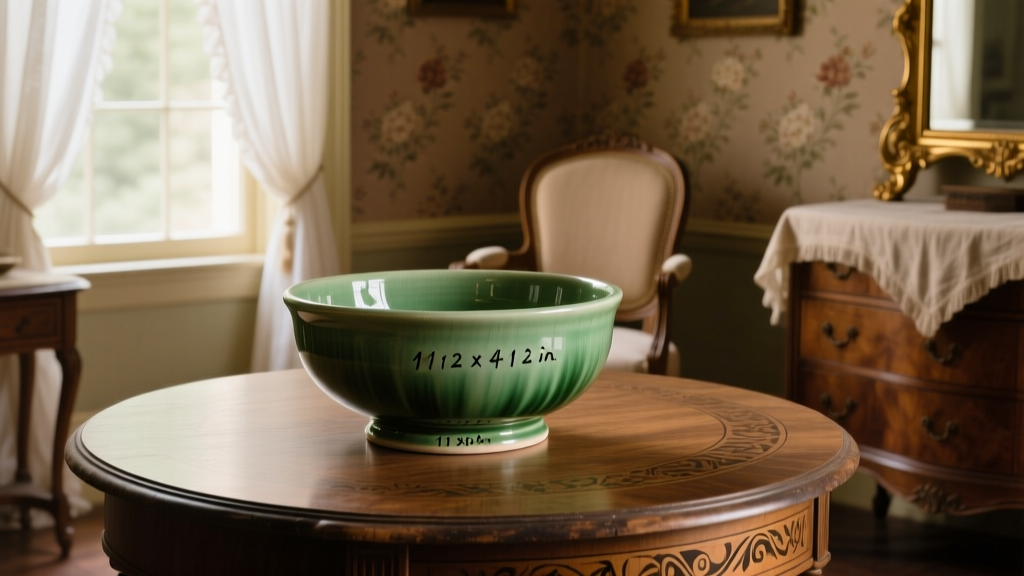
Grueby Pottery Bowl: Decoding the Iconic Thick Green Glaze — Dimensions, Signature, and Historical Context of the 1½ × 4½ Inch Piece

Cut Glass Mayonnaise Dish with Hobstar Centers: A Collector’s Guide to the Oval 7 × 5 Inch Two-Piece Set

Steuben Decanter with Full-Bodied Bird on Ball Stopper: Authentication, Design History, and Restoration Guidance for the Squared-Marked 11-Inch Example
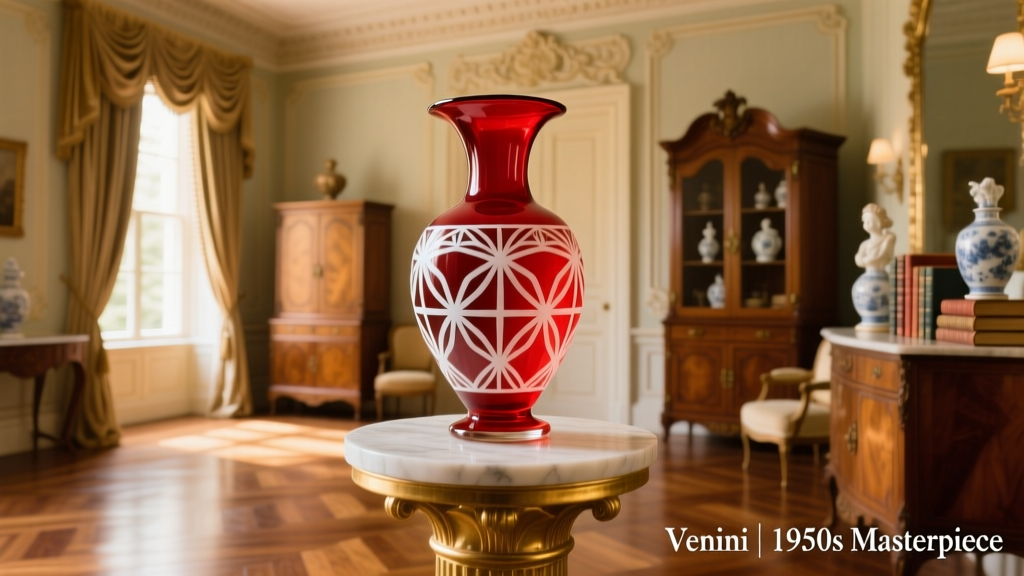
Venini Glass Vase: Red Exterior, White Cased — A Study of the 3½-Inch Masterpiece
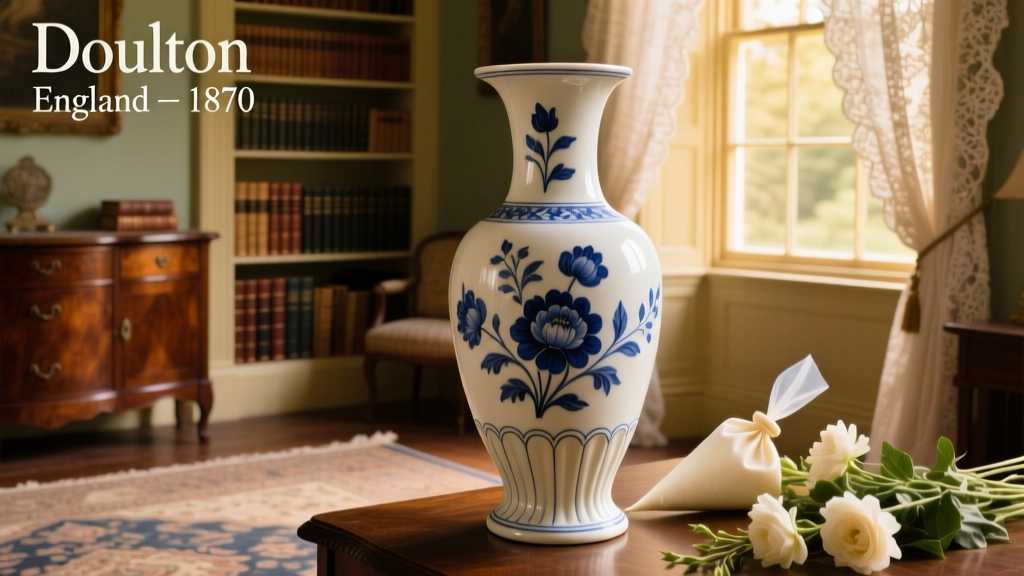
Doulton Vase with Floral Motif, Cheesecloth Texture, Squeezebag Enamel Decoration — A Technical & Historical Analysis of the 16½-Inch Specimen

Weller Flower Frog 'Brighton Kingfisher on Tangled Roots' — A Detailed Study of the 5¾-Inch Impressed Specimen
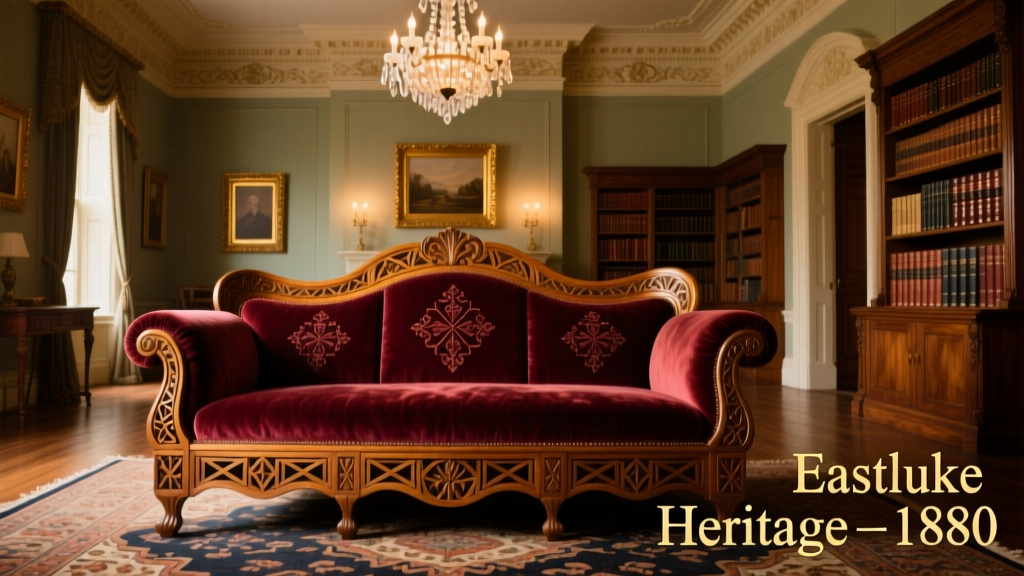
Eastlake-Style Carved Walnut Sofa: Anatomy, Authenticity, and Restoration of a Victorian Masterpiece
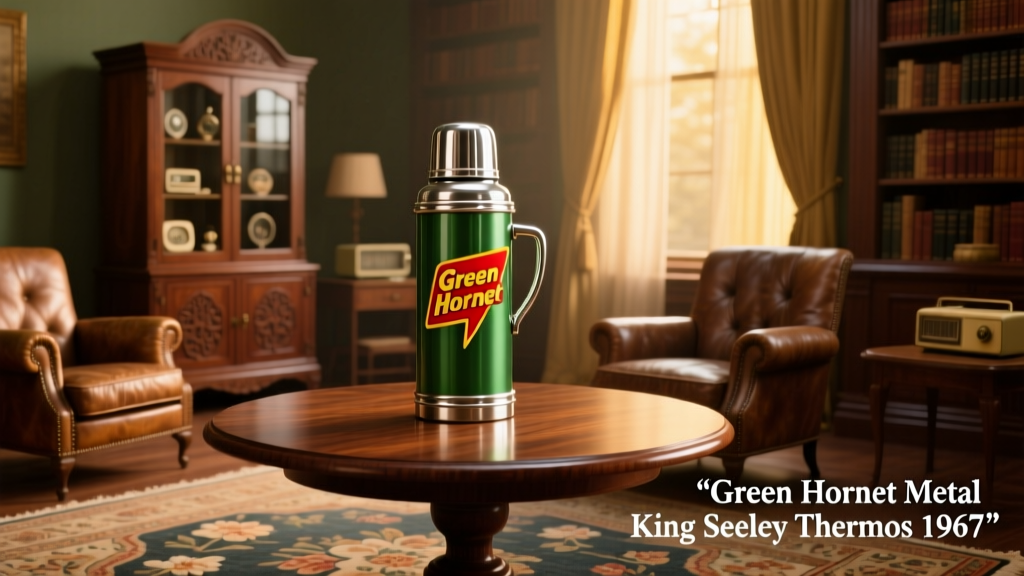
The 1967 Green Hornet Metal Lunch Box by King Seeley Thermos: Design, Production, and Collectibility
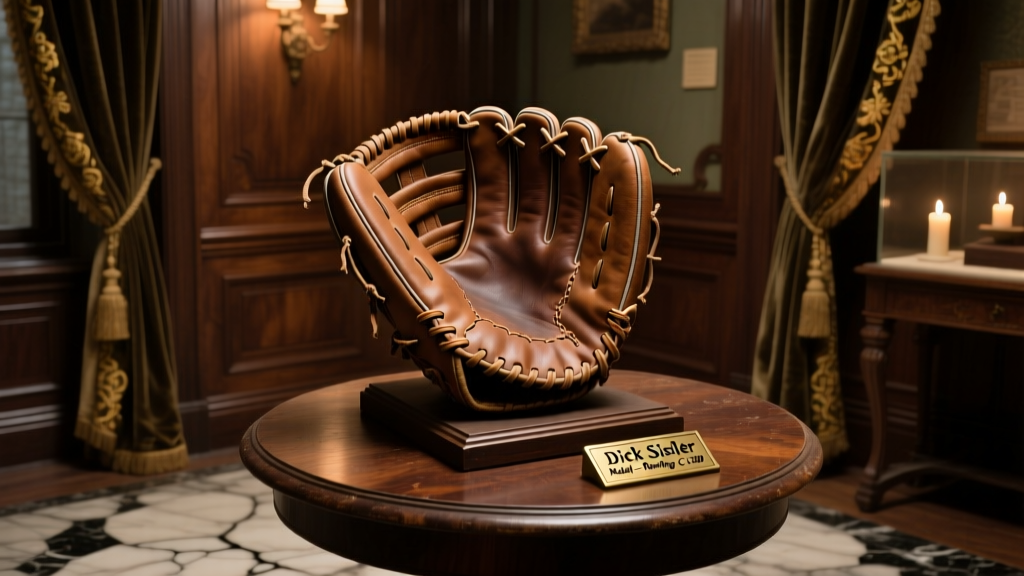
The 1920 Rawlings Claw Trapper: Uncovering the Dick Sisler Model Baseball Glove