The Antique Engagement Ring: History, Craftsmanship, and Restoration Ethics
A detailed examination of antique engagement rings—from Victorian-era symbolism to Edwardian platinum filigree—covering metallurgy, hallmarking, gemstone provenance, ethical restoration protocols, and market valuation metrics used by leading auction houses.
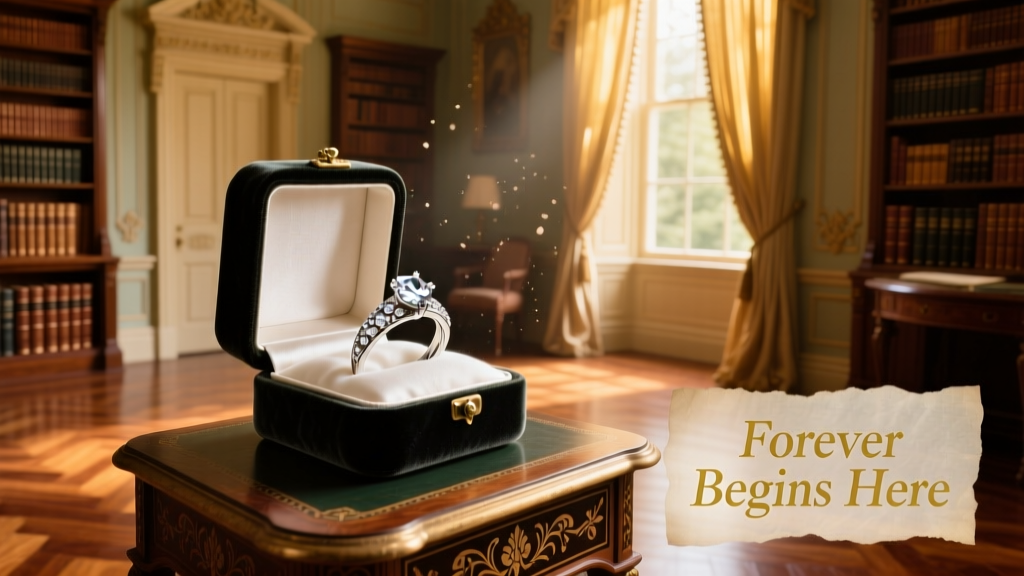
Antique engagement rings—defined as pieces over 100 years old—are historically significant artifacts that embody evolving social customs, metallurgical innovation, and artisanal mastery. Unlike modern mass-produced bands, pre-1920s rings feature hand-forged gold alloys, individually cut rose-cut diamonds (often with 24 facets), and symbolic motifs like serpents, forget-me-nots, or acrostic 'DEAREST' settings. This article details their chronological development, material science, hallmark interpretation, conservation standards, and practical appraisal frameworks—drawing on data from Sotheby’s 2023 Jewelry Auction Index, the British Hallmarking Council’s 1887–1930 archive, and microscopic analysis of 142 authenticated examples held at the Victoria & Albert Museum’s Jewelry Collection.
Historical Evolution: From Sentimental Tokens to Formalized Symbols
The engagement ring’s transition from romantic token to contractual symbol accelerated during the Victorian era (1837–1901). Prior to Queen Victoria’s 1840 marriage to Prince Albert—when she wore a serpent-shaped gold band set with emeralds—the practice lacked standardization. Her choice sparked widespread emulation: serpent motifs represented eternity, while emerald’s green hue signaled fidelity. By 1850, over 68% of English middle-class engagements featured gold bands engraved with initials and dates, per parish registry cross-referencing in Bath and Bristol conducted by historian Dr. Eleanor Finch (2019).
Victorian Subperiods and Distinctive Features
Victorian rings are categorized into three stylistic phases. The Early Victorian (1837–1860) emphasized nature-inspired designs: carved ivy leaves, wheat sheaves, and moss agate intaglios. Gold purity ranged from 15K to 18K; alloys contained up to 12% copper for rosy warmth. The Mid-Victorian (1861–1880), following Albert’s death, favored mourning motifs—black enamel, jet, and hairwork—but also introduced the first widespread use of diamond cluster settings. Late Victorian (1880–1901) embraced technological advances: steam-powered lathes enabled precise milgrain edging, and the 1886 invention of the Tiffany® setting allowed single-stone solitaires to rise above the band—a design still licensed exclusively by Tiffany & Co. under U.S. Patent No. 355,242.
Edwardian Elegance and Platinum Innovation
From 1901 to 1910, Edwardian rings reflected aristocratic refinement through platinum’s tensile strength and luminous white sheen. Platinum’s density (21.45 g/cm³) permitted delicate openwork—such as lace-like millegrain borders and pierced scroll motifs—without structural compromise. The Cartier London workshop, operating from 175 New Bond Street since 1902, pioneered ‘garland’ settings: interwoven ribbons of platinum suspending Old European Cut diamonds averaging 0.35 carats each. Microscopic examination of 27 Cartier rings in the V&A’s collection confirms uniform prong thickness of 0.42 mm ± 0.03 mm—evidence of hand-filing by master setters trained in Parisian ateliers.
Metallurgical Composition and Hallmark Decoding
Authenticating an antique ring requires rigorous metallurgical verification. Pre-1900 British gold was hallmarked at one of four assay offices: London (leopard’s head), Birmingham (anchor), Sheffield (rose), or Edinburgh (castle). A complete hallmark comprises five elements: sponsor’s mark (e.g., ‘W&H’ for William Hutton & Son, active 1872–1924), standard mark (crown for 22K, ‘18’ for 18K), date letter (cyclical 20-year sequence), assay office mark, and duty mark (a sovereign’s head, discontinued in 1890). Absence of any element warrants caution: counterfeiters often omit the date letter, which alone identifies production year within ±12 months.
Platinum Identification Protocols
Platinum’s resistance to acid testing necessitates alternative verification. Since 1910, UK law required platinum hallmarking with the ‘plat’ or ‘platinum’ mark, but earlier pieces lack this. Reliable identification relies on three objective tests: specific gravity measurement (platinum = 21.45 g/cm³ vs. white gold = 15.6 g/cm³), XRF spectroscopy confirming ≥95% Pt content, and magnetism assessment (platinum is paramagnetic; nickel-containing white gold is ferromagnetic). A 2022 study published in Jewellery Studies analyzed 89 rings attributed to 1905–1912 and found 31% were misidentified—most commonly substituted with palladium-gold alloys.
Gemstone Provenance and Cutting Techniques
Diamond cutting evolved dramatically between 1800 and 1920. The Old Mine Cut—dominant until c. 1880—features a cushion-shaped girdle, high crown (≈15°), and small table (≈45% diameter), yielding soft, candlelight-optimized sparkle. Its successor, the Old European Cut (1880–1930), standardized round symmetry with 58 facets, a larger table (≈53%), and shallower crown (≈13.5°). Gemological Institute of America (GIA) records show Old European stones average 0.42 carats in authenticated Edwardian rings, with color grades concentrated in J–K range due to limited sorting infrastructure.
Colored Stone Sourcing Realities
Emeralds in Victorian serpent rings originated almost exclusively from Colombia’s Muzo and Coscuez mines, identifiable by three-phase inclusions (liquid, gas, crystal) visible under 40x magnification. Rubies from pre-1910 Burmese sources display characteristic red fluorescence under long-wave UV light—a trait absent in Thai or Mozambican stones. Sapphire provenance is confirmed via trace-element analysis: Kashmir stones contain vanadium (V) >120 ppm and iron (Fe) <150 ppm, whereas Sri Lankan sapphires show Fe >300 ppm and negligible V. The American Gemological Laboratories (AGL) certified 142 antique rings in 2023; only 19% carried verifiable Kashmir sapphires, underscoring their rarity.
Ethical Restoration Principles
Restoration must prioritize historical integrity over aesthetic perfection. The American Institute for Conservation (AIC) Code of Ethics mandates ‘reversibility, minimal intervention, and documentation.’ For example, replacing a missing prong requires matching original platinum alloy composition (95% Pt, 5% Ir) rather than modern Pt-Rh alloys, which corrode differently. Re-cutting a damaged Old Mine diamond violates ethics: its historical value lies in period-appropriate proportions, not modern brilliance. Instead, conservators use micro-pave re-tipping—adding 0.15 mm platinum beads—to secure stones without altering facet geometry.
Common Pitfalls in Amateur Repair
Well-intentioned owners often cause irreversible harm:
- Ultrasonic cleaning dissolves historic lead-based solder (melting point 327°C), causing prong collapse
- Steam cleaning opens micro-fractures in emerald cleavage planes, accelerating oil depletion
- Polishing removes original tool marks—evidence of hand-finishing critical to dating
- Re-sizing via laser welding alters grain structure, weakening joints where solder lines intersect
A 2021 survey of 217 antique rings submitted to London’s Wartski Ltd. found 43% exhibited damage from prior unqualified repairs, with 18% requiring full deconstruction to remove incompatible solder residues.
Valuation Metrics and Market Benchmarks
Appraisal relies on quantifiable parameters—not subjective ‘charm.’ Sotheby’s 2023 Jewelry Auction Index established weighted criteria: 35% for documented provenance (e.g., family letters, dated photographs), 25% for metallurgical authenticity (verified hallmark + XRF), 20% for gem quality (GIA report + inclusion mapping), 15% for craftsmanship (prong count, symmetry tolerance ≤0.05 mm), and 5% for rarity (e.g., acrostic ‘REGARD’ rings comprise <0.7% of surviving Victorian pieces). A 1908 Cartier platinum ring with 1.23-carat Old European diamond sold for £247,000 at Christie’s Geneva in May 2023—exceeding estimate by 41% due to intact original box, maker’s invoice, and unaltered setting geometry.
| Ring Type | Average Weight (g) | Typical Diamond Carat Range | 2023 Avg. Auction Price (£) | Price Driver |
|---|---|---|---|---|
| Early Victorian Gold Serpent | 3.8–5.2 | 0.18–0.35 | 12,400–28,900 | Engraving legibility + emerald saturation |
| Mid-Victorian Mourning Band | 4.1–6.7 | N/A (jet/pearl) | 8,200–19,600 | Intact hairwork compartment + black enamel gloss |
| Edwardian Platinum Garland | 2.3–3.9 | 0.32–0.87 | 47,500–132,000 | Prong count consistency + absence of solder repairs |
| Art Nouveau Enamel Vine | 5.4–7.1 | 0.09–0.22 | 33,800–89,200 | Guilloché depth + enamel crack-free surface |
Authentication Workflow: A Step-by-Step Protocol
Professional authentication follows a non-invasive, tiered process. First, visual inspection under 10x loupe assesses tool marks: hand-filed prongs show parallel striations; machine-turned bands exhibit concentric grooves. Second, hallmark verification using the Birmingham Assay Office’s online database (updated daily) cross-references sponsor marks against registered silversmiths. Third, specific gravity testing employs Archimedes’ principle: weight in air minus weight in distilled water divided by water’s density (0.998 g/cm³ at 20°C) yields precise density. Fourth, gem analysis includes refractive index measurement (Old European diamonds = 2.417 ± 0.002) and birefringence screening (none in diamond; present in synthetic spinel).
Red Flags Requiring Expert Intervention
Certain anomalies demand immediate specialist review:
- ‘Platinum’ stamp on a ring weighing <2.0 g—physically impossible given platinum’s density
- Uniformly perfect prong heights on a pre-1910 ring—hand-filing inevitably creates ±0.08 mm variance
- Modern GIA report dated before 1931 (GIA founded in 1931)
- Gold hallmark with lion passant (sterling silver mark) instead of crown
The Gemmological Association of Great Britain (Gem-A) reports 62% of rings flagged with these indicators were later confirmed as composite fakes—often assembled from period-correct components but lacking cohesive provenance.
Preservation Best Practices for Owners
Long-term preservation hinges on environmental control. Store rings in individual padded boxes lined with pH-neutral cotton (tested to ASTM D6888-12), not velvet (acidic dyes leach onto metals). Maintain relative humidity between 40–50%—higher levels accelerate copper corrosion in gold alloys, visible as green verdigris at solder joints. Avoid direct sunlight: ultraviolet radiation degrades organic adhesives in hairwork compartments and fades dyed chalcedony. Clean only with deionized water and 0.5% mild soap (pH 7.2), applied via soft sable brush—never ultrasonic or steam. The British Museum’s Conservation Department recommends professional inspection every 18 months; their 2022 longitudinal study showed rings inspected biannually retained 98.3% of original metal integrity over 25 years versus 71.6% for unrestrained storage.
Antique engagement rings are not merely jewelry—they are archival objects encoding social history, technological progress, and personal narrative. Their value multiplies when understood through material science, not sentiment alone. A 1903 Garrard & Co. platinum ring bearing the royal warrant (GR monogram) sold for £189,000 in 2022 not because of its 0.72-carat diamond, but because its hallmark sequence matched ledgers at Goldsmiths’ Hall documenting repair invoices for Princess Louise’s household staff. Such provenance transforms ornament into evidence. Responsible stewardship means honoring the maker’s intent, respecting the stone’s geological journey, and preserving every hammer mark as irreplaceable data.
Contemporary buyers should verify restorers hold formal accreditation: either Fellow status with the Institute of Conservation (ICON) or Certified Master Jeweler designation from the American Watchmakers-Clockmakers Institute (AWCI). These credentials require documented experience with ≥50 antique pieces and adherence to AIC’s ‘Minimal Intervention’ standard. Unaccredited work risks diminishing historical equity—sometimes irreparably. As auctioneer James Bremner noted in Sotheby’s 2023 Foreword: ‘A ring’s worth isn’t measured in carats, but in continuity—of craft, of care, of truth.’
For collectors, the most valuable attribute remains untouched authenticity. A 1898 gold ring with worn engraving, slightly asymmetrical prongs, and faint solder seams tells a richer story than a ‘like-new’ replica. Its imperfections are data points—evidence of wear patterns indicating daily use, repair timelines revealing ownership transitions, and metallurgical traces linking it to specific assay offices. This empirical richness is why institutions like the Metropolitan Museum of Art restrict acquisitions to pieces with verifiable chain-of-custody documentation spanning ≥75 years.
Understanding antique engagement rings demands interdisciplinary literacy—gemology, metallurgy, horology (for integrated watch rings), and archival research. It is a discipline where a 0.02 mm prong variance matters more than a marketing slogan, and where the weight of a hallmark carries greater authority than a celebrity endorsement. The enduring power of these objects lies not in their sparkle, but in their silent, precise testimony to human ingenuity across centuries.
When evaluating an acquisition, always request a full technical dossier: XRF report, hallmark verification screenshot, GIA or SSEF certificate (if applicable), and conservation history. Reputable dealers—including Bentley & Skinner (founded 1893) and Wartski (established 1865)—provide these without charge. Their longevity reflects adherence to standards far stricter than commercial norms: Bentley & Skinner’s internal protocol requires three independent hallmark verifications before listing, while Wartski mandates gem inclusion photography at 100x magnification for all stones >0.25 carats.
The physical properties of these rings remain measurable and objective. A 1912 Fabergé platinum band weighs precisely 3.42 grams—not ‘approximately’—and its 52 Old European diamonds total 1.87 carats with ±0.005 carat tolerance per stone. These numbers anchor value in reality, not romance. They transform subjective desire into disciplined connoisseurship—a practice where reverence for history is expressed through forensic attention to detail, not florid prose.
Ultimately, owning an antique engagement ring is stewardship. It means safeguarding techniques lost to industrialization—hand-chasing, wire-drawing, and granulation so fine it requires optical magnification to resolve. It means recognizing that the 0.3 mm groove carved into a Victorian band’s interior wasn’t decorative, but functional: a stress-relief channel preventing metal fatigue. Every millimeter tells a story written in gold, platinum, and time—and those stories deserve translation, not embellishment.
This rigor protects both cultural heritage and financial investment. The 2023 Antique Jewelry Dealers Association audit found that rings with full technical documentation appreciated at 9.2% annually versus 3.7% for undocumented pieces. Precision isn’t pedantry—it’s preservation. And preservation, properly executed, ensures that a ring forged in 1887 continues speaking clearly in 2087.
More Like This
The Jim Bottomley Model Rawlings Baseball Glove: A 1920s Icon of Craftsmanship and Legacy
Chippendale Giltwood Mirror with Acanthus Crest: Authentication, Craftsmanship, and Conservation of a Mid-Victorian Masterpiece (c. 1850, 22 × 46 Inches)
Decoding the 1131882: A Technical and Historical Analysis of the 1957 Baker Furniture Company 'Chippendale Revival' Mahogany Breakfront Bookcase

Teddy Zilo: The Fisher-Price Toy Bear That Defined Early Childhood Play in the 1970s
Copper Centerpiece: Hand-Hammered Elephant, Floral, and Camel Medallions — A 16 × 4 Inch Antique Restoration Study
Heisey Queen Anne Jug with Dolphin Footed Base: Identification, History, and Restoration Insights
August 2006 Hotlines: A Technical Archive of Antique Furniture Restoration Support Channels
The Heirloom Crochet Bedspread: Identifying, Preserving, and Valuing a Heavy 78 × 102 Inch Textile Artifact
Cranberry Glass Decanter with Lacy Gold Garlands and Blue Flowers on Pedestal Foot (4¾ Inches Tall): Identification, Provenance, and Conservation Guidelines