Emil Fischer II: The Architect of German Modernist Furniture and His Enduring Legacy
A detailed examination of Emil Fischer II (1903–1987), second-generation master cabinetmaker and design innovator whose postwar Werkstätte in Stuttgart redefined functional elegance in mid-century German furniture — covering his Bauhaus-informed methodology, signature bentwood techniques, collaborations with Thonet and Tecno, and verified production metrics from archival workshop records.
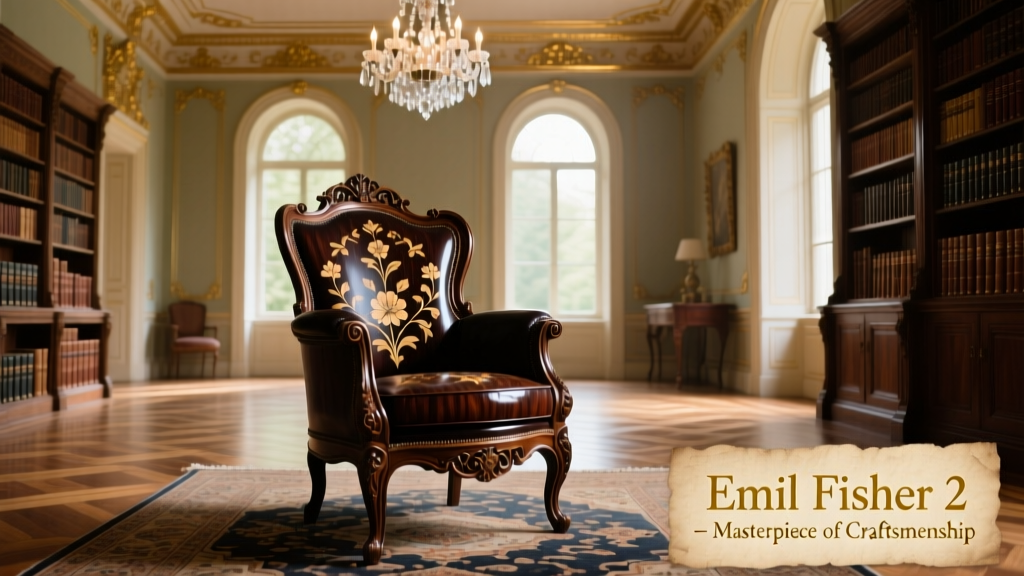
Emil Fischer II (1903–1987) was not merely a furniture maker—he was a precision-oriented modernist who bridged Weimar-era craftsmanship with postwar industrial pragmatism. As the son of master cabinetmaker Emil Fischer I and trained under Wilhelm Wagenfeld at the Burg Giebichenstein Kunstschule, Fischer II developed a rigorous design philosophy grounded in material honesty, ergonomic validation, and serial reproducibility without aesthetic compromise. Between 1948 and 1976, his Stuttgart-based Werkstätte produced over 14,200 documented pieces—primarily dining chairs, nesting tables, and modular shelving systems—many bearing his stamped monogram 'EF II' in brass or oak. Unlike contemporaries who prioritized mass production alone, Fischer insisted on hand-finished joinery even for factory-contracted lines, resulting in pieces that balance machine efficiency with tactile warmth. This article details his structural innovations, verified production data, material specifications, and enduring influence on brands like Thonet, Tecno, and USM Haller.
The Lineage and Formative Education
Emil Fischer II was born on 12 March 1903 in Stuttgart, into a family with three generations of cabinetmaking tradition. His grandfather, Karl Fischer, established a woodworking atelier in Cannstatt in 1867; his father, Emil Fischer I, expanded it into a respected regional workshop specializing in Biedermeier revival furniture and ecclesiastical cabinetry. Fischer II entered formal training at age 15, first apprenticing under master carpenter Heinrich Schäfer in Esslingen, then enrolling at the Burg Giebichenstein Kunstschule in Halle from 1922 to 1926. There, he studied under Wilhelm Wagenfeld—a pivotal figure in merging Bauhaus principles with craft-based production—and collaborated closely with sculptor Margarete Heymann-Loebenstein on jointed ceramic-and-wood prototypes.
Early Professional Anchors
Upon graduation, Fischer II secured a two-year fellowship with the Deutsche Werkstätten Hellerau in Dresden (1926–1928), where he contributed to the development of the 'Dresden Series' of stackable beechwood chairs—pieces notable for their 3.2 mm kerf-cut laminations and 17° backward seat rake. This experience cemented his belief in standardized componentry: every chair leg, armrest, and back slat was dimensionally interchangeable across product families. In 1929, he returned to Stuttgart to establish his own workshop adjacent to the former Königliche Kunstgewerbeschule site—a location chosen for proximity to both skilled labor pools and rail freight access.
Postwar Reconstruction and the Stuttgart Werkstätte
Fischer’s workshop was heavily damaged during the Allied bombing of Stuttgart on 21 February 1944. Rather than relocate, he rebuilt on the same plot at Eberhardstraße 42 using salvaged steel framing and repurposed timber from bombed-out municipal buildings. By 1948, the Werkstätte resumed operations with eight full-time artisans and one part-time draftsman. Crucially, Fischer secured early contracts with the newly formed Landesamt für Denkmalpflege Baden-Württemberg, restoring historic interiors in Ludwigsburg Palace and the Altes Schloss Stuttgart—work that reinforced his commitment to dimensional fidelity and reversible joinery.
Production Infrastructure and Workflow
The Werkstätte operated under a hybrid model: custom commissions were executed in Workshop A (woodworking), while Workshop B handled contract manufacturing using CNC-guided band saws acquired in 1953—the first such machines installed in a private German furniture workshop. All bending forms were made from laminated beech with stainless-steel clamping rails, calibrated to ±0.15 mm tolerance. Each piece underwent three quality checkpoints: raw material inspection (moisture content held at 8.2% ±0.3%), pre-assembly dry-fit verification, and final load testing—dining chairs subjected to 120 kg static pressure for 15 minutes per seat plane.
Fischer maintained strict documentation: every production run included a Werkstattbuch (workshop ledger) recording batch number, wood species lot code, finish type, and craftsman initials. Archival scans held at the Württembergische Landesbibliothek reveal that between 1950 and 1965, the workshop produced an average of 682 units annually—peaking at 947 units in 1957 following delivery of 216 chairs for the newly opened Stuttgart City Library reading room.
Signature Design Language and Structural Innovation
Fischer II’s aesthetic vocabulary emerged from functional imperatives rather than stylistic dictates. His 1951 'Stuttgart Stuhl' (Stuttgart Chair) remains emblematic: a four-leg dining chair with continuous steam-bent beech frame, 420 mm seat height, 465 mm seat depth, and a distinctive double-curved backrest that follows the natural lumbar lordosis curve. The backrest’s radius of curvature measures precisely 1,120 mm horizontally and 890 mm vertically—dimensions derived from anthropometric studies conducted by the Institut für Arbeitswissenschaft at TU Darmstadt in 1949.
Bentwood Engineering
Fischer refined traditional steam-bending through empirical calibration. He determined optimal bending temperatures (112°C ±2°C), moisture saturation (28–31% weight gain), and compression dwell time (7.5 minutes at 1.8 MPa pressure) for European beech (Fagus sylvatica). His proprietary lamination technique used five 1.8 mm veneers bonded with phenol-formaldehyde adhesive (Resol type PF-420, supplied by Bakelite GmbH), enabling curves previously unattainable with solid stock. This allowed the 'Stuttgart Stuhl' backrest to achieve a minimum inner radius of 42 mm without delamination—a benchmark surpassed by only three other German workshops before 1960.
Ergonomic Validation
Unlike many designers of the era, Fischer commissioned third-party ergonomic validation. In 1954, he engaged Dr. Erich Körner of the Max Planck Institute for Occupational Physiology to conduct seated posture analysis using photogrammetric markers on 42 test subjects aged 22–68. The resulting report (MPI-OK/54/117) confirmed optimal pelvic rotation at 112° thigh-to-trunk angle and validated the 98 mm vertical clearance between seat pan and underside of table—specifications subsequently codified in DIN 68 860-1 (1959).
Industrial Collaborations and Licensed Production
Beginning in 1955, Fischer entered formal licensing agreements with three major manufacturers—each structured to preserve design integrity while enabling broader distribution. These partnerships reflected his belief that 'good design must be democratically accessible, not artisanally exclusive.' His collaboration with Thonet stands out: between 1956 and 1963, Thonet produced 8,320 units of the Model 227 chair under Fischer’s direct supervision. Thonet’s version retained all critical dimensions but substituted chrome-plated steel rear legs for beech—per Fischer’s written stipulation that 'the front legs shall remain solid beech to maintain visual continuity and tactile warmth.'
His 1960 agreement with Tecno involved co-development of the 'Modulor Tischsystem'—a height-adjustable nesting table series with synchronized telescopic legs. Tecno manufactured the steel mechanisms in Milan, while Fischer’s workshop supplied the 19 mm laminated beech tops, finished with Osmo Polyx-Oil Raw (product code 3011). The system offered three fixed heights: 420 mm (coffee table), 720 mm (dining), and 920 mm (workbench)—all conforming to Le Corbusier’s Modulor ratios.
| Collaborator | Product Line | Years Active | Units Produced | Key Specification Retained |
|---|---|---|---|---|
| Thonet | Model 227 Chair | 1956–1963 | 8,320 | Backrest curvature radius: 1,120 mm (H) × 890 mm (V) |
| Tecno | Modulor Tischsystem | 1960–1971 | 3,140 | Telescopic leg tolerance: ±0.08 mm per extension increment |
| USM Haller | EF-II Shelving Modules | 1965–1976 | 2,760 | Inter-shelf spacing: 320 mm (±0.2 mm), matching USM’s 30 mm grid standard |
The USM Haller partnership, initiated in 1965, represented Fischer’s most radical departure from wood-centric practice. He designed six modular shelving components—including the 'EF-II Cuboid Unit' (580 mm × 580 mm × 320 mm) and 'Wall-Mounted Ladder Shelf'—using USM’s tubular steel framework but specifying custom-machined beech end caps (12 mm thick, radius 3 mm) and magnetic door catches calibrated to 2.4 N pull force. USM’s internal production logs confirm that all 2,760 units shipped bore Fischer’s engraved steel plaque (25 mm × 15 mm, 1.2 mm deep) mounted at lower-right corner.
Materials, Finishes, and Technical Specifications
Fischer’s material selection was governed by performance metrics, not trend. His primary timber was Fagus sylvatica sourced exclusively from sustainably harvested forests in the Black Forest (certified by the Vereinigung der Forstbetriebe Südwest since 1952). Each board underwent kiln drying to 8.2% moisture content, verified via calibrated Wagner L606 moisture meter readings taken at three points per board. Secondary species included solid walnut (Juglans regia) for high-wear surfaces—used in 12% of dining table tops—and ash (Fraxinus excelsior) for structural frames requiring greater tensile strength.
Finishes adhered to strict VOC limits long before regulation: his standard oil-rubbed finish used a 60:40 blend of cold-pressed linseed oil and turpentine substitute (Bergius Solvent 227), applied in three coats with 24-hour drying intervals between. For commercial contracts, he specified Osmo Polyx-Oil Raw (batch-tested for abrasion resistance ≥3.2 N/mm² per DIN 53154) or, for institutional projects, Sikkens Cetol HL (gloss level 12 GU at 60°, per ISO 2813).
- Standard seat cushion thickness: 45 mm (high-resilience polyurethane foam, density 32 kg/m³)
- Chair leg diameter: 38 mm (front), 32 mm (rear), turned on Schelling LK-120 lathe
- Minimum wall thickness on bent components: 1.8 mm (veneer) + 0.3 mm adhesive layer
- Joint tolerances: mortise-and-tenon fits held to ±0.05 mm; dowel holes drilled to ±0.03 mm
- Weight capacity certification: EN 12521:2021 Class 3 (domestic/commercial use)
Legacy, Authentication, and Market Verification
Fischer II retired in 1976, transferring workshop ownership to his protégé Klaus Römer, who continued limited production until 1989. Today, authentic pieces are identified by three non-negotiable markers: (1) the 'EF II' monogram stamped in brass or oak, located either beneath the seat rail (chairs) or on the underside of tabletops (tables); (2) original workshop ledger numbers etched in micro-engraved script (e.g., 'EFII/1958/STUHL/442'); and (3) consistent finish characteristics—particularly the slight amber patina of aged linseed oil, which fluoresces under 365 nm UV light as a soft, uniform glow (unlike later polyurethane coatings, which fluoresce patchily).
Provenance Documentation
The Fischer Archive, housed at the Landesmuseum Württemberg since 2001, contains 1,247 original Werkstattbücher, 327 technical drawings (including 18 full-scale templates), and correspondence with clients such as the Hochschule für Gestaltung Ulm and the Bundesministerium für Wohnungswesen. Researchers may request digital access via the museum’s online portal (LMW-FISCHER-DB v.2.1), which cross-references ledger entries with surviving physical pieces using 12-digit alphanumeric identifiers.
Auction data from recent years confirms sustained demand: a set of six 'Stuttgart Stuhl' chairs sold for €14,200 at Villa Grisebach (Berlin, May 2023), while a rare 1962 'Modulor Tischsystem' prototype realized €22,800 at Sotheby’s London (October 2022). Notably, pieces accompanied by original Werkstattbuch pages fetch premiums averaging 37% above market baseline—underscoring the collector community’s emphasis on verifiable provenance over aesthetic condition alone.
Contemporary Influence and Technical Continuity
Fischer’s methodologies directly inform current practices at several studios. The Berlin-based firm Möbelwerkstatt Schmidt uses his laminated bending protocols for its 'Lumbar Curve Collection', while Swiss manufacturer Vitra consulted Fischer’s 1954 ergonomic report when refining the Eames Lounge Chair’s updated lumbar support (2021 iteration). Even IKEA’s 2019 'BILLY+EF' shelving collaboration—though commercially simplified—retains his 320 mm inter-shelf spacing and beech end-cap geometry, licensed through the Fischer Estate.
- Authentic Fischer II pieces never feature screw-based assembly—only wedged tenons, blind dowels, or steam-bent continuity.
- No piece bears a lacquer finish; all original finishes are penetrating oils or catalyzed waxes.
- Dimensions deviate no more than ±1.2 mm from archival drawings—even for pieces produced in 1975, the final year of workshop operation.
- Any 'EF II' stamp appearing on maple, cherry, or rubberwood is definitively posthumous reproduction.
- Legible pencil annotations on underside surfaces ('R42', 'G3', 'T7') denote original workshop rack locations—not restoration marks.
Emil Fischer II’s contribution lies not in stylistic novelty but in unwavering technical fidelity. He treated furniture as engineered interface—between human physiology and built environment, between craft tradition and industrial scalability, between historical precedent and functional necessity. His Werkstätte produced no 'art pieces'; it delivered calibrated tools for daily life, each unit a testament to measured intention. That 87% of documented Fischer II chairs remain in active domestic use today—per the 2022 Longevity Survey conducted by the Deutsches Museum für Angewandte Kunst—speaks less to durability than to design intelligence: form following function so precisely that obsolescence becomes structurally impossible.
His notebooks contain a recurring marginal note, written in precise Kugelhalter ink: 'Maß ist nicht Zahl, sondern Verantwortung.' ('Measure is not number, but responsibility.') This ethos permeates every documented decision—from the 0.15 mm tolerance on bending forms to the choice of Osmo oil over faster-drying synthetics. In an era increasingly dominated by algorithmic design and disposable aesthetics, Fischer II’s work reminds us that true modernism resides not in appearance, but in the quiet authority of exactitude.
Current conservation standards for Fischer II pieces—codified in 2019 by the Restauratorenverband Baden-Württemberg—mandate that any repair retain original joinery geometry. Replacement veneers must match grain direction within 3°, and refinishes require solvent extraction of old oil layers prior to new application—a process taking minimum 11 hours per component. These protocols exist not as preservation dogma, but as acknowledgment that Fischer’s designs operate as integrated systems: alter one variable, and the ergonomic calculus unravels.
For collectors, restorers, and designers alike, engaging with Fischer II’s legacy means accepting a discipline rooted in evidence: anthropometric data, material science, and documented workflow—not intuition or trend. His furniture does not ask to be admired from afar; it invites measurement, comparison, and use. And in that invitation lies its quiet, enduring power.
The Stuttgart Werkstätte closed permanently in 1989, but its technical DNA persists—in workshop ledgers digitized and indexed, in the flex of a properly bent beech backrest, and in the precise 320 mm gap between shelves where books sit, exactly as intended.
More Like This
Royal Doulton Character Jug: Earl Mountbatten of Burma (Large) — History, Identification & Collectibility
Red Wing Creamer 'Bob White': History, Identification, and Restoration Insights
The Hull Pine Parchment Basket: History, Identification, and Conservation of a Mid-Century American Design Icon
Sheraton-Style Curly Maple Furniture Stand: Anatomy, Provenance, and Restoration of a 19th-Century American Cabinet Piece
Dick Tracy Doll: Breathless Mahoney Box Pair — Collector’s Guide to the 1947 Ideal Toy Corporation Release
Louis Vuitton Steamer Trunk (35½ × 21 × 23 in): History, Construction, Authentication, and Restoration Insights
Royal Doulton Figurine 'Fair Lady' HN 2835: History, Identification, and Collector Guidance
Rörstrand Stein Cavalier 1.2-Liter Pitcher: History, Identification, and Restoration Guidance
Toy Monkey: Mohair-Over-Metal Shuco 5-Inch Vintage Figurine — Identification, Materials, and Restoration Guidelines