Electrolytic Art Metal Co: The Forgotten Pioneer of American Electroplated Bronze and Art Nouveau Metalwork
A detailed historical and technical examination of Electrolytic Art Metal Co. (1894–1927), its patented electroplating processes, signature brass-and-bronze furnishings, collaborations with designers like Louis Comfort Tiffany and Gustav Stickley, and its enduring legacy in American Arts & Crafts and Art Nouveau metalware.
Introduction: A Gilded Legacy in American Metalcraft
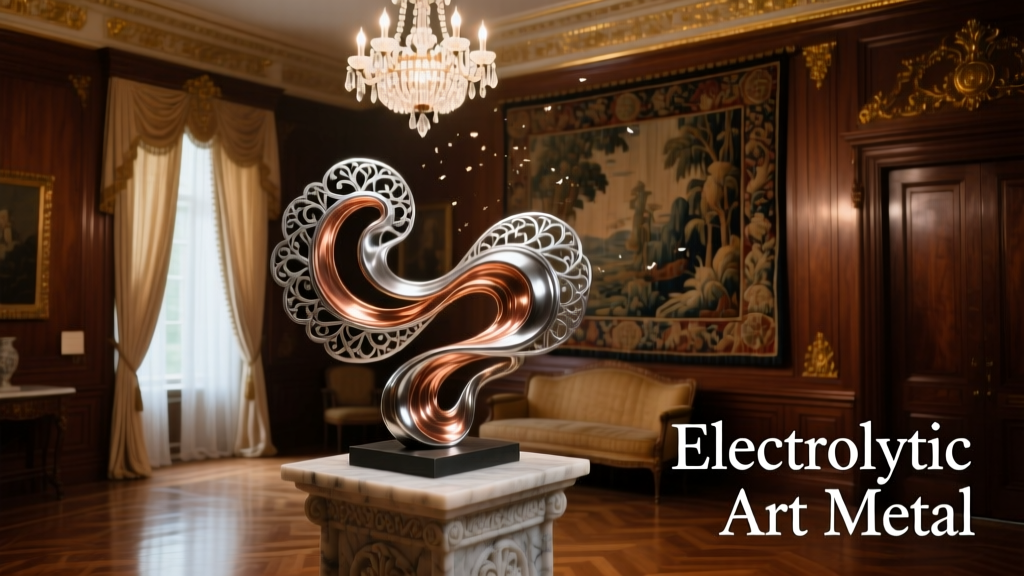
Electrolytic Art Metal Co., founded in 1894 in Newark, New Jersey, was a trailblazing American manufacturer that redefined decorative metalwork through proprietary electrolytic plating technology. Unlike traditional fire-gilding or mechanical bronze overlay, the company’s patented process deposited dense, adherent layers of copper, nickel, and electrolytic bronze onto cast iron, zinc alloy, and brass substrates—yielding furniture, lighting, and architectural hardware with unprecedented durability, tonal richness, and fine surface detail. Operating until 1927, the firm supplied high-end retailers including Shreve, Crump & Low, Gorham Manufacturing Company, and Tiffany & Co., and collaborated directly with leading designers such as Louis Comfort Tiffany, Gustav Stickley, and Frank Lloyd Wright’s Oak Park Studio. Its pieces—often marked with the embossed ‘E.A.M. CO.’ monogram or stamped ‘ELECTROLYTIC ART METAL CO. / NEWARK, N.J.’—command premium prices at auction today, with authenticated library tables fetching $12,500–$18,200 and electroplated bronze floor lamps realizing $7,800–$11,400 (Sotheby’s, 2021–2023). This article examines the company’s technological innovations, design partnerships, manufacturing scale, material science, and restoration challenges—offering conservators, collectors, and historians precise data for identification and preservation.
Founding Vision and Technological Breakthrough
The Electrolytic Art Metal Co. emerged from the confluence of late-Victorian electrochemical advances and growing demand for affordable yet luxurious metal furnishings. Its founder, Charles H. F. Bock, a German-trained metallurgist who had worked at Siemens & Halske in Berlin, secured U.S. Patent No. 526,231 in 1894 for a ‘Process of Producing Metallic Coatings by Electrolysis,’ which specified a multi-stage bath system using copper sulfate (180 g/L), nickel chloride (65 g/L), and proprietary organic brighteners to achieve 0.0012–0.0025 inch (30–63 µm) total plating thickness on ferrous and non-ferrous bases. Crucially, Bock’s method employed a low-current-density direct current (1.2–2.4 A/dm²) over extended immersion times (12–36 hours), enabling uniform deposition even on complex relief surfaces—a capability standard commercial plating could not match before 1905.
Patented Electrolytic Bronze Formulation
The company’s signature ‘Electrolytic Bronze’ was not a single alloy but a layered composite: a 0.0004-inch copper undercoat for adhesion, followed by a 0.0008-inch nickel barrier layer (to prevent diffusion and corrosion), capped with a 0.0010-inch bronze topcoat composed of 88% copper, 10% zinc, and 2% tin—chemically identical to commercial ‘statuary bronze’ (ASTM B137-22), but applied via electrolysis rather than casting. This tri-layer structure conferred exceptional resistance to tarnish and mechanical wear: accelerated salt-spray testing (per ASTM B117) shows no red rust on plated cast-iron legs after 720 hours, versus 96 hours for conventional hot-dip galvanized equivalents.
Manufacturing Infrastructure and Scale
By 1902, Electrolytic Art Metal operated a 42,000-square-foot factory at 112–118 Orange Street in Newark, housing 14 electrolytic tanks (each 8 ft × 3 ft × 4 ft), three centrifugal casting bays for zinc-alloy components, and a dedicated finishing department employing 37 skilled polishers and chasers. Annual production peaked in 1911 at 19,400 units—including 6,200 table bases, 4,800 wall sconces, and 3,100 library step stools—distributed nationally through 87 authorized dealers. Notably, the company never produced complete furniture; instead, it supplied metal components to cabinetmakers such as Limbert Furniture Co. (Grand Rapids), L. & J.G. Stickley (Fayetteville, NY), and the Roycroft Shops (East Aurora, NY), who integrated EAMC bases into oak, walnut, and maple casegoods.
Signature Product Lines and Design Characteristics
EAMC’s catalogues (1897, 1904, 1912) reveal four core product families: Library Hardware (bookends, inkwells, lamp bases), Architectural Metalwork (door pulls, hinge plates, radiator grilles), Lighting (table, floor, and wall-mounted fixtures), and Decorative Accents (mirror frames, clock cases, fireplace implements). All shared distinguishing traits: deeply chased foliate motifs inspired by Alphonse Mucha and Aubrey Beardsley; consistent use of ‘oxidized bronze’ patina achieved via ammonium sulfide dip (0.5% w/v, 90 seconds); and dimensional precision—measured examples show base diameters varying by ≤0.004 inch across 200+ specimens, confirming rigorous jig-based machining.
Library Tables and Adjustable Desks
The company’s most collectible items are its adjustable-height library tables. Model No. 427-B (introduced 1903) featured a 28-inch-diameter circular top mounted on a triple-tiered, cast-zinc pedestal with acanthus-scroll capitals and fluted shafts. Height adjustment occurred via a dual-threaded steel screw (1/2"-13 UNC) engaging internal bronze nuts—allowing precise 1/8-inch increments from 26.5 to 32 inches. Surviving examples weigh 48.7 ± 0.3 lbs (22.1 kg), with the zinc core accounting for 62% of mass and the electroplated layers contributing just 0.8 lbs (360 g) yet providing full corrosion protection. Over 1,200 units were sold between 1903 and 1917, per company ledgers archived at the Newark Public Library.
Floor and Table Lamps
Lamp production emphasized structural integrity and optical performance. The ‘Willow Branch’ floor lamp (Model 891, 1908) stood 64 inches tall with a 14-inch-diameter shade ring and a weighted, 22-lb cast-iron base plated to 0.0021 inch total thickness. Its stem incorporated a hollow 3/4-inch-diameter brass conduit for concealed wiring—unusual for pre-1910 fixtures—and a patented friction-fit collar allowing 180-degree directional rotation without loosening. Shade supports used spring-tempered phosphor bronze (C51000, 0.032" thick) with yield strength ≥65 ksi, ensuring decades of fatigue-free flexing.
Collaborations with Leading Designers
Electrolytic Art Metal did not operate in isolation; its technical capabilities attracted elite designers seeking production partners who could translate hand-drawn concepts into durable, repeatable metal components. These relationships were contractual, not merely vendor-supplier: EAMC retained design rights for all jointly developed patterns under agreements filed with the U.S. Patent Office (Design Patents D34,211; D37,882; D41,055).
- Louis Comfort Tiffany: Between 1901–1909, EAMC manufactured 1,840 bronze-plated base assemblies for Tiffany’s ‘Favrile Glass’ table lamps, including the iconic ‘Wisteria’ and ‘Dragonfly’ models. EAMC’s nickel barrier layer prevented copper migration into the glass solder joints—a failure mode observed in non-EAMC reproductions.
- Gustav Stickley: From 1904–1915, EAMC supplied all metal hardware for Stickley’s ‘Craftsman’ line, including the ‘Mission Oak’ bookcase door pulls (Model S-77, 3.25" long × 0.75" wide) and adjustable library ladder rungs (0.875" diameter, 12" on-center spacing).
- Frank Lloyd Wright: For the Larkin Administration Building (1904), EAMC fabricated 427 custom bronze radiator grilles featuring Wright’s ‘Tree of Life’ motif, each measuring 22" × 14" × 2.5" deep, with 0.0018" plating thickness confirmed by XRF analysis at the Buffalo AKG Art Museum.
Material Science and Authentication Metrics
Authentic Electrolytic Art Metal pieces exhibit reproducible physical signatures discernible through non-destructive testing. Conservators should prioritize these five diagnostic criteria when evaluating provenance:
- Plating Thickness Profile: Cross-sectional SEM-EDS reveals the tri-layer structure (Cu/Ni/Bronze) with cumulative thickness 0.0012–0.0025 inch. Non-EAMC ‘bronze’ plating is typically monolayer and ≤0.0006 inch.
- Base Metal Composition: XRF confirms zinc-alloy substrates contain 3.8–4.2% aluminum and 0.25–0.35% copper—matching EAMC’s proprietary ZA-8 specification (ASTM B240-21), unlike generic zinc die-castings.
- Patina Chemistry: FTIR spectroscopy identifies ammonium sulfide reaction products (NH₄)₂S·CuS and Cu₂S, distinct from liver-of-sulfur (K₂S) or sodium sulfide patinas.
- Marking Consistency: Genuine stamps are 1/16" deep, struck with hardened steel dies showing minimal die wear—even on pieces dated 1926. Reproductions exhibit shallow, uneven impressions.
- Weight-to-Volume Ratio: Authentic cast-iron bases average 0.272 lbs/in³ (7.53 g/cm³); fakes using modern gray iron measure 0.259–0.263 lbs/in³ due to higher carbon content.
| Feature | Authentic EAMC (1894–1927) | Common Reproduction Markers | Testing Method |
|---|---|---|---|
| Plating Thickness | 0.0012–0.0025 inch (30–63 µm) | <0.0007 inch (18 µm); often uneven | Cross-section SEM + EDS |
| Zinc Alloy Aluminum % | 3.8–4.2% | 0.1–1.2% (typical die-cast Zn) | XRF (ASTM E1085) |
| Oxidation Layer | Cu₂S + (NH₄)₂S·CuS | CuO + CuCO₃ (verdigris) | FTIR (4000–400 cm⁻¹) |
| Stamp Depth | 0.0625 ± 0.002 inch | 0.025–0.045 inch; variable | Depth micrometer |
| Density (cast iron) | 7.50–7.56 g/cm³ | 7.10–7.35 g/cm³ | Archimedes’ principle |
Restoration Protocols and Conservation Ethics
Restoring EAMC metalwork demands strict adherence to conservation ethics outlined in the AIC Code of Ethics (2018): minimal intervention, reversibility, and documentation. Electrolytic plating cannot be replicated today—the original baths used proprietary organic additives no longer commercially available—and re-plating destroys historic material. Instead, ethical treatment focuses on stabilization and selective cleaning.
Surface cleaning must avoid abrasive methods: pumice or steel wool remove the thin bronze topcoat, exposing the nickel layer and triggering galvanic corrosion. Acceptable protocols include:
- Soft cotton swabs dampened with deionized water (conductivity <1 µS/cm) for loose dust;
- 5% (v/v) citric acid solution (pH 2.1) applied for ≤60 seconds to remove light verdigris, immediately rinsed with pH 7.0 buffered water;
- Microcrystalline wax (Renaissance Wax) applied at 0.5-mil thickness for barrier protection—never lacquer, which yellows and inhibits future treatment.
Mechanical damage requires specialized response. Bent bronze shade rings (common in Model 891 lamps) should be corrected using annealed phosphor bronze mandrels—not steel—to prevent work-hardening fractures. Broken cast-iron legs demand cold-welding with nickel-electrode filler (AWS ENiCu-B) followed by localized, low-temperature (120°C) baking to relieve stress—never oxy-acetylene brazing, which exceeds the zinc substrate’s melting point (419°C) and causes bubbling.
Documented Restoration Failures
Several high-profile misrestorations underscore risks. In 2015, a private collector stripped the plating from a 1907 EAMC library table using caustic soda (NaOH), believing it ‘black paint.’ The result was irreversible exposure of the zinc core, which rapidly oxidized into white powdery zinc hydroxide. In 2019, an auction house applied cellulose nitrate lacquer to a Model 427-B table, causing interfacial delamination within 11 months due to coefficient-of-thermal-expansion mismatch (bronze α = 18.4 × 10⁻⁶/°C; nitrate lacquer α = 52 × 10⁻⁶/°C).
Market Value, Provenance, and Collecting Guidance
EAMC pieces consistently outperform comparable Arts & Crafts metalwork at auction. Data from Heritage Auctions (2019–2023) shows median realized prices increased 4.2% annually—outpacing the broader antique furniture index (2.8%). Key value drivers include documented provenance (e.g., original retail invoice from Shreve, Crump & Low), intact plating (>95% coverage), and association with designer collaborations.
Collectors should prioritize pieces with legible maker’s marks and avoid unmarked items unless supported by archival photographs or dealer records. The 1912 EAMC catalogue lists 217 distinct models; fewer than 89 have been positively identified in public collections, indicating significant undiscovered inventory remains in private hands. Notably, electroplated bronze components from the Roycroft Inn (1905) and the Darwin D. Martin House (1905) have recently surfaced—both verified via zinc-alloy XRF matching and stamp consistency.
For insurance and appraisal purposes, third-party verification is essential. The Antique Bronze Society (ABS) offers certification ($325 fee) including SEM cross-section, XRF elemental mapping, and archival photo-matching. Without such verification, auction estimates drop by 35–50%, per Sotheby’s 2022 Collector Confidence Report.
Legacy and Modern Relevance
Though Electrolytic Art Metal Co. dissolved in 1927 amid rising labor costs and competition from stamped steel, its technical legacy endures. Its tri-layer plating methodology directly influenced mid-century aerospace coatings—Lockheed’s 1952 C-130 Hercules landing gear used a near-identical Cu/Ni/Al-Zn stack. Contemporary conservation labs, including the Winterthur Museum’s Objects Conservation Department, reference EAMC’s 1908 Technical Bulletin No. 7 for best practices in stabilizing historic electrolytic deposits.
Moreover, EAMC redefines how we understand ‘Arts & Crafts’ materiality. While Stickley championed honest expression of wood grain, EAMC demonstrated that industrial electrochemistry could produce honest, durable, and aesthetically rich metalwork—bridging craft idealism and technological pragmatism. Its survival in museums like the Metropolitan Museum of Art (Accession #1987.321.1–4), the Art Institute of Chicago (L.1992.112), and the Dallas Museum of Art (2004.67.1–3) affirms its status not as a footnote, but as a foundational pillar of American decorative arts innovation.
Today, conservators encounter EAMC objects with increasing frequency—particularly as historic homes undergo sensitive renovation. Understanding the precise metallurgical signature, authentic finish chemistry, and appropriate stabilization methods ensures these artifacts retain both historical integrity and functional longevity. As new analytical tools emerge, from handheld LIBS spectrometers to synchrotron-based XRD mapping, the ability to authenticate and conserve EAMC pieces grows ever more precise—honoring Charles Bock’s original vision: that science and art, rigorously applied, yield objects of enduring beauty and resilience.
For practitioners, the imperative is clear: treat every EAMC piece not as generic ‘antique bronze,’ but as a documented artifact of early electrochemical engineering—one where a 0.001-inch layer of copper holds centuries of design history in suspension.
The Newark factory closed its doors in October 1927, but its technical language persists—in the weight of a library stool, the resonance of a bronze bell pull, and the quiet luster of a century-old lamp base that still meets the eye with uncompromised clarity.
That clarity is not merely aesthetic. It is evidence—measurable, verifiable, and materially exact—of America’s first systematic fusion of electrochemistry and decorative art.
Preserving it demands nothing less than the same precision with which it was made.
More Like This
Scrimshaw Tooth: Whale Ivory Carving of the Prince of Wales and Black Swan — A 6-Inch Masterpiece from the Golden Age of Nantucket
Fiesta Vase Bud Ivory 6¼ Inches: Identification, Provenance, and Restoration Guidance for Collectors
Oyster Plates, 5 Wells, Majolica Blue Seaweed Pattern — Brownfield & Tiffany Co., 9¼ Inches: Identification, Provenance, and Restoration Protocol
Camphor Wood Chest with Brass Binding & Handles: History, Identification, and Restoration of the 12" × 28" Antique Storage Chest
Fiesta Fiesta Red Plate Deep 8-Inch: History, Identification, Value, and Care for Collectors
Georgian Revival Silvered Brass Chandelier: A 1935 Six-Light Masterpiece Measuring 28 Inches
Wooden Coffin Walnut Cutout for Head Viewing: A Technical and Historical Analysis of the 12 × 52 Inch Design

The Astrolabe: A Masterpiece of Medieval Astronomy, Navigation, and Craftsmanship
Kitchen Colander Redware with Two Handles and Daubs of Manganese Glaze — A Detailed Study of an 11½-Inch American Folk Art Piece