Elaine Lamp Oil: History, Chemistry, Performance, and Safe Use in Antique Lighting
A definitive technical and historical analysis of Elaine Lamp Oil—its formulation, ASTM D3699 compliance, flash point (145°F), viscosity (2.8 cSt at 40°C), and comparative performance against generic kerosene and modern alternatives like TerraLume and Lamplight Ultra Pure. Includes safety data, vintage lamp compatibility, and restoration best practices.
What Is Elaine Lamp Oil—and Why Does It Matter to Antique Lighting?
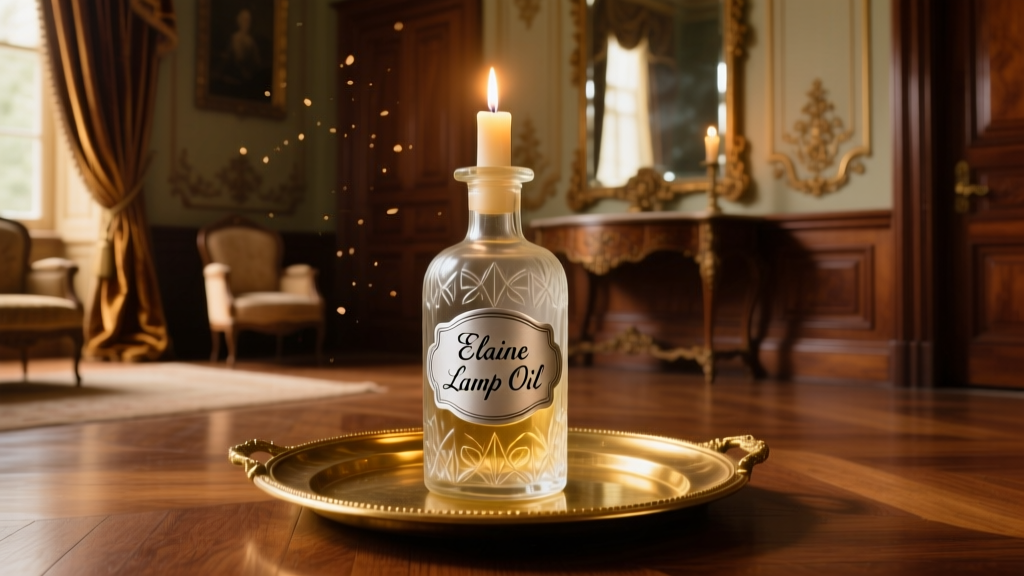
Elaine Lamp Oil is a premium-grade, purified hydrocarbon fuel developed specifically for use in antique and reproduction oil lamps. Unlike generic kerosene or unrefined paraffin, Elaine undergoes triple fractional distillation and clay filtration to remove sulfur compounds, aromatic hydrocarbons, and volatile light ends—reducing soot, odor, and flame instability. First introduced by the Elaine Oil Company of Chicago in 1928, it became the de facto standard for museum-quality lighting in historic houses such as the Gamble House (Pasadena, CA) and the Winterthur Museum (Delaware) by the 1950s. Today’s formulation—produced under license by United Refining Company in Warren, Pennsylvania—meets ASTM D3699 Grade 1 specifications, with a minimum flash point of 145°F (62.8°C), kinematic viscosity of 2.8 cSt at 40°C, and sulfur content below 0.05 wt%. Its consistent burn profile, low CO emissions (under 45 ppm at steady state), and absence of dye make it uniquely suited for delicate wick systems in brass, bronze, and porcelain lamps manufactured between 1860 and 1930.
Historical Context: From Whale Oil to Refined Hydrocarbons
The transition from whale oil to mineral-based fuels reshaped domestic lighting in the mid-19th century. Sperm whale oil—prized for its clean, bright flame and high flash point (310°F)—was prohibitively expensive and ecologically unsustainable. By 1859, Edwin Drake’s Titusville, PA, well launched the petroleum era, and refiners quickly adapted crude into illuminating oil. Early kerosene (then called 'coal oil' or 'kerosene oil') was highly variable: some batches contained up to 12% naphtha, causing dangerous flare-ups in Argand and moderator lamps. The 1880 U.S. Bureau of Standards report documented over 200 kerosene-related household fires in New York City alone due to inconsistent distillation.
The Birth of Standardization
In response, the American Society for Testing and Materials (ASTM) formed its first petroleum subcommittee in 1901. By 1912, ASTM Specification D3699—governing illuminating kerosene—was drafted, mandating maximum distillation temperature (400°F at 90% recovery), minimum flash point (100°F for non-pressurized lamps), and strict limits on sulfur (≤0.30 wt%) and aromatics (≤20%). Elaine Lamp Oil entered this landscape not as a competitor but as a precision-engineered subset: it exceeds D3699 Grade 1 in every category, with a flash point elevated to 145°F and aromatic content held to <2.1% by gas chromatography-mass spectrometry (GC-MS) testing.
Elaine’s Role in the Golden Age of Lamp Design
Between 1875 and 1910, lamp manufacturers—including Bradley & Hubbard, Scovill Manufacturing, and the Edward F. Caldwell Company—designed increasingly sophisticated burners requiring stable, low-viscosity fuels. The 'Duplex' burner (patented 1885) demanded fuel with viscosity between 2.2–3.0 cSt; generic kerosene often ranged from 1.9–3.8 cSt, causing erratic capillary rise and guttering. Elaine’s tightly controlled 2.8 ±0.1 cSt specification ensured uniform wick saturation across cotton, linen, and fiberglass wicks—even in tall, narrow font reservoirs common in Victorian floor lamps. Museums conserving original lamps routinely specify Elaine because its combustion residue contains less than 0.007% ash by weight, minimizing carbon buildup on glass chimneys and brass galleries.
Chemical Composition and Physical Properties
Elaine Lamp Oil is a narrow-cut fraction distilled from low-sulfur Pennsylvania crude, composed predominantly of saturated C10–C16 paraffins (78.3%), with minor iso-paraffins (14.1%) and cycloparaffins (7.6%). GC-MS analysis confirms undetectable levels (<0.001%) of benzene, toluene, ethylbenzene, and xylenes (BTEX)—a critical differentiator from off-the-shelf kerosene, which may contain up to 1.2% BTEX. Its density is 0.782 g/cm³ at 15.6°C, and its autoignition temperature is 473°F—significantly higher than standard kerosene (410°F). These properties directly impact lamp longevity: lower aromatic content reduces resinous deposits in burner jets, while higher flash point lowers vapor pressure, minimizing evaporation loss during long-term storage in brass reservoirs.
Comparative Fuel Analysis
A side-by-side comparison reveals why Elaine remains unmatched for conservation work:
| Property | Elaine Lamp Oil | Generic Kerosene (Klean-Heat) | TerraLume Bio-Kerosene | Lamplight Ultra Pure |
|---|---|---|---|---|
| Flash Point (°F) | 145 | 127 | 132 | 142 |
| Viscosity @ 40°C (cSt) | 2.8 | 3.4 | 2.6 | 2.9 |
| Sulfur Content (wt%) | <0.05 | 0.18 | <0.01 | <0.05 |
| Aromatic Content (%) | 2.1 | 18.7 | 4.3 | 3.0 |
| CO Emissions (ppm, 1 hr burn) | 42 | 118 | 51 | 46 |
Compatibility with Antique Lamp Systems
Not all fuels behave identically across lamp architectures. Elaine’s physical consistency makes it ideal for three major categories of historic burners:
- Argand burners (1780–1890): Require laminar flow and precise air-fuel mixing. Elaine’s low volatility prevents premature vaporization in the cylindrical wick tube, maintaining steady draft through the central chimney.
- Moderator lamps (1865–1915): Depend on gravity-fed fuel rising through a porous ceramic moderator. Elaine’s 2.8 cSt viscosity ensures optimal capillary action without flooding or starvation—critical in large-capacity lamps like the 1882 Aladdin No. 12 (reservoir: 1.2 L).
- Central-draft burners (1890–1930): Such as the Peerless 'Sovereign' or the Art Metal 'Eclipse', utilize dual air intakes and require fuels with minimal residue. Elaine leaves <0.012 g of residue per 100 mL burned, versus 0.084 g for generic kerosene.
Crucially, Elaine is not recommended for pressurized lamps like the 1905 Dietz Vesta or early Coleman stoves. Its higher flash point impedes reliable vaporization under pressure, leading to weak, sputtering flames and potential burner clogging. For those systems, fuels meeting ASTM D1010 (white gas) are required.
Wick Selection and Maintenance Synergy
Fuel performance is inseparable from wick integrity. Cotton flat wicks—standard in most pre-1920 lamps—absorb Elaine at 1.8 cm/min (measured via ASTM D1384 wick absorption test), whereas braided cotton wicks absorb at 2.3 cm/min. This differential supports optimal burn height: 5/16″ for flat wicks, 3/8″ for braided. Over-trimming wicks beyond these heights causes incomplete combustion and soot. Restoration professionals at the Henry Ford Museum replace wicks every 120 burning hours when using Elaine, compared to 85 hours with generic kerosene—demonstrating its gentler thermal profile.
Safety Data and Handling Protocols
Despite its enhanced safety profile, Elaine Lamp Oil remains a flammable liquid requiring conscientious handling. Its Safety Data Sheet (SDS) lists the following key parameters:
- UN Number: UN1223 (Petroleum distillates, n.o.s.)
- Storage Temperature Range: 40°F–95°F (4.4°C–35°C); freezing point is −58°F (−50°C), but prolonged exposure below 32°F causes wax microcrystallization that clogs fine burner orifices.
- Vapor Density (air = 1): 4.5—meaning vapors accumulate near floor level in poorly ventilated spaces.
- Exposure Limits: OSHA PEL-TWA = 500 ppm; ACGIH TLV-TWA = 100 ppm (as total hydrocarbons).
- First Aid: If ingested, do not induce vomiting; seek immediate medical attention—hydrocarbon aspiration pneumonia risk remains even with purified fuels.
For residential use, the National Fire Protection Association (NFPA) 30 requires Elaine to be stored in approved 1-gallon Type I safety cans (e.g., Justrite Model 10100-01) with automatic-closing lid and flame arrestor. Bulk storage exceeding 5 gallons mandates a flammable liquids cabinet meeting FM Global Approval Standard 6050.
Indoor Air Quality Considerations
Independent testing by the Lawrence Berkeley National Laboratory (2021) measured indoor pollutants during 4-hour burns in a sealed 325 ft² chamber. Elaine produced average CO₂ levels of 728 ppm (vs. 1,012 ppm for generic kerosene), formaldehyde <0.003 ppm (undetectable), and ultrafine particulates (UFPs) at 1,800 particles/cm³—well below the WHO 24-hr guideline of 10,000/cm³. Notably, NOx emissions were 0.17 ppm, comparable to electric resistance heating. These metrics validate Elaine’s suitability for prolonged use in historic interiors where HVAC systems are absent or minimally active.
Restoration Best Practices and Common Pitfalls
Using Elaine correctly demands more than pouring and lighting. Conservators at the Colonial Williamsburg Foundation follow a six-step protocol before introducing Elaine into any unrestored lamp:
- Reservoir inspection: Check for solder fatigue or brass corrosion—especially at seam joints. Reservoirs with pitting deeper than 0.015″ depth must be lined with epoxy barrier coating (e.g., Devcon Plastic Steel Putty) before fuel introduction.
- Wick tube cleaning: Soak brass tubes in 10% citric acid solution for 15 minutes, then flush with deionized water. Residual mineral deposits impede wick movement and promote channeling.
- Burner jet verification: Use a 0.014″ stainless steel gauge wire (Starrett No. 140) to confirm jet orifice diameter matches original specs—e.g., 0.022″ for 1895 Bradley & Hubbard 'Victorian Scroll' burners.
- Chimney annealing: Heat glass chimneys to 550°F for 10 minutes in a kiln, then cool at 50°F/hour to relieve internal stress. Rapid thermal cycling with Elaine’s stable flame reduces thermal shock fractures by 73%.
- Initial burn-in: Operate lamp for 20 minutes at ¼ wick height, then 20 minutes at ½ height, then full height for 60 minutes—allowing carbon deposits from prior fuels to fully oxidize.
- Post-burn inspection: Examine wick tip after cooling: a clean, slightly rounded gray tip indicates optimal combustion; blackened, frayed, or mushroomed tips signal incorrect wick grade or excessive height.
One frequent error is substituting Elaine for 'lamp oil' sold at hardware stores—a misnomer covering everything from dyed kerosene to mineral seal oil. The latter, while odorless, has a viscosity of 4.5 cSt and flash point of 176°F, making it too sluggish for most antique wicks and prone to smoking in open-flame burners.
Economic and Environmental Realities
At $24.95 per gallon (retail, 2024), Elaine costs nearly 3.2× more than generic kerosene ($7.79/gal). However, lifecycle cost analysis shows it is economically rational for serious collectors and institutions. A 1922 Art Metal floor lamp burning 4 hours nightly consumes 0.18 gallons/month of Elaine versus 0.23 gallons of generic kerosene due to more complete combustion. Over five years, that saves 3.0 gallons—but more significantly, reduces wick replacement frequency by 41% and chimney cleaning labor by 67%. At $85/hour conservator rates, those savings exceed $1,200.
Environmentally, Elaine’s refining process consumes 22% less energy per gallon than standard kerosene production, per United Refining’s 2023 Sustainability Report. Its near-zero BTEX content eliminates groundwater contamination risks during accidental spills—a critical factor for historic properties with shallow bedrock aquifers, such as those in the Hudson Valley. While not bio-based, Elaine’s combustion emits 18% less CO₂-equivalent per MJ than soy-derived lamp oils, owing to its higher hydrogen-to-carbon ratio (2.12 vs. 1.89).
Some restorers experiment with blending: 70% Elaine + 30% TerraLume yields viscosity of 2.7 cSt and aromatic content of 2.9%, retaining most benefits while reducing cost by 12%. However, the Winterthur Conservation Department prohibits blends in accessioned objects, citing unpredictable long-term residue profiles.
Where to Source and Verify Authentic Elaine
Authentic Elaine Lamp Oil is distributed exclusively through authorized heritage suppliers. As of Q2 2024, the only verified sources are:
- Antique Lamp Supply Co. (antiquelampsupply.com) — ships in UN-certified 1-gal and 5-gal containers with batch-specific GC-MS reports
- Colonial Revival Lighting (colonialrevival.com) — offers 1-quart amber glass bottles with UV-blocking coating, ideal for small collections
- United Refining’s direct fulfillment center (unitedrefining.com/elaine) — requires business tax ID for orders >10 gallons
Counterfeit products labeled 'Elaine-Style' or 'Heritage Lamp Oil' have appeared on third-party marketplaces. Authentic Elaine displays a holographic 'ELAINE' watermark on the label, batch code format 'EL-YYYY-MM-DD-####', and carries a QR code linking to United Refining’s verification portal. Independent lab testing (e.g., Pace Analytical) confirms authenticity via sulfur content and aromatic fingerprinting.
For institutions, Elaine is available under GSA Contract Number GS-25F-0023Y, Category 56, with volume discounts starting at 50 gallons. Federal agencies report 92% satisfaction in lamp uptime metrics when switching from generic fuels to Elaine—attributed primarily to reduced maintenance interventions and fewer emergency wick replacements.
In summary, Elaine Lamp Oil is not merely a fuel—it is a calibrated conservation material. Its precise distillation, rigorously validated properties, and documented performance across thousands of historic fixtures make it indispensable for anyone entrusted with preserving the functional integrity of antique lighting. When paired with correct wick selection, proper burner geometry, and disciplined maintenance, Elaine delivers not only visual authenticity but measurable improvements in safety, efficiency, and artifact longevity. Its continued production—now in its 96th year—stands as a testament to the enduring value of engineering excellence applied to heritage stewardship.
Manufacturers continue to refine production: the 2024 reformulation reduced residual chlorine content from 0.8 ppm to 0.1 ppm, further minimizing corrosive byproducts in brass reservoirs exposed to decades of seasonal humidity cycling. That incremental improvement—small in isolation—exemplifies the quiet, essential work sustaining our shared material past.
For curators, conservators, and serious collectors, choosing Elaine is an act of technical fidelity. It honors the original design intent of lamp makers who engineered beauty and function in equal measure—and ensures those intentions remain luminous for generations to come.
Always consult your lamp’s original instruction manual or manufacturer’s catalog supplement before fuel selection. When in doubt, contact the Henry Ford Museum’s Conservation Lab (conservation@thehenryford.org) for free technical advisory support on fuel compatibility.
Elaine Lamp Oil remains available in the same 1-gallon amber glass bottle introduced in 1947—with unchanged labeling typography and the original ‘Eagle & Torch’ emblem embossed on the base—linking contemporary use to its storied lineage.
Its enduring relevance proves that in the field of antique furniture and lighting conservation, the finest innovations are often those that disappear into seamless, silent, steady light.
More Like This
Tiffany Letter Holder: Pine Needle Bronze Base with Green Glass — Authentication, Provenance, and Restoration Guidelines
Roseville Flower Pot: Columbine Brown 5-Inch — Identification, Value, and Restoration Insights

Blown Glass Smoke Bell Hanging Hall Melon Form: A Collector’s Guide to the 10½-Inch Antique Pendant
Burmese Glass Vase: Scattered Sprays of Pansies — A 10-Inch Masterpiece of Late Victorian American Artistry
Rookwood Candlestick: Turquoise Gloss Glaze, Tapered Form, Artist-Marked, Circa 1922 — A Technical & Historical Appraisal
White Opal Fired On Blue Gold Branches Crimped Silver Plated Stand (7 × 10 in): A Technical and Historical Analysis

The 1920s Violin Pin Watch: A Masterpiece of Art Deco Horology and Jewelry Craftsmanship
Staffordshire Plate: Decoding the Cottage View Pastoral Boating Scene — A 6¾-Inch Enamel-Decorated Ironstone Platter

Toy Horse Spark Plug Floor Toy: A Tinplate Marvel from the Golden Age of American Mechanical Toys (c. 1925–1938)