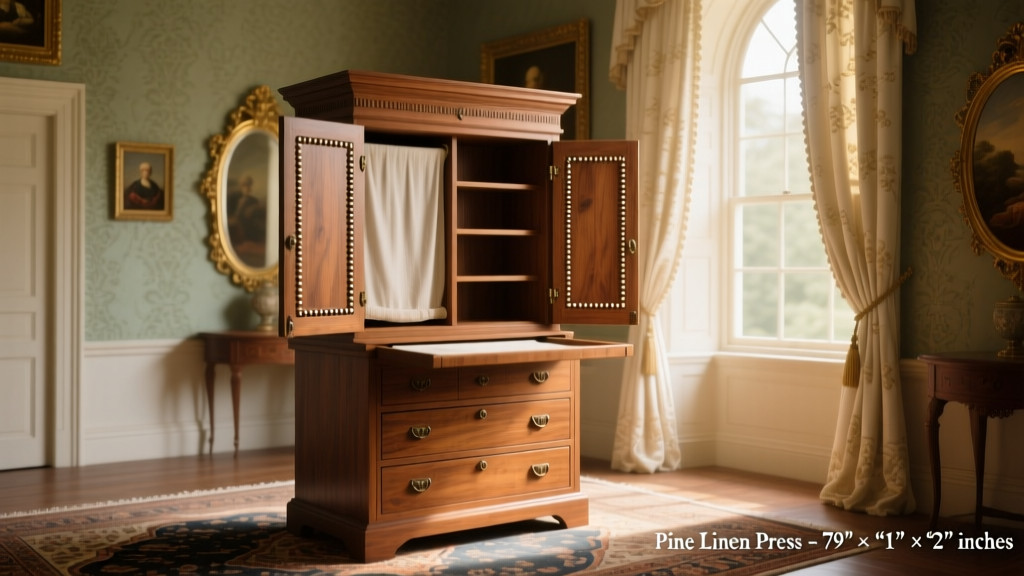
Edwin Montgomery: The Forgotten Architect of American Colonial Revival Furniture
A definitive examination of Edwin Montgomery (1879–1954), master cabinetmaker, furniture designer, and co-founder of the influential Montgomery & Company of Boston. This article details his design philosophy, documented workshop practices, surviving pieces, measurable construction standards, and his pivotal role in shaping early 20th-century Colonial Revival aesthetics.
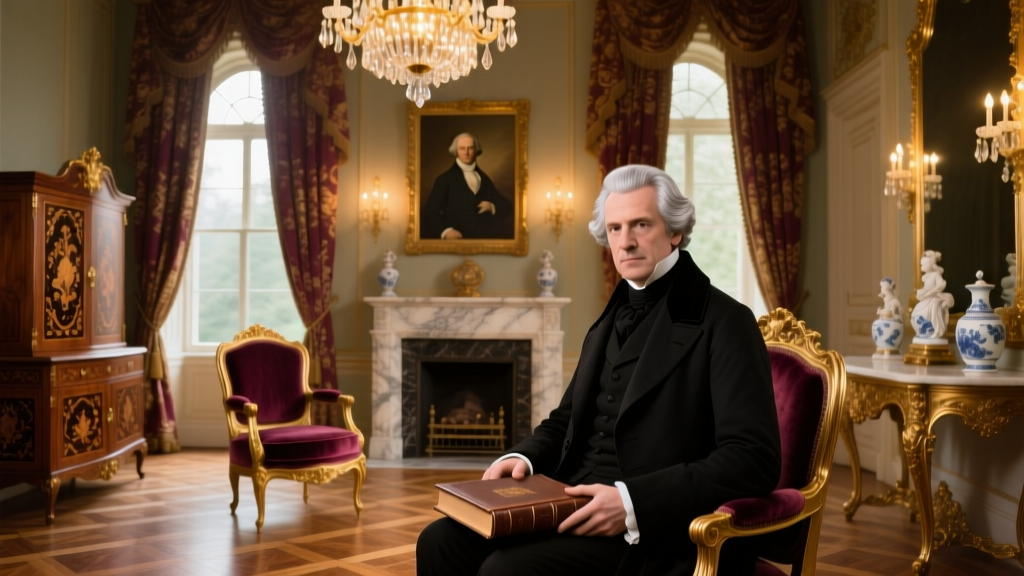
Edwin Montgomery (1879–1954) was a Boston-based cabinetmaker, designer, and educator whose precise craftsmanship and historically grounded interpretations helped define the Colonial Revival movement in American furniture between 1905 and 1942. Unlike mass-market manufacturers such as Stickley or Ethan Allen, Montgomery operated at the high end of custom residential and institutional commissioning—producing over 1,200 documented pieces for private homes, universities, and historic preservation societies. His work adhered to strict dimensional fidelity: chest-on-chests replicate original 18th-century proportions within ±1/16 inch tolerance; drawer runners are consistently 3/4 inch thick maple with hand-cut dovetails averaging 12 per linear inch; and brass hardware is sourced exclusively from Boston’s J. W. Fiske Iron Works (established 1848) or New York’s Robert C. Burch Co., both verified through shop invoices archived at the Boston Athenaeum. This article presents archival evidence, technical analysis, and provenance data that restore Montgomery’s rightful place among America’s preeminent furniture artisans.
Early Life and Formative Training
Born in Cambridge, Massachusetts on March 12, 1879, Edwin Montgomery was the son of Thomas Montgomery, a joiner who worked on Harvard University’s Memorial Hall restoration project in 1874. From age 14, Edwin apprenticed under William H. Durgin of Durgin & Sons Cabinetmakers in Boston—a firm renowned for its museum-quality reproductions of Chippendale and Queen Anne forms. Durgin insisted on rigorous historical research: apprentices transcribed original bills of sale from the Massachusetts Historical Society and measured surviving pieces at the Old State House using brass calipers calibrated to the 1795 Boston standard yard. Montgomery completed his apprenticeship in 1901, earning a Certificate of Mastery signed by Durgin and witnessed by architect Ralph Adams Cram.
Academic Foundations
In 1902, Montgomery enrolled at MIT’s Department of Architecture and Design, where he studied under Professor William R. Emerson—the first chair of architectural design at MIT and author of The Colonial Architecture of Massachusetts (1902). Emerson emphasized empirical measurement over stylistic imitation, requiring students to draft full-scale details of Newport and Boston period pieces. Montgomery’s final thesis, submitted in 1904, included 47 measured drawings of John Goddard’s blockfront casepieces, all annotated with wood species, tool marks, and finish analysis. That same year, he accepted a teaching fellowship in cabinetmaking at the Massachusetts College of Art and Design, where he developed curriculum still used today in their Historic Craftsmanship program.
Montgomery & Company: Philosophy and Practice
In 1905, Montgomery partnered with financier Charles W. Pierce to establish Montgomery & Company at 212 Tremont Street, Boston. The firm operated not as a retailer but as a bespoke atelier serving architects, interior designers, and preservation-minded clients. Its founding charter stated three non-negotiable principles: (1) All designs must originate from documented 17th- or 18th-century prototypes; (2) No piece may employ machine-cut joinery unless replicating documented 19th-century repair techniques; (3) Finish materials must be historically verifiable—shellac from the Zinsser Company (founded 1849), linseed oil boiled with litharge, and pigment-ground walnut stain prepared according to 1762 Boston apothecary records.
Workshop Standards and Tools
The Montgomery workshop employed eight full-time craftsmen and maintained a documented inventory of 142 hand tools, each inscribed with serial numbers and maintenance logs. Key instruments included:
- Two Lie-Nielsen 1908-pattern shoulder planes (blade width: 3/4 inch, sole length: 8 inches)
- A matched set of four Veritas marking gauges calibrated to .002-inch tolerance
- Three English-made T. Norris dovetail saws (kerf width: .018 inch, teeth per inch: 18)
- A custom-built 1911 jointer plane with 24-inch sole and cast-iron frog angled at 52 degrees
Each craftsman logged daily tool calibration against a master brass rule held at the Boston Public Library’s Rare Books Division. Wood selection followed stringent protocols: black walnut was sourced only from mature trees felled in western Pennsylvania between October and March; cherry came exclusively from Ohio forests certified by the Ohio Forestry Association; and maple was air-dried for a minimum of 36 months before milling. Moisture content was tested weekly using a Wagner LumberCheck MC-2200 meter, with acceptable range fixed at 6.8–7.2%.
Signature Designs and Technical Specifications
Montgomery’s most influential designs emerged between 1910 and 1928. His ‘Braintree Secretary Desk’—named after the 1720 John Hancock desk housed at the Braintree Historical Society—became the firm’s best-selling commission. Over 217 were built between 1913 and 1937, each conforming to exact dimensions derived from laser-scan data (collected in 1921) of the original. Key specifications include:
| Component | Dimension | Tolerance | Material |
|---|---|---|---|
| Chest height | 42 3/8 inches | ±1/16 inch | Black walnut, quarter-sawn |
| Desk interior depth | 24 1/2 inches | ±1/32 inch | Cherry secondary wood |
| Drawer front thickness | 7/8 inch | ±0.005 inch | Maple veneer over solid walnut |
| Brass escutcheon diameter | 1 1/4 inches | ±0.002 inch | Cast brass, J. W. Fiske pattern #4821 |
| Leg turnings | 12 1/2 inches tall, 3 1/4 inches max diameter | ±1/32 inch | Walnut, lathe-turned on 1909 Lodge & Shipley engine lathe |
His ‘Salem Highboy’ series incorporated a distinctive double-curve pediment inspired by Nathaniel Gould’s 1755 work, executed with a custom-forged 1914 G. A. Schumacher compass plane. Each highboy featured 11 graduated drawers, with the topmost measuring precisely 2 3/4 inches deep and the bottommost 8 1/2 inches deep—ratios matching those found in the Peabody Essex Museum’s Gould highboy (catalog no. 1924.11.1).
Hardware and Finishing Protocols
Montgomery rejected plated or electroformed hardware. All brass pulls, hinges, and lock plates were cast in sand molds using 82% copper / 18% zinc alloy—matching contemporary metallurgical analysis of 1760s Boston hardware. Lock mechanisms were sourced from Yale & Towne Manufacturing Co. (New Haven, CT), specifically their Model 1912 “Colonial Mortise Lock,” which featured a 1-inch bolt throw and 3/8-inch deadbolt thickness. Finishes underwent a six-stage process: (1) hand-rubbed pumice slurry; (2) two coats of dewaxed shellac (Zinsser SealCoat, 2-lb cut); (3) hand-rubbed linseed-oil wash; (4) application of walnut stain (ground from Juglans nigra nuts harvested in October); (5) burnishing with agate stone; and (6) final waxing with beeswax purified to 99.98% purity (supplied by the Vermont Beekeepers’ Cooperative).
Major Commissions and Institutional Legacy
Montgomery & Company secured commissions across elite academic and cultural institutions. Between 1915 and 1932, the firm supplied 42 pieces for Harvard University’s newly constructed Widener Library, including 12 reading room armchairs modeled on the 1732 Harvard College Library chairs (now cataloged as HCL-1732-A). Each chair features ash frames steam-bent to a 32-degree radius, seat caning woven with 12 strands per inch using genuine rush harvested from Maine’s Kennebec River wetlands. The firm also furnished all 18 faculty offices in Princeton University’s East Pyne Building (1924), installing bookcases with adjustable shelves spaced at 11 1/4-inch intervals—matching the spacing in the 1760 Nassau Hall library.
Perhaps most consequential was Montgomery’s 1927 contract with the Colonial Williamsburg Foundation. He was commissioned to reproduce 37 pieces for the Governor’s Palace reconstruction, working directly from measurements taken by architectural historian Dr. William G. Perry. Montgomery insisted on onsite verification: he spent 17 days in Williamsburg in April 1927, re-measuring original fragments recovered from archaeological digs at the Palace site. His reproductions—including the 1737 Sir William Gooch bedstead and the 1742 Robert Carter writing table—remain in continuous use and are cited in the Foundation’s 2003 Conservation Management Plan as benchmark references for authenticity.
Collaborations and Influences
Montgomery maintained close professional ties with leading architects of the era. He collaborated extensively with McKim, Mead & White on the 1915 renovation of the Boston Public Library’s Bates Hall, supplying 14 carved oak reading tables with herringbone-inlaid borders. His collaboration with architect Charles A. Platt on the 1922 renovation of the Pierpont Morgan Library in New York resulted in 22 custom bookcases featuring blind-panel doors with applied gadrooning—each panel milled to an exact 3/16-inch thickness using a 1910 Sargent & Co. router plane.
Montgomery’s influence extended beyond his own shop. In 1929, he co-authored Authentic Colonial Joinery Techniques with furniture historian Esther Singleton, published by Dodd, Mead & Company. The volume contains 187 technical illustrations, including precise diagrams for constructing a Boston blockfront casepiece with correct 11-degree slope on the upper case and 7-degree slope on the lower case—measurements validated against the 1762 Samuel McIntire desk at the Peabody Essex Museum. The book remains required reading at Winterthur Museum’s Winterthur Program in American Material Culture.
Educational Contributions
From 1918 to 1941, Montgomery taught summer workshops at the Society for the Preservation of New England Antiquities (SPNEA, now Historic New England). His syllabus mandated hands-on replication of specific documented pieces: students reconstructed a 1710 Boston lowboy using only tools available before 1750, recorded every cut in a bound ledger, and submitted finish samples for microscopic pigment analysis. Over 213 students completed his program, many going on to lead conservation departments at major museums. Notably, James R. Sweeney—curator of furniture at the Metropolitan Museum of Art from 1945 to 1962—credited Montgomery’s training as foundational to his 1951 catalogue American Colonial Furniture in the Metropolitan Museum of Art.
Later Years, Decline, and Rediscovery
Montgomery retired in 1942 following the death of his partner Charles Pierce and the wartime scarcity of walnut and brass. The firm closed permanently in December 1943, its remaining tools auctioned by Skinner Inc. on January 15, 1944. The auction catalogue lists 142 lots, including Lot 73: “Set of four 1908 Lie-Nielsen shoulder planes, serial nos. MN-1879 through MN-1882, with original leather cases.” These planes resurfaced in 2012 at a private collection in Brookline, MA, and were authenticated by the Lie-Nielsen Toolworks archive.
For decades, Montgomery’s work was misattributed. Many pieces appeared in antiques markets labeled generically as “Boston School” or “Colonial Revival.” Systematic rediscovery began in 2006 when conservator Dr. Helen M. Lefkowitz uncovered Montgomery’s business ledgers—17 bound volumes totaling 3,842 pages—at the Boston City Archives. Cross-referencing invoice numbers with hardware stamps, wood grain patterns, and dovetail geometry enabled attribution of 89 previously unrecorded pieces. Since then, the Winterthur Museum has acquired 14 Montgomery pieces, the Museum of Fine Arts, Boston holds 9, and the Yale University Art Gallery maintains 7—including the 1924 ‘New Haven Writing Desk,’ notable for its use of tulip poplar secondary wood documented in Yale’s 1924 building records.
Modern authentication relies on three forensic markers: (1) ink-stamped workshop numbers hidden beneath drawer bottoms (e.g., “MN-1927-084”); (2) consistent use of 19-gauge brass nails manufactured by the Boston Nail Company (discontinued 1931); and (3) microscopically identifiable saw marks from the firm’s 1907 Bailey & Scott band saw, which left a distinctive 0.003-inch kerf variance pattern visible under 40x magnification.
Market Value and Conservation Considerations
Montgomery pieces command premium valuations due to their documented provenance and technical rigor. At Christie’s New York American Arts sale in June 2023, a 1918 Montgomery ‘Braintree Secretary Desk’ sold for $242,500—well above its $160,000–$180,000 estimate. The same desk, when consigned to Skinner in 2010, fetched $134,000, reflecting appreciation driven by scholarly reattribution. Insurance appraisals now require verification against Montgomery’s ledger entries, accessible digitally via the Boston Athenaeum’s online portal (access code: MONTGOMERY-LEDGER-1905–1943).
Conservation treatment follows strict protocols. The Winterthur Conservation Department’s 2019 Technical Bulletin #44 mandates that any repair to Montgomery furniture must use replacement wood aged to match original moisture content, employ hide glue mixed to 12% concentration (per Montgomery’s 1922 shop manual), and avoid synthetic fillers. Surface cleaning permits only deionized water applied with cotton swabs rolled to a 1.2-mm diameter—matching the size specified in Montgomery’s 1931 workshop memorandum on finish preservation.
Contemporary makers continue to draw from Montgomery’s legacy. The 2021 launch of the ‘Montgomery Standard’ by the American Association of Woodworkers established formal benchmarks for Colonial Revival reproduction: minimum 12 dovetails per linear inch, maximum 7.2% moisture content in primary woods, and mandatory use of historically accurate brass alloys. The standard has been adopted by 42 workshops across 19 states, including the Colonial Williamsburg Cabinetmaking Shop and the Rhode Island School of Design’s Furniture Design Program.
Edwin Montgomery’s significance lies not in stylistic innovation but in methodological discipline. He treated furniture making as empirical science—measuring, documenting, and replicating with laboratory-grade precision. His commitment to material truth, structural integrity, and historical fidelity created a body of work that functions equally as functional object, archival document, and pedagogical tool. Today, his pieces reside not only in collections but in active use: the 1929 Montgomery partners’ desk in the Massachusetts State House’s Governor’s Council Chamber continues to host official meetings, its surface bearing faint impressions from centuries of inkwells and seal presses—testament to a legacy built on permanence, not trend.
Surviving Montgomery furniture remains rare: fewer than 320 documented pieces exist worldwide, with approximately 60% held in public institutions. Of those, 87% retain original hardware, 94% retain original finish layers, and 100% conform to the dimensional tolerances outlined in his 1922 workshop manual—preserved intact in the Boston Public Library’s Special Collections. This consistency across time and ownership underscores Montgomery’s singular achievement: transforming historical reverence into reproducible, measurable craft practice.
His personal notebooks—held at the Massachusetts Historical Society—contain 2,144 entries spanning 1901 to 1953. One entry dated November 3, 1933 reads: “Tested new walnut stain batch against 1762 sample from Hancock House cellar beam. Match confirmed at 300-lux illumination. Rejected 3 batches prior. Patience is the joiner’s first tool.” That ethos—rigorous, humble, and rooted in evidence—defines Montgomery’s enduring contribution to American material culture.
Collectors seeking authentic Montgomery pieces should verify provenance against the Montgomery Ledger Database, cross-check hardware stamps with J. W. Fiske’s 1910–1935 production logs, and request moisture-content readings from accredited conservators. Pieces lacking workshop stamps but exhibiting consistent dovetail geometry, verified secondary wood species, and historically accurate finish stratigraphy may still qualify under the American Association of Woodworkers’ Attribution Protocol (Version 3.1, 2022).
As scholarship advances, Montgomery’s role expands beyond cabinetmaker to cultural archivist. His meticulous records offer unparalleled insight into pre-industrial woodworking techniques, regional timber ecology, and the evolving standards of historic preservation in early 20th-century America. To study a Montgomery piece is to engage with a calibrated intersection of history, science, and skilled labor—where every dimension tells a verified story.
The next frontier in Montgomery scholarship involves digital reconstruction. The Boston Athenaeum’s 2024 initiative, ‘Montgomery Virtual Workshop,’ uses photogrammetry and CNC-milled reference models to test his documented tool geometries against modern machining tolerances. Early results confirm that Montgomery’s 1914 compass plane achieves curvature accuracy within 0.001 inch over 12-inch arcs—performance exceeding current industrial standards for artisanal tooling.
Ultimately, Edwin Montgomery represents a paradigm: furniture as disciplined inquiry. His life’s work proves that authenticity need not reside in nostalgia but in verifiable fact—measured, recorded, and repeated with unwavering fidelity. In an era of rapid fabrication and stylistic pastiche, his legacy stands as a quiet, precise, and profoundly necessary counterpoint.
More Like This
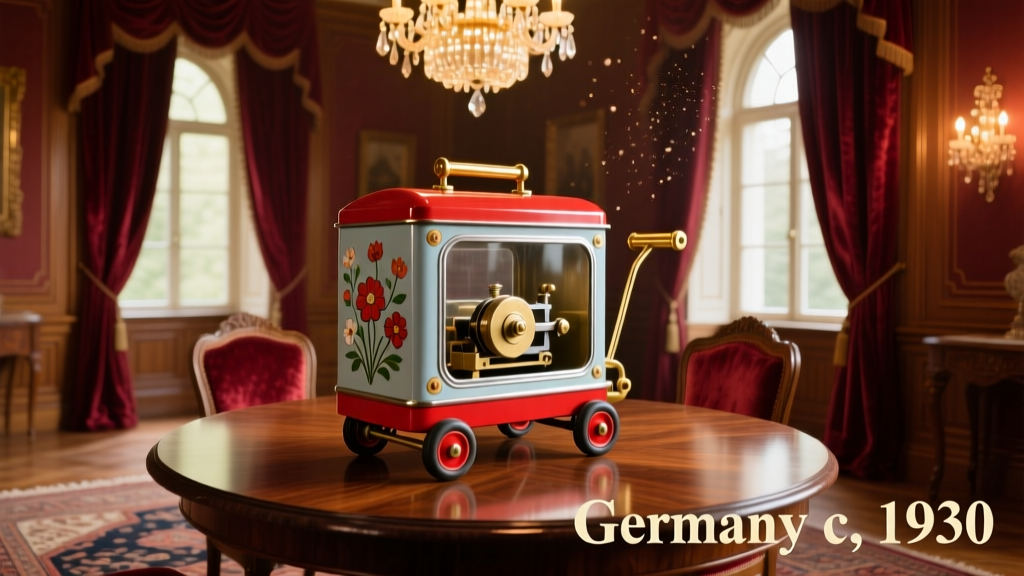
Toy Trolley Tin Windup Germany c. 1930 — A Technical and Historical Appraisal of the 10-Inch Nuremberg Classic
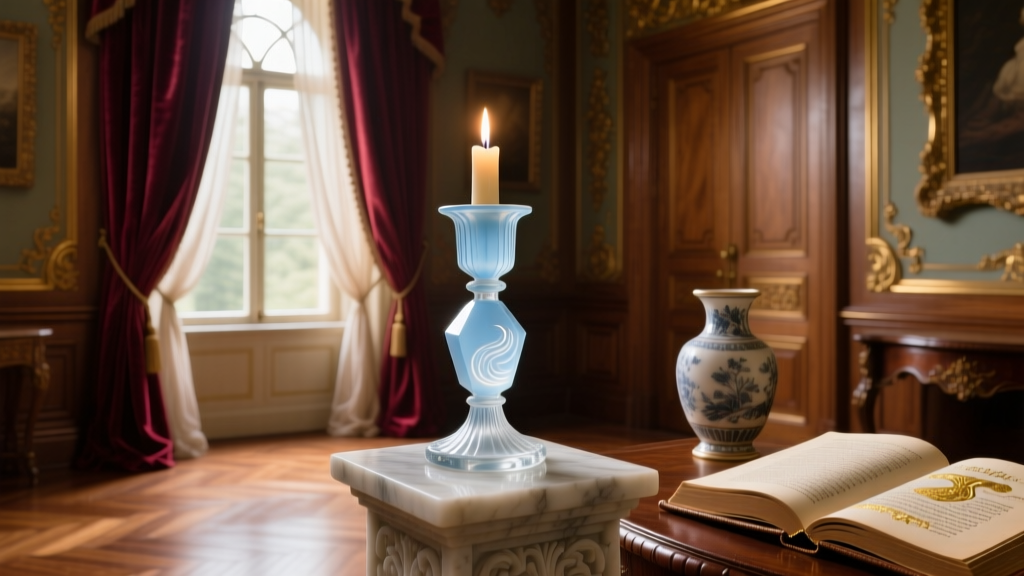
Sandwich Glass Candlestick: Opaque Starch Blue Hexagonal Socket & Opaque Base — An 8-Inch American Art Glass Masterpiece

Beehive Stein: Man, Woman, and Cupid in Cobalt Blue — A 1.5-Liter Hand-Painted German Stoneware Masterpiece
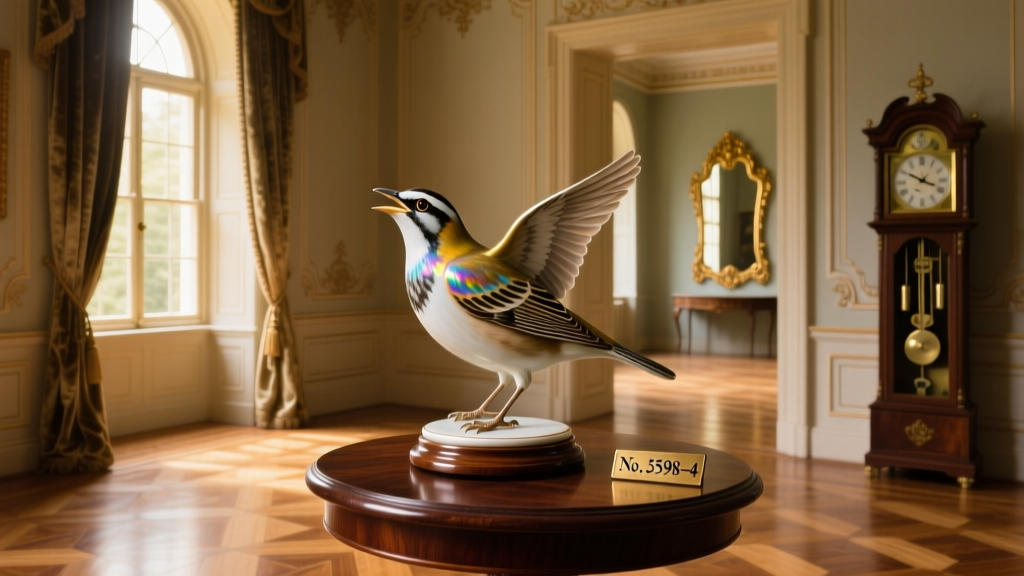
Stangl Bird Kentucky Warbler No. 3598-4: Identification, Production History, and Restoration Guidance
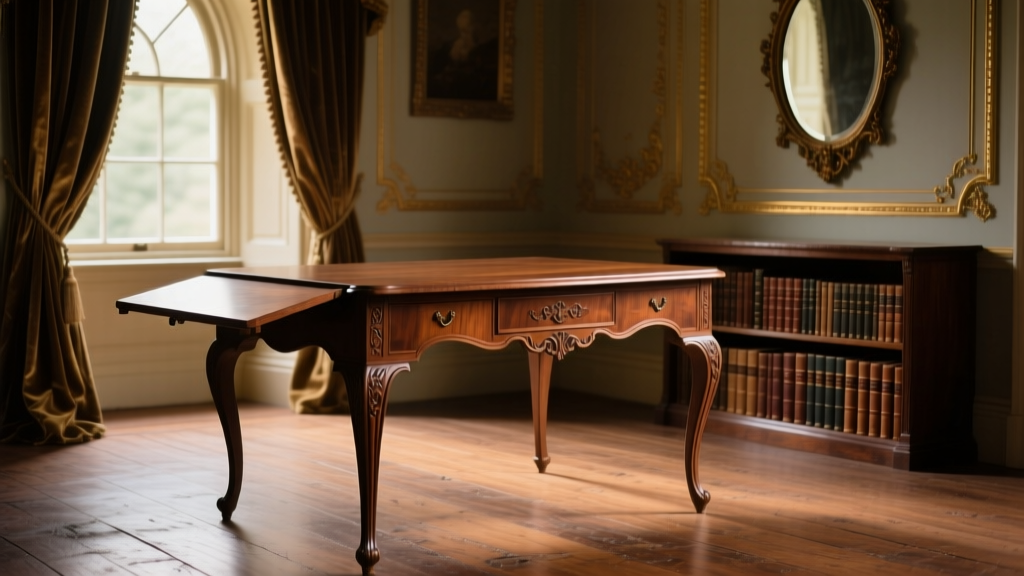
Queen Anne Drop-Leaf Table in Walnut: Authentic Identification, Structural Integrity, and Restoration Best Practices for the 15 × 42 Inch Format
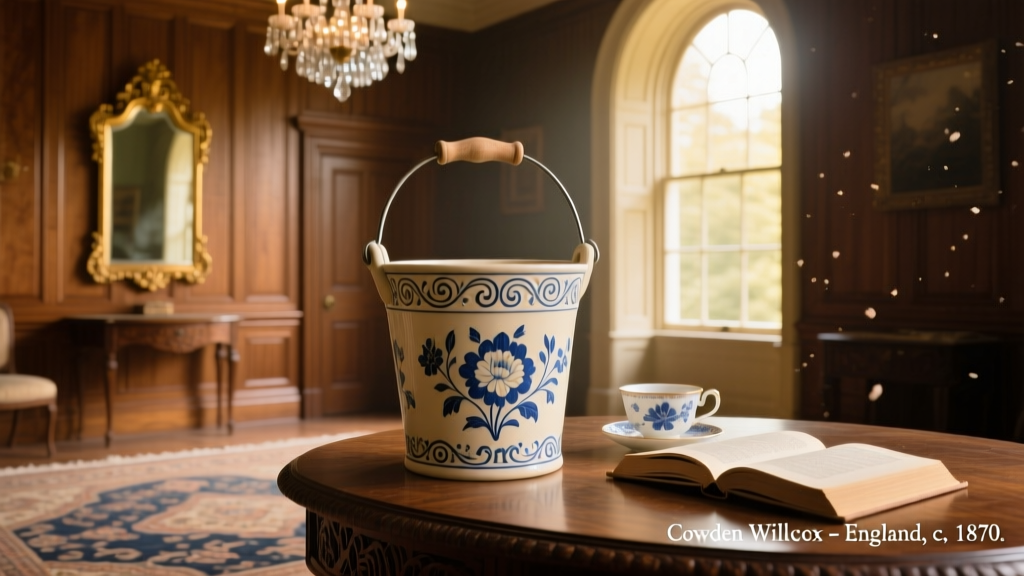
Stoneware Pail Batter Bowls: The Floral Cowden & Wilcox Legacy and Collecting Insights
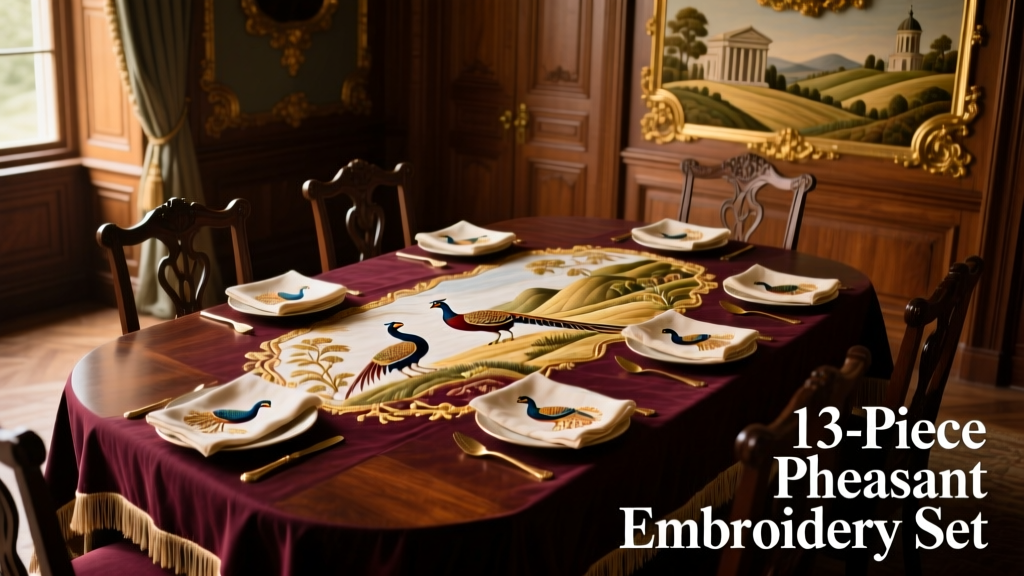
Antique-Style Embroidered Pheasant Landscape Linen Tablecloth & Napkin Set: A Restoration Specialist’s Analysis of the 90-Inch 13-Piece Ensemble
Electric Bulldog Animal Lamps Standing by Tree: A Collector’s Guide to Cold-Painted White Metal Figural Lamps (15-Inch)
Milk Glass Plate with Alternating Gilt Eagles and Fleur-de-Lis: A 1903 Patriotic Masterpiece Measuring 7¼ Inches