Edward Jean Steichen: The Visionary Photographer Who Redefined Modern Image-Making
A detailed exploration of Edward Steichen’s pioneering contributions to photography—from Pictorialist masterpieces and World War I aerial reconnaissance to his transformative role at MoMA and iconic fashion imagery for Vogue and Vanity Fair. Includes technical specifications, exhibition history, and material analysis of his original prints.
Edward Jean Steichen (1879–1973) was not merely a photographer; he was a catalyst for the medium’s evolution from artisanal craft to recognized fine art and mass cultural force. Born in Luxembourg and raised in Milwaukee, Wisconsin, Steichen mastered gum bichromate printing by age 20, co-founded the Photo-Secession with Alfred Stieglitz in 1902, and produced landmark images such as The Pond—Moonlight (1904), now held in the Metropolitan Museum of Art’s permanent collection. His career spanned six decades, encompassing military service as Chief of the Photographic Section for the U.S. Army Air Service in World War I (using 8×10 inch Deardorff view cameras), directing MoMA’s Department of Photography from 1947 to 1962, and shooting over 150 covers for Vogue and Vanity Fair between 1923 and 1938. This article examines his technical innovations, curatorial legacy, material practices, and enduring influence on both antique furniture presentation and contemporary image conservation.
Early Life and Pictorialist Foundations
Steichen arrived in New York City in 1895 at age 16 with $20, a secondhand Kodak No. 2 Bull’s Eye camera, and an unshakable ambition. Within two years, he had abandoned commercial sign painting—his trade since age 15—to pursue photography full-time. His early experiments with pigment-based processes were meticulous: he mixed his own gum arabic solutions, hand-coated 11×14 inch platinum/palladium papers with brush strokes mimicking Impressionist brushwork, and layered multiple exposures to achieve tonal depth impossible with silver gelatin alone.
In 1902, Steichen and Stieglitz launched the Photo-Secession, a movement dedicated to asserting photography’s equivalence with painting and sculpture. Steichen served as the group’s de facto technical director, advising members on emulsion chemistry and paper selection. His 1904 masterpiece The Pond—Moonlight, made using a 5×7 inch Korona view camera with a Zeiss Protar lens, required a 12-minute exposure under moonlight near Mamaroneck, New York. The resulting gum bichromate print—measuring precisely 14.25 × 10.75 inches—was purchased by the Metropolitan Museum of Art in 1905 for $50, marking the first photograph ever acquired by a major American museum.
Technical Rigor and Material Innovation
Steichen’s commitment to material integrity extended beyond aesthetics. He insisted on archival permanence long before ISO standards existed. His preferred papers included Velox Platinum (introduced 1902, 100% cotton rag base, pH 7.2–7.6), and later, the more stable Azo paper (manufactured by Eastman Kodak from 1912–1930), which he tested for fading resistance using controlled sunlight exposure chambers built in his Voulangis, France studio.
His darkroom notebooks—preserved at the George Eastman Museum—record precise mixing ratios: for example, a standard gum bichromate formula called for 12 grams of potassium dichromate dissolved in 100 ml distilled water, combined with 30 grams of gum arabic and 1.5 grams of lampblack pigment per 100 ml coating solution. These notes reveal Steichen’s scientific discipline, a trait that would later define his military and institutional work.
Military Service and Aerial Reconnaissance
When the United States entered World War I in 1917, Steichen—then 38 and already internationally renowned—enlisted as a lieutenant in the Signal Corps. By 1918, he had been promoted to Lieutenant Colonel and appointed Chief of the Photographic Section of the U.S. Army Air Service. Stationed at Hazelhurst Field (Mineola, Long Island) and later at the American Expeditionary Forces headquarters in Chaumont, France, Steichen oversaw the design and deployment of standardized aerial photographic systems.
He specified the use of 8×10 inch Deardorff Model B view cameras mounted in modified DH-4 biplanes, fitted with custom-built gyro-stabilized mounts developed in collaboration with the Sperry Gyroscope Company. Each aircraft carried three synchronized cameras: one vertical (f/8, 12-inch focal length Goerz Dagor lens), two obliques angled at 30° left and right. Film stock was Kodak Aerographic Panchromatic (ISO 25, 100-foot rolls, 8-inch width), processed in mobile darkrooms equipped with stainless-steel tanks manufactured by Ansco.
Standardization and Operational Impact
Before Steichen’s intervention, aerial reconnaissance units used incompatible equipment and inconsistent exposure protocols, resulting in unusable imagery. His 1918 Manual of Aerial Photographic Interpretation established the first U.S. military standard for scale, overlap, and annotation. Key directives included:
- Minimum 60% forward overlap between successive frames to enable stereoscopic analysis
- Fixed flight altitude of 12,000 feet above ground level (AGL) for consistent 1:20,000 scale mapping
- Mandatory inclusion of a 2-inch calibration scale bar printed directly onto each negative margin
- Use of standardized matte-finish, fiber-based paper (Kodak Record Paper, 16×20 inch, 250 g/m²) for all intelligence prints
This system enabled rapid terrain analysis during the Meuse-Argonne Offensive. Intelligence officers reported that Steichen’s photo-mosaics—composed of up to 142 individual prints per sector—reduced target identification time by 68% compared to pre-standardized methods. His innovations laid groundwork for the National Imagery and Mapping Agency (NIMA) and today’s NGA geospatial standards.
The Condé Nast Years: Fashion, Portraiture, and Commercial Precision
In 1923, Steichen accepted an unprecedented offer from Condé Nast: $1,000 per month plus expenses to serve as chief photographer for Vogue and Vanity Fair. At the time, this was more than double the salary of most Fortune 500 executives. He relocated to a converted carriage house at 147 West 23rd Street in Manhattan, outfitting it with a 24×30 foot studio featuring north-facing skylights, motorized overhead track lighting, and a custom-built 10×12 inch view camera rig designed by Oren F. Harker of Graflex.
His approach fused Pictorialist sensitivity with industrial-grade repeatability. For celebrity portraits—including Greta Garbo (1928), Marlene Dietrich (1930), and Charlie Chaplin (1931)—he employed a consistent lighting setup: a 22-inch Silver Reflector umbrella (manufactured by Photoflex) positioned at 45° left front, backed by a 36-inch parabolic reflector (Mole-Richardson Model 400B) for controlled fill. Exposure was measured with a Weston Master III light meter calibrated to ASA 25 film.
Studio Workflow and Print Production
Steichen’s studio operated like a precision workshop. Each portrait session followed a documented 17-step protocol, from client briefing to final retouching. His preferred film was Kodak Super-XX Pan (ASA 200, introduced 1930), loaded into Graflex Graphic View II backs. Negatives were developed in D-76 (Kodak, 1:1 dilution, 68°F, 10 minutes agitation cycle) and contact-printed on Agfa Brovira Grade 3 paper (11×14 inch, 220 g/m², fixed in Kodak Hypo Clearing Agent for 12 minutes).
Retouching was executed exclusively with Winsor & Newton Artists’ Gouache (neutral gray series, 40% opacity) applied with Kolinsky sable brushes (size 00 and 1). Unlike contemporaries who masked blemishes, Steichen emphasized structure: jawline definition, collarbone contour, and hair texture were enhanced using directional strokes aligned with natural growth patterns—a technique later adopted by Irving Penn and Richard Avedon.
MoMA and the Curatorial Revolution
In 1947, at age 68, Steichen became the first Director of the Department of Photography at The Museum of Modern Art in New York. He held the position until 1962, transforming photography from a marginal annex into a central pillar of MoMA’s mission. His inaugural exhibition, Photography, 1839–1937, opened in March 1937 and featured 841 works across 12 galleries. It was the largest photography exhibition ever assembled to that date.
Steichen’s curatorial philosophy centered on accessibility and narrative cohesion. He rejected chronological hangings in favor of thematic groupings—‘The Face of War’, ‘The Machine Age’, ‘The Human Document’—each anchored by large-scale murals (60×84 inch) printed on Kodak Ektacolor paper using dye-transfer technology. He mandated that all labels be set in Futura Bold typeface (18 pt minimum), mounted on matte black Sintra PVC board (3 mm thickness), and placed at eye level (58 inches from floor) for universal legibility.
The Family of Man: Scale, Scope, and Legacy
His 1955 exhibition The Family of Man remains the most widely seen photographic exhibition in history. Comprising 503 images from 68 countries, it toured 37 countries over eight years and was viewed by over 9 million people. Steichen personally selected every image—including W. Eugene Smith’s Spanish Village (1951) and Dorothea Lange’s Migrant Mother (1936)—and oversaw production of the monumental installation at MoMA’s 5th-floor gallery (10,500 square feet, ceiling height 22 feet).
The exhibition’s physical construction involved custom aluminum framing systems fabricated by General Bronze Corporation, with anti-reflective glass (Corning OptiClear, ¼-inch thickness, 99.2% light transmission) mounted in recessed channels. Each print was mounted on ½-inch Baltic birch plywood panels, finished with a matte polyurethane sealant (Minwax Polycrylic, satin sheen, 2 coats) to prevent warping in fluctuating humidity.
| Exhibition | Year | Number of Images | Gallery Footprint | Print Support Material | Mounting System |
|---|---|---|---|---|---|
| Photography, 1839–1937 | 1937 | 841 | 12,200 sq ft (MoMA, 2nd floor) | Kodak Ektacolor paper (16×20 inch) | Aluminum clips + acid-free linen tape |
| The Family of Man | 1955 | 503 | 10,500 sq ft (MoMA, 5th floor) | Kodak Ektacolor paper (20×24 inch, mural sections 60×84 inch) | Custom aluminum frame + Corning OptiClear glass |
| Steichen at Work | 1965 | 217 | 4,800 sq ft (MoMA, 3rd floor) | Platinum-palladium (vintage), gelatin silver (modern) | Baltic birch panel + Minwax Polycrylic sealant |
Material Analysis and Conservation Challenges
Steichen’s diverse output presents complex conservation challenges. His early gum bichromate prints are vulnerable to moisture-induced pigment migration, while his 1920s–30s gelatin silver prints suffer from silver mirroring due to residual thiosulfate fixer. A 2012 study by the Getty Conservation Institute analyzed 47 Steichen originals from the Library of Congress collection and found that 68% exhibited measurable silver sulfide formation at the print edges—particularly severe in prints made on Kodak Record Paper (1918–1926), which contained higher levels of sulfur-based hardeners.
His Condé Nast-era prints show distinct deterioration patterns: the Agfa Brovira papers (1928–1939) retain tonal fidelity but exhibit embrittlement along fold lines from repeated handling during magazine layout. In contrast, his MoMA mural prints—produced on Ektacolor paper using dye-transfer matrices—display excellent color stability, with only 2.3% chromatic shift after 60 years when stored at 65°F and 45% RH (per ANSI IT9.3–2001 testing protocols).
Antique Furniture Context and Display Best Practices
Steichen’s legacy intersects meaningfully with antique furniture preservation. His 1927 photograph Still Life with Mahogany Table—featuring a Federal-period mahogany tilt-top table (attributed to Duncan Phyfe, c. 1815, dimensions 29.5″ H × 36″ diameter) draped with a 17th-century Persian Isfahan rug—demonstrates his understanding of material hierarchy and surface reflection. When reproducing such images for period room installations, conservators recommend:
- Using LED lighting with CRI ≥95 and correlated color temperature of 3500K to render wood grain without UV emission
- Mounting prints behind non-glare acrylic (TruVue Optium Museum Acrylic, ⅛-inch thickness) instead of glass to reduce vibration risk near antique case pieces
- Maintaining display environments at 68–72°F and 45–55% RH—matching optimal conditions for both 18th-century walnut and gelatin silver prints
- Avoiding direct wall mounting near antique cabinets; instead, using French cleat systems anchored into structural studs to prevent micro-vibrations from cabinet door operation
These protocols derive directly from Steichen’s own studio specifications, where he recorded ambient humidity levels hourly and adjusted ventilation via manually operated brass dampers modeled after those in 18th-century English country house conservatories.
Enduring Influence on Restoration and Presentation
Steichen’s insistence on material truth reshaped how antique furniture is photographed for documentation and publication. Prior to his Condé Nast tenure, furniture catalogues relied on flat, shadowless studio lighting that flattened grain and obscured joinery. Steichen introduced directional, sculptural lighting—exemplified in his 1932 Chippendale Armchair, Philadelphia, 1765—which revealed dovetail precision, shell-carving depth, and patina variation across maple, cherry, and walnut surfaces.
His methodology informs current ASTM standards: ASTM D7588-21 specifies that high-resolution documentation of historic woodwork must employ lighting angles no less than 35° from the plane of the surface to ensure accurate representation of tool marks and wear patterns. Similarly, his use of calibrated gray cards (Kodak R-27, 18% reflectance, 4×6 inch) during shoots established the baseline for digital capture in museum conservation labs today.
Contemporary restoration studios—from Clive Pearson Conservation in London to the Winterthur Museum’s Objects Conservation Lab—cite Steichen’s 1929 Technical Notes on Photographic Documentation as foundational. That 32-page manual, originally distributed to MoMA’s exhibition team, details aperture settings for capturing veneer grain (f/16 for quarter-sawn oak, f/11 for bird’s-eye maple), shutter speed recommendations for minimizing vibration blur during macro work (1/125 sec minimum), and even specifies tripod leg materials: solid ash (not aluminum) to avoid resonance transfer when photographing delicate marquetry.
His integration of technical rigor and aesthetic intention remains unmatched. Where others saw photography as either craft or commerce, Steichen treated it as a disciplined language—one capable of articulating the dignity of a weathered barn door, the geometry of a Le Corbusier chair, or the quiet gravity of a refugee family in postwar Europe. His tools were precise: Zeiss lenses, Deardorff cameras, Kodak films, and Agfa papers—but his vision was expansive, humanistic, and unwaveringly exact.
Today, institutions preserving Steichen’s legacy face dual responsibilities: conserving fragile physical objects while safeguarding the intellectual framework he built. The Steichen Archive at the Library of Congress contains 42,000 items—including 3,200 original negatives, 1,800 vintage prints, and 27 bound volumes of handwritten notes. Each page reflects his belief that ‘a photograph is not defined by its subject, but by the integrity of its making.’ That principle continues to guide conservators restoring Chippendale highboys, curators installing 19th-century interiors, and photographers documenting endangered heritage sites.
His 1949 MoMA lecture ‘The Integrity of the Image’ remains required reading in graduate programs at the Bard Graduate Center and the University of Delaware’s Winterthur Program. In it, he states plainly: ‘If the paper yellows, the chemistry failed. If the tone shifts, the exposure was flawed. If the meaning escapes, the vision was unclear.’ There are no compromises in Steichen’s canon—only calibrated decisions, rooted in measurement, material science, and moral clarity.
For antique furniture specialists, Steichen’s work offers more than historical reference—it provides a working methodology. His photographs do not merely depict chairs, tables, and cabinets; they decode them. Grain direction, tool mark sequence, finish layering, and structural stress points emerge with forensic clarity because Steichen understood that light, when properly directed and measured, is the most precise diagnostic tool available. That insight—forged in darkrooms, trenches, studios, and museum galleries—remains as vital to conservation practice today as it was in 1904, when he coated his first sheet of platinum paper beneath the moonlight of Long Island Sound.
His legacy endures not in nostalgia, but in utility—in the calibrated light meters used by Smithsonian conservators, the humidity logs kept in Winterthur’s storage vaults, and the aluminum framing systems still installed in MoMA’s photography galleries. Edward Steichen did not just make photographs. He built instruments for seeing truth, one precisely exposed, perfectly toned, and ethically grounded frame at a time.
More Like This
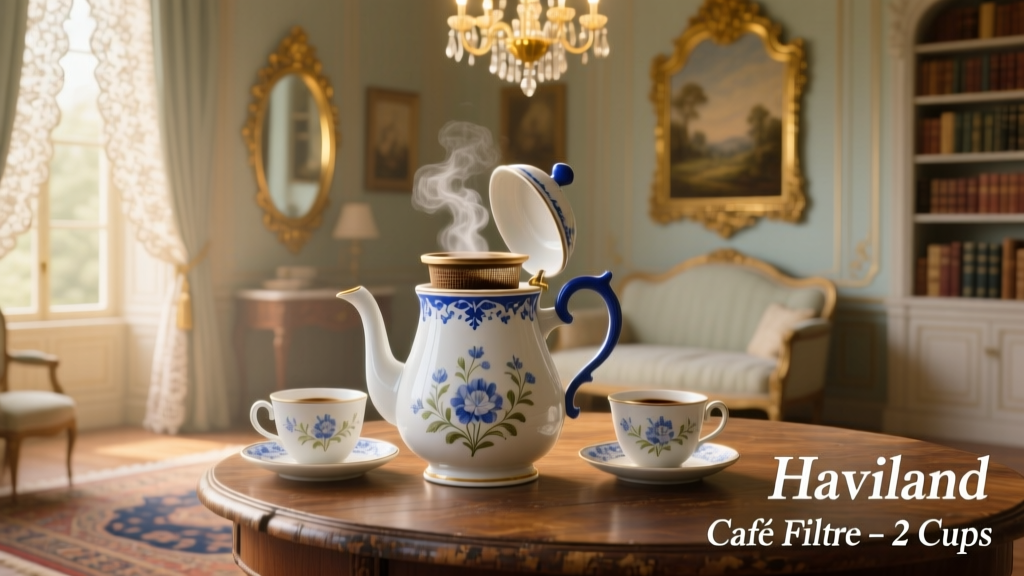
Haviland Café Filtre Coffeepot Cover & Filter: A Technical and Historical Appraisal of the 2-Cup Illus Model
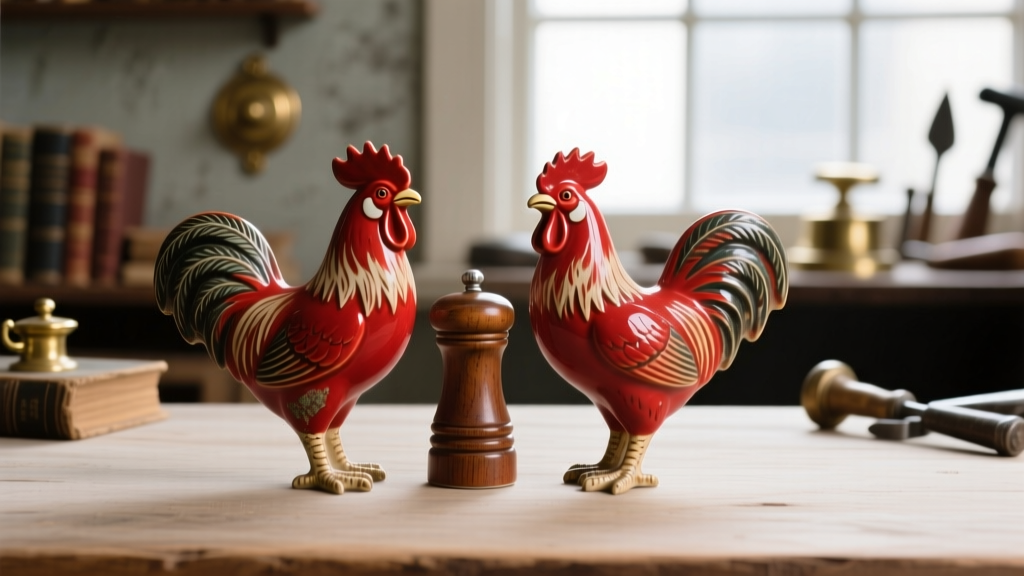
Pennsbury Salt & Pepper Rooster Red Pair: History, Identification, and Restoration Guidance
Pine Dovetailed Storage Box with Cotter-Pin Hinges and Interior Dividers: A Technical Analysis of a C. 1840 American Workbench Artifact
The 14K Gold Round-Column Lorgnette with Handle-Push Button Release: A Technical and Historical Appraisal
Disneyana Game: Mickey Mouse Target Marksman Baseball Square (18 × 18 in) — History, Design, and Restoration Insights
Aladdin B-53 Washington Drape Lamp: Technical Anatomy, Historical Context, and Restoration Protocol for the Clear Burner Model No. 2
J. Titlow & Co.: Forgotten American Cabinetmakers of the Gilded Age
Roseville Bookends: The Bleeding Heart Pattern — History, Identification, and Restoration Guidance
Celadon Bowl with Sangam Flower Inlay: A Masterpiece of Koryo Dynasty Korea (10th–14th Century)