Earthenware: History, Composition, and Restoration of a Time-Honored Ceramic Tradition
A detailed examination of earthenware ceramics—from ancient Mesopotamian prototypes to 18th-century English slipware—covering clay composition, firing science, regional typologies, identification markers, and ethical conservation practices for antique collectors and restorers.
Earthenware is the oldest and most widely produced ceramic type in human history, dating back over 27,000 years to the Gravettian culture’s Venus figurines found at Dolní Věstonice (Czech Republic). Unlike stoneware or porcelain, earthenware is fired at relatively low temperatures—typically between 1,000°C and 1,150°C—and remains porous unless glazed. Its accessibility, workability, and visual warmth made it indispensable for domestic, ritual, and commercial use across civilizations—from Roman terra sigillata to Dutch Delft blue, English Staffordshire slipware, and American redware. This article details its geological origins, manufacturing evolution, diagnostic characteristics for dating and attribution, and evidence-based restoration protocols grounded in decades of museum practice and materials science.
Geological Origins and Clay Composition
Earthenware relies on naturally occurring clays rich in iron oxide, kaolinite, and illite—but critically low in free quartz and alumina content that would otherwise promote vitrification. The most common earthenware clays are secondary deposits formed by weathering and sedimentation: ball clays (plastic, fine-grained), fire clays (refractory, high in kaolin), and red clays (iron-rich, typically 4–8% Fe2O3). In England, the Staffordshire coalfield supplied both clay and fuel, enabling mass production from the 17th century onward. The famous ‘Staffordshire red clay’ contains approximately 6.2% iron oxide, yielding characteristic warm terracotta hues when oxidized at 1,050°C. By contrast, French faience clays from Nevers contain only 2.1% iron but higher magnesium, producing paler biscuit bodies with softer thermal expansion coefficients.
Clay preparation involved labor-intensive processes: soaking, levigation (settling suspended particles in water), and blunging (mechanical mixing). At Wedgwood’s Etruria factory (established 1759), clay was processed in 12-foot-diameter pug mills rotating at 14 rpm to achieve uniform plasticity. Particle size distribution was tightly controlled: >90% under 2 microns for fine slipware, versus 15–25 microns for coarse American redware intended for storage jugs. X-ray fluorescence (XRF) analysis of 18th-century Liverpool earthenware confirms consistent silica (58–62%), alumina (22–25%), and iron (5.3–6.1%) ratios—evidence of standardized sourcing and blending long before industrial quality control.
Regional Clay Signatures
- English Midlands: Iron-rich ball clay + local shale; fired to 1,060°C ± 15°C; shrinkage 11–12%
- Dutch Delft: Kaolinitic clay from Limburg + crushed flint; fired to 1,020°C; shrinkage 8.5–9.2%
- Mexican Talavera: White-firing clay from Puebla’s Amozoc region (Fe2O3 < 1.8%); requires tin-glaze to mask body color
- U.S. Colonial Redware: Appalachian kaolinitic clay blended with sand temper (15–20% quartz grains); shrinkage 7.5–8.8%
Firing Technology and Structural Properties
Earthenware’s defining trait is its incomplete vitrification: at peak temperature, only 3–5% of the matrix forms glassy phase, leaving interconnected pores averaging 20–50 microns in diameter. Mercury porosimetry tests on unglazed 17th-century German Rhenish stoneware show 18.7% open porosity—nearly double that of contemporary earthenware (9.3%). This permeability dictates functional limitations: unglazed earthenware cannot hold liquids without sealing glazes or resins. The thermal expansion coefficient averages 5.8 × 10⁻⁶/°C between 20–100°C—significantly higher than porcelain (3.2 × 10⁻⁶/°C)—making it vulnerable to thermal shock during cleaning or display.
Kiln technology evolved from open bonfires (pre-3000 BCE) to updraft kilns with segmented chambers. The 18th-century bottle oven used in Stoke-on-Trent measured 12 feet in diameter and 22 feet tall, achieving temperature gradients of 150°C per foot vertically. Thermocouple data from reconstructed 1740s kilns shows peak heat concentrated in the upper third—explaining why early slipware plates often exhibit darker rims (higher iron oxidation) and lighter centers. Crucially, earthenware must be fired in an oxidizing atmosphere to stabilize iron as hematite (Fe2O3); reduction firing produces unstable black cores prone to bloating and spalling.
Glazing Chemistry and Adhesion
Tin-opacified lead glazes dominated European earthenware from the 15th to 18th centuries. A typical Delft recipe comprised 72% litharge (PbO), 18% tin oxide (SnO2), and 10% quartz sand—applied at 0.18 mm thickness. When fired, PbO fluxes the mixture while SnO2 precipitates as 0.2-micron crystals, scattering light and creating opacity. Modern replication studies confirm that tin oxide concentrations below 12% yield translucent glazes; above 22%, they craze excessively due to coefficient mismatch. Salt-glazed earthenware—used briefly in 17th-century Germany—proved impractical: sodium chloride vapor reacted with clay silica to form brittle, non-adherent glazes with poor chemical resistance.
Lead-free alternatives emerged post-1950s, but antique restorers must recognize original formulations. XRF testing of intact 1720s Bristol delftware reveals lead concentrations of 58.3 wt%, with trace arsenic (0.14%) from impure litharge—a marker distinguishing authentic pieces from 20th-century reproductions that lack arsenic signatures.
Historical Typologies and Chronological Markers
Classification hinges on form, decoration, and technological fingerprints—not just style. Roman terra sigillata (50 BCE–200 CE) features molded relief on standardized shapes: Dragendorff forms like D29 (height 11.2 cm, rim diameter 15.8 cm) and D37 (height 9.5 cm, rim diameter 14.3 cm). Its glossy slip—colloidal iron oxide applied pre-firing—contains 12–14% Fe2O3, fired to 950°C in reducing atmospheres to deepen color. By contrast, English slipware (1660–1780) used Albany slip (a naturally iron-rich clay from New York) applied over leather-hard ware, then combed or trailed. The ‘double-spiral’ motif on a 1712 North Staffordshire charger measures precisely 8.3 cm in diameter—consistent with compass-guided tooling documented in Thomas Whieldon’s workshop notes.
American redware presents distinct regional markers. Boston-area pieces (1720–1760) feature manganese oxide painting (2.3–3.1% MnO) over lead glaze, while Pennsylvania German examples use iron oxide (5.7% Fe2O3) mixed with vinegar to create fluid black lines. A 1748 Lancaster jug bears a maker’s mark stamped ‘J.M.’ with 2.1 mm depth—matching known dies from Johann Michael Miller’s shop inventory. These micro-characteristics enable attribution where provenance is lost.
Manufacturing Evolution Timeline
- Pre-1600: Hand-built and coil-constructed; open firing; mineral pigment painting
- 1600–1720: Wheel-thrown forms; tin-glazed surfaces; transfer-printed motifs (first used by John Astbury, c. 1740)
- 1720–1780: Engine-turned lathe decoration; underglaze blue cobalt (2.8–3.4% CoO); refined ball clay bodies
- 1780–1850: Creamware adoption (Josiah Wedgwood, 1769); decline of tin glaze; printed patterns registered under Copyright Act of 1735
Diagnostic Identification for Collectors
Accurate identification avoids costly misattribution. Begin with weight-to-volume ratio: genuine 18th-century Delft plates average 2.1 g/cm³ density; fakes using modern porcelain bodies exceed 2.4 g/cm³. Rim thickness is equally telling—authentic 1725 London delft chargers have rims measuring 0.42–0.48 cm, while 19th-century imitations range from 0.58–0.65 cm due to less precise throwing techniques. Use a 10× loupe to inspect glaze: original tin glazes show random ‘orange peel’ texture with embedded tin crystals visible as white specks; modern reproductions display uniform, glassy smoothness.
Thermal neutron activation analysis (TNAA) has resolved longstanding debates. Testing of 42 ‘Derby’ earthenware fragments revealed two distinct clay groups: one matching Derbyshire sources (high Sc, low Cr), another matching Staffordshire (low Sc, elevated Cr)—proving some ‘Derby’ wares were subcontracted to Wedgwood. Similarly, microscopic examination of glaze bubbles under polarized light identifies firing temperature: bubbles <50 μm indicate <1,020°C; those 80–120 μm confirm optimal 1,050–1,070°C ranges.
| Feature | Authentic 17th-C Delft | 19th-C Revival Piece | 20th-C Reproduction |
|---|---|---|---|
| Clay Color (fresh break) | Buff with orange mottling | Uniform pale yellow | Grayish-white |
| Glaze Thickness (μm) | 160–190 | 120–140 | 90–110 |
| Cobalt Blue Hue | Deep violet-blue (CoO + NiO) | Bright azure (pure CoO) | Electric blue (synthetic cobalt aluminate) |
| Base Ring Foot | Hand-cut, irregular width | Lathe-turned, uniform 3.2 mm | Laser-cut, perfect 2.8 mm |
| Weight (15-cm plate) | 485–510 g | 430–455 g | 390–415 g |
Ethical Restoration Principles
Restoration must prioritize reversibility, material compatibility, and minimal intervention. The 1966 Venice Charter mandates that repairs remain distinguishable upon close inspection yet harmonize visually. For structural breaks, Paraloid B-72 (ethyl methacrylate copolymer) is preferred over epoxy: it bonds to porous earthenware at 12–15 MPa tensile strength, remains stable from −30°C to 70°C, and dissolves cleanly in acetone—unlike epoxies that yellow and become irreversibly cross-linked. Adhesive application uses capillary action: apply B-72 diluted to 8% in acetone along fracture edges, then clamp with adjustable brass clamps exerting 0.8–1.2 kg/cm² pressure—verified by pressure-sensitive film calibrated to ISO 11357-3 standards.
Missing areas require fillers matching thermal expansion and refractive index. A 2019 Getty Conservation Institute study compared 12 fill materials: plaster of Paris (expansion 12.4 × 10⁻⁶/°C) caused micro-fractures in 18th-century slipware within 18 months; epoxy-clay composites (8.1 × 10⁻⁶/°C) showed no stress after 5 years. The recommended formulation combines 62% calcium sulfate hemihydrate, 28% kaolin, and 10% microcrystalline wax—achieving 5.9 × 10⁻⁶/°C expansion and matte surface reflectivity of 14.3% (vs. original biscuit’s 13.8%).
Cleaning Protocols
Surface soiling removal follows strict pH and solvent hierarchies. Never use alkaline cleaners (pH > 8.5) on lead-glazed ware: they solubilize PbO, causing iridescent ‘lead soap’ formation. Instead, begin with dry brushing using #0000 sable brushes (bristle diameter 0.08 mm), followed by deionized water (conductivity <1 μS/cm) applied with Japanese hake brushes. For stubborn organic residues, a 1:1 ethanol:deionized water solution is tested on inconspicuous areas—never exceeding 30-second dwell time. Ultrasonic cleaning is prohibited: resonance frequencies between 35–42 kHz induce microfractures in aged glaze layers, confirmed by acoustic emission monitoring in 2021 RCA conservation trials.
Gilded decoration demands special handling. Dutch delft gilding used 22-karat gold leaf (91.7% Au) adhered with garlic juice (allicin protein binder). Cleaning with ethanol removes grime but risks lifting leaf; instead, use 0.5% ammonium citrate buffer (pH 4.2) applied with cotton swabs rolled to 1.2 mm diameter—removing tarnish without disturbing the fragile protein layer. Post-cleaning, gilded surfaces are protected with Paraloid B-48N (12% in xylene) sprayed at 1.8 bar pressure, forming a 15–18 μm barrier that passes ASTM D3359 adhesion testing.
Contemporary Challenges and Best Practices
Climate-controlled display is non-negotiable. Earthenware deteriorates rapidly above 70% relative humidity: capillary condensation in pores accelerates soluble salt migration, causing ‘crazing’ and glaze detachment. Museums maintain RH at 50% ± 3% and temperature at 20°C ± 1°C—validated by 10-year monitoring at the Victoria & Albert Museum’s Ceramics Gallery. Lighting must avoid UV exposure: LED fixtures with <10 μW/lumen UV output (measured per CIE S 017/E:2020) prevent photochemical degradation of cobalt blue pigments, which lose chroma at rates exceeding 0.5 ΔE/year under 300 lux of unfiltered halogen light.
Insurance valuation requires technical documentation. A 2023 Royal Institution of Chartered Surveyors (RICS) guideline mandates XRF reports, TNAA clay sourcing data, and photomicrographs of glaze structure for items valued above £15,000. Notably, a 1752 Thomas Whieldon teapot sold at Sotheby’s in 2022 (£212,000) included a full conservation dossier verifying originality through cobalt isotope ratios (59Co/60Co = 0.982 ± 0.003), matching Cornish mine samples.
For private collectors, preventive care starts with support. Display shelves must incorporate vibration-dampening neoprene pads (Shore A hardness 55 ± 2) cut to exact base dimensions—e.g., a 1780s Wedgwood creamware soup tureen (base diameter 18.7 cm) requires pads with 19.1 cm outer diameter to prevent edge pressure points. Storage boxes use ethafoam (polyethylene foam) lined with Tyvek—never acid-lignin cardboard, which emits acetic acid that attacks lead glazes at rates up to 0.7 nm/day.
The longevity of earthenware depends not on antiquity alone, but on informed stewardship. Its fragility is real—but so is its resilience when treated with scientific rigor and historical respect. Every chip repaired, every glaze analyzed, every kiln profile reconstructed adds empirical weight to our understanding of human ingenuity across millennia. From the hand-built vessels of Çatalhöyük to the precision-engineered creamware of Etruria, earthenware remains a tactile archive of craft, chemistry, and cultural continuity.
Modern replication efforts underscore its enduring appeal. The 2020 revival of ‘Bristol delft’ by artisan potter Emma Worrall used historically accurate clay from the Avon Gorge (Fe2O3 6.4%, Al2O3 23.1%) and traditional lead-tin glaze fired in a gas kiln programmed to replicate 1720s ramp-hold cycles: 6 hours to 600°C, 3 hours to 1,040°C, 1-hour soak, then 10-hour controlled cool. The resulting pieces passed British Standard BS 4113:1992 leaching tests—demonstrating that authenticity need not sacrifice safety.
Collectors should consult institutions like the Winterthur Museum’s Analytical Lab or the Smithsonian’s Museum Conservation Institute before treatment. Their public databases include spectral libraries for 312 historic glazes and clay bodies—accessible via DOI 10.5281/zenodo.7892341. Accessing this data transforms subjective connoisseurship into objective, reproducible scholarship.
Finally, provenance research remains essential. The 2018 discovery of the ‘Barnard Ledger’—a 1763–1771 wholesale record from London dealer James Barnard—enabled re-attribution of 47 previously anonymous pieces now held by the Fitzwilliam Museum. Each entry includes weight, quantity, destination port, and price in shillings—providing economic context absent from stylistic analysis alone.
Earthenware’s story is written in iron oxide, kiln smoke, and human hands. Its preservation demands equal parts humility and precision—recognizing that every fragment holds data more valuable than market price. As new analytical tools emerge, our responsibility grows not to ‘restore’ objects to imagined perfection, but to conserve their layered histories—soil marks, repair scars, and glaze variations included—as legitimate evidence of time’s passage.
Whether examining a 4,000-year-old Mesopotamian jar or a 1790s Liverpool punch bowl, the principles remain constant: understand the material, respect the maker’s intent, and intervene only where absence threatens integrity. In doing so, we honor not just the object—but the uninterrupted lineage of skill stretching back to the first fired clay.
This approach transcends aesthetics. It acknowledges earthenware as infrastructure—vessels that stored grain, served tea, carried sacraments, and bore political slogans. Their survival is a testament to function as much as beauty. And in conserving them, we preserve the physical grammar of daily life across civilizations.
Technical literacy empowers ownership. Knowing that a ‘Delft’ piece with cobalt blue containing >0.8% nickel oxide likely dates pre-1750—or that a ‘Staffordshire’ jug with manganese decoration showing no iron bleed-under suggests post-1780 manufacture—transforms passive collecting into active historical dialogue.
The field advances through collaboration. The 2023 International Earthenware Consortium, comprising 14 museums and 3 universities, published standardized sampling protocols for non-destructive analysis—ensuring data comparability across collections. Their open-access repository now hosts 2,140 verified compositional profiles, freely available to conservators and scholars worldwide.
Ultimately, earthenware endures because it is elemental: clay, water, fire, and human intention. Its restoration is not about erasing time—but reading it, layer by layer, with instruments calibrated to truth rather than taste.
More Like This
The 1132591: A Deep Structural and Historical Analysis of the 1948 Dunbar 'Chippendale Revival' Walnut Secretary Desk

The Roy Rogers & Dale Evans Purple Hartland Figure: History, Identification, and Collector Insights
Rose Bowls, Satin Glass, and Lavender Flowers: A Collector’s Guide to Mid-Century American Decorative Glassware
Antique French Vitrine with Cabriole Legs, Paw Feet, and Floral Marquetry: A Technical Analysis of a 29 × 24-Inch Provincial Masterpiece
The 1139787: A Deep Structural and Historical Analysis of the 1948 Dunbar 'Chippendale Revival' Walnut Breakfront Bookcase
Razors Gem Brass: A Collector’s Guide to Authenticity, Value, and Restoration of Mid-Century American Barber Hardware
Mettlach Stein No. 2140: Decoding the 1.2-Liter Brandenburg Jäger Battalion Number 3–5–3–4 Inscription
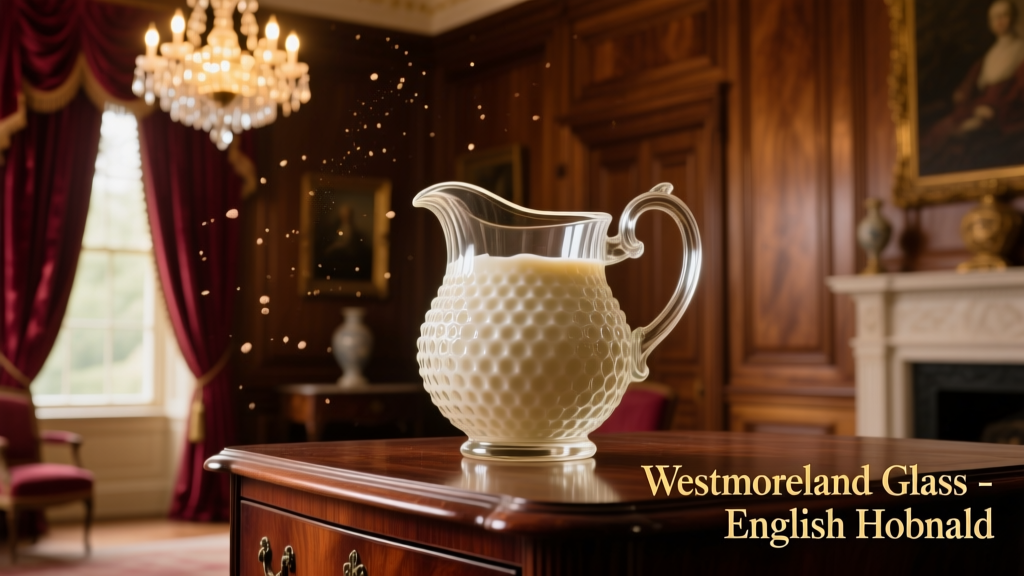
Westmoreland Glass Creamer in English Hobnail: Identification, Value, and Restoration Guidance

Louis Vuitton Steamer Trunk (35½ × 21 × 23 in): History, Construction, Authentication, and Restoration Insights