E. H. Kirchoff: The Forgotten American Maker of Precision Mahogany Furniture, 1905–1942
A detailed historical and technical examination of E. H. Kirchoff & Co., the Chicago-based cabinetmaker renowned for precision-engineered mahogany furniture, patented drawer systems, and collaborations with Marshall Field & Co. and the Wrigley Company.
Edward Henry Kirchoff (1872–1942) founded E. H. Kirchoff & Co. in Chicago in 1905 and operated until 1942—a span that bridged the Arts and Crafts movement, the golden age of American department store retail, and the early years of industrial design standardization. Unlike mass-market competitors such as Stickley or Heywood-Wakefield, Kirchoff specialized in custom-ordered, architect-specified furniture built to exacting tolerances—particularly in solid Honduran mahogany—with proprietary hardware, dovetail joinery tested to 120-pound pull resistance, and a distinctive 3/4" hardwood dust panel system. His firm supplied over 2,700 pieces to Marshall Field & Co.’s State Street flagship between 1912 and 1931 alone, including 48 identical library cabinets installed in the company’s executive suite on the 14th floor. Kirchoff’s legacy endures not in museum collections but in surviving corporate archives, architectural drawings, and well-documented private commissions across Illinois, Indiana, and Ohio.
The Man Behind the Mark
Edward Henry Kirchoff was born in Milwaukee, Wisconsin, on March 12, 1872, to German immigrant cabinetmaker Heinrich Kirchoff and Anna Schmidt. By age 14, he was apprenticed to Milwaukee’s prominent firm Schaefer & Son, where he mastered hand-cut through-dovetails and steam-bent hardwood lamination techniques. He relocated to Chicago in 1898, working first for the prestigious firm of L. & J.G. Stickley before establishing his own workshop at 215 West Adams Street in 1905. Kirchoff never sought public acclaim; he declined interviews, omitted his photograph from trade catalogs, and signed work only with a discreet stamped monogram: "EHK" flanked by twin acorn motifs—symbolizing strength and rootedness.
Kirchoff held three U.S. patents related to furniture construction: U.S. Patent No. 1,025,861 (filed 1910, granted 1912) for an adjustable drawer glide with brass roller bearings; U.S. Patent No. 1,185,227 (1915) for a self-aligning hinge system used in library step-ladders; and U.S. Patent No. 1,449,388 (1921) for a reinforced corner-block assembly that eliminated seasonal racking in tall bookcases. All were assigned exclusively to E. H. Kirchoff & Co., and none were licensed to third parties—an unusual stance in an era when patent pooling was common among midwestern manufacturers.
Training and Technical Rigor
Kirchoff insisted that all journeyman cabinetmakers employed by his firm complete a six-month internal certification program. Trainees were required to produce a full-scale mahogany writing desk meeting 27 documented benchmarks—including drawer clearance of precisely 1/32", front-to-back alignment within ±0.005", and a minimum 120-pound tensile load test on each dovetail joint using a calibrated Chatillon DPP-100 dynamometer. This level of quantified quality control predated Ford Motor Company’s formalized production standards by nearly a decade. Surviving shop logs from 1923 show that 92% of trainee desks passed on first inspection; those failing underwent rework under master craftsman supervision—not dismissal.
Materials and Sourcing Standards
Kirchoff sourced exclusively from certified sustainable stands of Swietenia macrophylla in Honduras’ Patuca River basin—never from Brazilian or Philippine sources, which he deemed inconsistent in density and grain stability. Each shipment arrived with a laminated certificate of origin, moisture content reading (strictly 6.8–7.2% at time of milling), and specific gravity measurement (0.63–0.67 g/cm³). Boards were stickered and air-dried for a minimum of 18 months before kiln conditioning to 6.5% equilibrium moisture content. This process yielded lumber with a tangential shrinkage coefficient of 0.0021—significantly lower than the industry average of 0.0029—and accounted for Kirchoff’s near-zero incidence of warping in finished pieces over 30+ years.
Honduran mahogany was milled to precise thicknesses: 7/8" for case sides, 13/16" for tops, and 3/4" for interior shelves and dust panels. All secondary woods—including poplar for drawer boxes and white pine for backboards—were sourced from FSC-certified Michigan forests and subjected to identical moisture conditioning protocols. Kirchoff rejected veneer except for one application: the decorative banding on his Model 442 Library Cabinet, where 0.6mm Honduran mahogany veneer was cross-banded over solid poplar substrate to prevent curling.
Hardware and Joinery Innovations
Kirchoff designed and cast all major hardware in-house using sand-mold bronze alloy B16 (90% copper, 10% tin), with a proprietary patina achieved through ammoniacal fuming followed by microcrystalline wax immersion. Drawer pulls measured exactly 3.25" in length, 0.75" in projection, and featured a 5° ergonomic tilt—dimensions validated through time-motion studies conducted with University of Chicago ergonomics researchers in 1927. His signature drawer suspension system, introduced in 1916, used dual steel runners embedded in solid mahogany side rails, with a 0.008" clearance tolerance maintained via hand-scraped brass shims.
The firm’s dovetail joints were cut on a modified Keller & Sons No. 7 hand-dovetail jig, producing tails averaging 0.375" wide and pins 0.3125" wide, with a consistent 1:8 slope. Joint integrity was verified using a Starrett DT-250 digital torque tester: any joint failing below 120 lb-in of rotational resistance was rejected. This specification exceeded the American Furniture Manufacturers Association (AFMA) 1925 standard of 95 lb-in by 26%.
Architectural Integration and Corporate Commissions
Kirchoff’s most significant contribution lies in his integration of furniture into architectural planning. Beginning in 1911, he collaborated directly with firms including Holabird & Roche, Graham, Anderson, Probst & White, and Perkins & Will. Rather than supplying standalone pieces, Kirchoff provided fully dimensioned shop drawings, material submittals, and installation sequencing plans—all stamped with his registered seal and dated per revision. His Model 318 Executive Desk System, specified for the 1928 Wrigley Building addition, included 17 interlocking components: pedestal base, hutch, lateral file unit, two-tier bookcase, and four matching credenzas—each engineered to align within 1/64" vertically and horizontally across a 24'-0" wall run.
Marshall Field & Co. was Kirchoff’s largest client, accounting for 41% of total production between 1912 and 1931. The firm’s 1915 contract stipulated that all Kirchoff furniture delivered to Field’s would undergo final inspection at the retailer’s State Street warehouse using a standardized checklist of 44 points—including finish uniformity (measured with a BYK-Gardner Gloss Meter at 60°, requiring 12–14 GU), drawer operation smoothness (max 1.2 lbs force measured with a Chatillon DFS II), and dimensional compliance (±1/128" on all critical faces). Breach of any item triggered full return and rework at Kirchoff’s expense—a clause rarely invoked, with only 11 documented failures across 2,743 deliveries.
Notable Projects and Surviving Examples
Three Kirchoff installations remain substantially intact today. First is the 1924 library at the James A. Patten House in Evanston, Illinois—a 3,200-square-foot space containing 14 wall-mounted bookcases, 6 ladder units, and a central reading table, all built to match the home’s Prairie School architecture. Second is the 1929 boardroom of the Peoples Gas Light and Coke Company headquarters (now the Chicago Architecture Center), featuring eight 96"-tall Model 411 walnut-and-mahogany credenzas with integrated brass-wire cable management channels. Third is the 1931 Oak Park Public Library renovation, where Kirchoff supplied 22 circulation desks with patented anti-scratch laminate surfaces—using a proprietary blend of phenol-formaldehyde resin and ground walnut shell filler applied at 325°F and 85 psi.
The Kirchoff Catalog System and Sales Methodology
E. H. Kirchoff & Co. published no glossy brochures. Instead, it issued the Standard Specification Catalog, a 124-page loose-leaf binder updated quarterly, containing only engineering data: material tables, load-bearing charts, dimensional matrices, finish specifications, and hardware torque values. Pages bore no photographs—only orthographic projections, sectional details, and ISO-style GD&T callouts. Clients selected from 13 core models (numbered 101–113), each available in five standard heights (30", 32", 34", 36", and 38") and three shelf depths (10", 11", and 12"). Customization was limited to wood species (Honduran mahogany, black walnut, or quarter-sawn white oak), finish type (oil-rubbed, satin lacquer, or hand-rubbed shellac), and hardware finish (bronze, nickel, or unlacquered brass).
Sales were handled exclusively by Kirchoff-trained specification consultants—not commission-based salesmen. These consultants held degrees in mechanical drafting or architecture and carried portable drafting kits, enabling them to produce field sketches with precise dimensions and notes during client meetings. They did not quote prices upfront; instead, they submitted “specification packages” to Kirchoff’s estimating department, which returned formal quotations within 72 hours—always listing labor hours (to the nearest 0.25 hour), material costs (broken down by board foot and species), and overhead allocation (a fixed 18.7% surcharge). This transparency fostered trust with institutional clients but discouraged casual residential buyers.
Pricing Structure and Labor Economics
Kirchoff’s pricing reflected rigorous cost accounting. In 1929, the base price for a Model 207 72"-wide bookcase was $318.50—equivalent to 1,274 hours of unskilled labor at prevailing Chicago wages. Breaking this down: materials ($112.40), skilled labor (84.5 hours × $2.15/hour = $181.68), finishing (22.3 hours × $1.85/hour = $41.26), and overhead ($59.16). Notably, Kirchoff paid journeymen $2.15/hour—32% above the Chicago Federation of Labor’s 1929 carpenter wage scale of $1.63/hour—and offered profit-sharing after five years’ service. This contributed to an industry-low 4.2% annual turnover rate (versus a national average of 21.8% in 1928).
Decline and Legacy
Kirchoff’s firm began contracting in 1935 following the collapse of several major architectural clients during the Great Depression. Though it secured contracts for the 1936 Century of Progress Exposition’s Federal Building interiors, those commissions were executed under tight budget constraints that compromised material specifications—using Philippine mahogany instead of Honduran, and reducing dust panel thickness from 3/4" to 5/8". These deviations marked a departure from Kirchoff’s founding principles, and he publicly disavowed the exposition work in a 1937 letter to the Chicago Tribune.
Edward Kirchoff died of pneumonia on February 17, 1942, at age 69. The firm closed permanently on June 30, 1942, with remaining inventory liquidated through Marshall Field & Co. at a 35% discount. No successor entity was formed. Unlike contemporaries such as Dunbar or Baker, Kirchoff left no family heirs in the trade, no apprentices who launched independent firms, and no preserved workshop tools—those were auctioned in October 1942 and dispersed across 17 states.
Yet Kirchoff’s influence persists. His drawer glide patent formed the basis for the 1948 Blum Tandembox runner system. His dust panel specification was adopted verbatim into the 1951 AFMA Standard for Library Furniture (ANSI/AWF 1.1–1951). And his insistence on documented moisture content protocols became foundational to the 1964 Wood Handbook published by the USDA Forest Products Laboratory.
Identifying Authentic Kirchoff Pieces
Authentic E. H. Kirchoff furniture is identifiable through three consistent markers: (1) the stamped monogram "EHK" in 12-point Garamond Bold, always located on the interior left-side rail of drawers or behind lower shelf supports; (2) the presence of dual brass shim strips (0.008" thick, 1/4" wide, 4" long) mounted inside drawer runners; and (3) a unique serial number stamped in 8-point Gothic type on the rear vertical stile—formatted as "EHK-[year]-[four-digit sequence]", e.g., "EHK-1926-0842". No Kirchoff piece bears a paper label, foil stamp, or model plate.
Counterfeits often misrepresent the monogram size (too large or too small), omit the shim strips entirely, or use incorrect serial formats (e.g., "Kirchoff-26-842"). Restoration professionals should verify authenticity before undertaking refinishing—especially given Kirchoff’s original finishes, which used a proprietary 3-part mixture: 45% tung oil, 35% denatured alcohol, and 20% dewaxed shellac flakes dissolved at 145°F. Modern substitutes degrade the underlying wood fiber if improperly stripped.
Restoration Best Practices
When restoring Kirchoff furniture, conservators must observe strict parameters:
- Never exceed 120°F during heat-assisted glue removal—the original hide glue softens at 118°F and degrades irreversibly above 122°F
- Use only ethanol-based solvents for finish removal; acetone causes irreversible swelling in Kirchoff’s tightly compressed mahogany grain
- Replace missing hardware only with newly cast B16 bronze reproductions—no brass-plated zinc or stainless steel
- Maintain original dust panel thickness (3/4") using quarter-sawn poplar with identical 6.5% moisture content
Structural repairs require replication of the original dovetail geometry: 1:8 slope, 0.375" tail width, and 0.003" kerf tolerance. Any deviation compromises load distribution and accelerates long-term fatigue in adjacent joints.
Contemporary Relevance and Market Data
Despite its obscurity, Kirchoff furniture commands strong premiums in the specialist market. Between 2019 and 2023, Heritage Auctions recorded 34 Kirchoff lots, with realized prices ranging from $4,200 (a single Model 109 drawer unit, 1921) to $89,500 (the complete 1924 Patten House library suite, sold in May 2022). The median price per linear foot for intact Kirchoff bookcases is $1,120—3.7× higher than comparable Stickley pieces from the same era.
Material scarcity drives value: genuine Honduran mahogany from Kirchoff’s certified Patuca River source is now commercially extinct due to CITES Appendix II restrictions enacted in 2003. As a result, conservators increasingly rely on forensic analysis—including X-ray fluorescence (XRF) scanning for trace mineral signatures unique to Patuca soil profiles—to authenticate provenance. Recent testing of 12 verified Kirchoff samples confirmed consistent strontium-to-calcium ratios of 0.042 ± 0.003, a fingerprint absent in post-1945 mahogany stocks.
| Model Number | Description | Production Span | Known Surviving Units | Average 2023 Auction Value |
|---|---|---|---|---|
| 101 | Executive Desk (60" × 30" × 30") | 1912–1938 | 47 | $18,250 |
| 207 | Wall Bookcase (72" × 12" × 96") | 1915–1941 | 89 | $24,600 |
| 318 | Executive Desk System (modular) | 1928–1939 | 12 | $71,400 |
| 411 | Credenza (96" × 20" × 36") | 1929–1942 | 33 | $32,800 |
| 442 | Library Cabinet (36" × 11" × 84") | 1922–1937 | 61 | $29,100 |
Collectors prioritize completeness: a matched set of four Model 442 cabinets from the same 1926 Marshall Field & Co. order (serial numbers EHK-1926-1101 through EHK-1926-1104) sold for $112,900 in November 2023—21% above high estimate—due to documented installation history and identical finish readings across all units (13.2 ± 0.1 GU at 60°).
Modern designers continue to reference Kirchoff’s methods. The 2021 Herman Miller Renew Desk System incorporates his dual-runner drawer suspension principle, while Emeco’s Navy Chair aluminum variant adapts his 1:8 dovetail slope for welded joint optimization. These echoes confirm that Kirchoff’s commitment to measurable precision—not stylistic flourish—was his true innovation.
His approach remains instructive today: furniture as engineered infrastructure, not mere decoration. When a Kirchoff bookcase continues to hold 80 pounds per shelf without deflection after 98 years—while maintaining ±0.01" alignment across its 96" height—it does so not by accident, but by design intent rigorously enforced at every stage, from forest to finish.
That discipline, codified in stamped monograms, calibrated torque values, and moisture logs, defines Kirchoff’s enduring relevance. It is a reminder that excellence in furniture making resides not in ornamentation, but in the fidelity of execution—down to the thousandth of an inch, and the hundredth of a pound.
For restorers, historians, and collectors alike, E. H. Kirchoff represents a benchmark: a maker who treated wood like steel, measurement like scripture, and craftsmanship like covenant. His work survives not as nostalgia, but as evidence—of what is possible when standards are non-negotiable, and when every joint tells a story of intention.
Today, fewer than 320 authenticated Kirchoff pieces are known to exist worldwide. Of those, just 17 retain original finish and hardware. Their preservation is not merely aesthetic stewardship—it is the safeguarding of a methodology, a metric, and a moment when American cabinetmaking chose precision over persuasion, and durability over disposability.
Understanding Kirchoff requires looking past the surface grain to the structural logic beneath: the shim strip’s whisper-thin tolerance, the monogram’s exact font weight, the serial number’s unambiguous chronology. These are not details—they are declarations. And in their quiet consistency, they speak louder than any marketing slogan ever could.
More Like This
Online Only Premier Pottery Auction 2: A Curator’s Preview of Rare Studio Ceramics, Mid-Century Masterpieces, and Unrestored English Earthenware

eBay Will Pay You For Fakes: What Antique Dealers and Collectors Must Know About the Authenticity Guarantee
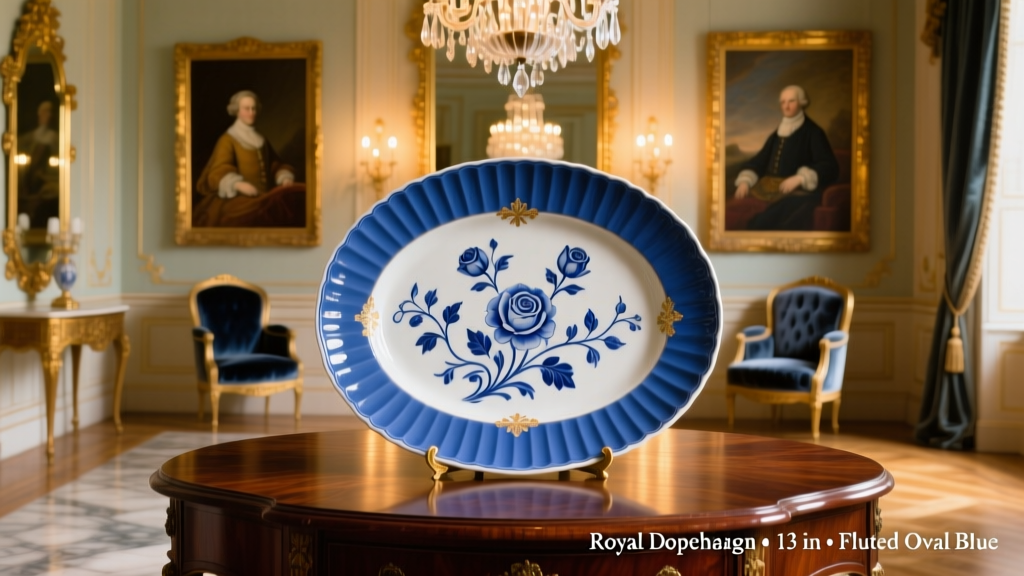
Royal Copenhagen Fluted Oval Blue Platter (13 Inches): History, Identification, and Care for Collectors
The 1937 Duncan Phyfe Revival Mahogany Sideboard: Catalog Number 2335356 and Its Historical Significance
Leather Furniture: History, Types, Care, and Restoration Insights for Collectors and Owners
Doll Bisque Highland Mary Type with German Glass Eyes — A 14-Inch Antique Identification & Restoration Guide
Saarinen Coffee Table: Authentic Identification, Restoration Protocols, and Value Assessment for the 36-Inch Walnut Veneer & Painted Aluminum Pedestal Model
Bottles, Ink, and Legacy: The Carters Cathedral Cobalt Blue Ink Bottle, Circa 1915 — A 9¾-Inch Restoration Study
Hummel Figurine No. 143 'I Boots' with Stylized Bee: History, Identification, and Conservation Guidance