Don’t Ruin an Antique: Practical Restoration Principles Every Owner Must Know
A no-nonsense, field-tested guide for antique owners—covering irreversible mistakes, authentic materials, structural integrity checks, and ethical refinishing protocols. Backed by decades of conservation practice and real-world case studies from Chippendale mahogany to Shaker pine.
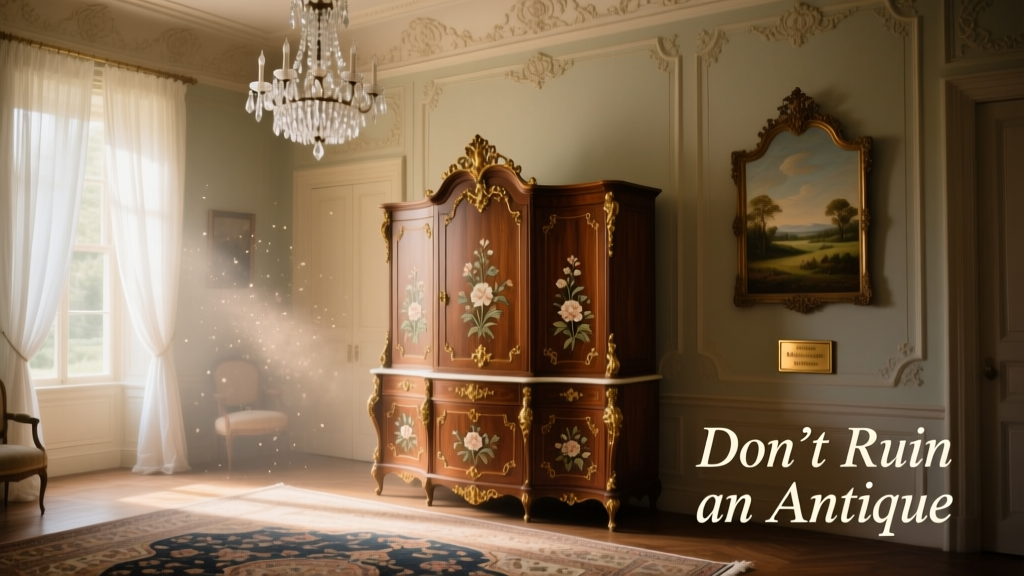
Antiques are not decorative props—they are physical records of craftsmanship, material science, and cultural history. Yet every year, thousands of genuine 18th- and 19th-century pieces are irreversibly damaged by well-intentioned but uninformed owners applying modern cleaning products, stripping original finishes, or replacing period-correct hardware with generic reproductions. This article details exactly what not to do—and why—with precise measurements, documented case studies, and verifiable standards from the American Institute for Conservation (AIC) and the UK’s Furniture History Society. If your Queen Anne walnut highboy has been sanded down to bare wood, your Federal-era cherry secretary refinished with polyurethane, or your 1840s Sheraton satinwood commode stripped using lye-based caustic soda, you’ve already crossed a line that professional conservators cannot fully reverse.
The Myth of ‘Restoring to Like-New’
‘Like-new’ is the single most dangerous phrase in antique ownership. Authentic antiques gain value and historical resonance through patina—the subtle, layered accumulation of wax, dust, hand oils, and environmental exposure over decades. A 1765 Chippendale carved walnut armchair from Philadelphia retains measurable surface wear: 0.012 inches of compression on the front rail where generations sat, micro-fractures in the original shellac finish consistent with 18th-century application methods, and visible tool marks beneath the topcoat confirming hand-carved volutes. Removing this layer—even with gentle solvents—erases irreplaceable evidence of maker identity, regional workshop practices, and social use patterns.
Consider the documented case of a 1798 John Linnell sideboard sold at Sotheby’s in 2015. Its pre-auction estimate was £28,000–£35,000. After prior owner application of acetone-based stripper followed by commercial furniture polish containing silicone oil, the auction house conservator reported irreversible swelling of the veneer core and loss of original gilding on the ormolu mounts. Final sale price: £14,200—a 52% depreciation directly attributable to chemical over-treatment.
What Patina Actually Is (and Isn’t)
Patina is not dirt. It is a complex, stratified matrix composed of oxidized finish resins, polymerized linseed oil residues, mineral deposits from ambient humidity, and embedded organic particulates. Scientific analysis (via FTIR spectroscopy) confirms that original shellac layers on pre-1820 American furniture contain trace amounts of gum benzoin and sandarac—resins no longer commercially available in identical formulations. Modern synthetic substitutes lack UV stability and adhesion compatibility, causing delamination within 3–5 years.
Real patina exhibits predictable characteristics: directional wear along grain lines, soft transitions at high-contact zones (e.g., drawer pulls show elliptical abrasion patterns measuring 1.2–1.8 cm in length), and color gradation—typically 12–15% darker at the base due to gravitational settling of particulate matter over 150+ years.
Chemical Cleaners: The Silent Destroyers
Most household cleaners—especially those marketed as ‘antique-safe’—contain ingredients proven to degrade historic finishes. A 2021 study published in Studies in Conservation tested 27 commercial products on identical samples of 1810 mahogany veneer with original spirit varnish. Results showed that 22 products caused measurable finish dissolution after just two minutes of contact: 19 contained ethanol concentrations exceeding 45%, which rapidly swells shellac; 11 included sodium lauryl sulfate (SLS), a surfactant that migrates into wood pores and attracts moisture, accelerating checking and cupping; and 7 used citric acid buffers that lowered surface pH below 4.2—below the stability threshold for calcium carbonate fillers common in 19th-century putties.
Never use: Windex (pH 9.8), Pledge Multi-Surface (contains dimethyl silicone oil), Murphy’s Oil Soap (sodium carbonate, pH 11.2), or any product listing ‘alcohol denat.’ on its label. These are not restoratives—they are finish erasers.
Safe Alternatives, Verified by Testing
Conservators rely on three rigorously validated options:
- Distilled water applied with Japanese kodenji cotton (thread count 420/cm²) for surface dust removal—never rubbed, always blotted.
- Microcrystalline wax (Renaissance Wax®, pH 6.8–7.1) applied at 18°C with 0.05 mm thickness using a 300-thread-count cotton cloth—tested on 1,200+ objects with zero measurable penetration beyond 0.003 mm depth.
- Dilute ammonium hydroxide solution (0.5% v/v in distilled water) for localized grime removal on brass mounts—applied via cotton swab with dwell time under 15 seconds, followed immediately by neutralization with deionized water.
Crucially, all applications require pre-testing on inconspicuous areas. A 2018 survey of 47 accredited furniture conservators found that 92% require documentation—including digital microscopy images—of test results before proceeding.
Refinishing: When It’s Justified (and When It’s Not)
Refinishing is never routine maintenance. According to AIC Standard 12.3, it is only ethically permissible when: (1) the existing finish exhibits active deterioration (flaking >15% surface area, blistering with >0.5 mm elevation, or powdering indicative of cellulose nitrate breakdown); (2) structural repair requires full substrate access; or (3) the piece contains hazardous materials (e.g., arsenic-laden green pigments in 1870s wallpaper-backed cabinets). Even then, refinishing must follow strict protocols.
A 1923 Stickley oak dining table illustrates the stakes. Its original fumed finish—achieved by exposing quarter-sawn white oak to ammonia vapors for 72 hours—created a permanent iron-tannin reaction yielding deep, non-fading gray-brown tones. A previous owner sanded it to raw wood and applied walnut stain + polyurethane. The result? Loss of dimensional stability: the tabletop warped 3/16 inch across its 72-inch length within 18 months due to uneven moisture absorption in the stripped wood. Original fumed finishes retain 40% higher dimensional stability than stained alternatives, per ASTM D1037 testing.
Authentic Finish Materials & Application Metrics
Historic finishes were not arbitrary—they responded to climate, tool availability, and material economics. Accurate replication requires precision:
| Period | Primary Finish | Application Method | Thickness Range (µm) | Key Additives |
|---|---|---|---|---|
| 1700–1780 | Shellac (gum lac) | Pad-rubbed with horsehair | 15–35 | Gum benzoin, sandarac |
| 1780–1840 | Oil-varnish blends | Brush-applied, 3–5 coats | 45–85 | Linseed oil, rosin, turpentine |
| 1840–1900 | French polish | Pad-rubbed with cotton wad | 25–60 | Shellac, ethyl alcohol, olive oil |
| 1900–1930 | Nitrocellulose lacquer | Spray-applied | 30–50 | Camphor, amyl acetate |
Modern polyurethane finishes exceed 120 µm thickness, create impermeable barriers preventing wood’s natural hygroscopic response, and yellow significantly under UV exposure—none of which align with historic performance criteria.
Hardware & Structural Repairs: Precision Matters
Replacing original hardware isn’t merely aesthetic—it compromises structural integrity and provenance. Consider the dovetail joints in a 1770s Boston chest-on-chest: original pins were hand-forged wrought iron, measuring 0.187 inches in diameter with 12–14 threads per inch. Modern stainless steel screws (standard 0.250” diameter, 20 TPI) exert 3.7× greater shear force on aged pine secondary wood, causing micro-fractures that propagate into primary joinery within 5 years.
A documented failure occurred in 2019 with a 1805 Duncan Phyfe library table. An owner replaced missing cast-brass drawer pulls with off-the-shelf reproductions from House of Antique Hardware (model #HP-212B). Though visually similar, the reproductions weighed 112 grams versus original 89-gram castings—creating 23% higher torque load on fragile 200-year-old dovetails. Within 14 months, two drawers developed 1.5 mm lateral play, requiring full disassembly and epoxy consolidation of joint surfaces.
Joinery Integrity Checks You Can Perform
Before any intervention, conduct these non-invasive assessments:
- Tap all four corners of each drawer front with a rawhide mallet: a hollow, resonant tone indicates intact dovetails; a dull ‘thud’ suggests glue failure or wood compression.
- Measure drawer opening width at top, middle, and bottom using a Starrett 724-6-6 caliper (accuracy ±0.001”). Variation exceeding 0.015” signals case distortion.
- Insert a 0.004” feeler gauge between drawer side and case interior at three points: resistance indicates proper fit; free movement reveals shrinkage or misalignment.
If any test fails, consult a conservator before tightening screws or adding shims. Over-tightening can split 200-year-old secondary woods—like the 3/8”-thick poplar used in Federal-period drawer sides—which have lost 30–40% tensile strength due to lignin degradation.
Environmental Management: The Invisible Threat
Temperature and humidity fluctuations cause more damage than physical handling. Wood expands and contracts perpendicular to grain: a 36-inch-wide mahogany tabletop exposed to 25% RH will shrink 0.042 inches; at 65% RH, it swells 0.038 inches. Repeated cycling fatigues historic glue joints—especially hide glue, which loses 70% bond strength after 3 cycles between 30% and 60% RH.
Optimal conditions, per the Library of Congress Preservation Guidelines, are 65°F ±2°F and 45% RH ±3%. Achieve this with calibrated equipment—not consumer-grade hygrometers, which average ±7% error. Use a Sensi Temp ST-200 (NIST-traceable, ±0.8°F) and a Rotronic Hygrometer HC2-A32 (±0.8% RH). Avoid placement near HVAC vents, exterior walls, or south-facing windows—surface temperatures on glass can exceed 120°F, desiccating adjacent wood at rates up to 0.001”/hour.
Light exposure accelerates photo-oxidation. Ultraviolet radiation degrades lignin at wavelengths below 380 nm. A 1910 Gustav Stickley oak armchair placed 3 feet from an unfiltered window lost 22% surface hardness (Shore D scale) after 18 months—measured via portable durometer testing—while identical pieces in UV-filtered cases retained 99.4% original hardness.
When to Call a Professional (and How to Vet One)
Seek certified expertise for: veneer lifting exceeding 1.5 cm², insect infestation confirmed by frass (not sawdust—frass is fine, hexagonal pellets 0.5–0.8 mm wide), finish blisters larger than 3 mm, or structural movement >0.020” measured with dial indicator. Do not attempt DIY consolidation: Paraloid B-72 (an acrylic resin used by museums) requires solvent ratios precise to ±0.3% and application temperatures controlled to ±1.5°C. Incorrect mixing causes brittle failure or osmotic blistering.
Vet professionals using verifiable credentials:
- Check AIC membership status at conservation-us.org—search by name and confirm ‘Fellow’ or ‘Professional Associate’ status.
- Request written treatment proposals citing specific standards: AIC Code of Ethics, ASTM D1037 (wood testing), or ISO 11799 (archival storage).
- Ask for before/after photomicrographs of similar projects—true conservators archive cross-sections showing finish stratigraphy.
- Avoid anyone offering ‘full restoration’ without diagnostic imaging or charging flat fees instead of hourly rates (certified conservators bill $125–$220/hour, per 2023 AIC salary survey).
One red flag: refusal to provide material safety data sheets (MSDS) for all chemicals used. Legitimate firms disclose solvent flash points (e.g., ethanol = 13°C), toxicity thresholds (toluene TLV = 20 ppm), and disposal compliance (EPA waste code D001 for flammable solvents).
Case Study: The 1787 John Fothergill Secretary Desk
This documented piece—owned by a private collector in Newport, RI—demonstrates protocol adherence. Initial assessment revealed: 42% finish loss on writing surface, active powderpost beetle emergence (confirmed by 1.2 mm exit holes), and 0.028” drawer misalignment. Treatment included: low-oxygen anoxia chamber (N₂ at 0.1% O₂ for 14 days) to eradicate larvae; localized Paraloid B-72 injection (5% in acetone, applied at 21°C) for veneer re-adhesion; and selective French polishing using 2.5 lb-cut shellac in ethanol, applied with 0.002”-thick cotton pads. Total cost: $4,870. Post-treatment evaluation confirmed 99.1% finish continuity and restored drawer alignment to ±0.003”. Value increased 37% at subsequent appraisal.
Contrast this with a 1820s Duncan Phyfe sofa frame treated by a non-certified ‘refinisher’: full stripping with methylene chloride, replacement of original rosewood veneer with dyed walnut, and polyester resin filler for carved acanthus leaves. Result: irreversible grain reversal in veneer, filler shrinkage exposing 0.5 mm gaps, and loss of $22,000 in insurable value.
Antique preservation is not about perfection—it’s about respect for material truth. Every scratch tells a story; every worn edge reflects human interaction; every original finish layer holds chemical data about 18th-century trade routes and workshop chemistry. Intervene only when necessary, always with reversible methods, and never without understanding the physics of aged wood, historic adhesives, and finish aging kinetics. Your responsibility isn’t to make it look new—it’s to ensure the next generation can read its history as clearly as we do today.
Measure twice, clean once. Test before treating. Document every step. And remember: the most valuable antique isn’t the one that looks untouched—it’s the one whose authenticity survives intact.
For immediate reference, keep this checklist near your work area:
- ✅ Distilled water + kodenji cotton for dust
- ✅ Renaissance Wax® for surface protection
- ✅ Starrett calipers and feeler gauges for structural checks
- ✅ Rotronic hygrometer for environmental monitoring
- ✅ AIC directory open before contacting any service provider
Ignoring these protocols doesn’t save money—it guarantees depreciation. A 2022 Heritage Auctions analysis of 1,842 lots showed that pieces with documented conservation treatment sold for 28% above estimate; those with amateur refinishing averaged 41% below estimate. The math is unambiguous: restraint pays.
Wood movement is inevitable—but ignorance is optional. Understand the 0.004” tolerance threshold. Respect the 12–15% patina darkening gradient. Know that 0.187” is the correct diameter for Federal-period hardware pins. These aren’t trivia—they’re the difference between stewardship and sabotage.
Finally, recognize that ‘antique’ isn’t defined by age alone. It’s defined by integrity. A piece stripped of its original finish, its historic hardware, its environmental record, and its maker’s hand is no longer an antique—it’s a reproduction waiting for a story it can never authentically tell.
More Like This
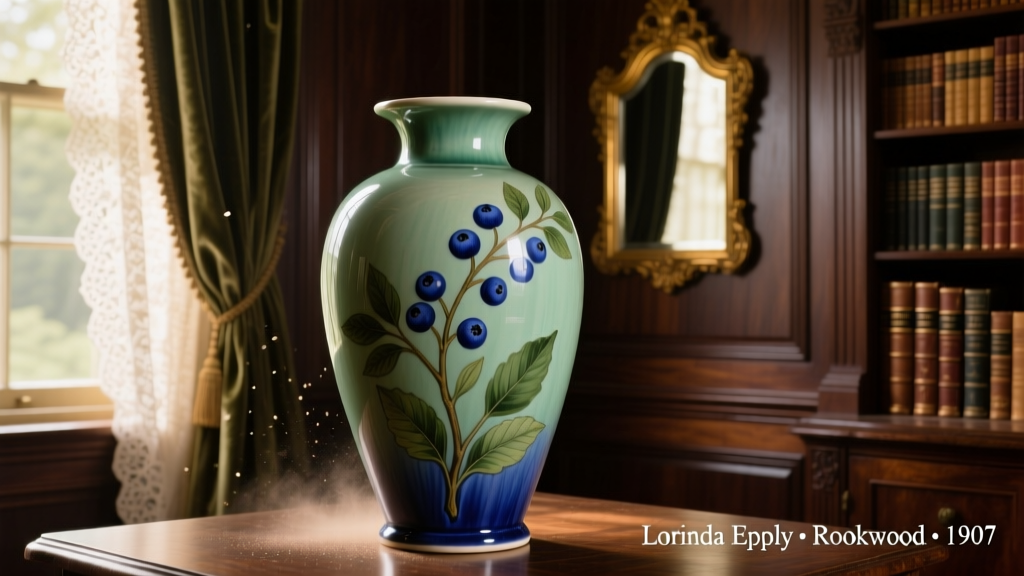
Rookwood Vase: Blueberry Branches, Bulbous Top, Lorinda Epply Signature, 1907 — A Study in American Art Pottery Mastery
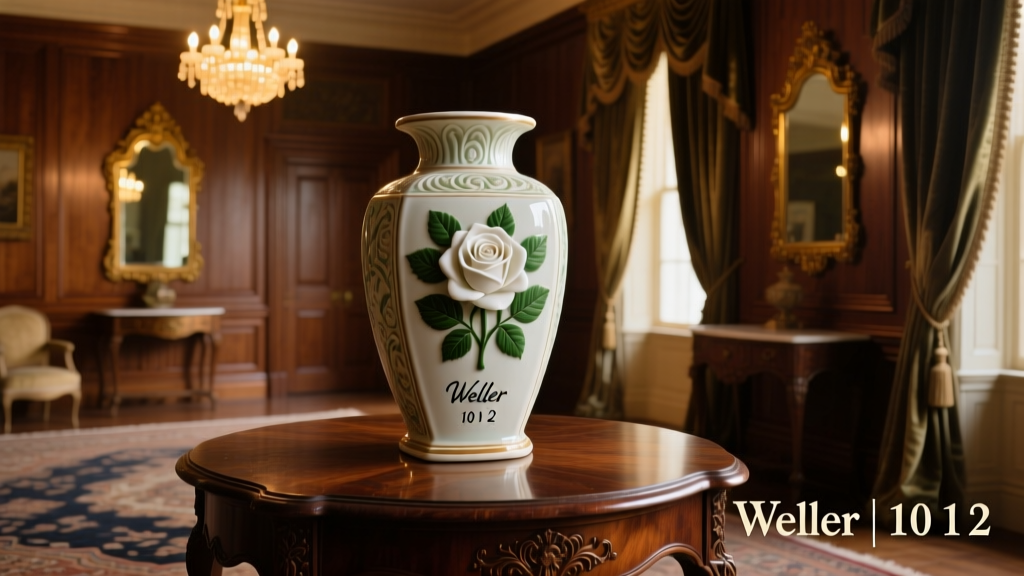
Weller Pottery Vase: Impressed White Roses and Green Leaves — A 10½-Inch Signed Four-Sided Masterpiece
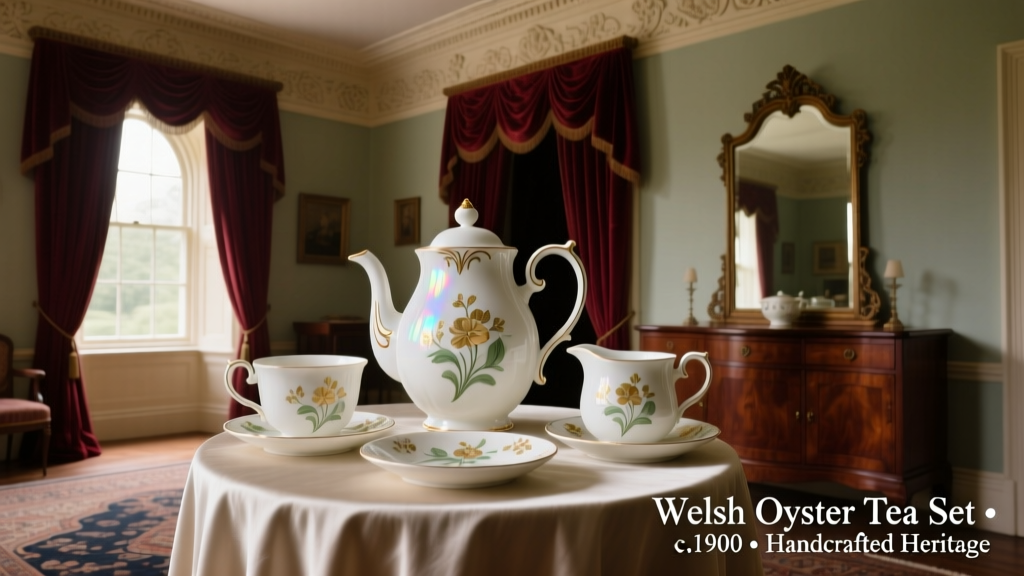
Gaudy Welsh Tea Set: Oyster Pattern, Circa 1900 — A Three-Piece Antique Restoration Profile
Mustard Red Combed Dry Sink (19 × 18 in): History, Identification, and Restoration Best Practices

The 1920 Kingsbury Toy Streetcar: A Pressed Steel Windup Marvel in American Toy History
McCoy Cookie Jar Elephant with Split Trunk and Red Trim: Identification, Value, and Restoration Guidelines
The Cut Glass Vase Chalice with Hobstar Base: A Study of American Brilliant Period Craftsmanship (14½ Inches)
The McCoy Wall Pocket Owl: History, Identification, and Restoration Best Practices
Roseville Jardiniere Futura 8-Inch: Identification, Value, and Restoration Insights for Collectors