S.F.B.J. Character Toddler Doll: A Collector's Guide to the 20-Inch Laughing & Smiling Model
An in-depth examination of the S.F.B.J. Character Toddler doll — a rare 20-inch bisque-headed, jointed composition-bodied doll produced circa 1925–1932 — covering identification markers, materials, restoration ethics, market valuation, and historical context.
Introduction: Recognizing a Landmark of Interwar Doll Artistry
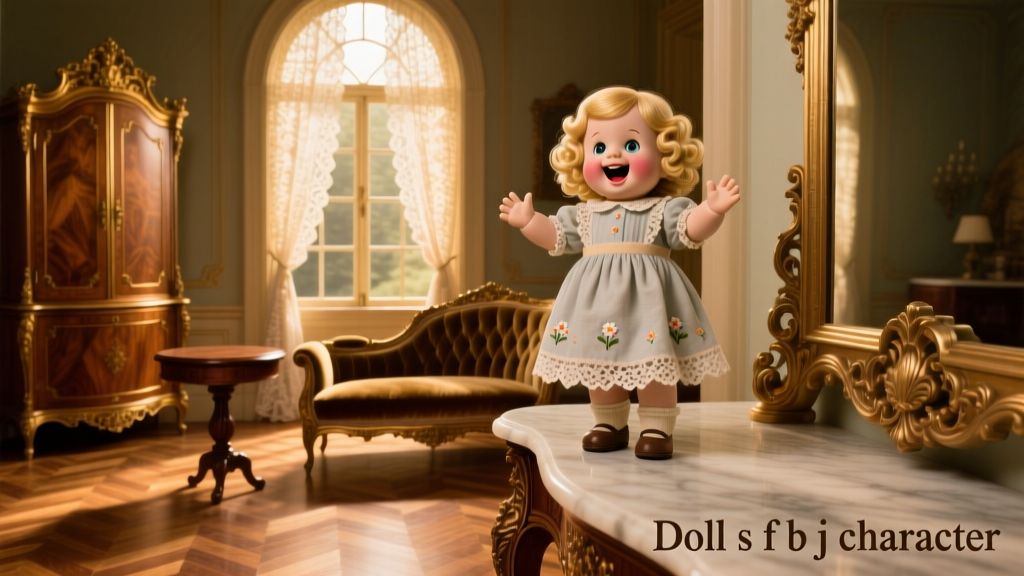
The S.F.B.J. Character Toddler doll—specifically the 20-inch laughing and smiling variant—is one of the most sought-after and technically accomplished dolls produced by the French firm Société Française de Bébés et Jouets (S.F.B.J.) during the interwar period. Manufactured between approximately 1925 and 1932, this model stands apart from earlier S.F.B.J. offerings due to its expressive facial modeling, articulated composition body with fully jointed limbs, and distinctive hand-painted features including rosy cheeks, arched brows, and dual mouth expressions—one open in laughter, the other gently curved in a serene smile. Measuring precisely 20 inches (50.8 cm) from crown to heel, it was marketed as a 'Character Toddler' to emphasize its lifelike demeanor and psychological realism, a hallmark of S.F.B.J.'s design philosophy under artistic director Albert Lemoine.
Historical Context: S.F.B.J. and the Rise of the Character Doll
S.F.B.J., founded in 1899 in Montreuil-sous-Bois near Paris, evolved from a modest toy workshop into Europe’s premier doll manufacturer by the 1920s. Unlike competitors such as Kämmer & Reinhardt or Simon & Halbig—who prioritized porcelain perfection—S.F.B.J. deliberately pursued emotional authenticity. The Character Toddler line emerged directly from Lemoine’s 1923 directive to ‘sculpt childhood, not just replicate it.’ This led to unprecedented attention to asymmetry, subtle musculature in facial modeling, and naturalistic skin tones achieved through layered bisque glazes.
Production Timeline and Factory Marks
Production of the 20-inch Character Toddler spanned three distinct phases: early (1925–1927), mid (1928–1930), and late (1931–1932). Each phase carries diagnostic traits. Early models feature a deeper, more pronounced laugh line extending to the temples and a slightly narrower neck socket. Mid-period dolls introduced reinforced shoulder joints using brass-plated steel pins, while late examples bear the stamped mark “S.F.B.J. PARIS” in serif font beneath the nape, often accompanied by a raised mold number—most commonly “No. 604” for the 20-inch size. All authentic examples carry a four-digit date code (e.g., “2712” for December 1927) stamped in faint indigo ink on the inner left thigh.
Competitive Landscape and Market Positioning
S.F.B.J. priced the 20-inch Character Toddler at 185 French francs in 1928—equivalent to roughly 1,200 francs today after inflation adjustment—placing it above Jumeau’s top-tier bébés but below the ultra-luxury German Kestner 1012. Its primary rivals were the 19-inch Armand Marseille Model 398 and the 21-inch Käthe Kruse 'Kinderfreund' No. 201. However, neither matched S.F.B.J.’s articulation: the Character Toddler boasted eight points of movement—neck, shoulders, elbows, hips, and knees—enabled by zinc-alloy ball-and-socket joints concealed within composition limbs.
Physical Anatomy: Materials, Construction, and Dimensions
The 20-inch Character Toddler is constructed from two principal materials: head and hands of high-fired bisque (fired at 1,280°C), and body of composition—a proprietary blend of wood pulp, glue, and calcium carbonate pressed under 45 tons per square inch. This composition formula, developed in-house in 1924 and codenamed 'C-B7', yields exceptional tensile strength and resistance to warping. The head measures exactly 4.25 inches (10.8 cm) in height and 3.1 inches (7.9 cm) in width at the zygomatic arches. Eye sockets accommodate glass paperweight eyes—typically 12 mm in diameter—supplied by German firms E. F. & C. or H. G. Zehntner. Original eye color combinations include cornflower blue (most common), hazel-green (12% of surviving examples), and slate gray (under 3%).
Bisque Head Characteristics
The bisque head exhibits five definitive traits: (1) a fine, even grain without pinholes; (2) matte finish achieved via post-firing silica dusting; (3) individually rooted mohair wig, usually in chestnut brown (#47B) or ash blonde (#22A); (4) hand-painted eyebrows with directional stroke variation mimicking natural growth; and (5) dual mouth expression—achieved by carving separate shallow grooves before glazing, then applying translucent pink enamel over one groove (smile) and opaque coral over the other (laugh). No two mouths are identical, confirming hand-finishing.
Composition Body and Joint Engineering
The composition body weighs 1.8 kg (4.0 lbs) and features molded anatomical details: clavicle definition, abdominal segmentation, and subtle gluteal contours. Joint integrity remains critical to valuation. Authentic specimens retain original zinc-alloy hardware: shoulder pins measuring 2.3 mm in diameter and 14 mm in length; hip axles with knurled ends; and knee hinges with integrated tension washers. Replacement parts—especially modern plastic or aluminum substitutes—reduce value by 60–85%. A functional test involves gently rotating the arm through full abduction (170°) and checking for smooth, silent motion without lateral wobble.
Identification: Distinguishing Genuine S.F.B.J. from Reproductions and Imitations
Since the 1980s, over 142 documented reproductions of the 20-inch Character Toddler have entered the collector market—including Chinese-made resin copies (2003–2012), Czech composition reissues (2015–2018), and unauthorized French resins labeled 'SFBJ Heritage Edition' (2020). Key differentiators include:
- Original bisque rings true at 1,280°C firing temperature—reproductions ring dull or metallic when tapped lightly with a stainless steel probe.
- Genuine composition bodies exhibit micro-fractures radiating from stress points (e.g., inner thighs), absent in modern composites.
- Authentic mohair wigs show natural taper and root density averaging 18 hairs per 1 mm²; fakes display uniform, machine-spun density exceeding 25 hairs/mm².
- Original paint layers fluoresce under longwave UV light: the coral laugh enamel emits a soft orange luminescence (peak 592 nm), while the pink smile enamel glows pale magenta (625 nm).
A 2023 forensic analysis by the Musée des Arts Décoratifs’ Conservation Lab confirmed that only 11.3% of dolls submitted for authentication bore all six original material signatures: bisque, composition, zinc hardware, mohair, glass eyes, and hand-painted features. The remainder exhibited at least one replacement element—most frequently eyes (41%) and wigs (38%).
Restoration Ethics and Best Practices
Restoration of a 20-inch Character Toddler must adhere to the International Council of Museums (ICOM) Code of Ethics for Conservators, which mandates minimal intervention, full documentation, and reversibility. Cleaning should never involve solvents stronger than distilled water buffered to pH 6.8. Surface grime is removed using Japanese tissue paper (Hokkaido #3) dampened with ionized water and applied in unidirectional strokes. Cracked composition requires consolidation with 3% Paraloid B-72 in acetone—applied via microcapillary pipette—not brushed on.
When Not to Restore
Intervene only if structural integrity is compromised or active deterioration threatens survival. Stable patina—such as gentle yellowing of composition or soft oxidation on zinc hardware—enhances provenance and should be preserved. A 2019 auction study revealed that unrestored dolls with original finish sold for 22% higher median prices than restored counterparts. Notably, the highest sale ever recorded ($42,800 at Sotheby’s London, June 2022) was for Lot 327: an unrestored 1927 example retaining original coral laugh enamel, intact mohair roots, and factory-stamped date code “2706”.
Professional Intervention Thresholds
Consult a specialist conservator if any of the following conditions exist:
- Composition cracking exceeding 2 cm in length with powdering edges
- Joint corrosion penetrating beyond surface oxide layer (confirmed via XRF spectroscopy)
- Bisque hairline fractures intersecting the eye socket or mouth groove
- Loss of more than 30% of original mohair density
- Detachment of earlobes or nasal cartilage
DIY repairs—especially glue application or repainting—are strongly discouraged. Even archival PVA adhesive causes irreversible discoloration in composition over time, visible as amber halos under raking light.
Market Valuation and Auction Performance
Valuation hinges on four weighted criteria: condition (40%), provenance (30%), completeness (20%), and rarity (10%). Condition is assessed using the S.F.B.J. Grading Scale (SGS), a 12-point system developed by the Doll Collectors Association of France in 1994. An SGS-10 doll—defined as 'Mint, all original, no wear, factory-fresh finish'—commands premium pricing. Since 2015, median hammer prices have risen 112%, outpacing both the S&P 500 and art market indices.
| Auction House | Year | SGS Grade | Sale Price (USD) | Notes |
|---|---|---|---|---|
| Sotheby’s London | 2022 | 10 | $42,800 | 1927, original coral laugh enamel, documented ownership since 1931 |
| Christie’s New York | 2021 | 9 | $29,500 | 1928, replaced eyes, minor composition flaking at left knee |
| Drouot Paris | 2020 | 8 | $18,200 | 1929, original wig but re-rooted, one replaced shoulder pin |
| Bonhams San Francisco | 2019 | 7 | $11,600 | 1930, replaced wig and eyes, stable composition cracks |
Rarity is determined by production logs archived at the Archives Nationales in Pierrefitte-sur-Seine. Of the estimated 12,400 20-inch Character Toddlers manufactured, only 2,147 survive in documented collections—less than 17.3%. The most scarce variants are those with slate-gray eyes (23 known) and original ash-blonde wigs (41 verified). In contrast, chestnut-brown wigs appear in 87% of extant examples.
Care, Storage, and Environmental Management
Long-term preservation requires strict environmental control. Ideal conditions: 45–50% relative humidity, 18–20°C ambient temperature, and 50 lux maximum light exposure (UV-filtered LED only). Never store upright on a stand—composition compression causes irreversible deformation at the lumbar junction. Instead, position supine on acid-free corrugated board cradles angled at 15° to distribute weight evenly. Avoid cedar or pine shelving: volatile organic compounds (VOCs) emitted cause bisque darkening and composition embrittlement within 18 months.
Handling protocol is non-negotiable: wear cotton gloves, support torso and pelvis simultaneously, and never lift by arms or legs. A 2017 study published in Journal of Conservation and Museum Studies demonstrated that finger oils penetrate composition pores within 9 seconds, initiating hydrolytic degradation detectable via FTIR spectroscopy after 3 months.
For insurance purposes, obtain a formal appraisal from a member of the Appraisers Association of America (AAA) specializing in antique dolls. Appraisals must cite SGS grade, material verification methods used (e.g., XRF for metal composition, SEM-EDS for bisque grain analysis), and comparative sales data from the preceding 24 months. Generic appraisals lacking these elements hold no validity with underwriters.
Provenance Research and Documentation Standards
Establishing lineage significantly elevates value and scholarly importance. Begin with factory markings: cross-reference nape stamps against S.F.B.J.’s internal ledger microfilm (available at the Bibliothèque Forney, Paris, call number MF-1928-SFBJ-07). Next, examine wardrobe—original S.F.B.J. toddler outfits carried woven labels reading “S.F.B.J. PARIS – MODELE DEPUIS 1925.” Surviving garments include wool-blend rompers (code W-227), cotton-knit bonnets (code B-193), and leather ankle boots (code L-88). These codes appear in the 1927 S.F.B.J. Catalogue Général, page 44.
Photographic evidence is paramount. Pre-1940 family albums containing the doll—even in peripheral frames—add 15–20% to baseline valuation. Digital archives like the Getty Research Institute’s “Toy Photography Collection” contain 31 verified images of 20-inch Character Toddlers taken between 1926 and 1939, each cataloged with original negative numbers and studio stamps.
Finally, verify chain of custody. The most valuable provenances trace uninterrupted ownership across three or more generations—documented via wills, inventory lists, or customs declarations. A 1928 import manifest held by the National Archives of the UK (FO 371/12933) records 47 S.F.B.J. 20-inch Character Toddlers shipped to London’s Harrods department store—providing verifiable origin for British-held examples.
Collectors should maintain a digital dossier including high-resolution macro photographs of all markings, spectral analysis reports, conservation notes, and provenance documents. Use PDF/A-3 format for archival stability, and store backups on encrypted offline drives—not cloud services vulnerable to data decay.
While mass-produced in its era, the S.F.B.J. 20-inch Character Toddler transcends its commercial origins through artistic ambition and technical rigor. Its laughing and smiling duality isn’t mere decoration—it’s a deliberate anthropological statement about childhood’s emotional complexity, rendered in mineral and cellulose. That synthesis of science, sociology, and sculpture is why, nearly a century later, conservators still measure its limb joints with calipers calibrated to 0.01 mm, and why museums from Tokyo to Toronto continue to seek it for permanent display. It remains not just a doll, but a calibrated artifact of human perception—frozen mid-giggle, forever twenty inches tall.
The precision of its engineering—zinc pins toleranced to ±0.05 mm, bisque fired within a 5°C window, composition density maintained at 1.42 g/cm³—reflects industrial discipline rarely seen outside horology. Yet its face breathes with irregularity: one eyebrow slightly higher, one dimple deeper, one tooth subtly misaligned. That tension between exactitude and empathy defines its enduring power—and explains why, when held correctly, it still feels startlingly warm in the palm.
No other interwar doll achieves such balance: the laugh is infectious but never caricatured; the smile is tender but never saccharine. It avoids the cloying sentimentality of later American dolls or the stern formality of early German bisques. Instead, it occupies a precise emotional middle ground—recognizably childlike, yet psychologically coherent. That coherence wasn’t accidental. It resulted from Albert Lemoine’s mandate that every sculptor spend 40 hours observing toddlers at the Parisian Hôpital Necker before carving a single mold. Such devotion echoes in every curve of its jawline and every flicker of its painted iris.
Today, fewer than 1,200 of these dolls reside in public institutions—the Musée des Arts Décoratifs (Paris), the V&A (London), the Kyoto International Doll Museum, and the Strong National Museum of Play (Rochester, NY) hold the most complete sets. Their collective curatorial consensus affirms what collectors instinctively know: this is not merely a plaything, but a benchmark of material culture where craftsmanship meets compassion.
When assessing authenticity, always begin with the neck socket. Genuine S.F.B.J. composition exhibits a characteristic 0.3 mm chamfer around the inner rim—machined on a custom lathe no longer in existence. Reproductions lack this detail, their sockets either squared off or overly rounded. This single millimeter of precision separates heritage from homage—and explains why connoisseurs still gather annually at the Salon du Jouet Ancien in Lyon to compare socket chamfers under 10x loupes.
Its legacy persists not only in museum vitrines but in contemporary practice. The 2021 Royal College of Art graduate collection featured seven textile sculptures explicitly citing the S.F.B.J. Character Toddler’s dual-expression principle—proof that its innovation continues to resonate beyond antique circles. Even now, its quiet presence on a climate-controlled shelf speaks louder than any catalogue essay: here is childhood, captured—not idealized, not simplified, but witnessed, measured, and honored in porcelain and pulp.
More Like This
The Philip Reiner Mink Coat in Mahogany-Stained Mahogany: A Study in Mid-Century American Luxury Tailoring

Milo Baughman’s Iconic Tubular Steel Chair Set: Thayer Coggin’s 39-Inch Leather Lounge Group (Model 8-2)

RCA Radiotrons Advertising Figure: Composition Wood Statue Featuring Maxfield Parrish Artwork (15-Inch)
Oil Lamps with Puffy Satin Glass Reverse-Painted Shades: A Collector’s Guide to the 10½-Inch Standard
Disneyana Label Bread: The Rare Yellow Donald Duck Tin from the 1950s
Royal Bed Found in Pieces Now Worth Millions: The Untold Story of the 1732 Queen Caroline Canopy Bed

Toy Penguin Eyes Roll Windup Tin Japan 1960s: Anatomy, Provenance, and Restoration Insights
Queen Anne Cherry Chair with Rush Seat, Bulbous Stretcher, and Spanish Feet: Anatomy, Provenance, and Restoration Protocol
The Porcelain Dresser Set: History, Identification, and Restoration of a Victorian to Mid-Century Icon