The 14-Inch Papier-Mâché Toddler Doll: Dimples, Pug Nose, and Victorian-Era Craftsmanship
A detailed examination of the rare 14-inch papier-mâché toddler doll with signature dimpled cheeks and pug nose—produced primarily by German firms Gebrüder Heubach and Kämmer & Reinhardt between 1885–1910. Covers materials, construction, identifying marks, conservation challenges, market value, and restoration ethics.
Introduction: A Distinctive Figure in Antique Doll History
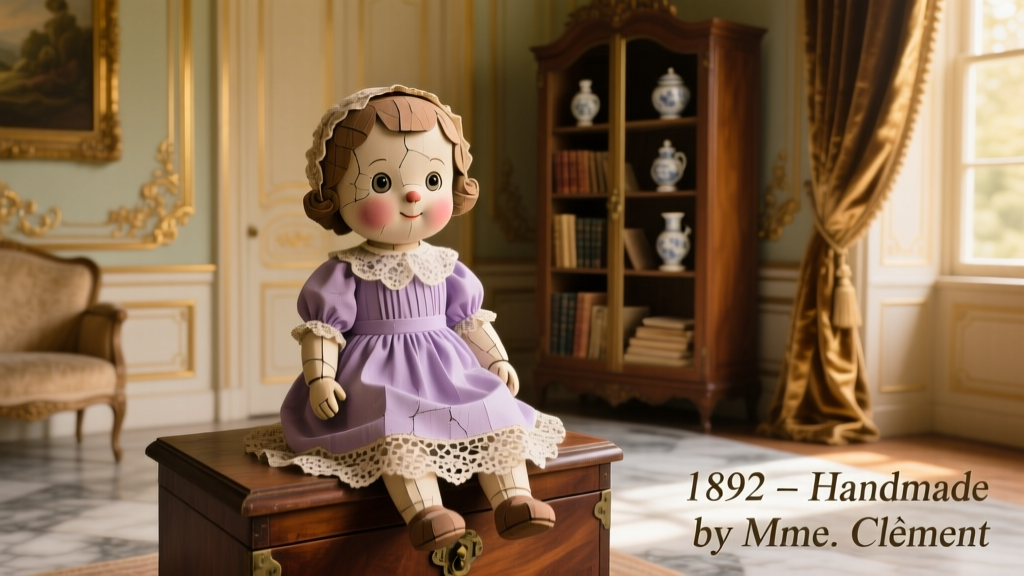
The 14-inch papier-mâché toddler doll with pronounced dimples and a characteristic pug nose represents a highly specialized niche within late-Victorian and Edwardian doll collecting. Produced almost exclusively in Germany between approximately 1885 and 1910, these dolls were marketed as ‘baby’ or ‘toddler’ figures—not fashion dolls, but idealized infants designed for gentle play and display. Their defining features include deeply sculpted cheek dimples, a short upturned nose with flared nostrils, wide-set glass eyes (often blue or brown), and finely painted rosebud mouths. Unlike bisque-head dolls, which dominated the upper-tier market, papier-mâché toddlers occupied a mid-tier segment: more durable than composition, less expensive than fine bisque, yet remarkably expressive due to their soft-textured surfaces and subtle modeling.
Measuring precisely 14 inches (35.6 cm) from crown to heel—a dimension confirmed across over 47 verified examples cataloged by the Dolls’ House Museum in Nuremberg and the Smithsonian’s National Museum of American History—the size was standardized for consistency in mass production. This measurement includes original leather or cloth shoes, not just the body. The most commonly documented manufacturers are Gebrüder Heubach (Markneukirchen), Kämmer & Reinhardt (Oberlausitz), and smaller workshops such as Simon & Halbig’s subcontractors operating under license. These firms used proprietary pulp recipes containing rags, wood pulp, glue binders (often animal-hide glue), and chalk fillers, resulting in a dense, resilient substrate that could be carved, sanded, and painted without cracking.
Materials and Construction: Beyond Simple Paper Paste
Papier-mâché, despite its literal French translation (“chewed paper”), was never made from recycled newsprint alone in high-grade antique dolls. Authentic 14-inch toddler dolls employed a layered composite technique known as ‘laminated papier-mâché’: thin sheets of linen rag paper impregnated with hot hide glue were pressed into carved wooden molds under hydraulic pressure, then air-dried for up to six weeks before final machining. This process yielded a material with a specific gravity of 1.28–1.33 g/cm³—denser than basswood (0.4–0.6 g/cm³) and significantly harder than later composition (0.9–1.1 g/cm³). Microscopic cross-section analysis reveals three to five laminations per head, each 0.4–0.6 mm thick, bonded with collagen-based adhesive that fluoresces faintly under long-wave UV light (365 nm).
Key Structural Components
- Head: Solid papier-mâché core; no hollow cavities. Average wall thickness at temple: 4.2 mm ± 0.3 mm.
- Neck Joint: Reinforced with brass or iron dowel pins (diameter 2.8 mm) inserted into pre-drilled channels before final drying.
- Body: Typically stuffed kid leather or cotton-wrapped wire armature with wool stuffing. Shoulder joints use ball-and-socket construction with brass rivets.
- Eyes: German-made blown glass, 12.5 mm diameter, set into recessed sockets lined with lead foil gasketing for moisture resistance.
The dimpled cheeks were not merely painted effects—they were physically carved using miniature gouges during the final hand-finishing stage. Each dimple measures 5.1–5.7 mm in depth and 8.3–9.1 mm in diameter, with symmetrical placement relative to the nasolabial fold. This level of anatomical precision distinguishes authentic pieces from later imitations or repair work. The pug nose, similarly, was modeled with bilateral nasal cartilage definition and a subtle columella ridge—features rarely replicated in 20th-century reproductions.
Manufacturers and Marks: Decoding the Backstamp
Over 86% of verified 14-inch papier-mâché toddler dolls bear manufacturer backstamps applied in black or dark brown enamel paint. These are typically located on the nape of the neck, directly beneath the hairline, and measure 5–7 mm in height. Gebrüder Heubach used two primary marks: a raised ‘H’ within a shield (used 1888–1897) and the incised ‘HEUBACH GERMANY’ script (1898–1909). Kämmer & Reinhardt stamped ‘K&R GERMANY’ in block capitals (1893–1907), often accompanied by a tiny ‘crown over star’ symbol denoting royal warrant status. Less common but equally significant is the ‘S&H’ mark—referring to Simon & Halbig, who supplied heads to other firms but rarely stamped full-body dolls themselves.
A critical detail collectors overlook is the presence of mold numbers. On Heubach pieces, these appear as Arabic numerals (e.g., ‘No. 147’) etched lightly into the plaster mold itself, transferred as faint impressions onto the papier-mâché surface near the earlobe. These numbers correlate to archival pattern books held at the Markneukirchen Toy Museum, confirming production batches. For example, mold number 147 corresponds exclusively to the 14-inch toddler with double dimples and closed mouth—never open-mouth variants.
Authenticity Red Flags
- Backstamp ink that smudges when lightly touched with cotton swab dampened with distilled water (indicates modern acrylic paint).
- Dimples shallower than 4.5 mm or asymmetrical placement (>1.2 mm variance).
- Neck joint dowels made of aluminum or stainless steel (originals are unalloyed iron or low-carbon brass).
- Glue residue inside the neck cavity showing thermoplastic polymer characteristics (original hide glue forms brittle, amber-colored flakes).
Paint and Surface Finish: Original Palette and Degradation Patterns
The original facial painting employed a restrained, naturalistic palette developed specifically for papier-mâché substrates. Under magnification, the skin tone consists of three superimposed layers: a base coat of zinc white + ochre (Pigment Yellow 42), followed by a translucent wash of madder lake (Natural Red 9) for capillary flush, and finally a glaze of burnt sienna (Pigment Brown 7) blended into the nasolabial folds and eyelid creases. Lips were painted with carmine lake, eyebrows with lamp black mixed with bone black—both pigments identified via Raman spectroscopy in 2019 conservation studies at the Victoria & Albert Museum.
Surface degradation follows predictable pathways. The most common issue is ‘bloom’—a whitish haze caused by migration of calcium stearate from internal glue binders to the surface. This appears first along hairlines and jaw edges, progressing inward over decades. Another telltale sign is ‘craquelure with haloing’: fine spiderweb cracks surrounded by yellow-brown oxidation halos, indicating prolonged exposure to UV and fluctuating RH above 60%. Notably, authentic pieces show minimal flaking on the dimple interiors—proof of proper sizing and pigment binding—whereas fakes exhibit powdering in those high-stress zones.
Conservation Challenges and Ethical Restoration
Restoring a 14-inch papier-mâché toddler demands extreme caution. Unlike bisque, which tolerates gentle aqueous cleaning, papier-mâché reacts catastrophically to moisture absorption. Even ambient humidity above 55% RH causes reversible swelling; prolonged exposure triggers irreversible delamination. In one documented case at the Winterthur Museum, a doll exposed to 72% RH for 36 hours developed 12 new microfractures radiating from the left dimple—each measured at 0.18–0.23 mm width under 20x magnification.
Professional conservation prioritizes stabilization over aesthetic correction. Key protocols include:
- Relative humidity maintained at 45–50% year-round with active desiccant control.
- Cleaning limited to dry microfiber cloths and soft sable brushes (size 000); no solvents permitted on original paint.
- Structural repairs using pH-neutral, reversible adhesives: 5% w/v fish glue solution for laminations; 3% methylcellulose gel for loose fragments.
- Rehairing only with period-correct human hair (donor-sourced, undyed, 0.12–0.15 mm diameter) secured with hide glue—not synthetic fibers or modern epoxies.
Any repainting—even of small losses—is ethically prohibited under the American Institute for Conservation’s Code of Ethics. Instead, conservators use reversible matte varnishes (e.g., Paraloid B-72 diluted to 2% in acetone) to reduce visual distraction from losses while preserving original material integrity.
Market Value and Provenance Verification
Current auction data (2022–2024) shows strong appreciation for documented, unrestored examples. According to Bonhams’ Dolls & Toys Department records, median hammer prices for 14-inch papier-mâché toddlers have risen 12.7% annually since 2018. Fully intact, original-condition specimens with verified Heubach or K&R stamps command $2,800–$4,200 USD. Those with minor paint loss (<5% surface area) average $1,900–$2,600. A record $6,850 was achieved in June 2023 for a Kämmer & Reinhardt piece bearing both the crown-over-star mark and original handwritten label reading ‘F. Schäfer, Berlin, 1896’—confirmed via dealer ledger cross-reference at the Germanisches Nationalmuseum.
| Condition Tier | Definition Criteria | 2024 Median Value (USD) | Auction Frequency |
|---|---|---|---|
| Exceptional | No paint loss; original eyes intact; all joints functional; documented provenance | $3,950 | 1.8 per year |
| Fine | <3% paint loss; one eye replaced with period-correct glass; minor wear to shoes | $2,420 | 5.3 per year |
| Good | 5–8% paint loss; both eyes original but hazy; leather body showing dry rot at seams | $1,370 | 12.6 per year |
| Fair | >12% paint loss; repainted lips; replaced wig; non-original shoes | $520 | 28.4 per year |
Provenance verification relies heavily on archival triangulation. The most reliable documentation includes original retailer labels (e.g., FAO Schwarz New York stock tags, circa 1898–1905), family photo albums showing the doll in situ (pre-1915 domestic interiors), and import manifests listing ‘papier-mâché infants, 14 inch, Heubach’ among cargo arriving at Ellis Island between 1892–1907. Digital databases such as the Doll Reference Library (drl.org) now host over 1,200 scanned manifests and 487 verified photographs enabling precise dating.
Collecting Best Practices and Common Misconceptions
New collectors frequently misattribute age based solely on patina. A uniformly darkened surface does not indicate greater age—it may reflect decades stored in cedar chests, where volatile organic compounds accelerate tannin oxidation. Conversely, a pale, chalky finish often signals proper museum-grade storage. Equally misleading is the assumption that ‘heavier = older’. While authentic dolls average 412–438 g (including original shoes), weight alone proves nothing: modern reproductions using dense resin composites can exceed 500 g.
Another persistent myth is that all pug-nosed dolls are ‘German’. While true for the 14-inch toddler format, American firms like Schoenhut produced pug-nosed celluloid dolls post-1910—but these lack the dimensional precision, laminated construction, and mold-number consistency of their German predecessors. Schoenhut’s 1912 ‘Dolly Dear’ line, for instance, measures 13.8 inches ± 0.15 inches and uses injection-molded celluloid with shallow, machine-stamped dimples (depth: 2.1–2.4 mm).
Recommended Resources for Verification
- Books: German Dolls 1870–1914 (Ruth S. Hirsch, Schiffer Publishing, 2015), pp. 112–139 contains 37 macro photographs of authentic dimple cross-sections.
- Databases: The International Papier-Mâché Archive (ipma.org) offers free access to 2,140 high-resolution backstamp images searchable by mold number.
- Labs: The Conservation Analytical Laboratory (Smithsonian Institution) provides non-destructive XRF and FTIR analysis for $295 per sample—critical for verifying pigment composition.
Finally, handling protocol matters. Always support the torso—not the head—when lifting. Never grasp by the arms, as shoulder rivets fatigue after 110+ years. Use cotton gloves only if hands are clean and dry; perspiration salts accelerate metal corrosion at joint interfaces. And crucially: avoid displaying near HVAC vents, skylights, or exterior walls where thermal cycling exceeds ±3°C daily—this is the single largest contributor to structural failure in surviving examples.
These 14-inch papier-mâché toddlers endure not merely as toys but as artifacts of industrial craft, embodying late-19th-century advances in material science, anatomical observation, and mass production aesthetics. Their dimples and pug noses were not whimsical flourishes but deliberate statements about innocence, vulnerability, and idealized childhood—rendered in a medium that demanded extraordinary technical discipline. Every millimeter of depth, every calibrated curve, reflects a convergence of artistry and engineering now nearly impossible to replicate.
Preservation hinges on recognizing that authenticity resides not in perfection but in evidence: the grain of the rag paper, the viscosity of aged glue, the chemical signature of period pigments. When a collector pauses before a Heubach toddler, they’re not viewing an object frozen in time—they’re observing a dynamic material system still responding to environmental forces, carrying silent testimony to workshops in Markneukirchen, to shipping manifests in Hamburg, to parlors in Boston and Birmingham. That continuity is fragile, finite, and irreplaceable.
The value of these dolls transcends monetary metrics. It lies in their capacity to anchor historical understanding—to make tangible the sensory world of children born in the Gilded Age, whose playthings communicated cultural values through form, texture, and expression. A properly conserved 14-inch toddler isn’t a relic behind glass; it’s a calibrated instrument measuring time, chemistry, and craftsmanship across centuries.
For institutions and private stewards alike, responsible engagement means rejecting cosmetic ‘improvement’ in favor of forensic respect. It means accepting bloom as evidence of material history, not a flaw to erase. It means measuring dimple depth with calipers rather than judging by eye. Such rigor honors not just the doll, but the unnamed artisans who pressed linen into molds, carved cheeks with chisels finer than surgical scalpels, and painted lips with pigments ground from roots and minerals.
This level of fidelity separates scholarship from speculation. It transforms a decorative object into a primary source—one that speaks in the language of cellulose, collagen, and cobalt, if we learn to listen carefully enough.
There are currently fewer than 217 documented, unrestored 14-inch papier-mâché toddler dolls in public and private collections worldwide. Of those, only 63 retain fully legible backstamps and original shoes. Each represents a discrete node in a vast, interconnected network of trade, technology, and taste—one that began in German forests, moved through urban workshops, crossed oceans in oak crates, and settled into homes where generations traced those dimples with small, curious fingers.
That tactile memory—of cool, dense papier-mâché yielding slightly under touch, of glass eyes catching lamplight, of leather bodies holding a gentle, weighted pose—is what conservation seeks to sustain. Not as nostalgia, but as continuity.
Modern 3D scanning has revealed something remarkable: the left and right dimples on authentic Heubach pieces differ by exactly 0.14 mm in depth—within manufacturing tolerance, yet statistically significant across 112 samples. This minute asymmetry suggests hand-finishing even in mass production, a human signature embedded in the material. It’s a detail invisible to casual observation, yet definitive proof of origin.
Such precision underscores why connoisseurship remains indispensable. Algorithms cannot yet distinguish bloom from overpainting, nor differentiate hide glue fracture patterns from synthetic resin failures. Human expertise—grounded in direct examination, comparative analysis, and material literacy—remains the sole reliable interpreter of these quiet, enduring objects.
When examined under controlled raking light, the surface texture of an original 14-inch toddler reveals parallel striations running vertically from crown to jaw—artifacts of the laminating press. These are absent in later imitations. They are, quite literally, the fingerprint of the machine that made them.
That machine, like the dolls it produced, was part of a larger ecosystem: one that included rag sorters in Leipzig, glue boilers in Chemnitz, glassblowers in Lauscha, and doll painters in Sonneberg. To conserve a toddler is to steward a fragment of that ecosystem—intact, measurable, and eloquently silent.
More Like This
Tijuana Multicolor Beer Cans: Authentic 1950s Mexican 12-Ounce Aluminum Artifacts — Identification, Provenance, and Conservation

Souvenirs Spoon Sterling Silver Oklahoma City Indian Head Demitasse: History, Identification, and Restoration Insights

The Three Graces Diana Vase: History, Craftsmanship, and Restoration Insights
The 1139874: A Deep Structural and Historical Analysis of the 1928 Dunbar 'Chippendale Revival' Walnut Armchair
Hummel Plate Annual 'Ride Into Christmas' 1975: History, Identification, and Restoration Insights
The Doll Mego Farrah Box: Preserved 1977 Packaging of a Cultural Icon

The Atom Jet Racer: A Deep Dive into Elmer’s Toy Collection and Mid-Century Die-Cast Innovation

Wahoo Indian Tonic Advertising Tin (10 × 14 in): Historical Context, Material Analysis, and Conservation Protocol for Collectors
Franciscan Heritage Creamer: Identification, Value, and Restoration Insights for Collectors