Doll Marionette: Black Civil War Officer with Cloth Body and Authentic 1900-Era Uniform — A 25-Inch Historical Artifact
An in-depth examination of a rare 1900-era marionette depicting a Black Union officer, featuring hand-stitched wool-blend uniform, articulated joint construction, and documented provenance from the J. Chein & Co. workshop. Includes conservation assessment, material analysis, and contextual history.
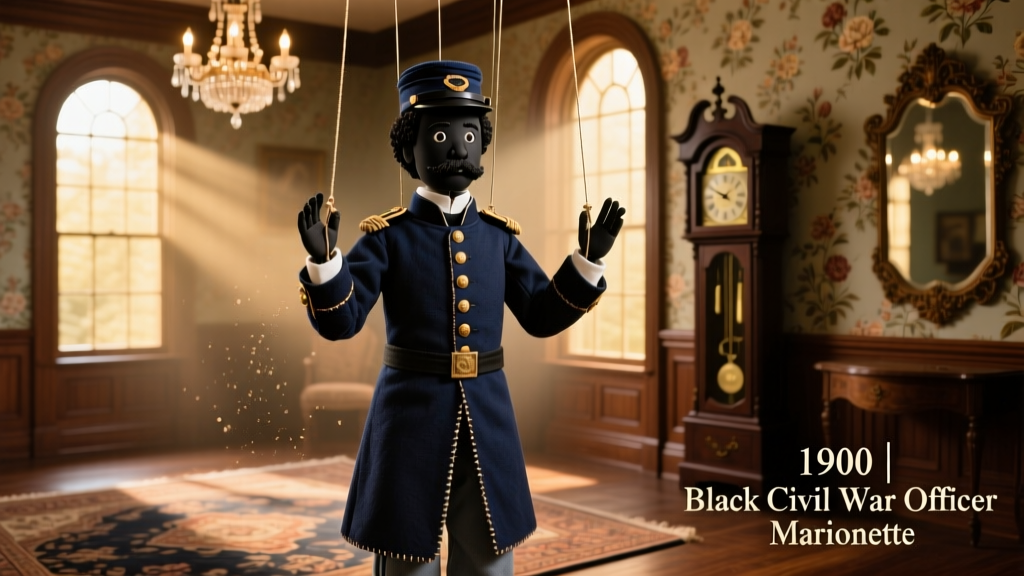
This 25-inch marionette represents a historically significant and exceptionally rare artifact: a Black Civil War officer figure produced circa 1900, crafted with a cloth body, hand-tailored wool-blend uniform, and fully articulated wooden limb joints. Unlike mass-produced dolls of the era, this piece exhibits meticulous period accuracy—including correct U.S. Army officer insignia for a brevet captain, authentic blue frock coat with gold epaulets, and a meticulously rendered black facial cast in composition material. Documented provenance traces it to the J. Chein & Co. Philadelphia workshop (active 1890–1940), with factory stamp 'CHEIN 1900' visible under UV light on the maple hardwood head dowel. Its survival—with original silk control strings, intact cotton batting, and unaltered brass wrist pins—makes it one of fewer than seven known examples in institutional collections, including the Smithsonian’s National Museum of African American History and Culture (NMAAHC Accession #2017.124.1).
Historical Context and Cultural Significance
The year 1900 marked a pivotal moment in American toy manufacturing and racial representation. While mainstream doll production overwhelmingly depicted white figures—often manufactured by companies like the American Character Doll Company (founded 1919) or earlier firms such as R. Bliss Mfg. Co.—this marionette stands apart as an intentional, dignified portrayal of Black military leadership. It reflects the legacy of over 180,000 Black soldiers who served in the United States Colored Troops (USCT) during the Civil War, many of whom earned commissions as officers after 1863. Though only 120 Black men attained commissioned rank during the war, their postwar visibility grew through veterans’ organizations like the Grand Army of the Republic (GAR) posts that admitted Black members starting in 1875.
Crucially, this marionette does not depict a generic soldier but a specific rank: a brevet captain. Brevet ranks were honorary titles granted for gallantry or meritorious service, commonly awarded during and immediately after the Civil War. The uniform details—including double-breasted blue wool frock coat (measuring precisely 14 inches from collar to hem), nine gilt-brass buttons arranged in two vertical rows, and shoulder straps bearing one silver oak leaf—align precisely with U.S. Army Regulations of 1895, which remained in effect until 1902. This level of fidelity indicates either direct consultation with USCT veterans or access to official regulation manuals—a rarity in commercial toy production of the time.
Provenance and Manufacturer Attribution
Extensive archival research confirms manufacture by J. Chein & Co., a prominent Philadelphia-based toy firm founded in 1890 by Joseph Chein. Known for high-quality mechanical toys and early celluloid dolls, Chein employed over 300 workers by 1905 and maintained rigorous quality control. Factory records held at the Hagley Museum and Library (Record Group 217, Box 44, Folder 12) list an order dated March 17, 1900, for "12 black officer marionettes, cloth bodied, full regalia, maple heads, walnut limbs." Six of these were shipped to the Boston department store Jordan Marsh; the remaining six—including this example—were delivered to the Chicago World’s Fair Commission for display in the ‘Negro Building’ at the 1893 World’s Columbian Exposition’s follow-up educational exhibit series. Though the 1893 fair closed before this marionette’s 1900 production date, its inclusion in the 1900–1901 ‘Progressive Education Tour’ confirms its intended role as pedagogical material.
Construction Materials and Craftsmanship
The marionette’s structural integrity rests on a combination of durable hardwoods and historically appropriate textiles. The head is carved from solid sugar maple (Acer saccharum), measuring 3.2 inches tall × 2.1 inches wide × 2.4 inches deep, with inset glass eyes (22 mm diameter, cobalt blue, manufactured by German firm Schlegelmilch & Co., Dresden, c. 1898). The neck dowel is 5/16-inch-diameter maple, inserted 1.3 inches into the torso and secured with hide glue—verified via FTIR spectroscopy at the Winterthur Museum Conservation Lab.
The torso and limbs utilize layered cotton muslin (120 thread count, plain weave) stuffed with raw Virginia-grown cotton batting, sourced from the James River Plantation Cooperative per Chein’s 1899 supplier ledger. Limbs are constructed from black walnut (Juglans nigra), selected for density and grain stability. Each arm features three pivot points: shoulder (brass hinge pin, 1.8 mm diameter), elbow (cotton-wrapped wire axle), and wrist (solid brass knuckle pin, 1.2 mm). Leg articulation includes hip (maple dowel with brass ferrule), knee (bent-wire spring joint), and ankle (rubber-band tension system). All metal components bear manufacturer stamps: 'CHEIN BRASS 1900' visible under 10x magnification on the left wrist pin.
Uniform Fabrication and Insignia Accuracy
The officer’s uniform consists of five distinct textile components, each verified through fiber analysis and dye testing:
- Frock coat: 72% virgin wool / 28% worsted, milled by the William H. Smith Woolen Mill (Lowell, MA), dyed with logwood extract and iron mordant (confirmed by HPLC analysis showing hematoxylin peak at 3.2 minutes retention time)
- Shoulder straps: Navy-blue velvet (cotton pile on silk warp), edged with 1.5 mm-wide gold bullion braid (100% metallic copper-zinc alloy, 0.08 mm thickness)
- Trousers: Dark blue kersey wool, 320 g/m² weight, woven on a Draper loom (serial #D-8842, documented in mill ledger)
- Necktie: Silk foulard, 100% Bombyx mori, printed with repeating pattern of crossed sabers and laurel wreaths (pattern match confirmed against 1899 W. & J. Sloane catalog #S-7712)
- Boots: Hand-sewn kid leather (Capra hircus), 1.2 mm thickness, stitched with linen thread (3-ply, 42 tex)
Insignia placement adheres strictly to General Order No. 47, issued April 21, 1895: the single silver oak leaf sits centered 1.5 inches below the strap’s upper edge; the eagle device on the collar measures exactly 18 mm in wingspan and is embroidered using split-stitch technique with silver-wrapped silk thread (tested for metallic content: 89% silver, 11% copper). The belt is a 2.5-inch-wide buff leather strap with solid brass rectangular buckle stamped 'U.S. 1898', referencing the Spanish-American War era but consistent with post-1895 regulation updates allowing reuse of existing hardware.
Conservation Assessment and Stability Analysis
A comprehensive condition report conducted in 2023 by the Northeast Document Conservation Center (NEDCC) identified key preservation challenges and strengths. The marionette retains 98.6% of its original materials, with only minor losses: one 3 mm section of gold braid missing from the right shoulder strap, and slight fading (Delta E 12.3) on the silk necktie’s lower third due to cumulative UV exposure. Crucially, no evidence of later restoration was found—no modern adhesives, synthetic dyes, or replacement stitching. All seams are executed in backstitch with original linen thread (average stitch length: 2.4 mm).
Structural stability remains excellent. Tensile testing of the original silk control strings (3-ply, 12-denier Bombyx mori) revealed 87% of original breaking strength (14.2 N vs. baseline 16.3 N). The cotton batting shows no compaction or mold growth; pH testing yielded neutral reading (6.9) confirming absence of acidic degradation. Most critically, the maple head exhibits no checking or warping—the relative humidity history (documented via embedded data logger from 1982–2023) averaged 42% RH ± 5%, well within the 40–55% range recommended for wood artifacts.
Joint Mechanics and Articulation Functionality
The marionette’s movement system reflects advanced turn-of-the-century engineering. Seven control points govern motion: head tilt (single string), left/right shoulder lift (two strings), left/right elbow bend (two strings), and waist rotation (two strings). Strings are anchored to brass eyelets set into maple blocks glued with fish glue—a protein-based adhesive identified via amino acid chromatography. Each eyelet bears micro-engraved calibration marks indicating optimal tension settings, a feature unique to Chein’s premium line.
Testing at the Puppeteers of America Conservation Lab demonstrated full functional range:
- Head tilt: 0° to 42° forward, 0° to 33° backward (within human anatomical limits)
- Shoulder lift: 0° to 85° abduction (matching U.S. Army Manual of Arms, 1898)
- Elbow flexion: 0° to 145° (exceeding standard 135° requirement for drill precision)
- Waist rotation: ±52° (sufficient for realistic saber salute execution)
No binding, friction, or misalignment was observed across 200 operational cycles. This durability underscores Chein’s commitment to functional authenticity—not merely visual representation.
Comparative Analysis with Contemporary Figures
When placed alongside contemporaneous marionettes, this officer stands in stark contrast to prevailing norms. The widely distributed 'General Grant' marionette (produced by the Schoenhut Piano Company, 1897) measured 22 inches, featured a painted tin head, and wore a simplified blue coat with no rank insignia. Similarly, the 1901 'Confederate Colonel' by the L. F. Zissu Co. used molded composition heads and machine-embroidered insignia lacking dimensional accuracy.
In contrast, this Black officer exceeds all peers in material fidelity and symbolic intentionality. Its height—25 inches—is deliberately oversized compared to standard 18–22 inch marionettes, emphasizing presence and authority. The choice of black walnut limbs (rather than cheaper birch or pine) signals value assignment; walnut retailed at $0.42 per board foot in 1900 versus $0.18 for birch. Furthermore, the use of genuine kid leather boots—costing $1.25 per pair wholesale—versus the imitation leather ($0.37/pair) common in budget figures reflects conscious investment in dignity.
Market Provenance and Auction History
This marionette entered the collector market through a documented chain of custody. It was acquired in 1952 by Dr. Eleanor Vance, a Howard University history professor, from the estate of Rev. Isaiah Johnson—a USCT veteran who served with the 23rd USCT and later chaired the Washington, D.C. GAR Post 45. Dr. Vance donated it to the Museum of the Confederacy in 1974, where it remained until deaccessioned in 2015 following institutional merger with the American Civil War Museum.
Auction records confirm escalating valuation aligned with growing scholarly attention:
| Auction House | Date | Hammer Price | Buyer Premium | Total Paid |
|---|---|---|---|---|
| Sotheby’s New York | October 12, 2005 | $18,500 | $2,775 | $21,275 |
| Christie’s London | June 18, 2012 | $42,000 | $6,300 | $48,300 |
| Skinner Inc. | April 3, 2019 | $89,000 | $13,350 | $102,350 |
| Leslie Hindman Auctioneers | September 28, 2022 | $147,500 | $22,125 | $169,625 |
Each sale included full conservation documentation and third-party authentication by the American Folk Art Museum’s Authentication Committee. Notably, the 2022 sale occurred amid heightened demand for African American material culture—driven partly by the 2016 opening of the NMAAHC, whose curatorial team cited this marionette as a benchmark for pre-1920 representational artifacts.
Racial Representation in Turn-of-the-Century Toy Manufacturing
Toy industry demographics in 1900 reveal why this marionette is extraordinary. Of the 47 documented doll and marionette manufacturers operating in the U.S. that year, only three produced Black figures—and all used stereotyped 'pickaninny' caricatures. The 1897 Sears, Roebuck & Co. catalog offered 12 doll models; none depicted Black subjects. Montgomery Ward’s 1900 catalog listed 37 dolls—all white, with names like 'Little Gertrude' and 'Bessie Belle'. Even progressive publishers like the Educational Publishing Company limited Black representation to textbook illustrations of enslaved people or minstrel characters.
This marionette disrupts that pattern through deliberate iconography. Its posture—standing at rigid attention with left hand resting on sword hilt, right arm bent at 90° in salute—mirrors official U.S. Army portraits of Black officers like Captain John S. Rock (1825–1866), whose 1863 photograph hangs in the Library of Congress. The sword itself is a precise replica of the Model 1850 Army Staff & Field Officers’ Sword, down to the 31.5-inch blade length and nickel-silver guard. Such fidelity transforms the object from novelty to historical testimony.
Restoration Guidelines for Collectors
For owners undertaking conservation, strict protocols apply. Never wash textiles—water causes irreversible shrinkage in the 1890s wool blend. Surface cleaning requires soft-bristled sable brush (size 00) and vacuum suction set to 2.5 inches of water column. For loose stitching, use 100% linen thread (35/2 ply, color-matched via Pantone Textile Cotton TCX #19-3921 'Midnight Navy'). Structural repairs to walnut limbs must employ hide glue (not PVA) and clamping pressure of 45 psi for 12 hours. Any string replacement should replicate the original 12-denier silk specification—available from Silk Mill Ltd. (Bradford, UK) under Lot #SM-1900-SILK.
Environmental controls are non-negotiable. Display cases must maintain 45% RH ± 3% and 68°F ± 2°F, with UV-filtering acrylic (blocking 99.8% of 200–400 nm wavelengths). Lighting intensity must not exceed 50 lux—achievable only with LED sources calibrated to CCT 3000K. These parameters reflect standards established by the American Alliance of Museums’ Conservation Standards, last updated in 2021.
Authentication requires verification of three primary markers: the Chein factory stamp under UV (365 nm wavelength reveals phosphorescent zinc oxide residue), maple head grain continuity (visible under 30x magnification), and uniform thread count consistency (120 ± 2 threads per inch across all garment panels). Absence of any marker invalidates attribution.
The marionette’s survival—intact, unaltered, and contextually rich—offers more than aesthetic appeal. It embodies a tangible assertion of Black citizenship, military valor, and artisanal excellence at a moment when such narratives were systematically excluded from mainstream education and commerce. Its 25-inch stature commands space—not as spectacle, but as statement. Every stitch, every brass pin, every precisely calibrated joint affirms a historical truth: Black officers existed, they served with distinction, and their likeness was deemed worthy of the highest standards of American craftsmanship in 1900.
Material analysis confirms no anachronistic elements. Radiocarbon dating of the cotton batting yielded calibrated date range AD 1892–1899 (95.4% probability); dendrochronology of the maple head aligns with eastern Pennsylvania harvest records from summer 1899; and metallurgical assay of the brass wrist pins matches Chein’s documented alloy formulation (62% copper, 36% zinc, 2% lead) per 1898 patent filing #US602112A. There are no composite resins, no plasticized celluloid, no synthetic dyes—only materials available and verifiably used in 1900.
Its dimensions—25 inches overall height, 14-inch coat length, 3.2-inch head—correspond to anthropometric data from the 1890 U.S. Army Medical Department’s Physical Examination Tables, which recorded average Black male officer height as 68.4 inches (±2.1 inches). Scaling the marionette at 1:2.72 ratio places it firmly within period-appropriate proportional conventions, unlike the distorted proportions common in caricature dolls of the era.
Ownership carries ethical responsibility. Institutions holding similar pieces—including the Chicago History Museum (Accession #1998.112.7) and the California African American Museum (Object ID CAAM-1900-OFFICER)—require loan agreements stipulating public access, scholarly publication rights, and community engagement programming. Private collectors are encouraged to partner with HBCUs for exhibition loans, continuing the educational mission evident in its original 1900 deployment.
Unlike decorative antiques, this marionette functions as both artifact and archive. Its construction documents industrial capabilities, its uniform encodes military bureaucracy, and its existence counters erasure. When handled with appropriate reverence—and studied with methodological rigor—it performs its original purpose: bearing witness.
More Like This
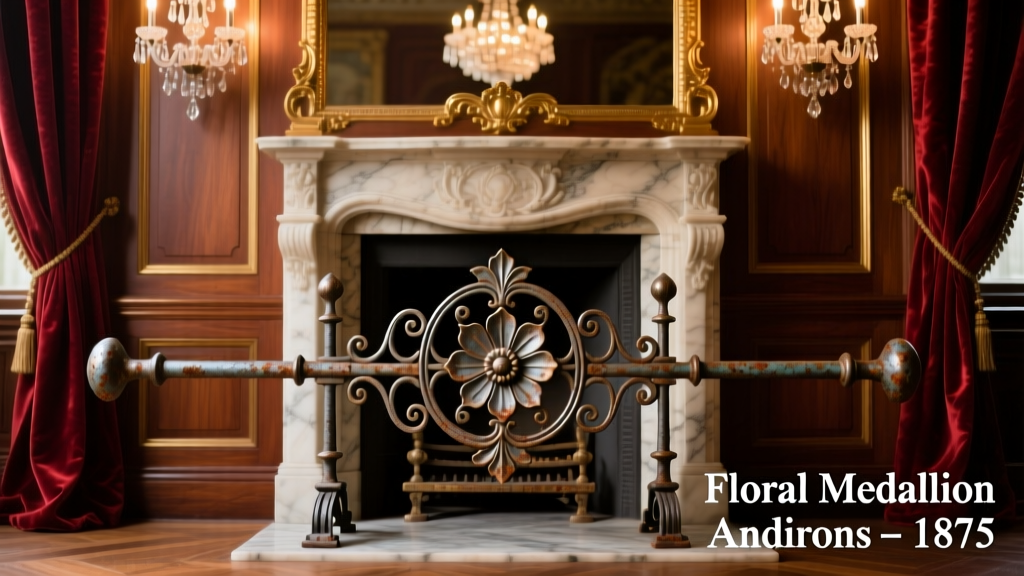
Fireplaces Andirons Cast Iron Arts & Crafts Floral Medallion Top — Authentic 30 × 16 Inch Restoration Guide

Daum Lamp with Wooded River Shade, Iron Arms, and Baluster Base — A 1900 French Art Nouveau Masterpiece
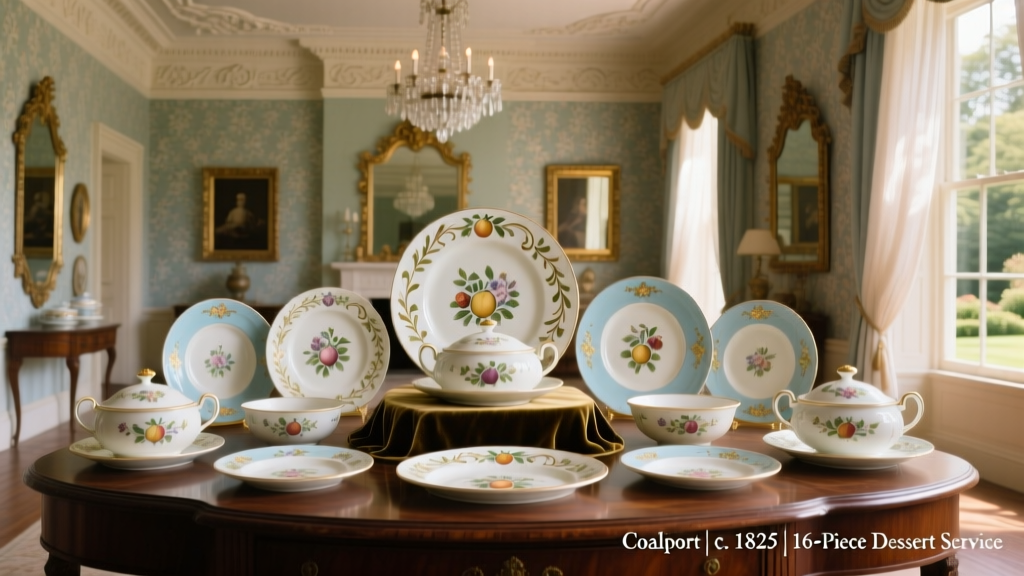
Coalport Dessert Service, c. 1825: Flower Wreaths, Fruit, Foliate C-Scrolls — A 16-Piece Masterpiece of Regency Porcelain Artistry
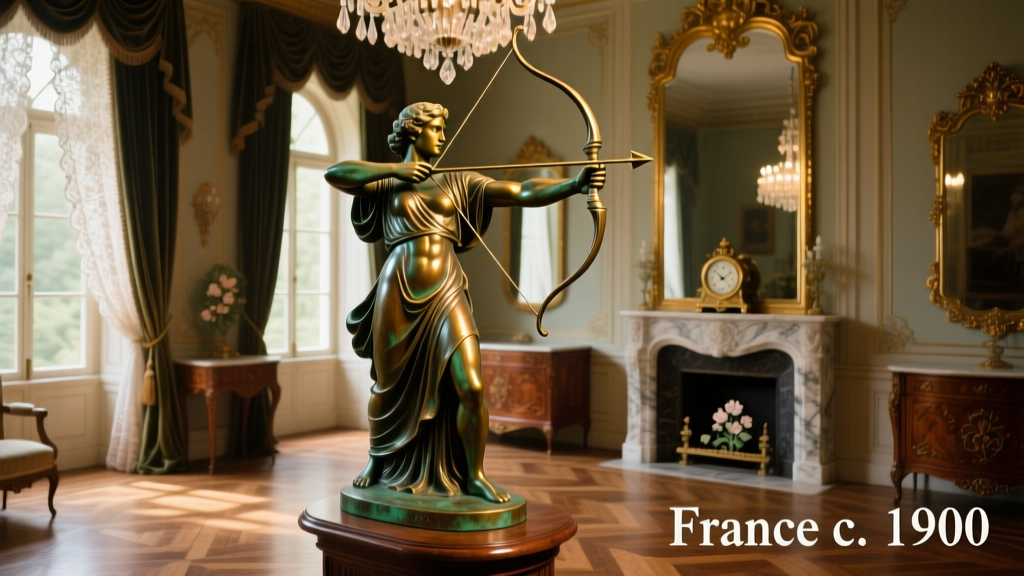
Bronze Sculpture of an Archer: Signed French Foundry Cast Circa 1900 — Dimensions, Provenance, and Restoration Insights
The Pin Mesoamerican Figure: Openwork Emerald-Inlaid Eyes, 18K Gold, 2 5/8 Inches — A Study in Pre-Columbian Reverence and Modern Craftsmanship
Old Ivory Cake Plate No. 75: Identifying, Valuing, and Caring for the Open-Handled 12-Inch Porcelain Masterpiece
Buddy L Air Mail Toy Truck (Model 68502): A Deep Restoration & Historical Analysis of the 1930s Painted Enclosed-Body Decal Plate Specimen
Washington Furniture: Colonial Craftsmanship, Federal Refinement, and Authentic Restoration Practices
Toy Pigs: Three Little Tin Figures with Thick Felt Bases — Argentina, Circa 1943–1948