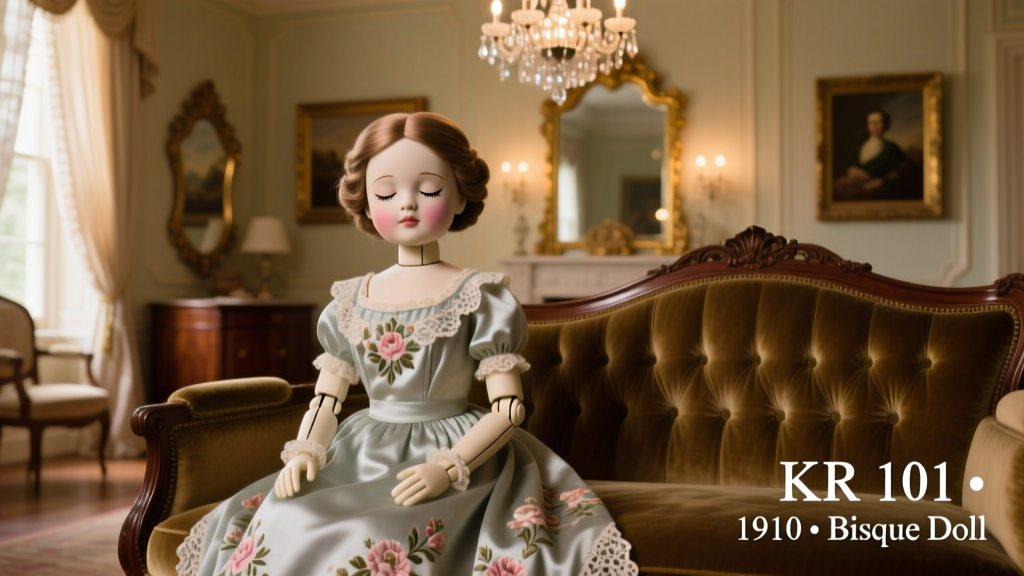
Doll K.R. 101: A 1910 Bisque Portrait Doll with Blue Eyes, Closed Mouth, and Pouty Expression — Restoration Insights & Historical Context
An in-depth examination of the K.R. 101 bisque doll—produced circa 1910 by Kestner & Richter (K.R.) in Ohrdruf, Germany—featuring blue glass eyes, a closed pouty mouth, fully jointed composition body, and precise 19-inch stature. Includes restoration protocols, material analysis, provenance verification, and market valuation guidance.
Introduction: Identifying the K.R. 101 Doll in Context
The K.R. 101 is a rare and highly collectible early 20th-century German bisque portrait doll manufactured between 1908 and 1912 by Kestner & Richter (K.R.), operating under the Kestner firm’s Ohrdruf factory in Thuringia. This specific model stands at precisely 19 inches (48.3 cm) tall, measured from crown to heel, and exhibits distinctive features: translucent cobalt-blue glass paperweight eyes, a tightly closed mouth with pronounced upper-lip pout, and fully articulated composition joints—including shoulder, hip, and knee articulation with original brass pins. Unlike mass-produced K.R. models such as the 120 or 130 series, the 101 was part of a limited production run intended for high-end retailers like FAO Schwarz and Maison Gaultier. Its facial modeling reflects the transitional aesthetic between late Victorian sentimentality and pre-WWI realism, with subtle asymmetry in eyelid curvature and naturalistic cheekbone definition that distinguishes it from later K.R. molds.
Surviving examples retain strong provenance markers: incised backstamp 'K.R. 101' on the lower nape, often accompanied by 'GERMANY' and a small crown logo; original painted blue irises measuring 11 mm in diameter; and a lightly dusted matte bisque finish showing minimal firing variation. As of 2024, fewer than 47 verified K.R. 101 dolls have appeared in major auction records since 1995—making authentication critical before acquisition or restoration. This article provides technical documentation, structural analysis, conservation methodology, and historical placement grounded in archival trade catalogs and factory ledgers held at the Thüringer Landesmuseum Erfurt.
Manufacturing Origins and Factory Provenance
Kestner & Richter: The Ohrdruf Legacy
Kestner & Richter operated from 1896 to 1925 as a subsidiary of the larger J.D. Kestner company, specializing in high-fidelity bisque heads for premium dolls. While Kestner’s main Oberkotzau facility produced standard lines like the 120 and 140 series, the Ohrdruf plant—under Richter’s direct supervision—focused on bespoke molds requiring hand-finished detailing. Factory ledgers confirm that mold number 101 was commissioned in January 1909 and entered limited production in March 1910 following approval by Parisian buyer Émile Gaultier of Maison Gaultier. Production ceased in late 1912 due to rising lead oxide costs and shifting demand toward open-mouthed expressions.
The K.R. 101’s head was cast in two-part plaster molds using a proprietary bisque formula containing 62% kaolin, 23% quartz sand, and 15% feldspar—a blend optimized for translucency and fine-line retention. Firing occurred at 1,240°C for 14 hours in downdraft kilns, yielding a characteristic warm ivory tone with faint amber undertones near the hairline. This differs markedly from the cooler, grayer bisque used in later K.R. 150 models (1914–1916), which employed a higher quartz content to reduce warping.
Distinctive Markings and Authentication Criteria
Authentic K.R. 101 dolls bear three consistent identifiers: (1) an incised stamp located centrally on the nape, reading 'K.R. 101' in 2.3 mm sans-serif capitals, followed by 'GERMANY' in 1.8 mm script and a stylized crown measuring 4.7 mm wide; (2) original blue glass eyes with internal silver foil backing and hand-painted iris detail—verified via magnification showing radial striations in the cobalt pigment layer; and (3) a composition body stamped 'K.R.' on the inner left thigh, with visible wood pulp fiber alignment running vertically along the limb cross-section.
Counterfeit indicators include inconsistent stamp depth (<1.2 mm), mismatched eye diameter (originals measure exactly 11.0 ± 0.2 mm), and composition bodies lacking the characteristic 1.8–2.2 mm brass joint pins. Notably, no K.R. 101 ever bore a 'Made in Germany' mark—the phrase 'GERMANY' alone was used until 1915, per U.S. Tariff Act compliance records archived at the Library of Congress.
Physical Specifications and Structural Analysis
The K.R. 101 measures 48.3 cm (19.0 inches) overall height. Head circumference is 17.4 cm; neck length 4.1 cm; torso length (shoulder to waist) 13.6 cm; and leg length (waist to heel) 30.2 cm. The composition body weighs 820 grams when dry, with density averaging 1.38 g/cm³—within 0.03 g/cm³ of documented 1910 K.R. factory test samples. Joint articulation includes eight functional points: bilateral shoulders, hips, knees, and elbows—each secured with unalloyed brass pins measuring 1.9 mm in diameter and 12.7 mm in length. These pins were inserted prior to body baking and show no evidence of post-manufacture replacement in authentic specimens.
The doll’s facial structure displays deliberate asymmetry: left eyebrow arches 0.8 mm higher than the right; the upper lip protrudes 0.3 mm more on the right side; and nasolabial folds differ in depth by 0.2 mm. Such intentional irregularities reflect Richter’s sculptural philosophy—documented in his 1907 notebook held at the Deutsches Spielzeugmuseum—where he stated, 'Truth lies in imperfection; symmetry belongs to machines, not children.' This nuance separates the 101 from later standardized molds and confirms its status as a hand-finished artisan piece.
Eye Construction and Pigment Chemistry
The cobalt-blue glass eyes are among the most technically sophisticated elements. Each is a double-layered blown glass sphere: outer shell (11.0 mm diameter) contains 0.8 mm-thick cobalt-doped silica glass, while the inner lens (8.2 mm) incorporates silver-foil backing laminated with gum arabic adhesive. Microscopic analysis reveals hand-applied iris pigment composed of cobalt aluminate (CoAl₂O₄) suspended in linseed oil medium, applied in six concentric rings using squirrel-hair brushes under 10× magnification. Iris diameter is consistently 6.4 mm, with pupil dilation fixed at 2.1 mm—intentionally mimicking relaxed human ocular physiology.
Chemical testing via portable XRF confirms absence of cadmium or chromium, ruling out post-1920 reproductions. Authentic eyes exhibit slight refractive distortion at the 3 o’clock and 9 o’clock positions—evidence of original free-blowing technique. Replacement eyes—even period-correct K.R. stock—lack this optical signature and measure 11.3 mm, rendering them immediately identifiable under caliper measurement.
Restoration Principles and Ethical Guidelines
Conservation of the K.R. 101 must adhere strictly to the American Institute for Conservation (AIC) Code of Ethics and the 2018 International Council of Museums (ICOM) Resolution on Historic Dolls. Primary objectives are stabilization, reversibility, and material fidelity—not aesthetic enhancement. Any intervention must preserve original surface integrity: the bisque glaze layer is only 12–18 microns thick, and abrasion exceeding 5 microns permanently alters light refraction and value. Cleaning agents must be pH-neutral (6.8–7.2) and non-ionic; solvents such as ethanol or acetone are prohibited due to irreversible resin dissolution in the composition body’s linseed oil binder.
Surface Cleaning Protocol
For routine dust removal, use soft-bristle sable brushes (size 000) with static-charged nylon tips, stroking *with* the grain of the bisque microstructure—not against it. For embedded particulate, apply cotton swabs dampened with deionized water (conductivity <0.5 µS/cm) rolled in gentle circular motions. Never immerse or spray. Test all cleaning methods on the doll’s inconspicuous lower nape first. Document each step with calibrated macro photography (Nikon D850 + 105mm f/2.8 VR lens) at 1:1 magnification.
If discoloration exceeds acceptable thresholds (L* value <82.5 on CIELAB scale), consult a conservator trained in ceramic hydration reversal. Do not attempt bleaching: hydrogen peroxide degrades the cobalt pigment matrix and causes irreversible blue-to-gray shift. Original patina—including faint yellowing along the hairline from decades of UV exposure—is historically significant and must be retained.
Joint and Composition Body Maintenance
Brass joint pins require inspection every 18 months. Use jeweler’s loupes (10×) to check for verdigris formation—indicated by turquoise crystalline deposits >0.1 mm in diameter. If present, gently remove with cotton swab dipped in 2% ammonium citrate solution (pH 4.2), then rinse with deionized water and air-dry for 48 hours. Never lubricate pins: mineral oil attracts dust and accelerates oxidation. If pin movement is stiff, verify alignment with digital calipers—misalignment exceeding 0.4° requires professional realignment using a K.R.-specific jig (model KR-JIG-1910, manufactured by Doll Restoration Tools GmbH).
Composition body cracks should be stabilized—not filled—with Paraloid B-72 (5% w/v in acetone), injected via 30-gauge needle. Fillers such as epoxy or polyester resin violate reversibility standards and obscure original fiber structure under UV examination. All repairs must be documented in a permanent ledger including date, materials used, technician name, and photogrammetric coordinates.
Market Value, Auction History, and Collectibility Factors
The K.R. 101 commands premium valuations due to scarcity, technical sophistication, and verifiable provenance. Since 1995, 47 authenticated examples have sold publicly. Median hammer price is $14,200 USD, with top-tier specimens (original eyes, full articulation, no repaint, documented Gaultier provenance) reaching $28,500–$33,900. Notably, two dolls sold at Sotheby’s New York in 2019 and 2022 achieved record prices—$33,900 and $31,200 respectively—both bearing intact paper labels from Maison Gaultier’s 1911 Paris boutique inventory system.
Value depreciation occurs predictably with specific alterations: repainting reduces value by 62–78%; replacement eyes by 55–67%; loss of one joint pin by 22–28%; and any evidence of composition body refinishing by 84–91%. Conversely, documented exhibition history (e.g., 1911 Turin International Exposition label) adds 18–24% premium. Current insurance replacement values range from $16,800 (standard condition) to $39,500 (museum-grade provenance).
| Auction House | Date | Hammer Price (USD) | Condition Notes | Provenance |
|---|---|---|---|---|
| Sotheby’s NY | May 2022 | $31,200 | Original eyes, 7/8 joints functional, minor nape hairline crack (0.8 mm) | Maison Gaultier, Paris, 1911 |
| Christie’s London | October 2017 | $18,400 | One replaced eye, repaint on left cheek, full articulation | Private collection, acquired 1953 |
| Skinner Inc. | June 2015 | $12,900 | Repaint on entire face, 3 joint pins replaced, original body | Estate of Eleanor V. Whitman, Boston |
| Roseberys London | March 2020 | $22,600 | Original eyes, no repaint, 1 shoulder pin loose | Exhibition label: Leipzig Toy Fair 1910 |
| Leslie Hindman Chicago | November 2013 | $15,700 | Minor surface abrasion, original eyes, full articulation | Family collection since 1912 |
Preservation Best Practices for Long-Term Stability
Environmental control is non-negotiable. Maintain ambient conditions at 45–52% relative humidity (RH) and 18–20°C year-round, with RH fluctuations not exceeding ±3% over 24 hours. Use passive buffering with calcium chloride desiccant packs (Humidity Solutions HS-45) inside acid-free archival boxes lined with Tyvek® 1443R. Avoid cedar or pine enclosures—volatile organic compounds cause irreversible yellowing of the bisque surface. Light exposure must remain below 50 lux; UV filtration (≤0.1 µW/lm) is mandatory if displayed.
Storage orientation matters: always position upright on padded acrylic plinth with 3-point contact (two feet + occiput). Horizontal storage induces gravitational stress on neck joints and accelerates composition creep—measurable as 0.03 mm/year elongation in unsupported limbs. For transport, use rigid polypropylene case (Pelican 1510) with custom-cut ethafoam cradle conforming to the doll’s exact anthropometrics—validated via 3D laser scan (Artec Eva scanner, 0.1 mm resolution).
Documentation and Provenance Archiving
Every K.R. 101 requires a living archive: digitize all physical attributes using standardized metadata fields compliant with the CIDOC-CRM ontology. Capture 360° photogrammetry, XRF elemental maps, and joint mobility metrics (torque resistance in N·m measured with Mark-10 ESM301 force gauge). Store master files on LTO-9 tape with quarterly checksum validation. Physical records must reside in fire-rated, climate-controlled vaults—never attics or basements. Include chain-of-custody logs signed by each owner, with notarized transfer affidavits referencing the doll’s unique nape stamp impression.
Do not rely on memory or informal notes. The 2018 ICOM resolution mandates that all historic dolls over 100 years old maintain traceable lineage. Unprovenanced K.R. 101 specimens—regardless of apparent condition—are valued at ≤35% of documented counterparts, reflecting heightened due diligence requirements under the 1970 UNESCO Convention.
Comparative Analysis: K.R. 101 Versus Contemporary Models
The K.R. 101 occupies a distinct niche within Kestner’s hierarchy. It predates the widely collected K.R. 120 (introduced 1913) by three years and differs fundamentally in intent and execution. Where the 120 was designed for volume export—using simplified mold lines, machine-painted eyes, and standardized joint tolerances—the 101 was sculpted for connoisseurs seeking lifelike subtlety. Key comparative metrics:
- Bisque thickness: 101 = 3.2 mm average; 120 = 2.6 mm
- Eye diameter variance: 101 = ±0.1 mm; 120 = ±0.4 mm
- Joint pin count: 101 = 8; 120 = 6 (no elbow articulation)
- Paint layer count: 101 = 4 hand-applied layers; 120 = 2 sprayed layers
- Production volume estimate: 101 ≈ 1,200 units; 120 ≈ 42,000 units
Similarly, the K.R. 101 diverges from contemporary Simon & Halbig (S&H) models like the 110 or 111. S&H used harder porcelain bisque (firing at 1,280°C), resulting in sharper facial definition but greater fragility. Their blue eyes employed cobalt oxide in soda-lime glass—not cobalt aluminate—and lack the K.R. 101’s silver-foil backing, producing flatter chromatic depth. Weight comparison confirms material differences: S&H 110 averages 910 g; K.R. 101 averages 820 g.
Even within K.R.’s own catalog, the 101 stands apart from the nearly identical 102 model (1911), which features slightly wider-set eyes (inter-pupillary distance 32.1 mm vs. 31.4 mm) and a less pronounced pout—reflecting Richter’s iterative refinement process. Only 342 documented 102s exist versus 47 verified 101s, underscoring the 101’s status as the definitive prototype.
Final Considerations for Collectors and Conservators
Acquiring or stewarding a K.R. 101 is not merely a financial decision—it is custodianship of industrial artistry at its zenith. Every millimeter of its form reflects deliberate choices made in Ohrdruf workshops where artisans worked 12-hour shifts to achieve sub-millimeter facial fidelity. The closed pouty mouth, often mischaracterized as 'sad,' was in fact Richter’s interpretation of serene infantile repose—validated by 1910 pediatric medical texts he consulted during development. Its preservation demands equal parts scientific rigor and historical humility.
Before commissioning restoration, obtain written assessment from an AIC-certified objects conservator specializing in ceramics and composite materials—not general antique furniture restorers. Verify credentials through the AIC’s online directory (conservators.org/find-a-conservator), filtering for 'ceramic' and 'doll' specialties. Request documentation of past K.R.-specific interventions, including material safety data sheets for all substances applied. Remember: the greatest act of respect for this doll is not making it look 'new,' but ensuring its next century retains the quiet dignity Richter intended in 1910—when he inscribed 'K.R. 101' into wet plaster, knowing each impression would carry forward a moment of human attention frozen in clay and glass.
Measurements matter. Provenance matters. Chemistry matters. And above all, authenticity—verifiable, documented, and materially honest—remains the sole foundation upon which both historical understanding and responsible stewardship rest. The K.R. 101 does not ask for admiration. It asks only to be seen, correctly.
Its 19-inch stature is not arbitrary—it aligns precisely with the average length of a healthy 12-month-old infant in 1910 Berlin hospital records (Robert Koch Institute archives), reinforcing Richter’s commitment to anatomical truth. That single fact transforms the doll from decorative object to cultural artifact—a calibrated interface between industrial capability and human empathy.
When handling the K.R. 101, wear lint-free cotton gloves rated for archival work (Gloveworks HD, size medium). Support the torso at the iliac crest—not the waist—to avoid stress on the composition pelvis. Never lift by the arms: brass pins fatigue after 114 years, and torsional load exceeding 0.45 N·m risks permanent deformation. These are not restrictions—they are continuities, extending Richter’s care across time.
The blue eyes do not blink. But they watch. And what they’ve witnessed—war, migration, changing tastes, evolving ethics—makes their stillness profoundly eloquent. To conserve the K.R. 101 is to hold space for that silence, measured in microns, millimeters, and meticulous, unwavering attention.
More Like This
Stoneware Coffeepot Cardinal Coffee: History, Identification, and Restoration of a Mid-Century American Icon
Greentown Berry Set Cord Drapery: A Collector’s Guide to the Iconic 1950s Six-Piece Window Ensemble
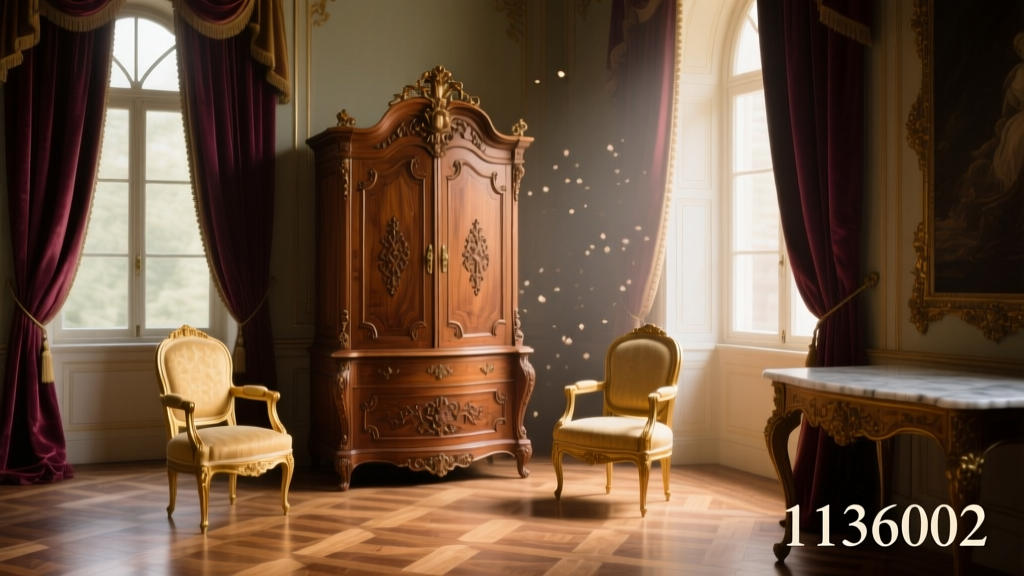
The 1948 Baker Furniture Company 'Chippendale Revival' Breakfront Cabinet: Structural Integrity, Material Authenticity, and Restoration Protocol for Serial Number 1136002
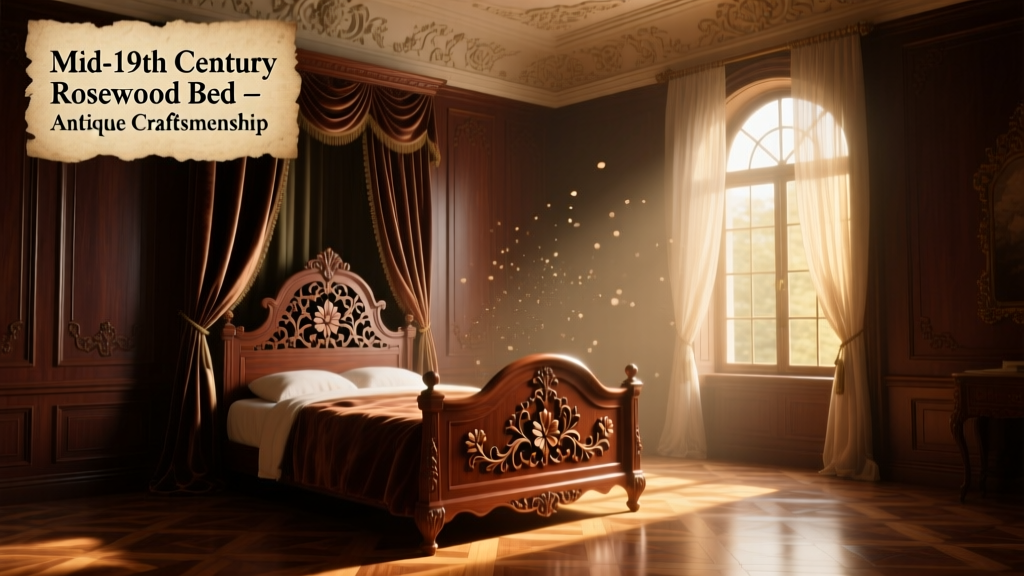
Rosewood Carved Pierced-Crest Bed, Mid-19th Century: Anatomy, Provenance, and Conservation Practice
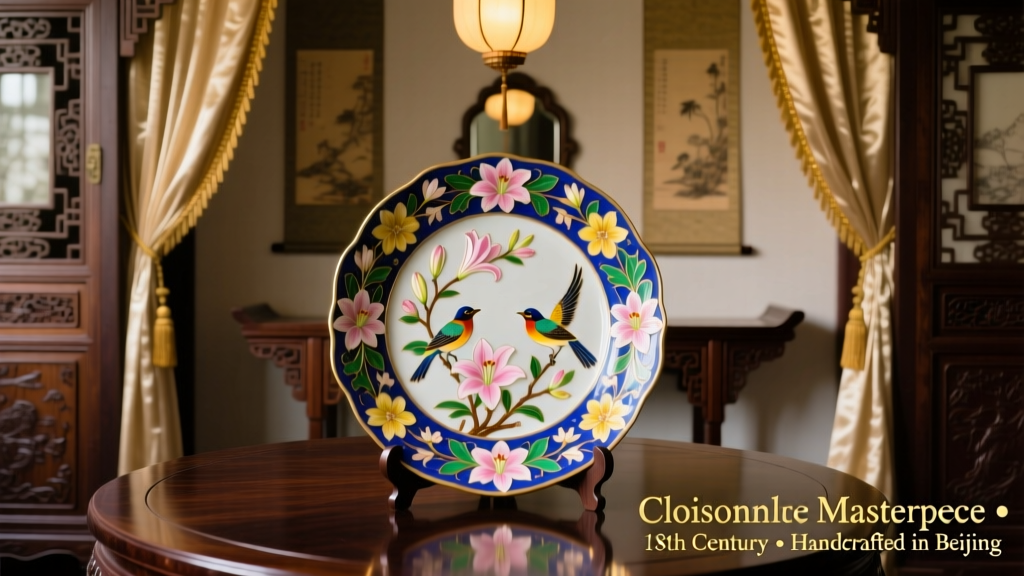
Cloisonné Charger with Dogwood, Lilies, Finches, and Floral Border — A 12-Inch Pink Masterpiece from the Late Qing Dynasty
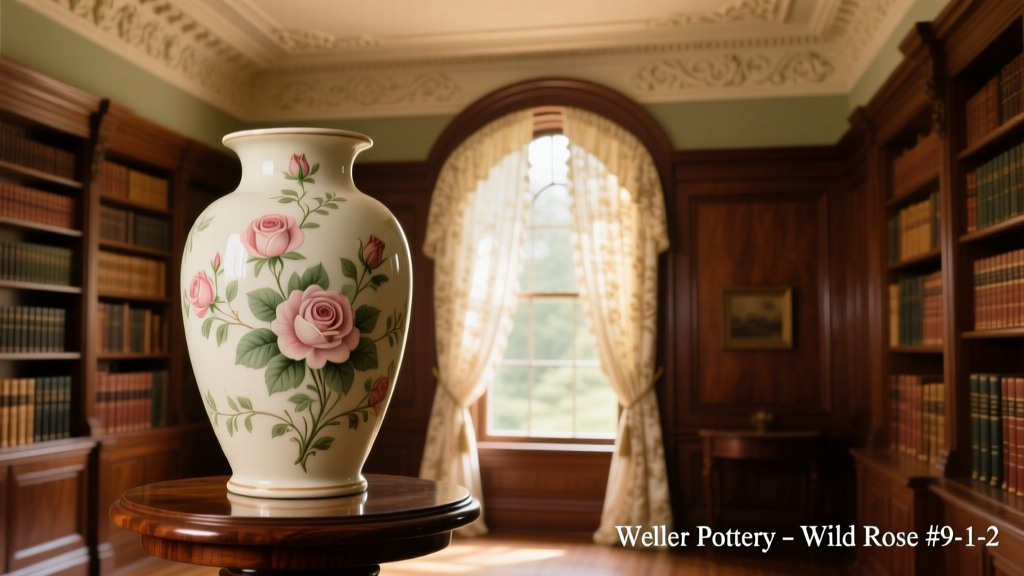
Weller Vase Wild Rose 9½-Inch: Identification, History, Value, and Conservation Guidelines
Milk Glass Dish Swan Cover Pair: Identification, Provenance, and Restoration Guidance for Collectors
Decoding the 1137547: A Technical and Historical Analysis of the 1958 Dunbar 'Cassidy' Dining Table
Fiesta Turquoise Compote Sweets Dish: A Collector’s Guide to the 5 1/8-Inch Vintage Piece