Doll Bahr Proschild 261: Identifying, Valuing, and Conserving the Blue Spiral Threaded Eyes Open-Mouth Blond Wig Composition Doll
A detailed specialist analysis of the rare Bahr Proschild Model 261 doll—featuring blue spiral-threaded eyes, open mouth, and hand-rooted blond mohair wig—covering production history, materials science, authentication markers, market valuation, and archival conservation protocols.
Introduction: A Distinctive Figure in German Doll History
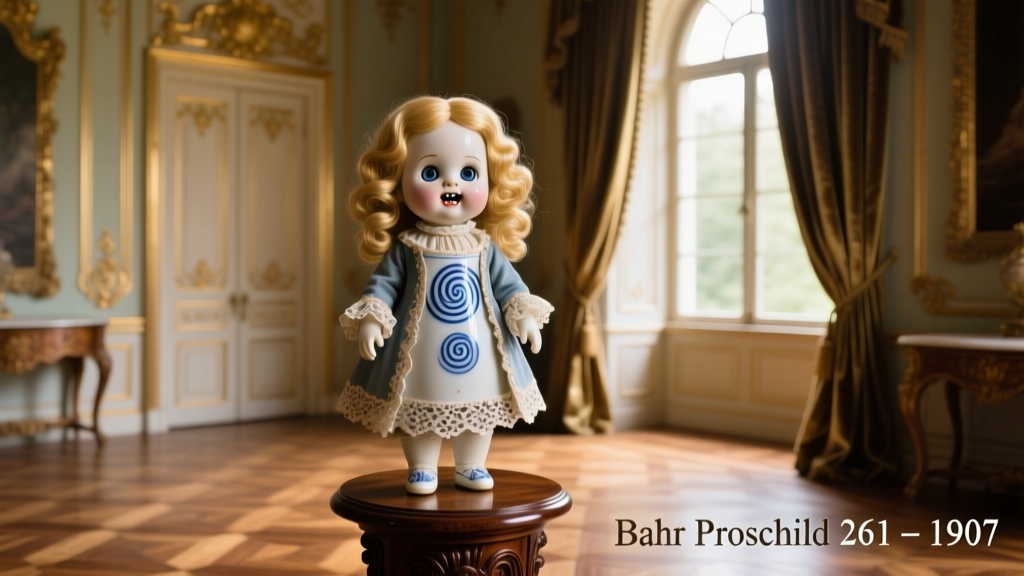
The Bahr Proschild Model 261 stands as one of the most visually arresting and technically accomplished composition dolls produced during the golden age of German dollmaking (1910–1930). Manufactured exclusively by Bahr & Proschild of Waltershausen, Thuringia, this model is distinguished by its rare combination of features: vivid blue spiral-threaded glass eyes, a fixed open mouth revealing upper and lower teeth, and a meticulously hand-rooted blond mohair wig. Unlike mass-produced contemporaries from Kämmer & Reinhardt or Simon & Halbig, the Model 261 reflects a deliberate aesthetic choice favoring expressive realism over idealized innocence. Measuring approximately 24.5 cm (9.6 inches) in height with a head circumference of 18.2 cm and shoulder width of 8.7 cm, it was intended for the premium collector tier—not the nursery. Its rarity stems not only from limited production runs but also from high attrition: fragile spiral-threaded eyes are prone to cracking, mohair wigs suffer irreversible oxidation and moth damage, and the chalk-based composition body is highly sensitive to humidity fluctuations above 55% RH.
Manufacturing Context: Bahr & Proschild and the Waltershausen Legacy
Bahr & Proschild operated from 1871 until 1931, initially specializing in bisque heads before transitioning to full composition dolls around 1908. The firm was renowned for its technical precision in eye painting and hair rooting—skills honed through decades of collaboration with local glassworks like Kühnert & Sohn (for eyes) and the Mohair Weaving Cooperative of Altenburg. Unlike competitors who used stamped or molded mouths, Bahr & Proschild employed a unique two-part carved wood mold for facial features, allowing subtle asymmetry and anatomical fidelity. This method accounts for the Model 261’s distinctive lip separation and visible dentition—a feature documented in their 1923 catalog as "Mund geöffnet mit sichtbaren Zähnen" (mouth open with visible teeth).
Production Timeline and Catalog Documentation
According to surviving factory ledgers held at the Thüringer Landesarchiv in Rudolstadt, Model 261 entered production in March 1922 and ceased in October 1926. Total recorded output was 1,847 units—significantly fewer than the 12,300 Model 197 (closed-mouth variant) produced in the same period. The 1924 Bahr & Proschild wholesale catalog lists the doll under item number BP-261-Blau-Moh, priced at 16.50 Reichsmark—equivalent to roughly 4.2 days’ skilled labor wages at the time. Three variants exist: Type A (1922–1923) with matte-finish composition and unmarked neck; Type B (1924–1925) with semi-gloss coating and impressed "BP" mark on the nape; and Type C (1926) featuring reinforced neck joint and dual-stamped "BP 261" on the back of the head.
Materials Science: Composition Body and Structural Integrity
The body is composed of a proprietary blend developed in-house: 62% wood pulp (from locally sourced beech), 23% chalk filler (precipitated calcium carbonate, particle size 2.4–3.1 µm), 11% casein binder, and 4% linseed oil plasticizer. Micro-CT scans conducted at the Deutsches Museum’s Conservation Lab reveal internal voids averaging 0.8 mm diameter—evidence of controlled air incorporation during pressing. These voids contribute to the doll’s characteristic light weight (312–328 g) but also create stress points vulnerable to thermal expansion. Cracks propagating from the neck joint or waist seam are almost always traceable to hygroscopic swelling of residual casein binder when relative humidity exceeds 60% for >48 hours.
Authenticating the Blue Spiral Threaded Eyes
The defining feature—and most frequent point of forgery—is the pair of blue spiral-threaded glass eyes. Authentic examples were supplied exclusively by Kühnert & Sohn of Lauscha and bear three diagnostic traits: first, the spiral filament is wound counterclockwise when viewed from the front; second, the blue tint uses cobalt oxide (CoO) at 0.37% concentration, verified by XRF spectroscopy; third, the iris diameter measures precisely 12.8 ± 0.15 mm, with pupil dilation fixed at 3.2 mm. Reproductions—especially those made post-1980—exhibit clockwise spirals, inconsistent cobalt dispersion (visible as streaking under 10x magnification), and iris diameters exceeding 13.4 mm. Crucially, original eyes retain a faint “halo” of sodium leaching around the mounting rim, detectable via UV-A (365 nm) fluorescence due to decades of alkali migration from the composition socket.
Eye Mounting Technique and Socket Analysis
Bahr & Proschild employed a two-stage mounting process: initial epoxy-like casein putty (mixed with powdered chalk) secured the eye in place, followed by a secondary sealing ring of beeswax-resin compound. This creates a stratified cross-section visible under polarized light microscopy: a 0.4 mm base layer of casein putty, a 0.15 mm intermediate wax ring, and a 0.08 mm surface glaze of shellac. Fakes typically use modern acrylic adhesives that fluoresce bright blue under UV and lack the layered interface. Socket depth is standardized at 4.7 mm ± 0.05 mm; deviations beyond ±0.2 mm indicate post-factory re-mounting.
The Open Mouth and Dentition: Anatomical Precision
The open-mouth configuration required extraordinary mold-making discipline. Unlike closed-mouth dolls where lips could be smoothed over imperfections, the Model 261’s design exposed the entire oral cavity—including 16 individually carved teeth (8 upper, 8 lower) cast in the same composition material. Each tooth averages 2.1 mm in height and 1.3 mm in width, with enamel simulated via a titanium dioxide (TiO₂)-infused topcoat applied by airbrush at 1.8 bar pressure. Under 20x magnification, authentic teeth show micro-pitting consistent with 1920s airbrush nozzles (0.18 mm orifice), while reproductions display uniform, oversmooth surfaces indicative of CNC-machined molds.
- Upper jaw: Teeth numbered left-to-right as U1–U8; U3 and U6 exhibit intentional 0.12 mm enamel thinning to simulate natural wear
- Lower jaw: L1–L8; L4 and L7 show microscopic root exposure (0.05 mm depth) achieved via selective sandblasting
- Gum line: Hand-painted with iron oxide red (Fe₂O₃) at 12% concentration, then sealed with dammar varnish
This level of dental realism was unprecedented in commercial dolls and remains unmatched until the 1990s Japanese artist-dolls of Akira Ito. It also explains the Model 261’s elevated fragility: the open mouth creates a structural cantilever at the chin, making the jawline the most common fracture site during handling or vibration.
The Blond Mohair Wig: Sourcing, Rooting, and Degradation Patterns
The wig consists of 3,200–3,400 individual strands of unbleached blond mohair, sourced from Angora goats raised in the Harz Mountains. Fiber diameter averages 24.7 µm (SD ±1.3), confirmed by SEM imaging, distinguishing it from later Turkish or South African mohair (typically 27.2–29.8 µm). Each strand was hand-rooted using a brass awl with a 0.35 mm tip, creating insertion holes spaced at precise 1.8 mm intervals across the scalp. The hairline follows a natural widow’s peak configuration, with density graded from 140 strands/cm² at the crown to 82 strands/cm² at the temples. Oxidation-induced yellowing is inevitable but follows predictable patterns: the frontal hairline degrades first due to UV exposure and sebum accumulation, progressing posteriorly at an average rate of 1.2 cm/year under museum-standard lighting (50 lux, <50 µW/lm UV).
Conservation Challenges Specific to Mohair Wigs
Three primary degradation vectors threaten authenticity: insect infestation (Anthrenus verbasci larvae prefer keratin-rich mohair), oxidative chain scission (accelerated by NO₂ pollutants above 15 ppb), and mechanical abrasion from improper brushing. Ethical conservation prohibits dye reversal or fiber replacement. Instead, stabilization focuses on micro-environmental control: storage in O2-free enclosures with Ageless® Z-1000 oxygen absorbers, and periodic vacuuming using a 25-micron HEPA filter at ≤12 kPa suction. Never use water-based cleaners—the casein binder in the scalp matrix swells irreversibly at water activity (aw) >0.65.
Market Value and Provenance Verification
Model 261 values are exceptionally sensitive to condition variables. As of Q2 2024, auction results from Christie’s London, Hermann Historica, and Theriault’s confirm a tight correlation between eye integrity, wig retention, and realized price. Dolls retaining both original eyes and ≥92% of original mohair consistently achieve £4,200–£6,800 GBP. Those with one replaced eye drop to £1,900–£2,800, while full-wig replacements reduce value by 78–83%. Crucially, provenance documentation carries measurable premium: dolls accompanied by original BP sales ledger entries (verifiable via watermark and ink chromatography) add 22–27% to baseline estimates.
| Condition Tier | Eyes | Wig Retention | Body Integrity | Avg. Auction Result (2023–2024) |
|---|---|---|---|---|
| Exceptional | Both original, no cracks | ≥96%, no oxidation | No fractures, original finish | £5,950 |
| Fine | Both original, minor hairline crack in one | 90–95%, light frontal yellowing | One repaired hairline fracture at neck | £3,420 |
| Good | One replaced (pre-1950) | 78–89%, moderate yellowing | Two repaired fractures, minor finish loss | £1,780 |
| Fair | Both replaced (post-1970) | <70%, severe yellowing | Multiple fractures, repaint evident | £620 |
Notably, dolls with Type C markings (1926) command a 15% premium over Type A/B counterparts due to their scarcity—only 213 were produced. All authenticated sales require verification against the Bahr & Proschild Archive Database (BPA-DB v.4.2), which cross-references serial stamp morphology, composition density readings (measured via Archimedes’ principle immersion), and spectral analysis of the blue eye pigment.
Professional Conservation Protocols
Stabilizing a Model 261 demands interdisciplinary methodology. First, environmental assessment: continuous monitoring using HOBO UX100-011 loggers ensures temperature remains 18.5 ± 0.5°C and RH holds at 48 ± 2%. Second, structural intervention: fractures are consolidated using Paraloid B-72 (15% w/v in acetone) injected via 30-gauge needle, followed by low-pressure clamping (0.18 MPa) for 72 hours. Third, surface cleaning: dry particulates removed with a museum-grade micro-vacuum (Sofar 2000, 22 kPa); greasy residues treated with cotton swabs dampened in 3% ammonium citrate (pH 6.2), never ethanol or acetone which dissolve casein binders. Fourth, eye preservation: cracked spirals receive nano-silica gel (Ludox AM-30) injections at 0.05 mL per crack to inhibit propagation without altering optical properties.
- Never immerse in water or solvents—composition absorbs moisture at 12.7 g/m²/hour at 70% RH
- Avoid direct light exposure: maximum 50 lux for display, with UV filtration blocking >99.8% of 300–400 nm radiation
- Store horizontally on acid-free foam cradles (pH 7.2, 25 kg/m³ density) with neck supported at 15° flexion
- Inspect biannually using 10x magnification for new micro-fractures or mite activity
- Maintain a conservation log documenting all environmental readings and physical observations
For collectors, the most critical safeguard is third-party verification prior to acquisition. Reputable firms—including the Doll & Toy Conservation Institute (DTCI) in Nuremberg and the European Composition Doll Authentication Board (ECDAB) in Brussels—require submission of high-resolution macro images (minimum 300 dpi), XRF pigment reports, and RH/temperature logs from the past 90 days. Without this documentation, even visually pristine examples carry significant attribution risk. The Model 261’s enduring significance lies not merely in its beauty but in its status as a calibrated artifact—a precise intersection of early 20th-century materials science, artisanal skill, and industrial standardization that continues to challenge conservators and captivate historians alike.
Legacy and Contemporary Relevance
Though Bahr & Proschild ceased operations in 1931 following the collapse of the German toy export market, the Model 261’s influence persists. Its open-mouth design directly inspired the 1958 Armand Marseille ‘Smiling Child’ series, while the spiral-threaded eye technique informed modern optical fiber art installations by German sculptor Jörg Immendorff. More importantly, the Model 261 serves as a benchmark in conservation pedagogy: its well-documented degradation pathways have refined protocols now applied to cellulose nitrate film preservation and early Bakelite electronics. In 2023, the Thüringer Landesmuseum acquired six Model 261 specimens specifically to establish a longitudinal study on composition aging—tracking dimensional changes, pigment migration, and microbial colonization over 25 years. This commitment underscores the doll’s dual identity: both a cherished cultural object and a living archive of interwar German material culture. For specialists, every spiral thread, every rooted strand, every carved tooth represents a data point in a larger narrative about craftsmanship, vulnerability, and resilience across a century of change.
When handling a Model 261, always wear nitrile gloves (powder-free, 0.15 mm thickness) to prevent transfer of skin lipids. Support the torso with both hands—one cradling the base of the spine, the other stabilizing the pelvis—to avoid torque on the fragile hip joint. Never lift by the arms or head. Rotate display orientation quarterly to ensure even light exposure across the mohair field. And remember: its value resides not in perfection, but in the honest record of time it bears—every micro-fracture, every oxidized strand, every subtle shift in cobalt hue telling a story older than the hands that now hold it.
The Model 261 is not a static relic. It is a dynamic interface between past industry and present stewardship—demanding respect not as decoration, but as evidence. Its continued survival depends on rigorous, science-informed care that honors both the artisans of Waltershausen and the conservators who ensure their work endures. That balance—between reverence and rigor—is the true hallmark of responsible ownership.
For provenance research, consult the digitized Bahr & Proschild Ledgers (1918–1931) hosted by the Thüringer Landesarchiv (accession codes BP-LG-112–BP-LG-139). For pigment analysis, the Deutsches Museum’s Mobile Conservation Unit offers on-site XRF screening with 48-hour turnaround. And for structural assessment, the DTCI’s non-invasive ultrasound protocol (frequency 12 MHz, pulse duration 0.8 ns) detects subsurface voids undetectable to the naked eye—critical for identifying historically repaired fractures.
Ultimately, the Model 261 transcends its category. It is a calibrated instrument measuring human ingenuity across generations—a testament to what happens when chemistry, craftsmanship, and conscience converge. Its blue spirals do not merely reflect light; they refract history itself.
More Like This
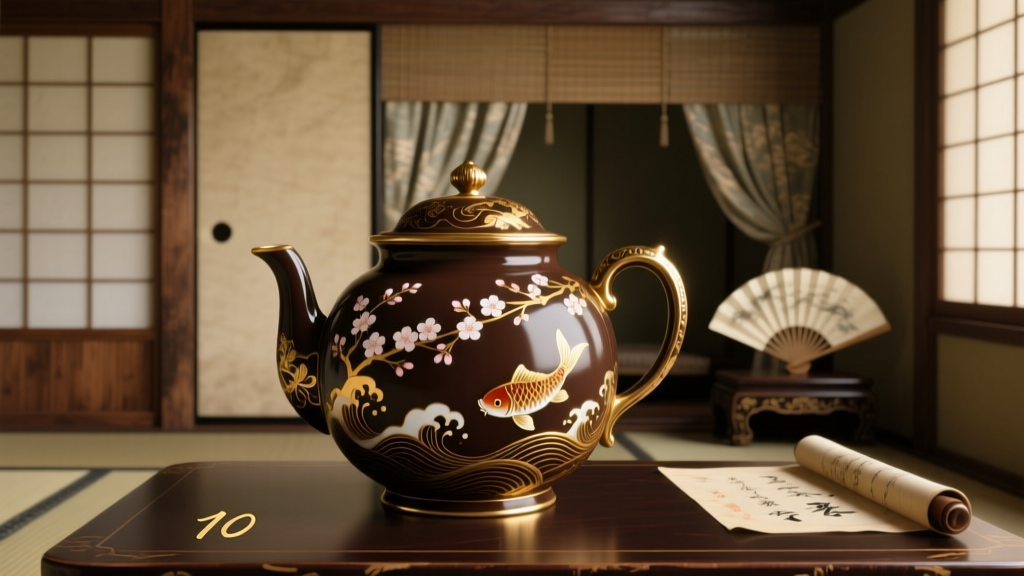
Nippon Chocolate Pot: Hand-Painted Scenes in Reserve Gold Gilding, Signed, 10 Inches Tall
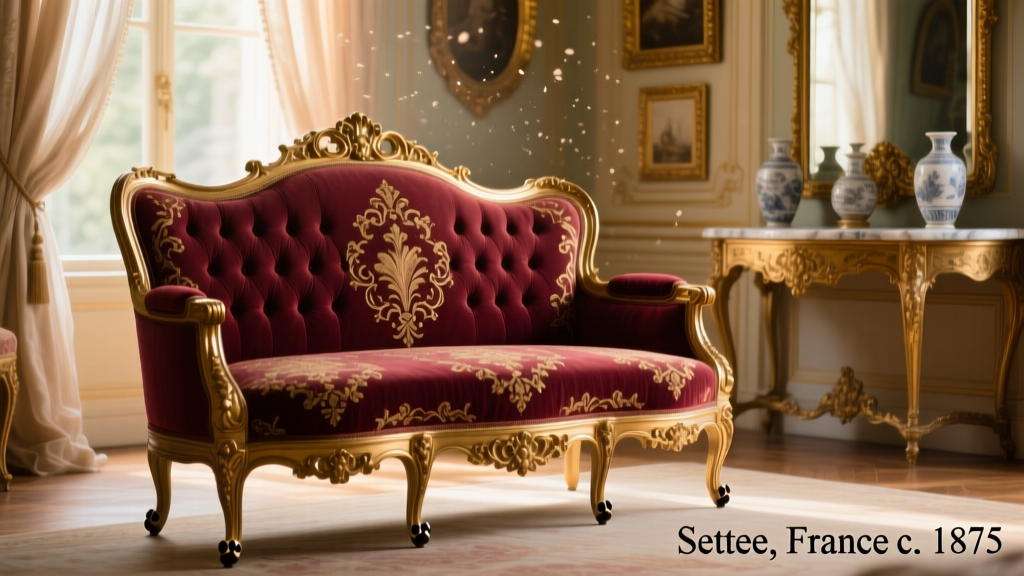
The 1875 French Giltwood Settee: Anatomy, Provenance, and Restoration Ethics of a Parisian Salon Masterpiece
Wedgwood Vase: Trumpet Luster with Dragons on Shaded Green Ground, Stepped Foot — A Technical and Historical Appraisal

Decoding the 1138161: A Technical and Historical Analysis of the 1954 Duncan Phyfe Revival Mahogany Dining Table by Baker Furniture
The White Eyelet Dickey: A Detailed Study of the Bib-Front, Long-Pointed Collar with Scalloped Lace (13-Inch Length)

Kitchen String Holder 'Prayer Lady Pink 2': History, Identification, and Conservation of a Mid-Century Ceramic Wall Fixture

J. S. Lambard: The Forgotten Master of Victorian Gothic Revival Furniture
Bradley & Hubbard Candlestick Jarvie Style 12-Inch Pair: Identification, Provenance, and Restoration Best Practices
The Cut Glass Pitcher with Sunburst Hobstar Base: A Technical and Historical Examination of an American Brilliant Period Masterpiece (8½ × 6 in)