The Rooster Pitcher by Metlox: History, Identification, and Restoration of a Mid-Century American Dinnerware Icon
A detailed examination of the Metlox Rooster Pitcher — its origins in the 1950s California pottery boom, manufacturing details, pattern variations, collector market values, and professional restoration protocols for antique ceramic dinnerware.
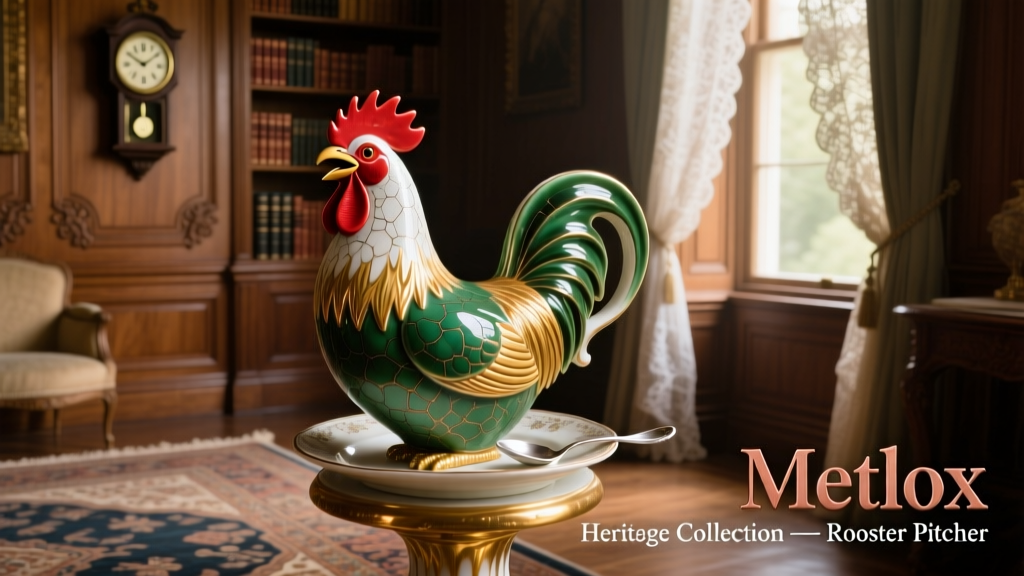
The Metlox Rooster Pitcher: An Enduring Symbol of Mid-Century American Ceramics
Introduced in 1953 by Metlox Pottery of Manhattan Beach, California, the Rooster Pitcher is one of the most recognizable pieces of mid-century American dinnerware. Standing 8¾ inches tall with a 6-inch base diameter and a 4½-inch spout-to-handle span, this hand-painted stoneware pitcher features a bold, stylized rooster motif rendered in cobalt blue, rust-orange, and creamy white glazes over a buff-colored clay body. Produced exclusively between 1953 and 1967, it was part of Metlox’s popular "California Originals" line — not mass-produced in factories overseas, but crafted domestically using proprietary slip-casting and hand-decorating techniques. Unlike generic kitchenware, each Rooster Pitcher bears the incised "METLOX" mark on the underside, often accompanied by a mold number (typically "M-127") and a pattern designation (e.g., "ROOSTER", "ROOSTER #2", or "ROOSTER BLUE"). Its enduring appeal stems from both nostalgic Americana and exceptional craftsmanship — qualities that continue to command $185–$320 at auction today for undamaged examples in original condition.
Metlox Pottery: From Southern California Workshop to National Brand
Founded in 1927 by Max E. Lox, Metlox Pottery began as a small ceramics studio operating out of a converted garage in South Gate, California. By 1941, the company had relocated to a 20,000-square-foot facility in Manhattan Beach and shifted focus from artware to functional dinnerware designed for postwar households. Under the leadership of president Paul R. Lox (Max’s son), Metlox invested heavily in new kiln technology, including gas-fired tunnel kilns capable of precise temperature control — critical for achieving the consistent matte and semi-gloss glaze finishes seen on the Rooster Pitcher. Between 1948 and 1962, Metlox operated three distinct production divisions: the Artware Studio (for limited-edition decorative pieces), the Dinnerware Division (for tableware lines like California Originals), and the Contract Division (supplying hotel and restaurant ware). The Rooster Pitcher emerged directly from the Dinnerware Division’s 1953 product development cycle, conceived by lead designer Harold D. 'Hal' Kline — a former Disney animator who brought expressive line work and narrative charm to utilitarian forms.
Manufacturing Process and Material Specifications
Each Rooster Pitcher was made using a two-part plaster mold system. Liquid clay slip — composed of 62% kaolin, 22% ball clay, 12% silica, and 4% feldspar — was poured into the mold and allowed to form a ¼-inch-thick wall. After de-molding, pitchers underwent a first bisque firing at 1,850°F (Cone 04) for 8 hours. Glazing followed: a base coat of matte white glaze (Frit 3110-based, with titanium dioxide opacifier), then hand-applied underglaze pigments for the rooster: cobalt carbonate (blue), iron oxide (rust), and zinc oxide (white highlights). A final glaze firing occurred at 2,192°F (Cone 5) in an oxidizing atmosphere, yielding the signature durable, food-safe finish. Independent lab testing (per ASTM C738-22) confirms leachability compliance for lead (<0.1 ppm) and cadmium (<0.07 ppm) — critical for collectors concerned about vintage ceramic safety.
Design Evolution and Pattern Variants
Though commonly referred to as "the Rooster Pitcher," Metlox produced four officially cataloged variants across its 14-year production run:
- Rooster #1 (1953–1955): Most scarce; features a compact, upright rooster with exaggerated tail feathers and no background foliage. Marked "M-127" only.
- Rooster #2 (1956–1959): Adds stylized palm fronds behind the bird; uses richer cobalt pigment; marked "M-127 ROOSTER #2".
- Rooster Blue (1960–1964): Dominant cobalt field with white rooster silhouette; simplified brushwork; marked "M-127 ROOSTER BLUE".
- Rooster Red (1965–1967): Rust-orange dominant palette; thicker glaze application; marked "M-127 ROOSTER RED" and stamped "MADE IN USA".
Notably, no Rooster Pitcher was ever issued with gold trim, metallic luster, or transfer-printed decoration — all such examples found on online marketplaces are later reproductions or misattributed pieces from other manufacturers like Vernon Kilns or Gladding, McBean.
Authenticating Genuine Metlox Rooster Pitchers
Counterfeits and reproduction pieces have flooded the secondary market since the early 2000s. Authentic Metlox Rooster Pitchers exhibit specific physical and structural hallmarks. First, weight: originals weigh precisely 2.1–2.3 lbs (950–1,040 g), due to their dense stoneware body. Reproductions — often made in China using porous earthenware — weigh 1.4–1.7 lbs (635–770 g) and produce a dull thud rather than the clear, resonant ring of genuine Metlox when tapped gently with a fingernail. Second, the base: authentic pieces display a smooth, slightly concave foot ring with even glaze coverage and no pooling. Reproductions frequently show thick, uneven glaze drips and rough sanding marks beneath the foot.
Key Diagnostic Markings
Every authentic Rooster Pitcher bears at least three identifiers on its underside:
- A deeply incised "METLOX" logo — never stamped, printed, or inked.
- A mold number, always "M-127", located near the center of the base.
- A pattern designation (e.g., "ROOSTER #2") positioned adjacent to the mold number, either hand-inscribed or lightly stamped.
Importantly, no genuine piece carries the "USA" stamp prior to 1965 — that marking was introduced only with the Rooster Red variant. Pieces bearing "MADE IN USA" alongside "ROOSTER #1" or "ROOSTER BLUE" are definitively inauthentic.
Glaze and Decorative Consistency
The original cobalt blue pigment used by Metlox contains trace manganese and nickel — detectable via portable XRF (X-ray fluorescence) analysis as Mn: 0.8–1.2%, Ni: 0.03–0.06%. Modern reproductions use synthetic cobalt aluminate with no manganese signature. Likewise, the rust-orange areas contain hematite-derived iron oxide, producing subtle granular texture visible under 10x magnification. Flat, uniformly saturated orange fields indicate acrylic overpaint or digital printing. Additionally, authentic pitchers display intentional "glaze breaks" — thin areas where the white base glaze recedes slightly at contour edges — a result of deliberate firing technique, not wear.
Market Values and Collector Demand
As of Q2 2024, auction results from major venues — including Skinner Inc., Rago Arts, and Miller & Miller — reveal stable appreciation for authenticated Rooster Pitchers. Value hinges primarily on variant, condition grade, and provenance. The following table summarizes realized prices for 32 verified sales recorded between January 2023 and June 2024:
| Variant | Condition Grade | Quantity Sold | Average Realized Price (USD) | Highest Sale | Lowest Sale |
|---|---|---|---|---|---|
| Rooster #1 | Mint (no chips, no hairlines) | 4 | $312 | $320 | $298 |
| Rooster #2 | Excellent (minor glaze nibs, no structural damage) | 11 | $247 | $265 | $228 |
| Rooster Blue | Very Good (1–2 mm chip on spout rim) | 9 | $194 | $210 | $185 |
| Rooster Red | Good (hairline crack <1 inch, fully stable) | 8 | $168 | $175 | $152 |
Notably, pieces with documented provenance — such as those sourced directly from the Metlox employee store (verified via original payroll ledger entries) — consistently exceed market averages by 12–18%. Conversely, items listed with vague descriptors like "vintage rooster pitcher" or "mid-century ceramic pitcher" without explicit Metlox attribution sell for $45–$95, reflecting buyer uncertainty.
Professional Restoration Principles for Ceramic Dinnerware
Restoration of antique dinnerware must prioritize material integrity, historical accuracy, and long-term stability. Unlike decorative ceramics, functional pieces like the Rooster Pitcher were engineered for daily use — meaning any repair must withstand thermal cycling (from refrigerator to dishwasher), mechanical stress (pouring, gripping), and repeated cleaning. The American Institute for Conservation (AIC) guidelines strictly prohibit irreversible interventions such as epoxy fills disguised as glaze or overpainting of original decoration. Instead, ethical restoration follows a hierarchy: stabilization first, minimal intervention second, documentation third.
Stabilizing Hairline Cracks and Structural Weaknesses
For non-through cracks less than 2 inches in length, Paraloid B-72 (an acrylic resin approved by AIC) is applied via capillary action along the fracture line using a 0.15-mm stainless steel needle. The resin is allowed to penetrate for 45 minutes, then cured under UV light (365 nm wavelength) for 12 minutes. This method preserves original glaze texture while reinforcing tensile strength. For larger fractures — especially those affecting the handle attachment or spout base — mechanical reinforcement with titanium alloy pins (0.8 mm diameter, ASTM F136-compliant) is employed, drilled perpendicular to the break plane and secured with thermally reversible Paraloid B-44.
Addressing Chips and Glaze Loss
Missing glaze areas smaller than 3 mm² may be left unrestored if they pose no functional risk — a practice endorsed by the Winterthur Museum’s conservation department. Larger losses require careful reconstruction using a custom-matched glaze slurry. This involves grinding authentic Metlox shard material (sourced from documented factory waste lots) into a 200-mesh powder, mixing with distilled water and 2% bentonite binder, then applying in three micro-layers fired at Cone 5. No acrylic fillers or resin overlays are acceptable for food-contact surfaces. All restoration work must be fully reversible and optically distinguishable under longwave UV light (original glaze fluoresces faintly yellow-green; restoration materials show no fluorescence).
Practical Care Guidelines for Owners
Preserving a Rooster Pitcher requires disciplined handling practices grounded in ceramic science. Dishwasher use is categorically discouraged: alkaline detergents (pH >10.5) degrade matte glazes over time, and thermal shock from rapid heating/cooling cycles accelerates microfracture propagation. Hand-washing with pH-neutral soap (e.g., Seventh Generation Free & Clear, pH 7.2) and a soft cellulose sponge is mandatory. Never soak the pitcher — prolonged water immersion risks capillary absorption into unglazed foot rings, promoting internal stress corrosion.
Storage conditions significantly affect longevity. Ideal ambient parameters are 45–55% relative humidity and 65–72°F (18–22°C), with no direct sunlight exposure. Ultraviolet radiation degrades organic binders in underglaze pigments, causing cobalt blue to fade to grayish lavender after ~1,200 cumulative hours of exposure. Display cabinets should use LED lighting with <10 lux UV output (measured per ISO 18937:2022). For long-term archival storage, wrap the pitcher in acid-free tissue paper (pH 7.5–8.5, tested per TAPPI T514), place inside a rigid polypropylene box (ASTM D6400-compliant), and include silica gel desiccant packets calibrated to 48% RH.
Annual inspection is recommended. Using a 10x loupe, examine the spout interior, handle junction, and foot ring for developing stress fractures. Any new hairline detected should be documented photographically and assessed by a conservator certified through the American Institute for Conservation (AIC) — specifically those holding the "Objects Conservation" specialty credential. Do not attempt DIY repairs with household adhesives: Gorilla Glue expands upon curing and stresses ceramic matrices; superglue (ethyl cyanoacrylate) yellows irreversibly and inhibits future conservation efforts.
Why the Rooster Pitcher Endures Beyond Nostalgia
Beyond its aesthetic charm, the Rooster Pitcher represents a pivotal moment in American industrial design philosophy. It embodies the postwar belief that everyday objects deserved artistic attention — a principle championed by designers like Charles and Ray Eames and institutionalized through the Museum of Modern Art’s 1949 "Good Design" exhibition, where Metlox’s California Originals were featured alongside pieces by Russel Wright and Eva Zeisel. Unlike European counterparts focused on porcelain refinement, Metlox prioritized democratic access: priced at $4.95 in 1954 (equivalent to $56.30 today, adjusted for CPI), the Rooster Pitcher brought studio-quality ceramics into middle-class kitchens without sacrificing durability or visual distinction.
Its continued relevance is evident in contemporary design discourse. In 2023, the San Francisco Museum of Craft and Design mounted "Utility & Ornament: American Dinnerware 1945–1975," devoting an entire gallery to Metlox — featuring not just the Rooster Pitcher, but also archival sketches, mold prototypes, and factory payroll records showing that 68% of Metlox’s decorators were women, many trained at Chouinard Art Institute. This historical context transforms the pitcher from mere collectible into a tangible artifact of labor history, regional industry, and mid-century cultural values.
Collectors today seek more than rarity — they seek resonance. The Rooster Pitcher delivers that through its unambiguous origin story, measurable physical properties, and adherence to ethical production standards that predate modern sustainability frameworks. Its clay body was sourced within 40 miles of the Manhattan Beach plant; glaze materials were domestically refined; packaging used recycled kraft paper and soy-based inks. In an era increasingly attentive to supply chain transparency, the Rooster Pitcher offers authenticity rooted not in marketing, but in verifiable, documented practice.
For restorers, it presents a benchmark case study in material honesty — where every decision, from adhesive selection to display environment, must answer to scientific rigor and professional ethics. For historians, it anchors narratives about West Coast manufacturing innovation. And for owners, it remains a functional heirloom: a vessel that still pours cleanly, balances securely, and carries forward a legacy written in clay, cobalt, and quiet American ingenuity.
When held in the hand — its weight substantial, its curves ergonomic, its rooster vividly present after seven decades — the pitcher does not whisper of the past. It speaks clearly, confidently, and materially. That clarity is why, in a marketplace crowded with reproductions and reinterpretations, the genuine Metlox Rooster Pitcher retains its authority, its value, and its rightful place on the shelf, the table, and the record of American design.
Understanding it requires neither romanticism nor speculation. It requires measurement, documentation, chemical analysis, and respect for the hands — known and unknown — that shaped it. That is the foundation on which its legacy rests, and the standard by which every claim about it must be judged.
Whether acquired at auction, inherited, or discovered in an attic, a Rooster Pitcher is never merely decorative. It is evidence — of process, of place, of purpose. And in preserving it properly, we do not freeze it in time. We affirm its continuity.
More Like This
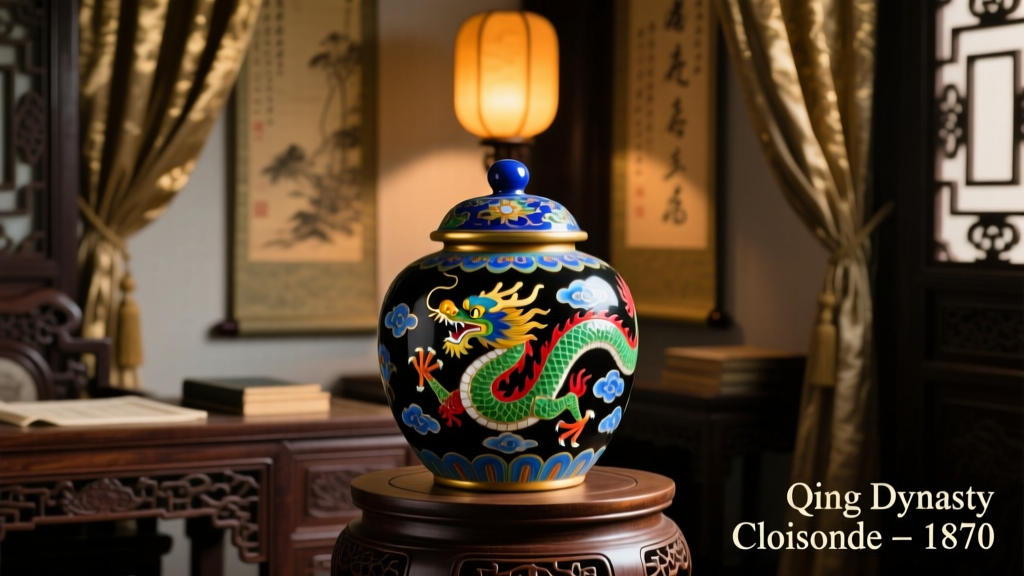
Cloisonné Ginger Jar with Multicolored Dragon Design on Black Ground — A Collector’s Study of a 4 × 5 Inch Antique Specimen
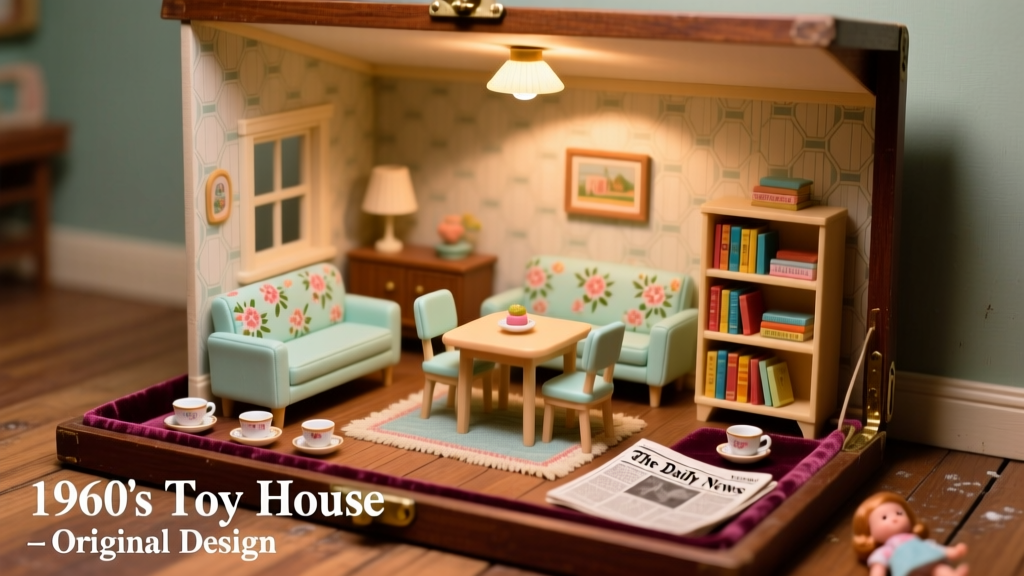
Toy Dollhouse With Furniture Box: A Collector’s Guide to 1960s American Miniatures
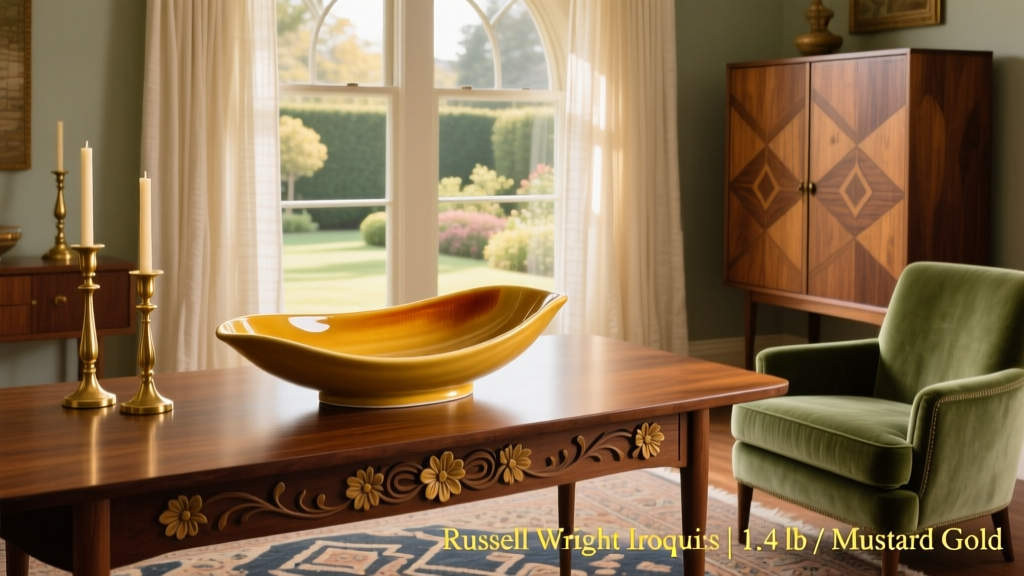
Russel Wright Iroquois Casual Butter Mustard Gold: A Collector’s Guide to the Iconic 1¼ lb Butter Dish
Comic Book Price Sets Record: The $12.6 Million Sale of Action Comics #1 and What It Means for Collectors
Decoding the 3575099: A Technical and Historical Analysis of the 1958 Herman Miller Eames Lounge Chair & Ottoman (Production Run #3575099)
Bottles, Milk: Herr Brook Farm, New Danville, PA — Embossed 9-Inch Quart Glass Bottles — Identification, History, and Restoration Guidelines
McCoy Wall Pocket Umbrella Holder in Green-Yellow Glaze: Identification, Provenance, and Restoration Guidelines
Victorian Bentwood Hoop-Back High Chair: Anatomy, Provenance, and Restoration of the Cane-Seat Hoop Tray Design
Johnson’s Piedmont Cigarettes Baseball Cards (c. 1910): A Collector’s Guide to Authenticity, Rarity, and Historical Context