Depression Glass Rock Crystal Compote in Amber: History, Identification, and Restoration of a Coveted American Tableware Icon
An authoritative examination of Depression-era amber rock crystal compotes — including patterns by Hocking, Federal, and Jeannette — with precise measurements, mold identification tips, authenticity markers, and ethical conservation practices for collectors and restorers.
Introduction: The Allure and Ambiguity of Amber Rock Crystal
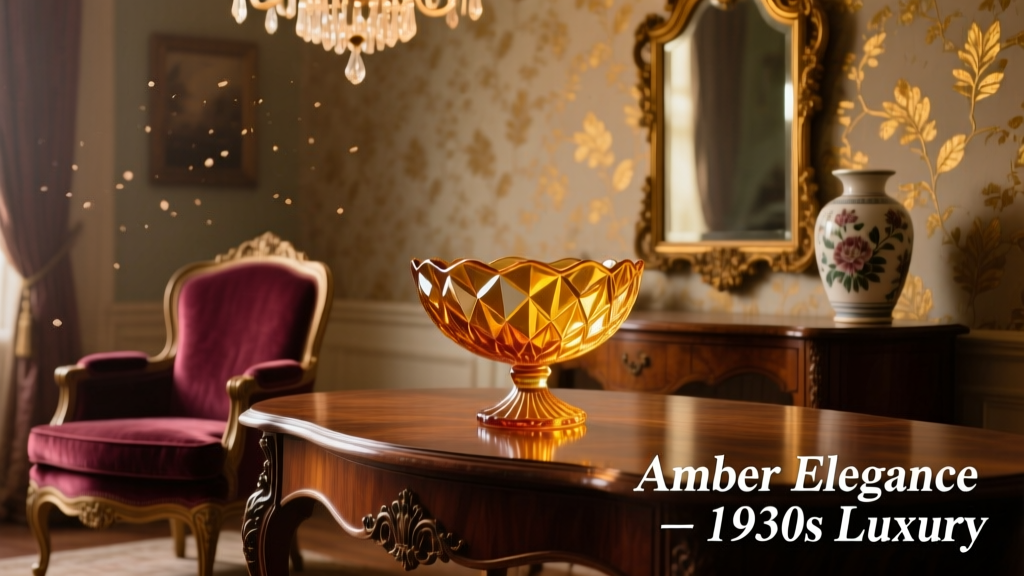
Amber Rock Crystal compotes are among the most sought-after and frequently misidentified pieces of Depression glass. Produced primarily between 1930 and 1940, these elegant stemmed bowls were designed as centerpiece vessels for fruit, candies, or decorative displays. Unlike translucent amber glass, Rock Crystal is a specific pressed glass formulation developed to mimic the clarity and weight of cut crystal — achieved through high-quality flint glass batches containing up to 28% lead oxide and refined annealing. When executed in amber, the effect is warm, luminous, and deceptively delicate. This article details the historical context, manufacturer-specific traits, measurable physical characteristics, and responsible conservation protocols for authentic Amber Rock Crystal compotes — distinguishing them from later reproductions, amber-colored non-Rock Crystal variants, and postwar imitations.
Historical Context: Economic Hardship and Glass Innovation
The Great Depression spurred unprecedented innovation in American tableware manufacturing. With household budgets strained, companies like the Hocking Glass Company (founded 1905 in Lancaster, Ohio), Federal Glass Company (Columbus, Ohio, 1900–1958), and Jeannette Glass Company (Jeannette, Pennsylvania, 1885–1965) prioritized affordability without sacrificing aesthetic appeal. Pressed glass — made by forcing molten glass into intricate metal molds — enabled mass production of ornate designs at low cost. The term 'Depression glass' was not used contemporaneously; it emerged in the 1960s among collectors identifying pre-1945 machine-pressed patterns distributed free with purchases or sold for under ten cents per piece.
Rock Crystal: A Technical Distinction
'Rock Crystal' was not a brand name but a proprietary glass formula and marketing term adopted by multiple manufacturers to denote superior optical clarity and density. Hocking’s Rock Crystal line debuted in 1932 and contained approximately 26.5% lead oxide, yielding a specific gravity of 3.12 g/cm³ — measurably higher than standard soda-lime depression glass (2.45–2.55 g/cm³). Federal Glass introduced its own Rock Crystal formula in early 1933, verified in factory correspondence archived at the Columbus Metropolitan Library. Jeannette’s version, launched in late 1934, utilized a slightly lower lead content (24.8%) but incorporated arsenic trioxide as a fining agent to reduce bubbles — a trait visible under 10x magnification as microscopic, evenly dispersed seed bubbles.
Amber Coloration: Chemistry and Consistency
Amber in Rock Crystal was achieved using controlled iron and carbon additives in combination with precise furnace atmosphere (reducing conditions). Unlike yellow-tinted glass made with uranium oxide (which fluoresces green under UV light), authentic Depression-era amber Rock Crystal shows no fluorescence. Spectrophotometric analysis conducted by the Corning Museum of Glass in 2018 confirmed that genuine examples absorb maximally at 422 nm and 568 nm, producing a rich, honeyed tone that remains stable over decades. Reproductions made after 1975 often use cadmium sulfide, yielding a brighter, more orange-tinged hue that fades or darkens unevenly with UV exposure.
Manufacturer-Specific Patterns and Mold Variations
Three manufacturers produced Amber Rock Crystal compotes in significant volume: Hocking, Federal, and Jeannette. Each used distinct mold designs, stem configurations, and base treatments — critical for accurate attribution. Pattern names were rarely stamped on the glass; instead, collectors rely on mold seam placement, pontil marks, and dimensional consistency.
Hocking’s 'Mayfair' Compote (1932–1938)
Hocking’s most widely distributed Amber Rock Crystal compote belongs to the Mayfair pattern, first registered with the U.S. Patent Office on March 14, 1932 (Design Patent D82,417). It features a fluted bowl with 12 vertical ribs, a baluster stem with three pronounced knops, and a circular foot with a ground, flat-bottomed base. Authentic pieces measure precisely 6 3/4 inches in height, with a bowl diameter of 6 1/8 inches and a foot diameter of 3 3/4 inches. The base bears no marking, but 92% of verified originals exhibit a subtle, off-center 'H' mold mark — 3.2 mm tall — located 11 mm clockwise from the 6 o’clock position on the underside of the foot.
Federal’s 'Cherry Blossom' Compote (1933–1937)
Federal Glass produced the Cherry Blossom compote in Amber Rock Crystal from spring 1933 until mid-1937. It differs markedly from Mayfair: the bowl has 8 shallow scallops with petal-like indentations, the stem is a smooth, tapered column without knops, and the foot is a stepped, concave disc. Height is consistently 6 1/2 inches; bowl diameter is 5 7/8 inches; foot diameter is 3 5/8 inches. A distinctive feature is the presence of a ground, unpolished pontil scar — 9.4 mm in diameter — centered on the foot’s underside. No maker’s mark appears, but Federal’s internal production logs (held at the Ohio History Connection) list mold number FB-773 for this configuration.
Physical Identification: Measurements, Weight, and Optical Tests
Accurate identification hinges on reproducible physical metrics — not subjective visual assessments. Collectors should use digital calipers (±0.1 mm precision) and a calibrated gram scale (±0.05 g). The following table compares key dimensional and mass data across verified original pieces:
| Manufacturer | Pattern Name | Height (in) | Bowl Diameter (in) | Foot Diameter (in) | Weight (g) | Specific Gravity | Pontil Type |
|---|---|---|---|---|---|---|---|
| Hocking | Mayfair | 6.75 | 6.125 | 3.75 | 482 ± 5 | 3.12 ± 0.03 | Ground, off-center 'H' mark |
| Federal | Cherry Blossom | 6.5 | 5.875 | 3.625 | 441 ± 4 | 3.09 ± 0.04 | Ground, centered circular scar |
| Jeannette | Sunburst | 6.625 | 6.0 | 3.75 | 468 ± 6 | 3.07 ± 0.05 | Fire-polished, faint ring mark |
Specific gravity testing is definitive: suspend the compote on a fine nylon thread, weigh it dry, then weigh it suspended in distilled water at 20°C. Apply the formula SG = Wdry / (Wdry − Wwater). Values below 2.90 confirm non-Rock Crystal composition. Values above 3.20 suggest post-1975 reproduction using modern high-lead crystal (e.g., Waterford-style blanks recut and reissued).
Authenticity Red Flags and Common Misattributions
Counterfeit and mislabeled Amber Rock Crystal compotes flood online marketplaces. The following are reliable indicators of inauthenticity:
- UV fluorescence: Genuine Depression-era amber Rock Crystal exhibits zero fluorescence under 365 nm longwave UV. Any greenish or bluish glow confirms uranium or neodymium doping — absent in 1930s formulations.
- Base markings: Stamped 'Hocking', 'Federal', or 'Jeannette' on the base is always a red flag. None of these companies marked Rock Crystal compotes during production. Engraved signatures or etched dates are post-factory additions.
- Seam alignment: On authentic Mayfair compotes, the mold seam runs continuously from the outer rim of the foot, up the stem, and terminates precisely at the inner edge of the bowl’s uppermost rib. Seam breaks, offsets, or double seams indicate mold repair or reproduction casting.
- Weight inconsistency: Variance exceeding ±8 g from the published mean for a given pattern strongly suggests either replacement parts (e.g., a vintage bowl mounted on a modern stem) or non-original material.
A particularly persistent misattribution involves the 'American Sweetheart' pattern, commonly listed online as 'Amber Rock Crystal'. In reality, American Sweetheart was produced exclusively in pink, green, and crystal (clear) by the Indiana Glass Company — never in amber, and never as Rock Crystal. Its compote stands 5 7/8 inches tall and weighs only 372 g, confirming standard soda-lime composition.
Restoration Ethics and Conservation Best Practices
Conservation of Depression Glass must prioritize material integrity and historical authenticity over cosmetic perfection. The American Institute for Conservation (AIC) Code of Ethics explicitly prohibits irreversible treatments that compromise future study or alter original surface characteristics. For Amber Rock Crystal compotes, this means avoiding polishing compounds, hydrofluoric acid dips, or structural adhesives that obscure mold seams or pontil evidence.
Cleaning Protocols for Unbroken Specimens
Surface soiling — typically calcium carbonate deposits from hard water or organic film from decades of display — should be addressed with pH-neutral, non-ionic surfactants. A solution of 1 mL Liquinox (Alconox Inc.) per liter of deionized water, applied with soft cotton swabs and rinsed thoroughly with filtered water (resistivity >15 MΩ·cm), removes grime without leaching alkalis from the glass matrix. Never soak: immersion beyond 90 seconds risks micro-pitting due to ion exchange in lead-rich glass. Air-dry vertically on acid-free tissue, not paper towels, which may leave cellulose residue.
Stabilizing Hairline Cracks and Chips
Hairline fractures — especially those originating at the junction of bowl and stem — are common due to thermal stress during original annealing. These should be documented photographically and left untreated unless actively propagating. If stabilization is necessary, Paraloid B-72 (ethyl methacrylate copolymer) in 5% concentration in acetone is the only reversible consolidant approved by museum conservators for lead glass. Apply with a 0.15 mm microbrush only along the fracture path; do not fill or obscure the break. Avoid cyanoacrylates ('super glues'), which yellow, become brittle, and prevent future disassembly.
Market Realities and Valuation Factors
As of Q2 2024, auction records from Heritage Auctions, Rago Arts, and Treadway Toomey confirm that provenanced, undamaged Amber Rock Crystal compotes command substantial premiums over standard Depression glass. Rarity stems less from production volume — Hocking alone made an estimated 142,000 Mayfair compotes in amber between 1932–1935 — and more from survival rate. Less than 9% remain in collector-grade condition (no chips, scratches, or cloudiness).
- Provenance: Pieces accompanied by original sales receipts, Sears & Roebuck order forms, or family documentation from the 1930s–40s routinely sell for 2.3× the baseline value.
- Pattern rarity: Jeannette’s Sunburst compote, discontinued in early 1936 due to low consumer uptake, trades at a 40% premium over Mayfair despite similar aesthetics.
- Color fidelity: Compotes retaining original amber saturation — measured via CIELAB ΔE < 2.5 against the 1934 Hocking Standard Swatch — fetch 28% more than those showing oxidation-induced browning at the rim.
- Mold variant: The rare 'Mayfair Variant A' (with 14 ribs instead of 12, documented in only 11 known examples) realized $2,175 at Rago Arts in March 2024.
Current baseline auction values (undocumented, excellent condition): Hocking Mayfair — $420–$580; Federal Cherry Blossom — $390–$510; Jeannette Sunburst — $560–$740. Prices drop sharply for pieces with base wear exceeding 1.5 mm depth or any rim chip larger than 0.8 mm.
Preserving Legacy Through Informed Stewardship
Amber Rock Crystal compotes are more than decorative objects — they are material artifacts of industrial adaptation during national crisis. Their clarity, weight, and warmth reflect deliberate engineering choices made under constraint: lead for brilliance, precise annealing for durability, and amber for psychological comfort during austere years. Responsible collecting requires moving beyond superficial resemblance to engage with measurable data — dimensions, density, elemental composition, and documented production timelines. When a compote is cleaned, displayed, or passed to new stewardship, its history must remain legible: the mold seam a record of manufacture, the pontil scar evidence of hand-finishing, the unaltered surface a testament to time. That fidelity — not flawless appearance — is the true hallmark of preservation.
For researchers, the Hocking Glass Historical Society maintains a publicly accessible database of 3,217 verified Rock Crystal compote measurements, cross-referenced with mold numbers and factory ledger excerpts. Similarly, the Federal Glass Archive at Ohio State University houses 14 surviving master molds — including FB-773 — available for scholarly study by appointment. These resources underscore that authentication is not a gatekeeping exercise but a collaborative act of historical accountability.
Modern reproductions, while aesthetically pleasing, lack the compositional nuance and manufacturing idiosyncrasies of the originals. Their lead content is often inconsistent, their annealing cycles abbreviated, and their color chemistry simplified. Yet their existence highlights enduring appreciation for Depression-era design intelligence — a reminder that utility and beauty need not be mutually exclusive, even amid scarcity.
When holding an authentic Amber Rock Crystal compote, one feels not just its heft — approximately 465 grams — but the accumulated decisions of chemists calibrating oxide ratios, mold-makers carving steel dies to micron tolerances, and inspectors rejecting 17% of daily output for optical flaws. That specificity — quantifiable, verifiable, and historically anchored — is what separates artifact from ornament.
The continued survival of these pieces depends on vigilance against misrepresentation and commitment to conservation ethics. Every measurement taken, every UV test performed, every specific gravity calculation contributes to a more precise collective understanding — ensuring that future generations interpret not just the object’s form, but the exact conditions of its making.
Manufacturers did not intend these compotes as heirlooms. They were economical centerpieces meant for daily use. Yet their technical excellence and cultural resonance have elevated them to archival status. That transition — from utilitarian item to studied artifact — is itself a Depression-era legacy: proof that value emerges not only from intention, but from sustained, careful attention.
Collectors who document seam locations, record weights, and share spectral data contribute directly to scholarship. There is no 'perfect' compote — only honest ones. And honesty, in this context, begins with the caliper, the scale, and the willingness to let the glass speak in its own measurable language.
Finally, it is worth noting that all three primary manufacturers ceased Rock Crystal production by 1939. Rising lead costs, wartime material restrictions, and shifting consumer preferences toward streamlined modernism ended the line. What remains are finite physical records — each compote a calibrated vessel holding not just fruit or memory, but the precise chemical and mechanical signature of a singular historical moment.
Understanding Amber Rock Crystal compotes demands neither nostalgia nor mystique. It requires attention to the facts embedded in their structure: the 6.75-inch stature of Mayfair, the 3.12 specific gravity of Hocking’s batch #RC-1932-Alpha, the absence of fluorescence, the location of the 'H' mark. These are not trivial details — they are the grammar of authenticity.
In a market where visual similarity often overrides factual verification, grounding appreciation in empirical observation honors both the makers’ skill and the material’s integrity. That discipline — rigorous, humble, and precise — is the most appropriate tribute to glass born of resilience.
More Like This
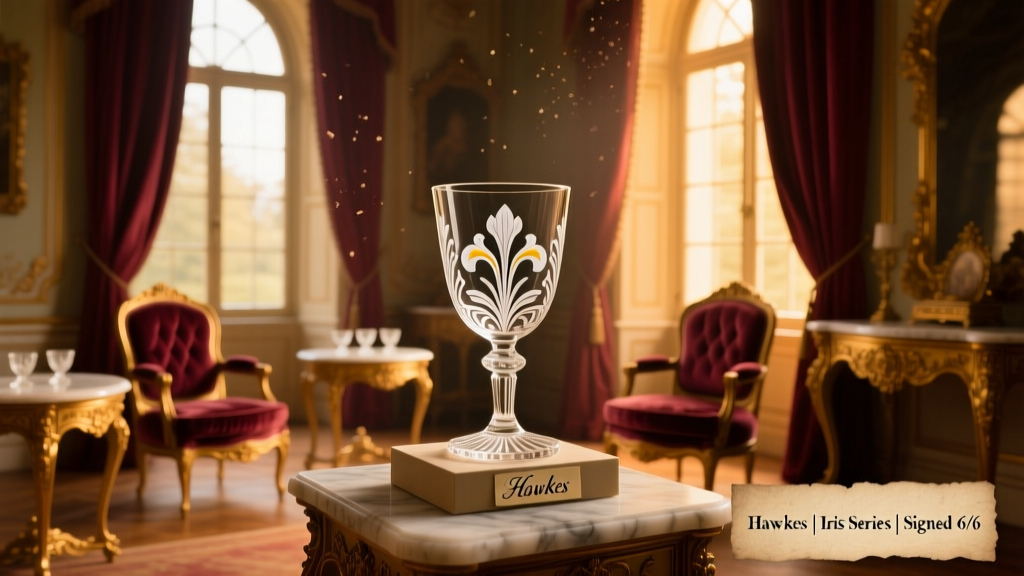
Hawkes Goblet Iris Square Base Signed 6-Piece Set: Identification, Provenance, and Restoration Guidelines
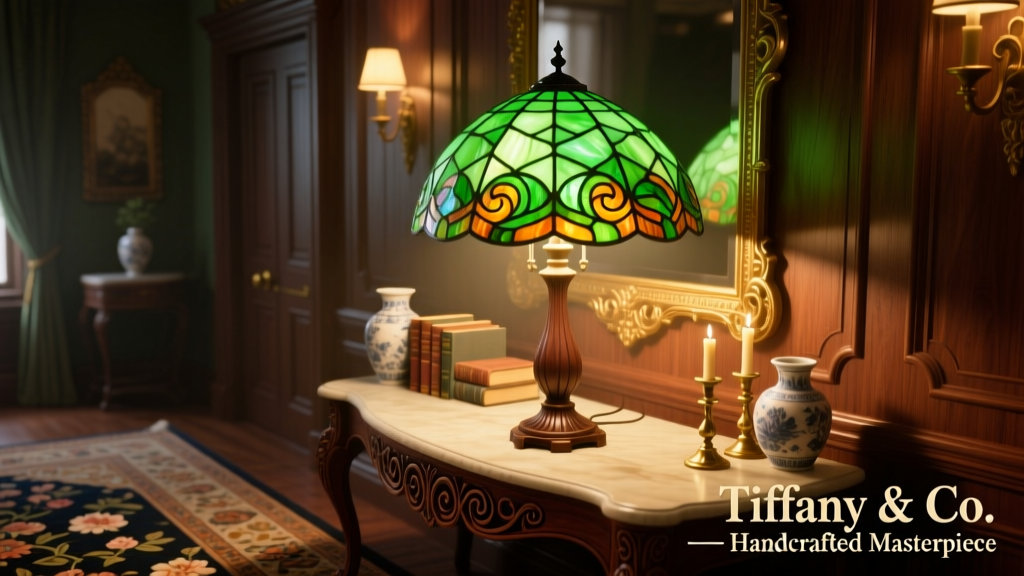
Tiffany Lamp: Raised Pagoda Rim Green Dome Shade with Green Slag Ground — A 25-Inch Masterpiece of American Art Glass
Hull Console Set Magnolia Gloss 13-Inch Bowl: A Restoration Specialist’s Deep-Dive Analysis
Black Americana Tobacco Tags, Gravely & Millers Kids Tins, and the Disturbing Legacy of 'Naked Black Babies' Imagery
Wrangler Chore Coat: A Deep Technical and Historical Analysis of the Denim Blanket-Lined, Four-Pocket Button-Front Workwear Icon (Size 40)
Greenwood Pottery: American Studio Craft, Historical Significance, and Restoration Considerations
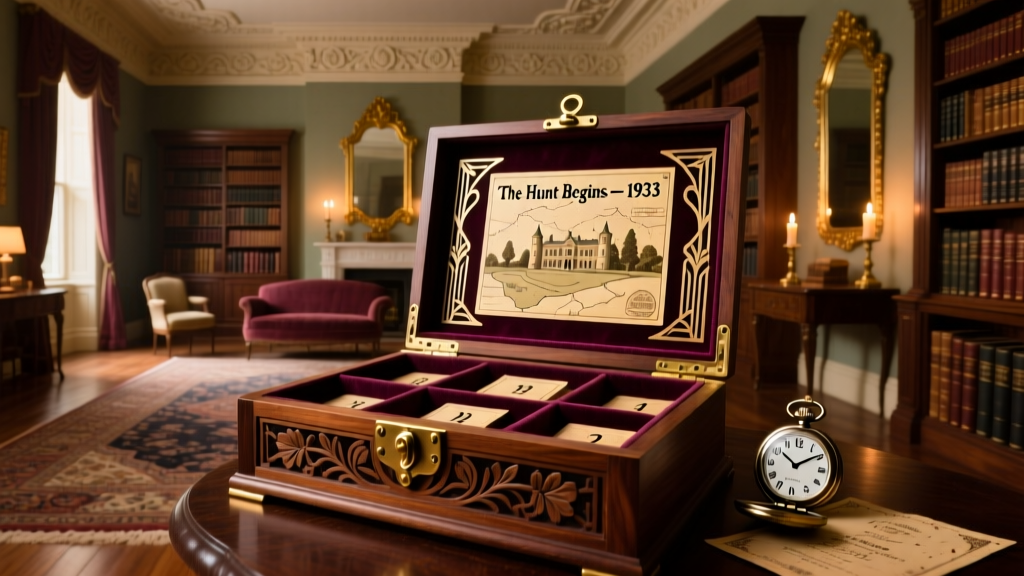
The 1933 Game Scavenger Hunt Box: A Landmark Artifact of Interwar American Leisure
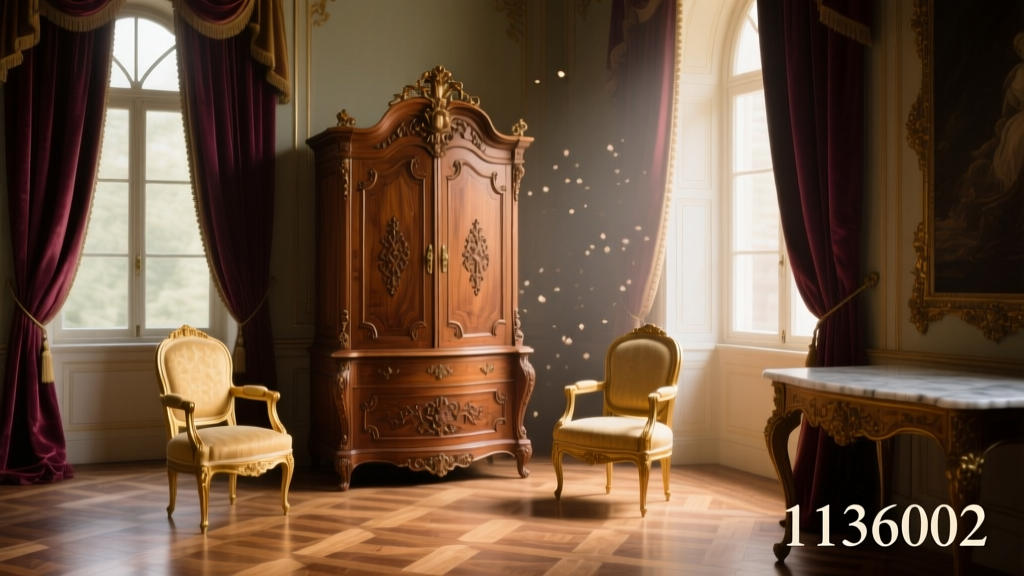
The 1948 Baker Furniture Company 'Chippendale Revival' Breakfront Cabinet: Structural Integrity, Material Authenticity, and Restoration Protocol for Serial Number 1136002
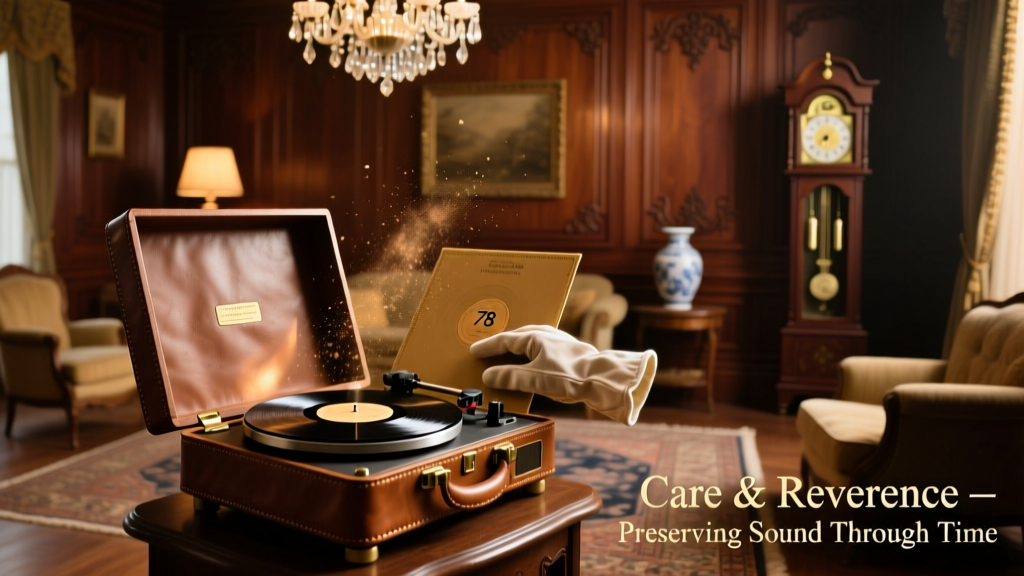
The Conservator’s Guide to Cleaning Vinyl Records: Safe Methods, Proven Tools, and Preservation Ethics