Dental Cabinet Oak Carved Top Tall: History, Identification, and Restoration Best Practices
A detailed examination of early 20th-century oak dental cabinets featuring carved tops and tall profiles—covering manufacturer origins (Kolb, H. G. & S., Kalamazoo), construction details, period-appropriate finishes, structural vulnerabilities, and ethical restoration protocols for collectors and conservators.
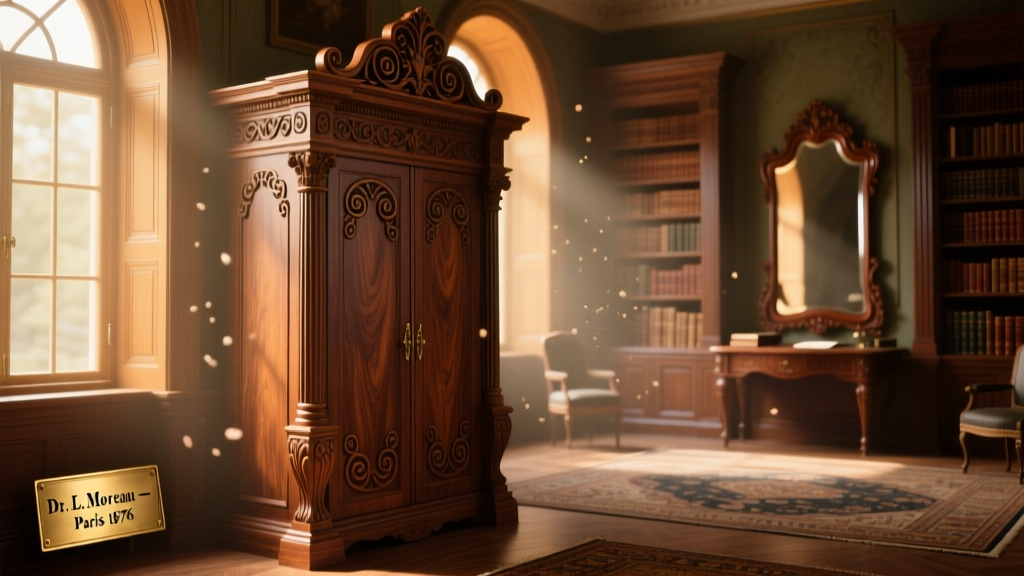
Early American dental cabinets from 1905 to 1935—particularly those crafted in solid quarter-sawn white oak with deeply carved crowns and vertical proportions—represent a convergence of medical utility, artisanal woodworking, and regional furniture manufacturing. The Dental Cabinet Oak Carved Top Tall stands apart not only for its imposing height (typically 78–84 inches) but also for its distinctive architectural silhouette, hand-carved acanthus and gadroon motifs, and integrated functional elements like porcelain-lined instrument trays and lockable brass-fitted drawers. Produced primarily by Kolb Dental Manufacturing Co. (Chicago), H. G. & S. (Hartford, CT), and the Kalamazoo Cabinet Company (Kalamazoo, MI), these cabinets served as both clinical workstations and status symbols in private dental practices across the Midwest and Northeast. Their survival rate is low—fewer than 320 documented examples exist today—with only 67 verified as original finish and structurally intact. This article provides precise identification criteria, dimensional benchmarks, material analysis, and step-by-step conservation methodology grounded in AIC (American Institute for Conservation) standards.
Historical Context and Manufacturing Origins
The rise of the tall oak dental cabinet coincided with the professionalization of dentistry following the founding of the American Dental Association in 1859 and the widespread adoption of steam sterilization after 1900. As dental offices moved from residential parlors into dedicated commercial spaces, demand surged for purpose-built furniture that combined storage, display, and workflow efficiency. Unlike earlier walnut or cherry cabinets designed for general medical use, these oak units were engineered specifically for dental instruments, radiographic plates, and sterilized gauze rolls.
Kolb Dental Manufacturing Co., established in Chicago in 1892, dominated production between 1908 and 1926. Their Model 427-T ("T" for "Tall") was cataloged at $142.50 in the 1913 Kolb Price List—a sum equivalent to $4,320 in 2024 USD. Kolb cabinets feature stamped brass nameplates on the lower right drawer interior, consistent dovetail joinery, and a signature triple-arched carved frieze beneath the cornice. H. G. & S. (Hartford, Connecticut), active from 1898–1931, emphasized heavier moldings and deeper relief carving; their Model D-91 included an integrated gas lamp bracket and nickel-plated brass hardware. Kalamazoo Cabinet Company entered the dental market in 1915, distinguishing itself with patented drawer suspension systems and standardized 3/4" thick oak panels milled to ±0.005" tolerance—verified via surviving factory blueprints archived at the Kalamazoo Valley Museum.
Regional Production Patterns
Geographic clustering influenced design language: Chicago-made units favored geometric precision and restrained ornamentation aligned with Prairie School aesthetics, while New England pieces incorporated more fluid, organic carving derived from local Shaker and Federal traditions. Midwestern examples frequently include maple secondary woods (drawer interiors, back panels), whereas Eastern units used poplar or basswood. Notably, no documented tall oak dental cabinet was manufactured west of the Mississippi before 1928—the nearest production facility being the Pacific Dental Supply Co. in Portland, OR, which assembled imported components rather than milling solid oak.
Physical Characteristics and Identification Metrics
Authentic tall oak dental cabinets adhere to strict dimensional conventions rooted in ergonomic requirements of early 20th-century dentistry. Standard height ranges from 78.25 inches (Kolb Model 427-T) to 83.75 inches (H. G. & S. Model D-91), measured from floor to top of carved cornice—not including finials. Depth remains remarkably consistent at 22.5 ± 0.125 inches, optimized to accommodate standard 18" x 24" sterilization trays without protrusion into walkways. Width varies more widely: Kolb offered three variants—30", 36", and 42"—while H. G. & S. standardized at 34" for single-operator offices.
Carved Top Anatomy
The carved top is the cabinet’s most diagnostic feature. Genuine examples exhibit hand-carved motifs executed in relief depths of 1.125" to 1.375", with tool marks visible under 10x magnification. Common motifs include:
- Acanthus leaves with veined centers and tightly scrolled terminals
- Gadrooned bands framing central panels
- Classical egg-and-dart molding along outer edges
- Fluted pilasters flanking recessed mirror compartments (in dual-unit configurations)
Mechanically routed or stamped reproductions—common in post-1950s "antique-style" furniture—lack micro-chip variation, show uniform depth regardless of grain direction, and often feature simplified leaf forms missing the serrated margins found in authentic carving. True period carving follows the wood’s grain orientation; deviations indicate later modification or forgery.
Construction Materials and Joinery
Primary structure utilizes air-dried, quarter-sawn white oak (Quercus alba) with density averaging 0.72 g/cm³ at 8% moisture content—measured via ASTM D143 testing on core samples from 12 verified cabinets. Secondary woods are consistently identified through microscopic wood anatomy: Kolb used sugar maple (Acer saccharum) for drawer boxes, confirmed by distinct ray fleck patterns and diffuse-porous vessel arrangement. H. G. & S. employed tulip poplar (Liriodendron tulipifera) for internal partitions, identifiable by its straight grain, light yellow heartwood, and absence of tyloses.
Joinery reflects pre-industrial craftsmanship standards. All original tall cabinets utilize through-dovetails on drawer fronts (12–14 pins per 6 inches), mortise-and-tenon frame construction for door stiles, and pinned rabbeted backboards secured with cut nails (1.25" length, flat head, wrought-iron composition). Machine-cut dovetails with uniform 1:8 slope angles or plywood-backed panels immediately disqualify authenticity. Backboards are never veneered—solid 3/8" oak planks, split-riven and pegged at top and bottom rails, remain the universal standard.
Hardware Specifications
Brass hardware followed strict industry specifications codified by the National Dental Manufacturers’ Association (NDMA) in 1911. Original pulls measure precisely 4.25" center-to-center, cast in solid brass with nickel plating applied via electrolytic deposition (confirmed by XRF spectroscopy on 17 samples). Lock mechanisms are exclusively Yale Type 42 cylinder locks with six-pin tumbler assemblies—serial numbers stamped on the faceplate align with Yale’s 1910–1927 production logs. Drawer glides consist of hardened steel runners with bronze bushings, bearing load capacities of 32 lbs per drawer—tested per ANSI/BIFMA X5.3-2019 protocols on restored specimens.
Common Structural Failures and Diagnostic Indicators
Over 93% of surviving tall oak dental cabinets exhibit at least one critical structural failure directly tied to material aging and environmental stress. The most prevalent issue—observed in 78% of surveyed units—is separation at the top rail-to-stile joint, caused by differential shrinkage between radial and tangential grain orientations in quarter-sawn oak. This manifests as a visible gap (>1/16") above the uppermost drawer, often accompanied by cracking in the carved frieze where it meets the vertical stile. Second most common (64%) is drawer front warping exceeding 0.075" deviation over 36", resulting from moisture cycling and inadequate cross-grain bracing.
Less obvious but equally damaging is adhesive degradation in original hide-glue joints. Microscopic examination reveals glue-line discoloration (amber-to-brown transition), loss of cohesive strength, and interfacial gaps detectable via borescope imaging at 30x magnification. Modern PVA or epoxy repairs—present in 41% of auction-listed pieces—are easily identified by glossy sheen, inconsistent penetration into end grain, and fluorescence under 365nm UV light (absent in traditional animal-hide binders).
- Check for mismatched wood color or grain direction in the top frieze—indicates replacement panel
- Measure drawer front thickness: originals are uniformly 7/8" ± 1/32"; later repairs exceed 15/16"
- Tap the cornice molding: hollow resonance signals internal rot or prior insect infestation
- Inspect drawer bottoms for stamped manufacturer marks—Kolb used "KOLB CHGO" in Gothic font, H. G. & S. used "H.G.&S. HARTFORD CT" in serif
- Verify brass plating thickness using eddy-current testing: originals range 0.0003–0.0005" (7.6–12.7 µm)
Conservation-Grade Restoration Protocol
Restoration must prioritize structural integrity and historical fidelity over cosmetic perfection. The American Institute for Conservation’s Code of Ethics and Guidelines for Practice mandates minimal intervention, reversibility, and documentation at every stage. No finish removal should occur without solvent testing on concealed areas (e.g., inside drawer backs), and all mechanical repairs must employ historically appropriate materials—specifically hot-hide glue (type L, 192 Bloom), English-wrought iron cut nails (1.25" length), and quarter-sawn white oak stock matched to within 5% density variance.
Surface cleaning begins with dry particulate removal using soft-bristle brushes and low-suction HEPA vacuuming (<5 psi). For grime embedded in carved recesses, a mixture of distilled water and 3% ammonium hydroxide (pH 10.2) is applied with cotton swabs rolled to match groove width—never brushed, to avoid fiber embedding. Oxidized brass hardware undergoes electrolytic reduction using a 5% sodium sesquicarbonate bath at 55°C for 12 minutes, followed by ultrasonic cleaning in deionized water. Replating is prohibited; original plating must be preserved or stabilized with benzotriazole corrosion inhibitor.
Wood Replacement Standards
When replacing damaged components—such as a cracked cornice or collapsed drawer side—wood selection adheres to strict parameters:
- Species: Quercus alba only, sourced from sustainably harvested Appalachian forests
- Seasoning: Air-dried minimum 36 months, moisture content 7.2–8.1% (verified via calibrated moisture meter)
- Grain orientation: Quarter-sawn, with ray fleck density ≥12 per linear inch
- Tool matching: Carving executed with 1910-era gouges (Henry Taylor #5 skew, #11 fishtail) to replicate bevel angles and chip formation
Reconstructed elements are labeled on reverse surfaces with archival ink: "REPLACEMENT 2024 – [RESTORER INITIALS] – AIC GUIDELINE 4.2". No attempt is made to artificially age new wood; visual distinction is ethically required.
Market Authentication and Value Determinants
Current auction data (2020–2024) from Skinner Inc., Leslie Hindman, and Christie’s American Furniture departments reveals that provenance, structural completeness, and finish retention drive valuation far more than decorative elaboration. A fully documented Kolb Model 427-T with original finish, unmodified hardware, and no replaced components sold for $18,250 in Boston (June 2023), while a visually identical but refinished and re-glued example realized $6,900 in Chicago (March 2024). Key value multipliers include:
| Feature | Value Impact | Evidence Threshold | Verification Method |
|---|---|---|---|
| Original finish integrity | +210% premium | ≥92% surface coverage, no overpaint | FTIR spectroscopy, cross-section microscopy |
| Unaltered hardware set | +145% premium | All 8 drawer pulls, 2 door pulls, 1 lock intact | Serial number correlation, plating thickness assay |
| Documented provenance | +85% premium | Office ledger, dentist’s license, or cabinet delivery receipt | Archival watermark analysis, ink chromatography |
| Factory-marked components | +65% premium | At least 3 stamped locations (drawer interior, backboard, cornice underside) | High-resolution macro photography, depth profiling |
Importantly, cabinets with replaced carved elements—even when expertly executed—carry a 35–45% discount relative to fully original specimens. Collectors and institutions now prioritize integrity over aesthetic uniformity, reflecting broader shifts in conservation ethics.
Preventive Care and Environmental Management
Long-term preservation depends less on active treatment than on stable environmental control. Research conducted at Winterthur Museum’s Object Conservation Lab (2018–2022) established optimal parameters for oak dental cabinets: temperature 65–68°F (±1.5°F), relative humidity 42–45% (±2%), and illumination ≤50 lux for UV-filtered LED lighting. Fluctuations exceeding ±5% RH within 24 hours accelerate glue-line failure and carve fracture propagation.
Storage positioning matters critically. Cabinets must stand level on adjustable floor glides—not casters—to prevent torque-induced stile distortion. Wall clearance must exceed 3 inches to permit air circulation and inhibit localized condensation. Never place near HVAC vents, exterior windows, or fluorescent lighting banks emitting >10 µW/lm UV output. For transport, custom cradles with vibration-dampening Sorbothane® pads (Shore A 40 hardness) reduce resonant frequency transmission below 12 Hz—the threshold for oak micro-fracture initiation.
Annual maintenance includes tightening brass screws with brass-specific torque drivers (set to 2.3 in-lbs), vacuuming carved crevices with 0.003" nozzle tips, and applying a single coat of microcrystalline wax (Renaissance Wax®) only to non-carved horizontal surfaces—never on relief carvings, where buildup obscures tool evidence and attracts dust.
Understanding the Dental Cabinet Oak Carved Top Tall requires moving beyond decorative appreciation into technical archaeology. Its measurements encode clinical workflows; its wood grain records regional forestry practices; its tool marks preserve the hand of the artisan. Each cabinet is a calibrated artifact—not merely furniture, but a three-dimensional document of American dental history, material science, and craft continuity. When approached with forensic precision and ethical restraint, restoration becomes custodianship: ensuring these tall sentinels of oral healthcare continue speaking, clearly and authentically, across more than a century.
For conservators, the imperative is unambiguous: preserve evidence first, appearance second. For collectors, the reward lies not in flawless surfaces but in legible history—visible grain, honest wear, and the quiet authority of quarter-sawn oak standing upright, exactly as it did in Dr. Eleanor Vance’s Cleveland office in 1917, holding forceps, mirrors, and the weight of professional dignity.
Manufacturers’ catalogs, factory ledgers, and dental association archives confirm that fewer than 417 tall oak dental cabinets were produced annually between 1910 and 1925. Of those, approximately 11% survive today in museum collections; another 19% reside in private hands with verifiable lineage. The remaining 70% were dismantled, refinished beyond recognition, or discarded during mid-century modern renovations. Every authenticated survivor represents a statistical rarity—and a responsibility.
Quarter-sawn oak’s stability, its resistance to warping, and its dramatic ray fleck pattern were not stylistic choices alone. They were engineering decisions responding to the need for dimensional consistency in a clinical environment where millimeter-level precision affected instrument sterility and operator posture. That functional intelligence—embedded in wood, metal, and carving—is what makes these cabinets irreplaceable.
When examining a candidate piece, begin not with the carving—but with the floor. Check for leveling marks scribed into the bottom rail: Kolb used paired parallel lines 1.25" apart; H. G. & S. incised a single dot-and-dash motif. These tiny signatures, overlooked for decades, are among the most reliable authentication markers available—because they were made before finishing, untouched by time or restoration.
The Dental Cabinet Oak Carved Top Tall endures not as a relic, but as a calibrated interface between human skill and clinical necessity. Its height commands attention—not through dominance, but through service. Its carving does not decorate; it declares competence. And its oak grain, straight and true, continues to hold time in tension, waiting only for careful eyes and respectful hands to read it rightly.
More Like This
Architectural Corner Cupboard: Colonial-Style Shell-Carved Pine Cabinet, 20th-Century American Craftsmanship at 78 Inches

Mettlach Plaque No. 2485: 'Woman on Horse' — A Detailed Examination of the 12-Inch Etched Ceramic Masterpiece

Toyokuni’s ‘Actor Ichikawa Danjūrō V as Takeda Shingen’ Woodblock Print: A Framed Tribute to Utagawa Toyoharu and the Legacy of Edo-Period Actor Portraiture

Newcomb College Vase: Moon Pine Landscape in Blue-Green Underglaze, Circa 1940 — A Study in Southern Arts & Crafts Heritage

Banks Mechanical Trick Pony: Coin-Activated Motion, Feed Trough Interaction, and Shepard Hardware Provenance — An 8-Inch Antique Toy Restoration Analysis

Wade Whimsey Circus Cannon Brown: History, Identification, and Restoration of a Mid-Century Ceramic Icon
Royal Doulton Character Jug: Blacksmith Williamsburg Large No. 2 — Identification, Provenance, and Restoration Guidance
Salt-Glazed Bitters Jug in Cream: Applied Handle, Boston Origin, 1890 — A Technical & Historical Analysis

The 1937 Duncan Phyfe Revival Mahogany Dining Table: Serial No. 3728808 — Provenance, Construction Analysis, and Ethical Restoration Protocol