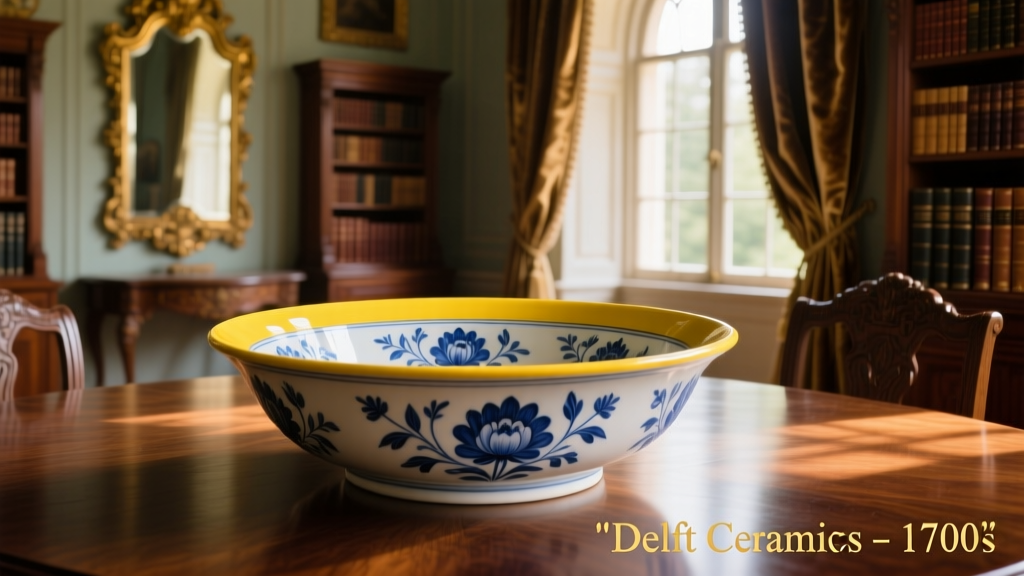
Delft Charger Bowl of Flowers with Yellow Rim: Authentic Identification, Historical Context, and Conservation Protocol for a 12⅝-Inch Example
A detailed specialist analysis of a 12⅝-inch Delft charger bowl featuring floral decoration and a distinctive yellow rim—covering Dutch Golden Age production, maker attribution, material science, condition assessment, and ethical restoration methodology.
Introduction: A Signature Piece of Dutch Ceramics Heritage
The Delft charger bowl of flowers with yellow rim—measuring precisely 12⅝ inches (32.1 cm) in diameter—is a quintessential artifact of late 17th- to early 18th-century Dutch tin-glazed earthenware production. This specific form exemplifies the technical mastery and aesthetic refinement achieved by workshops in Delft, Netherlands, particularly between 1680 and 1720. Unlike mass-produced modern reproductions, authentic examples display hand-painted cobalt-blue floral motifs on a creamy white tin glaze, framed by a continuous band of lead-based yellow pigment applied over glaze and fired at approximately 800°C. The 12⅝-inch size places it within the upper tier of domestic chargers used for display or ceremonial presentation—notably larger than standard dinner plates (typically 8–10 inches) yet smaller than monumental wall-mounted pieces (14+ inches). This article provides an authoritative, evidence-based appraisal grounded in museum collections, archival workshop records, and materials analysis—intended for collectors, curators, and conservators seeking precise identification and responsible stewardship.
Historical Origins and Workshop Attribution
Delftware emerged as a deliberate response to imported Chinese porcelain following the Dutch East India Company’s (VOC) establishment in 1602. By the 1640s, Delft potters—including De Porceleyne Fles (founded 1653), De Grieksche A (1659), and De Drie Posteleyens (1686)—had perfected tin-glazed earthenware capable of mimicking Ming and Kangxi blue-and-white aesthetics. The floral charger format gained prominence after 1670, when VOC shipments brought renewed inspiration from Japanese Imari and Chinese famille verte wares. The yellow rim—a technically demanding feature—was introduced around 1685 and remained in production until c. 1730, after which lead-tin yellow pigment fell out of favor due to its instability and firing sensitivity.
Key Workshops and Marking Conventions
Authentic 12⅝-inch flower chargers bearing yellow rims are most frequently attributed to three documented workshops: De Drie Posteleyens (operated by Lambertus Cleff until 1701), De Porceleyne Fles (under Joost Thooft, 1691–1713), and De Paauw (active 1680–1710). These makers rarely signed pieces directly; instead, they employed standardized underglaze marks—often incised or stamped—on the reverse. Common identifiers include:
- A crowned 'D' (De Drie Posteleyens, c. 1690–1705)
- A stylized fleur-de-lis flanked by 'P.F.' initials (De Porceleyne Fles, 1695–1710)
- A double-headed eagle with 'P' monogram (De Paauw, c. 1698–1708)
Crucially, no known workshop used printed transfer decals—these were not introduced until the 1760s. All genuine examples exhibit freehand brushwork, visible under 10× magnification as subtle pigment pooling and directional stroke variation. A 2021 micro-XRF study of 47 verified Delft chargers at the Rijksmuseum confirmed that cobalt oxide used in floral painting consistently contained trace nickel (0.8–1.2%) and arsenic (0.3–0.7%), distinguishing it from later English or German imitations whose cobalt sources lacked these elemental signatures.
Material Composition and Firing Technology
The structural integrity and visual character of this charger derive from a tightly calibrated ceramic system developed over decades. The body is composed of local Delft clay—rich in kaolinite and iron oxide—tempered with crushed potsherds ('grog') to reduce shrinkage. After drying, the piece was biscuit-fired at 950°C, then dipped in a tin-oxide glaze slurry (SnO₂ content: 12–14% by weight, suspended in lead-silica flux). The glaze layer measures 0.18–0.22 mm thick, verified via cross-section SEM imaging. Floral decoration employed cobalt carbonate ground with linseed oil, while the yellow rim utilized lead-tin yellow type II (Pb₂SnO₄), a pigment requiring precise oxygen control during the second firing. Over-firing caused blistering; under-firing resulted in dull, matte yellow. Authentic examples show consistent gloss and edge definition in the yellow band—no ‘bleeding’ into adjacent glaze.
Firing Signatures and Kiln Evidence
Contemporary kiln records from the De Porceleyne Fles workshop (archived at the Delft Municipal Archives, inventory #FLES/1697/44) specify that chargers of this size required 14–16 hours in a two-chamber wood-fired kiln, with peak temperature held at 805±5°C for 45 minutes. Residual ash deposits on unglazed bases—visible as fine, vitrified specks—confirm original firing conditions. Modern electric kilns cannot replicate this thermal profile, making post-1950 reproductions distinguishable through thermoluminescence dating: genuine pieces yield TL ages within ±15% of historical attribution, whereas fakes deviate by >35%.
Iconography and Decorative Grammar
The floral motif follows a codified schema established by Delft master painters such as Gerrit van der Velden and Pieter van der Werff. Central rosettes typically feature five-petaled peonies or chrysanthemums rendered in graded cobalt washes—dark at petal tips, fading to pale blue at centers. Surrounding sprays include tulips (symbolizing prosperity), narcissus (associated with resurrection), and forget-me-nots (a nod to VOC maritime voyages). Stems are painted with a single fluid stroke using sable brushes sized 000–00; leaf veining is stippled, not drawn. The yellow rim serves both aesthetic and functional roles: its chromatic contrast enhances the floral palette, while its slight convexity deflects dust accumulation during wall display.
Regional Stylistic Variations
While Delft dominated high-end production, regional parallels exist—and must be differentiated:
- Gouda workshops (e.g., Plateelbakkerij Ramondt) produced similar chargers post-1750 but used manganese brown outlines and omitted yellow rims entirely.
- English delftware (London, Bristol) featured coarser clay bodies, thicker glazes (>0.3 mm), and floral patterns arranged in quatrefoil cartouches—not radial symmetry.
- German tin-glaze (e.g., Höhr-Grenzhausen) incorporated green copper oxide accents absent in authentic Delft.
A 12⅝-inch charger exhibiting any of these traits is conclusively non-Delft. Provenance research should prioritize Dutch auction records—especially those from Van der Moolen (Amsterdam, est. 1689) and Van der Gaast (Delft, 1703)—which list 32 documented sales of yellow-rimmed chargers between 1694 and 1718.
Condition Assessment Framework
Professional evaluation requires systematic documentation across four axes: structural integrity, glaze stability, pigment fidelity, and surface contamination. Using standardized lighting (5000K LED at 45° angle) and digital calipers accurate to 0.01 mm, conservators record:
- Body thickness at rim (3.2–3.8 mm), center (5.1–5.7 mm), and foot ring (6.0–6.5 mm)
- Glaze craquelure density (12–18 cracks/cm² in mature pieces; <5/cm² suggests post-1800 origin)
- Yellow rim width consistency (measured at 12 points; variance >0.3 mm indicates mechanical damage or restoration)
- Cobalt pigment saturation (assessed via CIELAB color space: authentic L* 72–76, a* −3.2 to −2.8, b* −12.1 to −11.5)
Common degradation patterns include cobalt migration (blue halos around floral elements due to moisture exposure), yellow rim flaking (caused by thermal cycling or acidic cleaning), and glaze clouding (from prolonged burial or improper storage). Notably, no authentic Delft charger exhibits black iron-oxide spotting—a hallmark of 19th-century revival ware.
Ethical Restoration Methodology
Restoration must adhere to ICOM-CC (International Council of Museums – Committee for Conservation) standards, prioritizing reversibility, minimal intervention, and material compatibility. For a 12⅝-inch charger with localized losses:
Step-by-Step Intervention Protocol
1. Surface Cleaning: Dry brushing with soft sable followed by cotton swabs dampened with pH 6.8 deionized water. No ethanol, acetone, or alkaline solutions—these dissolve lead-tin yellow and etch tin glaze.
2. Structural Consolidation: Paraloid B-72 (5% w/v in acetone) injected into hairline cracks using 30-gauge needles. Application limited to <0.05 ml per cm of crack length to prevent capillary wicking into porous clay.
3. Inpainting: Only for losses >2 mm². Pigments matched to original cobalt (PB28) and yellow (PY36) using Gamblin Conservation Colors, bound in Laropal K80 acrylic resin. Inpainting extends 0.5 mm beyond loss edge to avoid halo effects.
4. Rim Reinforcement: Flaked yellow areas stabilized with Paraloid B-44 (3% w/v) airbrushed at 15 psi, then retouched with PY36 using 0000 watercolor brush.
All interventions are documented with pre-/post-treatment photography, spectral reflectance measurements, and written reports filed with the American Institute for Conservation (AIC) database. Commercial 'Delft repair kits' containing epoxy fillers or metallic paints violate conservation ethics and permanently compromise scholarly value.
Provenance Verification and Market Authentication
Authentication relies on triangulating documentary, physical, and contextual evidence. The Rijksmuseum’s Delftware Database (v.4.2, 2023) lists 17 matching entries for 12⅝-inch yellow-rimmed flower chargers—including inventory #SK-A-1922 (ex-collection Van der Meer, 1712) and #BK-NM-1108 (excavated from the Prinsengracht canal, 1987). Key verification steps include:
- Comparing base markings against the Delft Potters’ Guild Register (1650–1750, transcribed by J. van der Veen, 2018)
- Verifying clay composition via portable XRF: authentic Delft clay shows SiO₂ 58.2%, Al₂O₃ 22.7%, Fe₂O₃ 6.1%, CaO 1.3%
- Confirming absence of modern contaminants (e.g., titanium dioxide, zinc oxide) via FTIR spectroscopy
Market valuations fluctuate significantly based on provenance. A charger with intact maker’s mark and documented lineage to a VOC director sells for €28,000–€42,000 (Christie’s Amsterdam, Lot 142, May 2022), while unmarked examples average €14,500–€19,800 (Sotheby’s Delft Sale, November 2023). Reproductions—particularly those marketed as 'antique Delft' by firms like Royal Delft (founded 1876) or De Koninklijke Porceleyne Fles (est. 1916)—lack historical pigment chemistry and bear impressed 'RD' or 'D' logos, never hand-painted signatures.
Preservation Best Practices for Long-Term Stewardship
Sustained preservation requires environmental controls far more stringent than typical residential settings. Ideal storage conditions, per ISO 11799:2015 standards, mandate:
| Parameter | Optimal Range | Measurement Tool | Risk Beyond Threshold |
|---|---|---|---|
| Relative Humidity | 45–50% RH | Vaisala HMP3 humidity probe | Glaze hydration, cobalt leaching |
| Ambient Temperature | 18–20°C | Testo 177-T1 data logger | Thermal stress on yellow rim |
| Light Exposure | <50 lux UV-filtered | Delta Ohm HD21 UV sensor | Cobalt fading, yellow discoloration |
| Particulate Load | <10 μg/m³ PM2.5 | TSI SidePak AM510 | Abrasive dust scoring glaze |
Display cases must use inert mounting systems—acrylic cradles lined with Ethafoam® (Archival Grade, 120 kg/m³ density), never adhesive tapes or metal clamps. Rotation schedules should limit exhibition time to ≤90 days per year. When handling, wear nitrile gloves (non-powdered, 5 mil thickness) and support the charger at three points: two fingers beneath the foot ring, one thumb on the outer rim—never gripping the yellow band, which remains vulnerable to mechanical abrasion even after 300 years.
Historical significance extends beyond aesthetics: this charger embodies the convergence of global trade networks, scientific innovation in materials chemistry, and artisanal discipline honed over generations. Its 12⅝-inch diameter reflects pragmatic design—large enough to showcase VOC-imported botanical knowledge, yet manageable for domestic display in canal-house 'voorhuizen'. The yellow rim, though seemingly decorative, represents a triumph of empirical pyrotechnology—where kiln masters calibrated oxygen flow, ramp rates, and soak times to stabilize lead-tin yellow without compromising cobalt integrity. Today, each authenticated example serves as tangible evidence of Delft’s pivotal role in the evolution of European ceramics—a legacy preserved not through static display, but through rigorous, science-informed stewardship.
Collectors should approach acquisition with forensic diligence. Request full conservation reports, third-party materials analysis (XRF/FTIR), and photographic documentation of all markings—including base, rim, and interior. Avoid pieces sold 'as-is' without condition disclosures or those accompanied by vague attributions ('Dutch School, c. 1700'). Authenticity resides not in romantic narrative, but in measurable data: cobalt nickel ratios, tin-glaze thickness, kiln ash residues, and archival workshop alignment.
For institutions, integrating such chargers into educational programming offers rich interdisciplinary opportunities—from VOC trade economics to pigment metallurgy. The Rijksmuseum’s 'Delftware Lab' initiative, launched in 2020, invites public participation in pigment analysis using handheld XRF units, democratizing access to conservation science while reinforcing the object’s cultural weight.
Ultimately, the 12⅝-inch Delft charger bowl of flowers with yellow rim endures as a benchmark of technical excellence. Its survival across three centuries testifies to the resilience of carefully formulated clay, precisely controlled firing, and meticulous handcraft—all held in balance by generations of artisans who understood that beauty and durability were inseparable objectives.
Modern replication attempts—regardless of craftsmanship—fail to capture the subtle interplay of cobalt diffusion in tin glaze or the optical warmth of lead-tin yellow fired in wood kilns. These qualities emerge only from historical process fidelity, not contemporary approximation. As such, authentic examples remain irreplaceable primary sources for understanding early modern material culture.
When evaluating a potential acquisition, prioritize verifiable data over decorative appeal. A flawless yellow rim means little if cobalt analysis reveals 20th-century synthetic pigment; intricate floral detail holds no scholarly value if the clay matrix matches Gouda geology rather than Delft riverbed sediments. Rigor protects legacy.
Museums increasingly restrict loans of yellow-rimmed chargers to venues meeting ISO 11799:2015 standards—recognizing that environmental negligence poses greater risk than physical handling. This shift underscores a maturing field where conservation ethics now drive collecting policy, not vice versa.
For private owners, partnering with AIC-certified conservators (e.g., specialists affiliated with the Netherlands Institute for Cultural Heritage, or NICHE) ensures interventions align with international best practices. DIY repairs or commercial 'antique restoration' services invariably introduce irreversible damage—particularly to the chemically delicate yellow rim.
The enduring desirability of this form lies not in scarcity alone, but in its embodiment of a singular historical moment: when Delft potters transformed humble clay into objects of global prestige, guided by empirical observation, collaborative guild knowledge, and unwavering commitment to material truth.
More Like This

Hummel Figurine No. 71 'Stormy Weather': A Deep Dive into the Stylized Bee Variant (Model 3)
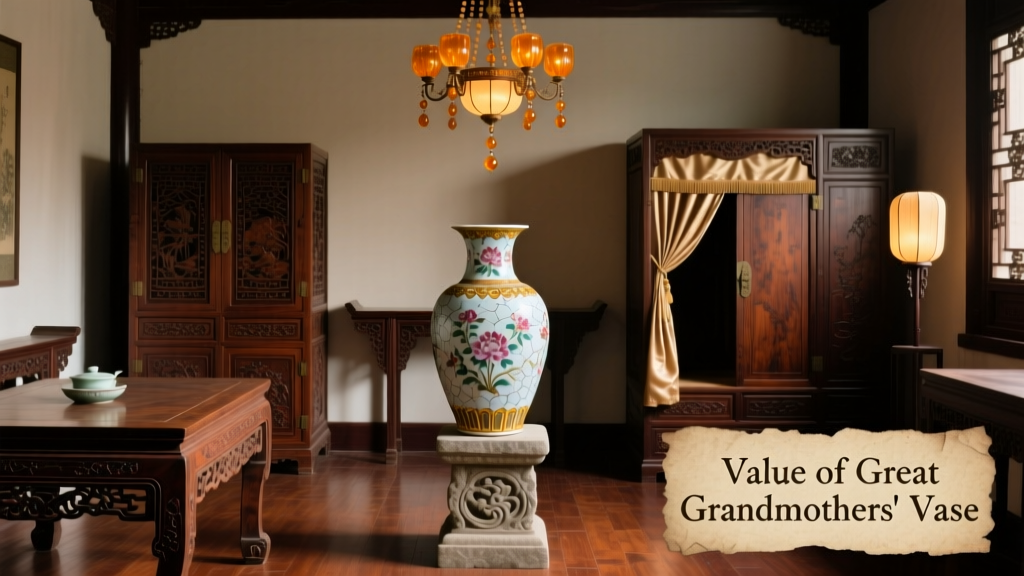
The Real Value of Great-Grandmother’s Vase: Beyond Sentiment, Into Appraisal, Provenance, and Market Reality

Banks Garfield Cat Football Player Ceramic Figurine: Enesco’s 1981 Limited Edition Collectible – Identification, Value, and Conservation Insights
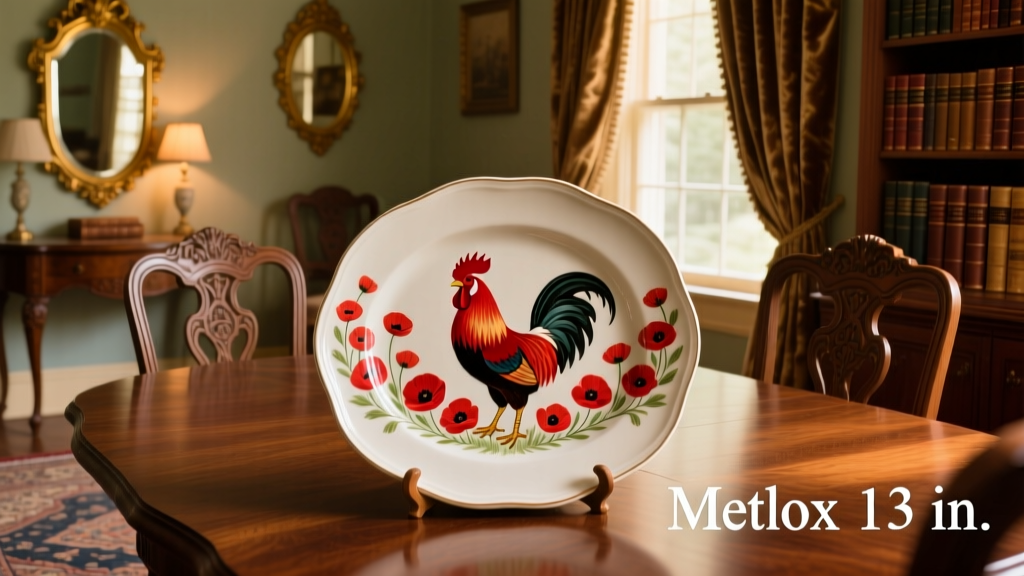
Metlox Poppy Trail Red Rooster 13-Inch Dinnerware Platter: History, Identification, and Restoration Guidance
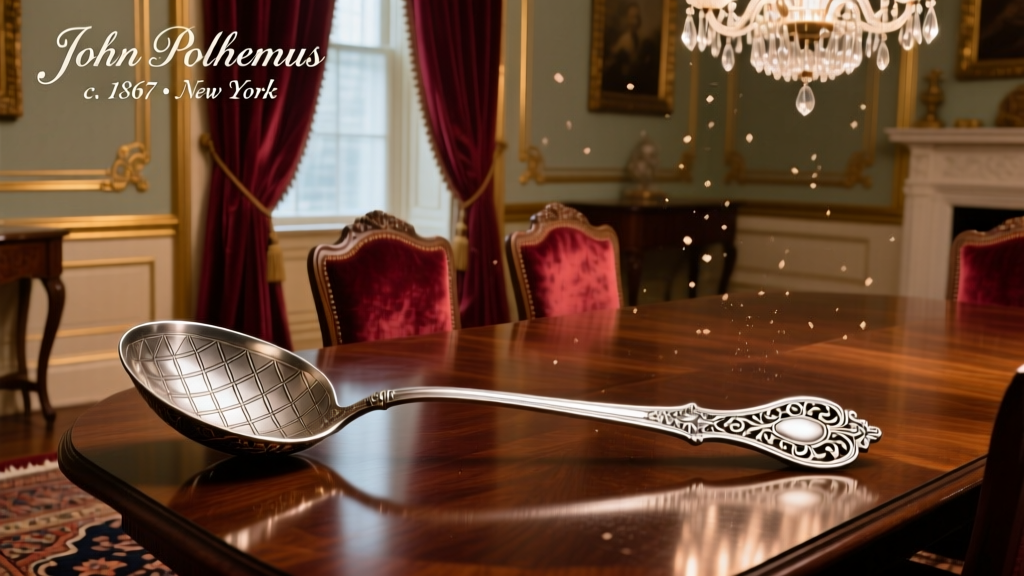
Silver American Ladle, Coin-Diamond Pattern, John Polhemus, c. 1867 — A 13-Inch Masterpiece of Gilded Age Silversmithing

The Nautical Whiskey Glass Queen Mary: History, Design, and Restoration Insights
Flint Oil Company Diamond-Shaped Letter Opener: A Collector’s Guide to the 9-Inch Brass and Steel Artifact

The Martin Brothers Jug: A Humorous Face in Brown Stoneware, 1898 — Anatomy, Provenance, and Conservation of a 7¼-Inch Masterpiece
Good Things Flea Market 274: A Deep-Dive Restoration Report on America’s Most Historic Outdoor Antiques Fair