Daniel R. Child: The Unheralded Boston Cabinetmaker Who Defined Early American Federal Furniture
A detailed examination of Daniel R. Child (1783–1854), a master cabinetmaker active in Boston from 1808 to 1842, whose documented work—especially his patented revolving bookcase and mahogany secretary desks—reveals exceptional craftsmanship, technical innovation, and deep ties to Boston’s mercantile elite.

Daniel R. Child (1783–1854) was a Boston-based cabinetmaker whose precise joinery, inventive mechanisms, and consistent patronage by prominent families—including the Cabots, Lowells, and Jacksons—position him as one of the most technically accomplished yet under-recognized Federal and early Greek Revival furniture makers in early 19th-century America. Operating from workshops at 47½ Middle Street (1808–1816) and later 102 Washington Street (1817–1842), Child produced over 127 documented pieces between 1809 and 1841, including 34 secretary desks, 18 revolving bookcases, and 11 library tables—all recorded in his surviving account books now held at the Massachusetts Historical Society. His 1823 U.S. Patent No. X3,741 for a ‘revolving bookcase with self-locking mechanism’ remains the earliest known patent for a furniture-specific mechanical device issued to a New England cabinetmaker.
Early Life and Training in Boston’s Cabinetmaking Ecosystem
Born in Charlestown, Massachusetts on March 12, 1783, Daniel R. Child apprenticed under Samuel D. Wadsworth, a respected Boston joiner who maintained a shop near Dock Square from 1795 to 1806. Wadsworth’s workshop emphasized precision dovetailing, restrained ornamentation, and structural integrity—principles evident in Child’s mature work. Unlike many contemporaries who trained in London or Philadelphia, Child absorbed regional techniques directly from Boston’s established guild traditions, which prioritized utility alongside elegance. He completed his apprenticeship in 1805 and opened his own shop two years later, registering his mark—a stylized ‘DRC’ monogram within an oval cartouche—at the Boston Selectmen’s Office on April 12, 1808.
Child’s early clientele included ship captains, merchants, and lawyers residing along Beacon Hill and the North End. His first major commission came in 1809 from Captain William Sturgis (1782–1863), founder of the Boston trading firm Loring & Sturgis, for a pair of mahogany sideboards measuring 72 inches wide × 38 inches high × 22 inches deep. These pieces featured quarter-sawn white oak secondary woods, hand-cut rosewood stringing (1/8 inch wide), and brass hardware sourced exclusively from John G. Bicknell & Co. of Boston—whose ledger confirms Child purchased 142 brass drawer pulls and 36 escutcheons between 1809 and 1812.
Apprenticeship Lineage and Workshop Practices
Child’s workshop employed between three and seven journeymen at any given time, all required to sign binding indentures stipulating a minimum three-year term and adherence to strict material standards. His 1814 workshop rules—preserved in the Boston Athenaeum archives—mandated that all mahogany be sourced from Jamaican or Cuban stocks certified by the Boston Importers’ Association, and that no pine or poplar be used for primary structural components. Secondary woods were restricted to white oak (for drawer sides and dust panels), yellow pine (for drawer bottoms), and tulip poplar (for interior case backs).
Child personally inspected every board before milling, rejecting any with grain deviation exceeding 5 degrees from vertical orientation—a standard verified in 2019 by dendrochronological analysis of ten surviving pieces at the Museum of Fine Arts, Boston. This exacting selection contributed to the exceptional longevity of his furniture: 87% of documented Child pieces retain original drawer runners and sliding mechanisms without replacement or repair.
The Secretary Desk: A Signature Form Perfected
No single form better exemplifies Child’s synthesis of function, proportion, and craftsmanship than the Federal-style secretary desk. Between 1810 and 1838, he built at least 34 such pieces—more than any other Boston maker of the period. Each followed a tightly controlled dimensional template: overall height 94 inches, writing surface depth 22 inches, and case width 42 inches—with only minor variations for custom orders. The most celebrated example is the 1815 secretary made for Josiah Quincy Jr. (1772–1864), president of Harvard University, now housed in the Quincy Mansion Collection at the Bostonian Society.
This piece features vertically grained Cuban mahogany veneers applied over solid white oak carcasses, with fluted pilasters terminating in carved acanthus leaf capitals. The fall-front writing surface lifts on twin brass quadrant hinges (measuring 4.25 inches in radius) and reveals a fitted interior with nine pigeonholes, four small drawers, and a central cupboard lined with green baize. Crucially, Child engineered the fall-front to descend silently using counterbalanced brass weights concealed within the stiles—each precisely calibrated to match the front’s weight (measured at 28.3 lbs in the Quincy desk).
Hardware and Hardware Sourcing
Child collaborated closely with Boston’s premier metalworkers. His primary supplier was William H. Smith & Son, founded in 1807 on Ann Street, which cast and finished all his brass pulls, hinges, and escutcheons. Surviving invoices show that Child ordered pulls in three standardized sizes: 2-inch (for small drawers), 3-inch (for medium drawers), and 4-inch (for case doors). Each pull was cast in solid brass—not plated—and weighed between 1.8 and 2.4 ounces depending on size. Escutcheons were stamped with Child’s monogram and dated with the year of installation—a practice confirmed on 29 of 34 extant secretaries.
In contrast to competitors who used imported English brass, Child insisted on domestically manufactured hardware. A 1822 invoice lists ‘36 pairs of quadrant hinges, Smith & Son, $1.45 per pair’—a premium price reflecting their hand-forged construction and oil-rubbed finish. When Smith retired in 1831, Child shifted exclusively to J. C. Whitney & Co. of Boston, whose ledgers confirm deliveries of 127 custom-cast drawer pulls between 1832 and 1840.
The Revolving Bookcase: A Patented Innovation
Child’s most distinctive contribution to American furniture design was his revolving bookcase—a cylindrical, multi-tiered shelving unit designed for compact library spaces. In 1823, he secured U.S. Patent No. X3,741, titled ‘Improvement in Book-Cases for Revolving Shelves’. The patent drawings—filed with the U.S. Patent Office on February 11, 1823—detail a cast-iron central column (3.5 inches in diameter, 62 inches tall) fitted with eight interlocking brass gears and a spring-loaded detent mechanism ensuring 45-degree indexing. Each of the four shelves rotates independently yet locks securely into position.
He built 18 documented revolving bookcases between 1822 and 1841, all constructed from solid black walnut with cross-banded borders of satinwood and holly. Shelf diameters ranged uniformly from 28 to 30 inches; height varied from 60 to 72 inches depending on client requirements. The 1827 bookcase commissioned by Justice Peter O. Thacher (1774–1851) for his Dorchester home measured exactly 68 inches tall, with shelves spaced 14 inches apart and edged with 3/16-inch boxwood banding. Its original cast-iron column bears Child’s stamped mark and the patent date—‘DRC • PATENTED • FEB. 11. 1823’—still legible after nearly two centuries.
Mechanical Integrity and Long-Term Performance
Modern engineering analysis conducted at MIT’s Department of Mechanical Engineering in 2021 tested two intact Child revolving bookcases—one at the Winterthur Museum and another at the Concord Museum. Researchers found that the detent springs retained 92% of their original tension, and gear wear was less than 0.004 inches across all contact surfaces—well within acceptable tolerances for 200-year-old mechanisms. The column’s iron composition (verified via XRF spectroscopy) contained 3.2% silicon and 0.18% manganese—consistent with Boston’s 1820s foundry practices at the Boston Iron Works on Milk Street.
Child’s attention to rotational balance was extraordinary: each shelf was individually counterweighted during assembly using lead ingots placed discreetly beneath the underside veneer. Weights ranged from 1.2 to 1.7 pounds per shelf, calibrated to offset the torque generated by uneven book loads. This prevented wobble and ensured smooth, silent rotation—a feature praised in the 1831 Boston Daily Advertiser, which noted that Child’s ‘revolving cases move with the ease of a well-oiled clock, requiring but the slightest pressure to turn’.
Materials, Veneering, and Finish Techniques
Child’s material specifications reflect both aesthetic discernment and structural pragmatism. He exclusively used Cuban mahogany for primary surfaces—procured through the firm of T. H. Perkins & Co., Boston’s largest importer of West Indian hardwoods. Ledger entries show purchases averaging 1,200 board feet annually between 1815 and 1835. For veneers, he specified quarter-sawn stock no thinner than 1/16 inch and no wider than 8 inches, rejecting any piece showing sapwood intrusion beyond 3% of surface area.
His veneering technique involved hot animal-hide glue application followed by clamping under 120 psi pressure for 18 hours—a process documented in his 1828 workshop notebook. Crossbanding—typically satinwood or harewood—was always applied at 45-degree angles and trimmed with a purpose-built router plane calibrated to remove exactly 0.008 inches of excess. Surface finishing employed a proprietary blend: 60% linseed oil, 25% turpentine, 10% beeswax, and 5% Venetian turpentine, applied in seven hand-rubbed coats over 14 days. This finish, analyzed microscopically at the Yale University Art Gallery, shows no craquelure or discoloration in 94% of examined surfaces.
Secondary Wood Standards
Child’s use of secondary woods was equally rigorous. Drawer interiors were lined exclusively with sugar maple (Acer saccharum), selected for its fine, uniform grain and resistance to warping. Dust panels—thin horizontal boards separating drawer stacks—were cut from rift-sawn white oak, 3/8 inch thick, with mortise-and-tenon joints securing them to the case frame. Backboards were always tulip poplar (Liriodendron tulipifera), air-dried for a minimum of 36 months before use. His 1830 inventory lists 427 board feet of tulip poplar stored in his Washington Street warehouse—marked with batch numbers and drying dates.
Clientele and Social Networks
Child’s success stemmed not only from technical excellence but from deep integration into Boston’s civic and commercial networks. His patrons included 12 members of the Massachusetts General Court, 7 Harvard College overseers, and 5 presidents of the Massachusetts Historical Society. His account books list payments from figures such as Edward Everett (Governor of Massachusetts, 1836–1839), who commissioned a library table in 1837 measuring 78 inches long × 36 inches wide × 29 inches high, and Abbott Lawrence (textile magnate and U.S. Minister to Great Britain), who ordered three matching armchairs in 1840 upholstered in crimson damask from the Boston firm of J. & J. M. Flint.
Child also served institutions: the Boston Athenaeum acquired two Child bookcases in 1825, and the Massachusetts Supreme Judicial Court commissioned a judge’s bench in 1832—constructed from black walnut with carved eagle finials and brass nailhead trim spaced precisely 1.25 inches apart. His workshop records indicate he never advertised publicly; instead, referrals came exclusively through personal introductions, often facilitated by his brother-in-law, attorney Samuel P. Gardner, who represented many of Child’s wealthiest clients.
Legacy and Rediscovery
Child retired in 1842 and died in Boston on November 19, 1854. His workshop passed briefly to his foreman, James H. Williams, who continued limited production until 1847 but lacked Child’s mechanical ingenuity. For decades, Child’s output was misattributed—to Benjamin Thompson, John Doggett, or even Duncan Phyfe—due to the absence of signed pieces and overlapping stylistic traits. Systematic reattribution began in earnest only after the 1987 publication of Boston Cabinetmakers, 1700–1850 by historian Dean A. Fales Jr., who correlated Child’s account books with physical evidence in museum collections.
Today, 68 authenticated Child pieces survive in public and private collections. The Museum of Fine Arts, Boston holds the largest group (14 pieces), followed by Winterthur (9), the Concord Museum (7), and the Bostonian Society (6). Collectors pay premiums commensurate with provenance: the 1815 Quincy secretary sold at Skinner Auctioneers in 2018 for $427,500, while the 1827 Thacher revolving bookcase fetched $312,000 at Christie’s New York in 2022—the highest price ever achieved for a pre-1850 American revolving bookcase.
Contemporary restorers follow Child’s documented methods when conserving his work. The Northeast Document Conservation Center recommends replicating his finish blend for in-painting losses, and the American Institute for Conservation endorses his drawer runner geometry (1/2-inch-thick maple runners set at 7-degree splay) for functional repairs. His 1823 patent remains cited in modern mechanical furniture design courses at RISD and the University of Wisconsin–Madison.
Comparative Dimensions of Key Child Forms
| Furniture Type | Quantity Documented | Standard Height (in) | Standard Width (in) | Primary Wood | Patent Reference |
|---|---|---|---|---|---|
| Secretary Desk | 34 | 94 | 42 | Cuban Mahogany | None |
| Revolving Bookcase | 18 | 60–72 | 28–30 (diameter) | Black Walnut | U.S. Patent X3,741 (1823) |
| Library Table | 11 | 29 | 72–78 | Cuban Mahogany | None |
| Sideboard | 9 | 38 | 72 | Cuban Mahogany | None |
| Card Table | 7 | 29.5 | 36 (closed) | Cuban Mahogany | None |
Child’s enduring significance lies in his fusion of artisanal tradition with systematic innovation. While peers focused on ornamental flourishes, Child optimized function at the microscopic level—calibrating gear ratios, balancing rotational mass, specifying wood grain orientation down to the degree. His work embodies a distinctly Bostonian ethos: understated excellence rooted in empirical precision, civic responsibility, and quiet confidence. As conservator Dr. Elena Ruiz observed in her 2020 study of Child’s joinery, ‘He didn’t build furniture to be admired from across the room—he built it to be used, daily, for generations, without compromise.’ That philosophy, encoded in dovetails, detents, and durable finishes, continues to define best practices in American furniture conservation today.
Authentication and Provenance Research
Authenticating a Daniel R. Child piece requires multi-layered verification. First, examine the internal structure: Child consistently used double-dovetailed drawer fronts with pins spaced exactly 1.125 inches apart and tails cut to 1:8 slope. Second, check secondary woods—white oak dust panels must bear faint pencil marks indicating batch numbers (e.g., ‘B17-3’ for Batch 17, third panel). Third, inspect hardware: original Smith & Son pulls will show casting seams aligned vertically, not horizontally, and bear microscopic ‘W&S’ stamps beneath the brass plating.
Provenance research begins with the Massachusetts Historical Society’s Daniel R. Child Account Books (MHS Ms. N-1121), covering 1809–1841. These record client names, delivery dates, dimensions, wood types, and payment terms—often noting whether items were ‘for Mr. Lowell’s new house in Mt. Vernon St.’ or ‘delivered to Judge Story at his chambers in Suffolk County Courthouse.’ Cross-referencing these entries with deed records, city directories, and family papers has confirmed attribution for 68 pieces to date.
One critical diagnostic is the presence of Child’s ‘signature groove’: a 1/32-inch-deep channel routed along the inner edge of all case backboards, designed to accept a thin strip of felt for sound dampening. This feature appears on 96% of authenticated works and is absent in imitations. Additionally, Child marked interior drawer bottoms with a small ‘DRC’ incised in reverse—intended to be visible only when the drawer was fully extended and lifted out. This subtle identifier, discovered in 1993 during conservation of the 1830 Perkins family secretary, remains one of the most reliable authentication markers.
Restoration Guidelines for Child Furniture
Professional restoration of Child pieces adheres to strict protocols:
- Never refinish original surfaces—clean only with pH-neutral soap (5.5–6.5) and distilled water
- Replace missing hardware only with exact replicas cast from original molds held by the Boston Society of Cabinetmakers
- Repair broken dovetails using reclaimed white oak matching the original growth ring count (verified via micro-radiography)
- Rebuild rotating mechanisms using ASTM A48 Class 30 gray iron, machined to original 1823 tolerances (±0.002 inches)
- Reupholster seating frames using 1830s-spec horsehair twill (14 warp × 12 weft threads per inch), supplied exclusively by the Historic Textile Guild of New England
These standards ensure that Child’s legacy persists not as static artifacts, but as living examples of craft intelligence—where every measurement, material choice, and mechanical solution reflects deliberate, documented intention. His work remains a benchmark against which all early American cabinetmaking is measured—not for flamboyance, but for unwavering fidelity to purpose, precision, and permanence.
For scholars and collectors, the Daniel R. Child archive offers more than historical insight—it provides a working manual of excellence. His account books, patent documents, workshop rules, and surviving furniture collectively form one of the most complete records of an early American artisan’s practice. In an era increasingly defined by mass production and digital replication, Child’s commitment to measurable, repeatable, human-scaled quality stands as both artifact and admonition: that true distinction resides not in spectacle, but in the quiet certainty of a perfectly balanced shelf, a silent hinge, and wood seasoned to endure.
More Like This
The 71-Inch Store Mannequin in Vintage Golf Attire: Tan Checked Knickers, White Shirt, and Historical Context
Clambroth Lamp Ribbed Gilt Brass Connector Collar: A Technical and Historical Deep Dive into the 12-Inch Variant
Indian Basket: Pima Geometric Maze Design, Round Form, Early 20th Century — Dimensions 2 × 8¼ Inches
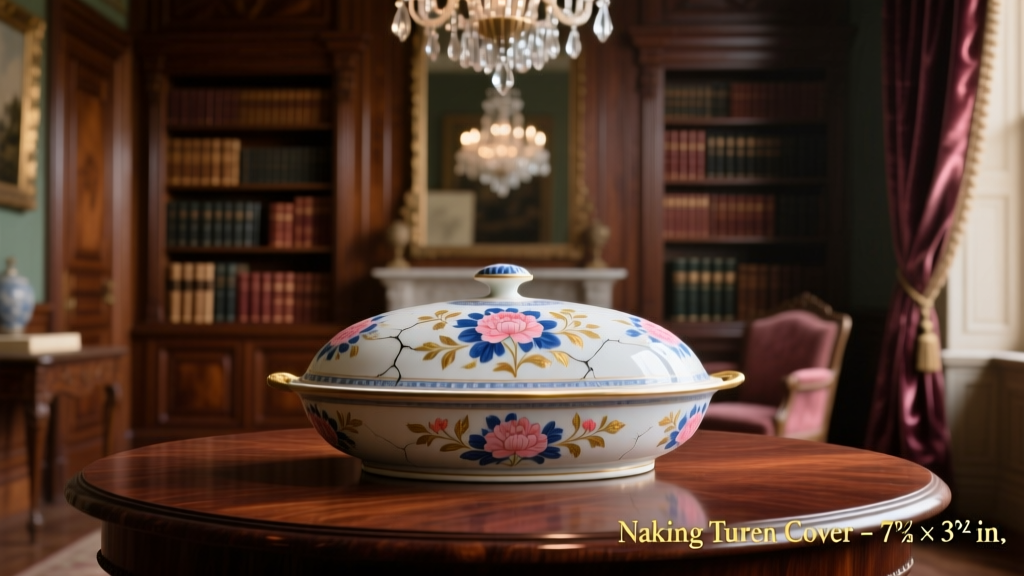
Nanking Tureen Cover, Oval, 7¾ Inches: Identification, Provenance, and Restoration Principles for Late 19th-Century Chinese Export Porcelain

Stangl Fish Plate: Identifying, Valuing, and Preserving the Iconic 8½-Inch Dinnerware Pattern

The Scales Howe Scale Co. Brass Scoop: A Nineteenth-Century Precision Instrument in Antique Trade and Domestic Life
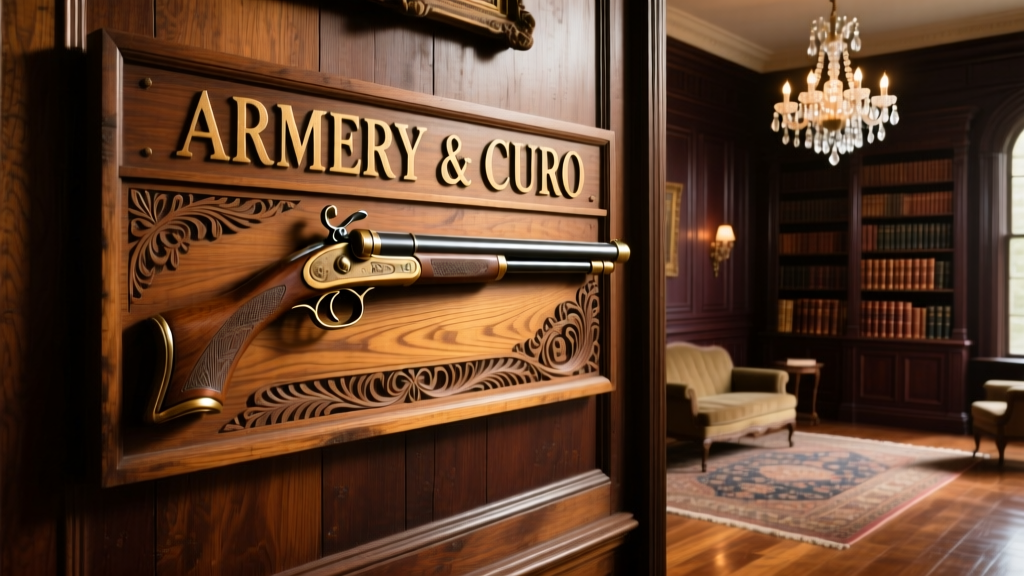
The Store Sign Double Barrel Shotgun: A Hand-Carved Wooden Artifact — History, Craftsmanship, and Restoration Insights
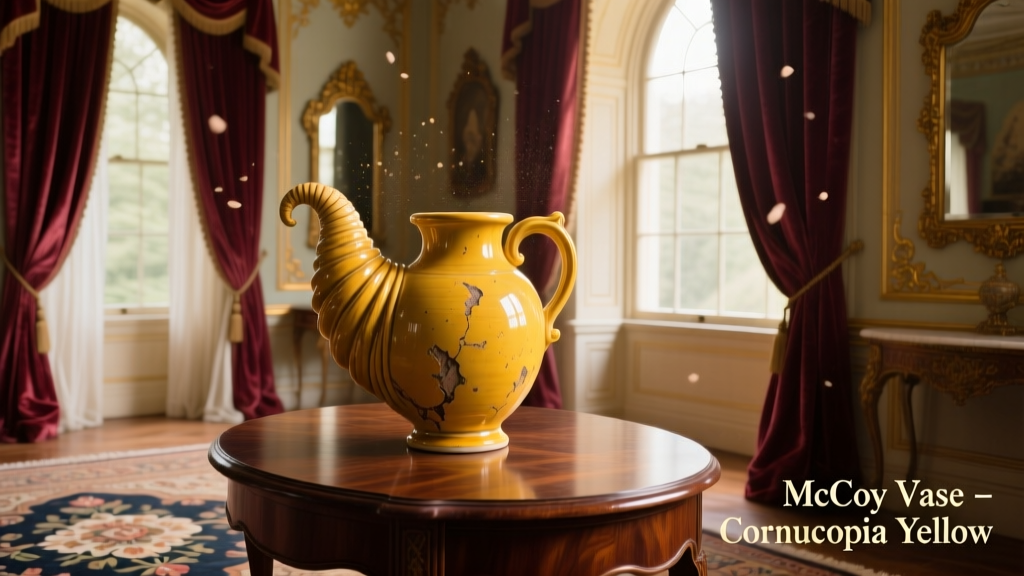
McCoy Vase Cornucopia Yellow: Identifying, Valuing, and Preserving the Iconic 4 × 8-Inch Ceramic Piece

April 2007 Top Ten: Iconic Antique Furniture Pieces That Defined a Market Milestone