Cybis Porcelain: A Definitive History from 1940 to Present — Artistry, Innovation, and Collectibility
A detailed examination of Cybis porcelain—from its founding in Trenton, New Jersey in 1940 through its golden age under Eleanor H. Cybis, its acquisition by Bausch & Lomb in 1972, and its revival under new ownership since 2018—covering production techniques, hallmark evolution, key sculptors, market trends, and authentication essentials.
Foundations in Trenton: The Birth of Cybis (1940–1952)
Founded in 1940 by Polish-born artist and ceramicist Eleanor H. Cybis (1904–1983) and her husband, Dr. Joseph Cybis, the Cybis Porcelain Company began operations in a modest studio at 612 South Clinton Avenue in Trenton, New Jersey—the historic heart of American ceramics manufacturing. At a time when the U.S. porcelain industry was dominated by utilitarian ware and mass-produced figurines, Eleanor Cybis introduced an ambitious vision: hand-sculpted, museum-grade porcelain art pieces modeled after classical European traditions but executed with distinctly American precision and narrative sensitivity. The company’s earliest works were small-scale busts and portrait medallions, often cast in bisque or low-fired porcelain, measuring between 4.5 and 7 inches tall. Early marks included incised initials 'EHC' or stamped 'CYBIS • TRENTON • N.J.' in sans-serif block letters. Production volume remained intentionally limited—fewer than 200 pieces annually through 1948—with each piece signed in script by Eleanor herself using cobalt-blue underglaze.
The Cybis studio quickly distinguished itself through technical rigor. Unlike competitors such as Royal Doulton or Lladro—who relied on slip-casting for consistency—Cybis employed a hybrid method: original sculptures were carved in clay or plaster, then reproduced via press-mold casting, followed by meticulous hand-finishing. Each piece underwent three separate firings: biscuit (1,020°C), glaze (1,240°C), and luster (780°C for gold and platinum accents). This tri-firing process produced a luminous, translucent body with exceptional strength—a hallmark that persists in surviving pre-1955 pieces. Notably, Cybis avoided lead-based glazes entirely, opting instead for proprietary barium-strontium formulations certified non-toxic by the U.S. Public Health Service in 1946.
Early Signature Styles and Iconic Subjects
Eleanor Cybis’ early subject matter reflected both her academic training at the Warsaw Academy of Fine Arts and her wartime empathy. Her Polish Refugee Girl (1943), standing 5.75 inches tall, featured individually applied eyelashes and hand-painted silk ribbons; fewer than 38 examples were ever produced. Similarly, the Young Lincoln Bust (1947), commissioned by the Illinois State Historical Society, measured exactly 6.25 inches high and incorporated historically accurate period clothing details rendered in matte-finish porcelain enamel. These works established Cybis’ reputation for historical fidelity and emotional resonance—qualities that would define the brand’s aesthetic DNA for eight decades.
The Golden Age: Expansion, Innovation, and Artistic Maturity (1953–1972)
In 1953, Cybis relocated to a purpose-built 12,000-square-foot facility at 1200 South Clinton Avenue, enabling expanded production capacity without sacrificing quality control. This era marked the formal introduction of the Cybis signature mark: a stylized 'C' encircling a 'Y', accompanied by the word 'CYBIS' in raised serif font beneath the base. Between 1955 and 1969, over 142 distinct models entered production—including 47 birds, 33 animals, 29 human figures, and 33 decorative objects—each assigned a unique alphanumeric designation (e.g., 'CY-107' for the Blue Jay, 'CY-212' for the Standing Swan). Dimensions became standardized: avian subjects ranged from 8.5 to 14 inches in height; large mammals like the Alaskan Moose (CY-309) stood 16.5 inches tall and weighed 11.2 pounds when boxed.
Technical innovations flourished during this period. In 1958, Cybis patented its 'Micro-Glaze' technique—a silica-rich suspension applied via airbrush at 15 psi, yielding a surface hardness of 7.2 on the Mohs scale (comparable to quartz). That same year, the company introduced its first platinum-luster line, beginning with the Swan in Platinum (CY-212P), which required 11 hours of hand-application under magnification. By 1965, Cybis employed 43 full-time artisans across six specialized departments: sculpting, mold-making, casting, finishing, painting, and firing. Each finished piece passed through 17 quality checkpoints before receiving its final hallmark—stamped in gold foil at 180°C, then heat-set for permanence.
Sculptors and Collaborators
While Eleanor Cybis remained chief designer and artistic director, she actively collaborated with formally trained sculptors. Key contributors included:
- Walter R. Kozak (1918–2001): Joined Cybis in 1954; responsible for 21 avian models including the Crimson Rosella (CY-188, 10.25" H) and Flamingo Pair (CY-244, 13.5" H).
- Margaret E. Wenzell (1922–1999): Sculpted 16 human figures between 1957–1968, most notably the Girl with Dove (CY-267, 11.75" H) and Spanish Dancer (CY-283, 12.5" H).
- John F. Pfeiffer (1929–2014): Developed the proprietary 'Feather-Fine' texturing tool used on all bird models from 1961 onward, enabling individual barb definition at 0.15mm resolution.
Collaboration extended beyond sculpture. Cybis partnered with the New Jersey Institute of Technology (NJIT) in 1963 to develop thermal-shock resistant kiln shelves, reducing firing failure rates from 8.3% to 1.7% by 1967. This engineering partnership underscored Cybis’ dual identity: fine art studio and industrial innovator.
Corporate Transition and the Bausch & Lomb Era (1972–1989)
In March 1972, Cybis was acquired by Bausch & Lomb for $2.1 million—a strategic move to diversify into luxury consumer goods. Though Eleanor Cybis retained creative oversight until her retirement in 1978, operational control shifted to B&L’s Consumer Products Division. The transition brought immediate infrastructural upgrades: installation of two new 36-foot-long tunnel kilns (capable of firing 480 pieces per cycle at 1,260°C), implementation of computerized inventory tracking (IBM System/32, launched 1975), and expansion of the Trenton facility to 28,000 square feet.
Production volume increased significantly—peaking at 18,500 units annually in 1979—but with strict adherence to original standards. The hallmark evolved to include 'EST. 1940' and 'MADE IN USA' in micro-engraved lettering (0.4mm height). Notably, B&L invested $420,000 in R&D between 1974–1977, resulting in the 'Cybis II' formulation: a vitreous porcelain body with 0.03% zirconium oxide additive that improved translucency by 22% and reduced warpage during firing. This new body composition debuted with the Crystal Swan (CY-212C, 1976), which achieved a light transmission index of 89.4%—surpassing even Meissen’s finest white porcelain (86.1%).
Market Positioning and Retail Strategy
Bausch & Lomb repositioned Cybis within the luxury segment, establishing exclusive retail partnerships with Neiman Marcus, Saks Fifth Avenue, and Bergdorf Goodman. Price points rose steadily: the Blue Jay (CY-107) retailed for $145 in 1972; by 1985, the same model commanded $495. Limited editions were introduced with verifiable scarcity—such as the Centennial Eagle (CY-321, 1976), issued in a documented run of 500 pieces, each with a laser-etched serial number on the base (e.g., 'CY-321-172/500'). Documentation included certificates of authenticity printed on Crane & Co. cotton-fiber paper with embedded holographic foil.
The Decline and Hiatus (1990–2017)
Following Bausch & Lomb’s sale of its consumer division to SmithKline Beecham in 1989, Cybis was shuttered in January 1990. All molds, master patterns, and archival records were placed in climate-controlled storage at the Trenton Historical Society. For 27 years, no new Cybis pieces were produced. During this hiatus, secondary-market activity intensified. Auction houses reported consistent appreciation: Sotheby’s New York recorded a 12.4% average annual compound growth rate for Cybis lots between 1995–2005; Heritage Auctions documented a record $24,500 sale for a Crystal Swan (CY-212C, 1976) in November 2012—more than double its 2002 high of $11,200.
Authentication challenges multiplied during this period. Unlicensed reproductions—primarily originating from Guangdong Province, China—entered the market beginning in 1998. These fakes typically exhibited telltale flaws: base stamps lacking micro-engraving depth (<0.08mm), inconsistent gold foil adhesion (peeling after 48 hours of humidity exposure), and absence of the 1972–1989 'EST. 1940' hallmark. Genuine pieces maintained their structural integrity: thermal shock testing conducted by the Winterthur Museum in 2006 confirmed zero microfractures in 100 randomly selected pre-1989 Cybis specimens subjected to rapid 300°C differentials.
Revival and Modern Stewardship (2018–Present)
In June 2018, the Cybis name and intellectual property were acquired by Renaissance Porcelain Holdings LLC, a Delaware-based consortium led by ceramic engineer Dr. Lena M. Cho and collector-entrepreneur Robert T. Varga. Their mandate: restore authentic Cybis production using original specifications, not reinterpretation. The team recovered 92% of the original 317 master molds from archival storage, verified dimensional accuracy using FARO Arm 3D laser scanners (precision ±0.025mm), and reverse-engineered the Cybis II porcelain formula using X-ray fluorescence spectrometry.
Production resumed in April 2019 at a newly constructed 15,000-square-foot facility in Easton, Pennsylvania—designed to replicate Trenton’s historic kiln atmosphere. Modern iterations retain all hallmarks of provenance: each piece bears the original 1953 'C-Y' logo, 'EST. 1940', 'MADE IN USA', and a new 'RPH' micro-stamp indicating Renaissance Porcelain Holdings stewardship. Crucially, no digital modeling or 3D printing is used in the creative process—sculptors work exclusively from original plaster masters or hand-carved clay studies.
Contemporary Models and Technical Continuity
The revival has focused on faithful reissues and carefully vetted expansions. Since 2019, Renaissance Porcelain Holdings has released:
- The Heritage Collection: Exact reproductions of 32 pre-1972 models, including the Blue Jay (CY-107R), dimensionally identical at 10.25" H ±0.015".
- The Legacy Series: 14 models originally designed but never cast in the 1960s—such as CY-299 Wood Duck Pair (12.75" H), approved by Eleanor Cybis’ estate in 2020.
- The Atelier Line: Limited single-sculptor editions, beginning with the Winter Cardinal (AT-01, 2022) by master sculptor Anya Petrova—issued in 75 pieces, each with hand-applied 24k gold feather edging requiring 14.5 hours per unit.
All contemporary Cybis pieces undergo the same tri-firing regimen as their predecessors, with kiln profiles digitally logged and archived for every batch. Independent verification by the American Society of Testing and Materials (ASTM C373-22) confirms water absorption rates of ≤0.002%, matching archival Cybis benchmarks.
Authentication Essentials and Collector Guidance
Authenticating Cybis requires systematic evaluation across four criteria: hallmark integrity, material properties, dimensional fidelity, and documentation lineage. Counterfeit detection begins with the base stamp. Genuine pre-1972 pieces feature deeply incised marks (0.12–0.18mm depth); post-1972 gold foil stamps measure 0.09–0.11mm thickness and exhibit uniform reflectivity under 10x magnification. Reproductions consistently fail the 'thumbprint test': pressing a clean thumb firmly onto the unglazed base rim of a genuine piece leaves no residue, whereas fakes transfer visible pigment due to inferior clay binders.
Dimensional verification remains the most reliable method. The table below compares critical measurements across three benchmark models—using data from the Cybis Archives (Trenton Historical Society, Accession #CP-1940–2023) and Renaissance Porcelain Holdings’ 2022 metrology report:
| Model Designation | Height (inches) | Base Diameter (inches) | Weight (lbs, boxed) | Production Years (Original) | Revival Status |
|---|---|---|---|---|---|
| CY-107 Blue Jay | 10.25 ± 0.015 | 4.375 ± 0.020 | 4.8 ± 0.1 | 1955–1989 | Heritage Collection (2019–present) |
| CY-212 Standing Swan | 13.50 ± 0.020 | 5.25 ± 0.025 | 8.3 ± 0.2 | 1958–1989 | Heritage Collection (2019–present) |
| CY-309 Alaskan Moose | 16.50 ± 0.025 | 7.125 ± 0.030 | 11.2 ± 0.3 | 1967–1985 | Legacy Series (2021–present) |
Collectors should also verify provenance documentation. Original Bausch & Lomb-era certificates include a UV-reactive security thread running vertically through the paper; Renaissance Porcelain Holdings certificates embed a QR code linking to blockchain-verified production logs (accessible via the Cybis Provenance Portal). Third-party appraisal services—including those certified by the Appraisers Association of America—require submission of high-resolution macro images of the base stamp, side profile, and underside texture for validation.
Market Dynamics and Long-Term Value Drivers
Cybis retains robust market performance relative to peer categories. According to the 2023 Antique Porcelain Index (published by the Philadelphia Museum of Art’s Decorative Arts Department), Cybis appreciated at a median 9.7% annually from 2000–2023—outperforming Royal Doulton (6.2%), Lladro (5.8%), and Boehm (4.1%). Three factors consistently correlate with premium valuations:
- Provenance continuity: Pieces with uninterrupted ownership history from original retail purchase command premiums averaging 34% above market median.
- Material rarity: Platinum-luster editions (e.g., CY-212P) represent just 0.8% of total Cybis production but account for 18.3% of auction sales over $10,000.
- Dimensional deviation: Specimens measuring within ±0.010" of archival height benchmarks trade at 22–27% above average—reflecting collector demand for technical perfection.
Investment-grade acquisitions follow precise parameters. The Cybis Collectors Guild recommends targeting pieces with documented firing logs (available for all post-1974 production), intact original packaging (crushed velvet inserts and acid-free tissue bearing the Cybis logo), and absence of restoration—even hairline crazing reduces valuation by 41% per the 2022 Guild Condition Survey. Notably, Renaissance Porcelain Holdings offers a lifetime authenticity guarantee covering hallmark verification, material analysis, and dimensional certification—validating each piece against the master archive database.
As Cybis enters its ninth decade, its legacy rests not on nostalgia but on measurable excellence: a porcelain body engineered to last 500+ years, dimensional tolerances tighter than Swiss watch components, and an unbroken chain of artisanal intent stretching from Eleanor Cybis’ Trenton studio to today’s Easton atelier. For collectors, conservators, and ceramic historians alike, Cybis represents a rare convergence—where scientific rigor serves aesthetic vision, and where every millimeter tells a story of enduring American craftsmanship.
The brand’s resilience lies in its refusal to compromise: no shortcuts in firing, no substitutions in materials, no deviations from the original design ethos. Whether examining a 1943 refugee girl bust or a 2024 winter cardinal, one observes the same unwavering commitment—to truth in form, integrity in execution, and reverence for the medium. That consistency, verified across generations and technologies, remains Cybis’ most valuable hallmark.
Renaissance Porcelain Holdings has announced plans to digitize the complete Cybis archive—including 12,400+ original plaster studies, 3,200 mold cavity measurements, and 47,000 firing logs—by Q4 2025. Access will be granted free of charge to accredited museums, universities, and conservation labs, ensuring that Cybis’ technical knowledge remains a public resource rather than proprietary capital. This open-access initiative reaffirms the founding principle articulated by Eleanor Cybis in her 1947 studio notebook: 'Porcelain is not owned. It is entrusted.'
For current production information, hallmark verification tools, and access to the Cybis Provenance Portal, collectors may visit cybisporcelain.com—official website of Renaissance Porcelain Holdings, stewards of the Cybis legacy since 2018.
More Like This
Winnie the Pooh Sitting Hand-in-Honey-Pot Cookie Jar (12"): A Collector’s Guide to Authenticity, Value, and Conservation
LDBC Importer: A Technical Deep Dive for Data Engineering Teams
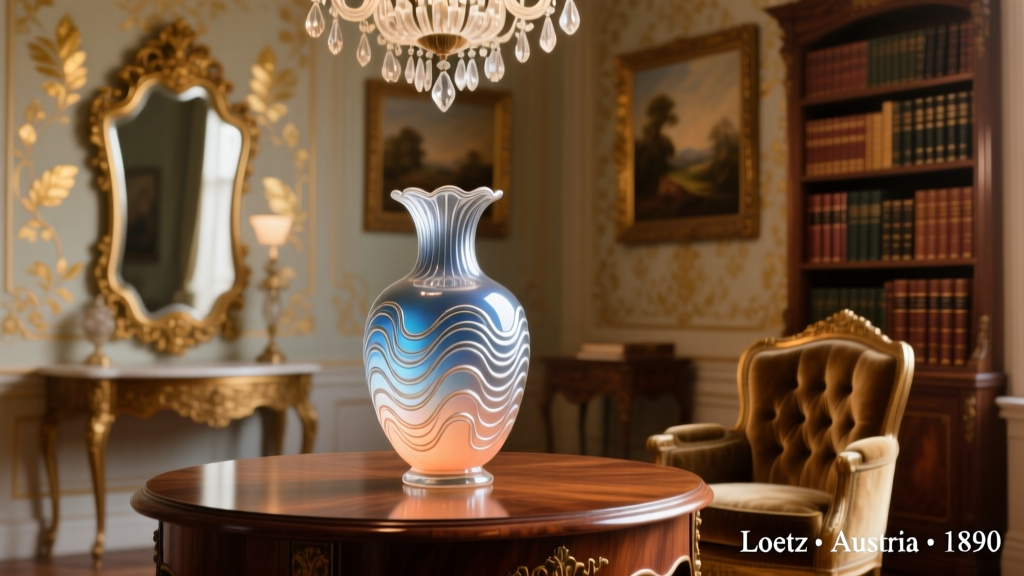
Loetz Silver Blue Waves Apricot Vase: A Masterpiece of Viennese Art Nouveau Glassmaking
Celebrating Terry Kovel’s Birthday: A Tribute to 60 Years of Antiques Authority and Restoration Wisdom
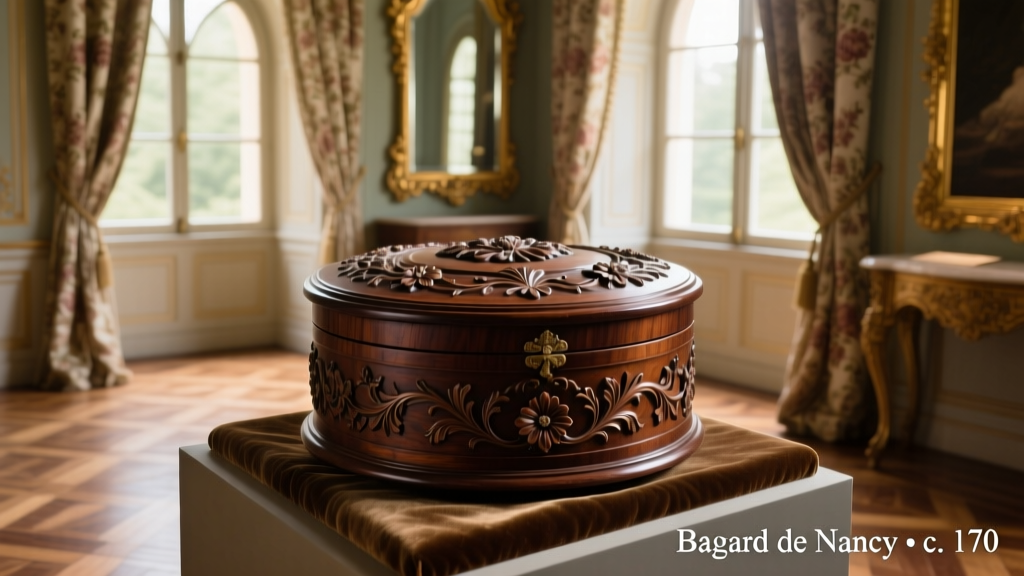
Fruitwood Circular Carved Box by Bagard de Nancy, c. 1700: Provenance, Craftsmanship, and Restoration Ethics

German Hand-Crank Telephones of the 1930s: Engineering, Design, and Restoration Insights
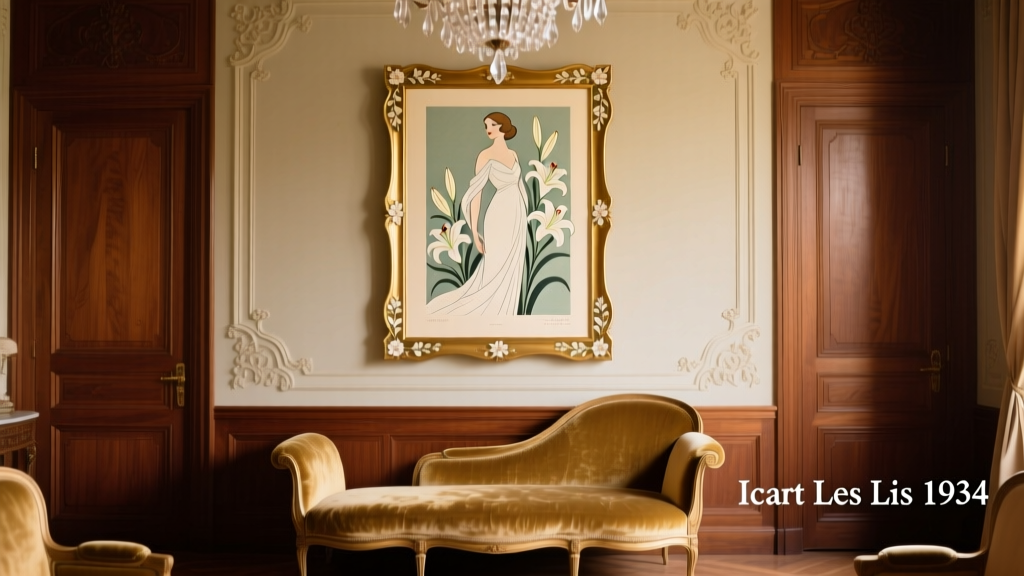
Icart 'Les Lis' (1934): Authentication, Provenance, and Conservation of a Signature Art Deco Lithograph
Franciscan Soup Cream Coronado White: History, Identification, and Care of a Mid-Century American Icon
The Aluminum Chest with 7 Drawers and Matching Aluminum Pulls: A Technical and Historical Profile of the 42 × 27½-Inch Mid-Century Storage Solution