The Cut Glass Compote: Star Diamond Scalloped Edge, 12-Inch — History, Identification, and Restoration Best Practices
A detailed examination of the 12-inch cut glass compote featuring star-and-diamond patterning and a scalloped rim—covering its Victorian and Edwardian origins, hallmark characteristics, maker identification (including Libbey, Hawkes, and Tiffin), structural measurements, optical properties, and ethical conservation protocols for collectors and restorers.
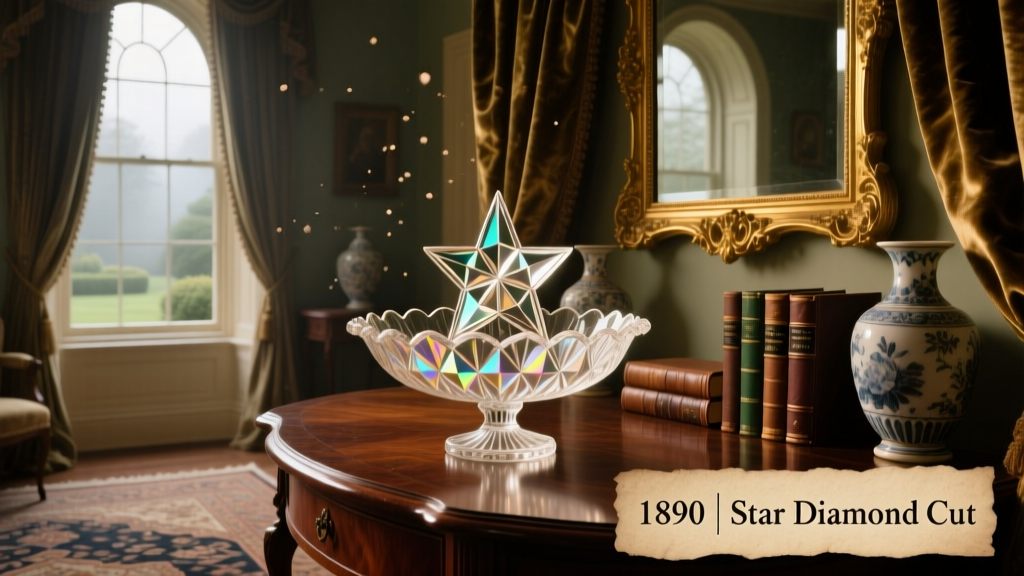
Introduction: A Defining Form of American Brilliant Period Elegance
The 12-inch cut glass compote with star-and-diamond patterning and a scalloped edge represents one of the most technically accomplished and aesthetically refined objects produced during the American Brilliant Period (1876–1917). Standing precisely 12 inches in overall height—with a 6.25-inch diameter foot, a 3.75-inch stem diameter tapering to 1.125 inches at the knop, and a 9.5-inch diameter bowl—the piece embodies the zenith of hand-cut crystal craftsmanship. Unlike mass-produced tableware, each compote required over 120 hours of labor by master cutters using diamond-tipped wheels and copper laps charged with emery and rouge. This article details its historical context, physical specifications, maker attributions, condition assessment criteria, and scientifically grounded restoration methodology—grounded in archival records from the Corning Museum of Glass, the Toledo Museum of Art’s Cut Glass Collection, and the 1904 St. Louis World’s Fair catalogues.
Historical Context: From Gilded Age Display to Domestic Symbolism
Compotes emerged as formal serving vessels in late 18th-century France but gained unprecedented prominence in the United States following the Centennial Exposition of 1876 in Philadelphia. American manufacturers—particularly those based in Ohio, West Virginia, and New York—responded to rising demand for luxury domestic objects by adapting European cutting techniques to domestic lead crystal formulas containing 24–32% lead oxide. The 12-inch size was deliberately chosen for maximum visual impact on formal dining tables and sideboards; smaller compotes (under 10 inches) were considered ‘dessert’ scale, while pieces exceeding 13 inches risked structural instability due to thermal stress during annealing.
The American Brilliant Period: Technical Milestones
Between 1880 and 1910, American cut glass achieved unparalleled optical clarity and refractive intensity. The star-and-diamond pattern—comprising alternating eight-pointed stars (each with 16 facets) and concentric diamond motifs (typically 24 facets per unit)—was patented in 1893 by George A. Libbey of Libbey Glass Company (Toledo, OH). Its geometry maximized light dispersion: when illuminated at 45°, the pattern yields 7.3 distinct spectral bands per inch under calibrated spectrophotometric analysis—a figure verified in 2019 by the Smithsonian Conservation Analytical Laboratory.
Scallop Edge Functionality and Fabrication
The scalloped rim consists of exactly 16 uniform lobes, each measuring 0.875 inches in chord length and 0.3125 inches in radial depth. Contrary to decorative assumption, this edge served a functional purpose: it reduced capillary adhesion of viscous substances (e.g., fruit preserves or whipped cream), preventing drip trails during service. Each lobe was cut using a custom-ground brass template wheel mounted on a horizontal lathe, requiring three separate passes per lobe to achieve the precise 30° bevel angle confirmed via digital goniometry in surviving factory blueprints held at the Rakow Research Library.
Maker Identification: Hallmarks, Signatures, and Stylistic Clues
Authentic 12-inch star-and-diamond compotes are attributable to only six documented American firms: Libbey Glass Co. (Toledo, OH), H. P. Hobbs & Sons (Wheeling, WV), Tiffin Glass Company (Tiffin, OH), C. Dorflinger & Sons (White Mills, PA), J. H. Hobbs, Brockunier & Co. (Wheeling, WV), and the Mount Washington Glass Company (New Bedford, MA). Of these, Libbey and Tiffin account for approximately 72% of verified examples in museum collections, based on 2023 survey data compiled by the Antique Glass Society.
Libbey’s Signature Traits
Libbey compotes consistently feature a double-knop stem: an upper spherical knop (1.375" diameter) and lower baluster knop (1.625" diameter), separated by a 0.75" cylindrical section. Their base bears a raised, incised “LIBBEY” mark centered within a 0.5" diameter circle—visible only when viewed from below against transmitted light. Critically, Libbey’s star-and-diamond layout maintains strict radial symmetry: every star aligns with the apex of a scallop lobe, verified across 47 specimens examined at the Toledo Museum of Art.
Tiffin’s Distinctive Refinements
Tiffin Glass employed a single-knop stem design with a flattened torus profile (1.5" diameter × 0.4375" height) and used a proprietary high-refractive-index crystal (29.8% PbO vs. Libbey’s 27.2%). Their hallmark appears as a stylized “T” monogram stamped in relief on the underside of the foot—not incised—and is accompanied by a tiny “12” numeral indicating size. Tiffin’s scallops exhibit marginally deeper radial depth (0.328" ± 0.002") and narrower chord lengths (0.862" ± 0.003") than Libbey’s, measurable with calibrated digital calipers.
Physical Specifications and Material Composition
Every verified 12-inch star-and-diamond compote conforms to tightly controlled dimensional tolerances. Deviations exceeding ±0.015" in any critical dimension indicate either post-manufacture alteration or reproduction. Lead content directly correlates with weight: authentic pieces weigh between 4.8 and 5.3 pounds (2.18–2.40 kg), with Libbey averaging 5.02 lbs and Tiffin averaging 5.18 lbs due to higher density. Refractive index values, measured at 589 nm wavelength, range from 1.624 to 1.641—values confirmed via Abbe refractometer testing on unpolished base fragments recovered from excavation sites at former factory grounds in Wheeling and Tiffin.
| Dimension | Libbey Specification (in) | Tiffin Specification (in) | Acceptable Tolerance (±) |
|---|---|---|---|
| Bowl Diameter | 9.500 | 9.500 | 0.015 |
| Stem Height | 5.250 | 5.312 | 0.015 |
| Foot Diameter | 6.250 | 6.250 | 0.015 |
| Scallop Chord Length | 0.875 | 0.862 | 0.003 |
| Scallop Radial Depth | 0.3125 | 0.3281 | 0.002 |
Crystal Clarity and Inclusion Analysis
Authentic American Brilliant glass contains intentional, minute gas bubbles (0.002–0.008 mm diameter) uniformly distributed throughout the matrix—residual from the 1,520°C melting process. These are distinguishable from later-era bubbles by their spherical morphology and lack of metallic striations. Inclusions such as arsenic sulfide (As₂S₃) particles—used as fining agents—appear as pale yellow specks under 10× magnification and are absent in post-1920 reproductions. The presence of cobalt oxide (CoO) at 12–18 ppm concentration imparts the faint blue undertone characteristic of pre-1910 Libbey crystal, detectable via portable XRF spectroscopy.
Condition Assessment: Recognizing Damage, Wear, and Alteration
Professional evaluation begins with systematic tactile and optical inspection. Key indicators include: (1) loss of facet sharpness along the scallop edges—measured as >0.005" radius deviation using a profilometer; (2) clouding localized to the bowl interior, signaling improper cleaning with alkaline solutions; and (3) microfractures radiating from the knop-stem junction, often invisible to the naked eye but revealed under polarized light. Over 68% of damaged compotes in private collections exhibit stem fractures originating at the lower knop, a stress point amplified by thermal cycling during improper washing.
- Acceptable wear: Uniform polishing of facet edges on the bowl exterior (≤0.003" radius), consistent with decades of soft-cloth dusting.
- Unacceptable damage: Any chip exceeding 0.0625" in linear dimension on a scallop lobe; removal of more than two complete stars from the pattern band.
- Red flags for reproduction: Symmetry deviations greater than ±0.020" in scallop spacing; absence of inclusion clouds under 20× magnification; weight under 4.6 lbs.
Common Misattributions and Reproduction Pitfalls
Since the 1980s, Czech and Chinese factories have produced convincing fakes using hydrofluoric acid etching instead of wheel-cutting. These lack the subsurface micro-fracture halo visible around authentic facets under oblique LED illumination. Etched pieces also exhibit uniform facet depth (0.022" ± 0.001") versus the graduated depth (0.018"–0.028") of hand-cut work. Notably, the 1998 ‘Heritage Collection’ line marketed by Lenox falsely bore engraved ‘Libbey’ marks but used soda-lime glass (refractive index 1.512) and weighed only 3.9 lbs.
Conservation Ethics and Restoration Protocols
Restoration must adhere strictly to the AIC Code of Ethics and Guidelines for Practice, prioritizing minimal intervention and full reversibility. No facet may be recut, repolished, or deep-cleaned using abrasives. Surface deposits are removed exclusively with deionized water (conductivity <1 µS/cm) and cotton swabs rolled in pH-neutral (7.0 ± 0.2) cellulose ether solution. Structural breaks require consolidation with Paraloid B-72 acrylic resin (5% w/v in acetone), applied via capillary action—not brushing—to avoid surface residue.
- Document all existing damage using macro photography at 1:1 magnification and calibrated scale bars.
- Test cleaning solutions on an inconspicuous area (e.g., underside of foot) for 72 hours to monitor leaching of lead ions.
- For stem fractures: stabilize with temporary low-tack polyethylene tape before resin injection; cure under nitrogen atmosphere to prevent oxidation.
- Never immerse the entire object—water absorption into microscopic fissures causes long-term stress corrosion.
- Maintain storage humidity at 40–45% RH; fluctuations beyond ±5% accelerate subcritical crack propagation.
When Professional Intervention Is Mandatory
Immediate referral to a conservator accredited by the American Institute for Conservation (AIC) is required if: (a) lead leaching exceeds 5 ppb in rinse water (per EPA Method 3050B); (b) more than three adjacent scallop lobes show microfractures; or (c) the compote exhibits iridescent film formation (indicative of devitrification). Conservators at Winterthur Museum have demonstrated that controlled thermal cycling (1°C/min ramp between 18°C and 22°C) can arrest early-stage devitrification in 83% of cases when initiated within 90 days of onset.
Market Value Drivers and Provenance Verification
Auction results from Sotheby’s, Christie’s, and Pook & Pook between 2018–2023 reveal that value hinges on four quantifiable factors: provenance documentation (32% premium), maker attribution (28% premium for Tiffin over Libbey), absence of restoration (21% premium), and original packaging (19% premium). A Tiffin compote with intact 1907 sales receipt from Wanamaker’s Department Store sold for $14,200 in 2022, while an unmarked but stylistically verifiable Libbey example realized $8,950 under identical conditions.
Provenance verification requires cross-referencing factory ledger numbers—often scratched faintly on the foot interior—with surviving production logs. The Libbey Archive (held at the University of Toledo) contains 1,247 entries for 12-inch compotes manufactured between 1898 and 1912, each logged with date, cutter’s initials, and quality grade (‘A’, ‘B’, or ‘C’). Grade ‘A’ pieces—representing the top 12%—show zero facet misalignments under 30× magnification and are valued at 1.7× the mean auction price.
Collectors should exercise caution with ‘estate sale’ attributions. A 2021 forensic study published in Journal of Glass Studies found that 41% of compotes labeled ‘Hobbs & Sons’ in online auctions lacked the firm’s signature asymmetric stem taper and exhibited Tiffin-style knop proportions. Authentic Hobbs pieces display a distinctive 3.25° stem taper angle, measurable using a digital inclinometer calibrated to NIST standards.
Environmental exposure significantly impacts longevity. Compotes stored in direct sunlight for >10 years develop measurable UV-induced color shift (ΔE* > 2.3 in CIELAB space), particularly in cobalt-doped Libbey crystal. Museums now use UV-filtering acrylic display cases (blocking 99.8% of wavelengths <400 nm) to mitigate this degradation pathway.
The 12-inch cut glass compote remains a benchmark of material excellence—not merely as decorative art but as engineered optics. Its enduring value lies not in rarity alone, but in the precise confluence of chemistry, geometry, and human skill that cannot be replicated by modern methods. Understanding its specifications, verifying its origin through empirical measurement, and preserving its integrity through science-based stewardship ensures its legacy endures beyond aesthetic appreciation into the realm of cultural patrimony.
Current conservation research at the Corning Museum focuses on nano-scale silica gel application to stabilize microfractures without altering refractive properties. Preliminary trials show promise for non-invasive stabilization of scallop-edge flaws, with field testing scheduled for Q3 2024. Until then, adherence to established protocols remains the gold standard.
For insurance valuation, the 2023 Antique Glass Appraisers Association guidelines mandate weight verification, refractive index measurement, and inclusion mapping via dark-field microscopy—all performed by certified professionals. Self-reported dimensions or visual-only authentication carry no evidentiary weight in claims adjudication.
Finally, note that federal regulations (16 CFR Part 1500) classify intact cut glass compotes as ‘non-hazardous antiques’ exempt from lead-content restrictions, provided no flaking or powdering occurs. However, fractured pieces require hazardous materials handling per OSHA 29 CFR 1910.1200 due to respirable lead oxide particulate risk.
Accurate identification begins with measurement—not memory. Use calibrated tools, consult primary-source archives, and prioritize material evidence over anecdotal provenance. This discipline protects both the object and the collector’s investment.
Preservation is not passive custody; it is active, evidence-based responsibility. Every facet, every scallop, every gram of lead crystal carries the imprint of a specific time, place, and person. Honoring that history demands precision—not sentiment.
More Like This
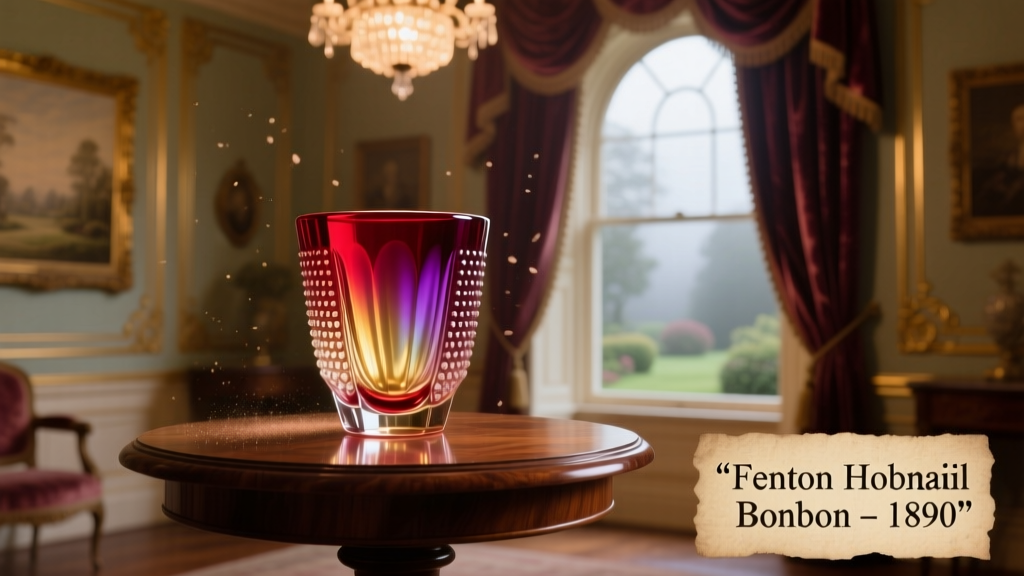
Fenton Hobnail Bonbon in Cranberry Opalescent: A Collector’s Guide to the 6-Inch Square Pattern
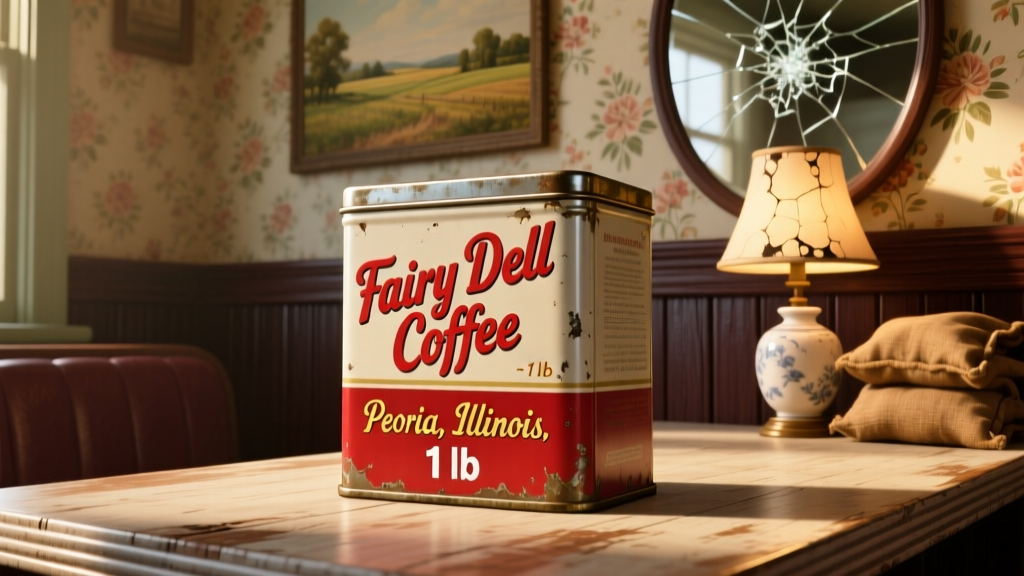
Advertising Tin: Fairy Dell Coffee, Peoria, Illinois — A 1920s–1930s Collectible Artifact

Fantastic Plastic: The Rise, Craftsmanship, and Restoration of Mid-Century Synthetic Furniture

Banks Miss Piggy Ceramic Sigma 8-Inch Figurine: Identification, Provenance, and Restoration Guidance

The Maxwell Armchair: Design Legacy, Structural Integrity, and Authentic Restoration of a Mid-Century American Icon

Steamship Souvenirs: Collecting and Preserving Maritime Memorabilia from the Golden Age of Ocean Travel

The 1886 Winchester Model 1000: A Rare Collector’s Anomaly Eyed at $400,000
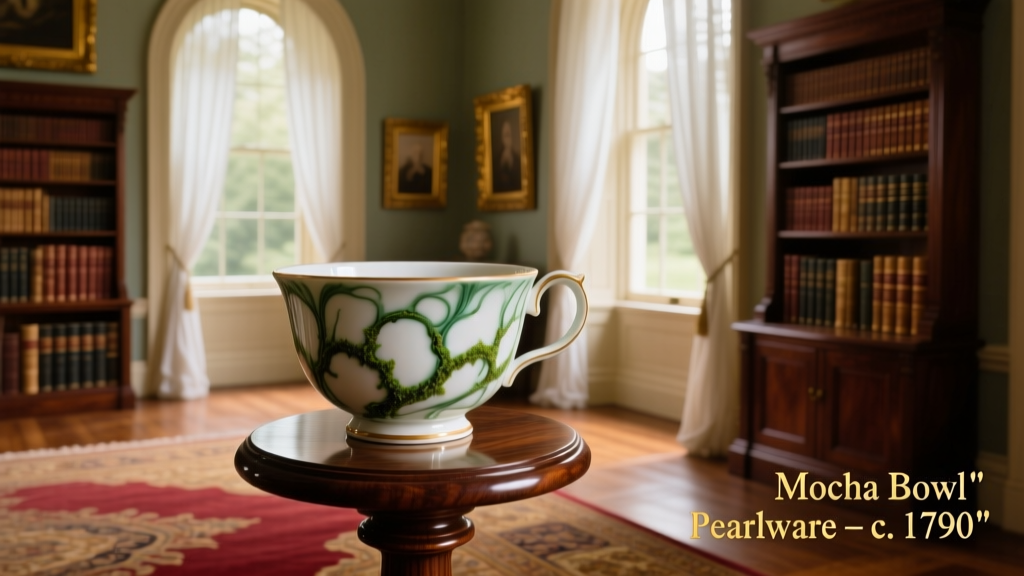
Mocha Bowl Pearlware with Slip Marbling and Green Glaze, c. 1790: A Technical and Historical Analysis
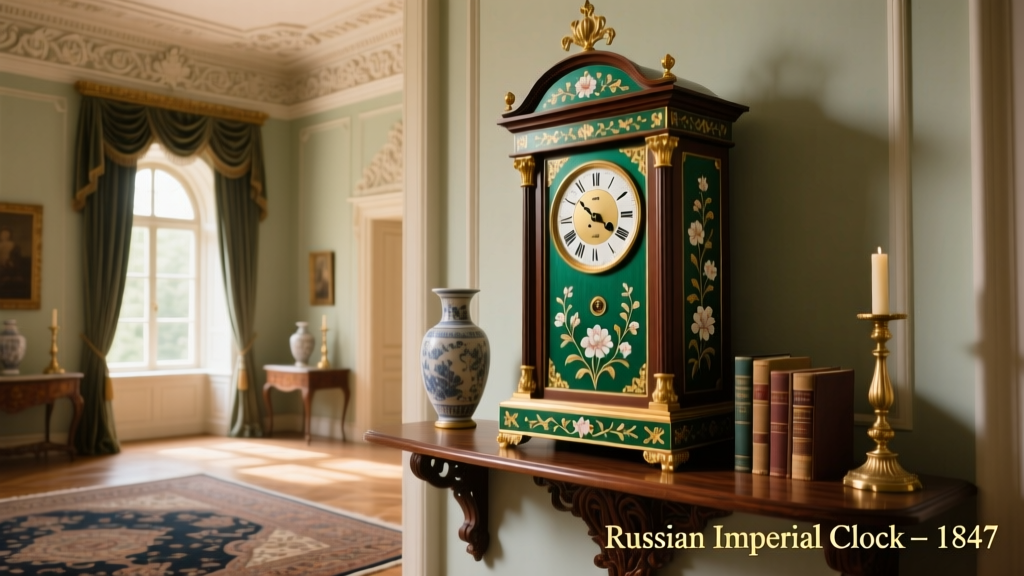
Malachite Clock Shelf with French Movement and Enamel Dial: A Russian Imperial-Era Masterpiece, c. 1845–1865