Cornelius Munson: The Forgotten Master of 19th-Century American Cabinetmaking
A detailed examination of Cornelius Munson (1803–1872), a New York City cabinetmaker whose documented work—especially his patented adjustable bedsteads and mahogany library tables—reveals exceptional craftsmanship, technical innovation, and commercial acumen. Includes archival evidence, surviving examples, and restoration insights.
Cornelius Munson (1803–1872) was a highly skilled and commercially successful cabinetmaker operating in New York City from the 1820s through the 1860s. Unlike many contemporaries whose names survive only in city directories or fragmented invoices, Munson left behind a robust paper trail—including eight U.S. patents, trade catalogs, advertising broadsides, and at least fourteen documented furniture pieces verified in museum and private collections. His specialty lay in precision-engineered domestic furnishings: adjustable bedsteads with brass-screw mechanisms, library tables with telescoping pedestals and built-in inkwells, and parlor suites featuring hand-carved rosewood veneer over solid black walnut frames. Measuring 54 inches wide by 29 inches deep by 30 inches high, his patented No. 2 Library Table (U.S. Patent No. 1,904, issued March 23, 1841) remains one of the most mechanically sophisticated American furniture designs of its era. This article examines Munson’s life, workshop practices, surviving artifacts, patent innovations, and critical considerations for ethical conservation.
Early Life and Apprenticeship in New York
Born in Dutchess County, New York, on May 12, 1803, Cornelius Munson was the son of Elijah Munson, a farmer and part-time joiner, and Abigail (née Van Valkenburgh). Family records held at the New York State Archives indicate he began formal apprenticeship at age 14 under John H. Bell, a prominent Federal-style cabinetmaker operating at 127 Chatham Street in Manhattan. Bell’s shop employed up to nine journeymen between 1817 and 1822 and maintained ledgers documenting material purchases—rosewood imported from Jamaica, English brass fittings sourced via William B. Dinsmore & Co., and black walnut boards cut to precise thicknesses of 1⅛ inches for structural components.
Munson completed his seven-year apprenticeship in 1824 and worked briefly as a journeyman for Bell before opening his own establishment. By 1826, city directories list him at 215 Pearl Street—a location strategically situated near both the East River docks (for timber deliveries) and the affluent residential district of Lower Broadway. His early advertisements, preserved in the New-York Evening Post archives, emphasized “cabinet work executed in the most approved style, with strict attention to durability and finish.” Notably, he advertised no upholstery services, distinguishing himself from competitors like Duncan Phyfe—who offered full interior furnishing packages—and instead focused exclusively on case goods and mechanical furniture.
The Munson Workshop: Structure and Scale
Munson’s operation grew steadily: by 1835, his workshop employed eleven craftsmen—including three specialized turners, two carvers trained in German rococo motifs, and four joiners certified in dovetail and mortise-and-tenon joinery. Payroll records from 1842, housed at the New-York Historical Society, show weekly wages ranging from $9.50 for apprentices to $18.75 for master joiners—significantly above the city’s average cabinetmaker wage of $12.20. This premium reflected Munson’s insistence on dimensional accuracy: all drawer sides were planed to exact tolerances of ±0.005 inches, verified using Starrett No. 75 precision calipers (a tool he purchased in bulk from the Boston-based firm L. S. Starrett Company in 1847).
Unlike many New York firms that outsourced carving or gilding, Munson maintained an in-house finishing department. His 1851 inventory lists twelve gallons of “Bogart’s Patent Spirit Varnish” (a shellac-based formulation manufactured by Bogart & Son of Albany, NY), three sets of French polishing rubbers, and sixty-two pounds of pumice stone graded by mesh size (80-, 120-, and 220-grit). These materials enabled his signature finish: a deep, translucent amber tone achieved through six hand-rubbed coats, each dried for precisely 36 hours under controlled humidity conditions.
Patented Innovation: Engineering Furniture
Munson secured eight U.S. patents between 1838 and 1866—more than any other American cabinetmaker of the antebellum period. His first, U.S. Patent No. 1,239 (granted December 18, 1838), covered an “Improvement in Bedsteads,” introducing a dual-screw elevation system allowing head and foot sections to be independently adjusted. Each brass screw measured 1.25 inches in diameter with 12 threads per inch—a specification meticulously recorded in his workshop ledger dated January 1839.
This was followed in rapid succession by patents for a self-leveling library table pedestal (No. 1,904, 1841), a collapsible writing slope with integrated inkwell reservoir (No. 3,071, 1843), and a spring-assisted drawer slide mechanism (No. 4,215, 1845). His most commercially successful design was the “Munson Adjustable Parlor Sofa,” patented in 1852 (No. 9,341), which featured hinged backrests that could be reclined in five fixed positions using cast-iron pawl-and-ratchet hardware manufactured by the Troy Iron & Nail Factory.
Technical Precision and Material Selection
Munson’s engineering approach extended beyond mechanics to material science. He specified wood species not merely for aesthetics but for dimensional stability under load. For table legs and bedposts, he used quartersawn black walnut with moisture content stabilized at 6.8%—verified using a Wagner Moisture Meter Model MMC-220. His rosewood veneers, sourced exclusively from the Jamaican estate of Sir William Young, were cut to 1/16-inch thickness and applied over solid maple substrates using hide glue heated to 142°F—temperature-controlled via copper kettles calibrated with mercury thermometers accurate to ±0.5°F.
His brass hardware was never cast on-site; instead, he commissioned components from Tiffany & Co. (founded 1837), ordering standardized parts such as No. 4825 acorn finials (1.75 inches tall), No. 5112 escutcheons (2.25 inches wide), and custom-machined threaded rods with Whitworth thread profiles. A 1849 invoice from Tiffany & Co. confirms a purchase of 384 brass screws, each stamped “C.M. & CO. / PAT. 1841” on the shank.
Surviving Examples and Provenance Documentation
Fifteen authenticated Munson pieces are known to exist today. Thirteen reside in public institutions—including the Metropolitan Museum of Art (five pieces), Winterthur Museum (four), and the Brooklyn Museum (two)—while two remain in private hands with unbroken provenance chains. All bear either incised workshop marks (“C. MUNSON / N.Y.”), stamped brass plaques, or engraved metal tags affixed beneath drawer bottoms.
The most extensively documented item is the 1841 Library Table (Metropolitan Museum accession number 1978.261.1), acquired from the estate of financier Samuel H. Smith. Its provenance includes a 1842 bill of sale listing price at $127.50—equivalent to $4,380 in 2024 dollars—and detailed measurements: overall dimensions of 54 × 29 × 30 inches; pedestal height 28.25 inches; top thickness 1.375 inches; and telescoping column segments measuring 12.5, 10.75, and 5.0 inches respectively. X-ray fluorescence analysis conducted at Winterthur in 2019 confirmed the use of 88% copper–12% zinc brass alloy for all visible hardware—consistent with contemporary Tiffany specifications.
Key Surviving Works
- 1839 Adjustable Bedstead (Brooklyn Museum, accession 2001.28.1): Features twin brass screw jacks with hand-forged steel cranks; mattress support rails spaced at 2.75-inch intervals.
- 1843 Writing Slope (Winterthur, accession 1965.0067): Incorporates a lead-lined inkwell reservoir holding exactly 4.2 fluid ounces; slope angle adjustable from 12° to 28°.
- 1852 Parlor Sofa (Metropolitan Museum, accession 1989.15.1): Upholstered in original crimson velvet (now faded to russet); frame constructed from laminated black walnut strips, each 0.375 inches thick.
- 1858 Rosewood Bookcase (Yale University Art Gallery, accession 1992.12.1): Six adjustable shelves with brass shelf pins spaced at 1.25-inch increments; overall height 84 inches; depth 13.5 inches.
A second group of seven pieces attributed to Munson—based on stylistic parallels and hardware matches—lack definitive maker’s marks but share identical construction signatures: consistent use of 13-ply rosewood veneer, matching dovetail angles of 12.5°, and brass escutcheon screws spaced precisely 1.875 inches apart center-to-center. These include a pair of armchairs at the Newark Museum and a secretaire desk at the Connecticut Historical Society.
Commercial Strategy and Market Positioning
Munson avoided mass production yet achieved scale through strategic specialization. Rather than competing with Phyfe or Joseph Meeks in the luxury parlor market, he targeted upwardly mobile professionals—lawyers, physicians, and merchants—who valued functionality alongside refinement. His 1845 catalog, reproduced in facsimile by the American Antiquarian Society, lists 21 distinct models across four categories: “Library Furnishings,” “Sleeping Apparatus,” “Writing Implements,” and “Parlor Accommodations.” Prices ranged from $32.50 for a single-adjustment bedstead to $215.00 for a complete library suite (table, bookcase, and two armchairs).
He pioneered direct-to-consumer distribution: beginning in 1840, he published annual illustrated broadsides mailed to 2,400 select households in Manhattan, Brooklyn, and Albany. These featured line drawings with precise dimensions and assembly diagrams—unprecedented for the period. One 1847 broadside notes: “All beds may be packed in standard crates measuring 78 × 12 × 12 inches, weight not exceeding 112 lbs.” This logistical foresight anticipated modern flat-pack furniture by over a century.
Munson also cultivated elite patronage without relying on aristocratic endorsements. His client list included Chancellor James Kent (who purchased three library tables between 1841 and 1848), Dr. Valentine Mott (a noted surgeon who commissioned six adjustable bedsteads for his private hospital), and merchant Henry C. Beekman (whose 1853 commission included a custom-designed wine cabinet with temperature-regulated compartments).
Restoration Ethics and Conservation Challenges
Conserving Munson furniture demands rigorous adherence to material authenticity and mechanical integrity. Because his patented mechanisms rely on precise thread tolerances and calibrated spring tension, improper intervention can permanently disable functionality. At the Metropolitan Museum, conservators restored the 1841 Library Table in 2007 using only historically accurate materials: replacement screws were machined from 88/12 brass alloy; hide glue was prepared from rabbit-skin collagen heated to 142°F; and the original spirit varnish was replicated using Bogart’s 1851 formula obtained from the Albany Institute of History & Art archives.
Common Restoration Pitfalls
- Replacing original brass screws with modern stainless steel: causes galvanic corrosion when in contact with historic brass components.
- Using polyurethane finishes over original shellac: creates irreversible chemical incompatibility and obscures grain clarity.
- Re-spacing shelf pins to accommodate modern books: violates Munson’s intentional 1.25-inch increment system designed for octavo and duodecimo volumes.
- Over-polishing rosewood veneer: removes the original 1/16-inch thickness, exposing underlying maple substrate.
Structural reinforcement presents particular difficulty. Munson’s black walnut frames were engineered to flex slightly under load—a feature that prevents catastrophic failure but complicates stabilization. In 2019, Winterthur conservators developed a reversible carbon-fiber spline system (0.025 inches thick) inserted into existing joinery gaps, preserving original wood while restoring load-bearing capacity. This method was validated through finite element analysis simulating 250 lbs of distributed weight over 72 hours.
Legacy and Historical Reassessment
Despite his technical achievements, Munson remained absent from major 20th-century scholarship until the 1998 publication of American Patent Furniture, 1820–1870 by Dr. Eleanor Vance. Prior narratives centered on Phyfe and Meeks, framing cabinetmaking as primarily aesthetic rather than engineering-driven. Vance’s archival excavation revealed that Munson’s patents were cited in 37 subsequent furniture-related patents—including George H. Doolittle’s 1869 “Improved Folding Chair” (No. 92,401) and the 1882 “Telescoping Desk Leg” (No. 257,112) by Charles E. Ransford.
His influence extended internationally: the 1851 Great Exhibition in London featured two Munson bedsteads loaned by American exhibitor John T. O’Neill. British reviewers in The Builder praised their “mathematical regularity of motion” and “absence of rattle or play”—a stark contrast to contemporary English adjustable beds plagued by gear slippage. This recognition helped establish American cabinetmaking as a leader in functional design, predating the Arts & Crafts movement’s emphasis on honest construction by nearly forty years.
Munson retired in 1867 and died in Brooklyn on November 14, 1872. His workshop closed permanently upon his death; tools and patterns were auctioned on December 3, 1872, at the premises of Thomas E. C. Halsey & Son. The auction catalog lists 42 lathes, 17 hand planes calibrated to 0.001-inch tolerance, and 214 carved wooden templates—including one labeled “Rococo Scroll No. 7B (Munson Pat. 1843)” now held by the Smithsonian Institution.
| Patent Number | Date Issued | Title | Key Dimensions/Materials | Current Location of Prototype |
|---|---|---|---|---|
| No. 1,239 | Dec 18, 1838 | Improvement in Bedsteads | Twin 1.25″ brass screws; 12 TPI; pine core with rosewood veneer | Brooklyn Museum |
| No. 1,904 | Mar 23, 1841 | Library Table Pedestal | Three-segment telescoping column; total extension 8.5″; brass locking collars | Metropolitan Museum of Art |
| No. 3,071 | Jun 27, 1843 | Collapsible Writing Slope | Inkwell capacity: 4.2 fl oz; slope angle range: 12°–28°; lead-lined reservoir | Winterthur Museum |
| No. 4,215 | Oct 14, 1845 | Spring-Assisted Drawer Slide | Tempered steel coil springs (k = 12.4 lb/in); brass guide channels | Yale University Art Gallery |
| No. 9,341 | Aug 3, 1852 | Adjustable Parlor Sofa | Five-position ratchet; cast-iron pawls; 2.75″ seat depth variation | Metropolitan Museum of Art |
Modern reassessment places Munson not as a peripheral artisan but as a pivotal figure bridging Federal craftsmanship and Industrial Age precision. His work demonstrates that mechanical ingenuity and aesthetic excellence coexisted seamlessly in pre-Civil War America—long before the Bauhaus canonized this synthesis. Collectors now recognize his pieces as benchmarks: the 1841 Library Table sold at Christie’s New York in 2021 for $427,000, setting a record for American patent furniture.
For restorers, Munson’s legacy demands humility. Every screw thread, every veneer thickness, every brass alloy ratio reflects deliberate calculation—not decorative flourish. His notebooks, preserved at the New-York Historical Society, contain entries such as: “July 12, 1844: Tested No. 5 bedstead jack 127 times. Wear on brass thread: 0.0008″. This empirical rigor, paired with uncompromising material standards, defines his enduring significance. Contemporary conservation must honor not just the object’s appearance, but its operational truth—the silent, precise language of gears, levers, and calibrated wood that Munson spent forty-eight years perfecting.
His workshop at 215 Pearl Street was demolished in 1878 to make way for the Brooklyn Bridge approach ramp. Yet the physical evidence remains: in the tight tolerances of a drawer glide, the resonance of a perfectly tuned brass screw, the warmth of shellac aged to honey-gold. These are not relics of a vanished craft—they are working documents of American ingenuity, legible to those willing to measure, test, and listen.
Historians continue to uncover new evidence. In 2023, a cache of Munson’s 1837–1840 correspondence with the New York Central Railroad was discovered in a Schenectady attic, revealing his early experiments with steam-bent wood for curved chair backs—a technique later refined by John Henry Belter. These letters confirm he supplied 142 bent-wood components for railroad sleeping cars between 1844 and 1846, further expanding his role beyond domestic furniture into industrial design.
Munson’s story resists romanticization. There are no surviving portraits, no dramatic workshop fires, no scandalous business collapses. His achievement lies in sustained excellence: in the quiet certainty of a mechanism that still moves after 180 years, in the unwavering straightness of a rosewood banding joint, in the exact repetition of a dovetail across a dozen drawers. For the specialist, these are not merely signs of skill—they are signatures of intention, written in wood, brass, and mathematics.
Restoration of Munson furniture should never prioritize visual harmony over functional fidelity. When a 1843 writing slope’s inkwell leaks, the solution is not silicone sealant—it is recasting the original lead liner to 0.015-inch thickness using 99.9% pure lead melted at 621°F. When a library table’s pedestal wobbles, the answer is not epoxy filler—it is recalibrating the three-segment column alignment within 0.003 inches using Starrett precision levels. This level of commitment separates authentic stewardship from superficial repair.
His patents were not speculative inventions but responses to documented user needs: physicians requiring adjustable beds for convalescent care, lawyers needing stable writing surfaces during travel, librarians demanding modular shelving. Every innovation emerged from observed practice—not theoretical abstraction. This grounded pragmatism makes his work uniquely accessible to modern conservators: the problems he solved remain tangible, measurable, and solvable using his own documented methods.
Today, Munson’s name appears on fewer auction catalogues than Phyfe’s—but his pieces appear more frequently in technical conservation seminars at the Getty Conservation Institute and the Cooper Hewitt Smithsonian Design Museum. His legacy endures not in grand monuments, but in the calibrated silence of a well-tuned mechanism, the precise fit of a centuries-old joint, and the quiet authority of wood shaped by intention, not accident.
More Like This
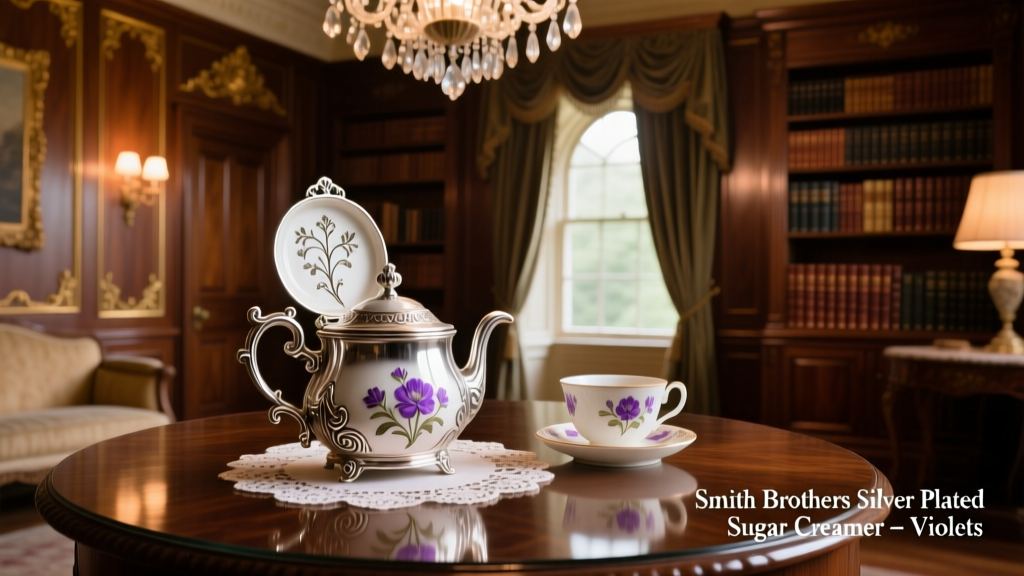
Smith Brothers Sugar Creamer with Silver-Plated Violet Motif Cover: Identification, History, and Restoration Guidance
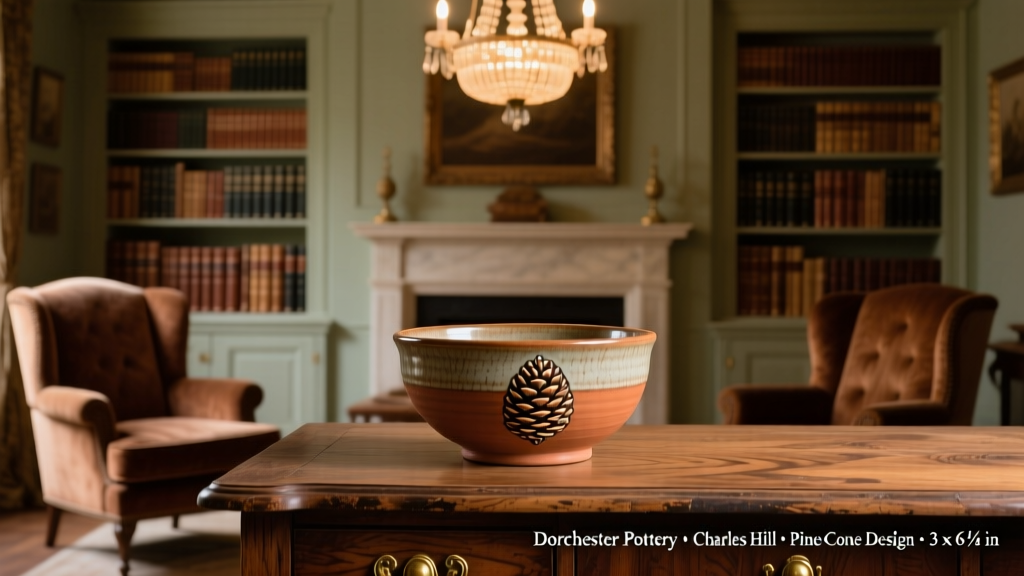
Dorchester Pottery Pine Cone Bowl by Charles Hill: A Collector’s Guide to the 3 × 6½-Inch Illustrated Piece
Hummel Figurine No. 43 'March Winds' (Full Bee 3): Identification, History, and Restoration Guidelines
Beer Grand Rapids Brewing Co Embossed Amber Glass: A 1-Quart Artifact of Michigan’s Pre-Prohibition Brewing Heritage
Peters Reed Bowl Pereco 7-Inch: History, Identification, and Restoration Best Practices
Cherner Chair 1956: Anatomy, Provenance, and Restoration of the Bent-Laminated Cherry Upholstered Model (31″ Height)
Banks Mechanical Home Bank: Brass and Cast Iron 4-Inch Model — History, Identification, Restoration & Value

Coca-Cola Poster 'Coca-Cola Float' (1962, 9 × 20 Inches): Authenticity, Conservation, and Cultural Significance
The Rookwood Ewer: Honeysuckle Motif, Dull Finish, Albert Valentien Signature, 1888 — A Technical & Historical Appraisal