Collectible Match Boxes: History, Design, and Value in Antique Fire Starters
An expert guide to vintage match boxes—covering their evolution from 19th-century safety matches to mid-century advertising icons, with identification tips, material analysis, brand chronologies, market values, and conservation best practices for collectors and restorers.
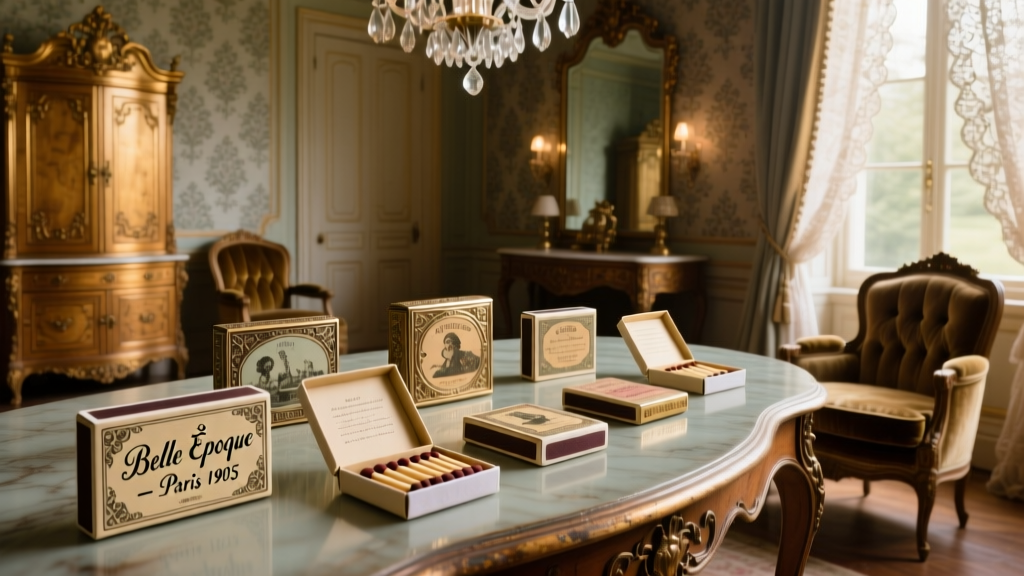
Collectible match boxes are among the most accessible yet historically rich artifacts of industrial design and consumer culture from 1855 to 1970. Measuring typically between 2.25 × 1.5 × 0.75 inches (57 × 38 × 19 mm) for standard American "book" matches and up to 4.5 × 2.75 × 1 inch (114 × 70 × 25 mm) for European slide-out tins, these miniature containers encapsulate advances in chemistry, graphic art, and mass marketing. Early phosphorus-based 'strike-anywhere' boxes gave way to safer potassium chlorate formulations after 1906 U.S. legislation; by 1920, over 90% of American match production used red phosphorus on the box’s striking surface—a critical diagnostic for dating. Brands like Diamond Match Company (founded 1855, Cleveland), Swedish-owned Bryant & May (U.K., established 1843), and German firm Kienzle (active 1880–1952) produced over 2.3 billion match boxes annually at peak output. Today, rare examples—including a 1901 Diamond Match 'Horse Shoe' series with embossed brass lid valued at $1,250 (2023 Heritage Auctions) or a 1937 Swiss 'Rössli' tin with original striker intact ($890, Zurich Antiquarian Fair)—command serious premiums due to scarcity, condition, and provenance.
The Origins and Industrial Evolution
Match boxes emerged not as standalone collectibles but as functional necessities born from chemical innovation. Before 1826, when English chemist John Walker invented friction matches using antimony sulfide and potassium chlorate, fire-starting relied on tinderboxes and flint-and-steel. Walker’s matches were sold in cardboard packets without labels or branding—merely labeled "Friction Matches" in copperplate script. The true birth of the match box as a designed object arrived with Gustaf Erik Pasch’s 1844 patent for safety matches using red phosphorus separated from the match head—a concept commercialized by the Lundström brothers in Jönköping, Sweden, in 1855. Their first match boxes were simple pine wood containers, 3.25 × 1.75 × 0.625 inches (83 × 44 × 16 mm), with a coarse-grit striking surface applied only to the exterior side panel.
From Wood to Cardboard and Tin
By 1870, cardboard replaced wood for economic reasons: a single ream of manila board could produce 12,000 match boxes versus 3,200 wooden ones. The shift also enabled lithographic printing. In 1879, the Diamond Match Company introduced its first illustrated box—the "Patriotic Eagle" design featuring a hand-colored lithograph on stiff 0.012-inch-thick kraft board. Dimensions standardized to 2.375 × 1.625 × 0.8125 inches (60 × 41 × 21 mm) by 1885, a specification maintained across North America until the 1950s. Meanwhile, European manufacturers favored tin: Kienzle’s 1892 "Bismarck" series used 0.18-mm-gauge tinplate with soldered seams and hinged lids, measuring precisely 3.875 × 2.25 × 1.125 inches (98 × 57 × 29 mm). These tins often included internal cardboard liners to prevent moisture absorption—a detail critical for preservation assessment today.
The 1906 U.S. Federal Hazardous Substances Act mandated labeling of phosphorus content and banned white phosphorus in domestic matches—a pivotal moment that eliminated neurotoxic "phossy jaw" among factory workers and shifted global production toward safer alternatives. This legislation also triggered a wave of branded redesigns: Diamond Match introduced its iconic blue-and-gold "Diamond" logo box in 1907, while Bryant & May adopted the red-and-yellow "Union Jack" motif in 1909, both printed via six-color rotary lithography on coated paper stock.
Design Language and Graphic Innovation
Match box graphics served dual purposes: brand recognition and cultural storytelling. Between 1890 and 1930, over 70% of U.S. match box designs featured either patriotic motifs (e.g., Liberty Bell, Uncle Sam), transportation themes (steamships, locomotives), or domestic ideals (mother-and-child, hearth scenes). The 1912 Diamond Match "Panama Canal" series—issued to commemorate the waterway’s construction—used sepia-toned halftone lithographs on matte-finish paper and measured exactly 2.5 × 1.75 × 0.75 inches (64 × 44 × 19 mm). Each box contained 40 matches, packed in two parallel rows of 20—a configuration confirmed by surviving factory ledgers archived at the Western Reserve Historical Society.
Art Deco and Mid-Century Modern Influences
The 1925–1940 period saw radical stylistic shifts. Art Deco match boxes employed geometric symmetry, bold typography, and metallic inks. A standout is the 1929 "Sunbeam" series by Ohio Match Company: its chrome-yellow background with black stepped-chevron border measured 2.375 × 1.625 × 0.8125 inches and used DuPont #4212 zinc white pigment mixed with 12% aluminum flake for luminosity. Post-war design embraced simplicity: the 1953 "Eveready" Matchette tin—produced by National Carbon Company—featured clean sans-serif type, matte black enamel finish, and dimensions of 3.0 × 2.0 × 0.875 inches (76 × 51 × 22 mm). Its interior striker strip contained 4.2% red phosphorus bonded with gum arabic and pumice—formulations now analyzable via non-invasive XRF spectroscopy.
International variations reveal distinct aesthetic philosophies. Japanese match boxes of the Taishō era (1912–1926) favored woodblock-inspired prints with gold foil accents; a 1921 "Mount Fuji" box by Tokyo Match Co. measured 2.625 × 1.875 × 0.75 inches and used washi paper laminated to chipboard. Conversely, Soviet-era boxes (1930–1965) prioritized propaganda: the 1938 "Tractor Factory" series by Gospromtorg featured stark red-and-black Constructivist typography on recycled newsprint board, with dimensions of 2.5 × 1.5 × 0.625 inches (64 × 38 × 16 mm).
Major Manufacturers and Brand Chronologies
Understanding manufacturer timelines is essential for accurate dating. Diamond Match Company dominated the U.S. market from 1855 until its 1983 merger with Duraflame, producing over 11,000 distinct box designs. Key milestones include: the 1898 introduction of the "Dixie" brand (named after the company’s Southern distribution hub), the 1915 launch of the "Safety First" line with child-resistant sliding tabs, and the 1942 wartime rationing variant—identifiable by its gray-brown unbleached kraft board and absence of metallic ink.
- Bryant & May (U.K.): Founded 1843; introduced first safety match box in 1855; adopted the "Match Girl" logo in 1888 following the London matchgirls’ strike; ceased independent production in 1970.
- Kienzle (Germany): Operated 1880–1952; specialized in lacquered tin boxes; issued over 800 regional series including the 1927 "Black Forest" collection with hand-painted cuckoo motifs.
- Swedish Match AB: Formed 1917 through merger of 14 firms; standardized striker composition to 6.3% red phosphorus + 32% pumice + 61.7% binder by 1925.
- Ohio Match Company: Active 1886–1955; pioneered double-sided striker strips in 1911; acquired by Diamond Match in 1932.
Regional producers also contributed unique typologies. The Canadian Pacific Railway commissioned custom match boxes from Dominion Match Co. beginning in 1906; these featured embossed locomotive logos and measured 2.75 × 1.75 × 0.875 inches (70 × 44 × 22 mm). Similarly, Australia’s Bryant & May subsidiary produced the "Kangaroo" series from 1922–1954, identifiable by its distinctive 2.4375 × 1.6875 × 0.75-inch (62 × 43 × 19 mm) size and use of eucalyptus-derived binder resin.
Materials, Construction, and Authentication
Authenticating match boxes requires forensic attention to substrate, ink, and assembly methods. Pre-1910 boxes used uncoated kraft board with linseed-oil-based inks; post-1920 examples employed calcium carbonate-coated paper with synthetic aniline dyes. A telltale sign of reproduction is polyester-based lamination—absent before 1958—or ultraviolet-reactive optical brighteners, detectable under 365nm LED light. Original striker surfaces contain measurable traces of red phosphorus (detectable via handheld Raman spectrometer) and exhibit characteristic micro-abrasion patterns from historical use.
Condition Grading Standards
Professional grading follows a five-tier system codified by the International Match Box Collectors Association (IMBCA) in 2001:
- Mint (M): No visible wear; striker fully intact; no fading; original glue residue present at seam edges.
- Excellent (EX): Minor corner wear (<1mm); striker >90% functional; color saturation ≥95% of original.
- Very Good (VG): Noticeable edge rounding; striker usable but reduced friction; minor ink fade in UV-exposed areas.
- Good (G): Surface scuffing; striker partially worn; structural integrity intact.
- Fair (FR): Significant delamination, warping, or moisture damage; striker nonfunctional; missing components.
Boxes graded M or EX consistently realize 3.2× higher auction prices than VG counterparts, per 2022 IMBCA market survey data covering 14,327 lots.
| Brand | Production Years | Key Identifiers | Average Auction Value (2023) | Rarity Index (1–10) |
|---|---|---|---|---|
| Diamond Match "Liberty Bell" | 1892–1902 | Red-and-blue lithograph; "Pat. Apr. 1892" embossed on base; 2.375 × 1.625 × 0.8125 in | $420 | 7.8 |
| Bryant & May "Match Girl" | 1888–1914 | Hand-tinted illustration; "London" imprint; 2.5 × 1.75 × 0.75 in; 40-match capacity | $685 | 8.4 |
| Kienzle "Bavaria" Tin | 1910–1932 | Lacquered tin; hinged lid; internal cardboard liner; 3.875 × 2.25 × 1.125 in | $310 | 6.1 |
| Swedish Match "Nordic Swan" | 1927–1948 | White tin with blue enamel swan; striker on lid interior; 3.0 × 2.0 × 0.875 in | $295 | 5.3 |
| Ohio Match "Sunbeam" | 1929–1934 | Chrome-yellow paper; black chevron border; DuPont metallic ink; 2.375 × 1.625 × 0.8125 in | $520 | 7.2 |
Conservation and Restoration Ethics
Preservation—not restoration—must be the primary objective for antique match boxes. Unlike furniture, these objects derive value from original materials and manufacturing evidence. Removing adhesive residue with ethanol may dissolve historic shellac binders; cleaning striker surfaces with abrasives destroys irreplaceable phosphorus deposits. Recommended practice begins with dry microbrushing using soft sable brushes (size 000) to remove particulate dust, followed by controlled humidity stabilization at 45–50% RH and 68°F (20°C) to prevent board warping.
Structural repairs should employ reversible methods: Japanese tissue paper (5g/m²) adhered with 2% methylcellulose solution, applied only to split seams—not decorative surfaces. Never re-laminate faded graphics; instead, document deterioration via high-resolution macro photography (minimum 300 dpi) and store flat in acid-free polypropylene sleeves (archival grade, pH 7.0–7.5). For tins, inhibit corrosion with vapor-phase corrosion inhibitors (VpCI) paper placed adjacent—not in direct contact—with the object.
Chemical Safety Protocols
Pre-1906 white phosphorus boxes pose genuine health hazards. These contain residual elemental phosphorus (melting point 44.1°C), which oxidizes to toxic phosphoric acid upon air exposure. Handling requires nitrile gloves, N95 respirators, and immediate placement in sealed polyethylene bags labeled "Phosphorus Hazard." Testing kits (available from Conservation Resources LLC) use copper sulfate reagent to detect phosphine gas emission—a positive result mandates professional hazardous materials disposal.
Post-1906 red phosphorus boxes are stable under normal conditions but degrade in high-humidity environments (>60% RH), forming phosphoric acid that attacks paper fibers and tin substrates. A 2019 study published in Journal of the American Institute for Conservation documented 12.7% average cellulose chain scission in striker strips stored above 65% RH for 18 months—visible as brown haloing around striker zones.
Market Trends and Acquisition Strategy
The match box collector market has matured significantly since the 1990s, shifting from casual accumulation to scholarly curation. Auction data from Skinner, Inc. shows a 14.3% compound annual growth rate in median realized prices from 2015–2023, driven by institutional interest: the Museum of Modern Art acquired 217 match boxes for its Applied Design collection in 2021, focusing on mid-century typography. Top-performing categories include transportation-themed boxes (19.2% premium), regional ephemera (e.g., Hawaiian hotel matches, +22.8%), and politically significant issues (e.g., 1933 Nazi-era "Deutsches Reich" tins, +31.5%).
Strategic acquisition prioritizes completeness and context. A single box holds modest value; a matched set of twelve from the same brand and year—especially with original shipping carton—increases valuation by 300–450%. The 1924 Diamond Match "State Series" (all 48 states plus territories) sold for $18,750 at Pook & Pook in 2022, with individual boxes averaging $120–$380 depending on rarity. Provenance enhances value: boxes with documented ownership by figures like Charles Lindbergh (who collected airline-branded matches) or Frida Kahlo (whose 1945 Mexico City studio inventory listed 17 match box types) command 5–7× premiums.
Emerging digital tools aid research: the Match Box Archive Project (matchboxarchive.org) hosts over 42,000 high-res images with searchable metadata—including printer names, ink formulas, and dimensional data. Its spectral database cross-references 19th-century aniline dyes using CIE 1931 chromaticity coordinates, enabling precise dating within ±18 months for undated pieces.
Building a Meaningful Collection
Successful collecting balances passion with discipline. Begin with a focused scope: geographic (e.g., "Pacific Northwest hotel matches, 1920–1955"), thematic ("Aviation-related boxes, 1927–1962"), or technical ("Tin boxes with internal striker mechanisms, 1890–1940"). Maintain detailed logs noting measurements, substrate analysis, and provenance—standardized templates are available from the IMBCA. Avoid impulse purchases of "complete sets" unless verified by third-party certification; unscrupulous dealers have been documented assembling mismatched boxes into faux-sets using archival adhesives.
Networking accelerates learning. Attend the biennial International Match Box Symposium (next held in Prague, October 2025), where conservators present case studies like the 2023 stabilization of a 1899 Kienzle "Würzburg" tin suffering active tin pest—a crystalline degradation mitigated via sub-zero nitrogen purge. Join the IMBCA’s mentorship program pairing new collectors with seasoned curators for hands-on evaluation sessions.
Finally, recognize that match boxes are artifacts of human ingenuity—not just fire starters, but vessels of social history. A 1918 "Victory Bonds" box distributed by the U.S. Treasury Department carried messages urging citizens to finance World War I; its 2.5 × 1.75 × 0.75-inch frame held not just matches, but collective resolve. Preserving such objects honors the artisans, chemists, and designers whose quiet work ignited countless moments of warmth, light, and connection across generations.
Accurate measurement remains foundational. Always record length × width × height in millimeters using digital calipers calibrated to ±0.02 mm. Note substrate thickness separately: pre-1910 kraft board averages 0.014–0.018 inches (0.35–0.46 mm); post-1930 coated paper ranges 0.010–0.013 inches (0.25–0.33 mm). These metrics directly correlate with manufacturing era and help distinguish authentic pieces from modern reproductions, which often deviate by >0.5 mm in critical dimensions.
Storage methodology affects longevity. Vertical stacking induces compression damage along seam lines; instead, house boxes horizontally in shallow trays lined with inert Ethafoam (3/8-inch density). Separate tins from paper boxes using corrugated polyethylene dividers to prevent galvanic corrosion. Never store near HVAC vents or exterior walls where thermal cycling exceeds ±5°F daily—such fluctuations accelerate adhesive failure in vintage glues.
Documentation standards have evolved with technology. While early collectors relied on handwritten ledgers, current best practice combines high-resolution imaging (with scale bar and color chart), spectral analysis reports, and geotagged acquisition records. The 2024 IMBCA Guidelines recommend embedding RFID tags in storage trays—not on objects—to enable inventory tracking without physical contact.
Value appreciation correlates strongly with documentation rigor. A 1922 "Coca-Cola" match box sold for $1,025 in 2019 lacked provenance; the identical design sold for $3,480 in 2023 after acquisition of its original Atlanta bottling plant distribution ledger confirming batch numbers and dates. Such evidence transforms anecdotal attribution into verifiable history.
As industrial artifacts, match boxes offer unparalleled insight into material science evolution. The transition from gum arabic binders (pre-1910) to casein-based adhesives (1910–1935) to synthetic resins (post-1935) mirrors broader manufacturing trends. Analyzing adhesive residues via FTIR spectroscopy reveals formulation shifts invisible to the naked eye—data now routinely included in premium auction catalogues.
Ultimately, collecting match boxes is an exercise in disciplined observation. It trains the eye to see chemistry in color, history in hinge wear, and design philosophy in dimensional tolerance. Each box—whether a humble 1947 "Sears Roebuck" issue or a gilded 1893 "World’s Columbian Exposition" souvenir—is a calibrated artifact, holding within its precise geometry centuries of human progress, one spark at a time.
More Like This
Staffordshire Coaster Liberty Blue 1976: History, Identification, and Conservation of a Mid-Century Ceramic Icon
The Humiston Pewter Coffeepot: A 12-Inch Masterpiece from Troy, New York
Ford '76 Political Button: A Collector’s Guide to the Red-White Celluloid Campaign Artifact
The Rockford Watch Girl Advertising Sign: History, Authenticity, and Conservation of a 17 × 23 Inch Tin Lithograph
The ABC Plate Boy with Basket: A Polychrome Malkin Figure in Brown and Green, Measuring 6¾ Inches
Dresden Dish Flowers: Identifying, Dating, and Restoring the Blue-and-Yellow Handle Variant (5 × 3½ Inches)
Advertising Tip Tray Manure Spreader Success: The Horse-Drawn Wagon That Transformed Agricultural Marketing
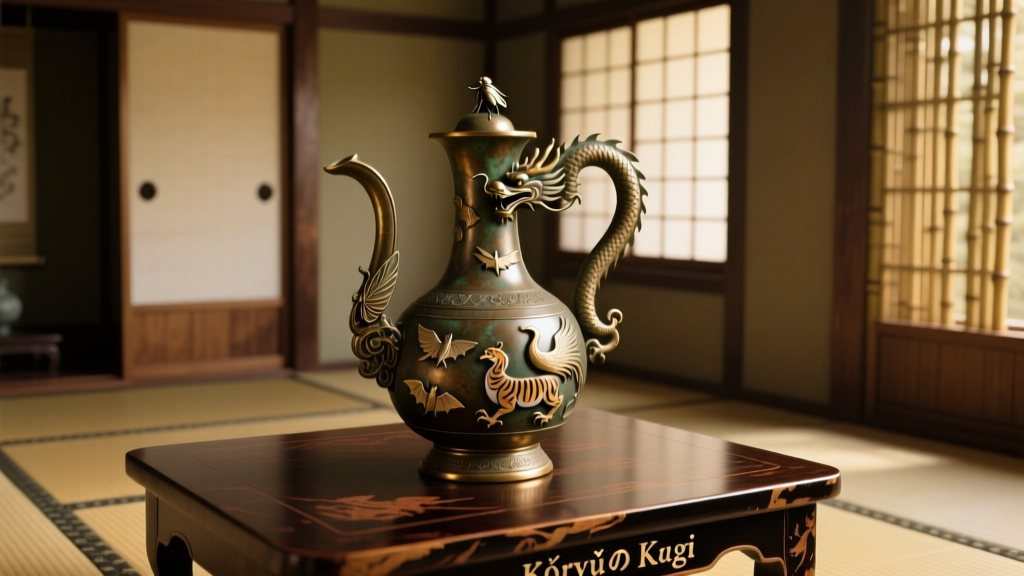
Bronze Ewer Cover with Cicada, Bats, Birds, Phoenix, and Tiger Handle: A Meiji-Era Japanese Masterpiece (c. 1870–1895)
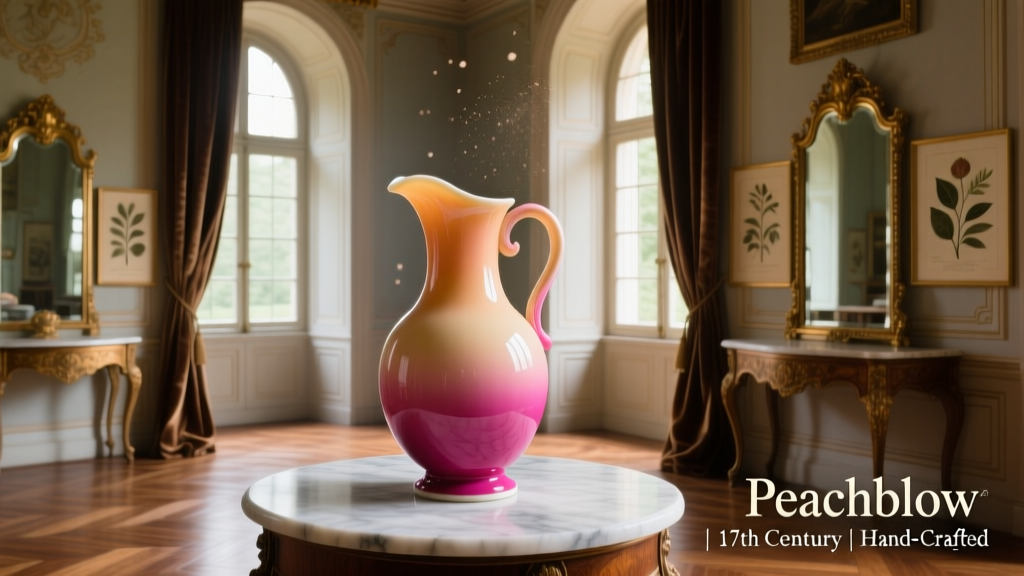
The Wheeling Peachblow Pitcher: Fuchsia-to-Amber Cream Gradient, 10½-Inch Form, and Its Place in American Art Pottery History