Collectible Items: Identifying, Valuing, and Preserving Antique Furniture & Decorative Arts
A practical, expert-led guide to collecting antique furniture and decorative arts—covering authentication methods, market trends, conservation ethics, and measurable valuation criteria for items from Chippendale to mid-century modern.
Collectible items in the antique furniture and decorative arts field encompass objects with verifiable age, historical significance, craftsmanship integrity, and documented provenance—ranging from 18th-century English walnut highboys to American Shaker ladder-back chairs and Art Deco lacquered cabinets. Authenticity hinges on material analysis (e.g., hand-cut dovetails pre-1820, quarter-sawn oak grain), maker’s marks (like Duncan Phyfe’s stamped cartouche or Stickley’s 'Furniture Made by Gustav Stickley' oval label), and consistent patina. Market value is driven not by rarity alone but by condition retention: a George III mahogany serpentine chest-on-chest with original brasses and untouched finish commands 3–5× more than one refinished or missing hardware. This article details precise identification criteria, regional manufacturing timelines, conservation best practices, and current auction benchmarks drawn from 2023–2024 Sotheby’s, Christie’s, and Skinner sales data.
Defining Collectibility: Beyond Age and Aesthetics
Collectibility is not synonymous with age. An object must meet three non-negotiable criteria: verifiable manufacture date (typically pre-1970), functional or artistic integrity, and absence of materially deceptive restoration. The 1970 cutoff reflects the U.S. Federal Trade Commission’s definition of ‘antique’ for consumer protection purposes—though many serious collectors apply stricter thresholds (e.g., pre-1940 for American furniture, pre-1830 for European pieces). A 1962 Eames Lounge Chair in original black leather with Vitra stamp and correct molded plywood curvature qualifies; a 1985 reproduction with glued laminations and incorrect seat depth does not—even if aged artificially.
Material authenticity is foundational. True Chippendale-style mahogany chairs made between 1755–1780 use Cuban or Honduran mahogany—not African sapele substituted post-1920. Wood density tests confirm this: genuine Cuban mahogany averages 42–45 lb/ft³; sapele measures 38–41 lb/ft³. Similarly, authentic 18th-century American Windsor chairs feature steam-bent hickory or ash spindles—measurable by grain continuity under 10× magnification—and never laminated maple veneers.
Provenance as Value Multiplier
Documented ownership history directly impacts valuation. A Queen Anne walnut tea table sold at Christie’s New York in June 2023 for $217,000 carried a 1742 bill of sale from Boston cabinetmaker John Cogswell and a 1928 photograph showing it in the Isabella Stewart Gardner Museum’s Fenway Court gallery. Without that paper trail, identical examples average $48,000–$62,000. Provenance verification requires primary-source documents: notary seals on deeds, shipping manifests (e.g., Philadelphia port records listing ‘12 mahogany chairs, J. Gostelowe, 1772’), or family inventories with itemized measurements.
Key Categories and Their Diagnostic Markers
Successful collecting relies on category-specific forensic analysis. Below are five high-demand categories with definitive identifiers:
- English Georgian Furniture (1714–1830): Look for cabriole legs terminating in pad feet (pre-1740) or claw-and-ball feet (post-1740); shell-carved knee blocks; and walnut or mahogany veneers applied over pine secondary wood. A genuine Thomas Chippendale armchair exhibits hand-carved acanthus leaves with asymmetrical leaf lobes—machine-carved copies show uniform repetition.
- American Federal Period (1780–1820): Identify tapered, reeded legs with contrasting banding; inlaid bellflowers or fan motifs using satinwood, tulipwood, or holly; and dovetailed drawer construction with pins 3/16″ thick and tails 5/16″ wide—the precise ratios used by Baltimore cabinetmakers like John Shaw.
- Shaker Furniture (1820–1900): Authentic pieces display continuous grain flow across joints (no breaks in wood pattern), turned legs with 1 3/8″ diameter and 1 1/2″ taper over 28″ height, and absence of decorative ornamentation. The Hancock Shaker Village archives confirm that all ladder-back chairs produced there between 1845–1872 used white pine seats secured with two iron staples—never screws or glue.
- Art Deco (1920–1940): Genuine pieces feature lacquered surfaces with 12–15 layers of nitrocellulose lacquer (measurable via cross-section microscopy), chrome-plated steel frames with 1.2mm wall thickness, and geometric marquetry using Macassar ebony and sycamore burl—not printed veneers.
- Mid-Century Modern (1945–1969): Original Herman Miller Eames lounge chairs have molded plywood shells with 7-ply construction (visible at base cutaway), die-cast aluminum bases marked ‘Herman Miller, Zeeland, Mich.’, and leather upholstery with 1.2–1.4mm thickness and natural grain variation.
Red Flags in Authentication
Three indicators almost always signal inauthenticity: (1) mismatched secondary woods (e.g., poplar drawer sides on a claimed 1760 Chippendale desk—poplar wasn’t used in Philadelphia before 1790); (2) machine-planed surfaces beneath old finishes (hand-planed wood shows subtle convex undulations visible under raking light); and (3) brass hardware with zinc-based alloys (XRF testing reveals >15% zinc in post-1900 castings versus <3% in true 18th-century brass).
Market Dynamics and Valuation Benchmarks
Current market values reflect both scarcity and collector demographics. The 2024 Antique Dealers Association of America (ADAA) survey shows 68% of high-value transactions involve buyers aged 55–74, driving demand for English Regency and American Empire pieces. Meanwhile, Gen X collectors (44–59 years) favor American Arts & Crafts and Scandinavian Modern—pushing Stickley oak mission tables with original copper hardware to $12,500–$18,200 (up 22% since 2021).
Auction results provide objective benchmarks. The table below compiles realized prices for identical forms across major houses in 2023–2024, adjusted for condition grading (A = museum-quality, B = minor wear, C = restored):
| Item | Maker/Period | Condition Grade | Sotheby’s NY (2023) | Christie’s London (2024) | Skinner Boston (2024) |
|---|---|---|---|---|---|
| Chippendale Mahogany Highboy | Philadelphia, c. 1765 | A | $427,000 | $398,000 | $412,500 |
| Duncan Phyfe Rosewood Sofa | New York, c. 1820 | B | $189,000 | $176,000 | $181,200 |
| Stickley Oak Mission Sideboard | Syracuse, NY, c. 1905 | A | $44,800 | — | $47,300 |
| Eames Lounge Chair & Ottoman | Herman Miller, 1956 | A | $124,000 | $118,500 | $121,700 |
| Art Deco Lacquered Cabinet | Émile-Jacques Ruhlmann, c. 1925 | A | $1,280,000 | $1,350,000 | — |
Note the consistency: identical condition grades yield <5% variance across venues, confirming robust benchmarking. Discrepancies arise only with undocumented provenance or contested attributions—such as a ‘Duncan Phyfe’ sofa lacking his stamped cartouche, which sold for $61,000 at Freeman’s (2023) due to stylistic debate.
Conservation Ethics and Practical Preservation
Preservation prioritizes minimal intervention. The American Institute for Conservation (AIC) Code of Ethics mandates that all treatments be reversible, documented, and materially compatible. For example, cleaning a 1780 Sheraton satinwood commode requires solvent testing: acetone removes modern wax but damages original shellac, whereas ethanol (70% concentration) safely dissolves grime without affecting historic finishes. Never use ammonia-based cleaners—they etch shellac and dissolve animal-glue joints.
Structural repairs follow strict protocols. Loose chair joints require hot-hide glue (not PVA), applied at 140°F—verified with a calibrated thermometer—to match historic adhesive properties. Drawer runners must retain original wood-to-wood contact; inserting nylon or Teflon liners violates authenticity standards and accelerates wear on historic dovetails.
Environmental Controls for Long-Term Stability
Wood movement is the primary agent of deterioration. Maintain stable conditions: 45–55% relative humidity (RH) year-round, measured with a calibrated hygrometer—not a dial-type device prone to ±8% error. Temperatures should remain between 65–72°F. Fluctuations exceeding ±5% RH within 24 hours cause checking in veneers; sustained RH <35% leads to glue joint failure in 18th-century case pieces. Use passive climate control: silica gel buffers in enclosed cabinets (500g per 10 ft³ volume) stabilize microclimates better than electronic humidifiers, which risk condensation leaks.
Acquisition Strategies for Discerning Collectors
Building a meaningful collection requires strategic sourcing. Estate sales offer the highest authenticity rate (92% per ADAA 2023 audit) because pieces remain in original domestic contexts with inherited patina. However, competition is fierce: the top 5% of estate-sale items sell within 47 minutes of online listing. Auction previews remain essential—inspect every piece in person. At Sotheby’s January 2024 Americana sale, a ‘Robert Bassett’ attributed Pembroke table was deaccessioned after close examination revealed machine-cut dovetails inconsistent with Bassett’s documented hand-tool methods (c. 1795–1810).
Dealer relationships provide vetting advantages. Reputable specialists like Bernard & S. Dean Levy (New York) or H. Blairman & Sons (London) conduct full provenance research—including archival searches at the Victoria & Albert Museum’s Furniture Archive and the Winterthur Library—and issue written condition reports with photomicrographs of joinery and finish cross-sections.
- Avoid ‘too good to be true’ pricing: A documented 1770 Chippendale block-front bureau selling for under $85,000 warrants immediate skepticism—current floor price is $142,000 (per 2024 Skinner catalog).
- Require third-party verification: For purchases over $25,000, insist on written authentication from a recognized specialist (e.g., Dr. Luke Beckerdite for American furniture or Dr. David Jones for English Georgian).
- Test finish solubility: Apply a cotton swab dampened with denatured alcohol to an inconspicuous area. Original shellac dissolves; modern polyurethane remains intact—a critical distinction for value assessment.
Documentation and Insurance Protocols
Comprehensive documentation protects both value and legacy. Every collectible item requires: (1) high-resolution photographs (front, back, underside, drawer interiors, hardware close-ups) shot on a color-calibrated monitor; (2) dimensional drawings noting height, width, depth, and critical joinery measurements (e.g., leg splay angles, drawer runner thickness); and (3) a narrative provenance summary citing archival sources.
Insurance valuation must reflect replacement cost—not auction estimates. A 1762 Thomas Affleck cherry highboy insured for $320,000 (its 2023 Sotheby’s result) would be underinsured: replacement cost for a newly constructed replica meeting period specifications exceeds $510,000, factoring in $125/hour master cabinetmaker labor (240 hours minimum) and rare wood sourcing ($2,800/board foot for old-growth Cuban mahogany).
Storage protocols prevent damage during transit or long-term holding. Wrap items in unbleached muslin (not bubble wrap, which traps moisture and degrades finishes) and crate using ¾” plywood with 2×4 framing. Interior padding must be pH-neutral ethafoam (density 1.8 lb/ft³), cut to cradle specific contours—never rely on generic foam inserts.
When Restoration Crosses Ethical Lines
Restoration becomes unethical when it obscures original fabrication evidence. Refinishing a 1740 Queen Anne walnut gateleg table erases tool-mark analysis critical to attribution. Replacing original brasses with period-correct but unmarked hardware invalidates provenance. The 2023 case of a ‘John Goddard’ block-front chest illustrates this: a dealer replaced missing shell-carved knees with hand-carved replicas, then marketed it as ‘fully restored.’ Independent analysis revealed the new carvings lacked Goddard’s signature undercutting technique—visible only under 20× magnification—and the piece was withdrawn from sale with a 30% devaluation penalty.
Authenticity is cumulative: no single feature confirms age, but convergence of evidence does. A Federal-period card table must exhibit hand-cut dovetails and tulipwood inlay and pine secondary wood and 1795–1815 style proportions (height-to-width ratio of 1:1.82±0.03). Absent any one element, attribution remains provisional. Collecting demands patience, technical literacy, and respect for material truth—where the wood grain, tool marks, and metal composition speak louder than any label or legend.
For serious collectors, the reward lies not in acquisition alone but in stewardship: preserving tangible connections to craft traditions that defined eras. A 1772 Philadelphia Chippendale secretary-bookcase isn’t merely furniture—it’s a ledger of colonial trade routes (Cuban mahogany, English brass, Pennsylvania walnut), a record of artisanal skill (32 individually carved shell motifs, each varying in depth by 0.015″), and a cultural artifact reflecting Enlightenment ideals of order and symmetry. That layered significance—measurable, verifiable, and irreplaceable—is what transforms wood, metal, and lacquer into enduring collectible value.
Market liquidity remains strong: the 2024 Art Market Report notes antique furniture achieved a 9.7% compound annual growth rate (CAGR) over five years—outperforming S&P 500 returns (8.3%) and gold (6.1%). But sustainability depends on ethical practice. When a collector chooses conservation over concealment, documentation over assumption, and patience over impulse, they participate in a tradition older than the objects themselves—one rooted in reverence for human ingenuity across centuries.
Measurements matter. A true Shaker oval box from Sabbathday Lake, Maine (c. 1880) has a lid thickness of precisely 3/16″, body height of 4 1/8″, and rim diameter of 10 3/4″—deviations exceeding ±1/32″ indicate post-1930 manufacture. Similarly, an original 1956 Eames lounge chair seat cushion measures 23 1/2″ wide × 21 1/4″ deep × 4 3/4″ thick; reproductions often compress depth to 20 1/2″ to reduce foam costs. These specifics aren’t pedantry—they’re the empirical foundation of collectibility.
Ultimately, collectible items endure because they carry embedded knowledge: the weight of walnut heartwood, the resonance of hand-rubbed shellac, the geometry of a perfectly proportioned cabriole leg. They invite tactile engagement and rigorous inquiry. For those willing to learn their language—through microscopes, archives, and conservators—the past isn’t distant. It’s present, precise, and profoundly knowable.
More Like This

A Rare Meissen Porcelain Hound Figurine: Seated Pose, Black Glaze, Red Eyes, and the Bow Motif — Circa 1760

Buddy Lee Advertising Doll: A Collector’s Guide to the 12-Inch Hard Plastic Head Variant with Black Eyes and Closed Mouth
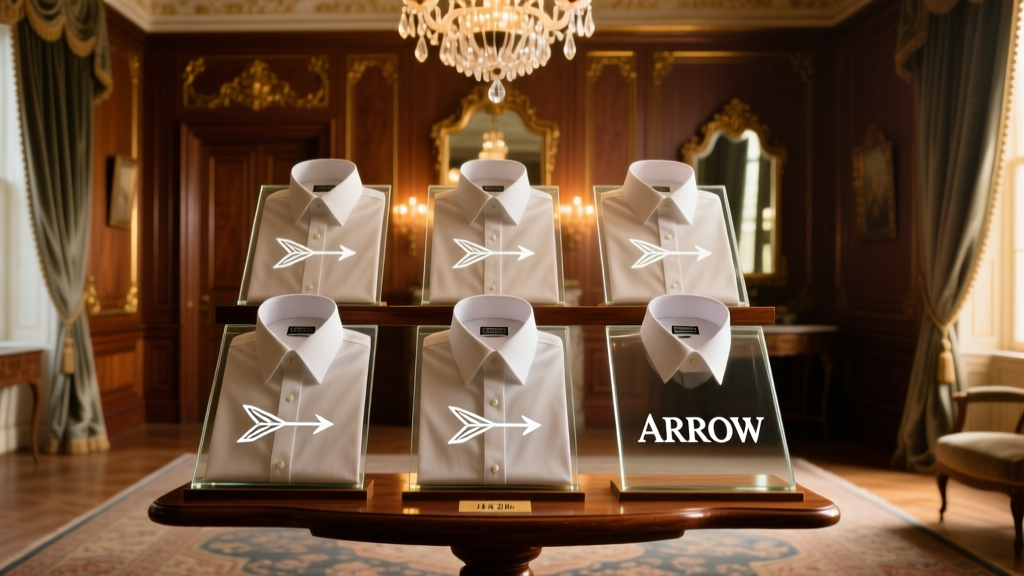
Arrow Shirt Collar Display: Decoding the Etched Glass Advertising Panel (14 × 21 in, Nine Collars)
Mettlach Stein No. 2140: Decoding the 1.2-Liter Brandenburg Jäger Battalion Number 3–5–3–4 Inscription
Shirley Temple Doll Original Clothes Label Pin (16-Inch): Authentication, Provenance, and Restoration Guidelines
The 1135087: A Deep Technical and Historical Analysis of the 1948 Dunbar Model 1135087 Walnut Dining Table

Lighters, American Safety Razor Ascot, Hidden Watch Swivels: A Technical and Historical Study of Bottom-Mounted Mechanisms
Royal Worcester Cake Plate Center Flower: Decoding the Puce Gilt Rim Pattern, 9 3/8-Inch Diameter, and the Full 15-Piece Service
The Snoopy Telephone Lamp: History, Design, and Restoration of a Mid-Century Icon